Condemnation Clause
What this document covers
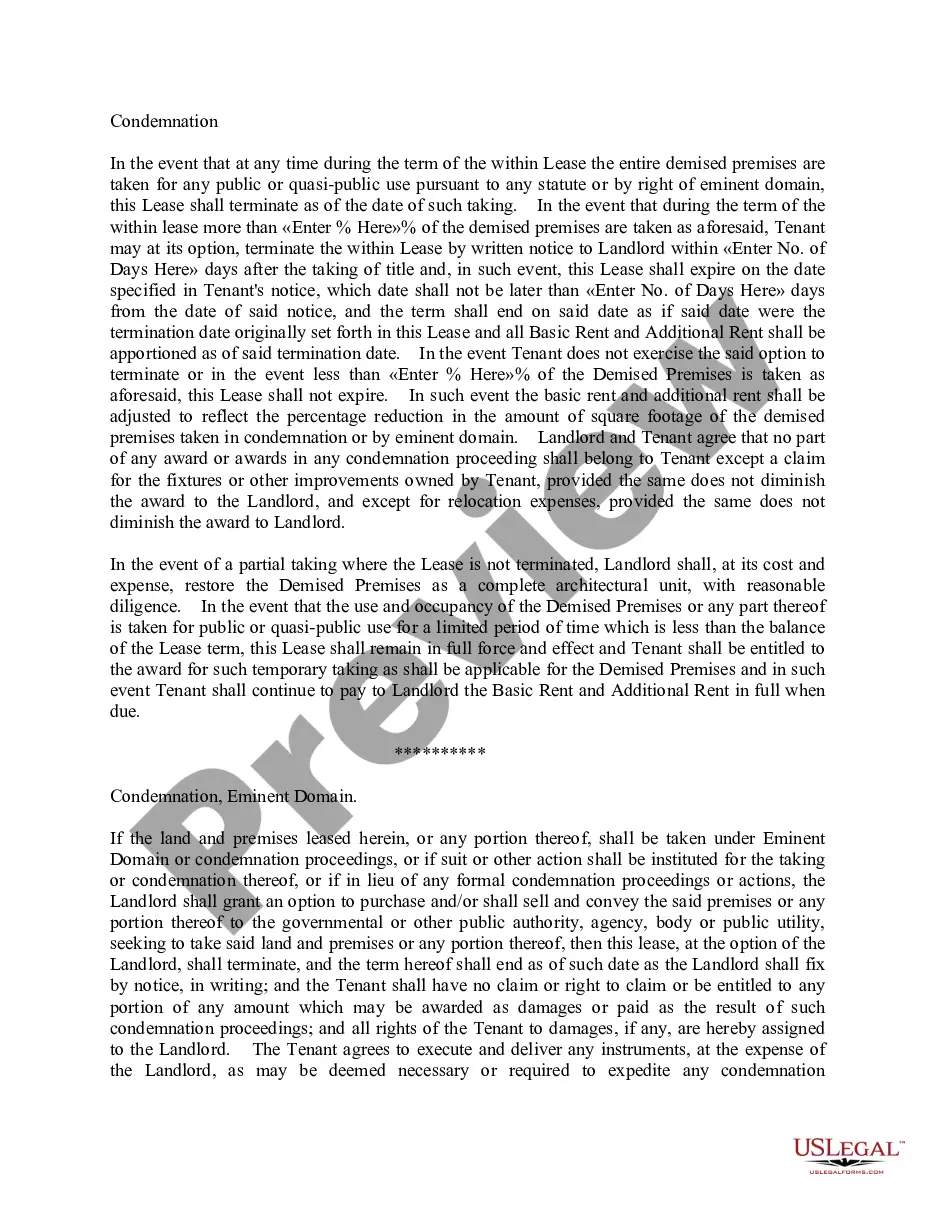
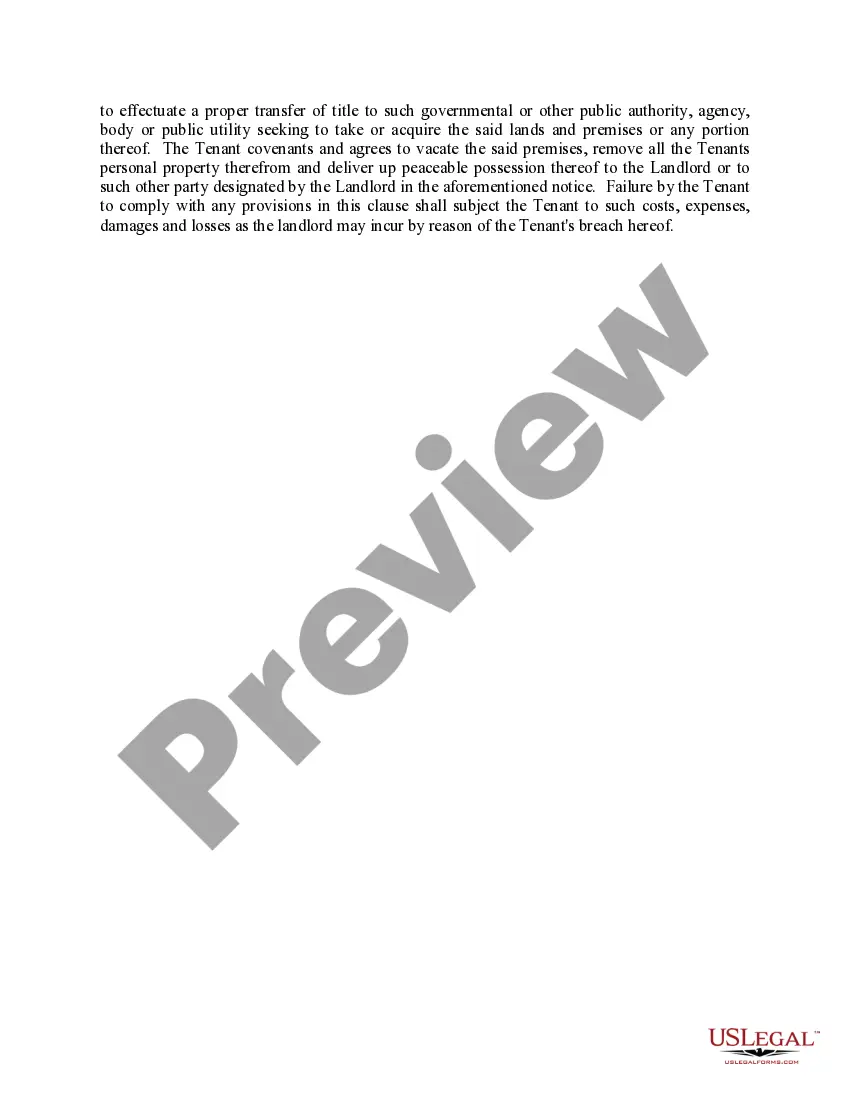
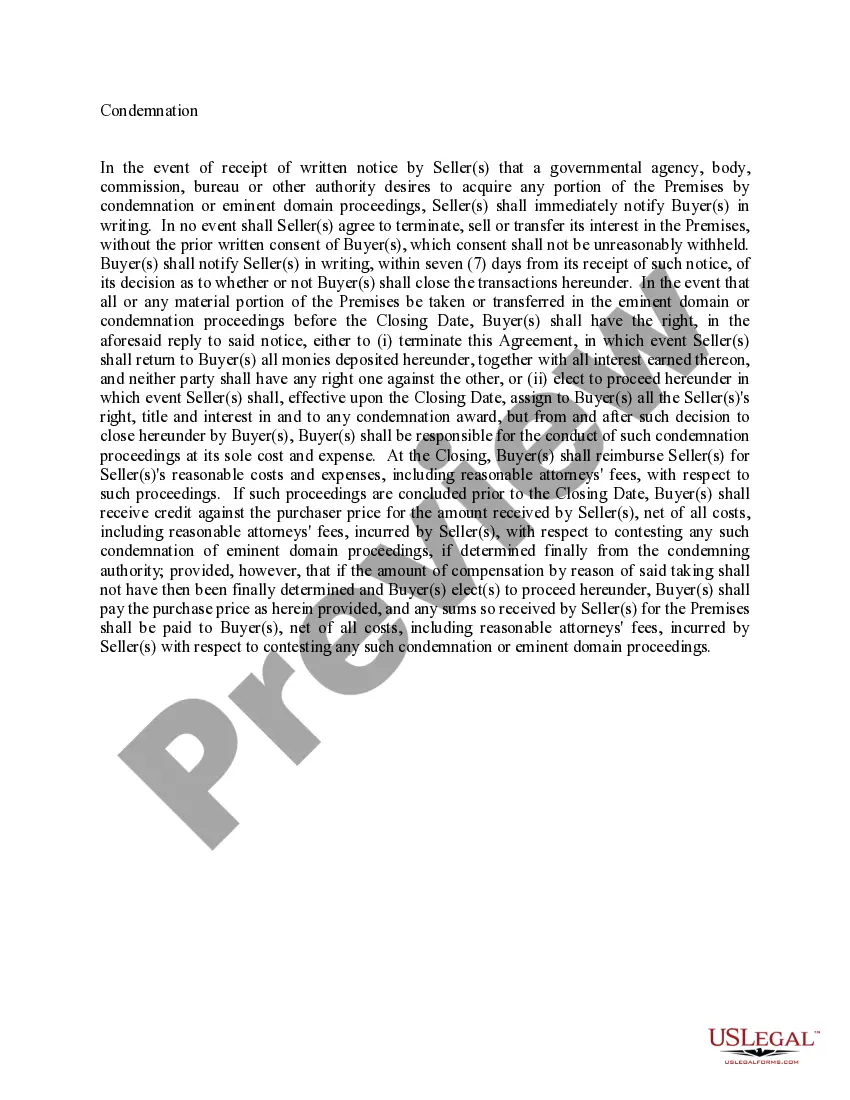
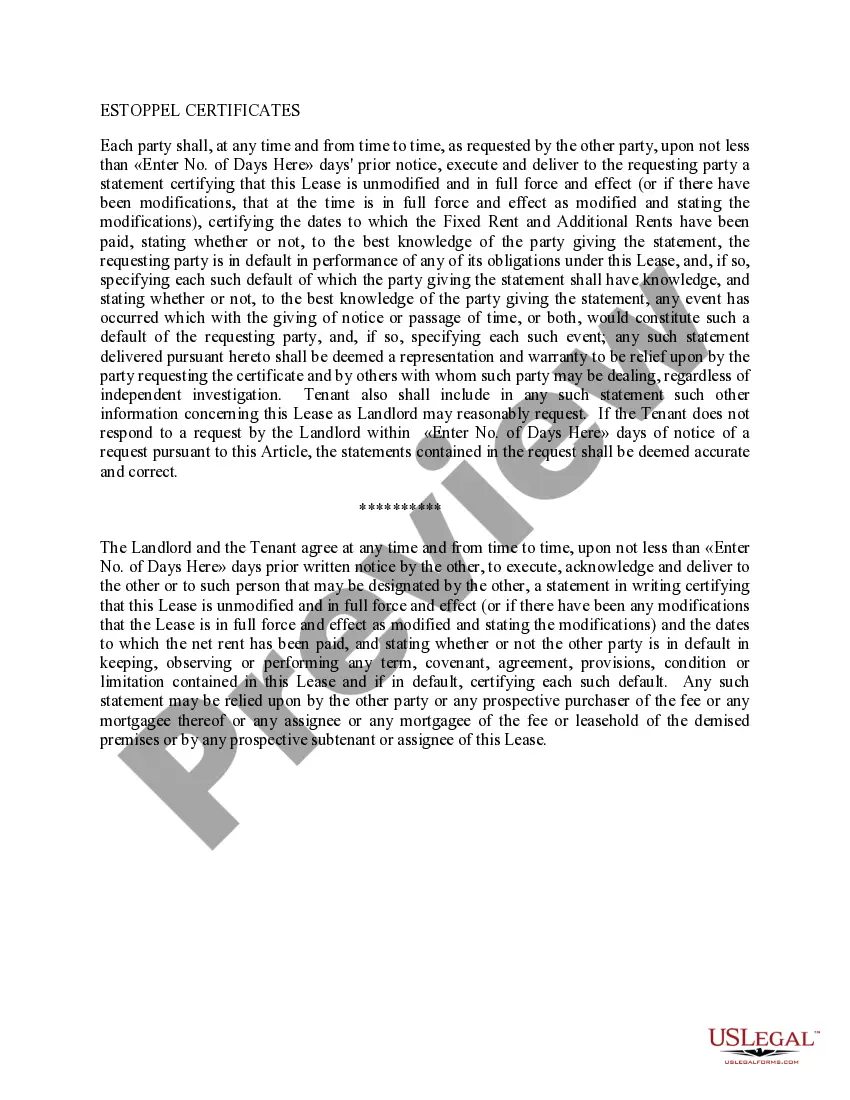
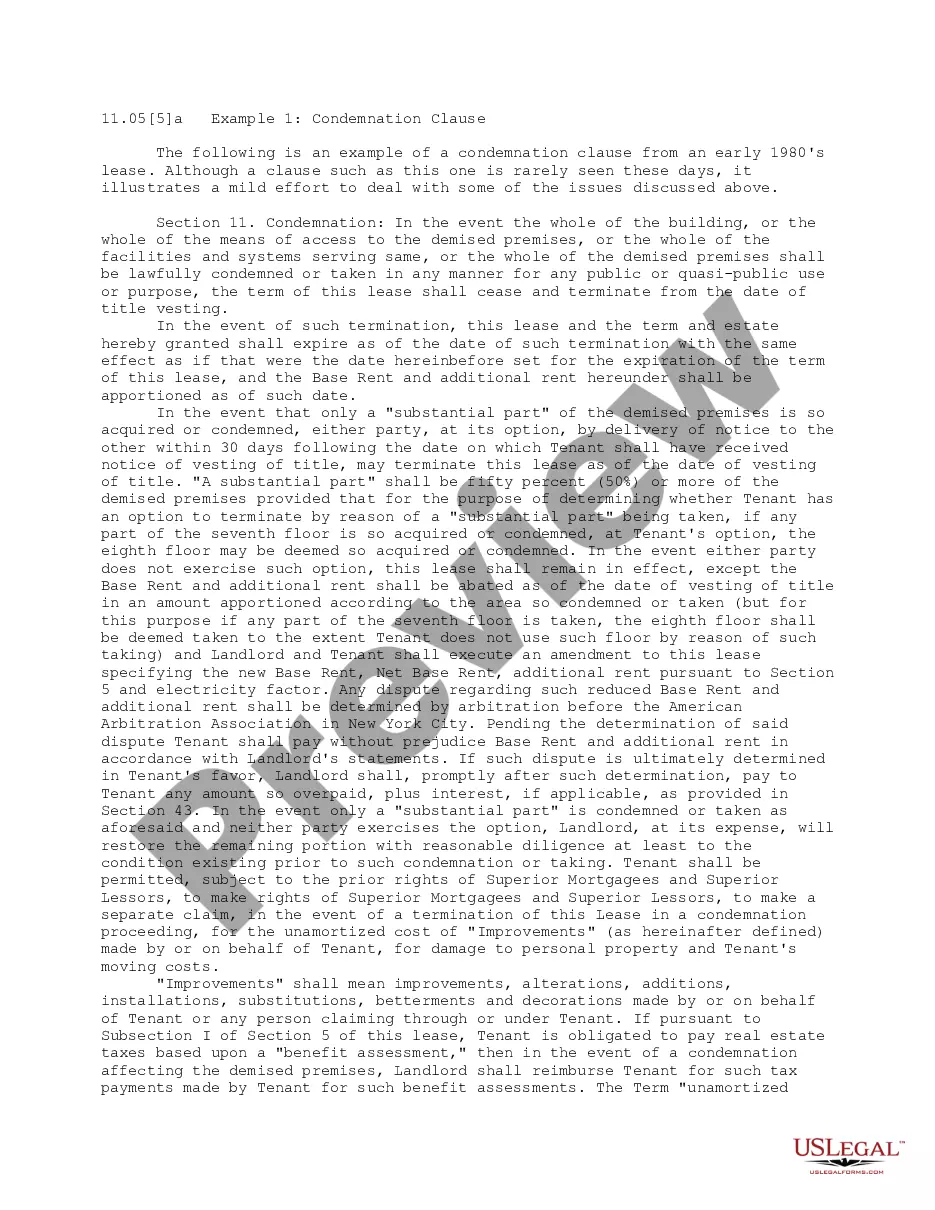
The condemnation clause is a legal provision commonly included in lease agreements. It outlines the terms under which a lease will terminate if the leased property is taken for public or quasi-public use through eminent domain. This clause is essential to protect the interests of both landlords and tenants by clearly stating the rights and obligations of each party if the property is condemned, ensuring that they understand the consequences of governmental actions involving their leased premises.
Key components of this form
- Termination clauses that specify when the lease ends due to condemnation.
- Options for tenants to terminate the lease if a significant portion of the property is taken.
- Adjustments to rent based on the portion of the property affected by the condemnation.
- Provisions regarding claims to awards or damages resulting from the condemnation.
- Obligations for both parties in the event of a partial taking of the property.
When this form is needed
This form should be used when entering into a lease agreement where there is a potential for the property to be taken for public use. It is particularly important for landlords and tenants who wish to clarify their rights regarding compensation and the status of the lease should a condemnation event occur. Instances include when a city plans a new road, school, or other public infrastructure that may require taking part of the leased property.
Who needs this form
- Landlords who want to protect their property rights in lease agreements.
- Tenants seeking clear understanding of their rights if the leased property is condemned.
- Commercial property owners and businesses leasing property.
- Individuals involved in lengthy lease agreements where property development may affect their tenancy.
How to complete this form
- Identify and enter the parties involved in the lease agreement.
- Specify the property being leased and its boundaries.
- Insert the terms regarding termination based on percentage of property taken.
- Detail any requirements for notifying the landlord or tenant in case of condemnation.
- Ensure all parties sign the agreement to validate it.
Is notarization required?
This form does not typically require notarization unless specified by local law. It is recommended to verify state-specific requirements regarding landlord and tenant agreements, as some jurisdictions may have additional rules.
Get your form ready online
Our built-in tools help you complete, sign, share, and store your documents in one place.
Make edits, fill in missing information, and update formatting in US Legal Forms—just like you would in MS Word.
Download a copy, print it, send it by email, or mail it via USPS—whatever works best for your next step.
Sign and collect signatures with our SignNow integration. Send to multiple recipients, set reminders, and more. Go Premium to unlock E-Sign.
If this form requires notarization, complete it online through a secure video call—no need to meet a notary in person or wait for an appointment.
We protect your documents and personal data by following strict security and privacy standards.

Make edits, fill in missing information, and update formatting in US Legal Forms—just like you would in MS Word.

Download a copy, print it, send it by email, or mail it via USPS—whatever works best for your next step.

Sign and collect signatures with our SignNow integration. Send to multiple recipients, set reminders, and more. Go Premium to unlock E-Sign.

If this form requires notarization, complete it online through a secure video call—no need to meet a notary in person or wait for an appointment.

We protect your documents and personal data by following strict security and privacy standards.
Common mistakes to avoid
- Failing to clearly define what constitutes a âtakingâ of the property.
- Not specifying the timeframe for notification after a condemnation event.
- Overlooking adjustments to rent if only part of the property is taken.
- Neglecting to include the tenants' rights regarding damages or awards.
Why use this form online
- Convenience of accessing essential legal forms from anywhere.
- Editable templates to tailor specifics to individual circumstances.
- Legal assurance with forms drafted by licensed attorneys.
- Quick turnaround time for obtaining necessary legal documents.
Looking for another form?
Form popularity
FAQ
A condemnation clause provision that would allow the tenant to recover just and adequate compensation for items that would not reduce the landlord's recovery often are included in the lease. These items would include business damage, fixtures and personal property of the tenant and relocation benefits.
A Condemnation clause in a lease determines what happens in the event that the leased premises are taken from the landlord by a governmental agency for public use, either by condemnation or eminent domain.
In order for a mortgagee to be satisfied with responses to such questions, a condemnation clause will usually provide the mortgagee the right to withhold a release of the mortgage (or condemnation proceeds to the mortgagor) until the mortgagee is satisfied that the remaining property is of sufficient value to secure
DEFINITION OF A CONDEMNATION CLAUSE. A condemnation clause in a lease provides for the contingency that the leased premises or a part of the leased premises may be taken for a public purpose by an entity with the power of eminent domain before the lease has expired.
A condemnation action does not invalidate an existing lease agreement, so you would still have the obligation to fulfill the terms of your lease. For this reason, many tenants may use any compensation they receive to pay off their lease.
Condemnation is used in law, and means the same thing as sentencing; you might have heard a judge say ?I condemn you to ten years of hard labor.? Also, a very dangerous building will be sealed up and deemed uninhabitable by an act of condemnation.