Montana Default Judgment
Description
How to fill out Montana Default Judgment?
Obtain a printable Montana Default Judgment in just a few clicks from the largest collection of legal electronic documents.
Discover, download, and print expertly prepared and certified samples on the US Legal Forms site. US Legal Forms has been the leading supplier of affordable legal and tax documents for American citizens and residents online since 1997.
After downloading your Montana Default Judgment, you can complete it in any online editor or print it and fill it out manually. Utilize US Legal Forms to access 85,000 expertly drafted, state-specific documents.
- Clients who already possess a subscription must sign in to their US Legal Forms account, access the Montana Default Judgment, and find it saved in the My documents section.
- Ensure your document complies with your state's regulations.
- If possible, review the form's description to gather more information.
- If available, preview the form to explore additional content.
- Once you're confident the document meets your requirements, select Buy Now.
- Create a personal account.
- Choose a subscription plan.
- Make payment through PayPal or credit card.
- Download the document in Word or PDF format.
Form popularity
FAQ
How long does a judgment lien last in Montana? A judgment lien in Montana will remain attached to the debtor's property (even if the property changes hands) for ten years.
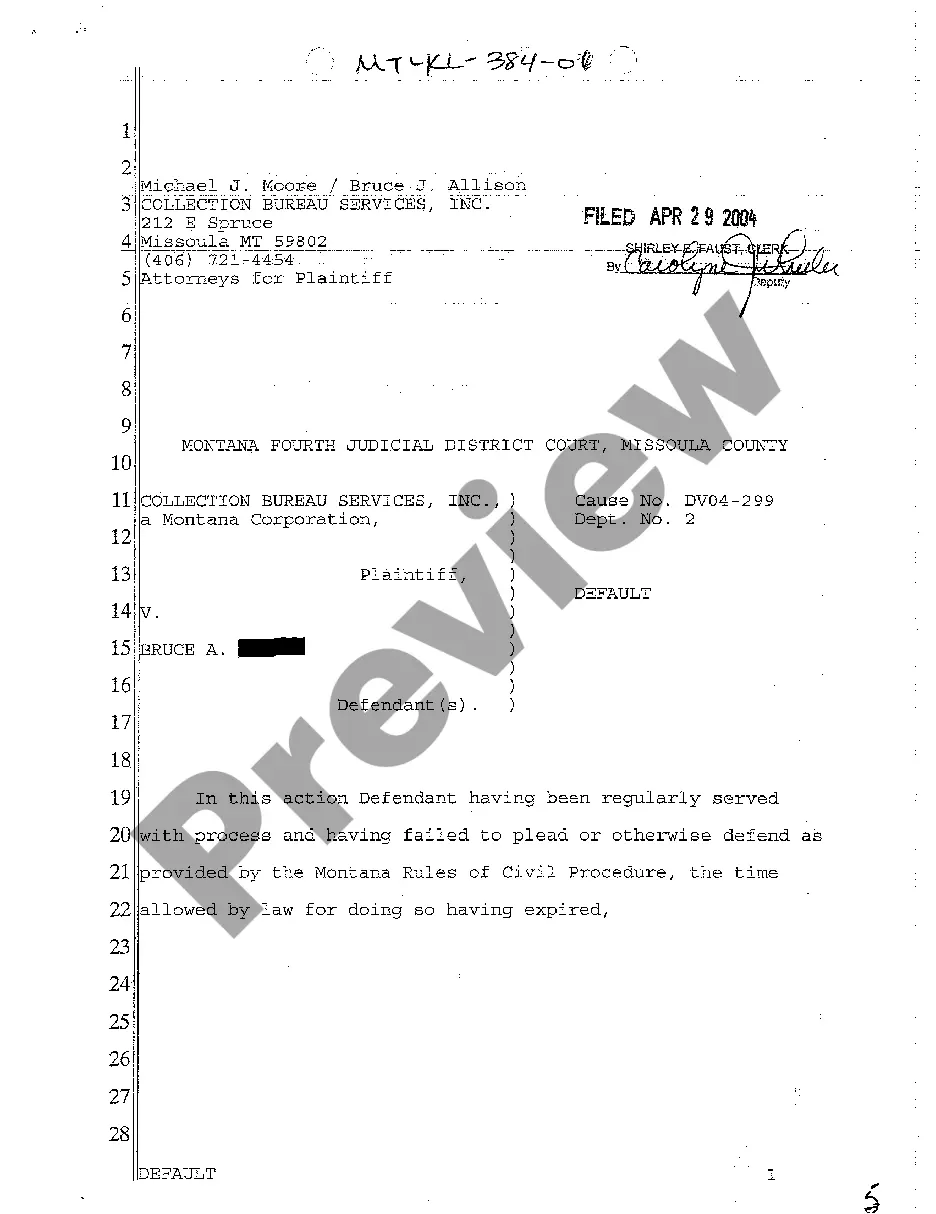
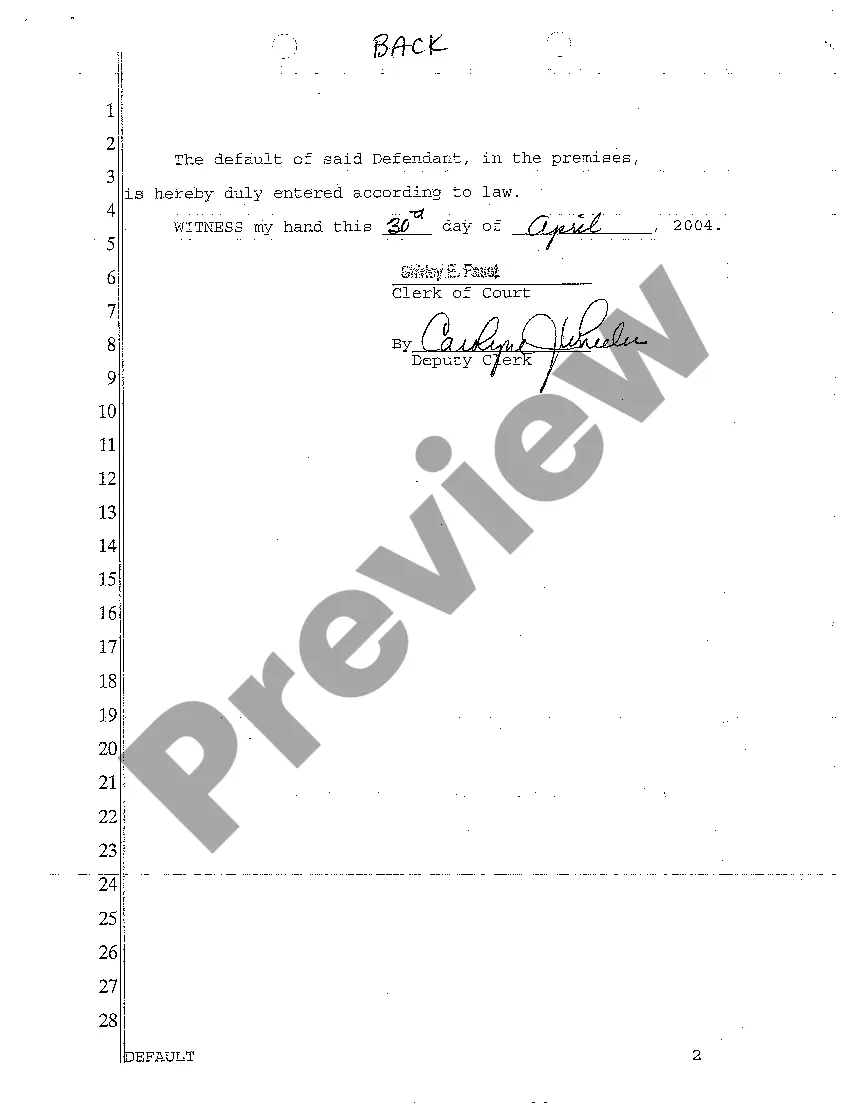
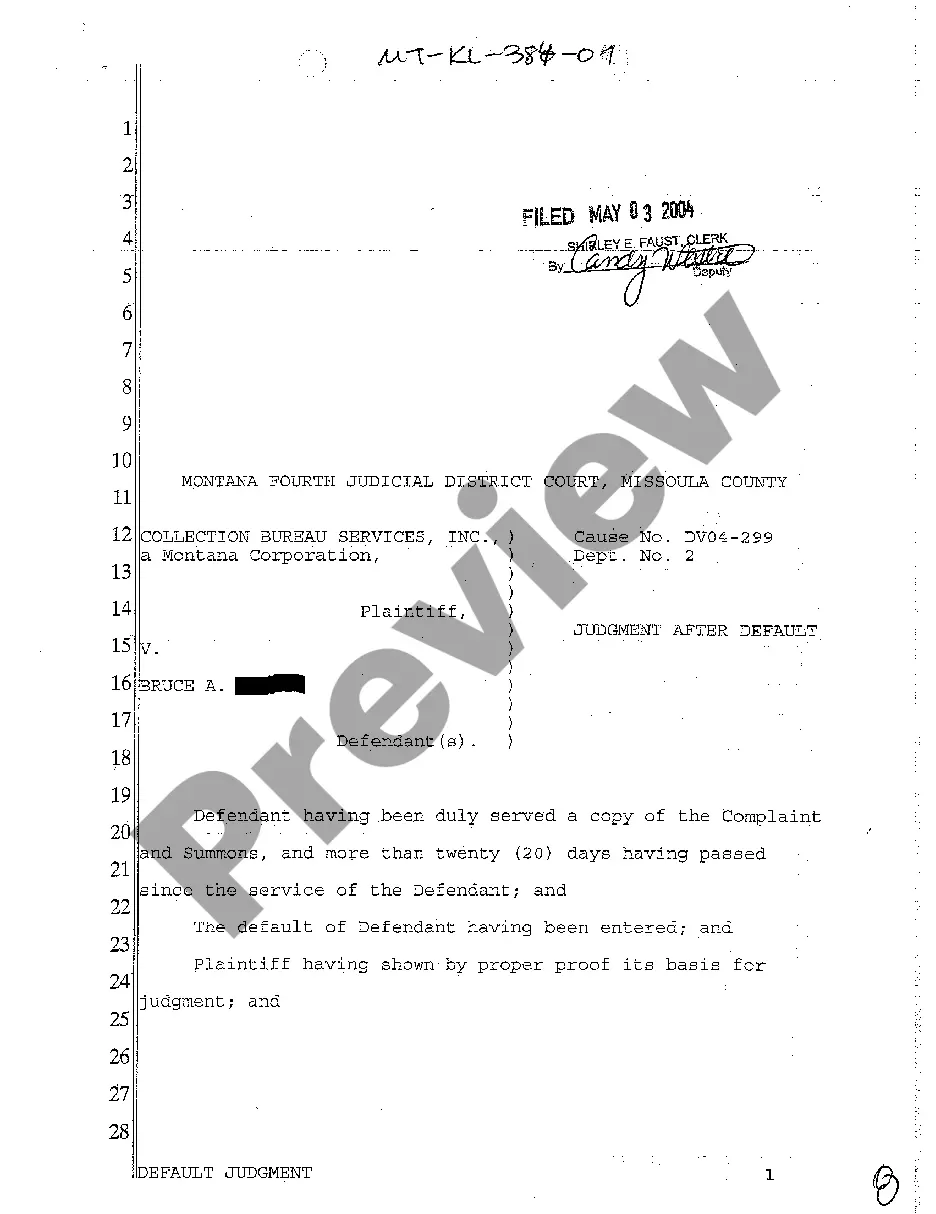
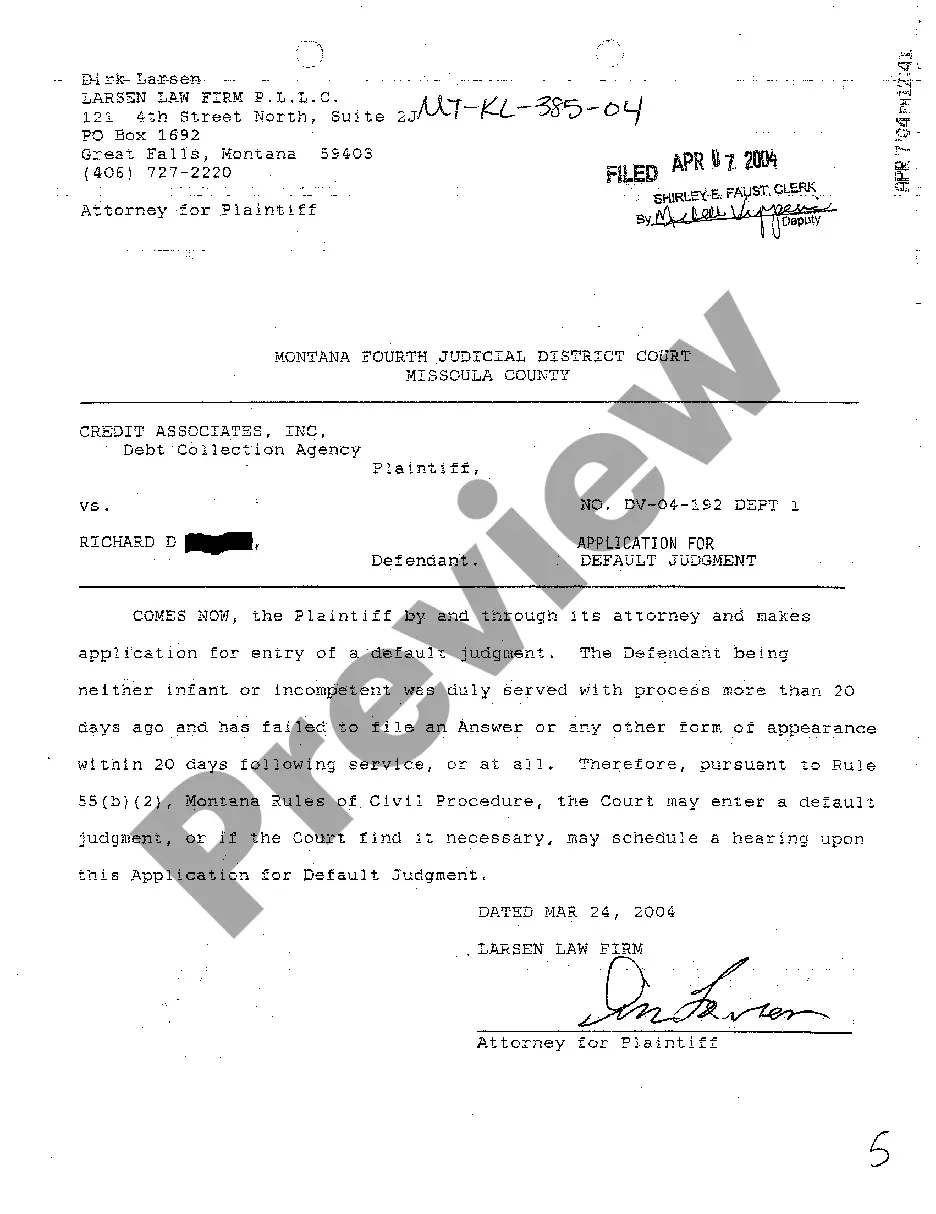
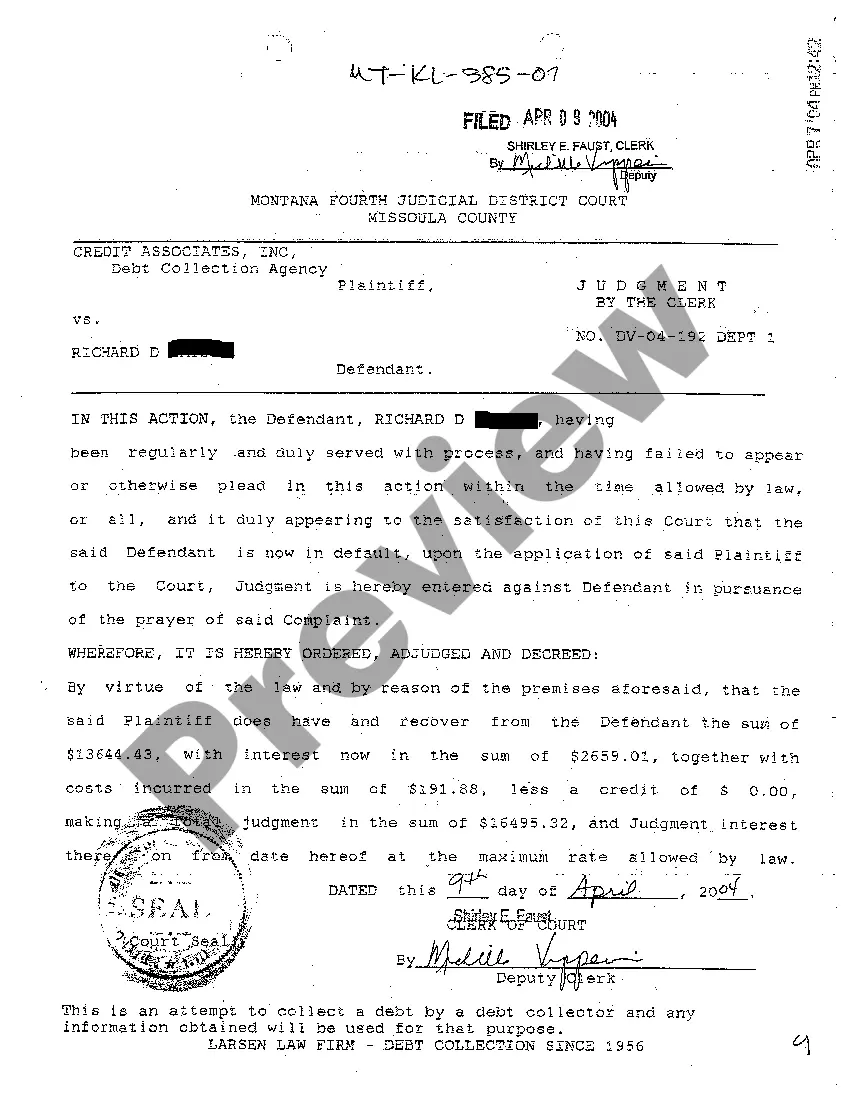
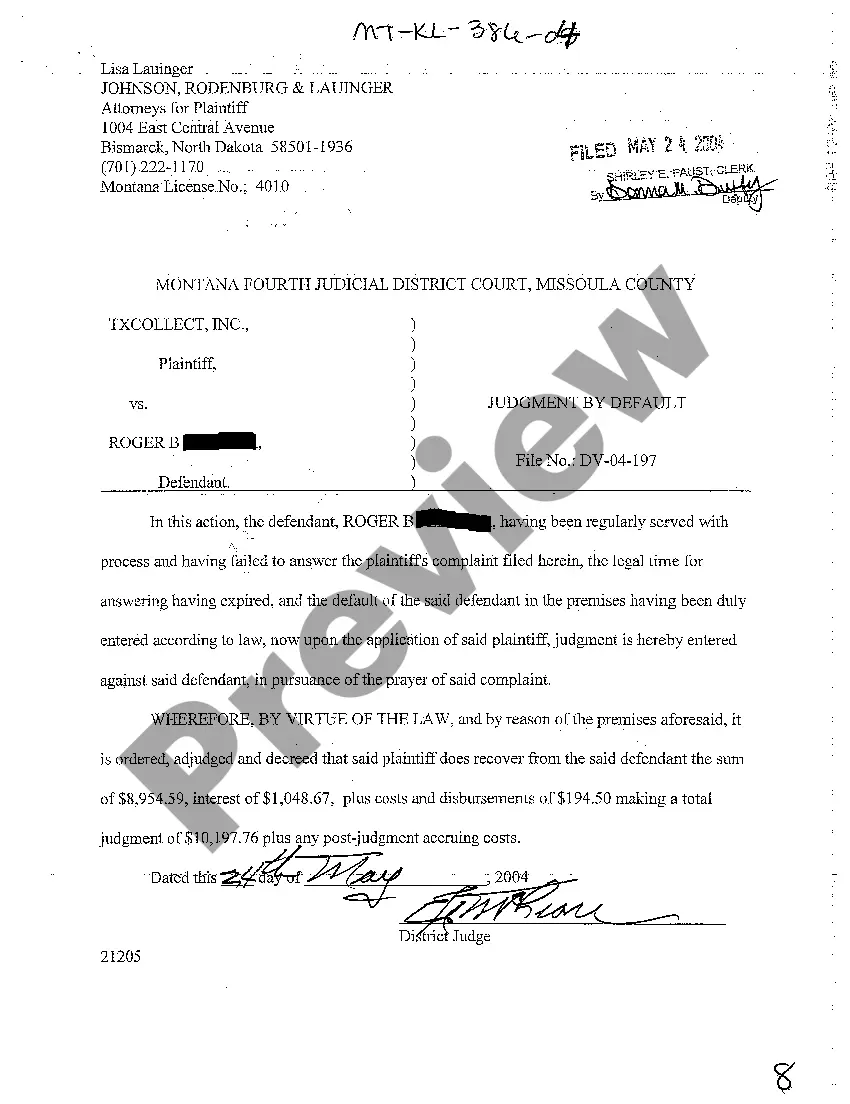
A default judgment is a ruling granted by a court or judge.For example, when a defendant is summoned to appear before the court in a case brought by a plaintiff, but fails to respond to the court's legal order, the judge can rule for default judgment and thereby decide the case in the plaintiff's favor.
First, you can ask the court to set aside the default judgment and give you an opportunity to contest it. Next, you can settle the debt with the debt buyer for an amount less than what the default judgment is for. And finally you can eliminate the default judgment completely by filing for bankruptcy.
After you notify the defendant of the judgment, you can begin to enforce the judgment. Your judgment might be for money, repossession, eviction, foreclosure, or any number of things. In any case, your rights at this point would be the same as if you had gone to trial and won.