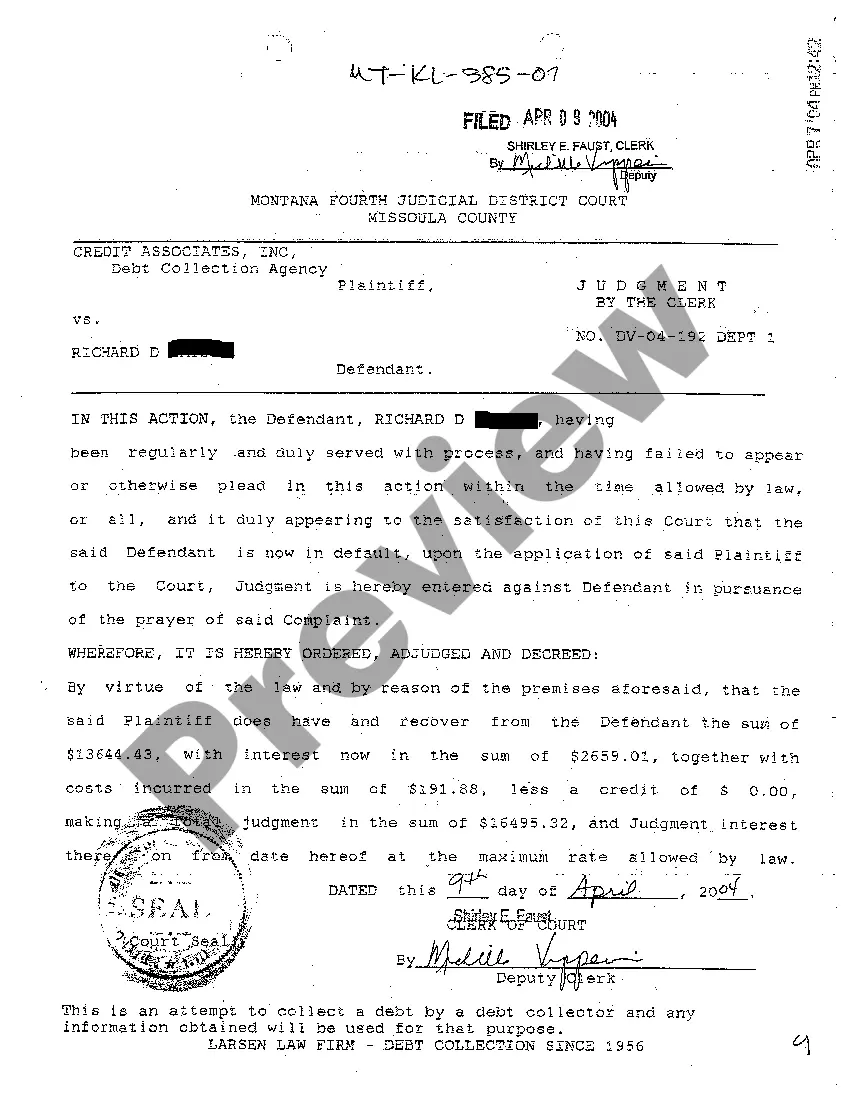
Montana Judgment of Default
Description
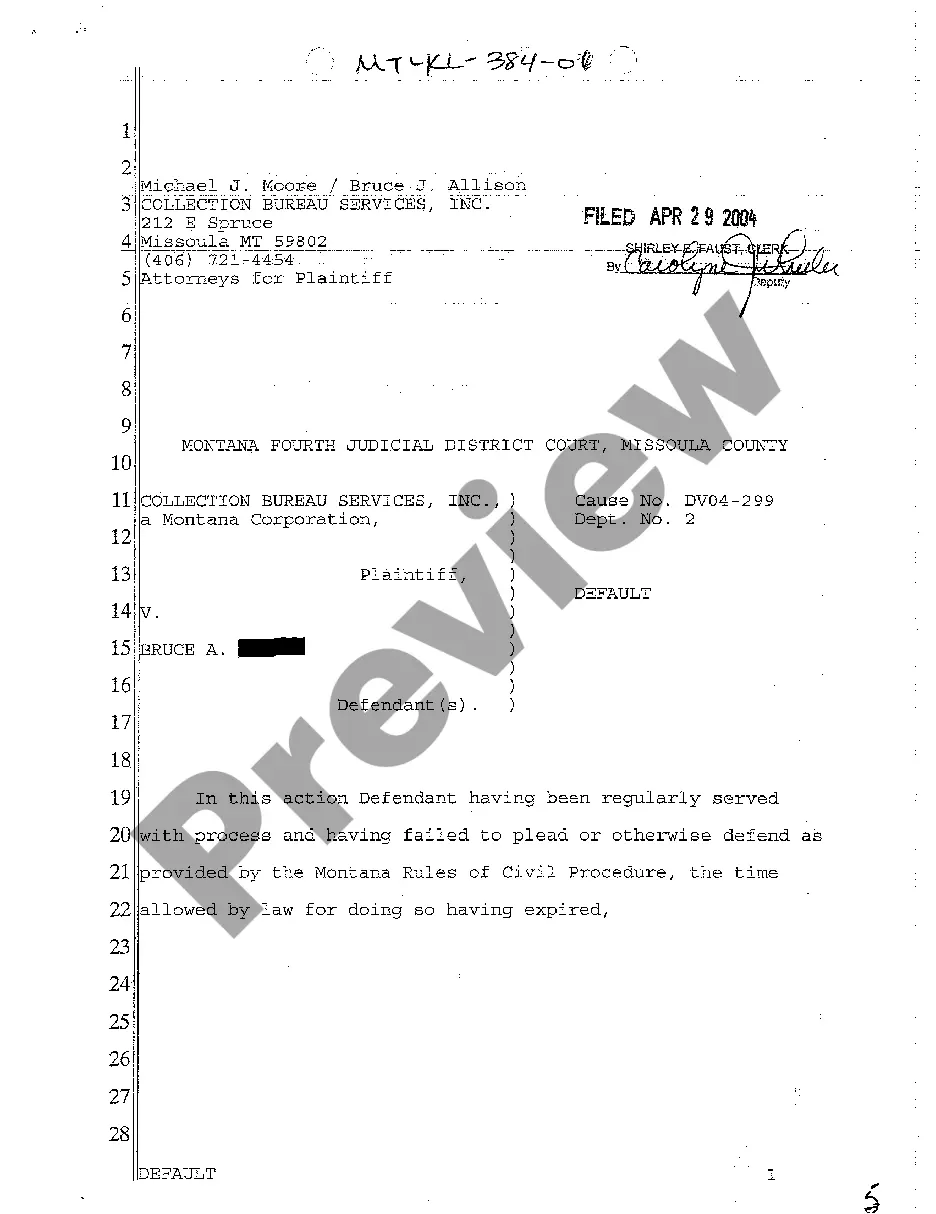
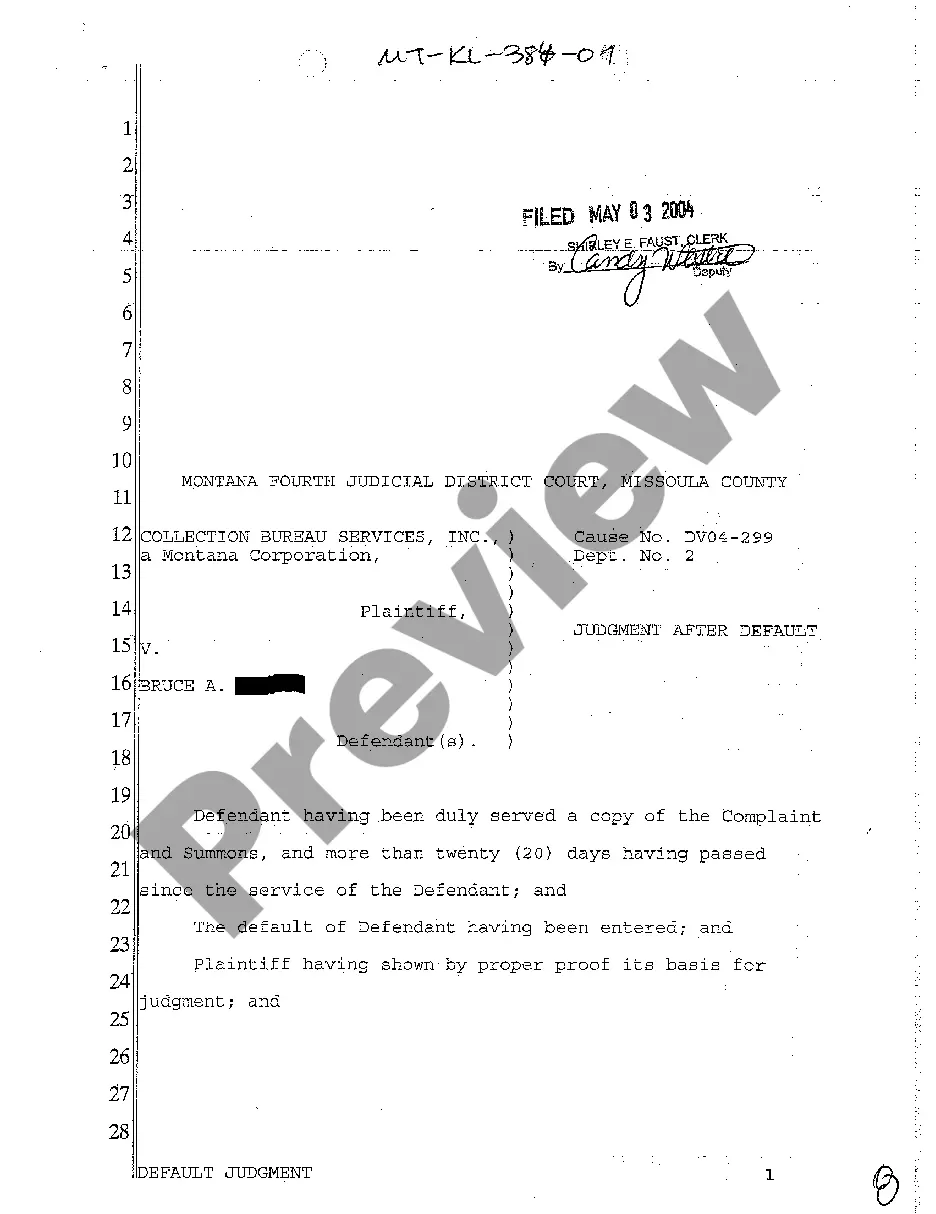
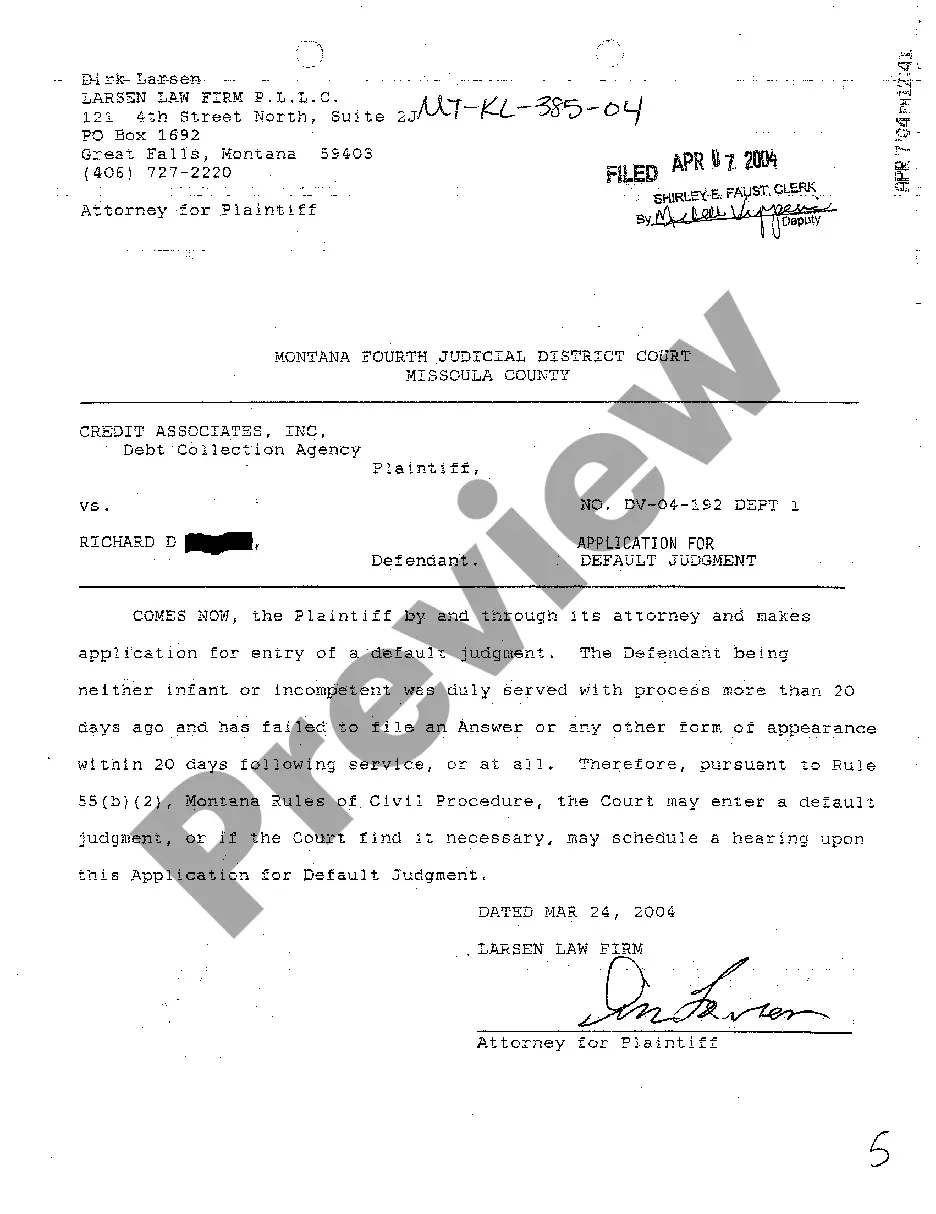
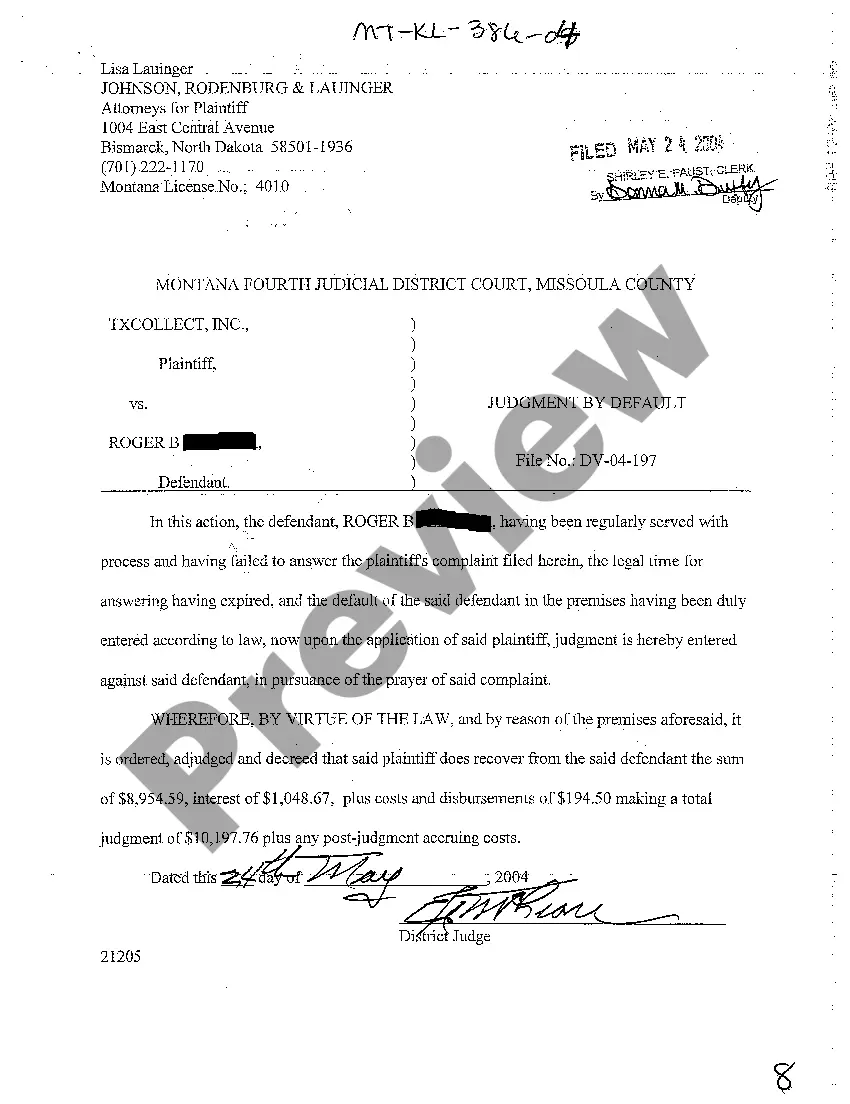

How to fill out Montana Judgment Of Default?
Acquire a printable Montana Judgment of Default in just a few clicks from the most extensive collection of legal e-documents.
Locate, download, and print expertly created and verified samples on the US Legal Forms site. US Legal Forms has been the leading provider of affordable legal and tax documents for US citizens and residents online since 1997.
Once you've downloaded your Montana Judgment of Default, you can complete it in any online editor or print it out and fill it in manually. Use US Legal Forms to access 85,000 professionally drafted, state-specific documents.
- Customers who already have a subscription must sign in directly to their US Legal Forms account, download the Montana Judgment of Default, and find it saved in the My documents section.
- Individuals without a subscription should follow the steps below.
- Ensure your document complies with your state's regulations.
- If available, review the form's description for additional information.
- If available, preview the form to learn more about its contents.
- When you are certain the document meets your requirements, simply click Buy Now.
- Create a personal account.
- Choose a subscription plan.
- Make a payment using PayPal or credit card.
- Download the document in Word or PDF format.
Form popularity
FAQ
Generally, if a defendant fails to respond to a complaint you can get a default judgment after 45 days. However, the court system is very slow these days and it can take several months to get the court to issue the default judgment.
In order to vacate a judgment in California, You must file a motion with the court asking the judge to vacate or set aside the judgment. Among other things, you must tell the judge why you did not respond to the lawsuit (this can be done by written declaration).
After you notify the defendant of the judgment, you can begin to enforce the judgment. Your judgment might be for money, repossession, eviction, foreclosure, or any number of things. In any case, your rights at this point would be the same as if you had gone to trial and won.
What happens next? When you file your Motion and Affidavit to Set Aside Default, you will get a hearing date and time from the court clerk. At the hearing, the judge will grant or deny the motion. If the judge grants your motion, the default or default judgment will be set aside, and the case will move forward.
First, you can ask the court to set aside the default judgment and give you an opportunity to contest it. Next, you can settle the debt with the debt buyer for an amount less than what the default judgment is for. And finally you can eliminate the default judgment completely by filing for bankruptcy.
In effect, you're found guilty because you never entered a defense. Default judgments are sometimes called automatic judgments because of how fast they can happen. Next up could be wage garnishment or a bank account levy, which allows a creditor to remove money from your bank accounts to repay the debt.
Typically, a court's rules governing enforcement of default judgments include procedures for wage garnishments, attachment of bank accounts and seizure of assets. The plaintiff can usually pursue more than one of these enforcement mechanisms simultaneously.
If you do not think the default judgment was appropriately entered against you, you must file a motion with the court asking the judge to set aside (void or nullify) the judgment. If the judge grants your motion, the case starts back up again.