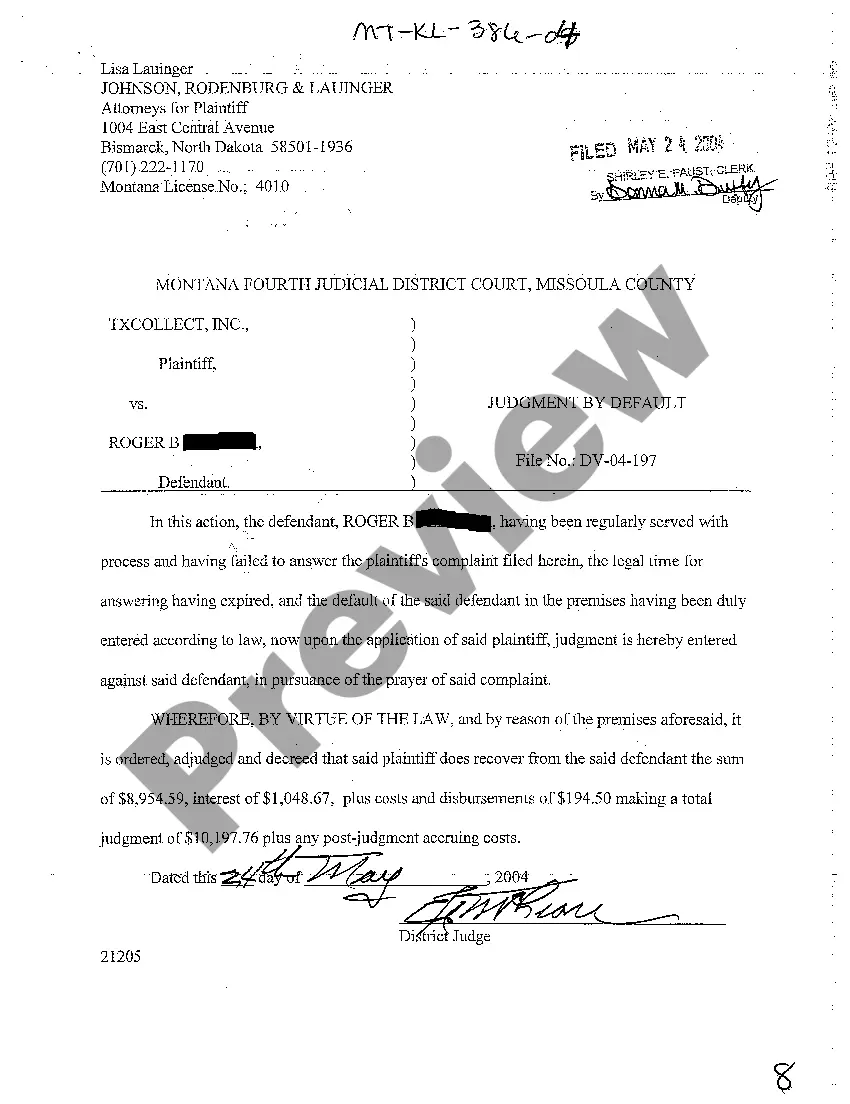
Montana Judgment By Default
Description
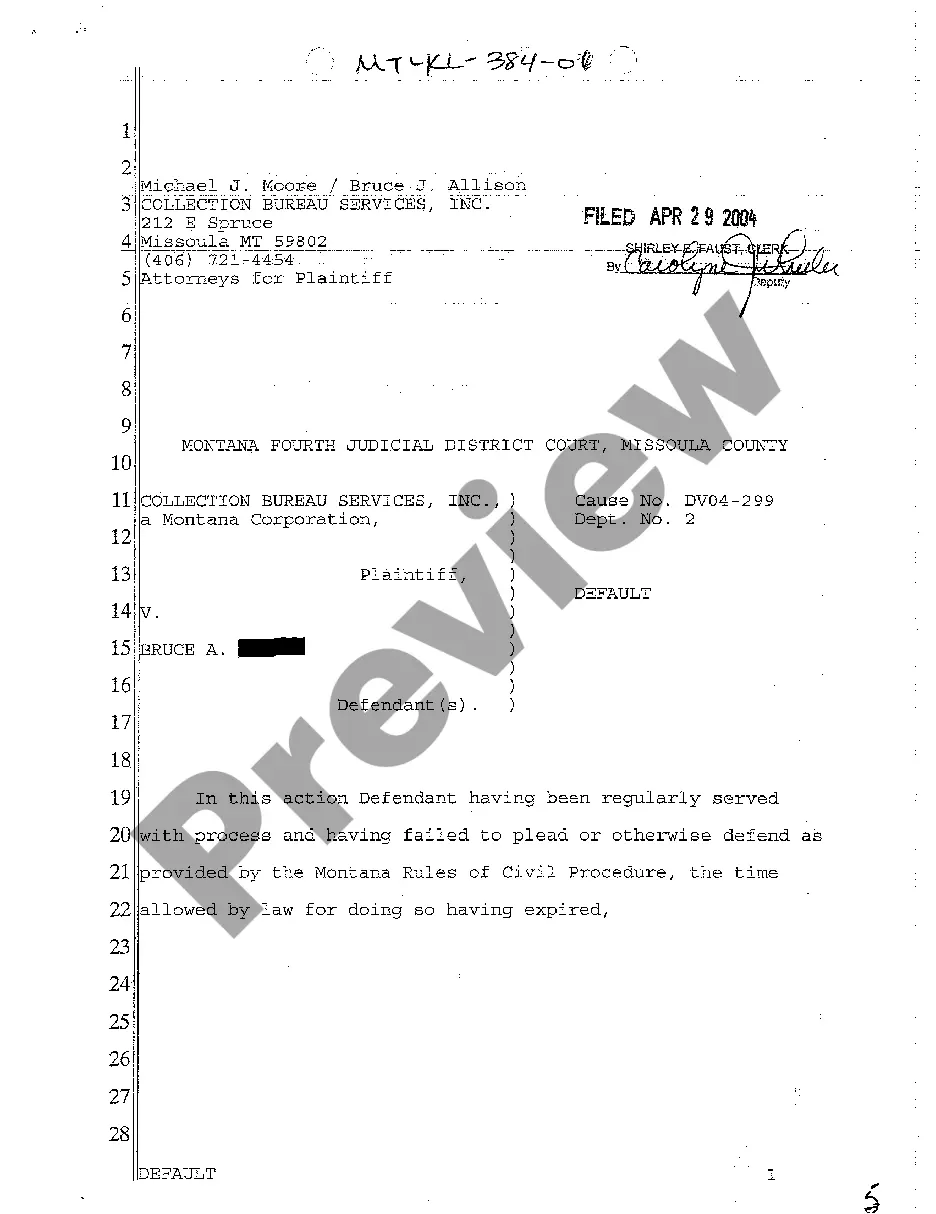
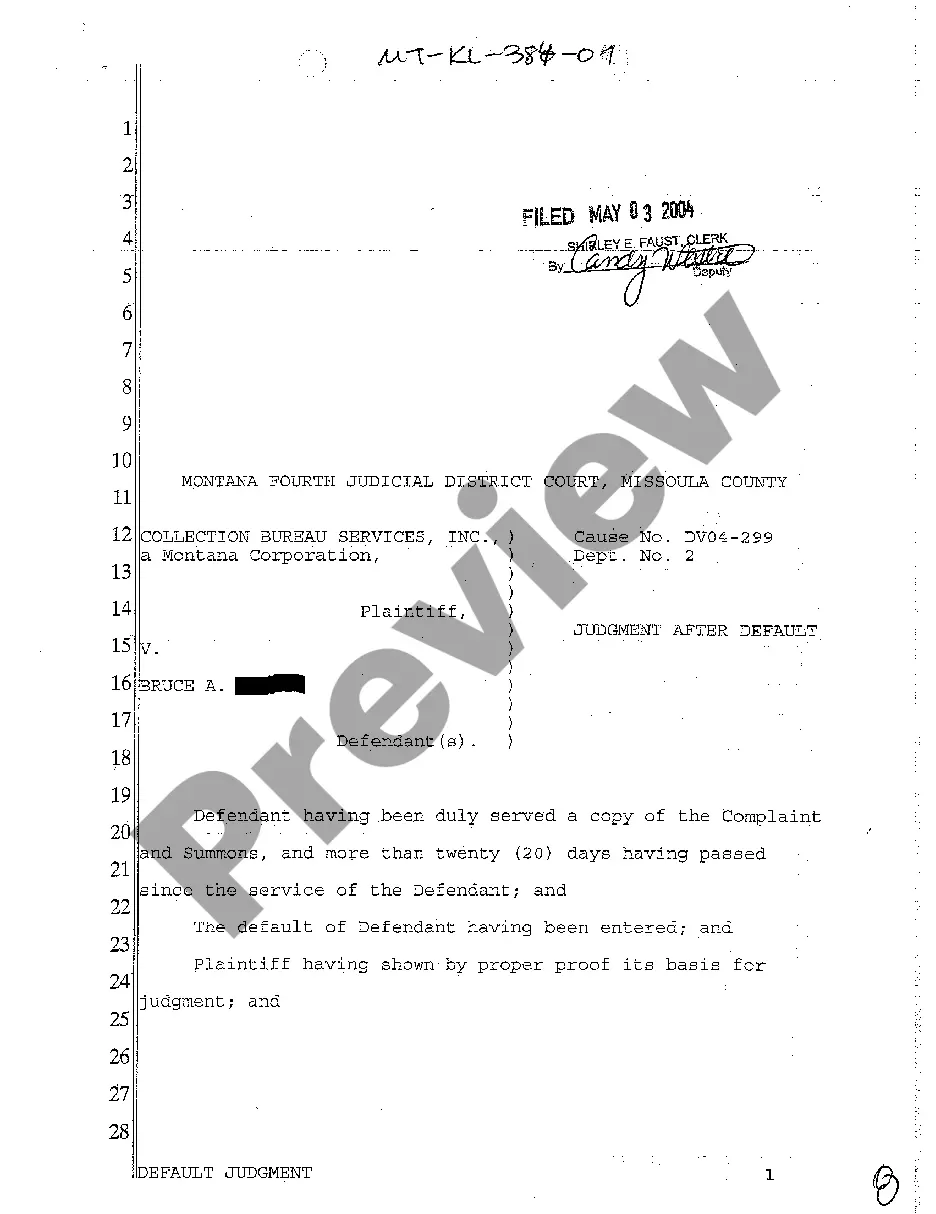
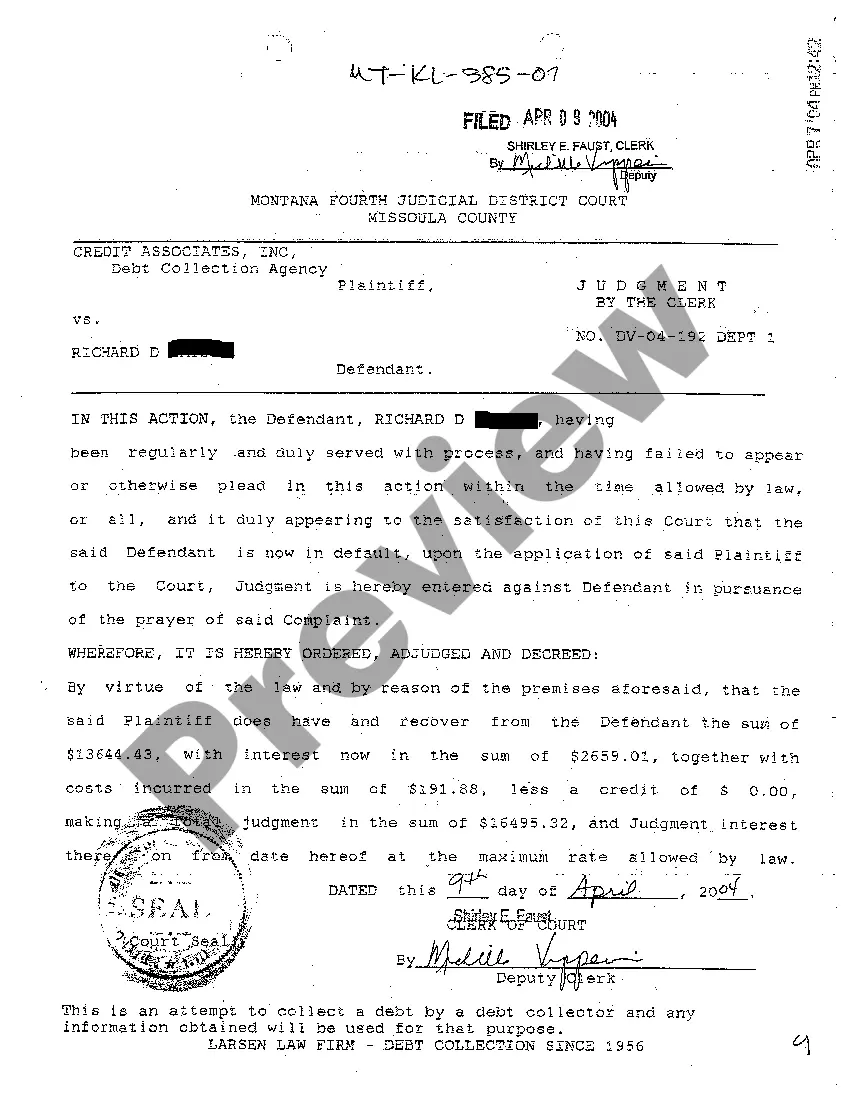
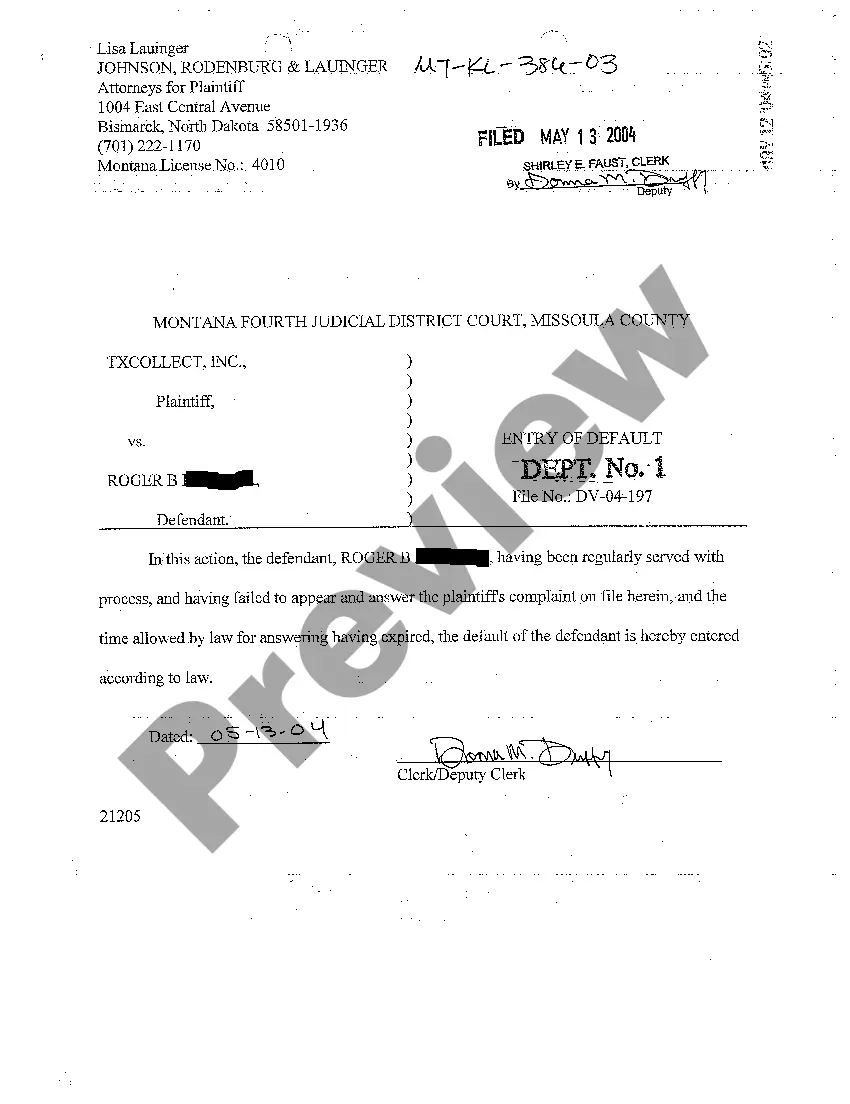
How to fill out Montana Judgment By Default?
Obtain a printable Montana Judgment By Default in just a few clicks from the largest collection of legal e-documents. Locate, download, and print professionally prepared and verified samples on the US Legal Forms website. US Legal Forms has been the leading provider of cost-effective legal and tax documents for US citizens and residents online since 1997.
Clients who already have a subscription must Log In to their US Legal Forms account, download the Montana Judgment By Default, and find it saved in the My documents section. Users who do not have a subscription must adhere to the following steps.
After downloading your Montana Judgment By Default, you can fill it out in any online editor or print it and complete it manually. Utilize US Legal Forms to access 85,000 expertly crafted, state-specific documents.
- Ensure that your template complies with your state's regulations.
- If possible, browse the form’s description for additional information.
- If available, examine the form to discover more details.
- Once you are confident the form is suitable for you, click Buy Now.
- Create a personal account.
- Choose a subscription plan.
- Make payment via PayPal or credit card.
- Download the document in Word or PDF format.
Form popularity
FAQ
Step 1: Make Sure You've Met the Requirements for a Default. Step 2: Decide How You Wish to Proceed. Step 3: Complete the Necessary Forms. Step 4: Complete Your Declaration in Support of Default Judgment. Step 5: Calculate Prejudgment Interest, if Appropriate. Step 6: Copy and Assemble Your Documents.
Default judgments happen when you don't respond to a lawsuit often from a debt collector and a judge resolves the case without hearing your side. In effect, you're found guilty because you never entered a defense. Default judgments are sometimes called automatic judgments because of how fast they can happen.
What happens next? When you file your Motion and Affidavit to Set Aside Default, you will get a hearing date and time from the court clerk. At the hearing, the judge will grant or deny the motion. If the judge grants your motion, the default or default judgment will be set aside, and the case will move forward.
In most cases, however, default judgment can be obtained through an administrative process, simply by filing a request with the court, and even where an application is required it can in some circumstances be made without notice to the defendant.
Generally, if a defendant fails to respond to a complaint you can get a default judgment after 45 days. However, the court system is very slow these days and it can take several months to get the court to issue the default judgment.
In effect, you're found guilty because you never entered a defense. Default judgments are sometimes called automatic judgments because of how fast they can happen. Next up could be wage garnishment or a bank account levy, which allows a creditor to remove money from your bank accounts to repay the debt.
First, you can ask the court to set aside the default judgment and give you an opportunity to contest it. Next, you can settle the debt with the debt buyer for an amount less than what the default judgment is for. And finally you can eliminate the default judgment completely by filing for bankruptcy.
Typically, a court's rules governing enforcement of default judgments include procedures for wage garnishments, attachment of bank accounts and seizure of assets. The plaintiff can usually pursue more than one of these enforcement mechanisms simultaneously.
A very important fact you should keep in mind is that California courts do impose a timeline for seeking entry of a default judgment. Specifically, a request for entry of default must be filed within 10 days following a defendant's failure to timely file and serve a responsive pleading.