South Carolina Non-Warranty Deed
What this document covers
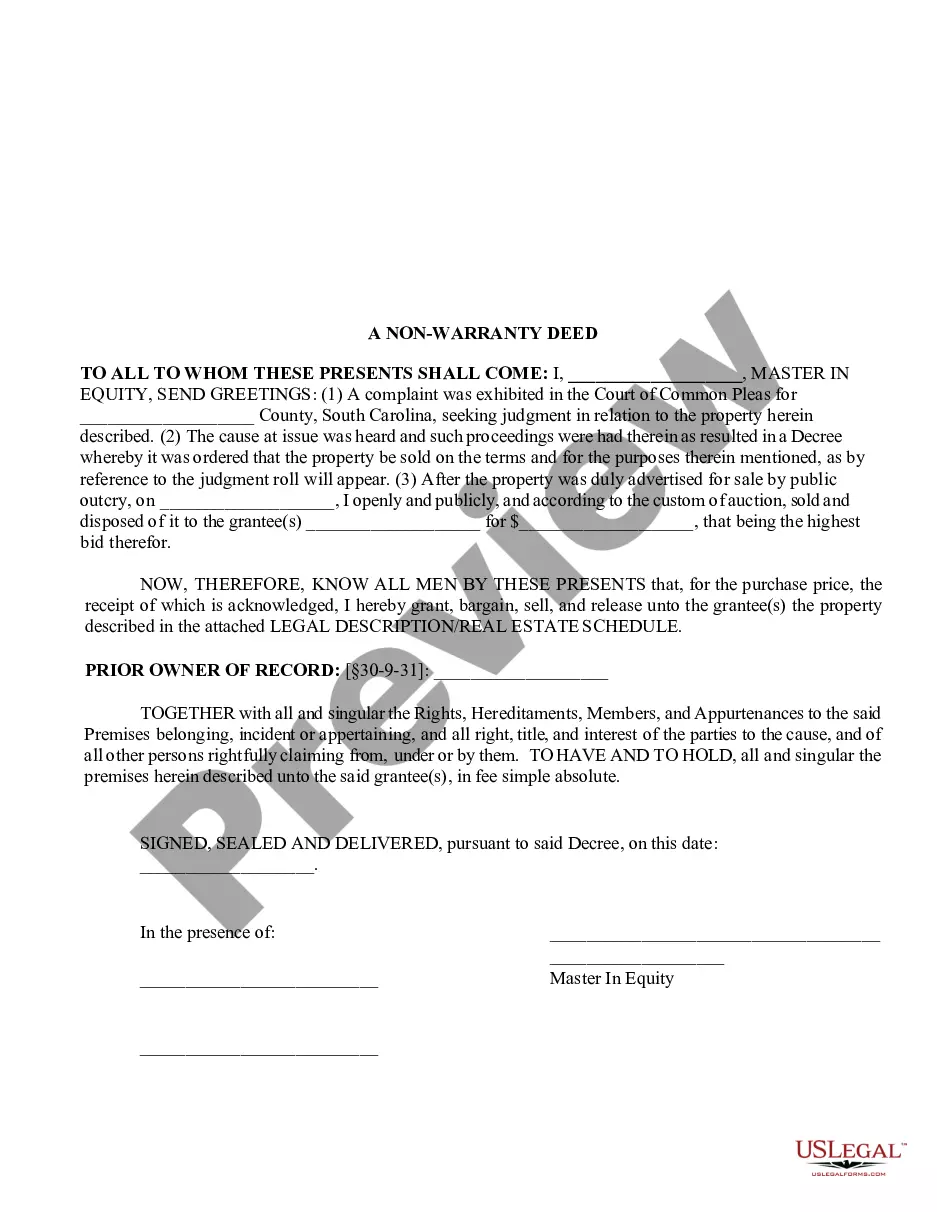
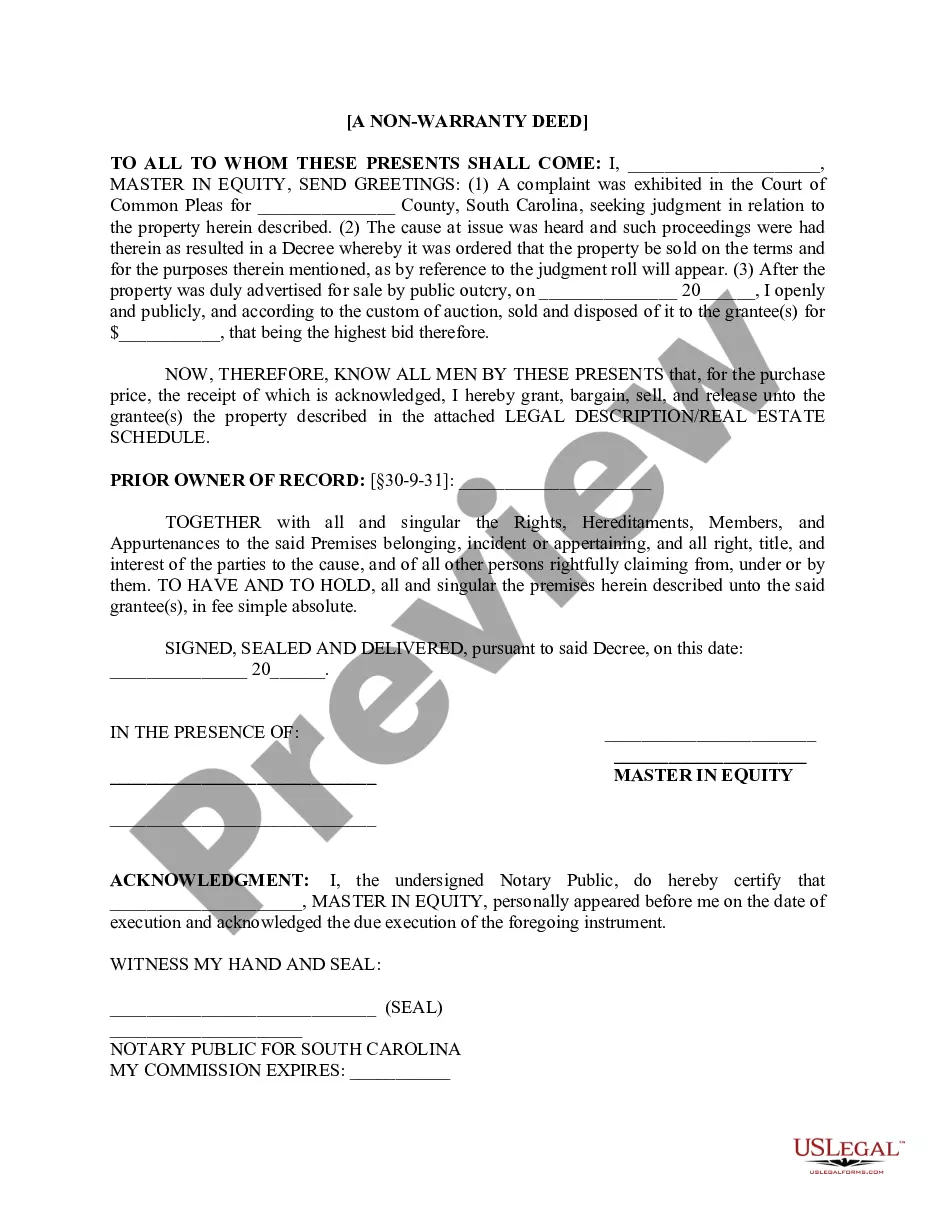
A Non-Warranty Deed is a legal document executed by a Master in Equity after a court judgment for foreclosure. Unlike other deeds, this form indicates that the property is sold without any warranties or guarantees regarding its condition or title. It is designed for the transfer of property awarded at auction, allowing the grantee to gain ownership while assuming the risks associated with the property.
Form components explained
- Identification of the Master in Equity and grantee(s).
- Details of the court action and decree leading to the property sale.
- Purchase price and acknowledgment of payment receipt.
- Legal description of the property being transferred.
- Information about the prior owner of record.
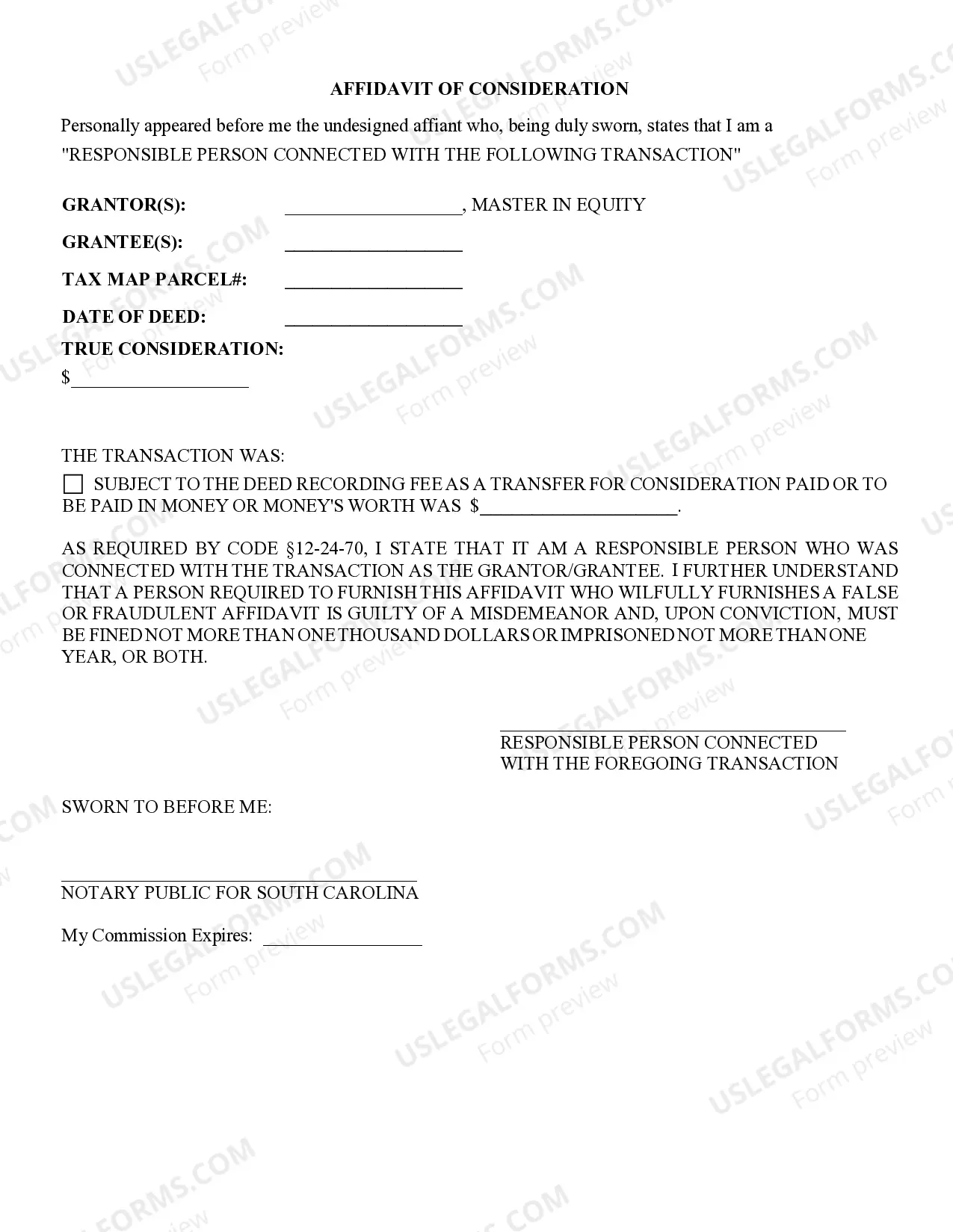
- Affidavit of consideration detailing the transaction specifics.


When to use this form
This form is typically used in situations where a property has been foreclosed upon, and the court has issued an order for its sale. Grantees may need to use this deed when they participate in auctions for such properties and wish to document their ownership while also acknowledging that no warranties are provided regarding the property's title or condition.
Who needs this form
- Grantees acquiring property through a foreclosure auction.
- Persons involved in property transactions requiring a non-warranty deed.
- Real estate professionals handling foreclosure properties.
- Legal representatives acting on behalf of the Master in Equity.
How to complete this form
- Identify the Master in Equity and the grantee(s) involved in the transaction.
- Fill in the details regarding the court action and the purchase price.
- Provide a complete legal description of the property being conveyed.
- Specify the prior owner of record as indicated on the deed.
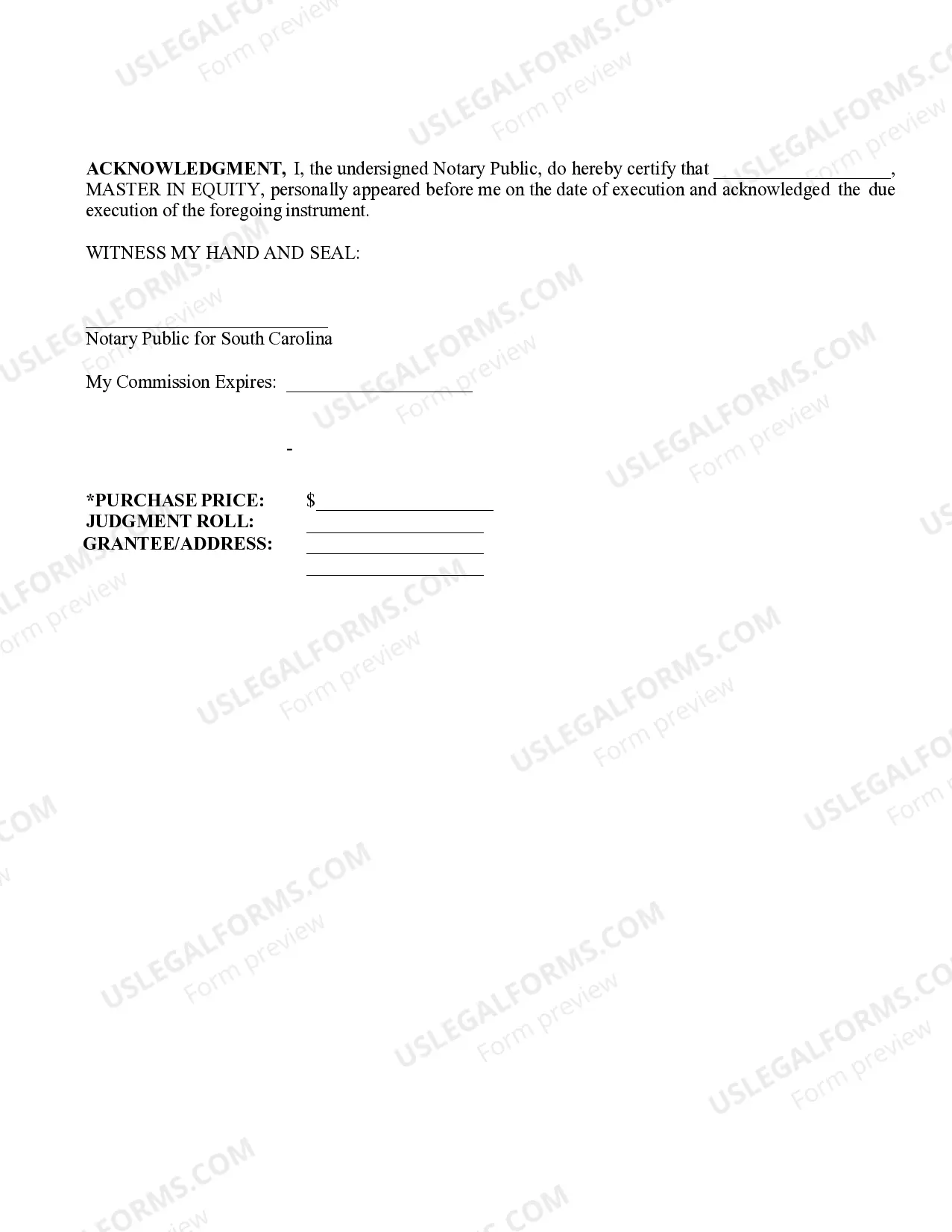
- Have the Master in Equity sign and date the document.
- Complete the notarization section as required by South Carolina law.
Does this form need to be notarized?
Yes, this form must be notarized to be legally valid. US Legal Forms offers integrated online notarization services, available 24/7, ensuring secure and convenient video calls with licensed notaries, which saves time and provides legal equivalence to in-person notarization without the need to travel.
Get your form ready online
Our built-in tools help you complete, sign, share, and store your documents in one place.
Make edits, fill in missing information, and update formatting in US Legal Forms—just like you would in MS Word.
Download a copy, print it, send it by email, or mail it via USPS—whatever works best for your next step.
Sign and collect signatures with our SignNow integration. Send to multiple recipients, set reminders, and more. Go Premium to unlock E-Sign.
If this form requires notarization, complete it online through a secure video call—no need to meet a notary in person or wait for an appointment.
We protect your documents and personal data by following strict security and privacy standards.

Make edits, fill in missing information, and update formatting in US Legal Forms—just like you would in MS Word.

Download a copy, print it, send it by email, or mail it via USPS—whatever works best for your next step.

Sign and collect signatures with our SignNow integration. Send to multiple recipients, set reminders, and more. Go Premium to unlock E-Sign.

If this form requires notarization, complete it online through a secure video call—no need to meet a notary in person or wait for an appointment.

We protect your documents and personal data by following strict security and privacy standards.
Mistakes to watch out for
- Failing to provide an accurate legal description of the property.
- Omitting the purchase price or leaving it blank.
- Not properly completing the notarization section, which can invalidate the deed.
- Neglecting to include the signature of the Master in Equity.
Why complete this form online
- Instant access to a legally vetted template created by licensed attorneys.
- Convenience of completing the form at your own pace without the need for in-person meetings.
- Editable format allows you to customize the document to fit your specific transaction details.
- Secure storage and access to your form as needed, reducing the risk of losing important documents.
Looking for another form?



Form popularity
FAQ
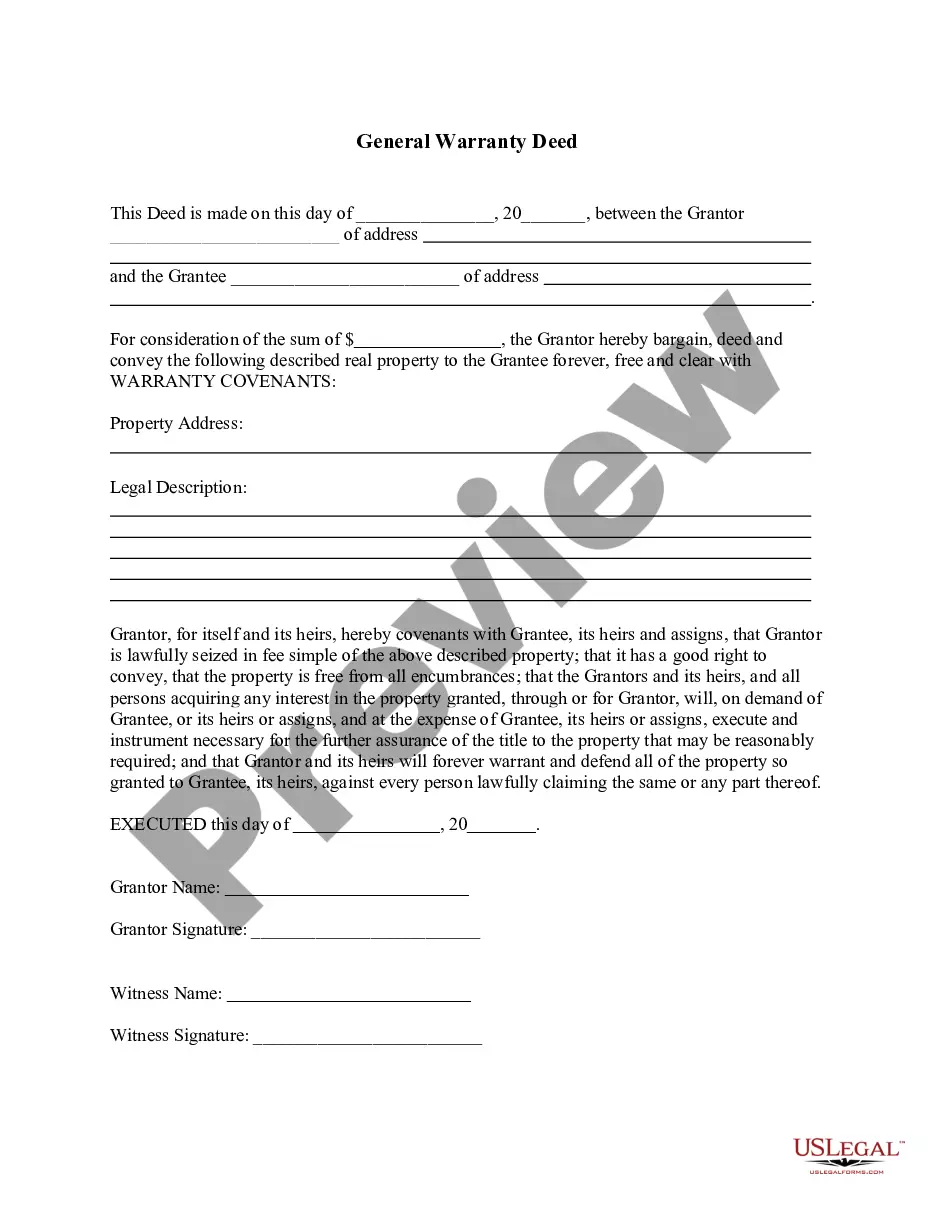
A general warranty deed covers the property's entire history.The general warranty deed assures the buyer they are obtaining full rights of ownership without valid potential legal issues with the title. With a special warranty deed, the guarantee covers only the period when the seller held title to the property.
A warranty deed guarantees that: The grantor is the rightful owner of the property and has the legal right to transfer the title.The title would withstand third-party claims to ownership of the property. The grantor will do anything to ensure the grantee's title to the property.
Non-Warranty Deeds In a Non-Warranty or Quitclaim Deed, the seller merely is giving the buyer whatever rights, if any, that the seller has in the property and the seller makes no warranties of any nature about the seller's rights in the property.
The quitclaim deed, also called a non-warranty deed, offers the grantee the least amount of protection. This type of deed conveys whatever interest the grantor currently has in the property if any.
Quitclaim Deed. Deed of Trust. Warranty Deed. Grant Deed. Bargain and Sale Deed. Mortgage Deed.
DEED: A written instrument by which one party, the Grantor, conveys the title of ownership in property to another party, the Grantee. A Warranty Deed contains promises, called covenants, that the Grantor makes to the Grantee.It is even possible that the Grantor does not have any title or ownership interest at all!
Special warranty deeds are most commonly used with commercial property transactions. Single-family and other residential property transactions will usually use a general warranty deed. Many mortgage lenders insist upon the use of the general warranty deed.
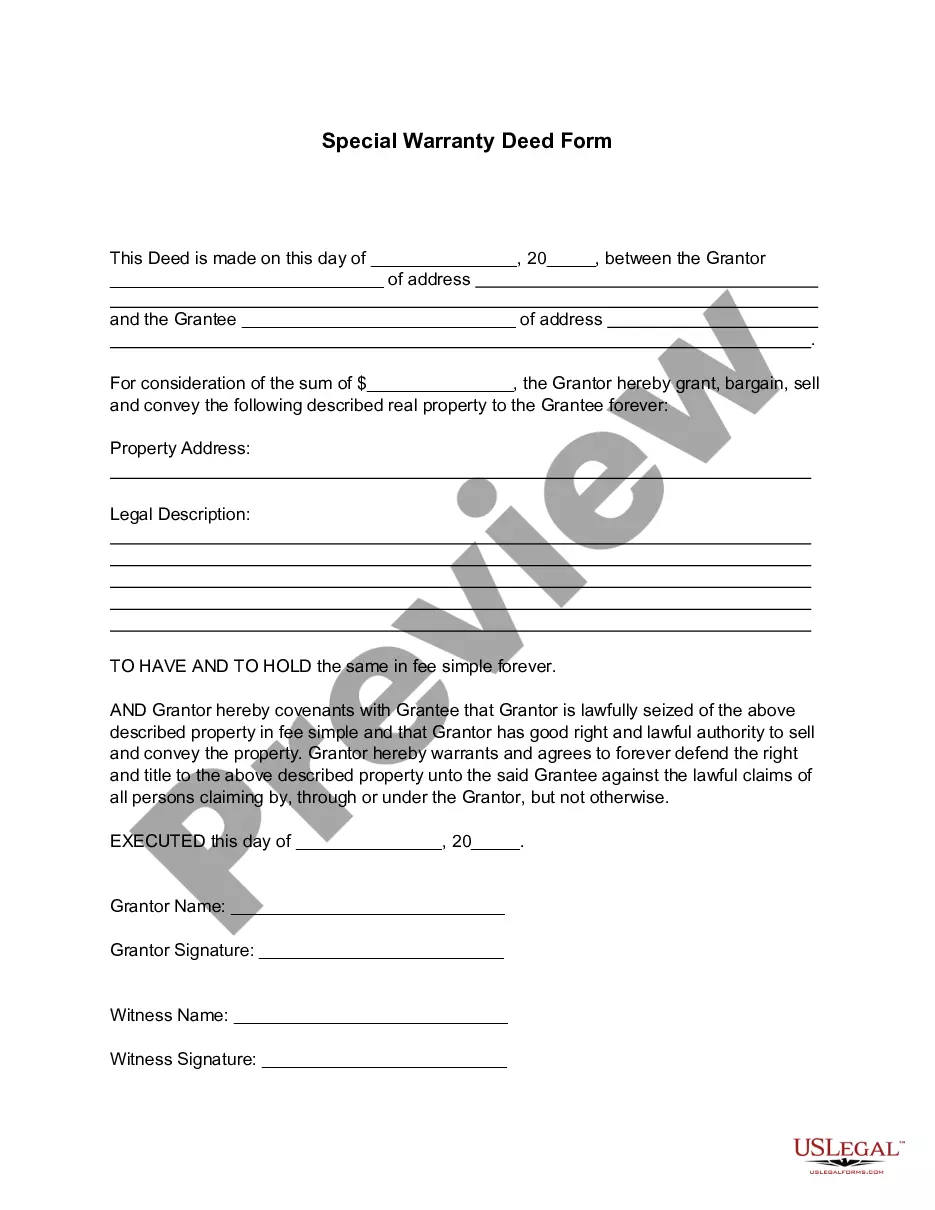
A special warranty deed to real estate offers protection to the buyer through the seller's guarantee that the title has been free and clear of encumbrances during their ownership of the property. It does not guarantee clear title beyond their ownership.
A warranty deed contains a guarantee that the grantor has legal title and rights to the real estate. A quitclaim deed offers little to no protection to the grantee.Warranty deeds ensure that the grantor has the right to sell the property, and guarantees that there are no liens or encumbrances against the land.