Wisconsin Closing Affidavit and Agreement - Buyer
About this form
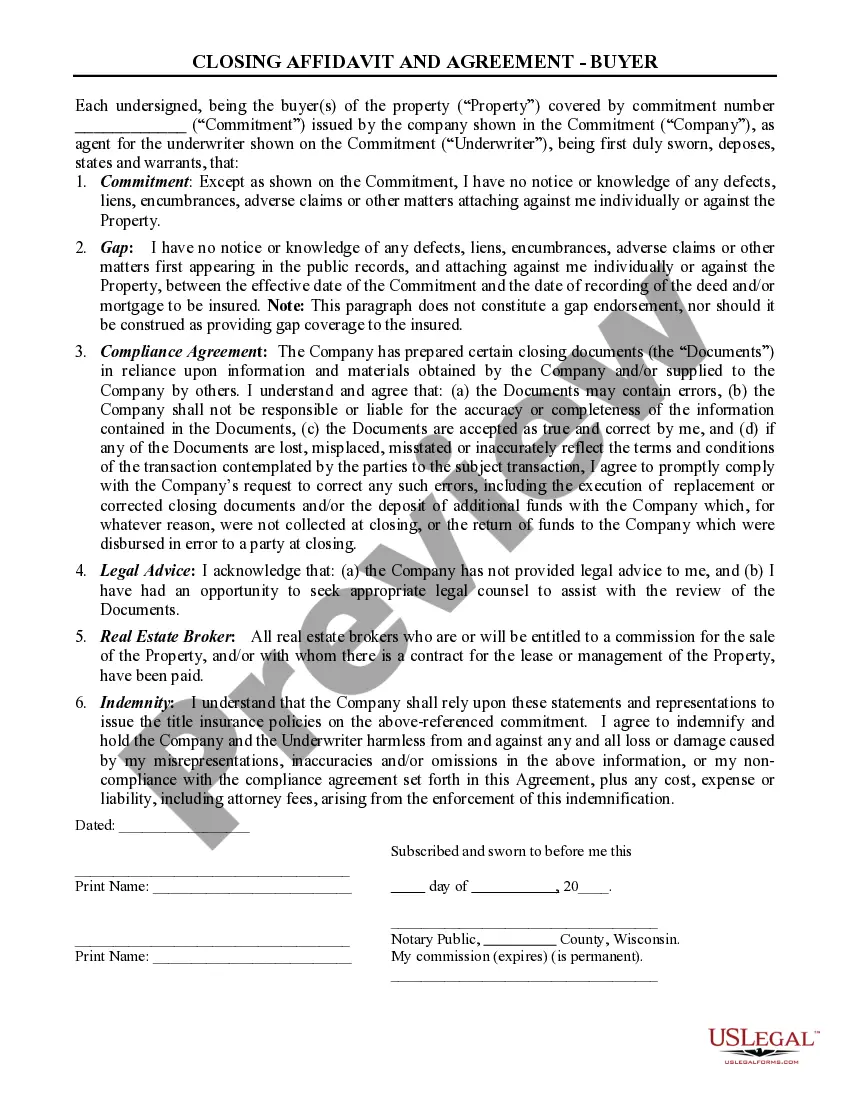
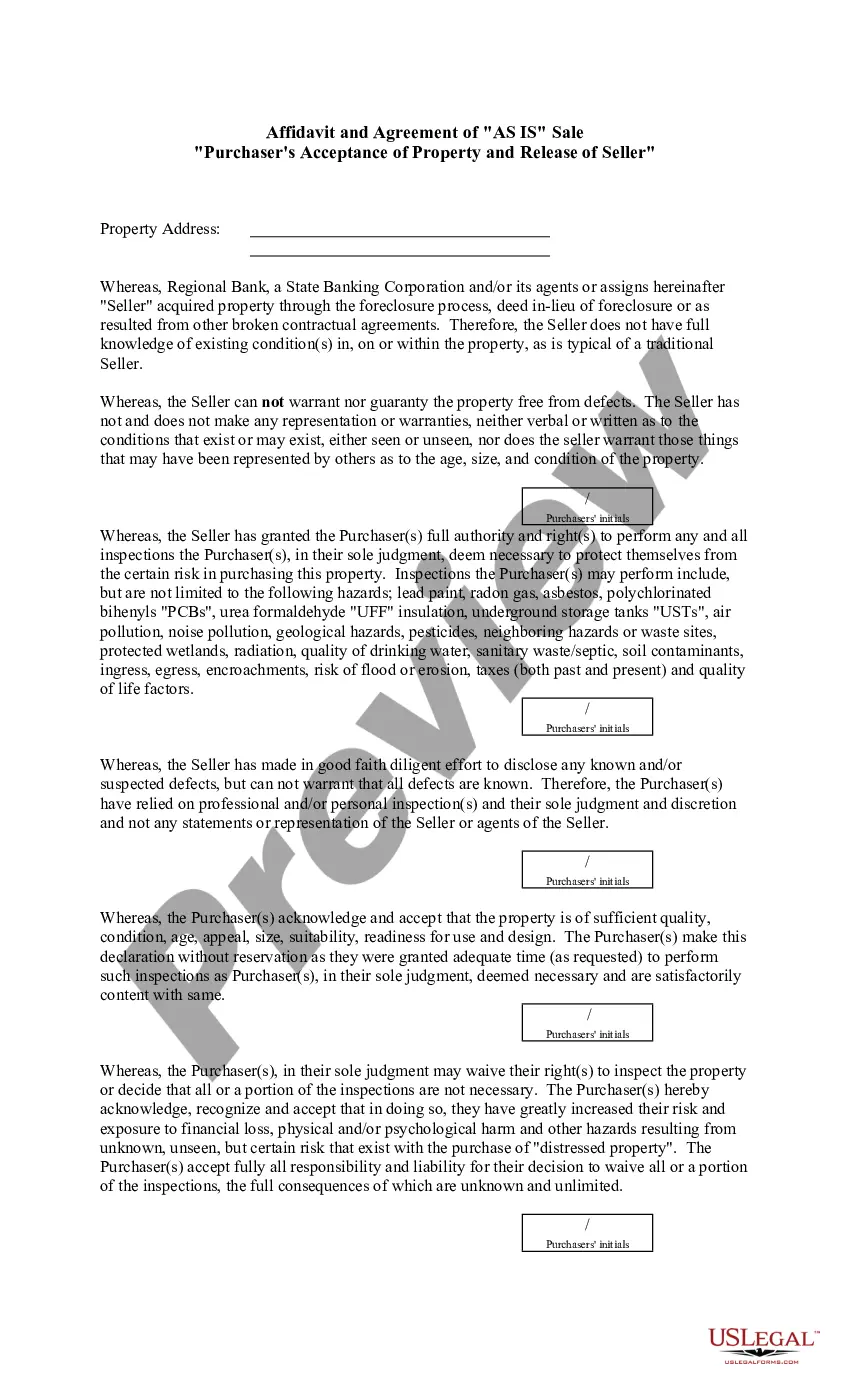
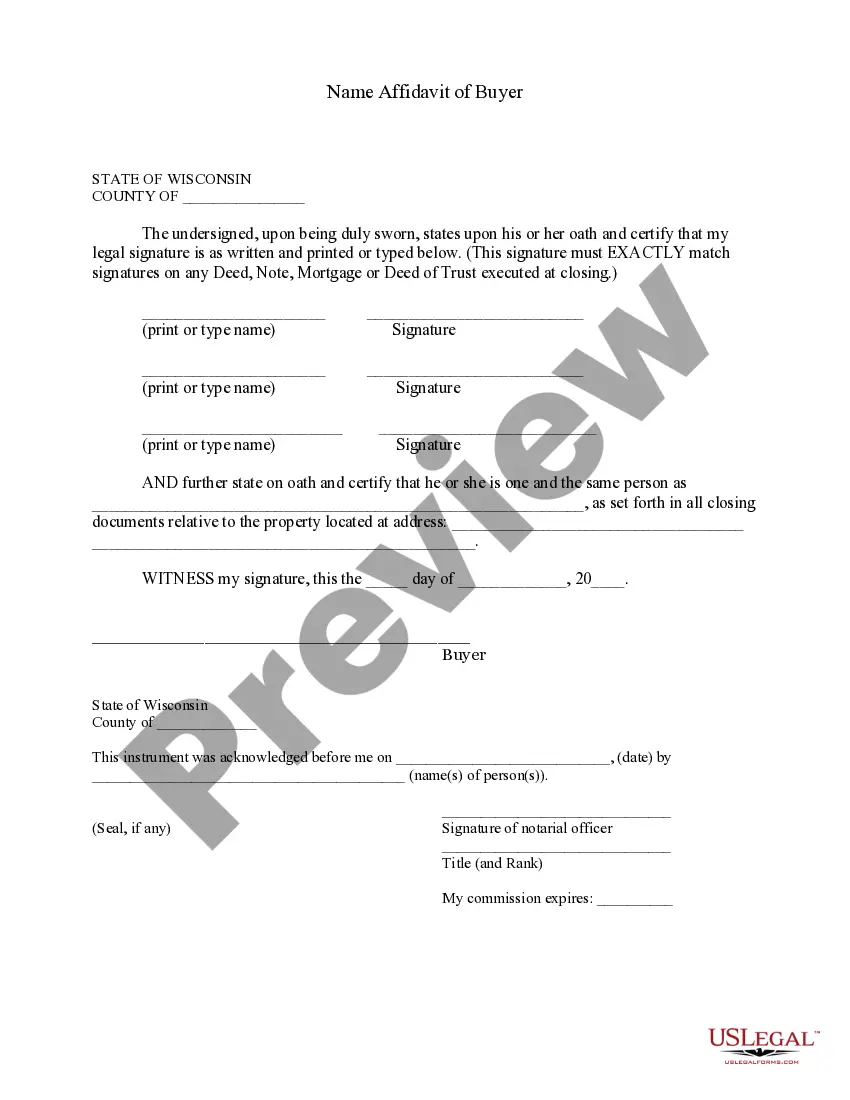
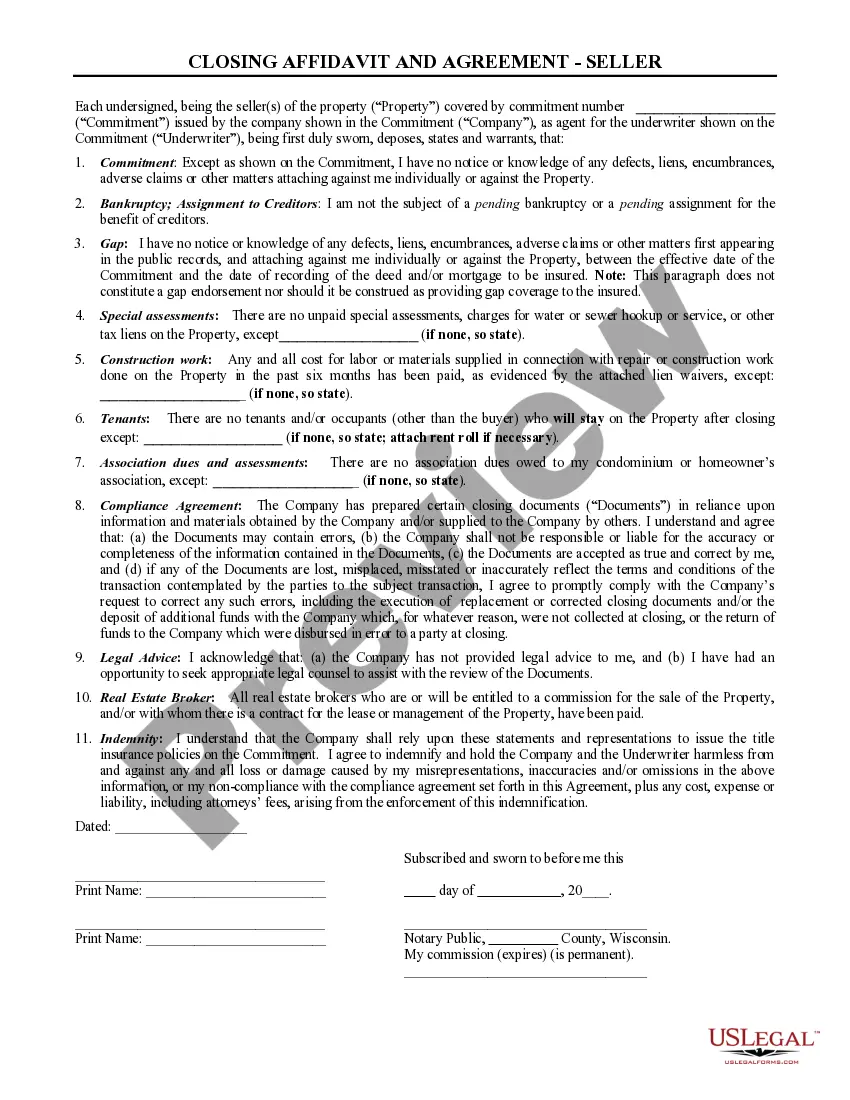
The Closing Affidavit and Agreement - Buyer is a legal document used during a property transaction. This affidavit serves as a sworn statement by the buyer, confirming that there are no known defects, liens, or claims against the property or the buyer prior to the closing of the sale. It differs from similar forms by explicitly addressing the agreement between the buyer and the title insurance company regarding the accuracy of closing documents and the buyerâs indemnification responsibilities.
Key components of this form
- Commitment: A declaration of knowledge regarding defects and claims related to the property.
- Gap: Assurance that no additional issues have arisen since the commitment date.
- Compliance Agreement: Acknowledgment of the reliance on provided information and agreement to correct potential errors.
- Legal Advice: A stipulation that the buyer has not received legal advice and has the opportunity to seek counsel.
- Real Estate Broker: Confirmation that all brokers involved have received their commissions.
- Indemnity: An agreement to hold the title insurance company harmless for any misrepresentations.
Situations where this form applies
This form is typically used during the closing of a real estate transaction when the buyer is finalizing the purchase of a property. It is essential when the buyer wants to affirm that there are no undisclosed issues with the property and to ensure that the closing process proceeds smoothly and legally.
Who needs this form
- Individuals or entities purchasing real estate.
- Real estate investors completing property transactions.
- Buyers working with real estate agents or brokers.
- Any party involved in closing real estate sales who needs to provide indemnification to a title company.
Completing this form step by step
- Identify the parties involved by printing the names of all buyers.
- Reference the commitment number issued by the title company.
- Review the sections on defects or claims and provide necessary disclosures.
- Complete the date fields accurately where indicated.
- Sign the affidavit in front of a notary public to validate the document.
Is notarization required?
Yes, this form must be notarized to be legally valid. US Legal Forms offers integrated online notarization services that are available 24/7. This allows you to notarize the affidavit easily through a secure video call without the need to travel.
Get your form ready online
Our built-in tools help you complete, sign, share, and store your documents in one place.
Make edits, fill in missing information, and update formatting in US Legal Forms—just like you would in MS Word.
Download a copy, print it, send it by email, or mail it via USPS—whatever works best for your next step.
Sign and collect signatures with our SignNow integration. Send to multiple recipients, set reminders, and more. Go Premium to unlock E-Sign.
If this form requires notarization, complete it online through a secure video call—no need to meet a notary in person or wait for an appointment.
We protect your documents and personal data by following strict security and privacy standards.

Make edits, fill in missing information, and update formatting in US Legal Forms—just like you would in MS Word.

Download a copy, print it, send it by email, or mail it via USPS—whatever works best for your next step.

Sign and collect signatures with our SignNow integration. Send to multiple recipients, set reminders, and more. Go Premium to unlock E-Sign.

If this form requires notarization, complete it online through a secure video call—no need to meet a notary in person or wait for an appointment.

We protect your documents and personal data by following strict security and privacy standards.
Common mistakes to avoid
- Failing to disclose known defects, liens, or encumbrances.
- Not completing all required fields before the closing.
- Forgetting to have the document notarized, if applicable.
- Providing inaccurate information that could lead to liabilities.
Why use this form online
- Convenient access to the form from anywhere, saving time and effort.
- Editable templates that allow users to customize their information easily.
- Reliability of documents drafted by licensed attorneys ensures legal compliance.
- Ability to instantly download and print the form for immediate use.
Looking for another form?
Form popularity
FAQ
Under Wisconsin law, land contracts are a seller-financing alternative to a traditional mortgage. Land contracts are often used for the sale of property to a family member. We also see land contracts being used occasionally for the sale of vacant land.
As an alternative to traditional financing, a land contract, also known as a contract for deed, is a legal agreement in which the real estate seller agrees to finance all or a portion of the purchase of the property rather than the buyer obtaining traditional bank financing.
Disadvantage #1: The title does not automatically pass to the purchaser in a land contract. Disadvantage #2: The seller could be held legally responsible for inspection issues with local or state authorities. Disadvantage #3: Forfeiture of a land contract by the purchaser is a fairly common occurrence.
How much earnest money is required in Wisconsin? There isn't any kind of legal requirement when it comes to how much earnest money to put down in Wisconsin, but most sellers will want to see at least 1 percent of the purchase price.
A land contract is a way to buy and sell real estate without involving a bank or other third-party lender. The seller finances the purchase, the buyer pays for it in installments and the title remains in the seller's hands until the loan is paid in full.
Pros And Cons Of A Land Contract Pro: It's Easier To Get Financing.Pro: It's A Win-Win For Sellers.Con: The Buyer Depends On The Seller.Con: Contract Vagueness.Con: Higher Interest Rates.Con: Homeownership Gray Area.