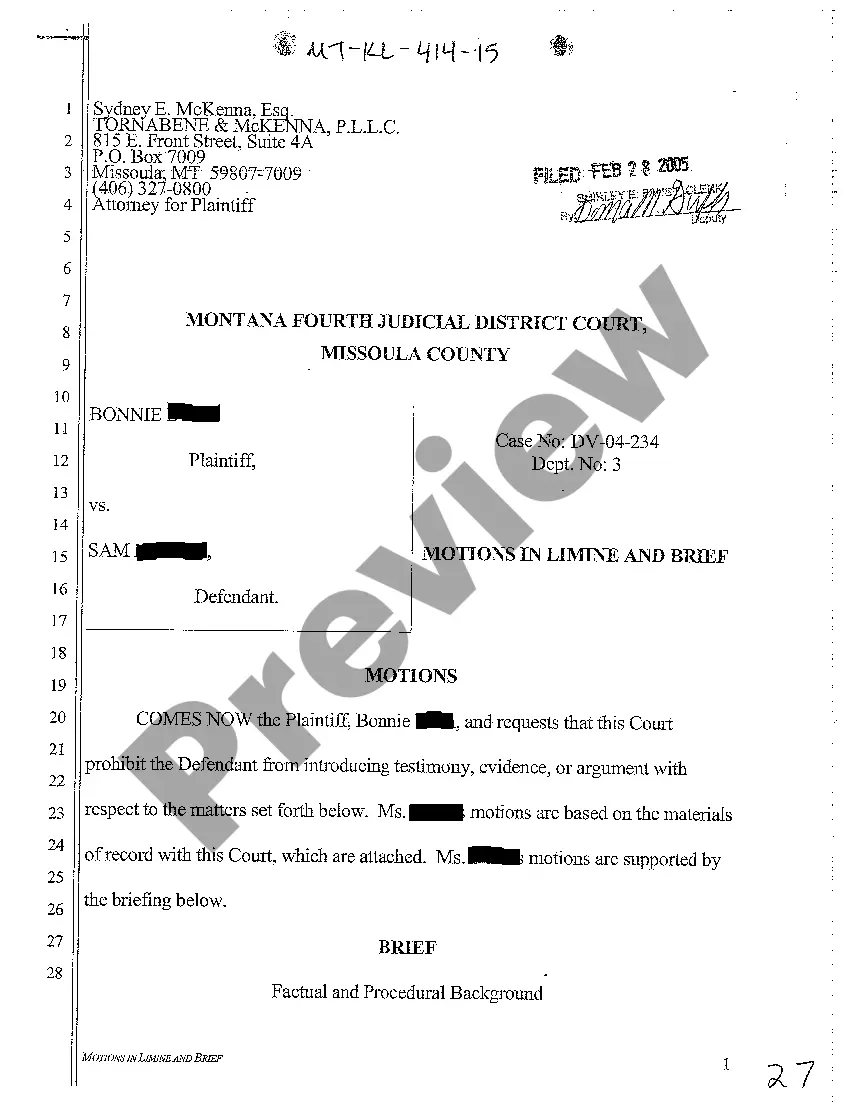
Short-Term Incentive Plan
What is this form?
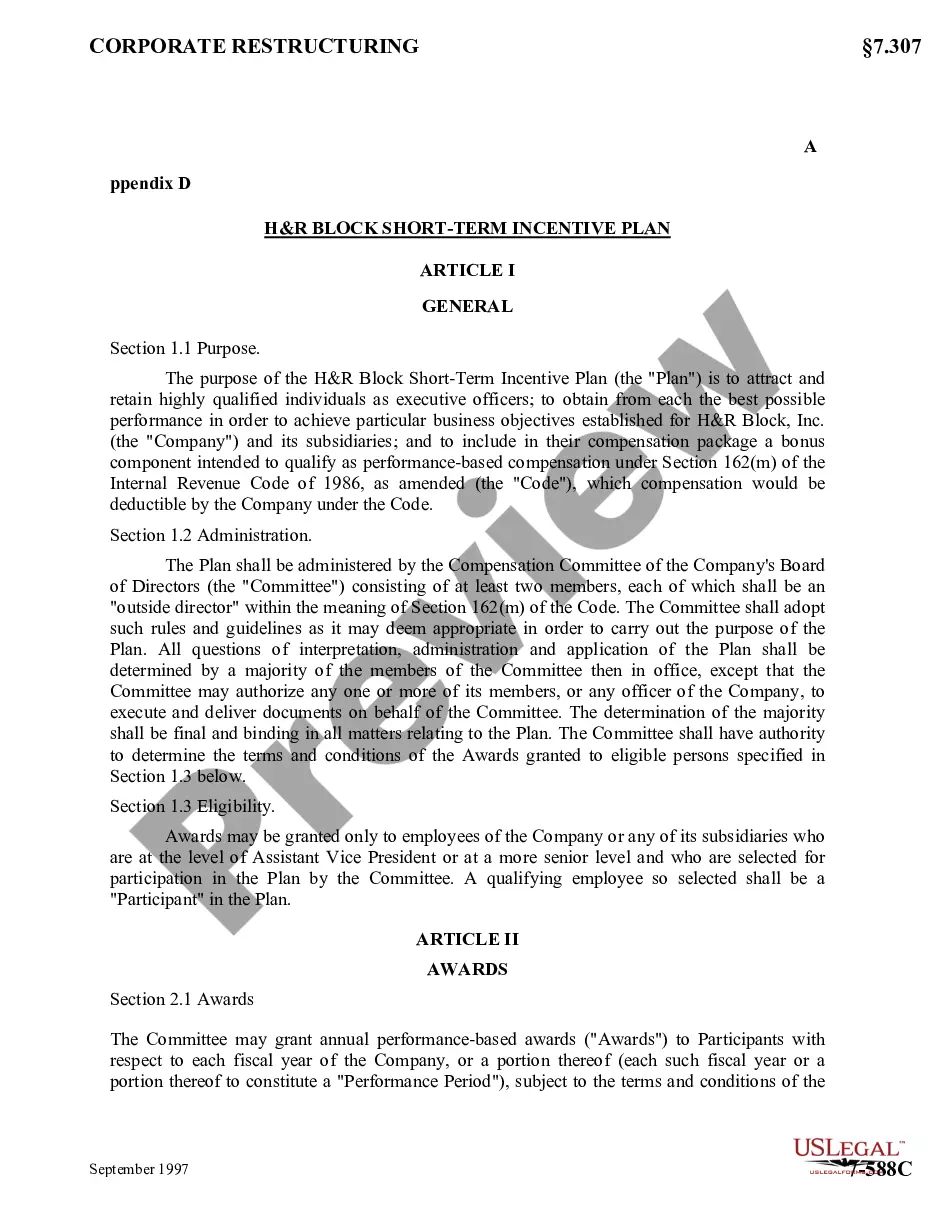
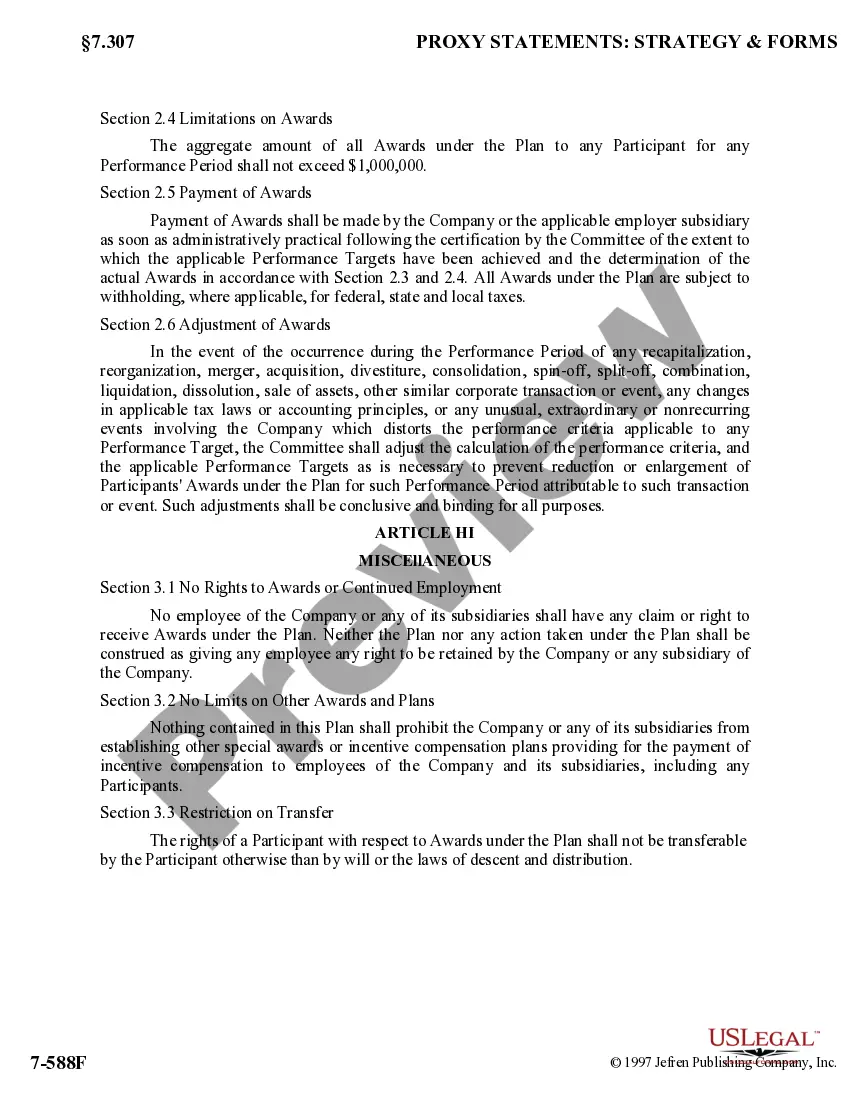
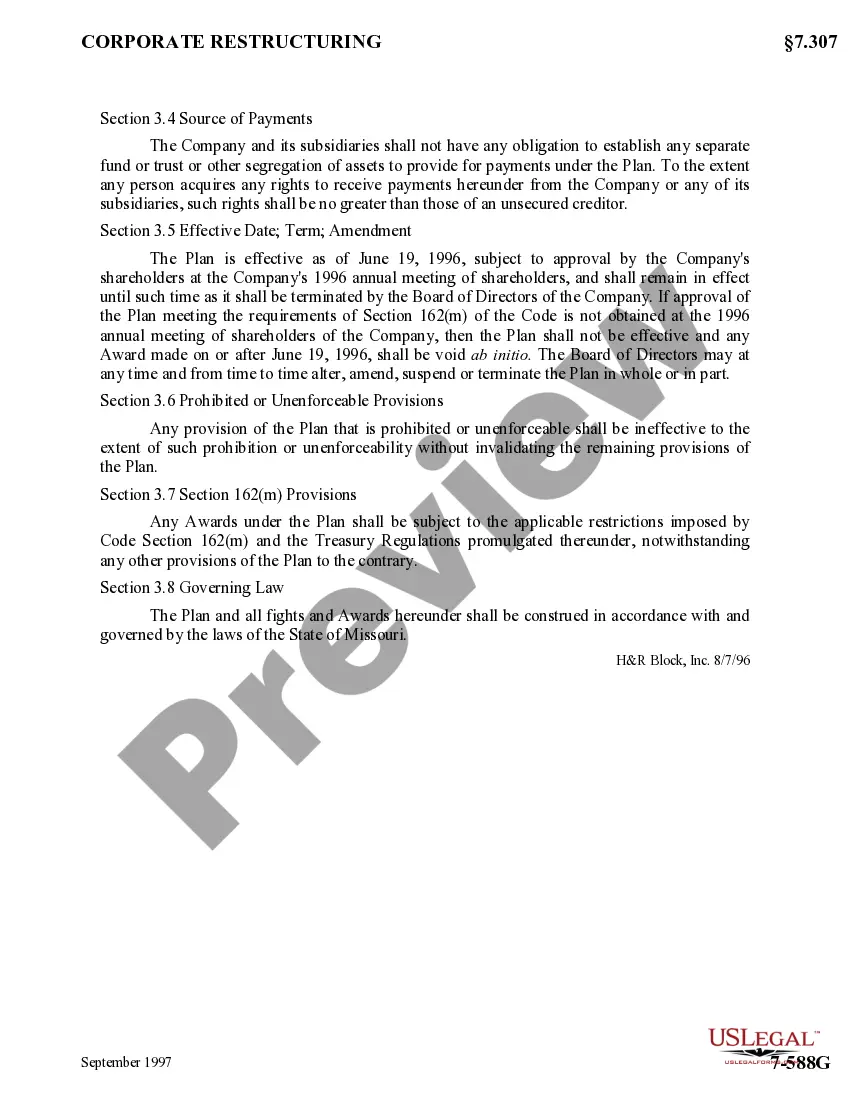
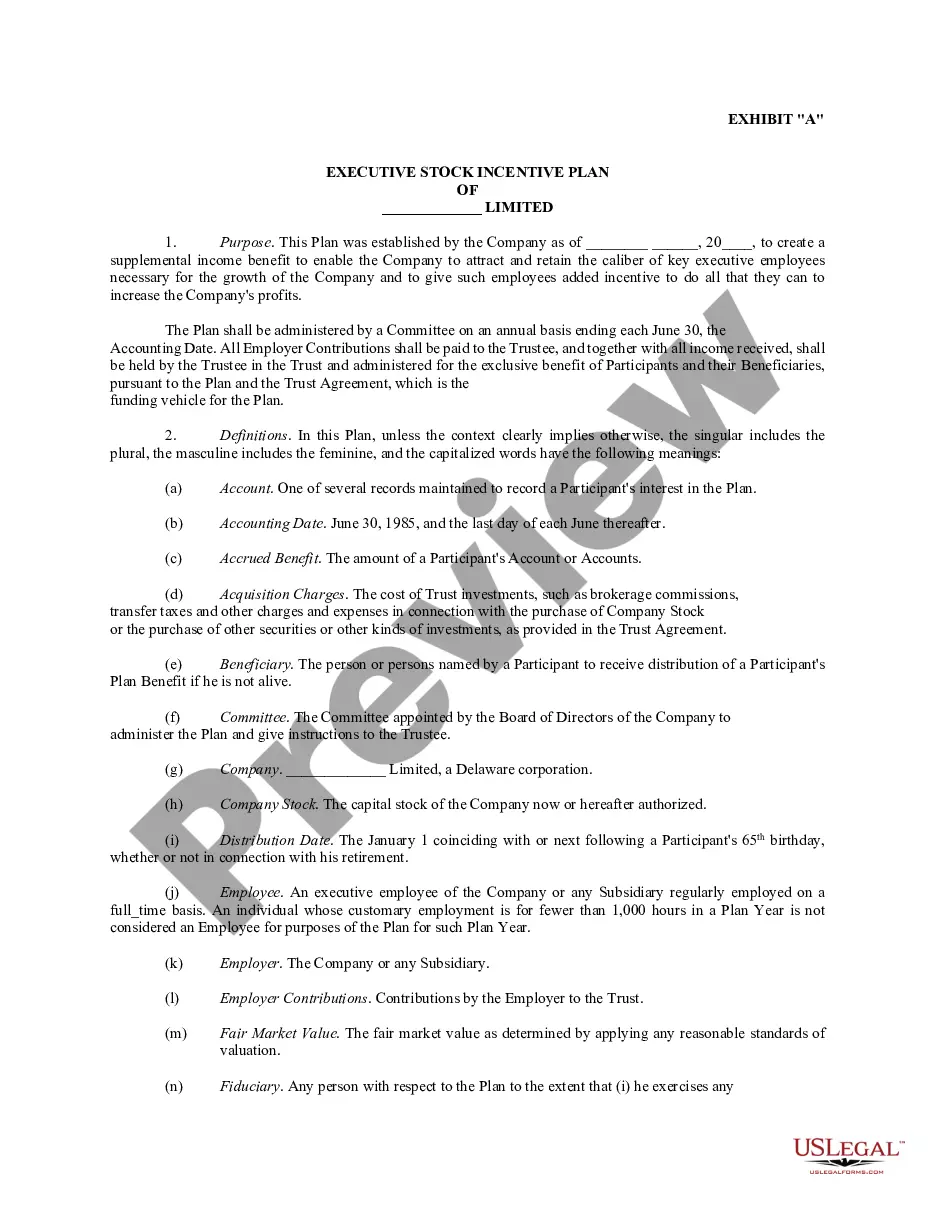
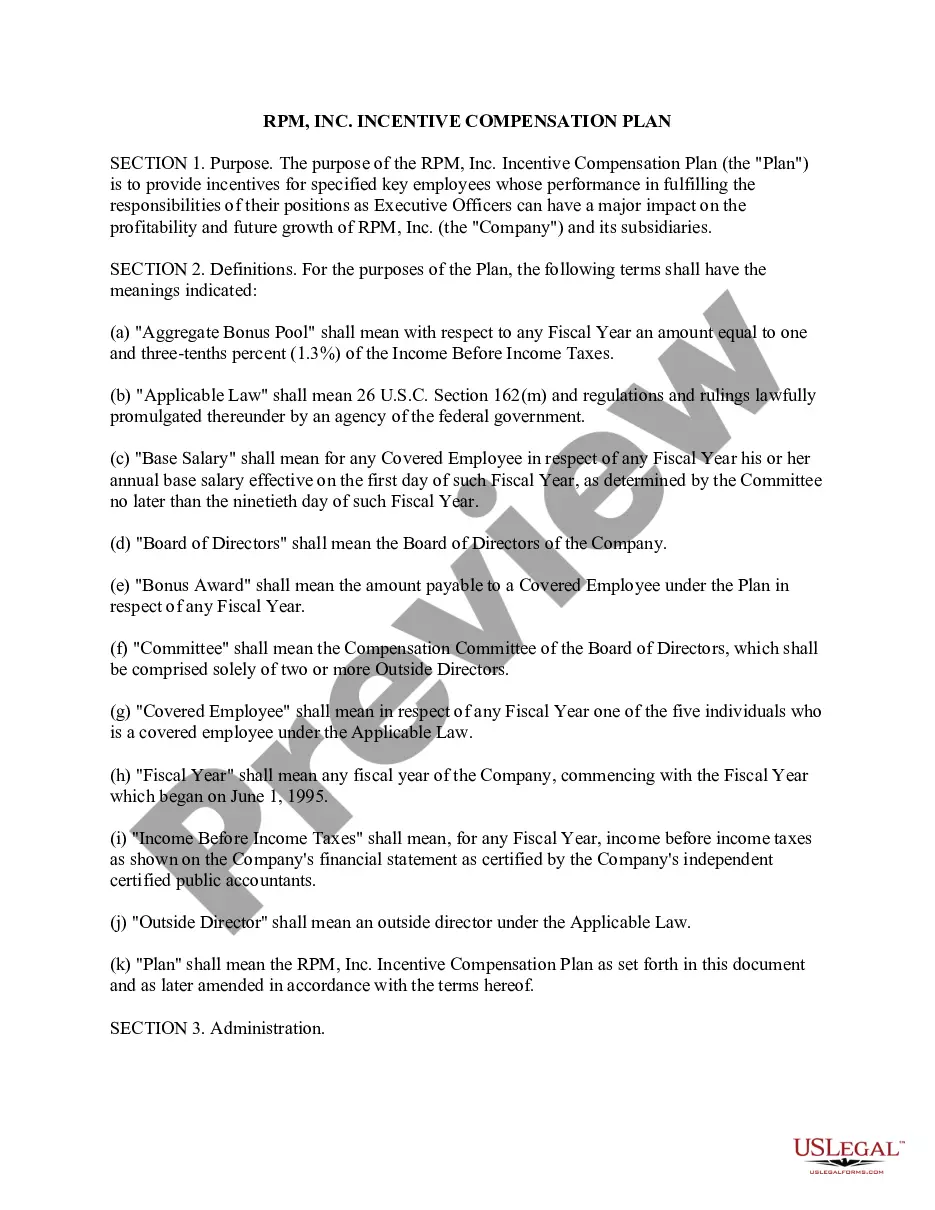
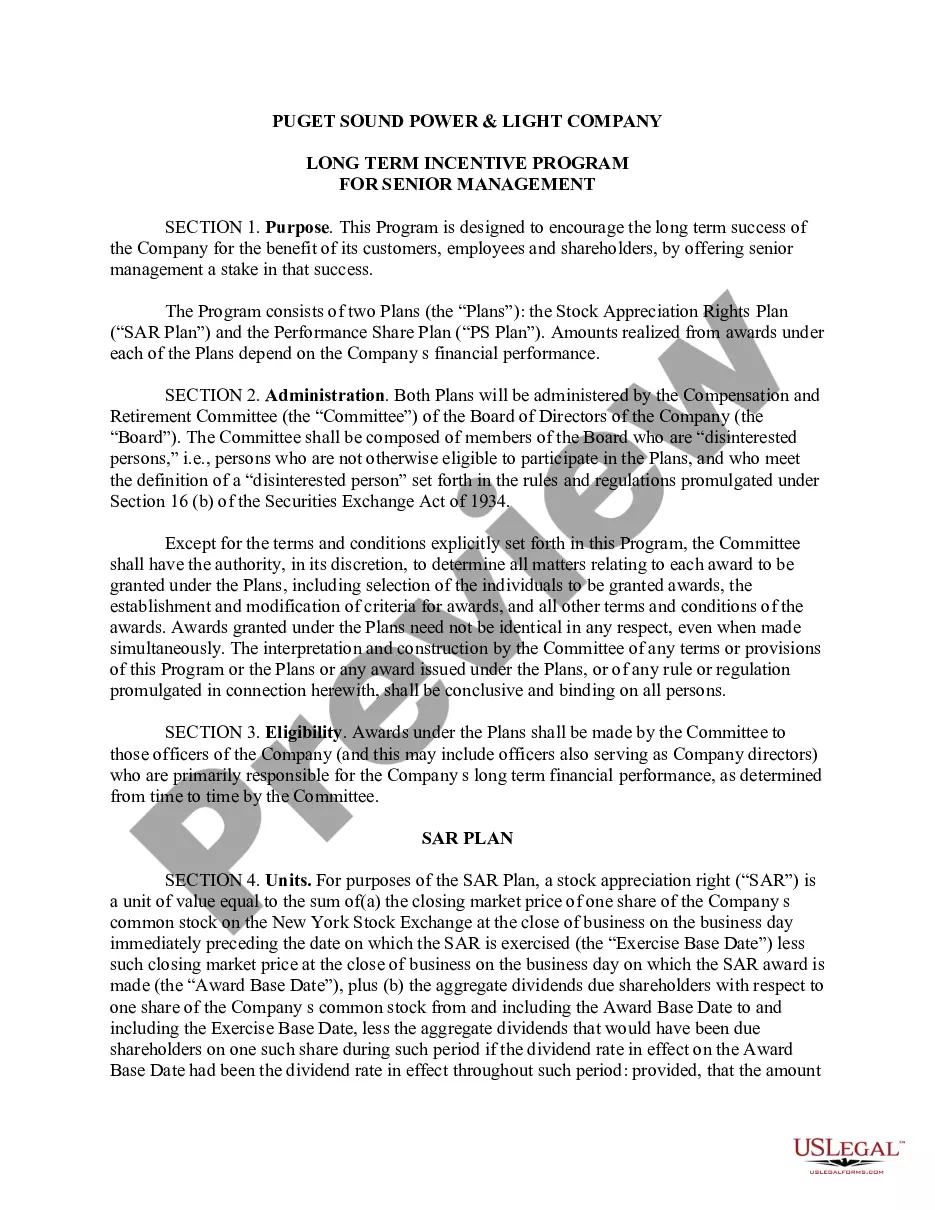
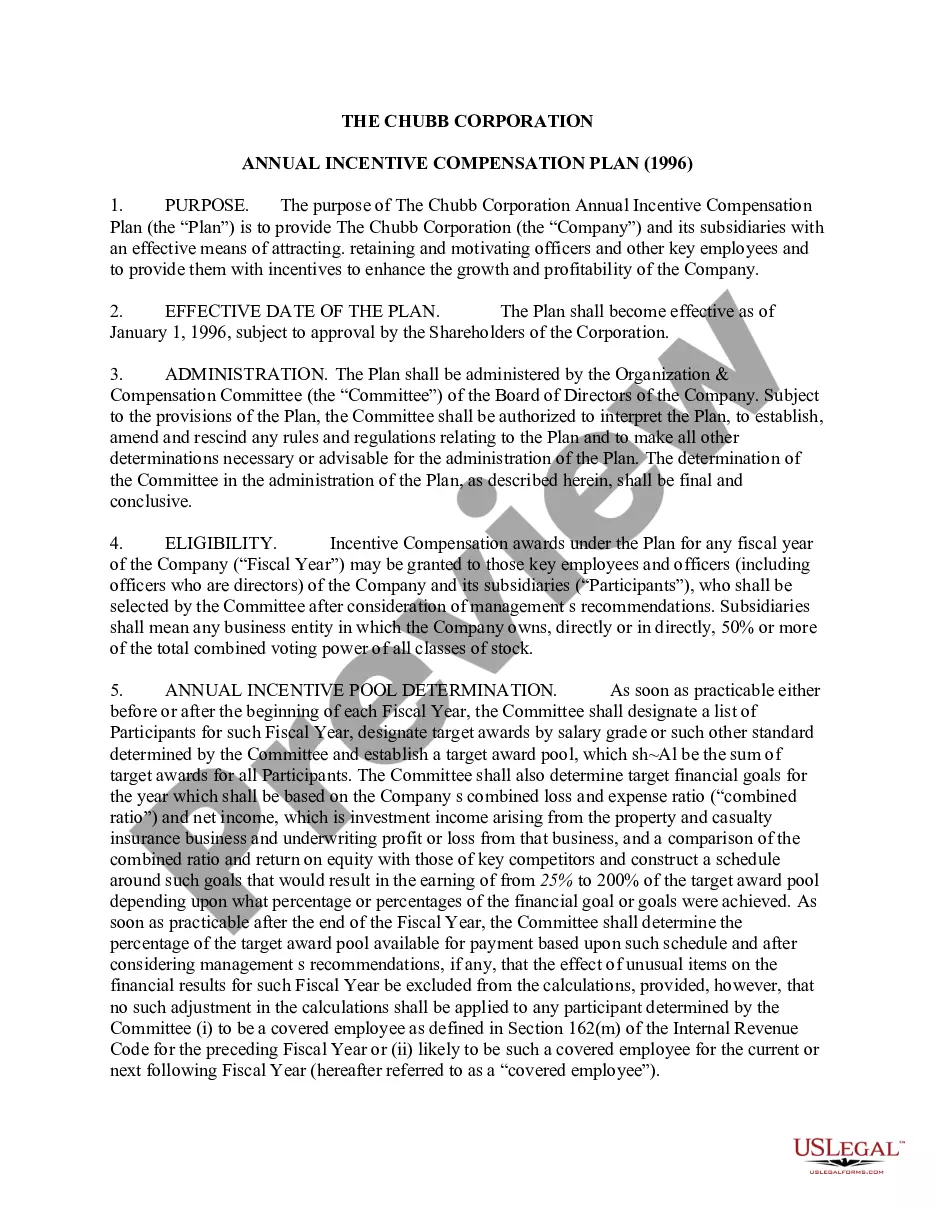
The Short-Term Incentive Plan is a legal document designed for corporations to establish a structured performance-based compensation program for executives. This plan outlines the criteria for awarding bonuses based on specific performance goals and targets, differentiating it from other forms of compensation by aligning rewards directly with company performance metrics. It is essential for attracting and retaining top executive talent while adhering to tax regulations under the Internal Revenue Code.
Key components of this form
- Purpose: Establishes goals for executive performance and outlines bonus eligibility.
- Eligibility: Defines which employees qualify for awards, typically executives at the Assistant Vice President level or higher.
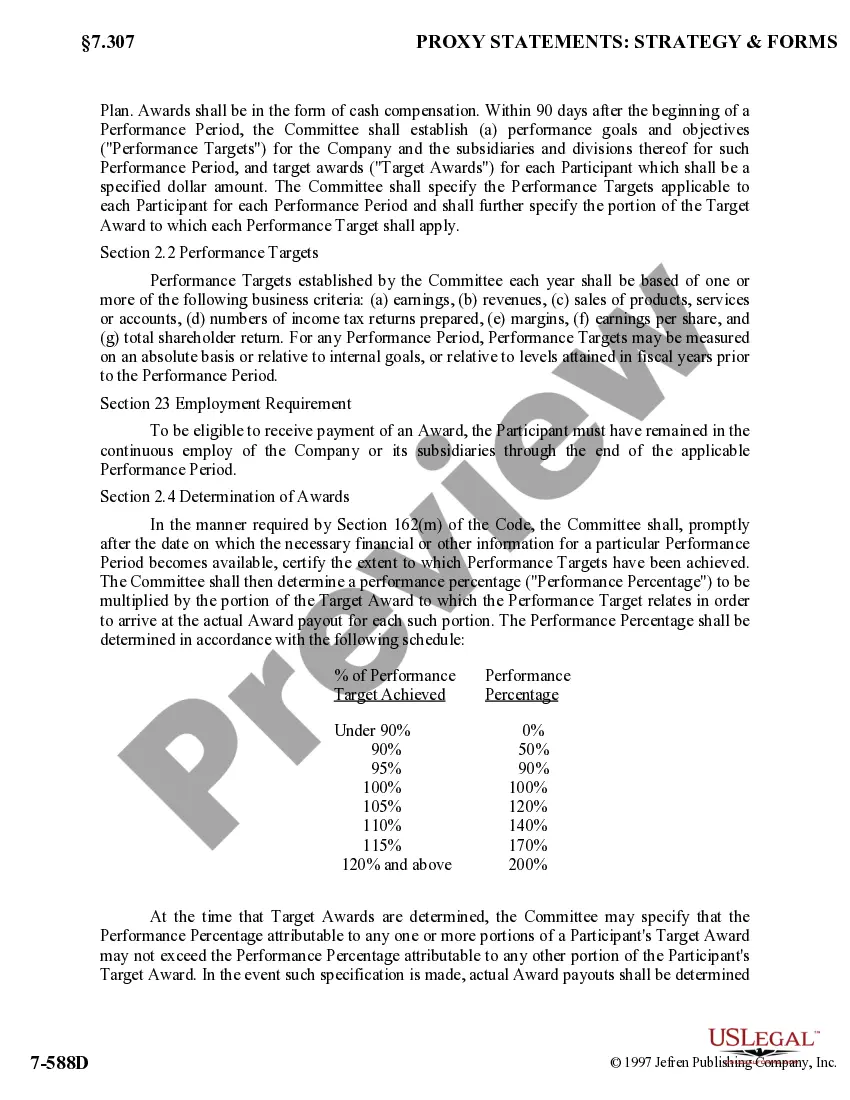
- Awards Structure: Describes the annual performance-based awards and specifies how they are calculated.
- Performance Targets: Lists the criteria used to assess executive performance, such as earnings and total shareholder return.
- Payment Terms: Details when and how awards are paid out following performance evaluation.
Common use cases
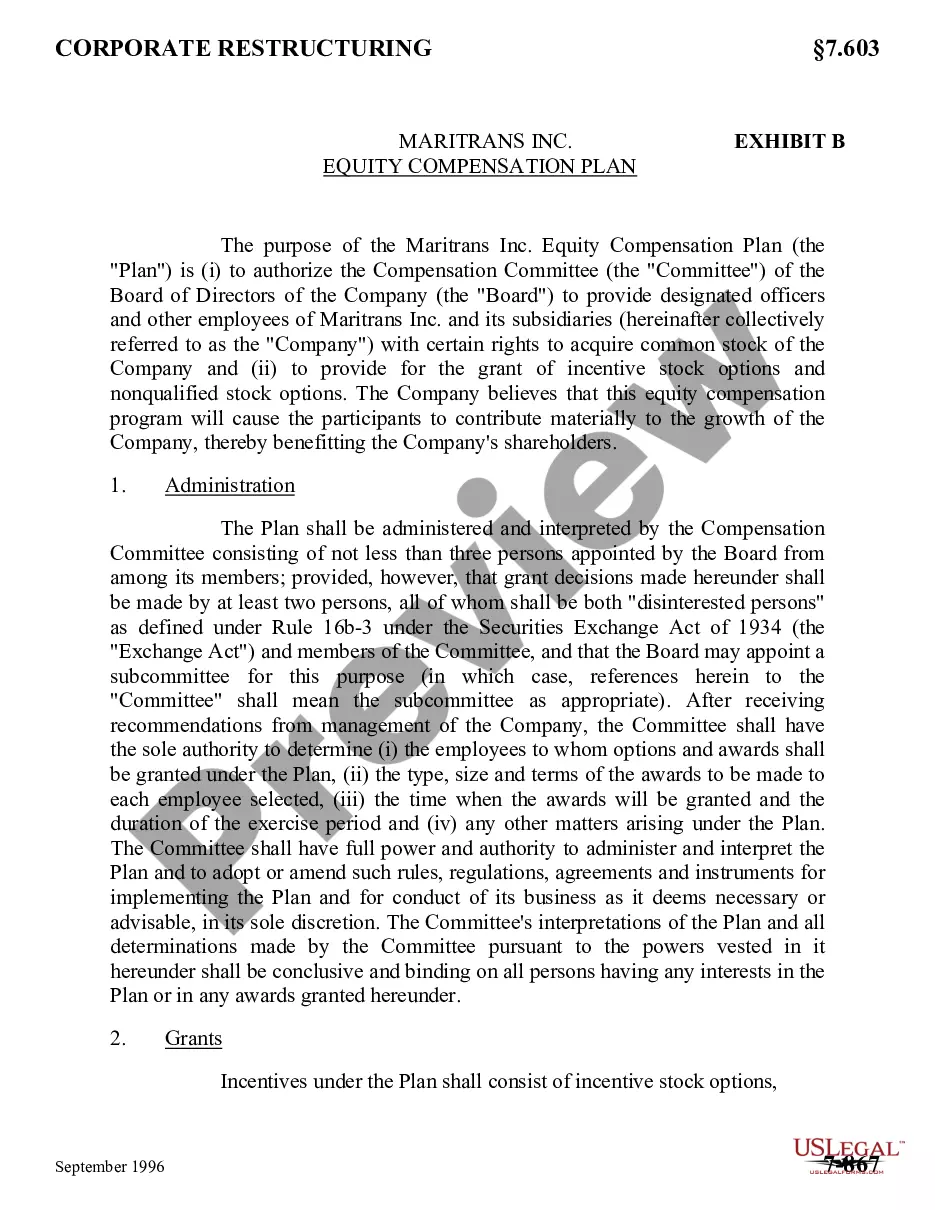
This form is used when a company seeks to implement a short-term incentive plan for its executives. It is particularly beneficial during annual compensation reviews, when a company is looking to boost morale and motivation through performance-based incentives, or when aligning executive compensation with corporate performance objectives.
Who this form is for
- Corporations planning to introduce a short-term incentive program.
- Human Resource departments responsible for managing executive compensation.
- Compensation Committees within a company's Board of Directors.
Steps to complete this form
- Identify the organization and its subsidiaries eligible under the plan.
- Determine the executive positions that meet the eligibility criteria.
- Establish performance targets for the relevant performance period.
- Outline the structure of awards in terms of cash compensation and target amounts.
- Set guidelines for the Compensation Committee's role and authority regarding the plan.
Does this document require notarization?
This form does not typically require notarization to be legally valid. However, some jurisdictions or document types may still require it. US Legal Forms provides secure online notarization powered by Notarize, available 24/7 for added convenience.
Get your form ready online
Our built-in tools help you complete, sign, share, and store your documents in one place.
Make edits, fill in missing information, and update formatting in US Legal Forms—just like you would in MS Word.
Download a copy, print it, send it by email, or mail it via USPS—whatever works best for your next step.
Sign and collect signatures with our SignNow integration. Send to multiple recipients, set reminders, and more. Go Premium to unlock E-Sign.
If this form requires notarization, complete it online through a secure video call—no need to meet a notary in person or wait for an appointment.
We protect your documents and personal data by following strict security and privacy standards.

Make edits, fill in missing information, and update formatting in US Legal Forms—just like you would in MS Word.

Download a copy, print it, send it by email, or mail it via USPS—whatever works best for your next step.

Sign and collect signatures with our SignNow integration. Send to multiple recipients, set reminders, and more. Go Premium to unlock E-Sign.

If this form requires notarization, complete it online through a secure video call—no need to meet a notary in person or wait for an appointment.

We protect your documents and personal data by following strict security and privacy standards.
Common mistakes
- Not clearly defining performance targets, leading to inconsistent evaluation.
- Failing to include all eligible employees in the application of the plan.
- Overlooking tax regulations that could affect the deductibility of awards.
Why use this form online
- Convenience of downloading and customizing the form to meet specific corporate needs.
- Access to templates drafted by licensed attorneys, ensuring legal compliance.
- Editability allows organizations to adjust the plan structure as required.
Legal use & context
- Ensures that performance-based compensation complies with Section 162(m) of the Internal Revenue Code.
- Provides a structured approach for determining executive awards based on quantifiable performance metrics.
What to keep in mind
- The Short-Term Incentive Plan is essential for linking executive pay to performance.
- Clear eligibility criteria and performance metrics are crucial for plan effectiveness.
- Annual reviews and adjustments are necessary to keep the plan relevant and compliant.
Looking for another form?



Form popularity
FAQ
The Short-Term Incentive Plan is a legal document designed for corporations to establish a structured, performance-based compensation program for executives. It sets the criteria for awarding bonuses based on specific performance goals and targets, aligning rewards directly with company results. The plan supports attracting and retaining talent and helps ensure compensation complies with tax rules under the Internal Revenue Code.
Examples of short-term incentive plans typically include annual performance-based bonuses tied to metrics such as earnings, revenue, or total shareholder return. The plan also defines eligibility (often executives at the Assistant Vice President level or higher), how awards are calculated, and when payouts occur after performance evaluations.
The plan awards annual performance-based bonuses calculated under the Awards Structure. Eligible executives earn increases based on defined Performance Targets, and the resulting bonuses are paid after the performance evaluation following the Payment Terms specified in the document. For example, earnings or total shareholder return may drive the calculation, and payouts occur on a set schedule after evaluation.
STI refers to a structured, annual performance-based bonus program established by the Short-Term Incentive Plan. It is not an ad hoc payment; rather, it follows defined eligibility, performance targets, and payment terms to award bonuses based on measured results over a given period.
The most common type is an annual, performance-based incentive plan tied to executive performance metrics. This Short-Term Incentive Plan uses annual performance targets and a defined payout schedule, helping align executive rewards with yearly company results. It contrasts with longer-term plans that focus on multi-year aims and vesting.
This plan concentrates on annual performance-based awards with clearly defined targets and payment timing, rather than multi-year performance criteria or vesting schedules. Eligibility is described as executives at or above the Assistant Vice President level, making it distinct within the corporate compensation framework.