Executive Employee Stock Incentive Plan
What is this form?
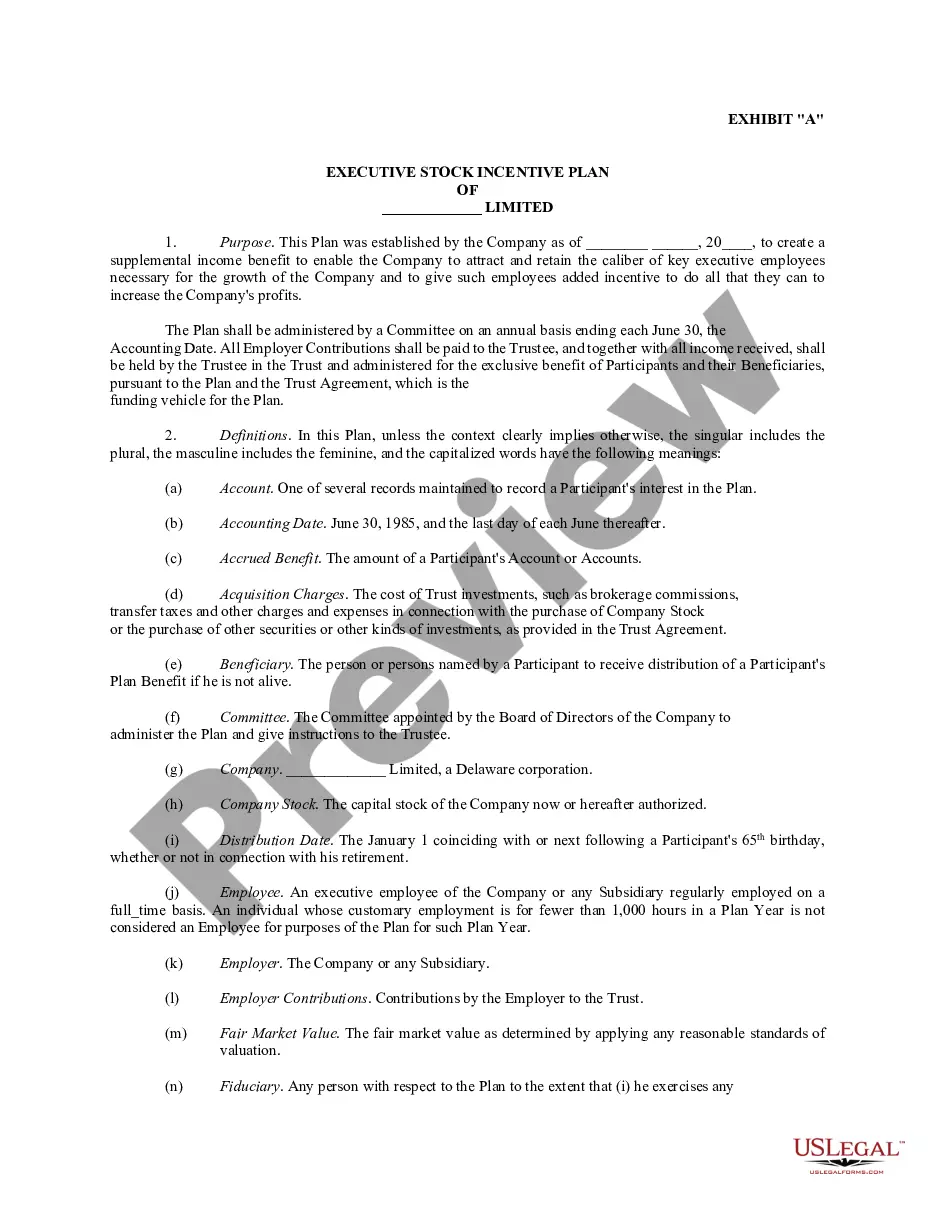
The Executive Employee Stock Incentive Plan is a document designed to provide a structured way for companies to offer stock options or bonuses to their key executive employees. This form establishes a framework that helps attract and retain the best talent by offering them a financial stake in the company's success. Unlike regular employment contracts, this plan focuses specifically on stock incentives as a means to enhance employee motivation and loyalty while supporting the company's growth objectives.
Key parts of this document
- Purpose: Defines the plan's aim to provide supplemental income to retain key executives.
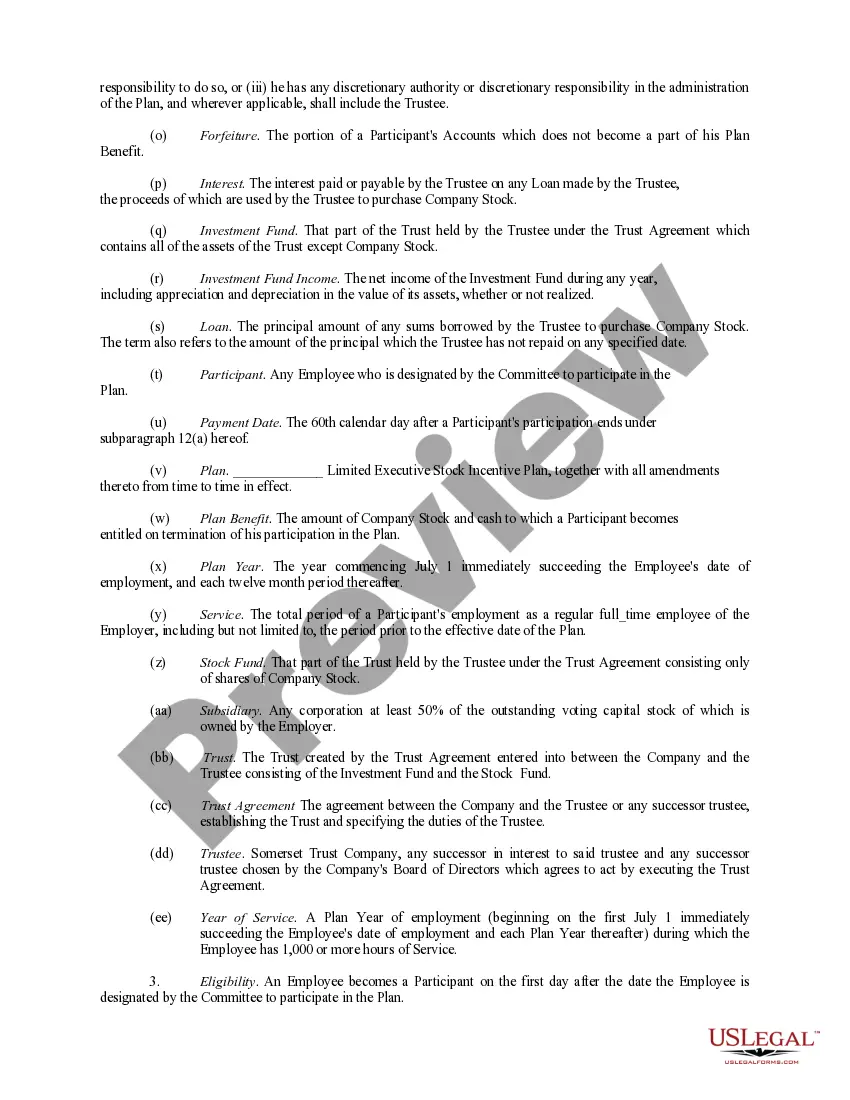
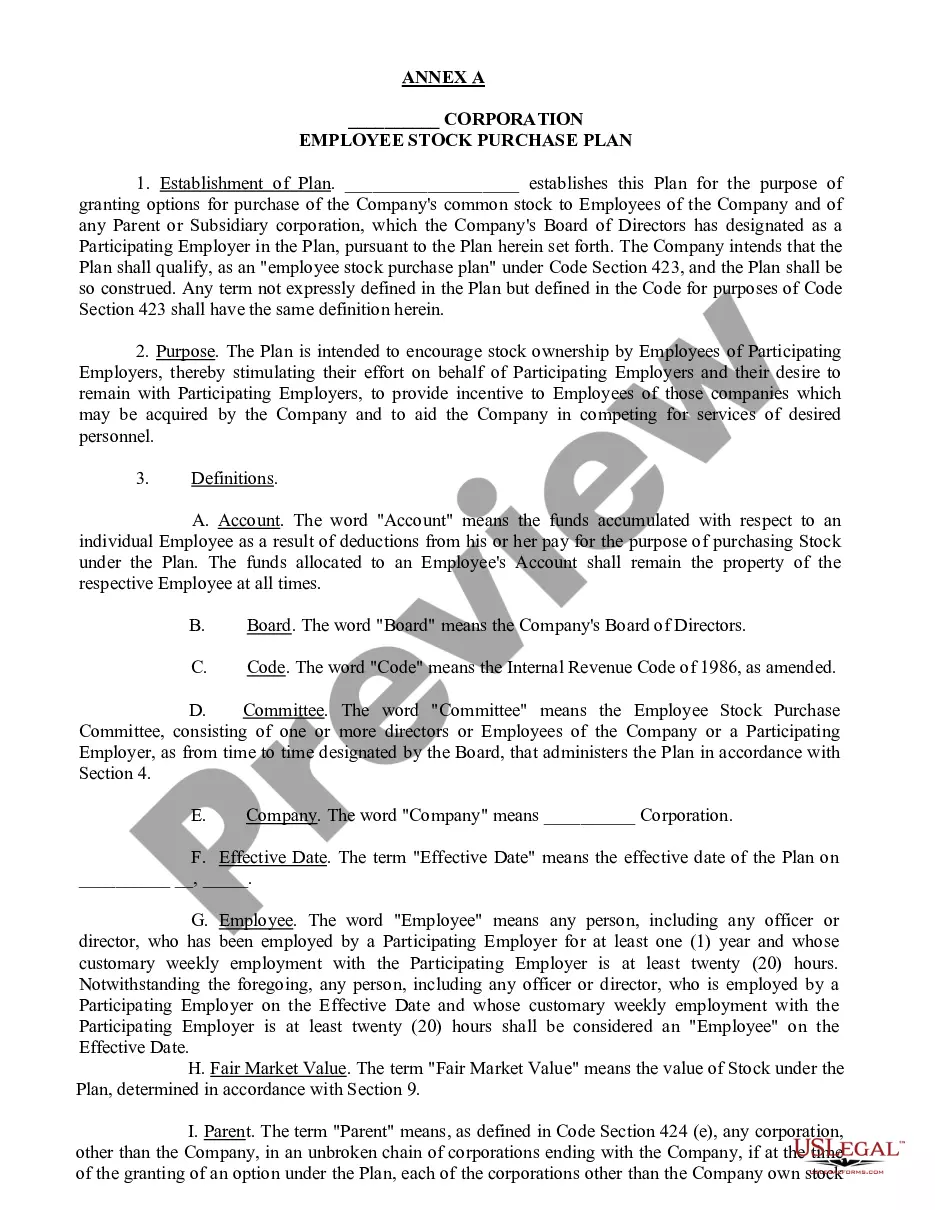
- Definitions: Clarifies important terms used within the plan, including "Participant," "Employer Contributions," and "Trustee."
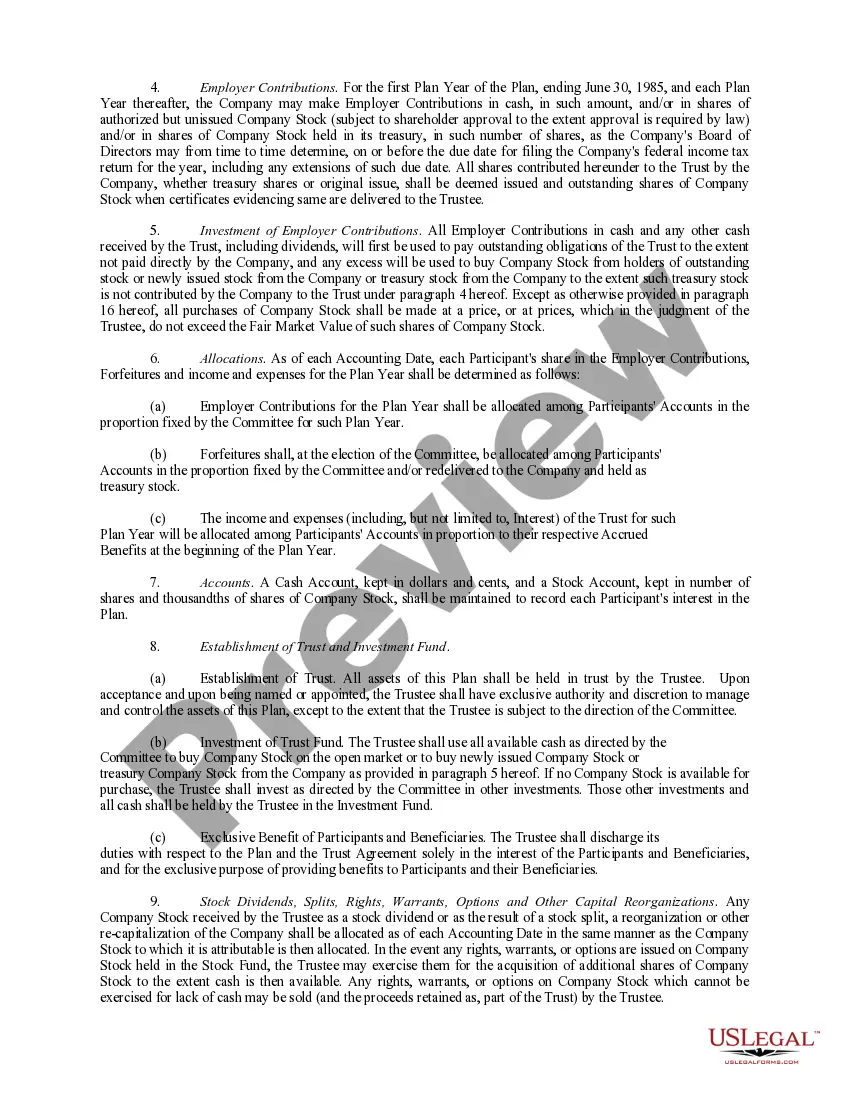
- Employer Contributions: Outlines how the company will contribute to the plan in cash or stock.
- Eligibility: Specifies which employees are entitled to participate in the plan.
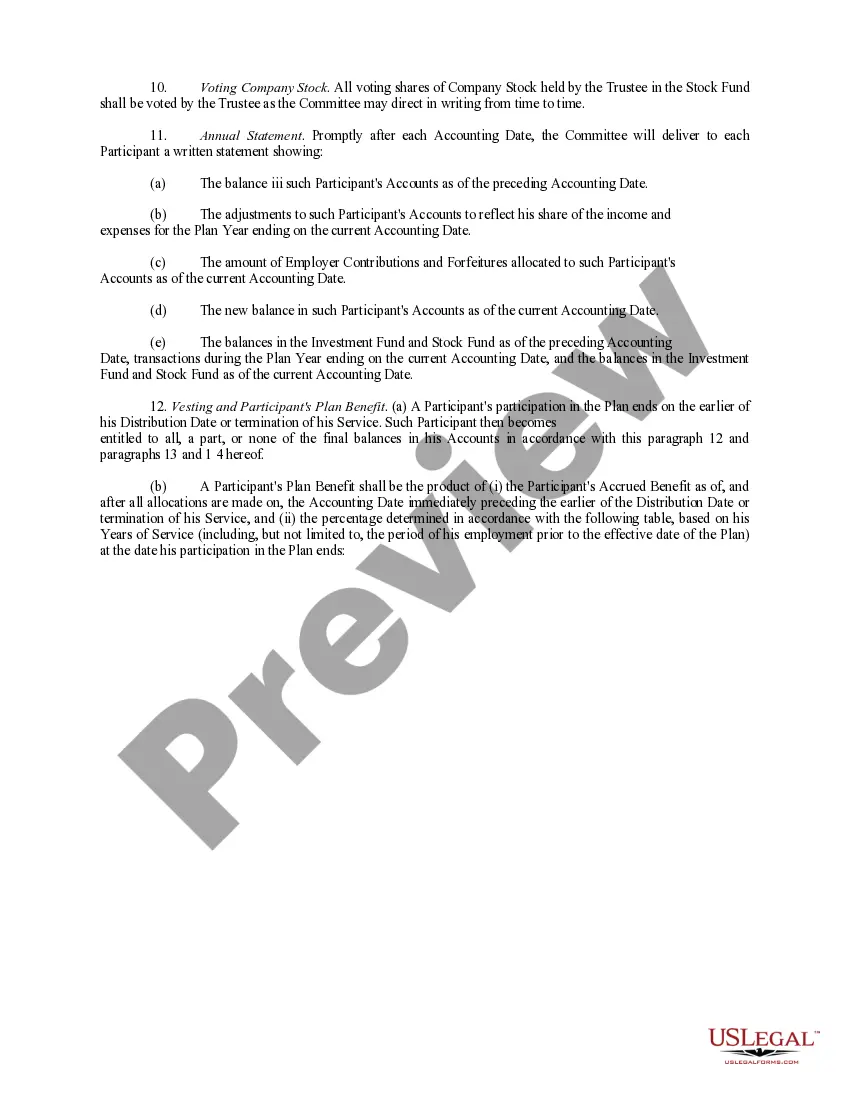
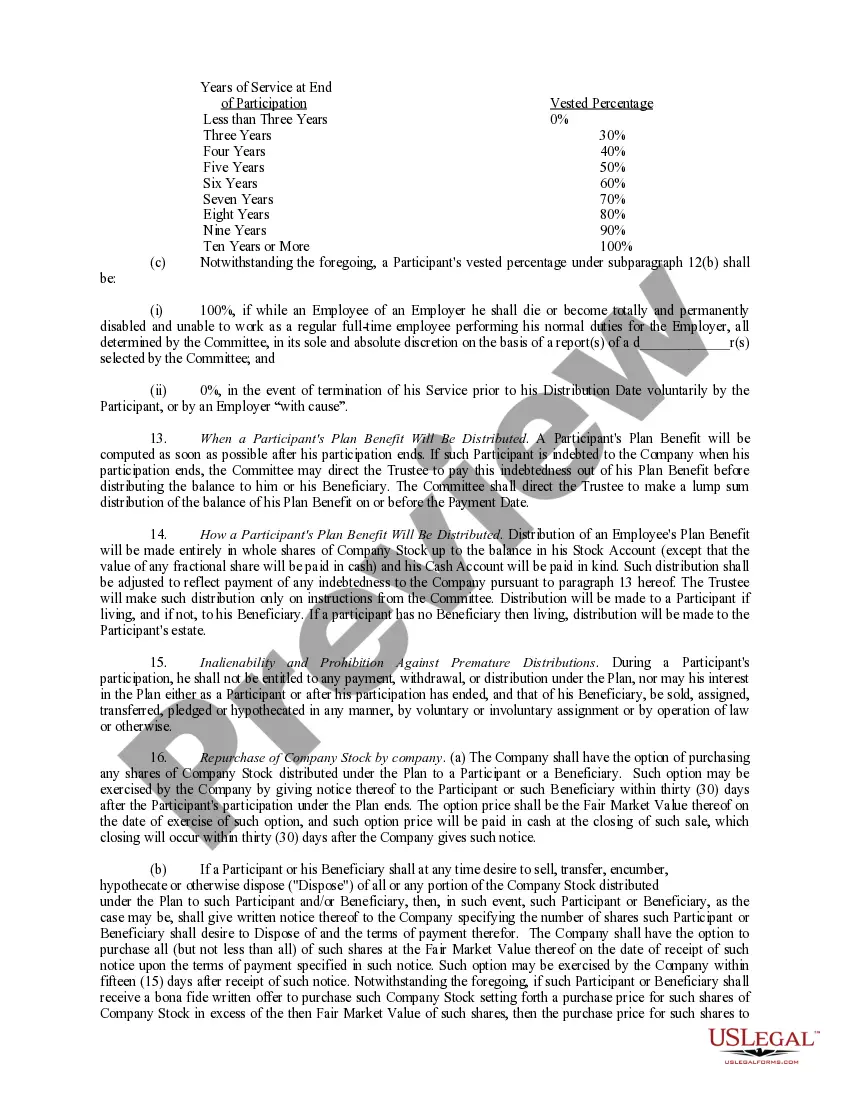
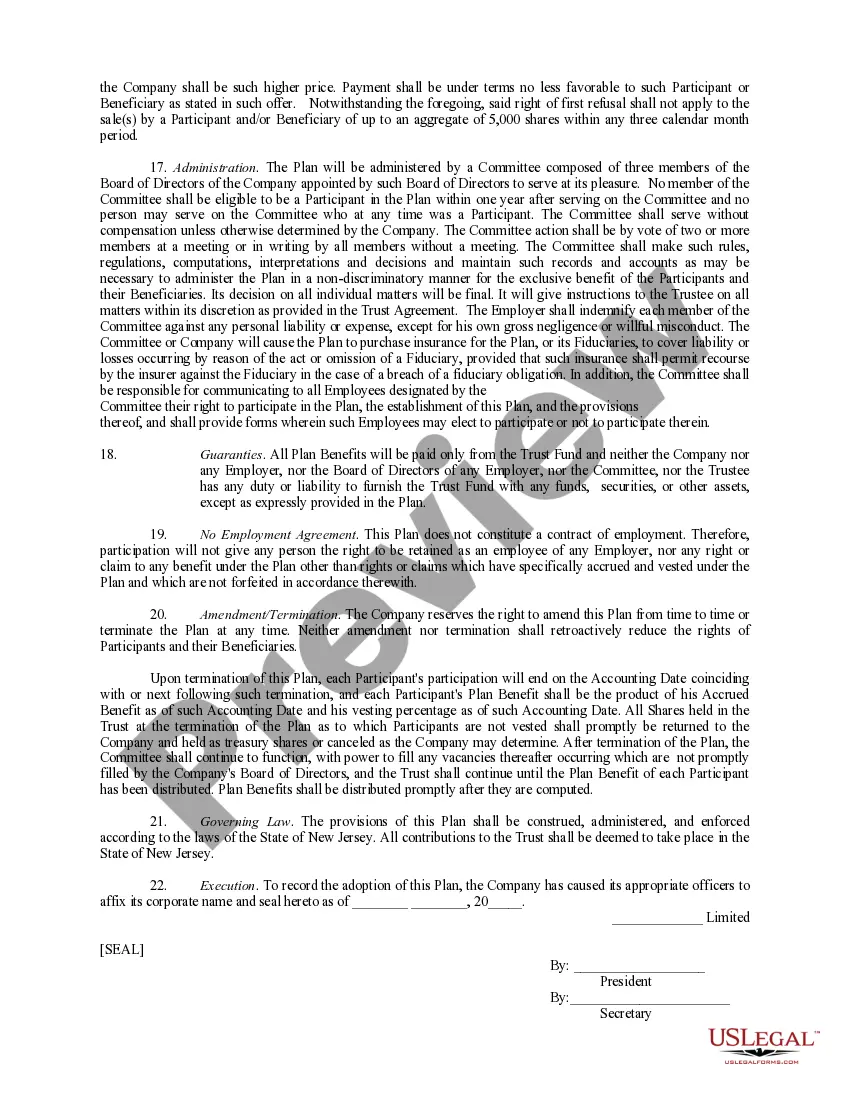
- Vesting: Details how and when employees become entitled to the benefits of the plan based on their years of service.
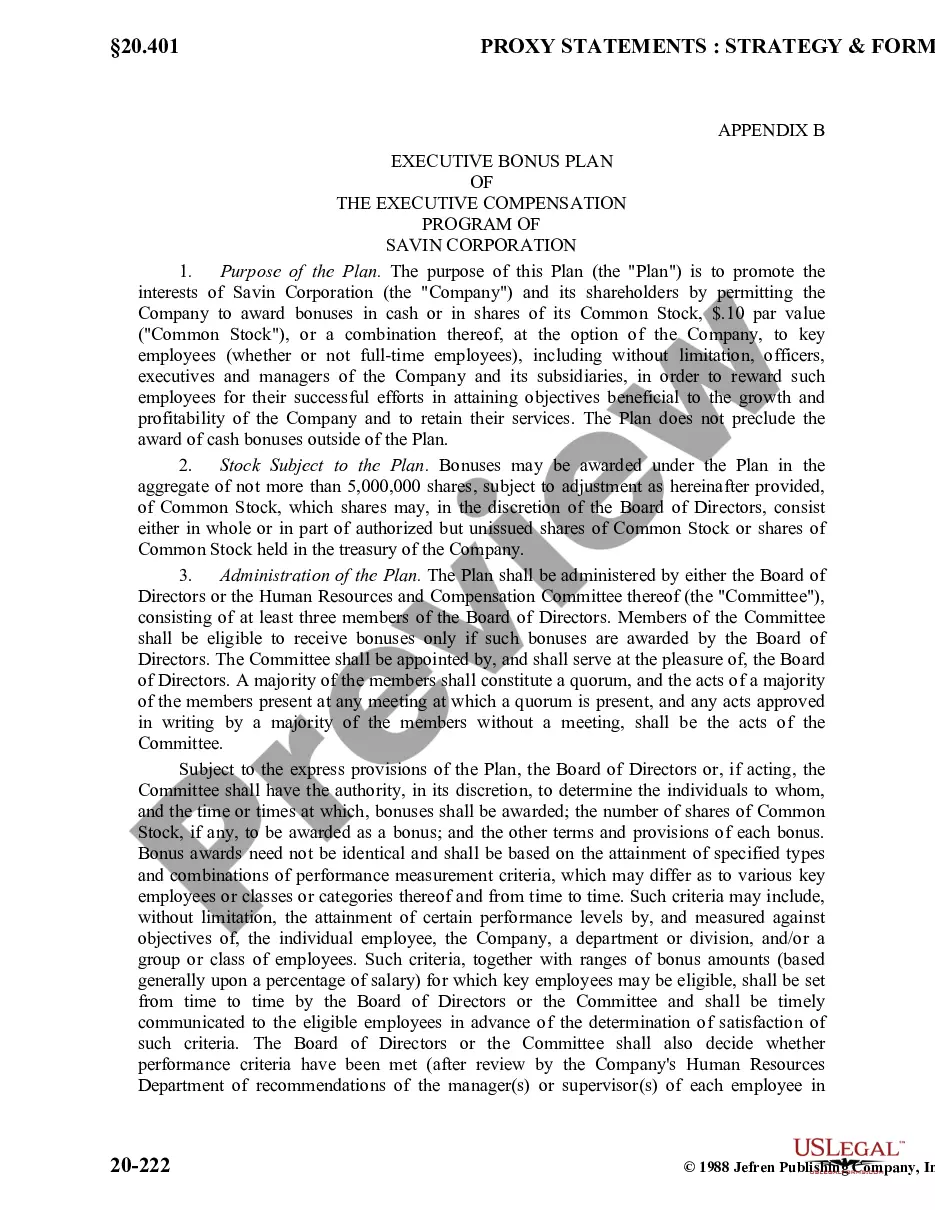
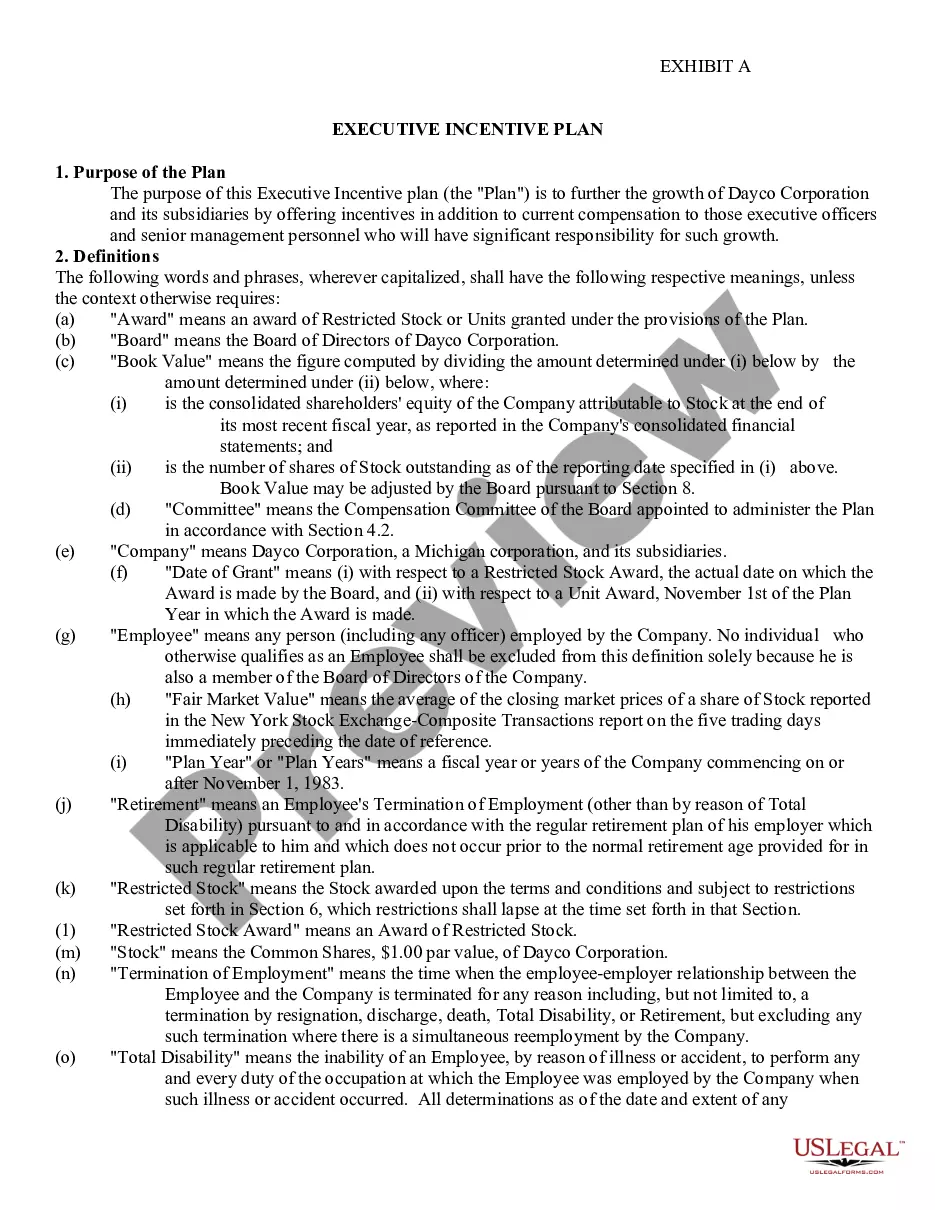
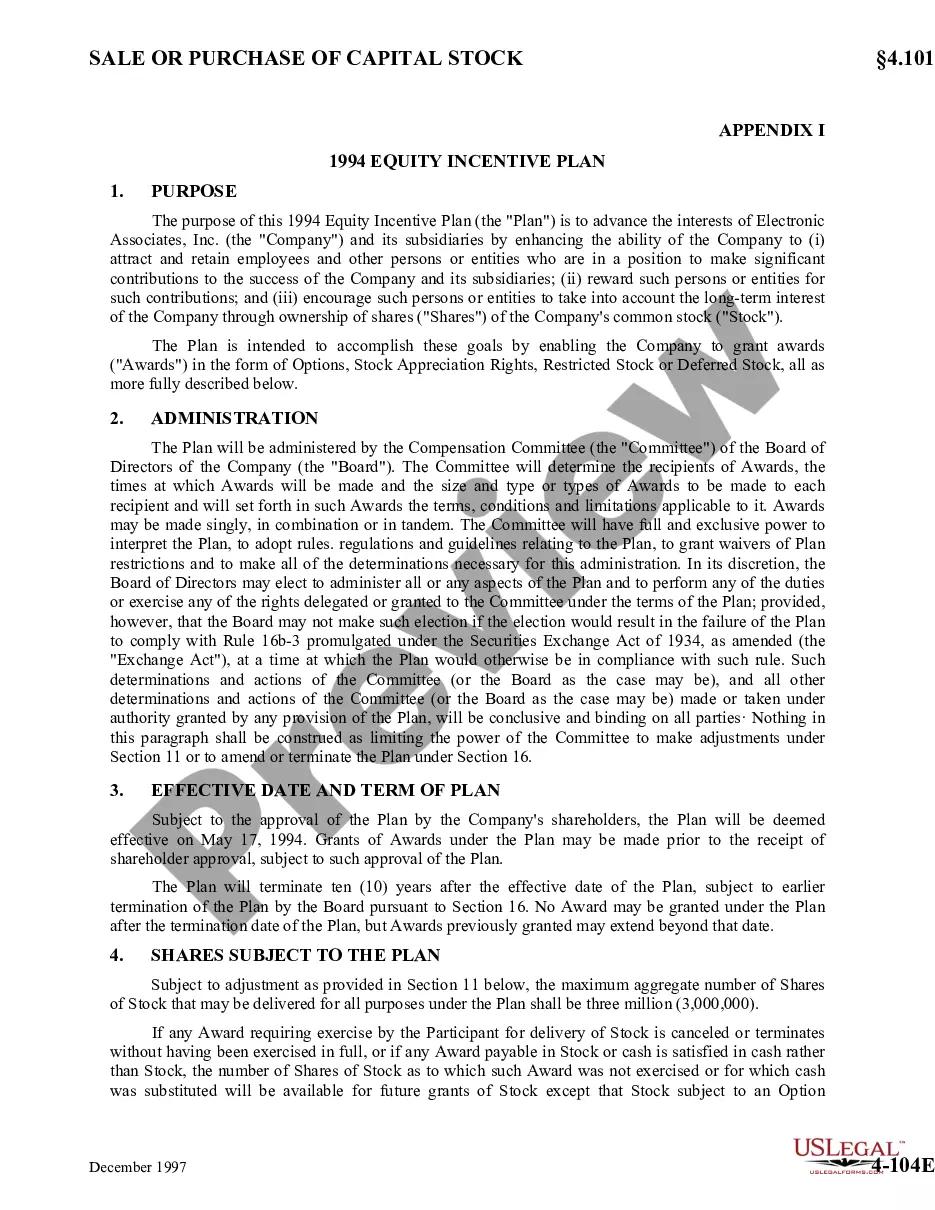

Situations where this form applies
This form should be used by companies looking to implement an Executive Employee Stock Incentive Plan as part of their compensation package. It is particularly useful in scenarios where companies wish to enhance their recruitment and retention strategies for executive roles. Additionally, businesses that aim to align the interests of executives with those of shareholders through stock ownership will benefit from this plan.
Who should use this form
- Companies seeking to incentivize executive performance.
- Human resources departments responsible for developing compensation packages.
- Corporate boards looking to establish formal agreements for stock benefits.
- Legal professionals drafting or reviewing employee incentive plans.
Completing this form step by step
- Identify the company name and the effective date of the plan.
- Define the purpose of the plan in a clear statement.
- Specify the eligibility criteria for employees who will participate.
- Outline the employer contributions in terms of stock and cash.
- Detail the vesting schedule and the method for distributing benefits to participants.
Notarization requirements for this form
Notarization is generally not required for this form. However, certain states or situations might demand it. You can complete notarization online through US Legal Forms, powered by Notarize, using a verified video call available anytime.
Get your form ready online
Our built-in tools help you complete, sign, share, and store your documents in one place.
Make edits, fill in missing information, and update formatting in US Legal Forms—just like you would in MS Word.
Download a copy, print it, send it by email, or mail it via USPS—whatever works best for your next step.
Sign and collect signatures with our SignNow integration. Send to multiple recipients, set reminders, and more. Go Premium to unlock E-Sign.
If this form requires notarization, complete it online through a secure video call—no need to meet a notary in person or wait for an appointment.
We protect your documents and personal data by following strict security and privacy standards.

Make edits, fill in missing information, and update formatting in US Legal Forms—just like you would in MS Word.

Download a copy, print it, send it by email, or mail it via USPS—whatever works best for your next step.

Sign and collect signatures with our SignNow integration. Send to multiple recipients, set reminders, and more. Go Premium to unlock E-Sign.

If this form requires notarization, complete it online through a secure video call—no need to meet a notary in person or wait for an appointment.

We protect your documents and personal data by following strict security and privacy standards.
Mistakes to watch out for
- Failing to clearly define eligibility criteria, leading to confusion among employees.
- Not updating the plan in accordance with changes in state or federal regulations.
- Neglecting to outline the vesting schedule, which can result in disputes over benefits.
Why complete this form online
- Immediate access to a structured plan template drafted by legal professionals.
- Easy customization to fit the specific needs of your organization.
- Secure storage and easy retrieval of your completed plan.
Legal use & context
- The plan must comply with federal and state laws regarding employee benefits and stock options.
- Participation in the plan does not guarantee employment or benefits unless specified.
- Defined contributions to the trust are vital for fulfilling the plan's obligations.
Looking for another form?
Form popularity
FAQ
Under US GAAP, stock based compensation (SBC) is recognized as a non-cash expense on the income statement. Specifically, SBC expense is an operating expense (just like wages) and is allocated to the relevant operating line items: SBC issued to direct labor is allocated to cost of goods sold.
Stock Based Compensation (also called Share-Based Compensation or Equity Compensation) is a way of paying employees, executives, and directors of a company with equity in the business.Shares issued to employees are usually subject to a vesting period before they are earned and can be sold.
Stock Options When shares go up in value, executives can make a fortune from options. But when share prices fall, investors lose out while executives are no worse off. Indeed, some companies let executives swap old option shares for new, lower-priced shares when the company's shares fall in value.
An incentive stock option (ISO) is a corporate benefit that gives an employee the right to buy shares of company stock at a discounted price with the added benefit of possible tax breaks on the profit. The profit on qualified ISOs is usually taxed at the capital gains rate, not the higher rate for ordinary income.
Under US GAAP, stock based compensation (SBC) is recognized as a non-cash expense on the income statement. Specifically, SBC expense is an operating expense (just like wages) and is allocated to the relevant operating line items: SBC issued to direct labor is allocated to cost of goods sold.
The price at which the options may be "exercised" is usually the price of the company's stock on the date the options are granted. If the company performs well, the stock price will increase over the exercise price, giving the options value and rewarding the executive for his role in the company's success.
Stock compensation should be recorded as an expense on the income statement. However, stock compensation expenses must also be included on the company's balance sheet and statement of cash flows.
A recipient of restricted stock is taxed at ordinary income tax rates, subject to tax withholding, on the value of the stock (less any amounts paid for the stock) at the time of vesting.Any dividends paid while the stock is unvested are taxed as compensation income subject to withholding.
An executive stock option is a contract that grants the right to buy a specified number of shares of the company's stock at a guaranteed "strike price" for a period of time, usually several years.