Executive Incentive Plan
What this document covers
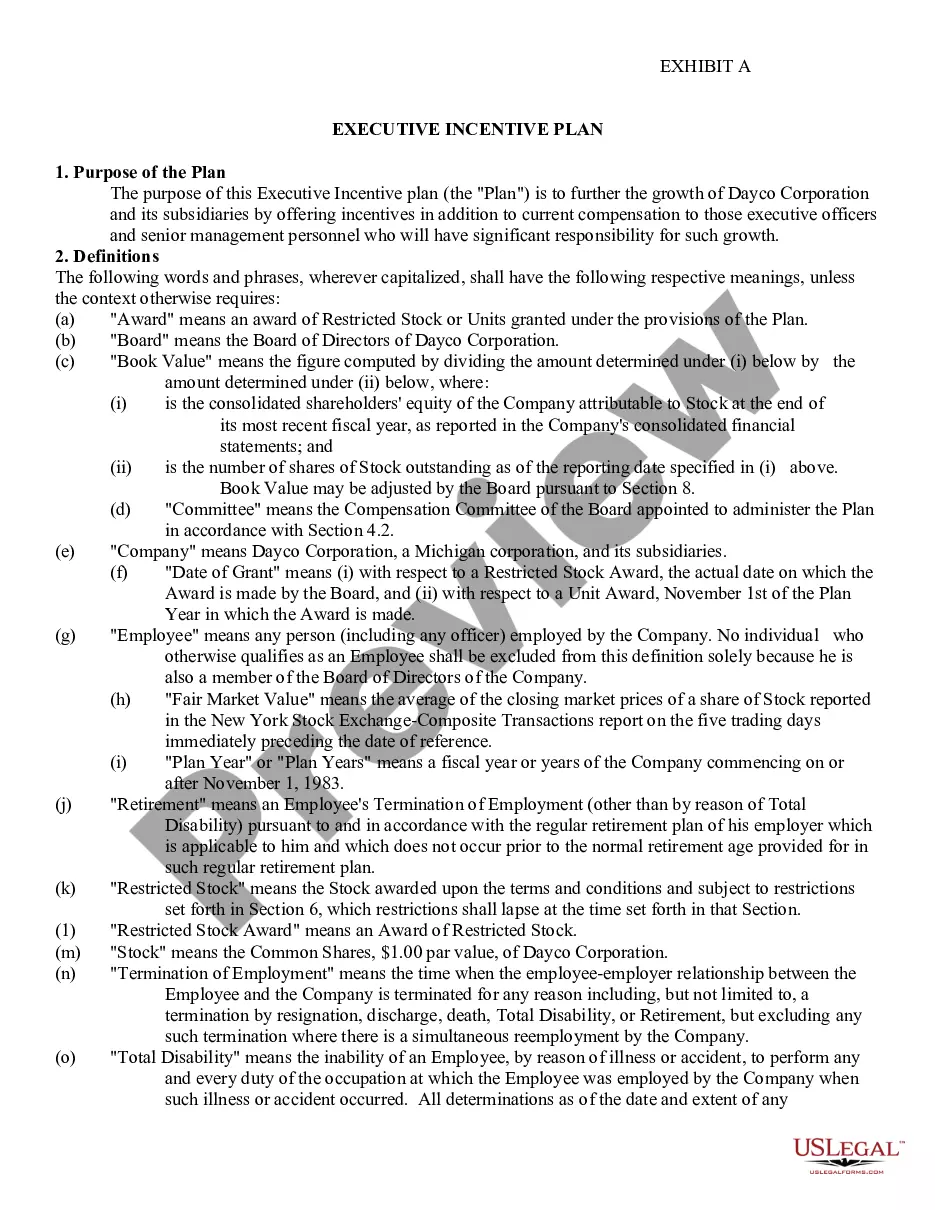
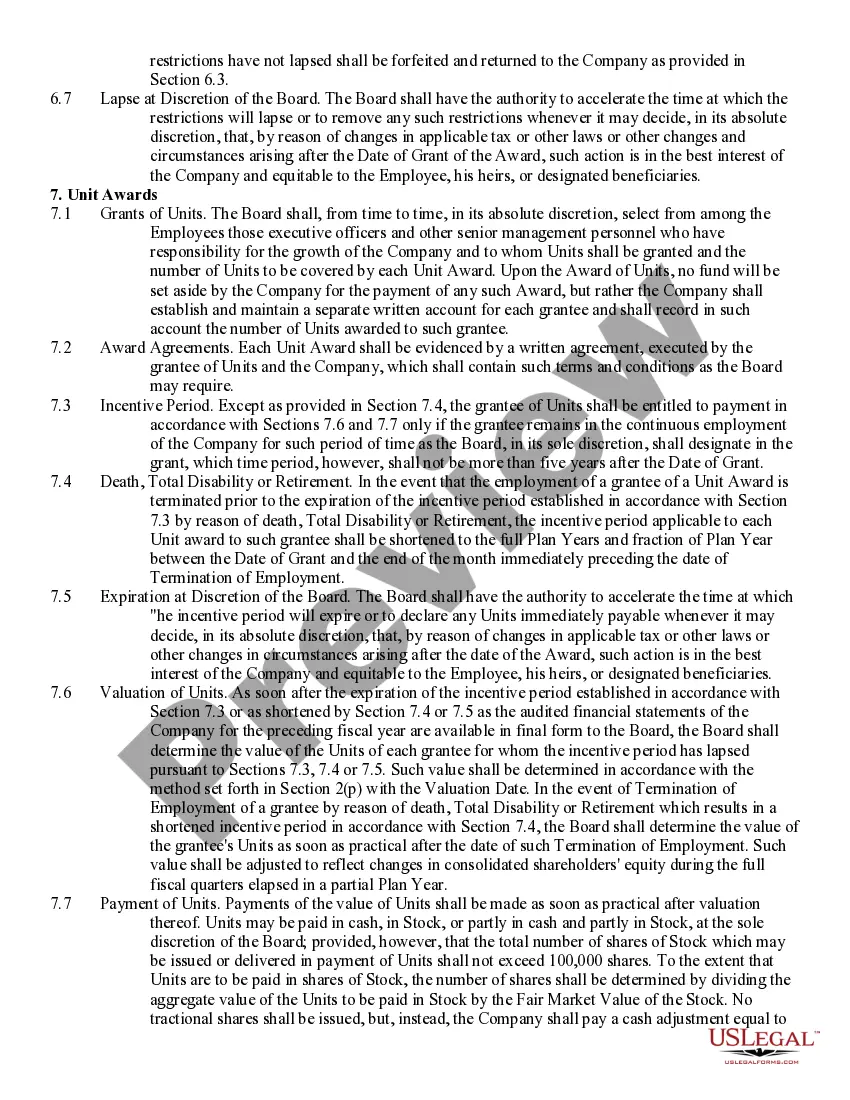
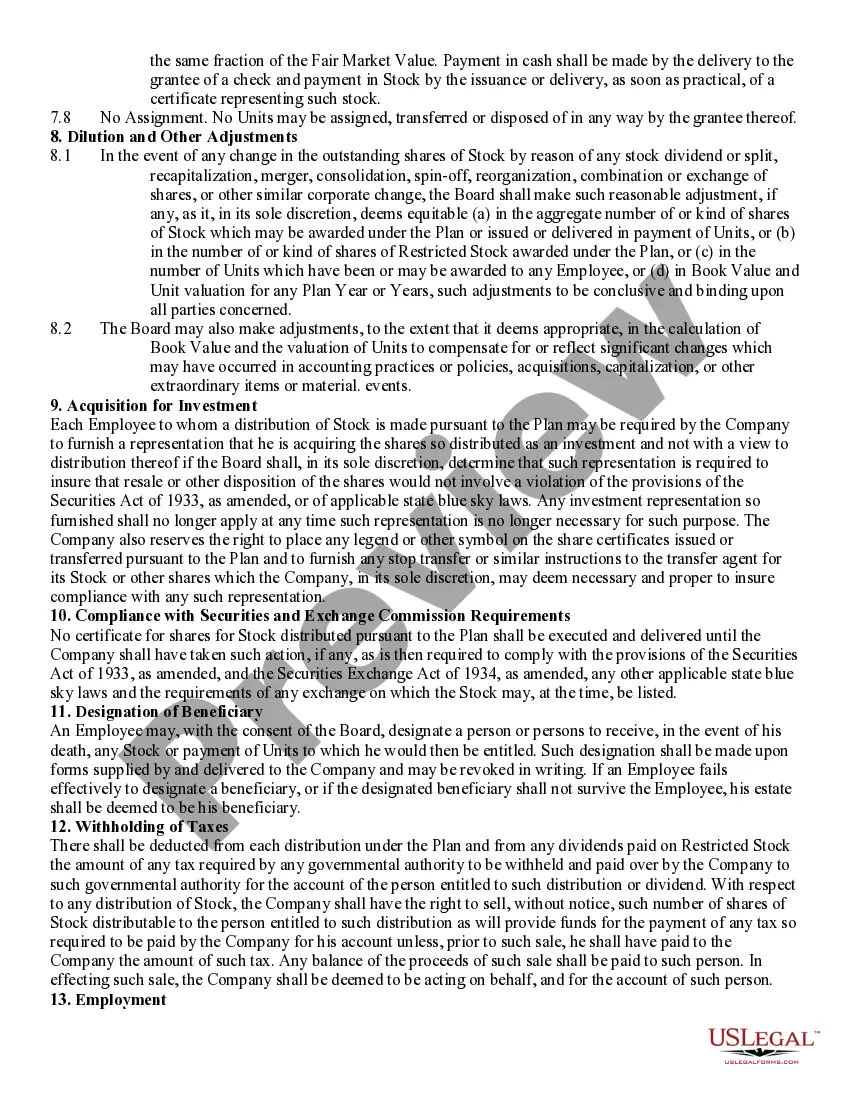
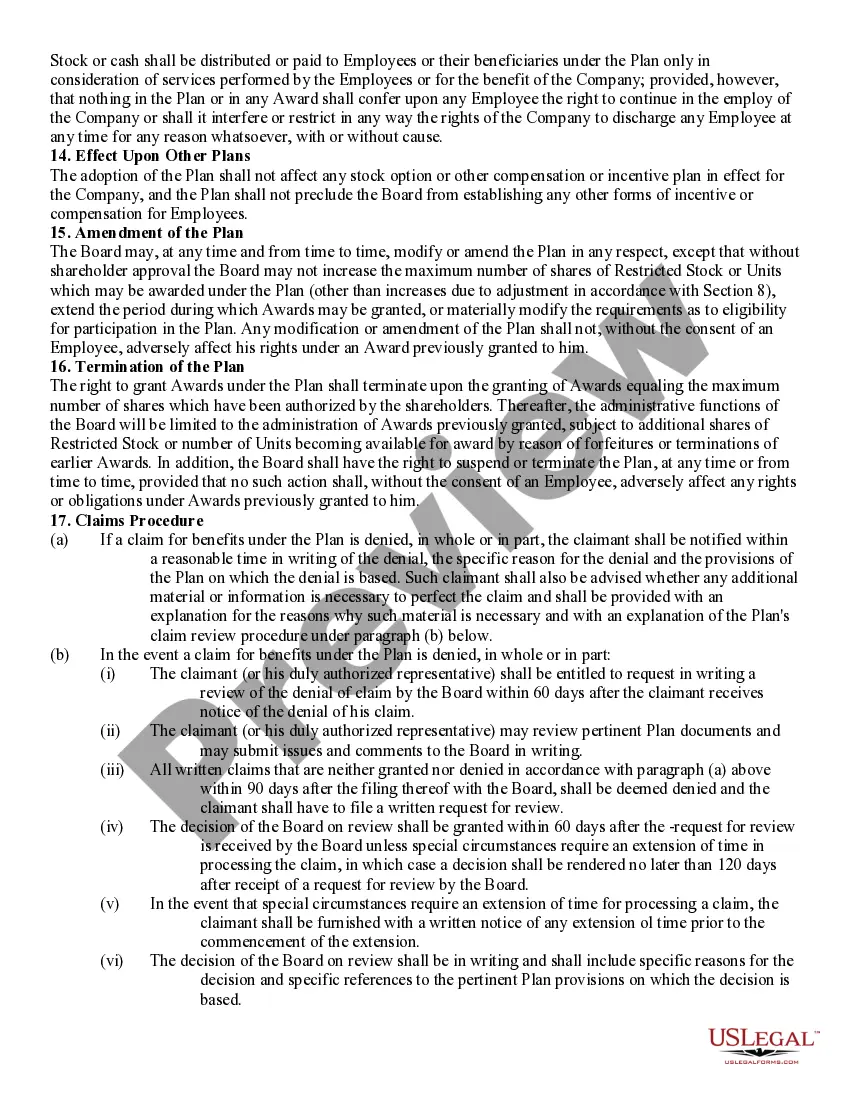
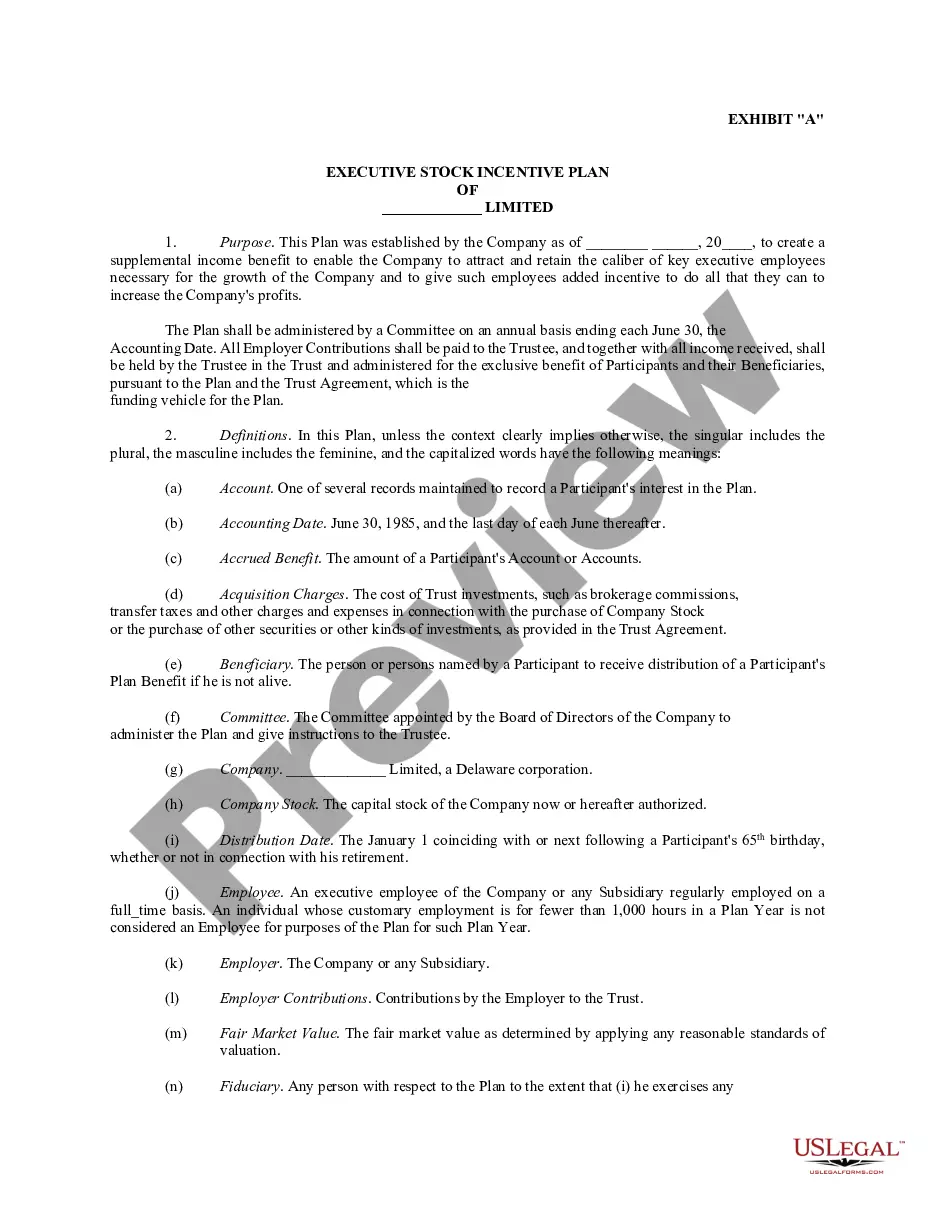
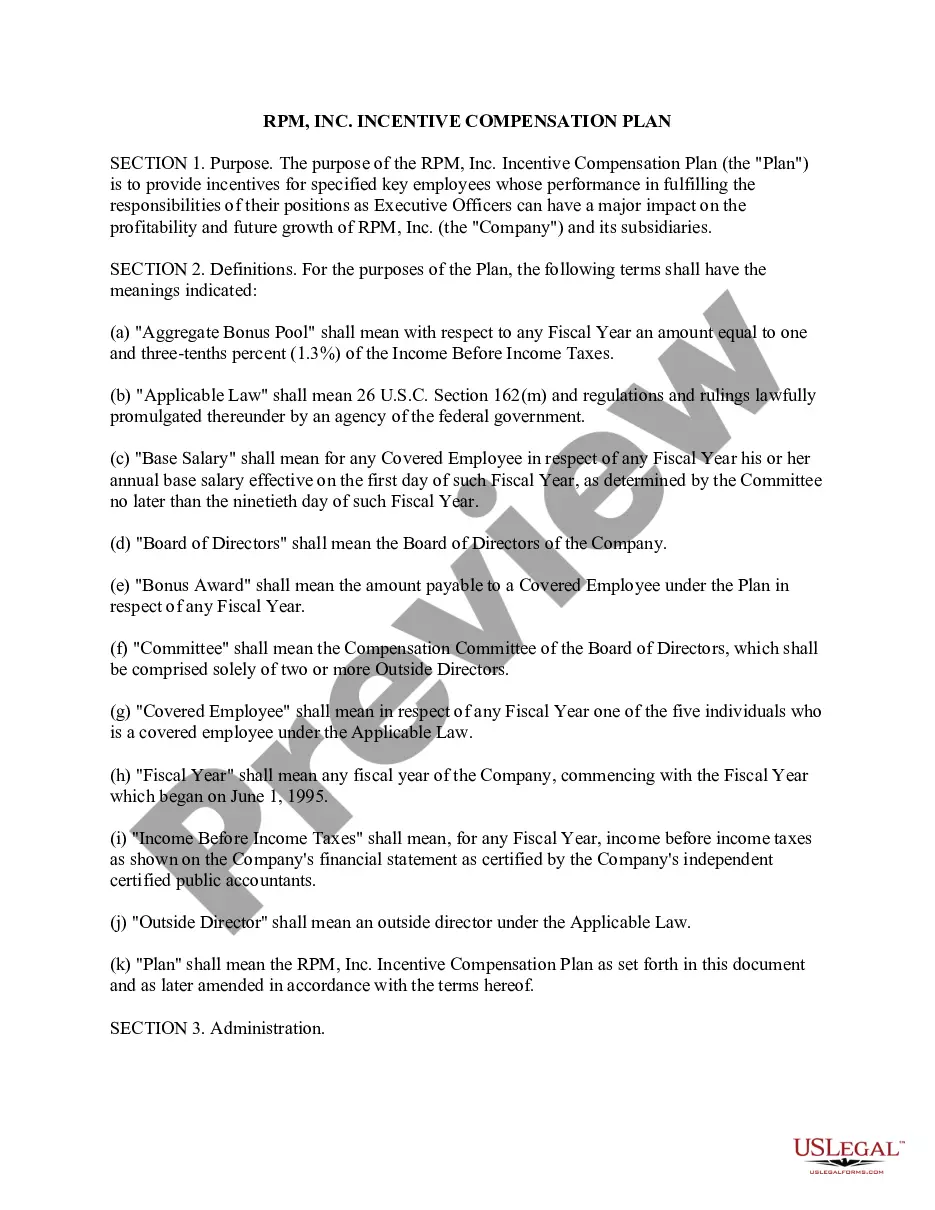
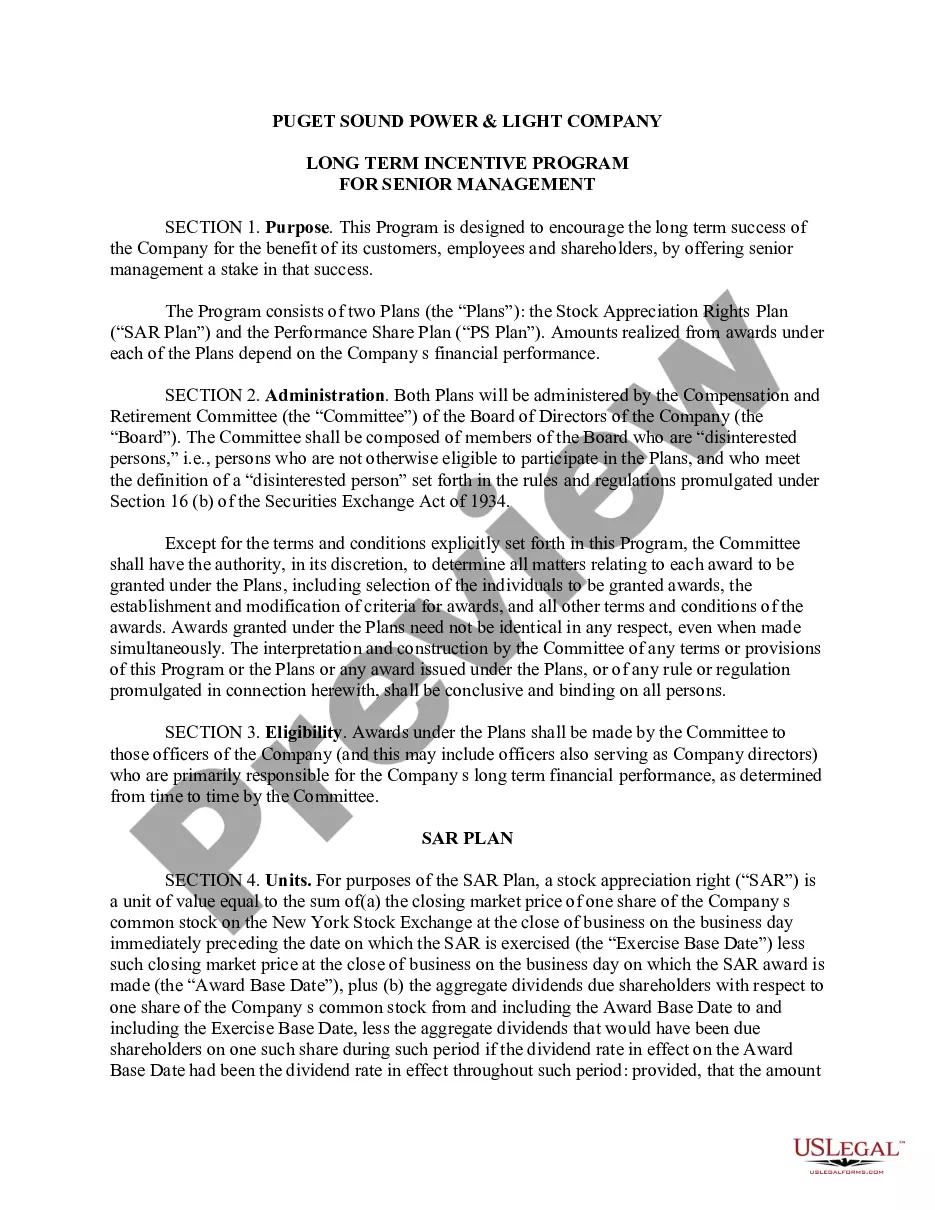
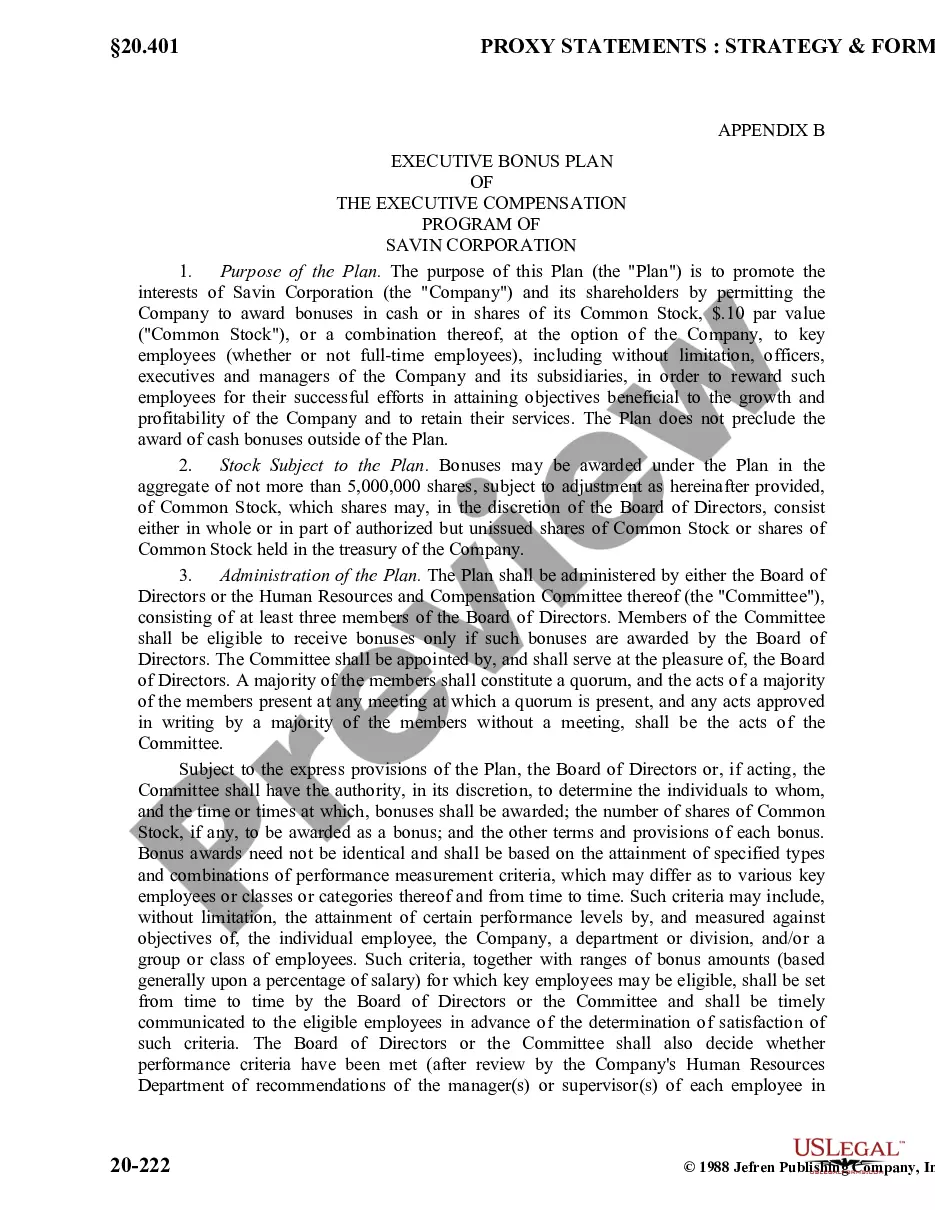
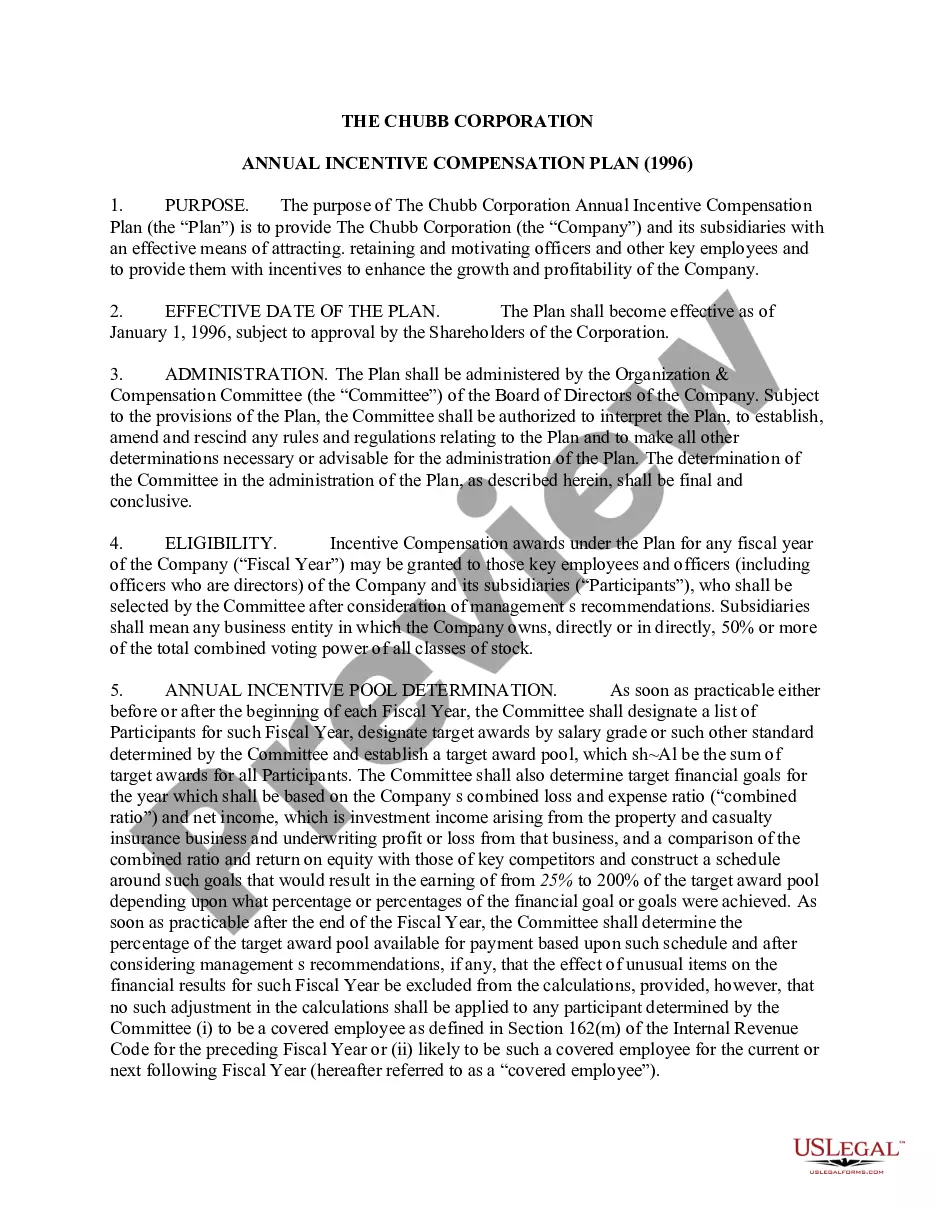
The Executive Incentive Plan is a legal document designed for corporations looking to motivate their executive officers and senior management personnel. This plan allows corporations to award restricted stock and units, aligning employee interests with company performance. Unlike standard employment contracts, this plan includes provisions for restricted stock and performance-based units, making it essential for retaining key leadership talent while driving corporate growth.
What’s included in this form
- Purpose: Aims to enhance corporate growth by providing incentives to executives.
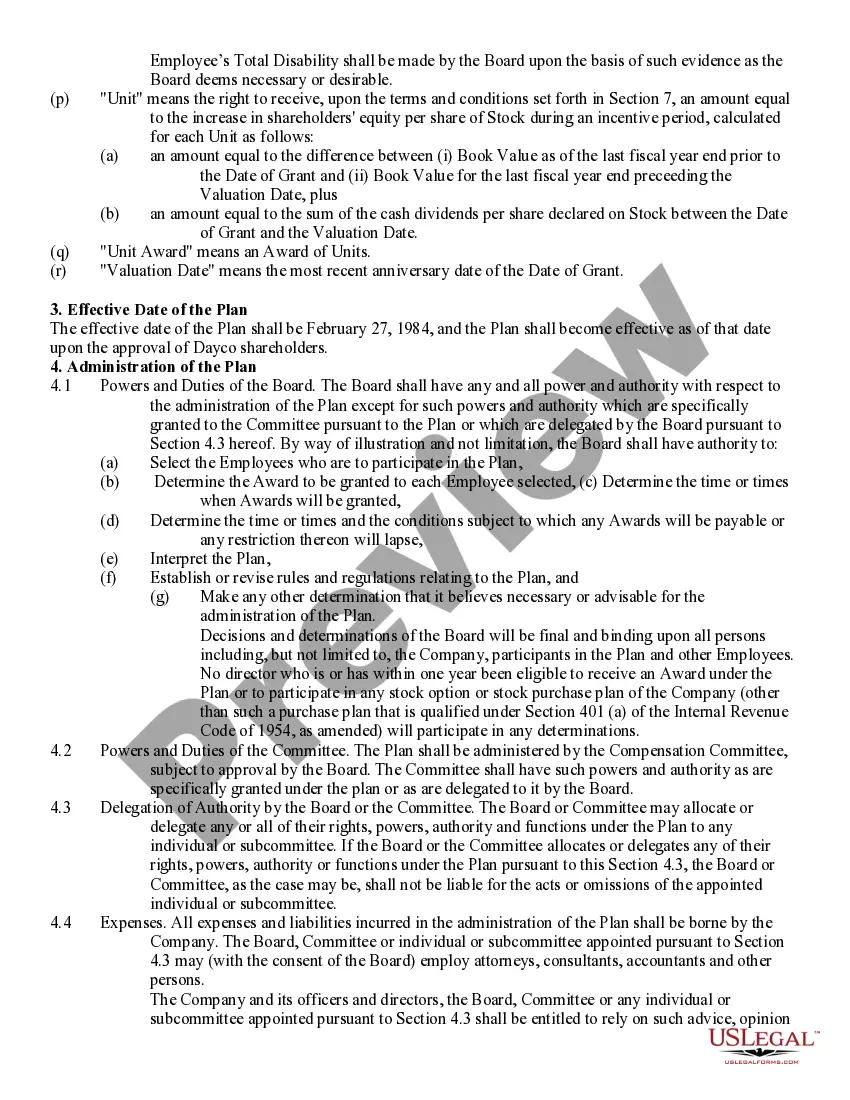
- Award Types: Includes both Restricted Stock Awards and Unit Awards.
- Eligibility: Defines who qualifies as an Employee and how awards are determined.
- Conditions: Sets forth restrictions on stock transfers and valuation methods for units.
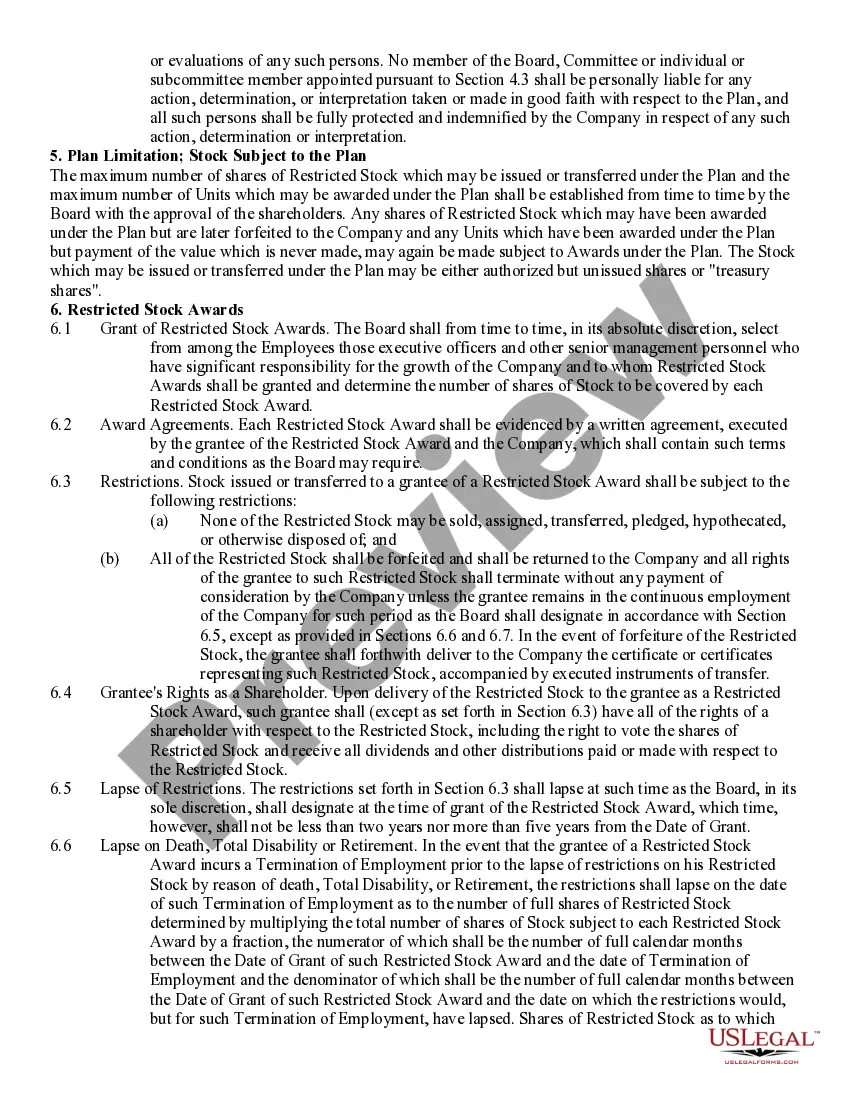
- Rights: Outlines shareholders' rights regarding restricted stock, including voting and dividends.
- Administration: Details the roles and responsibilities of the Board and the Compensation Committee.

Situations where this form applies
This form is essential when a corporation wants to establish an incentive plan for its executive team. It is particularly useful during periods of growth or restructuring when attracting and retaining top talent is critical. Corporations implementing performance-based incentives should utilize this form to ensure compliance and clarity in their incentive offerings.
Who should use this form
This form is intended for:
- C Corporations needing to motivate and retain their executive teams.
- Human resources professionals involved in executive compensation planning.
- Corporate attorneys drafting or reviewing incentive plans.
- Board members responsible for overseeing executive compensation packages.
How to prepare this document
- Identify the parties: Specify the corporation, the relevant employees, and board members involved in the plan.
- Define awards: Clearly state the types of awards (Restricted Stock and Units) being offered to employees.
- Outline conditions: Fill in any specific conditions regarding transfer restrictions, vesting periods, and performance criteria.
- Establish valuation: Determine how the book value will be calculated for the units and restricted stocks.
- Obtain necessary approvals: Ensure all awards have the required board and shareholder approval before implementation.
Notarization guidance
This form does not typically require notarization to be legally valid. However, some jurisdictions or document types may still require it. US Legal Forms provides secure online notarization powered by Notarize, available 24/7 for added convenience.
Get your form ready online
Our built-in tools help you complete, sign, share, and store your documents in one place.
Make edits, fill in missing information, and update formatting in US Legal Forms—just like you would in MS Word.
Download a copy, print it, send it by email, or mail it via USPS—whatever works best for your next step.
Sign and collect signatures with our SignNow integration. Send to multiple recipients, set reminders, and more. Go Premium to unlock E-Sign.
If this form requires notarization, complete it online through a secure video call—no need to meet a notary in person or wait for an appointment.
We protect your documents and personal data by following strict security and privacy standards.

Make edits, fill in missing information, and update formatting in US Legal Forms—just like you would in MS Word.

Download a copy, print it, send it by email, or mail it via USPS—whatever works best for your next step.

Sign and collect signatures with our SignNow integration. Send to multiple recipients, set reminders, and more. Go Premium to unlock E-Sign.

If this form requires notarization, complete it online through a secure video call—no need to meet a notary in person or wait for an appointment.

We protect your documents and personal data by following strict security and privacy standards.
Avoid these common issues
- Failing to properly define eligibility criteria for employees.
- Not clearly outlining restrictions on the transfer of restricted stock.
- Overlooking necessary approvals from shareholders or board members.
- Neglecting to adjust the plan for any state-specific legal requirements.
Benefits of completing this form online
- Convenience: Download and complete the form from anywhere at any time.
- Editability: Easily customize the form to fit your corporation's specific needs.
- Reliability: Access a legally vetted form drafted by licensed attorneys to ensure compliance.
Legal use & context
- The Executive Incentive Plan is designed to comply with state and federal regulations regarding executive compensation.
- Restricted stock and units are subject to specific conditions, including employment and ethical considerations to ensure fairness and transparency.
- Understanding the tax implications is crucial for both the corporation and its executives to avoid penalties or misunderstandings with tax authorities.
Summary of main points
- The Executive Incentive Plan incentivizes key employees through restricted stock awards.
- Clear definitions and administrative guidelines are vital for effective implementation.
- The plan should be regularly reviewed and updated to stay in compliance with legal requirements.
Looking for another form?
Form popularity
FAQ
One of the most popular ways to evaluate executive compensation is by comparing pay and performance. Unfortunately, many executives are given raises and bonuses even when their companies are faltering. Comparing pay to stock performance can help you determine whether executives are overpaid.
Income statement-related performance metrics (revenue, operating income) are typical of short-term incentive (STI) plans, whereas market-related metrics (total shareholder return, stock price appreciation) are relatively rare in STI plans but common in long-term incentive (LTI) plans, reveals a Mercer analysis of
According to the Center on Executive Compensation, "Executive pay arrangements typically consist of six distinct compensation components: salary, annual incentives, long-term incentives, benefits, perquisites and severance/change-in-control agreements."1 See High-Performing Companies Pay Executives Differently.
The annual Short Term Incentive (STI) component of the Plan provides participants with an opportunity to receive a non-base building cash incentive based on the achievement of specific annual financial, non-financial, and strategic objectives relative to the mission and goals of the UC Health enterprise.
The STI plan provides a performance based pay-at-risk portion of annual cash compensation to eligible employees.
Short-term incentives, also often referred to as annual incentives, are intended to compensate executives for achieving the company's short-term business strategy based on achievement of goals by the board compensation committee.
STI Bonus means the annual at target short-term incentive bonus the Executive is eligible to earn under the Employment Agreement, in accordance with the short-term incentive bonus plan; Sample 2. Based on 17 documents.
Step 1: Do Your Research. Step 2: Understand Your Value Is Not Tied to Your Current Compensation Level. Step 3: Remember That Executive Compensation Is Not Only About Salary. Step 4: Don't Be the First to Name a Price. Step 5: Be Prepared to Provide a Counter Offer.
Performance. One of the most popular ways to evaluate executive compensation is by comparing pay and performance. Unfortunately, many executives are given raises and bonuses even when their companies are faltering. Comparing pay to stock performance can help you determine whether executives are overpaid.