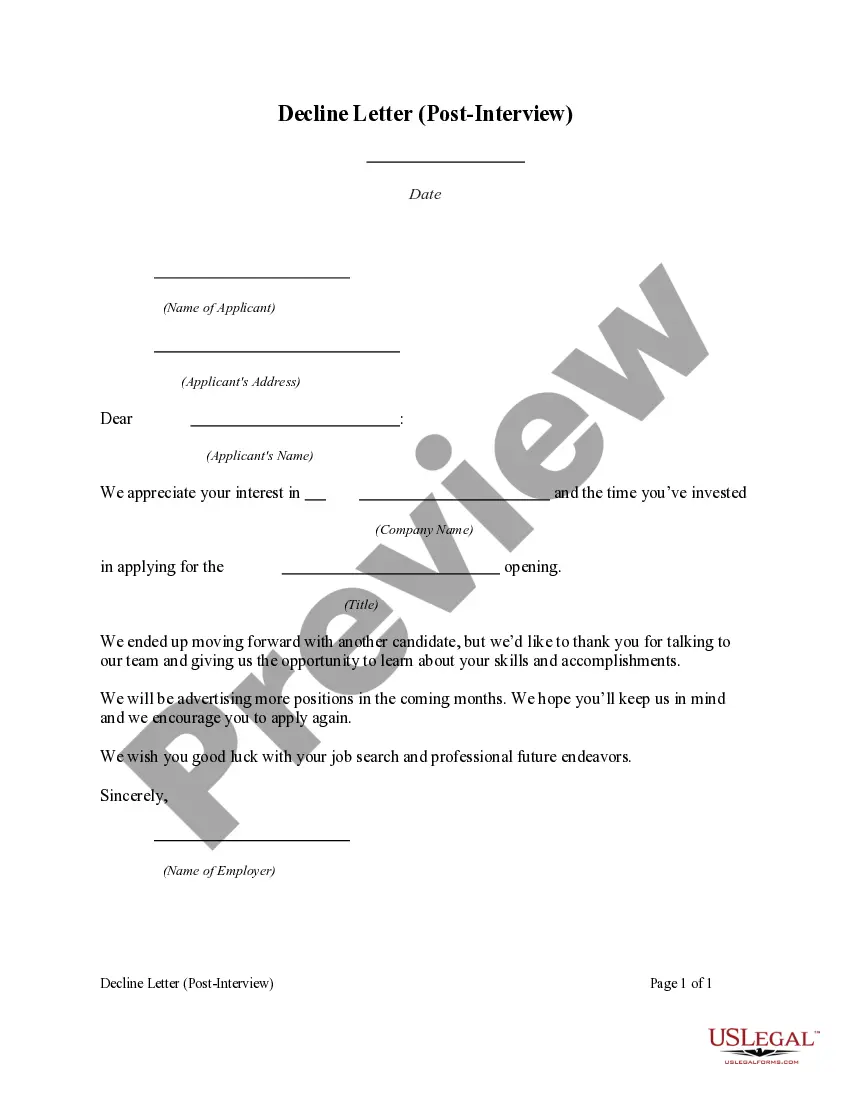
Post Interview Decline Letter
What this document covers
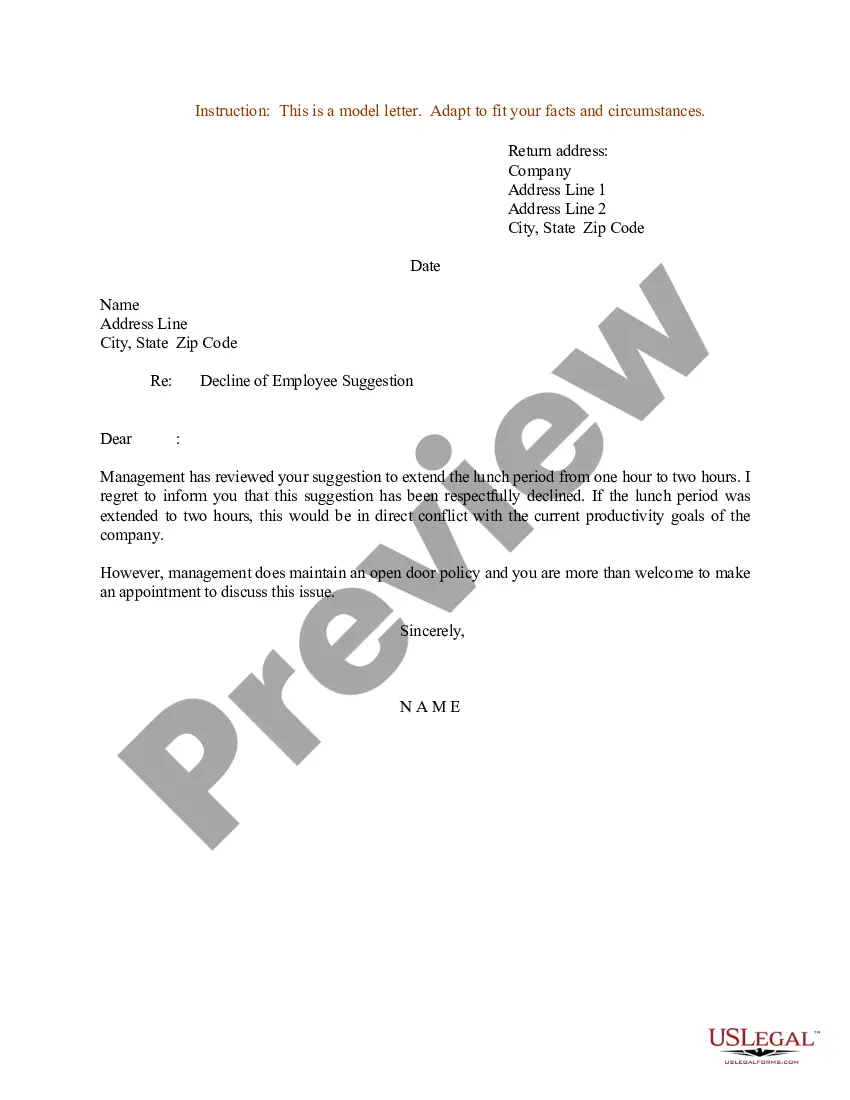
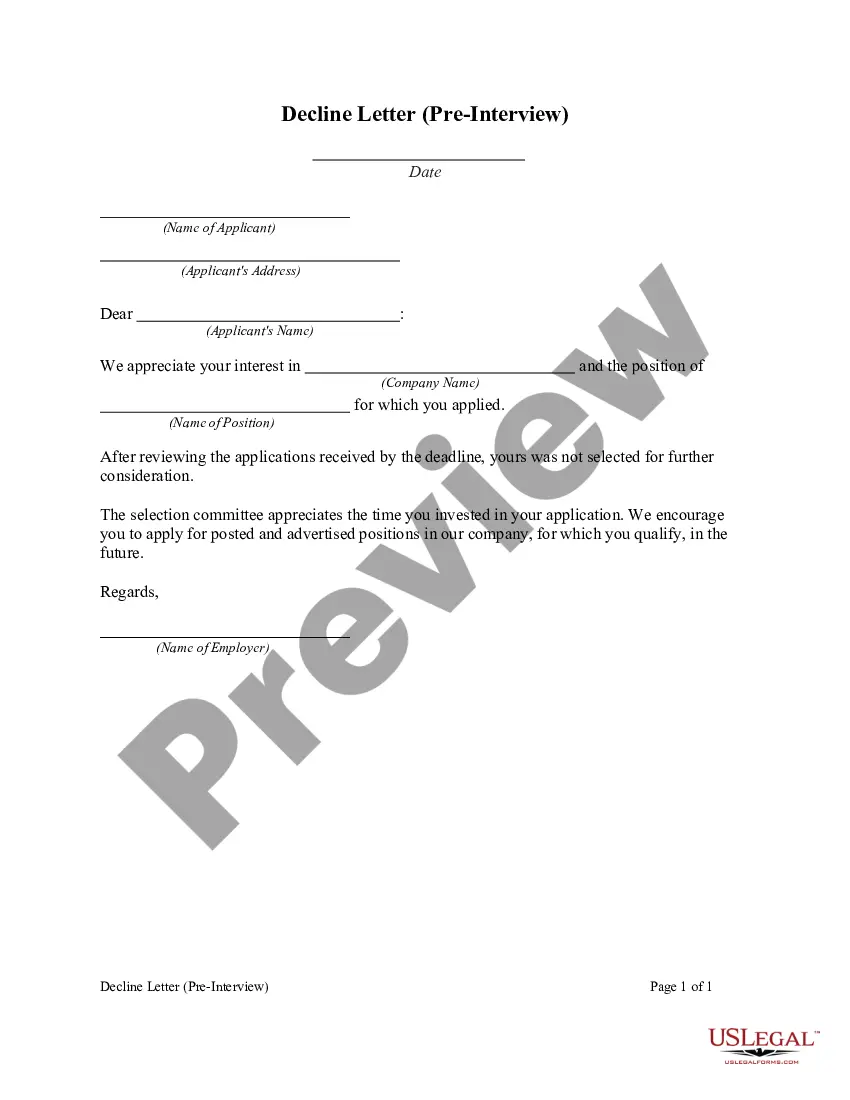
The Post Interview Decline Letter is a formal document used by employers to inform candidates who have been interviewed that they were not selected for the position. This letter is important for maintaining professionalism and providing closure to candidates, differentiating it from informal rejection notifications or emails. It ensures that candidates are aware of the decision and helps maintain a positive company image.
What’s included in this form
- Recipient's name and contact information
- Company name and address
- Date of the letter
- Reference to the position applied for
- A concise explanation for the decision
- An expression of appreciation for the applicant's interest
- Encouragement to apply for future openings
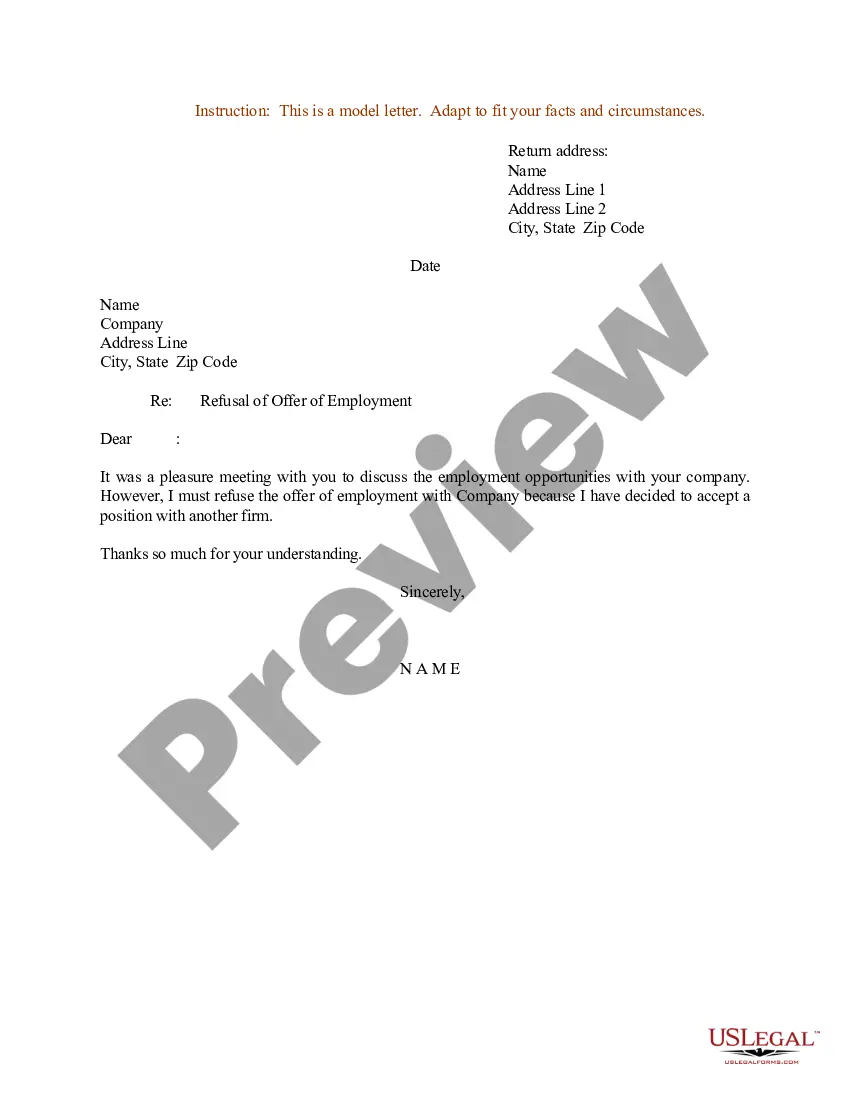
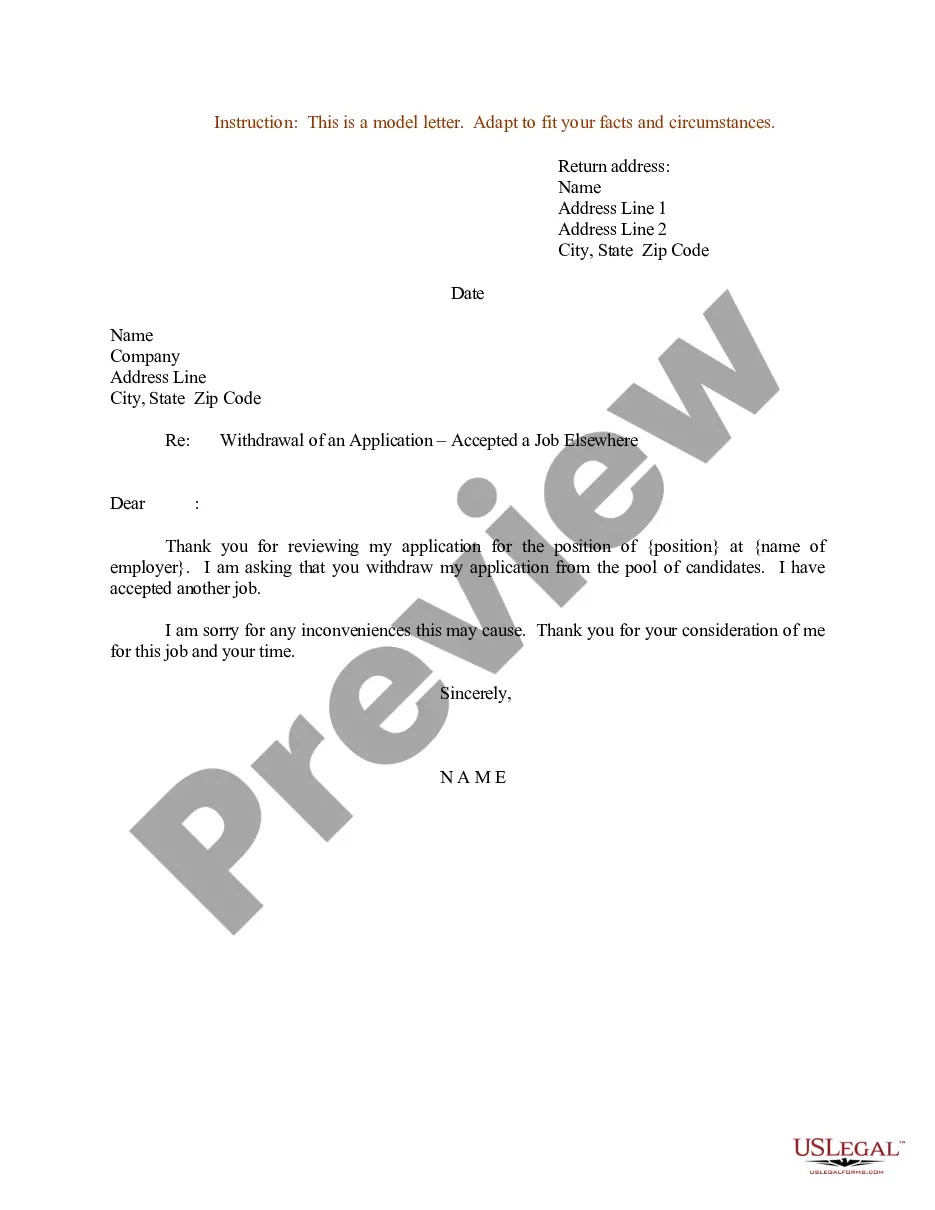
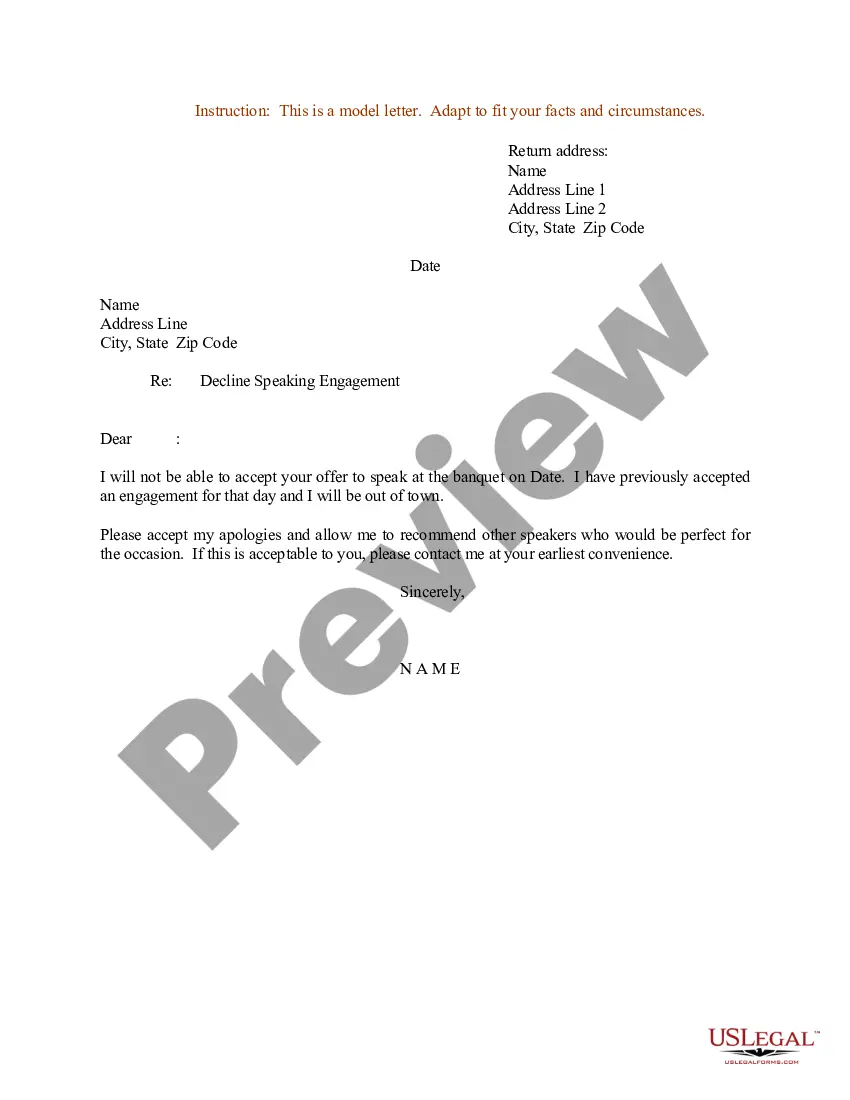
Situations where this form applies
This form should be used when an applicant has gone through the interview process, and a decision has been made not to hire them. It is appropriate to send this letter to provide clear communication, especially when the applicant may have invested time and effort into the interview. Employers can use this letter in various situations, such as after a series of interviews or following a job fair where candidates were assessed.
Who needs this form
- Employers or hiring managers who need to notify candidates of their application status
- Human resources professionals involved in the recruitment process
- Organizations looking to uphold a respectful and accountable hiring process
How to complete this form
- Identify the recipient's name and address accurately.
- Enter your company name and address at the top of the letter.
- Insert the date of the letter to maintain a record of communication.
- Clearly reference the position the candidate interviewed for in the body of the letter.
- Provide a brief, respectful explanation of the rejection decision.
- End with a positive note, encouraging the candidate to apply for future openings.
Does this form need to be notarized?
Notarization is generally not required for this form. However, certain states or situations might demand it. You can complete notarization online through US Legal Forms, powered by Notarize, using a verified video call available anytime.
Get your form ready online
Our built-in tools help you complete, sign, share, and store your documents in one place.
Make edits, fill in missing information, and update formatting in US Legal Forms—just like you would in MS Word.
Download a copy, print it, send it by email, or mail it via USPS—whatever works best for your next step.
Sign and collect signatures with our SignNow integration. Send to multiple recipients, set reminders, and more. Go Premium to unlock E-Sign.
If this form requires notarization, complete it online through a secure video call—no need to meet a notary in person or wait for an appointment.
We protect your documents and personal data by following strict security and privacy standards.

Make edits, fill in missing information, and update formatting in US Legal Forms—just like you would in MS Word.

Download a copy, print it, send it by email, or mail it via USPS—whatever works best for your next step.

Sign and collect signatures with our SignNow integration. Send to multiple recipients, set reminders, and more. Go Premium to unlock E-Sign.

If this form requires notarization, complete it online through a secure video call—no need to meet a notary in person or wait for an appointment.

We protect your documents and personal data by following strict security and privacy standards.
Mistakes to watch out for
- Failing to personalize the letter for each candidate.
- Using vague or unprofessional language.
- Neglecting to provide feedback or a rationale for the decision.
- Not including a positive note or well-wishes for future applications.
Advantages of online completion
- Convenience of downloading and customizing the letter quickly.
- Editable format to fit specific company needs and preferences.
- Reliable and professionally drafted content that ensures legal compliance.
- Immediate access without the need for face-to-face consultations.
Summary of main points
- The Post Interview Decline Letter is essential for professional communication with candidates.
- It provides closure to applicants while maintaining a positive company image.
- Customize the letter to reflect the specifics of the hiring process and feedback.
Looking for another form?



Form popularity
FAQ
If they were interviewed, it's best to tell them the news over the phone. If the individual didn't interview, inform them that they won't be hired over email. The best strategy, whether you're speaking on the phone or communicating over email, is to be polite but direct and to-the-point about your decision.
Let the candidate know ASAP. Many hiring managers wait until the end of the hiring process before they notify unsuccessful candidates. Pick up the phone. Keep it brief. Personalize, personalize, personalize. Be honest. Ask for feedback.
Thank the candidate warmly. Cold: Thank you for applying to the POSITION at COMPANY. Leave the door open. Cold: We'll keep your application on file should another position become available. Try to provide a satisfying explanation. Identify a strength. Conclusion.
Use the following job rejection letter sample template to help you inform unsuccessful candidates of your decision. Dear (name), Thank you for taking the time to speak to us about the position, (job title). We regret to inform you that (organization) will not be pursuing your candidacy for this position.
Get straight to the point. Give them feedback. Let the candidate know that there may still be a chance. Wish them good luck. Send it as soon as possible. Write different rejection letters for each stage in the hiring process. Keep it personal. Thank the candidate.
Let the candidate know ASAP. Many hiring managers wait until the end of the hiring process before they notify unsuccessful candidates. Pick up the phone. Keep it brief. Personalize, personalize, personalize. Be honest. Ask for feedback.
Be Prompt. Show Appreciation. Give a Good Reason. Keep It Short and Professional. When It's Not a Good Fit. When You Need More Money. Considering the Company Culture or Reputation. Declining an Offer After Accepting It.
Be honest. They don't say that honesty is the best policy for nothing. Prepare yourself. Do it face to face. Stick with "I" statements. Know that what you're feeling is normal. Avoid putting it off. Don't give false hope.