South Carolina A Non-Warranty Deed
About this form
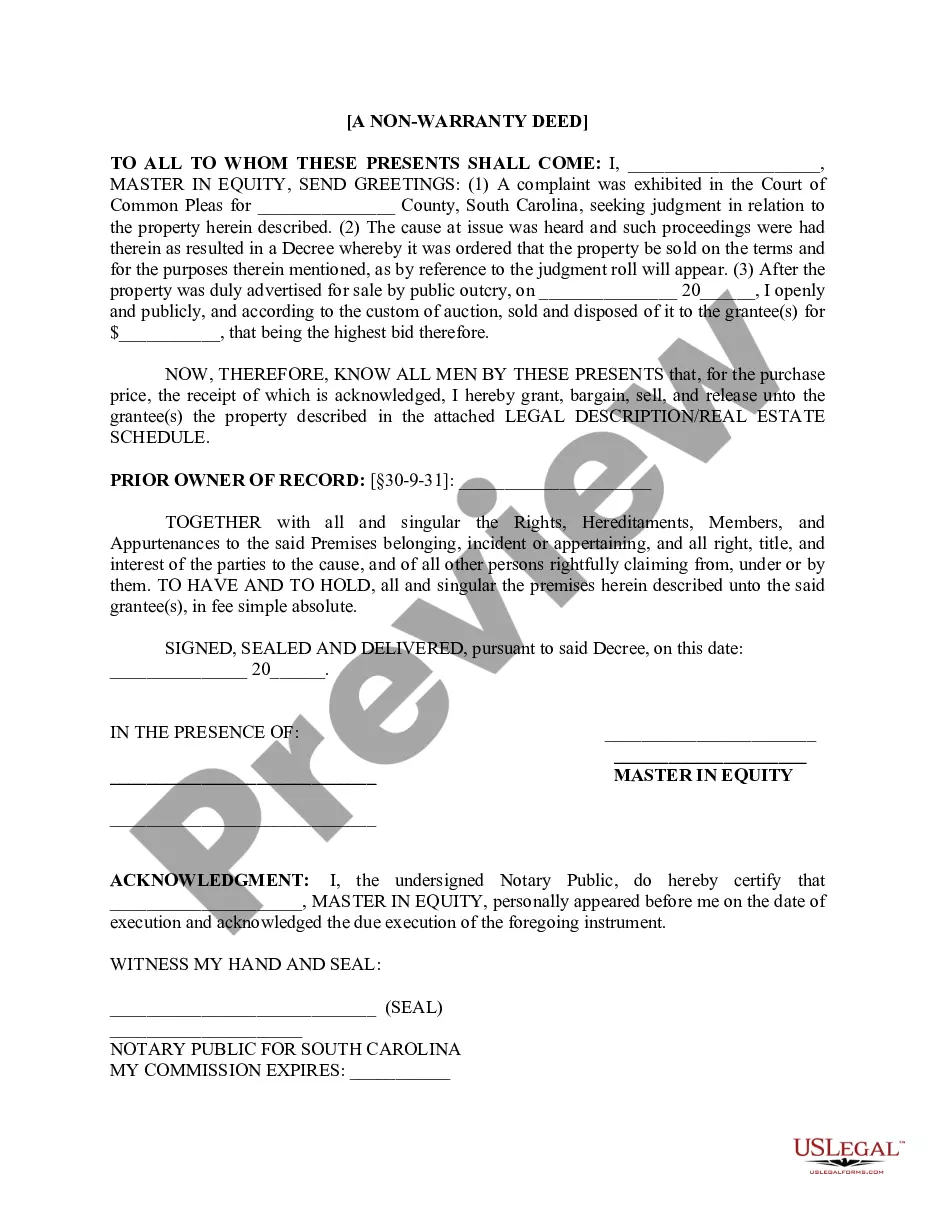
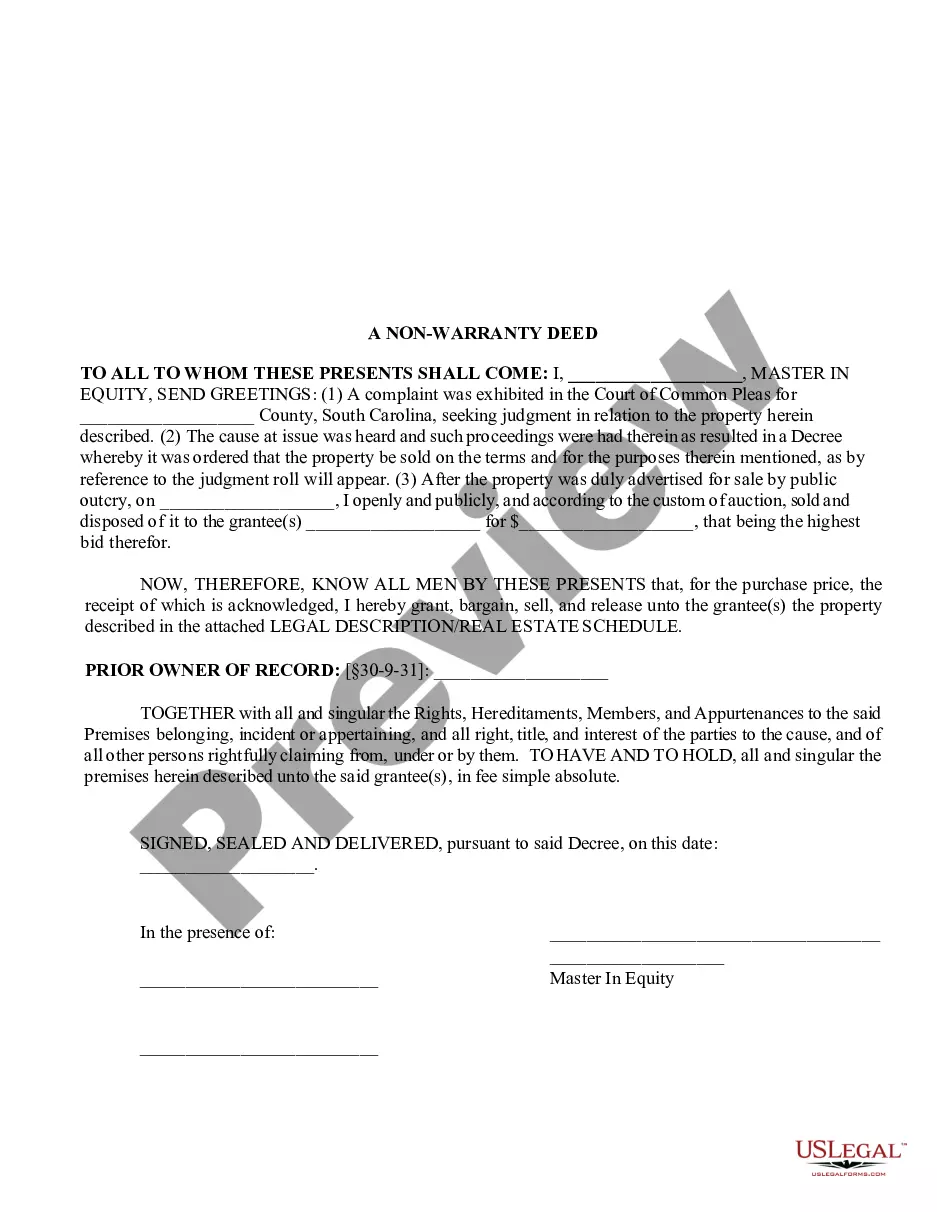
A Non-Warranty Deed is a legal document executed by the Master in Equity after a court-ordered foreclosure. This deed transfers property ownership to the highest bidder following a public auction and does not come with any warranty or guarantee of title. It differs from a warranty deed, which offers assurances regarding the property title.
Form components explained
- Master in Equity's declaration and acknowledgment of the sale.
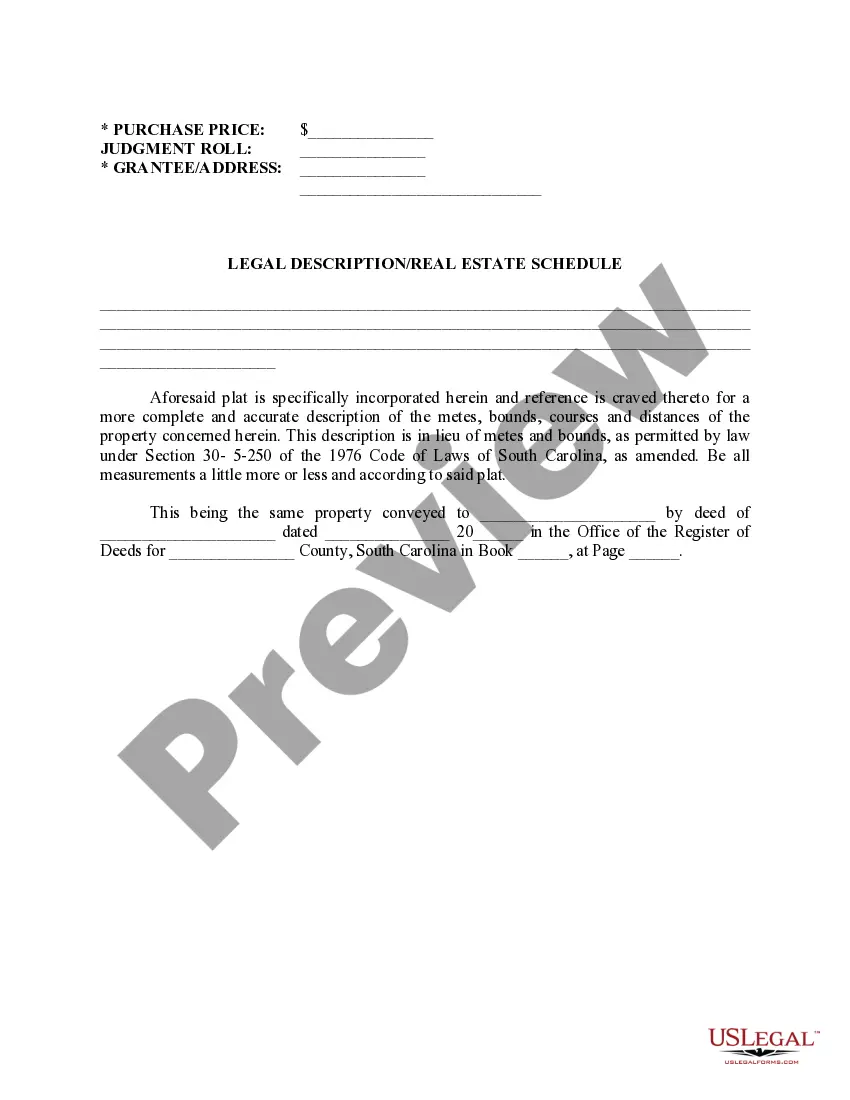
- Legal description of the property being transferred.
- Details of the auction, including date and final bid amount.
- Prior owner of record information.
- Signatures of the Master in Equity and a notary public.

Common use cases
This form should be used when property is sold at a foreclosure auction and the Master in Equity needs to transfer ownership to the winning bidder. It is essential in confirming the transaction and ensuring legal recognition of the new owner.
Intended users of this form
This form is intended for:
- Master in Equity presiding over a foreclosure sale.
- Individuals or entities that have successfully bid for property at a foreclosure auction.
- Legal professionals involved in real estate transactions related to foreclosures.
Completing this form step by step
- Identify the Master in Equity and enter their name in the designated section.
- Fill in the details of the property, including the legal description and prior owner of record.
- Specify the auction details, including the date of sale and amount of the highest bid.
- Ensure that the Master in Equity and a notary public sign the document.
- File the completed deed with the appropriate county office to formally transfer ownership.
Notarization guidance
Yes, this form must be notarized to be legally valid. The notarization process certifies the identity of the parties involved and confirms the authenticity of their signatures. US Legal Forms provides integrated online notarization for convenience and security.
Get your form ready online
Our built-in tools help you complete, sign, share, and store your documents in one place.
Make edits, fill in missing information, and update formatting in US Legal Forms—just like you would in MS Word.
Download a copy, print it, send it by email, or mail it via USPS—whatever works best for your next step.
Sign and collect signatures with our SignNow integration. Send to multiple recipients, set reminders, and more. Go Premium to unlock E-Sign.
If this form requires notarization, complete it online through a secure video call—no need to meet a notary in person or wait for an appointment.
We protect your documents and personal data by following strict security and privacy standards.

Make edits, fill in missing information, and update formatting in US Legal Forms—just like you would in MS Word.

Download a copy, print it, send it by email, or mail it via USPS—whatever works best for your next step.

Sign and collect signatures with our SignNow integration. Send to multiple recipients, set reminders, and more. Go Premium to unlock E-Sign.

If this form requires notarization, complete it online through a secure video call—no need to meet a notary in person or wait for an appointment.

We protect your documents and personal data by following strict security and privacy standards.
Common mistakes to avoid
- Failing to include the correct legal description of the property.
- Not obtaining the required signatures from the Master in Equity and a notary public.
- Omitting the auction details, such as the date and bid amount.
- Not filing the deed with the appropriate county office.
Why complete this form online
- Convenient access to customizable templates drafted by licensed attorneys.
- Instant download of the Non-Warranty Deed for immediate use.
- Guidance through each section to ensure completeness and accuracy.
- Ability to revise and save as needed before finalizing the document.
Looking for another form?


Form popularity
FAQ
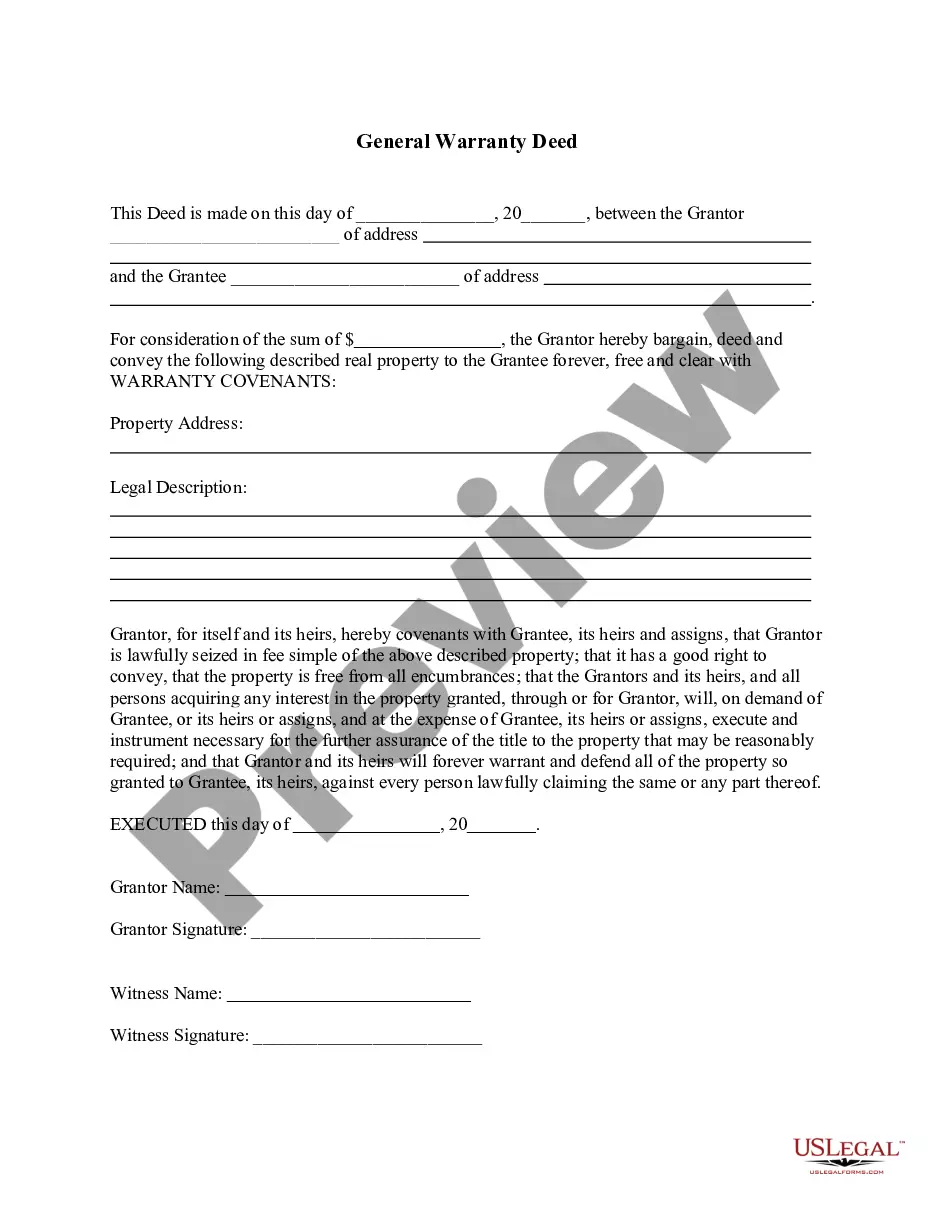
A warranty deed is a document often used in real estate that provides the greatest amount of protection to the purchaser of the property. The deed pledges or warrants that the owner owns the property free and clear of any outstanding liens, mortgages, or other encumbrances.
A general warranty deed is the most beneficial for the home buyer because it provides the most protection. It's a guarantee from the current owners (also referred to as grantors) that they have full ownership of the property and have disclosed all encumbrances, liens, easements and judgments.
Non-Warranty Deeds In a Non-Warranty or Quitclaim Deed, the seller merely is giving the buyer whatever rights, if any, that the seller has in the property and the seller makes no warranties of any nature about the seller's rights in the property.
A general warranty deed covers the property's entire history.The general warranty deed assures the buyer they are obtaining full rights of ownership without valid potential legal issues with the title. With a special warranty deed, the guarantee covers only the period when the seller held title to the property.
A special warranty deed to real estate offers protection to the buyer through the seller's guarantee that the title has been free and clear of encumbrances during their ownership of the property. It does not guarantee clear title beyond their ownership.
Special warranty deeds are most commonly used with commercial property transactions. Single-family and other residential property transactions will usually use a general warranty deed. Many mortgage lenders insist upon the use of the general warranty deed.
They are (1) covenant for seisin; (2) covenant of the right to convey; (3) covenant against encumbrances; (4) covenant for QUIET ENJOYMENT; (5) covenant of general WARRANTY; and (6) covenant for further assurances.
A warranty deed, also known as a general warranty deed, is a legal real estate document between the seller (grantor) and the buyer (grantee). The deed protects the buyer by pledging that the seller holds clear title to the property and there are no encumbrances, outstanding liens, or mortgages against it.
There are several different types of deeds, and many property owners have questions about the type of deed they should use to transfer property to a living trust.For example, California uses the term grant deed, and Michigan uses the term covenant deed, to describe a deed that provides a limited warranty of title.