Hawaii Commercial Contract for Contractor
Understanding this form
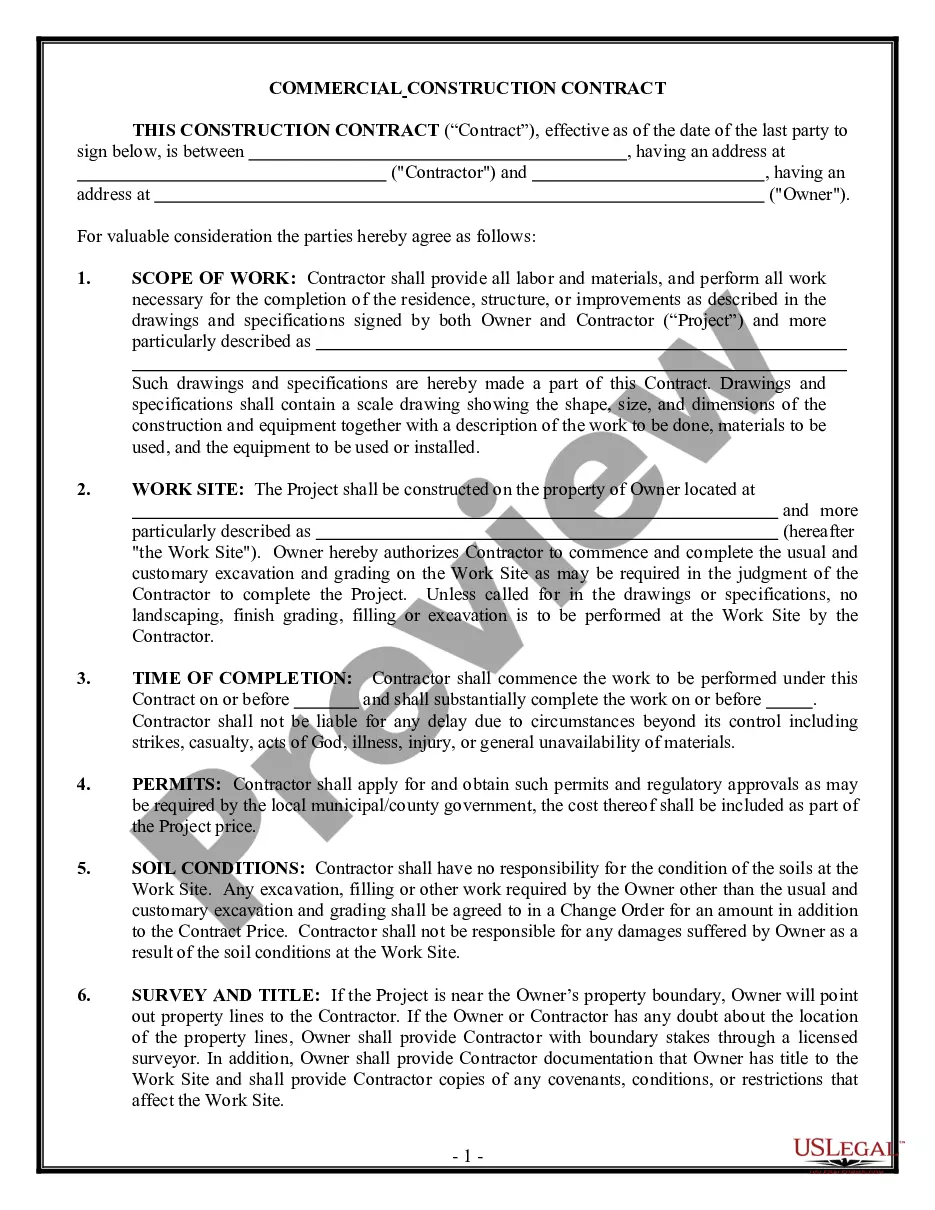
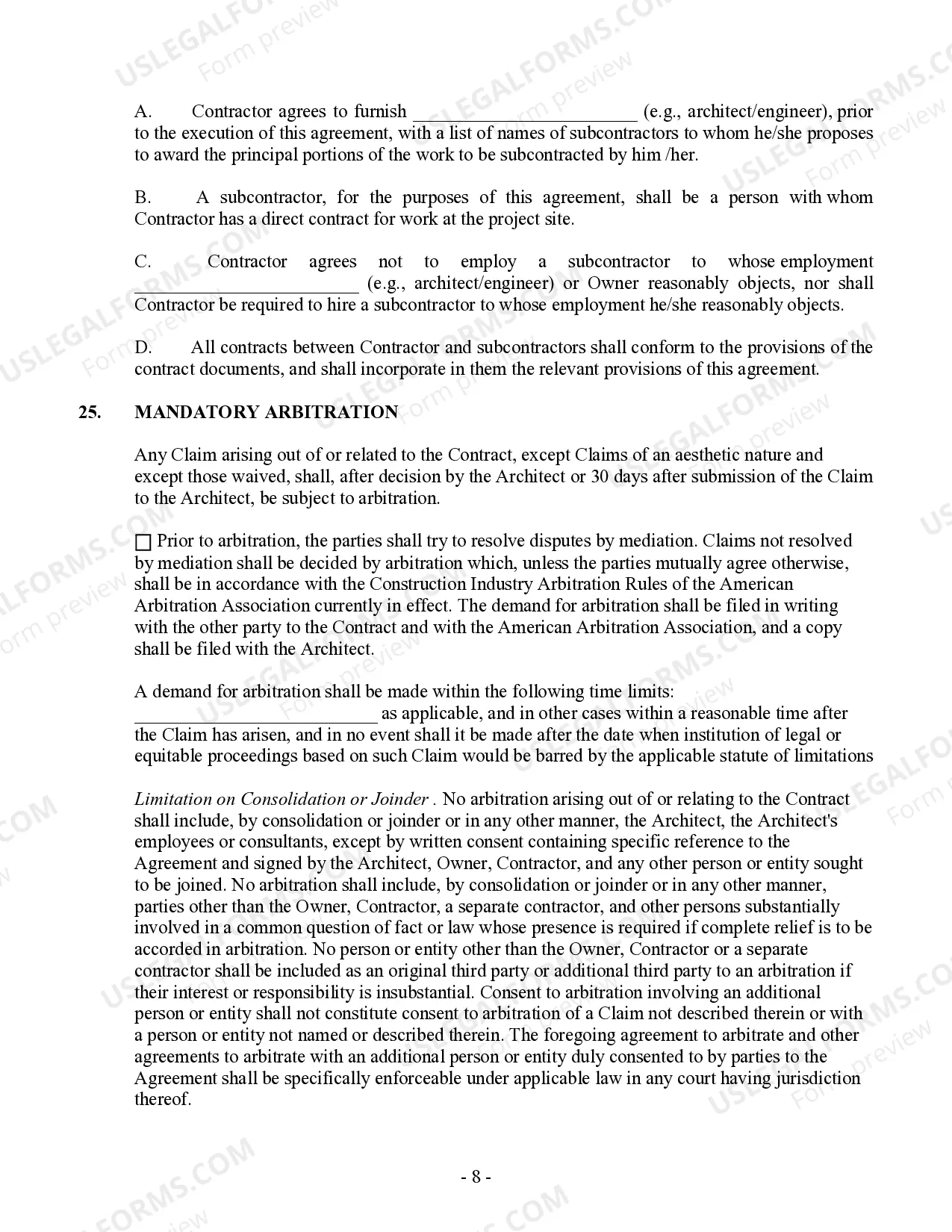
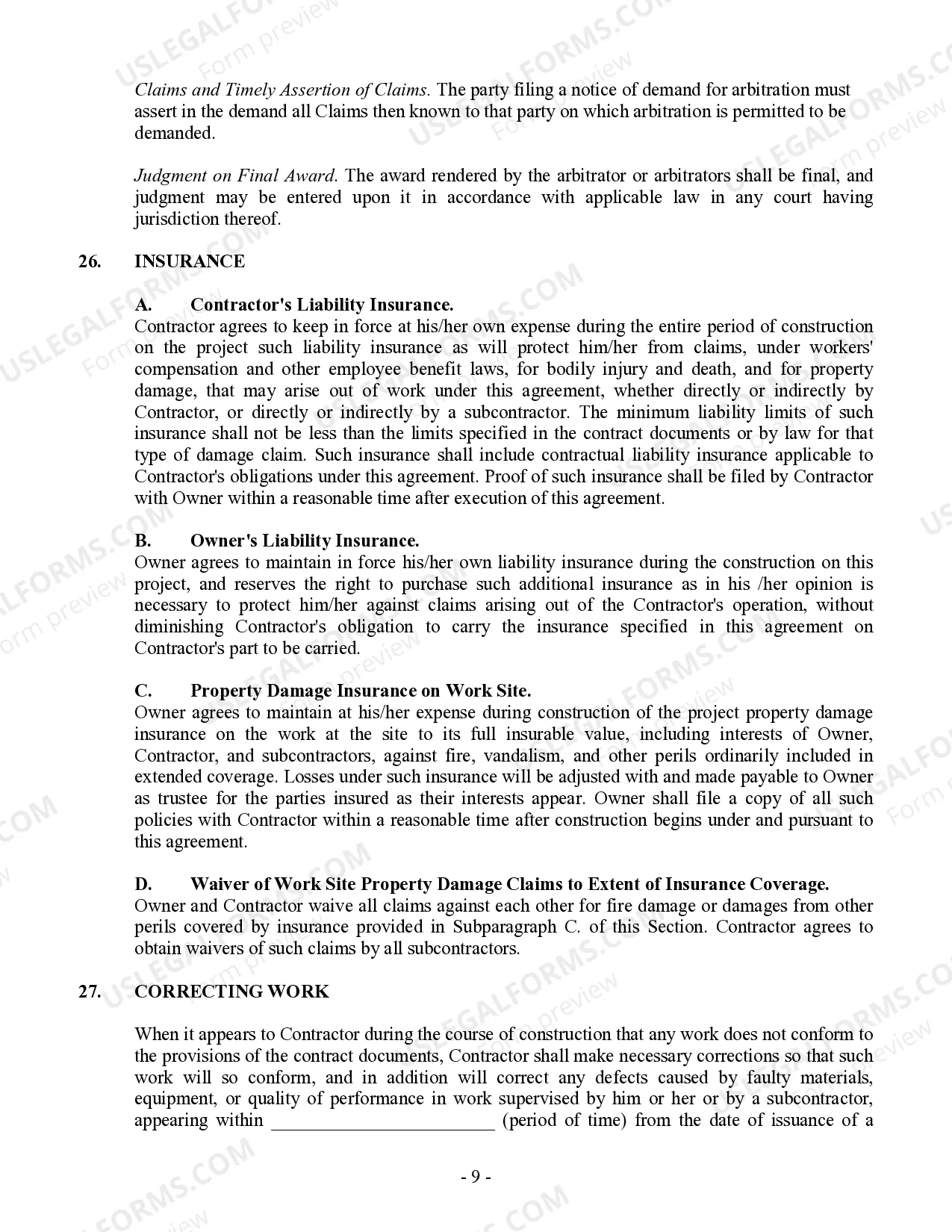
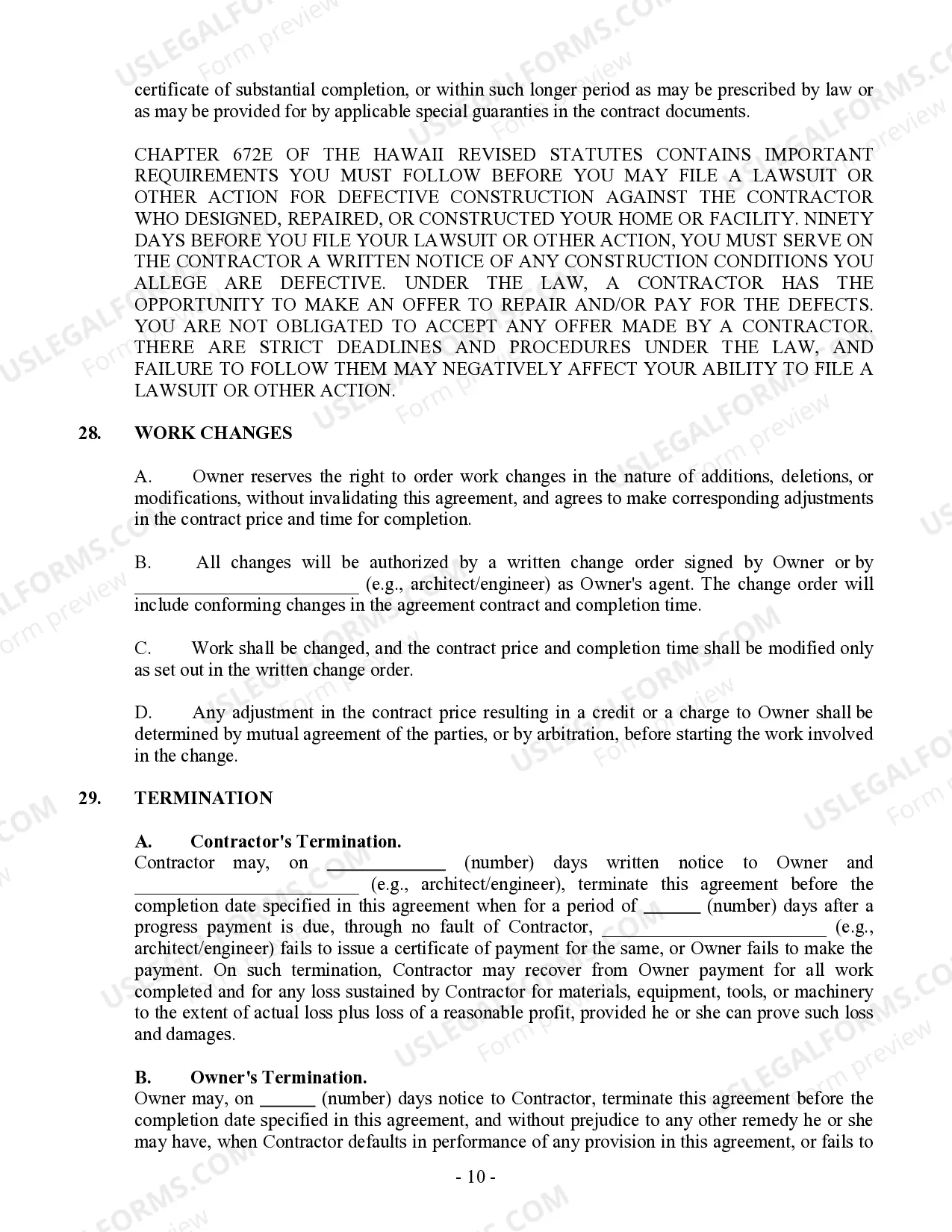
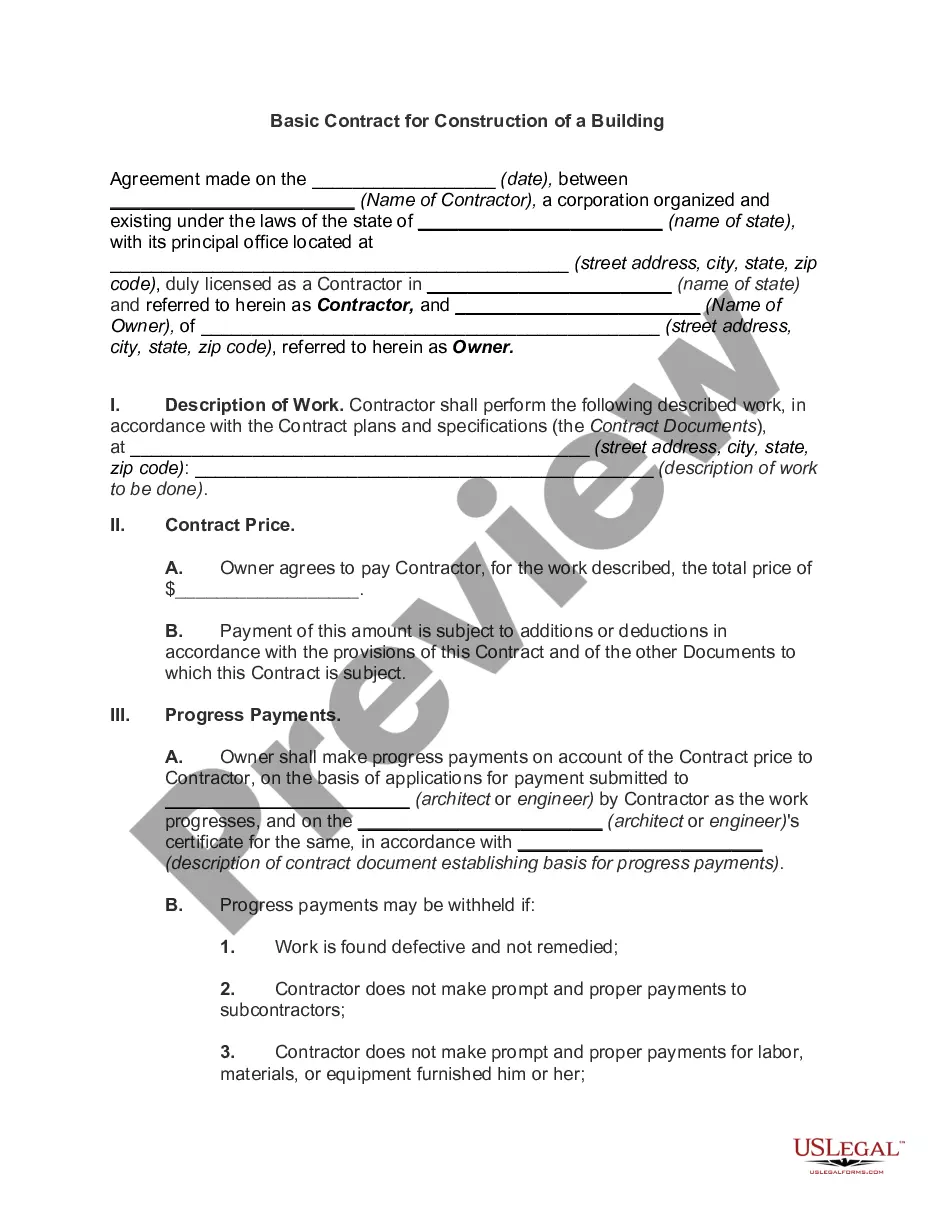
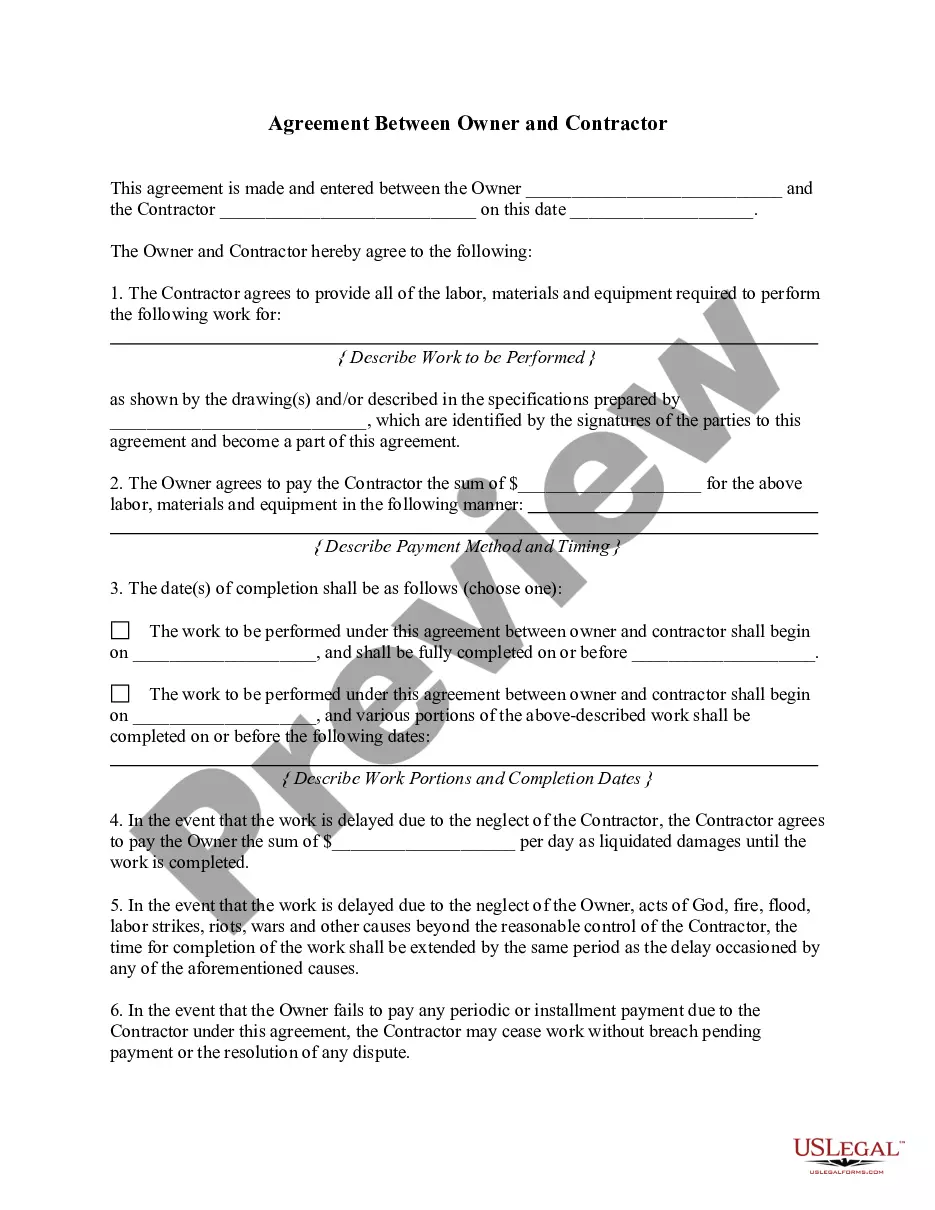
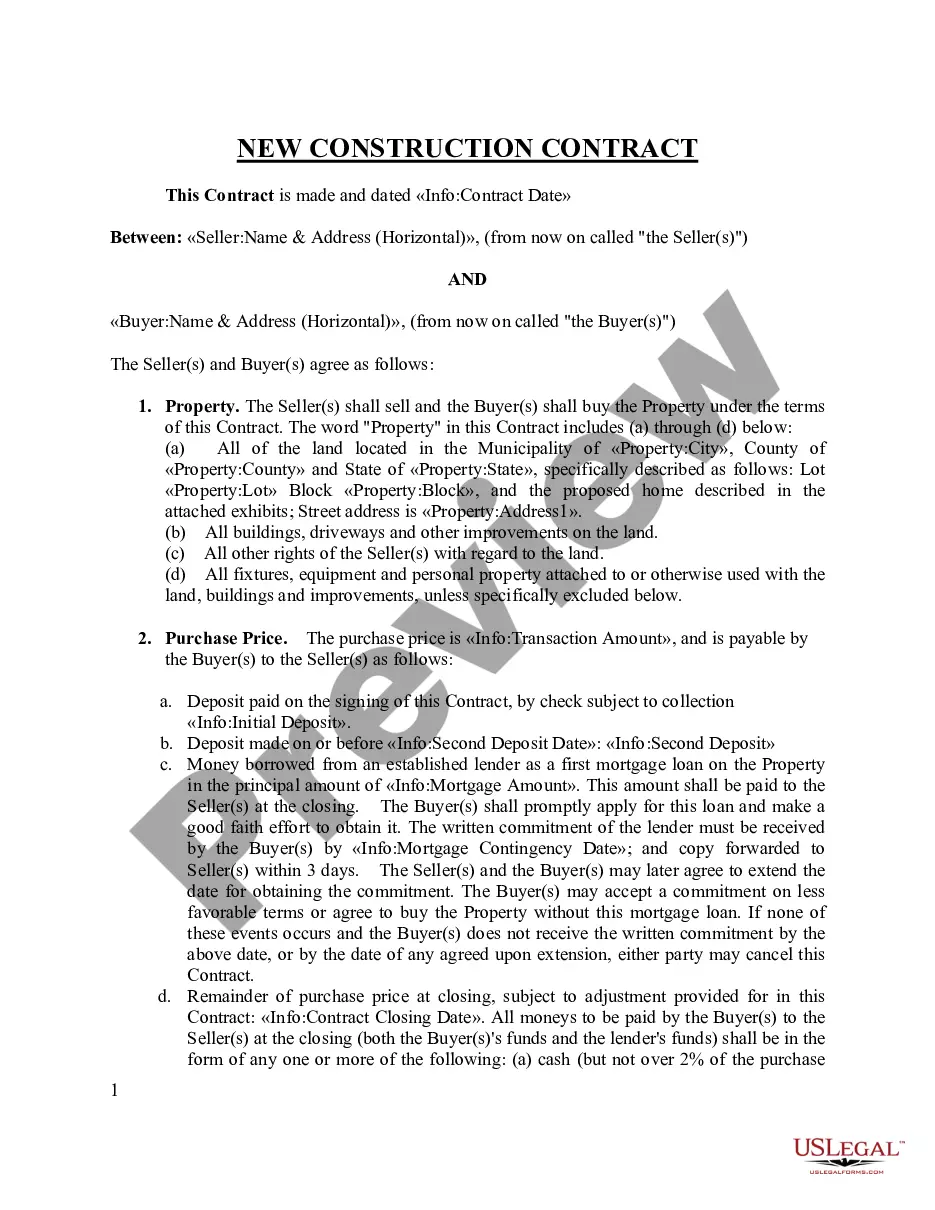
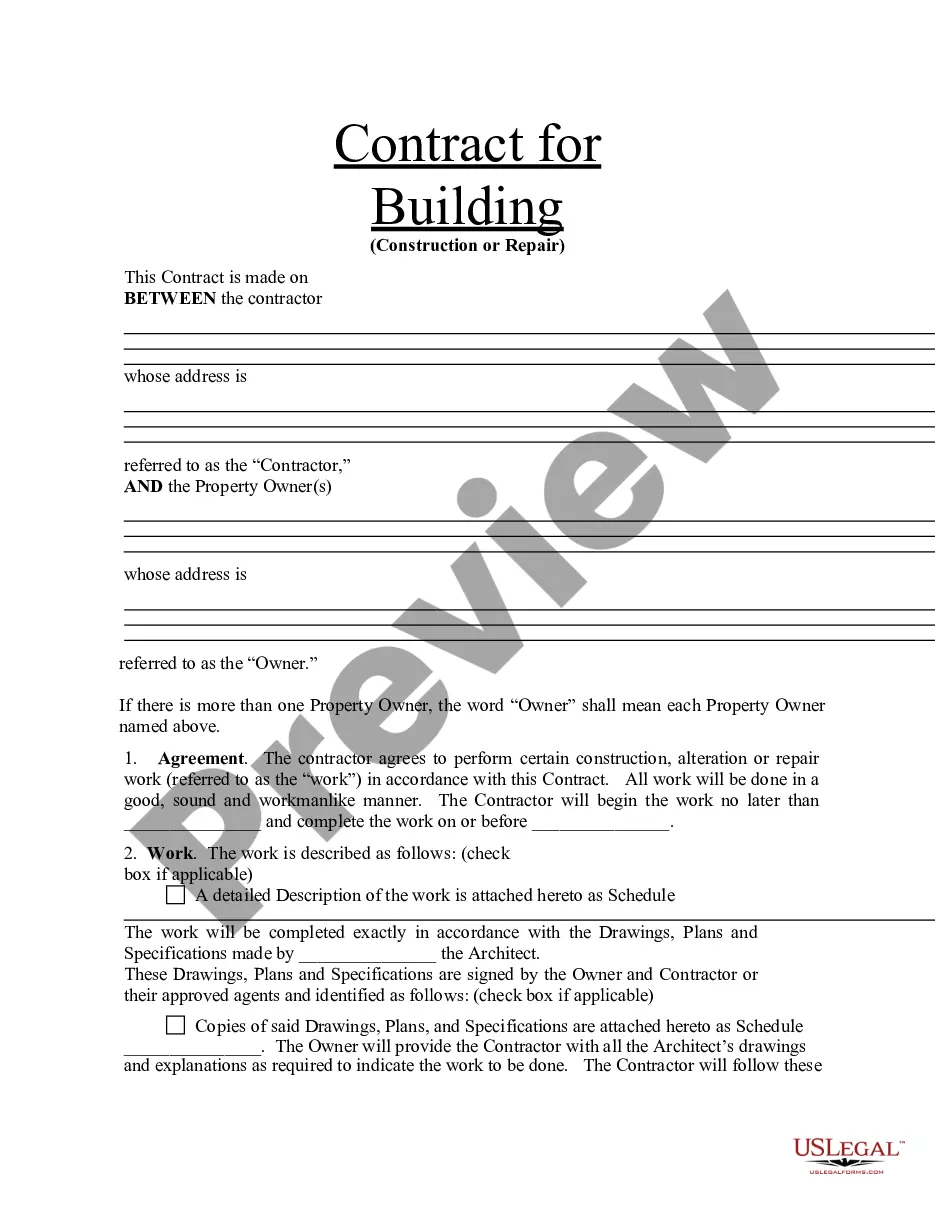
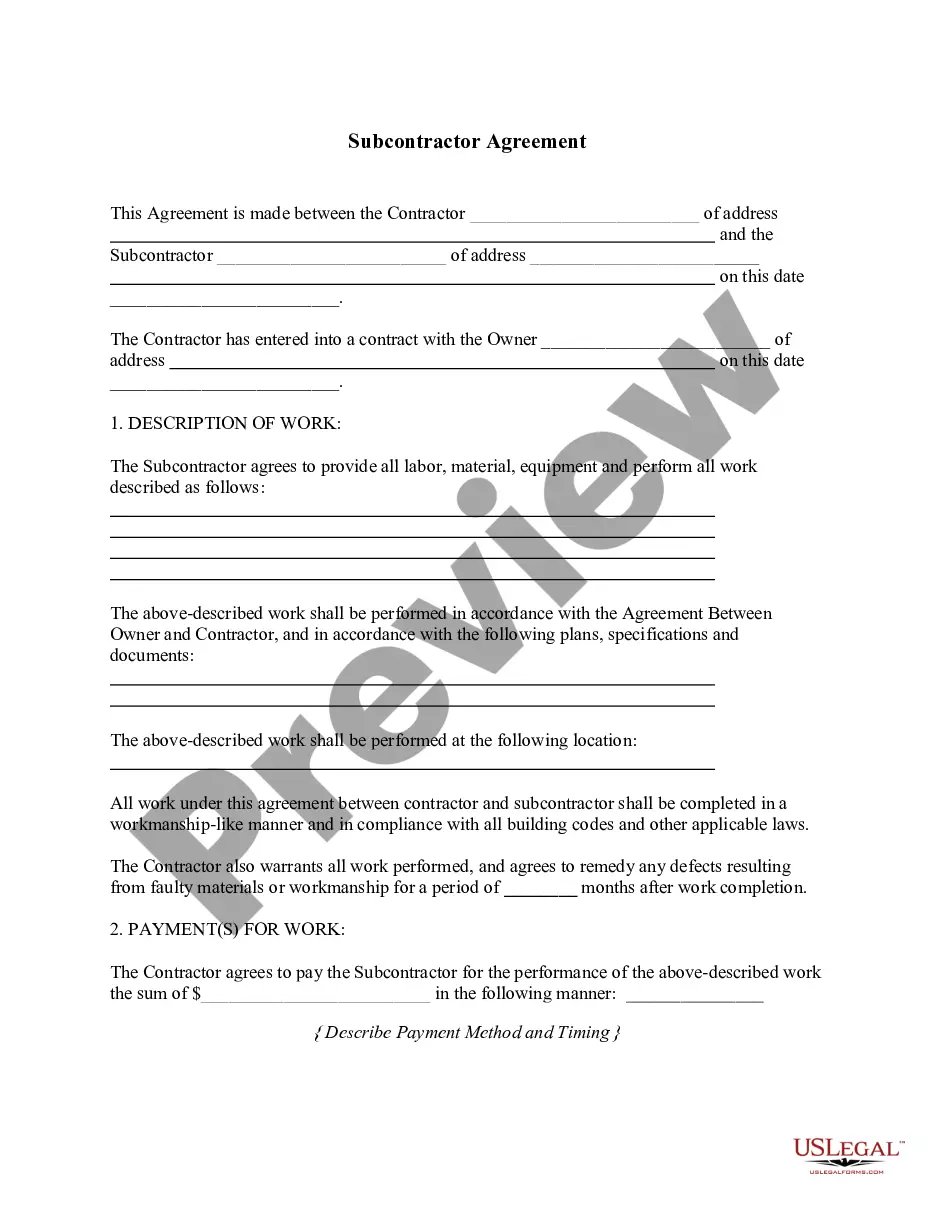
The Commercial Contract for Contractor is a legally binding document outlining the terms and conditions between commercial contractors and property owners. This form is unique as it accommodates both cost-plus and fixed-fee payment arrangements, ensuring clarity on responsibilities, payment terms, and project scope. Unlike generic contracts, this form is specifically drafted to comply with the laws of the State of Hawaii, making it suitable for construction projects within that jurisdiction.
Key parts of this document
- Detailed definition of the work site, including property location.
- Permits and regulatory responsibilities for the contractor.
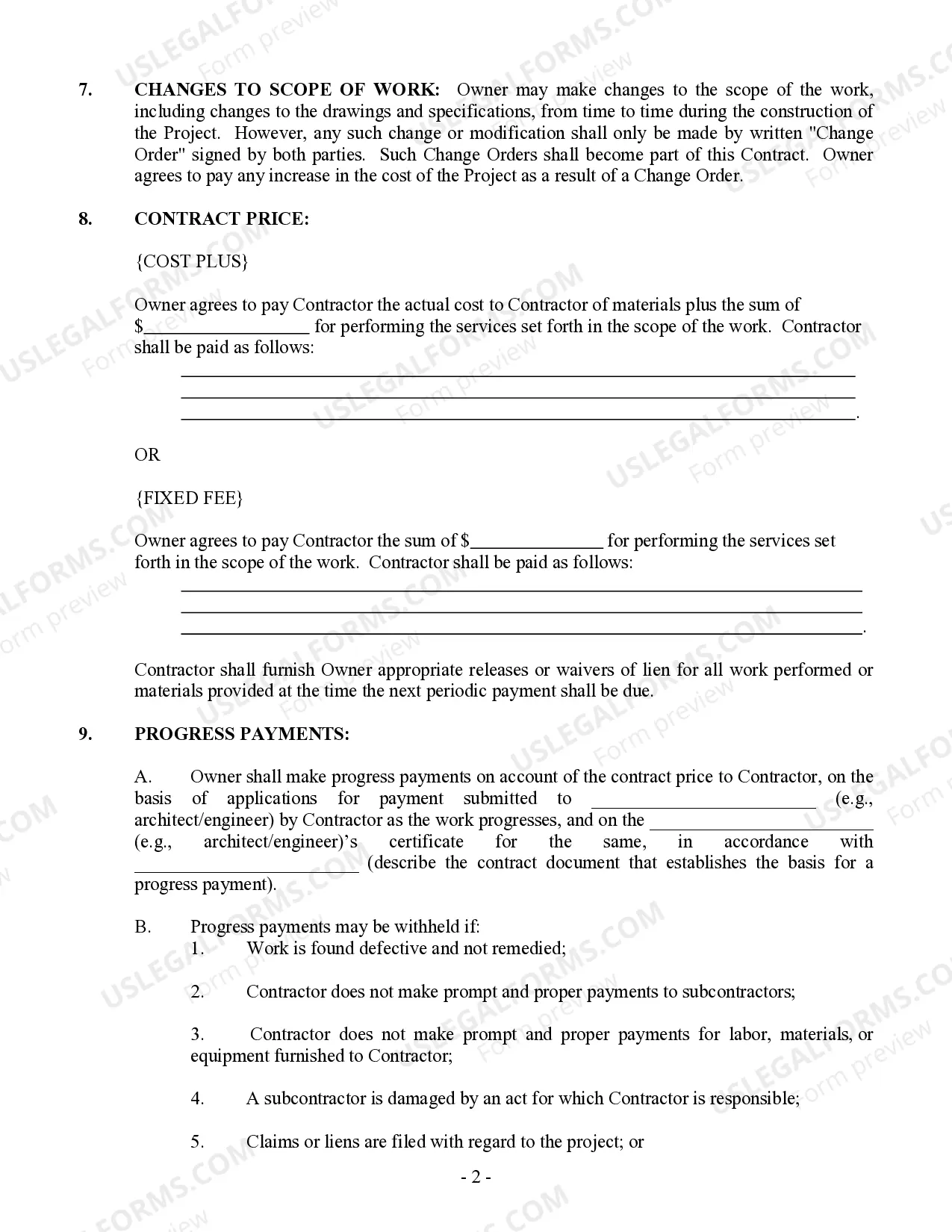
- Progress payment terms outlining when and how payments are made.
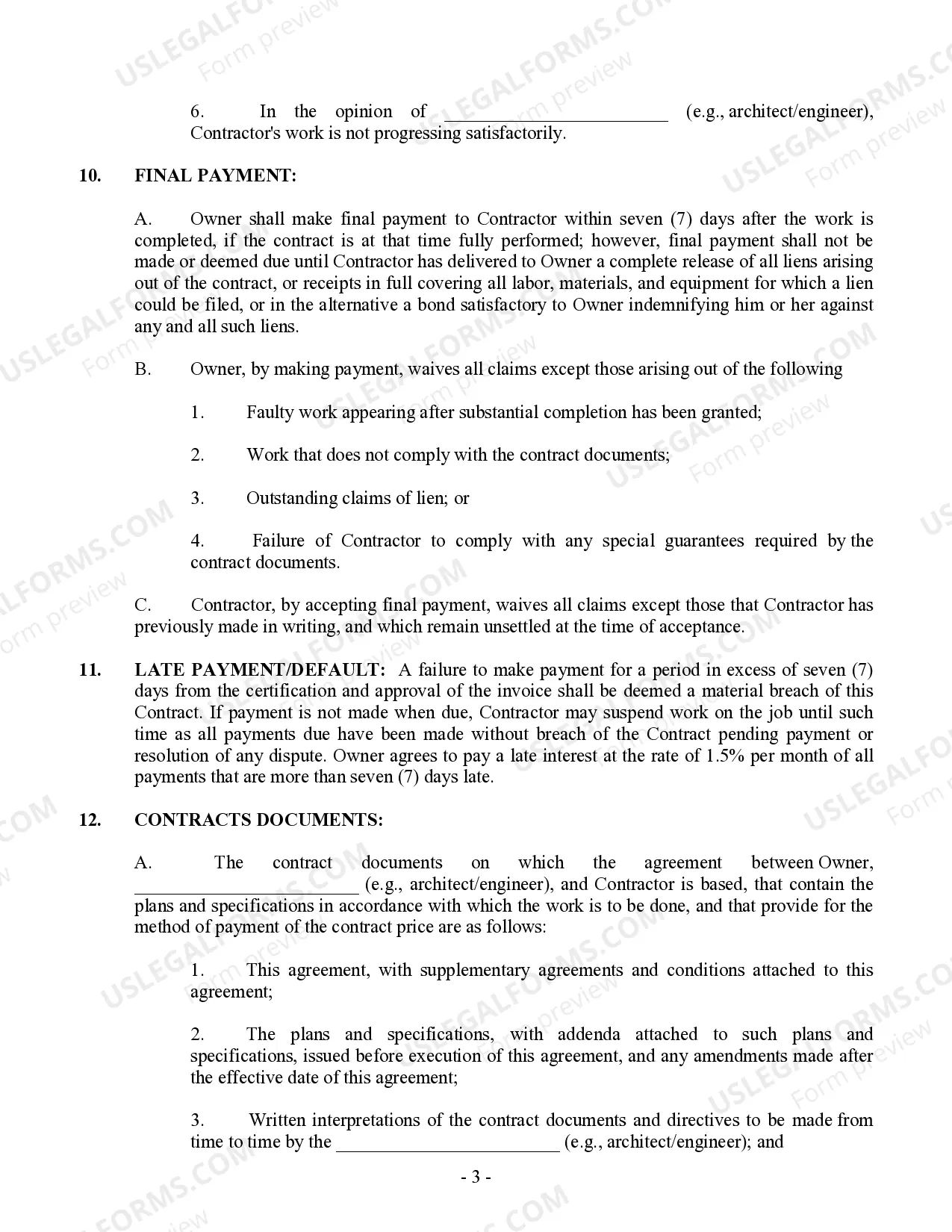
- Conditions for final payment, including lien releases and claims.
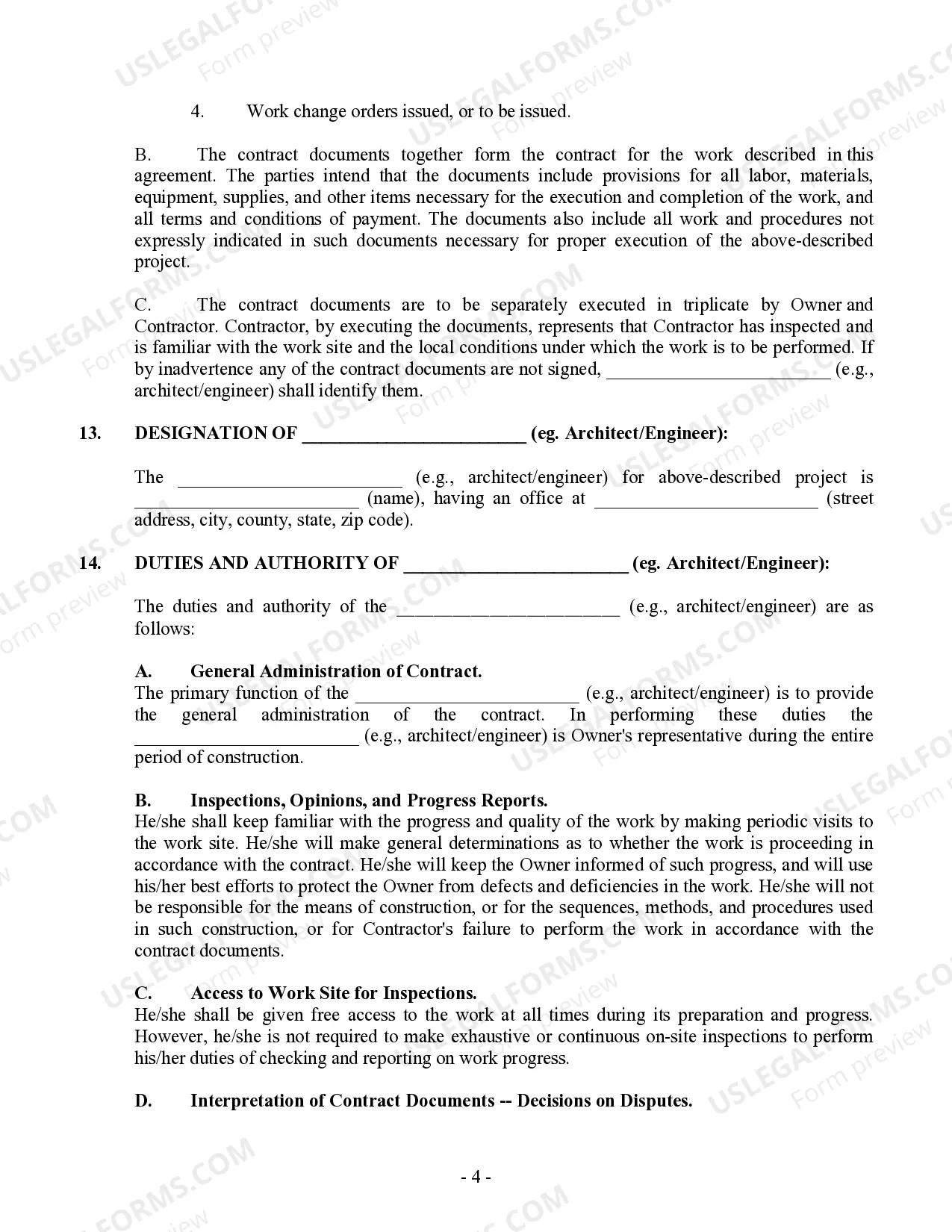
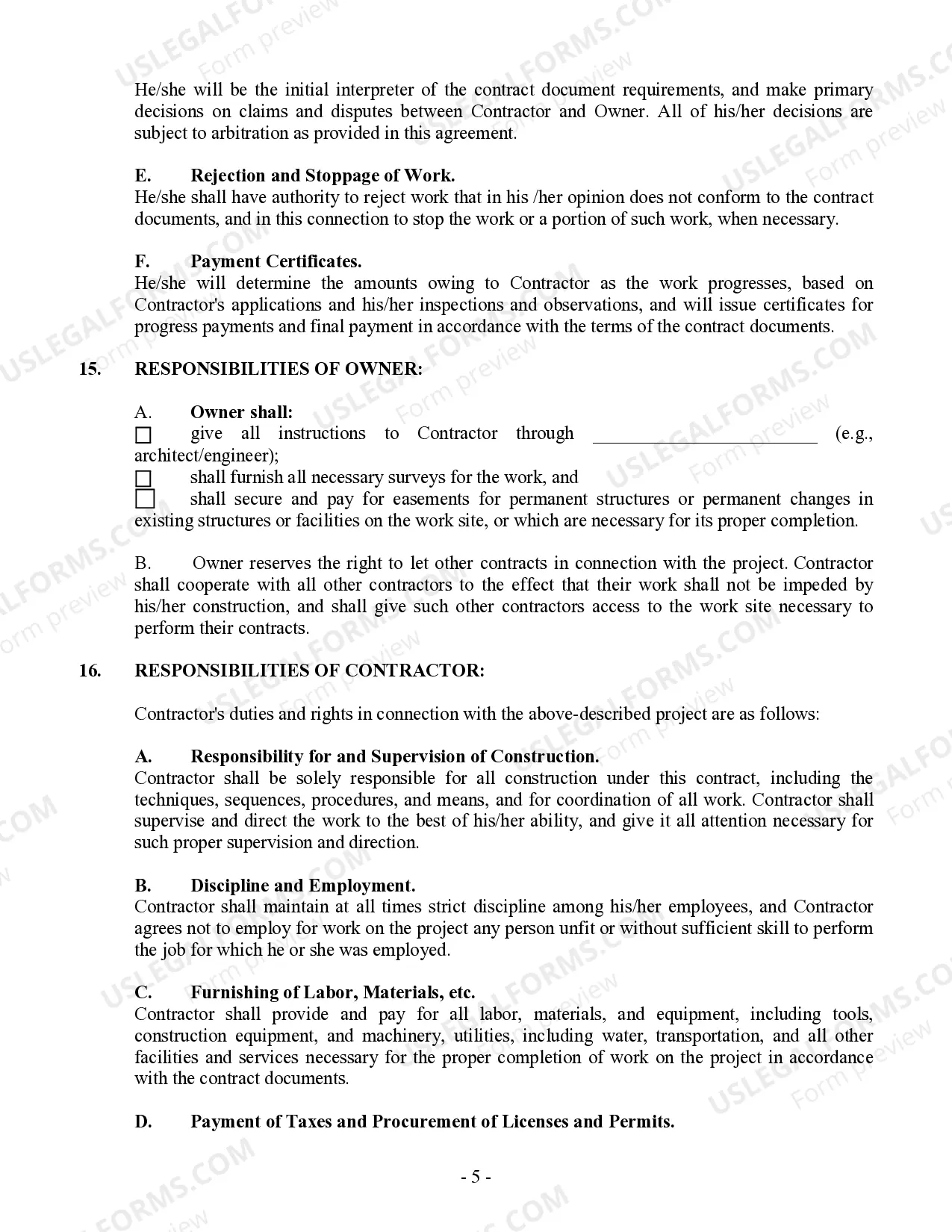
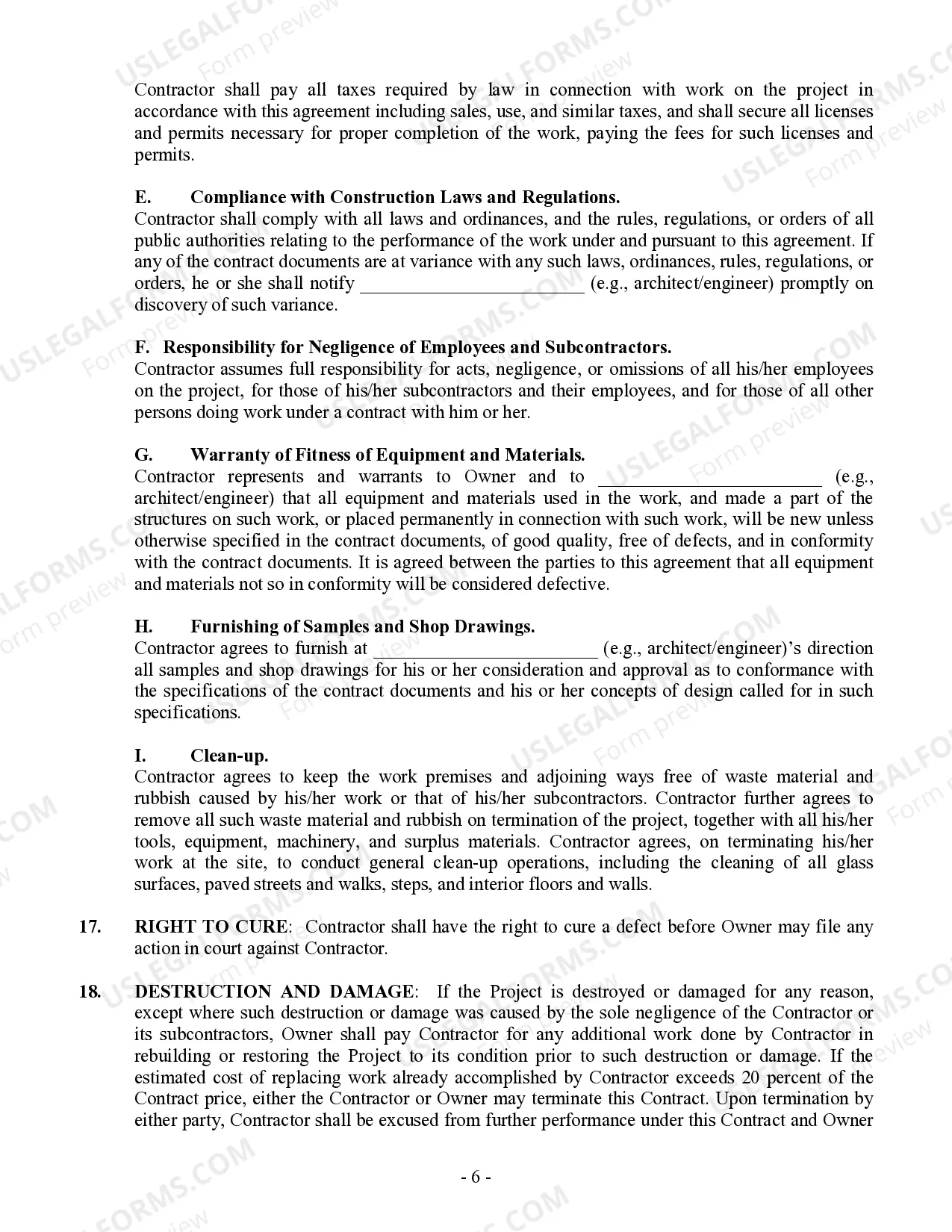
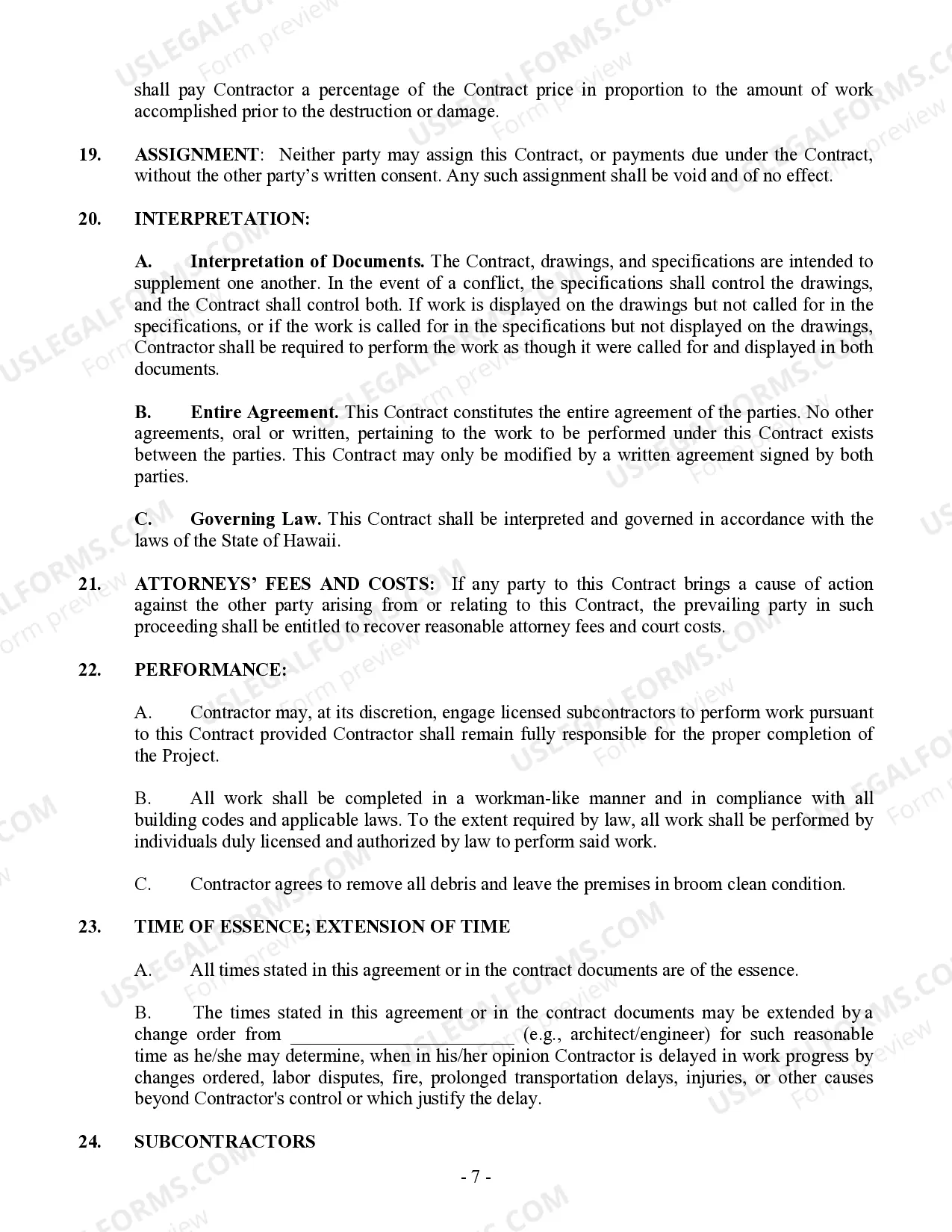
- The contractor's responsibilities, including supervision and compliance with laws.
- Provisions for change orders, allowing adjustments to the project scope and price.

When this form is needed
This form should be used when entering into an agreement for construction projects between commercial contractors and property owners. It is particularly useful for projects that require formal documentation of payment schedules, project specifications, and roles and responsibilities. Additionally, it is appropriate when the property owner and contractor wish to protect their interests with a clear understanding of how changes and disputes will be handled.
Who needs this form
This form is ideal for:
- Commercial contractors looking to formalize agreements with property owners.
- Property owners seeking clarity and protection in construction agreements.
- Legal professionals assisting clients in drafting construction contracts.
- Anyone involved in commercial construction projects in Hawaii.
Completing this form step by step
- Identify the parties involved, including the commercial contractor and property owner.
- Specify the work site location where the construction will take place.
- Detail the payment structure, indicating whether it is cost-plus or fixed fee.
- Clearly outline any required permits and responsibilities for obtaining them.
- Include key project specifications and timelines in the contract documents.
Notarization guidance
This form does not typically require notarization unless specified by local law. However, it is advisable to check local regulations to ensure compliance with any notarial requirements for construction contracts.
Get your form ready online
Our built-in tools help you complete, sign, share, and store your documents in one place.
Make edits, fill in missing information, and update formatting in US Legal Forms—just like you would in MS Word.
Download a copy, print it, send it by email, or mail it via USPS—whatever works best for your next step.
Sign and collect signatures with our SignNow integration. Send to multiple recipients, set reminders, and more. Go Premium to unlock E-Sign.
If this form requires notarization, complete it online through a secure video call—no need to meet a notary in person or wait for an appointment.
We protect your documents and personal data by following strict security and privacy standards.

Make edits, fill in missing information, and update formatting in US Legal Forms—just like you would in MS Word.

Download a copy, print it, send it by email, or mail it via USPS—whatever works best for your next step.

Sign and collect signatures with our SignNow integration. Send to multiple recipients, set reminders, and more. Go Premium to unlock E-Sign.

If this form requires notarization, complete it online through a secure video call—no need to meet a notary in person or wait for an appointment.

We protect your documents and personal data by following strict security and privacy standards.
Mistakes to watch out for
- Failing to specify the exact work site, leading to disputes over project scope.
- Not including detailed payment schedules, which can cause payment disputes.
- Overlooking necessary permits or regulatory approvals before starting work.
- Not clearly defining the responsibilities of each party, which may result in conflicts.
Why complete this form online
- Immediate access and download flexibility for quick use.
- Customizable fields to adapt the contract to specific project needs.
- Drafted by licensed attorneys ensuring legal reliability and compliance.
- Cost-effective compared to hiring legal professionals for simple contracts.
Legal use & context
- The contract serves as a formal agreement, making it enforceable in court.
- Understanding the terms can help prevent disputes between the contractor and the property owner.
- The provision regarding the right to cure defects provides contractors an opportunity to correct issues before facing legal action.
- The warranty clause limits liability to workmanship defects within a specified time frame.
Looking for another form?

Form popularity
FAQ
Hiring an unlicensed contractor in Hawaii is not strictly illegal, but it can lead to significant complications. You may face issues like lack of recourse if the job is done poorly or if any legal disputes arise. To safeguard your investment, opt for a licensed contractor and negotiate a robust Hawaii Commercial Contract for Contractor, ensuring clear expectations and legal protection.
An unlicensed contractor can still be classified as an independent contractor, but hiring one poses legal risks. Unlicensed status does not exempt them from liability or compliance with local regulations. Thus, for your security and to maintain legal protection, it is advisable to use a valid Hawaii Commercial Contract for Contractor with a licensed professional.
Yes, contractors must be licensed in Hawaii to ensure they meet the state's regulations and standards. Licensing provides assurance that contractors have the necessary skills and experience to manage construction projects safely. When entering into a Hawaii Commercial Contract for Contractor, ensure your contractor is properly licensed to protect your investment.
Verifying a contractor in Hawaii is crucial for ensuring you hire a qualified professional. You can start by checking their license status through the Hawaii Department of Commerce and Consumer Affairs. Additionally, reviewing their portfolio and client testimonials will help you ascertain their reliability, especially when you plan to establish a Hawaii Commercial Contract for Contractor.
Choosing between a handyman and a contractor depends on the complexities of your project. Handymen typically handle small, routine tasks, while contractors manage larger, more specialized projects requiring adherence to building codes. If your project involves extensive work, a Hawaii Commercial Contract for Contractor may be necessary to ensure compliance and protect your interests.
In Hawaii, the primary difference between an employee and an independent contractor lies in the level of control and independence. Employees work under the direction of an employer, while independent contractors operate with more autonomy. Understanding this distinction is essential when drafting a Hawaii Commercial Contract for Contractor, as it helps you specify the nature of the working relationship and responsibilities.
A commercial contract is a formal agreement between parties relating to business transactions. These contracts can cover services, goods, or construction work, making them essential for compliance and clarity in commercial dealings. In the context of a Hawaii Commercial Contract for Contractor, these agreements outline the expectations and responsibilities of all parties involved, promoting a transparent working relationship.
Acquiring a commercial contract in Hawaii starts with creating a solid marketing strategy that targets potential clients. You can leverage platforms like uslegalforms, which can guide you in drafting appropriate agreements and streamline the process of contract formation. Focus on building relationships, and responding promptly to inquiries to enhance your chances of securing contracts.
Hawaii's contract law governs the formation and enforcement of agreements, including commercial contracts. Generally, contracts in Hawaii require mutual consent, a lawful object, and consideration. Under Hawaii law, it is crucial to uphold ethical practices in contract formation, particularly when drafting a Hawaii Commercial Contract for Contractor, to ensure compliance and avoid disputes.
Yes, Hawaii requires a contractor's license for all individuals looking to engage in commercial construction work. This licensing ensures that contractors meet state standards for skill and professionalism. To operate legally, contractors must apply for the appropriate license through the state and follow local regulations, which often involve completing prescribed training or exams.