Condemnation Clauses: Contract for Real Property
Understanding this form
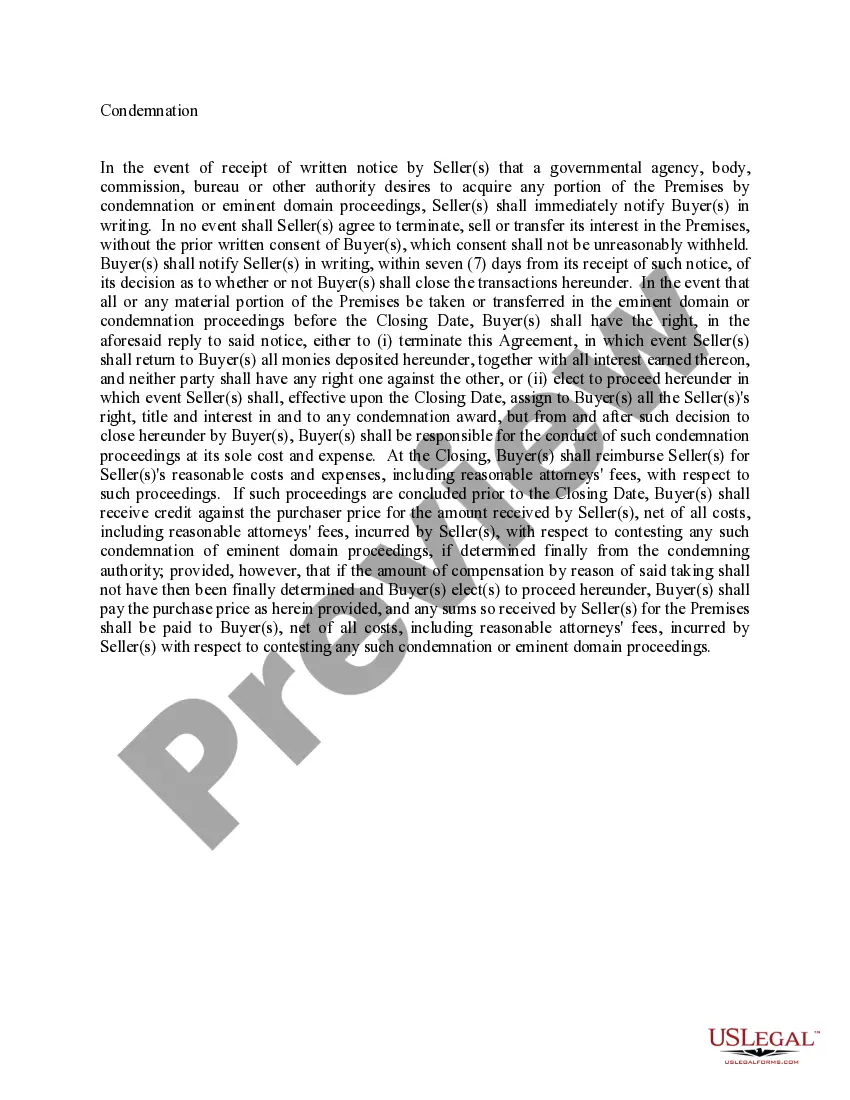
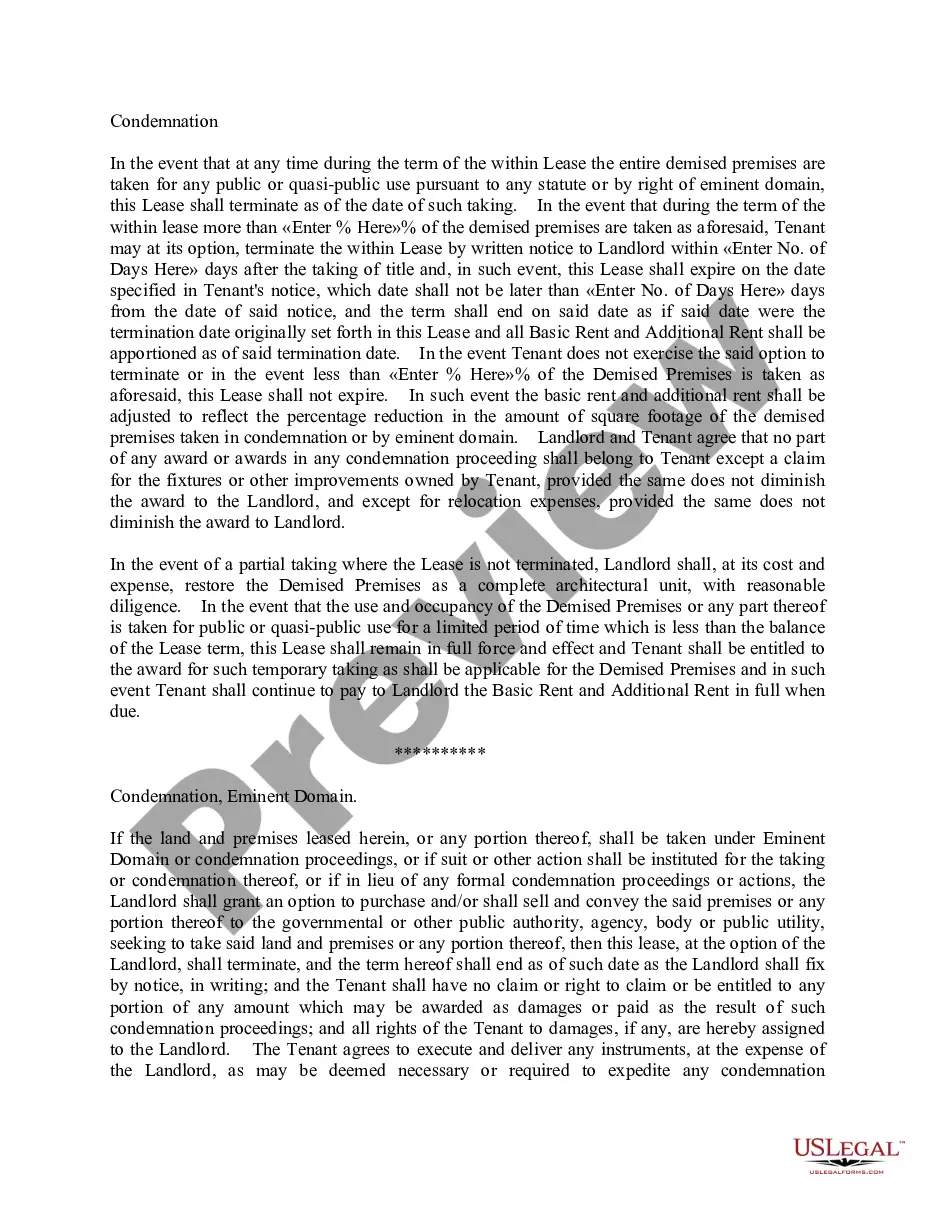
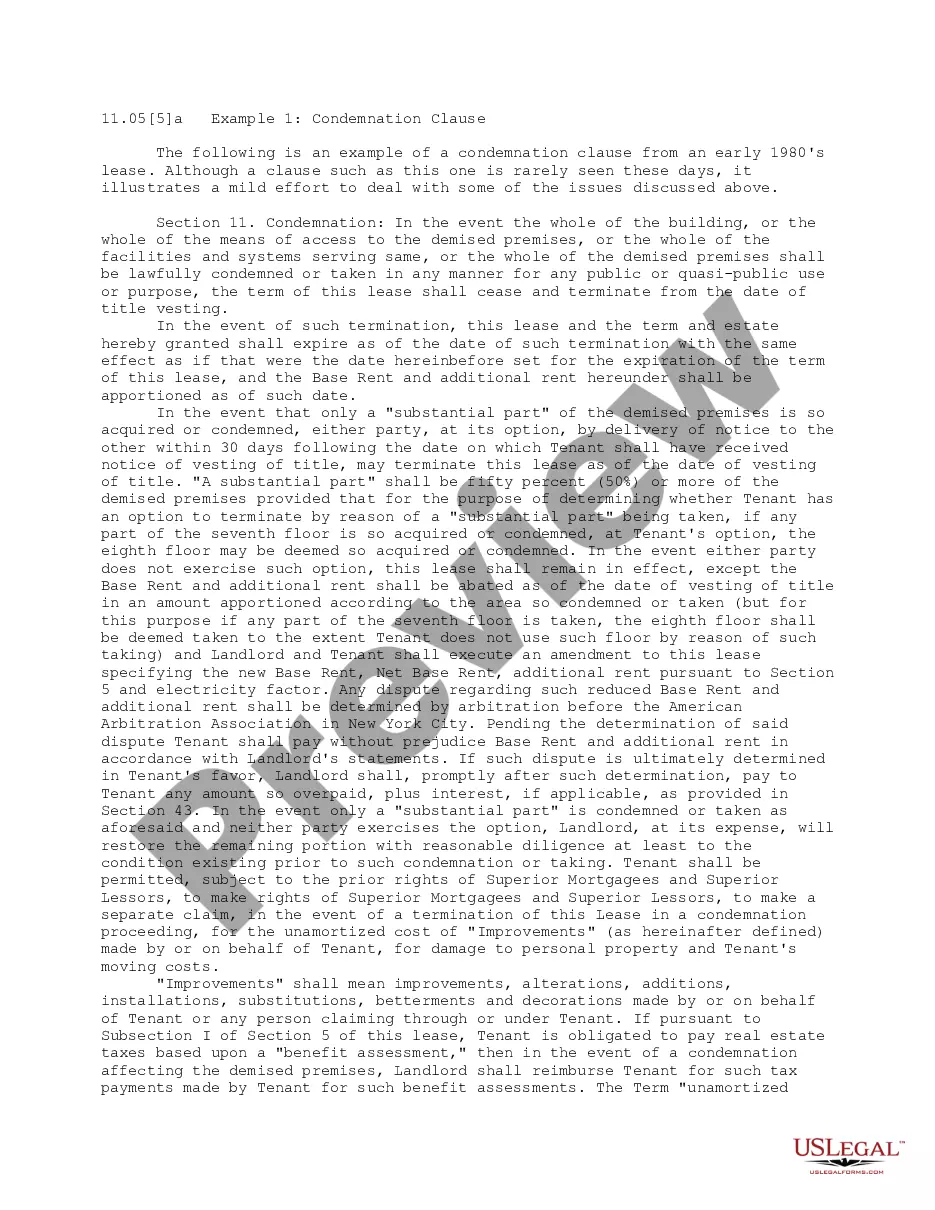
The Condemnation Clauses: Contract for Real Property is a legal agreement that outlines the conditions under which a real estate contract remains enforceable in the event of government acquisition via condemnation or eminent domain. Unlike other contracts that may focus purely on buyer-seller terms, this clause specifically addresses scenarios related to government actions concerning the property, ensuring that both parties understand their rights and obligations in such circumstances.
Main sections of this form
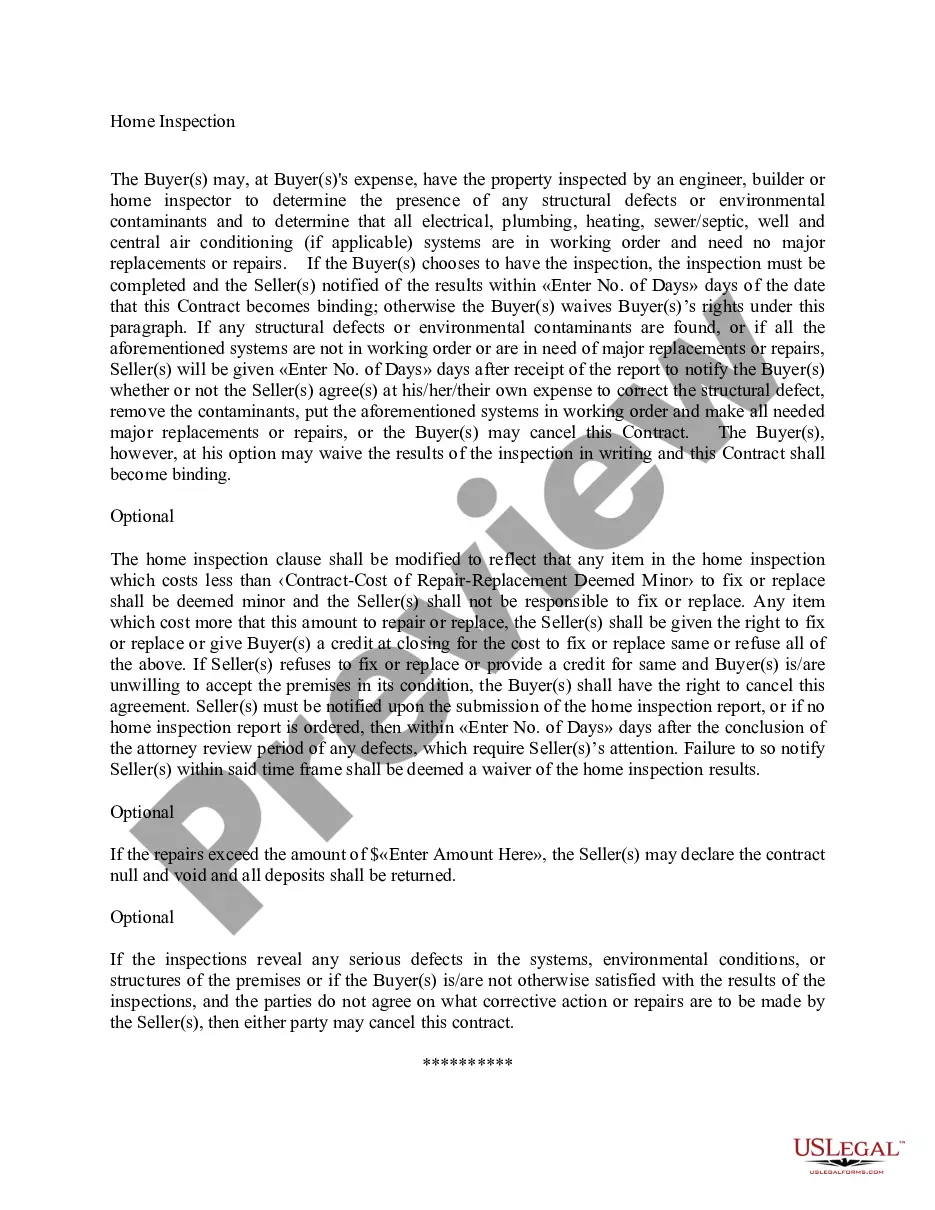
- Notification obligations: Seller must inform Buyer upon receipt of government intent to acquire the property.
- Buyerâs decision options: Buyer has the right to terminate the agreement or proceed with the purchase.
- Reimbursement terms: Seller must cover reasonable costs incurred due to condemnation proceedings, if applicable.
- Assignment of condemnation award: In case of closure, Seller assigns rights to any compensation received from government authorities.
- Timeframes for notifications and responses: Specific deadlines for Buyer to respond to Sellerâs notice of condemnation.
Common use cases
This form should be used when entering into a real estate contract that may be impacted by government actions. Common scenarios include properties that are under threat of eminent domain or condemnation, where clarity around rights and obligations is crucial for both sellers and buyers. This clause protects both parties in the event that the government seeks to acquire the property, providing options and ensuring fairness in the transaction.
Who should use this form
- Real estate sellers looking to protect their interests in case of government acquisition.
- Real estate buyers who want clarity about their rights if the property is subject to condemnation.
- Real estate attorneys drafting contracts involving properties potentially affected by eminent domain.
- Landlords and tenants negotiating lease agreements that may include government-related property acquisitions.
Steps to complete this form
- Identify the parties involved: Clearly enter the names and addresses of the Seller(s) and Buyer(s).
- Specify the property: Provide a detailed description of the property being sold or leased.
- Input relevant dates: Fill in the date that the contract is signed and any important deadlines.
- Include terms regarding notifications: Ensure the obligations for notifying parties about government intentions are clearly defined.
- Add signatures: Both parties need to sign and date the contract to make it legally binding.
Does this form need to be notarized?
This form does not typically require notarization unless specified by local law. However, it is advisable to check the requirements in your jurisdiction to ensure compliance with any specific local regulations regarding real estate contracts.
Get your form ready online
Our built-in tools help you complete, sign, share, and store your documents in one place.
Make edits, fill in missing information, and update formatting in US Legal Forms—just like you would in MS Word.
Download a copy, print it, send it by email, or mail it via USPS—whatever works best for your next step.
Sign and collect signatures with our SignNow integration. Send to multiple recipients, set reminders, and more. Go Premium to unlock E-Sign.
If this form requires notarization, complete it online through a secure video call—no need to meet a notary in person or wait for an appointment.
We protect your documents and personal data by following strict security and privacy standards.

Make edits, fill in missing information, and update formatting in US Legal Forms—just like you would in MS Word.

Download a copy, print it, send it by email, or mail it via USPS—whatever works best for your next step.

Sign and collect signatures with our SignNow integration. Send to multiple recipients, set reminders, and more. Go Premium to unlock E-Sign.

If this form requires notarization, complete it online through a secure video call—no need to meet a notary in person or wait for an appointment.

We protect your documents and personal data by following strict security and privacy standards.
Typical mistakes to avoid
- Failing to notify the Buyer timely about government notices.
- Not clarifying timeframes for decision-making in response to notifications.
- Overlooking the assignment of condemnation awards in case of property acquisition.
- Leaving out the details about reimbursement of legal fees and costs.
Benefits of completing this form online
- Convenient access: Downloadable templates allow for quick and easy completion at your convenience.
- Editable content: Modify the form to suit your specific circumstances.
- Reliability: Forms are drafted by licensed attorneys, ensuring they meet legal standards.
- Immediate availability: Get the necessary documentation without waiting for an attorney's appointment.
Looking for another form?

Form popularity
FAQ
A condemnation clause provision that would allow the tenant to recover just and adequate compensation for items that would not reduce the landlord's recovery often are included in the lease. These items would include business damage, fixtures and personal property of the tenant and relocation benefits.
A Condemnation clause in a lease determines what happens in the event that the leased premises are taken from the landlord by a governmental agency for public use, either by condemnation or eminent domain.
A condemnation action does not invalidate an existing lease agreement, so you would still have the obligation to fulfill the terms of your lease. For this reason, many tenants may use any compensation they receive to pay off their lease.
Description. Casualty and condemnation provisions in mortgage loan documents typically give the lender some degree of control over the proceeds and how to apply the proceeds toward repair or restoration of improvements.
In order for a mortgagee to be satisfied with responses to such questions, a condemnation clause will usually provide the mortgagee the right to withhold a release of the mortgage (or condemnation proceeds to the mortgagor) until the mortgagee is satisfied that the remaining property is of sufficient value to secure
DEFINITION OF A CONDEMNATION CLAUSE. A condemnation clause in a lease provides for the contingency that the leased premises or a part of the leased premises may be taken for a public purpose by an entity with the power of eminent domain before the lease has expired.