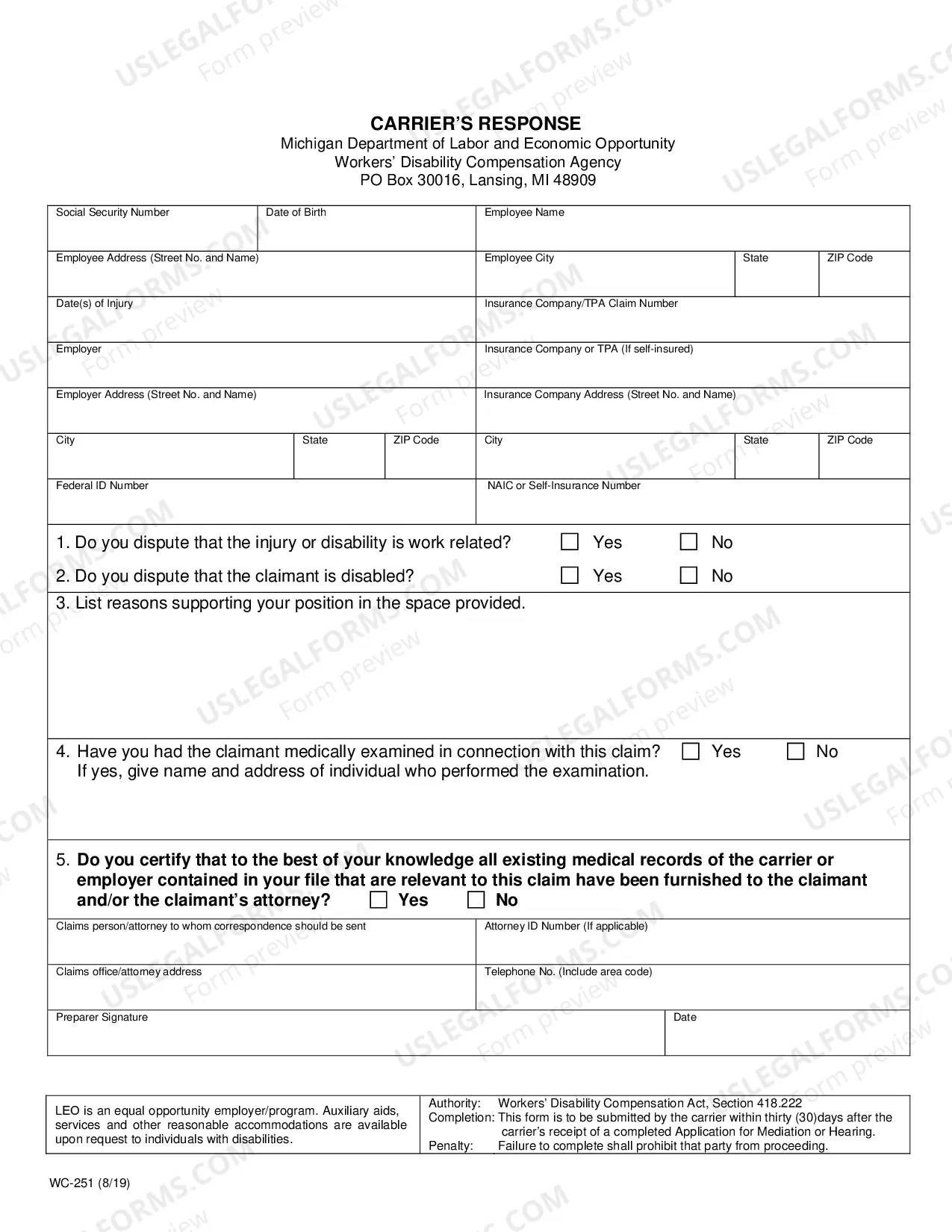
6.40 ELEMENTS OF CLAIM
Understanding this form
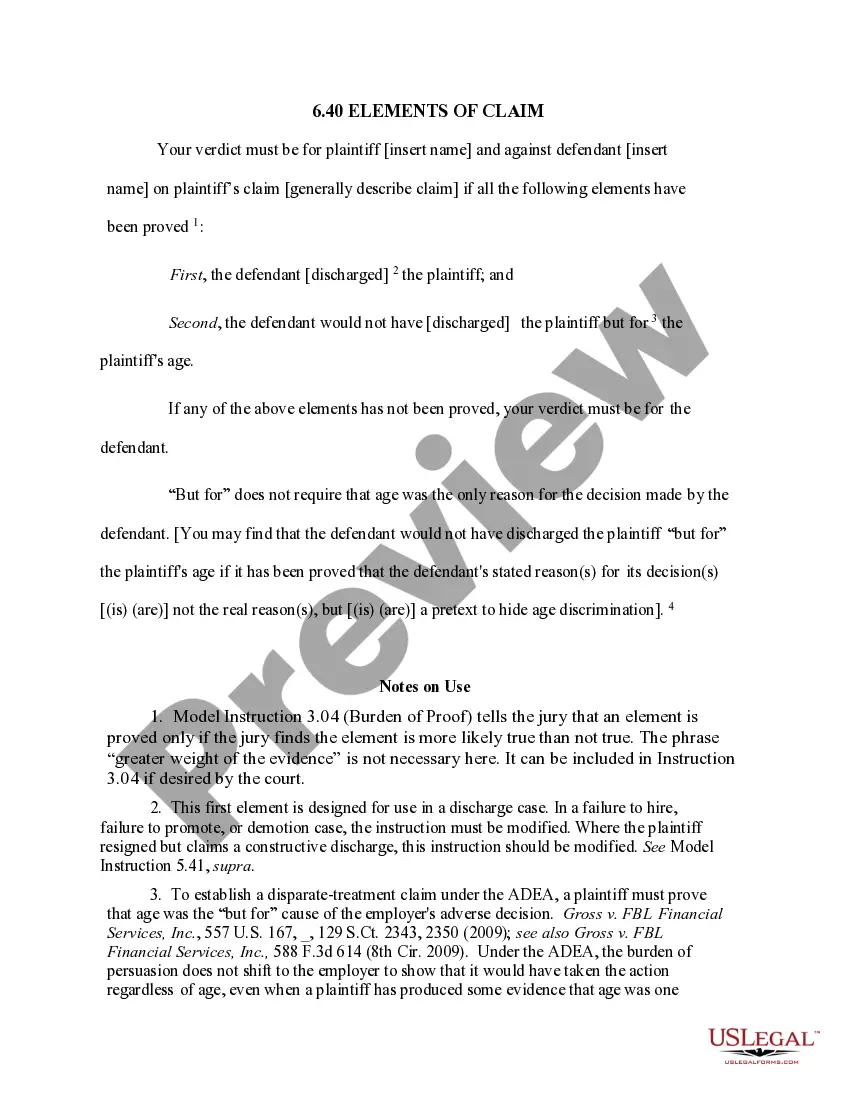
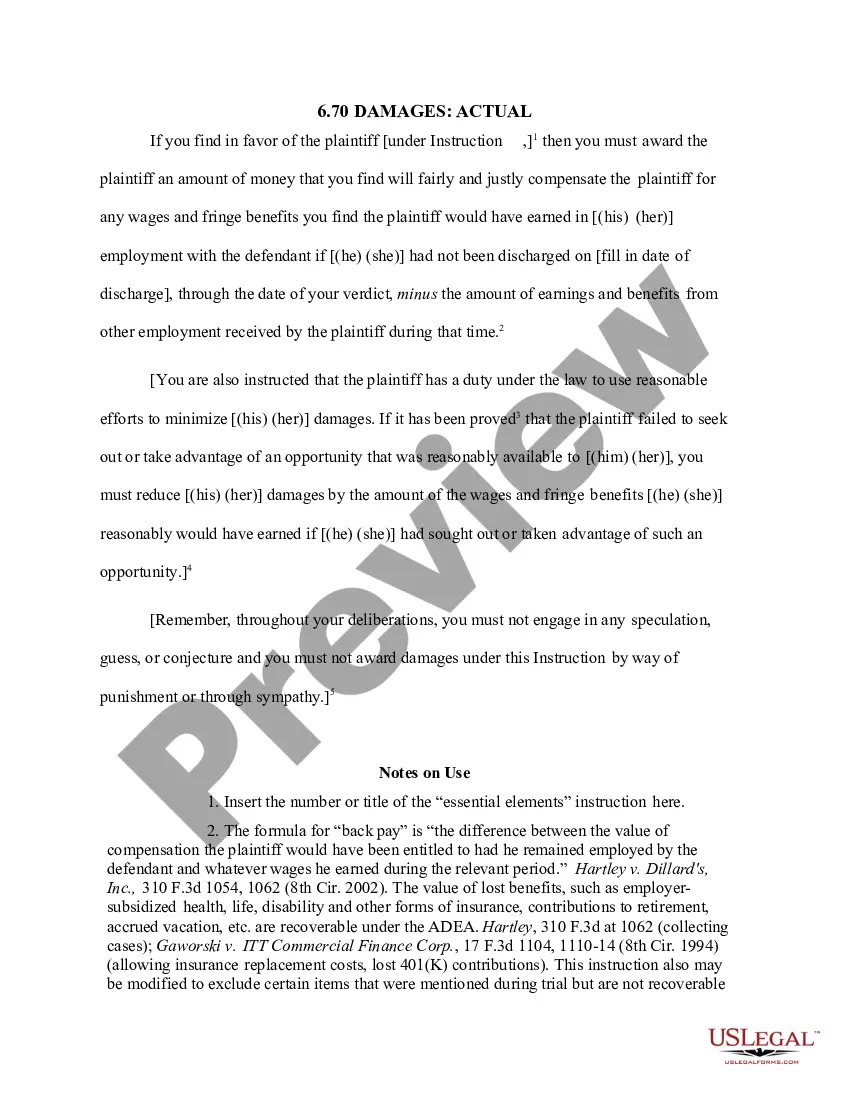
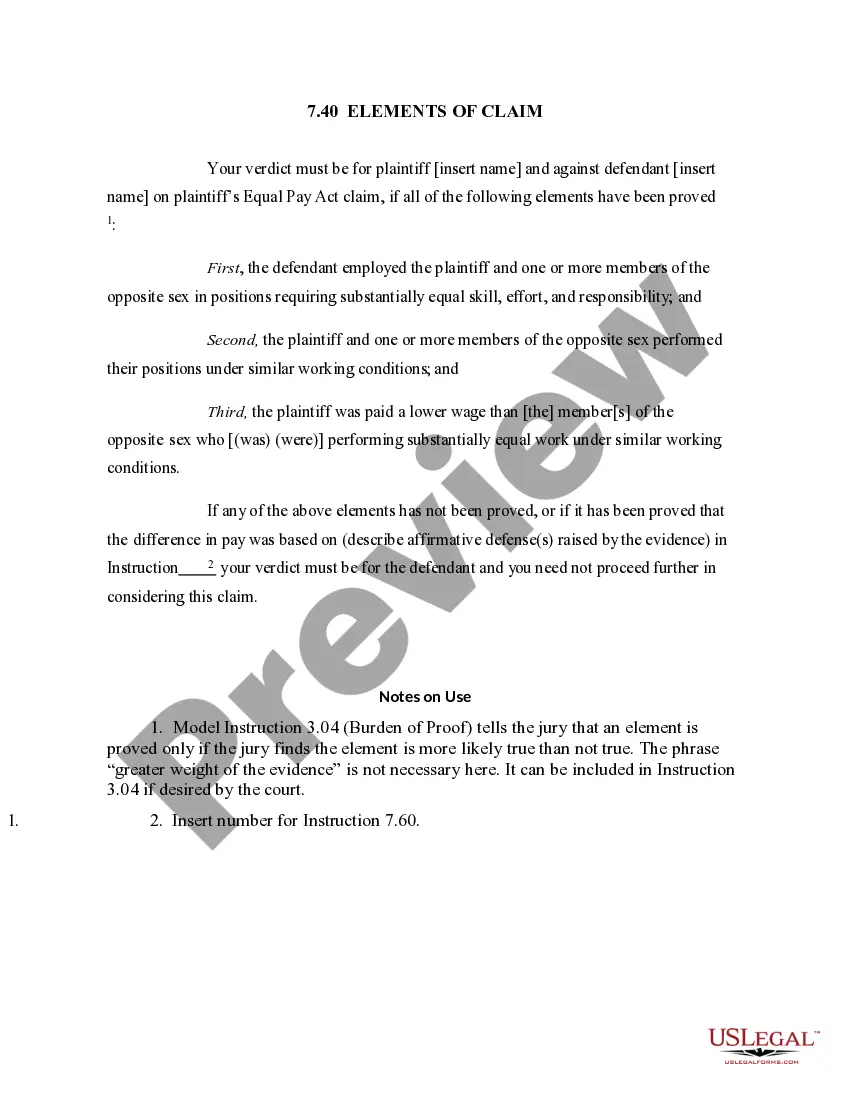
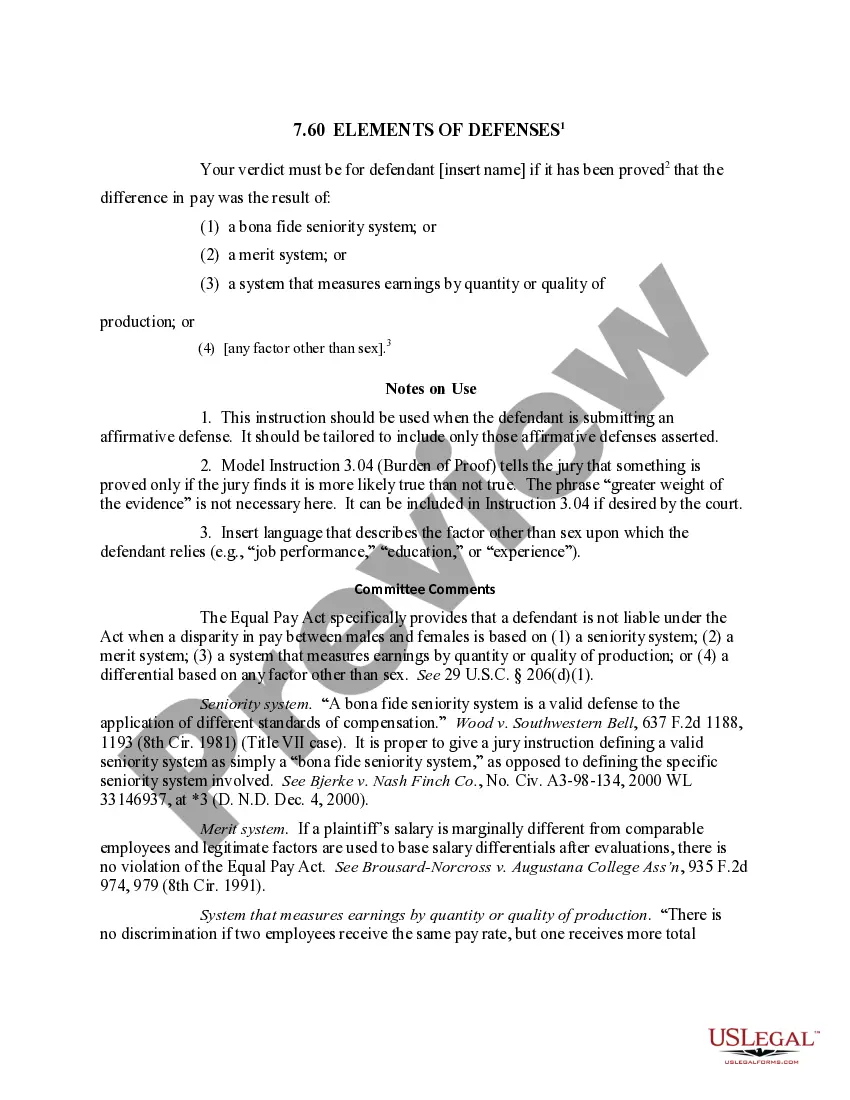
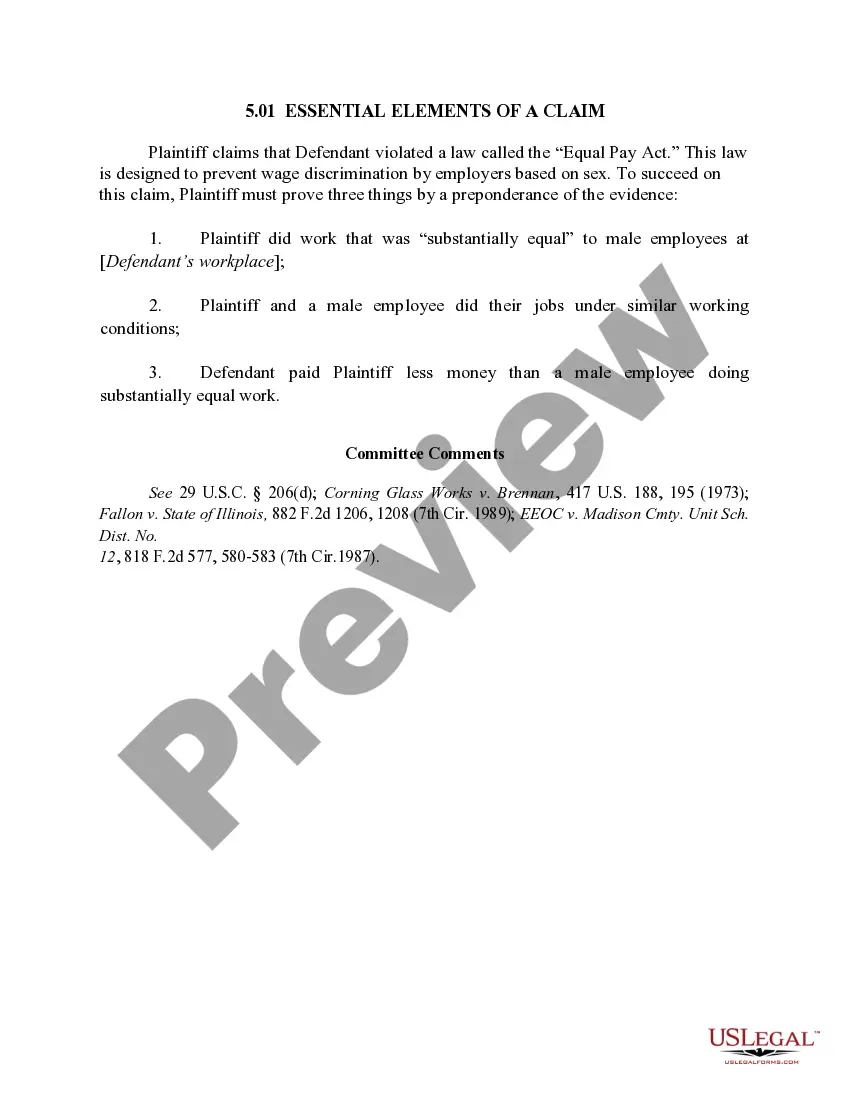
The 6.40 Elements of Claim form is used in age discrimination cases to outline the essential elements a plaintiff must prove in order to prevail against a defendant. This form differs from other legal forms in that it specifically addresses allegations surrounding age-related wrongful discharge, providing a clear framework for presenting evidence to a jury. By using this form, plaintiffs can ensure they are addressing the appropriate legal standards for age discrimination under the Age Discrimination in Employment Act (ADEA).
Key parts of this document
- Identification of the plaintiff and defendant.
- Description of the claim, specifically regarding age discrimination.
- Statement of the plaintiff's discharge by the defendant.
- Requirement to prove age was the âbut forâ cause of the discharge.
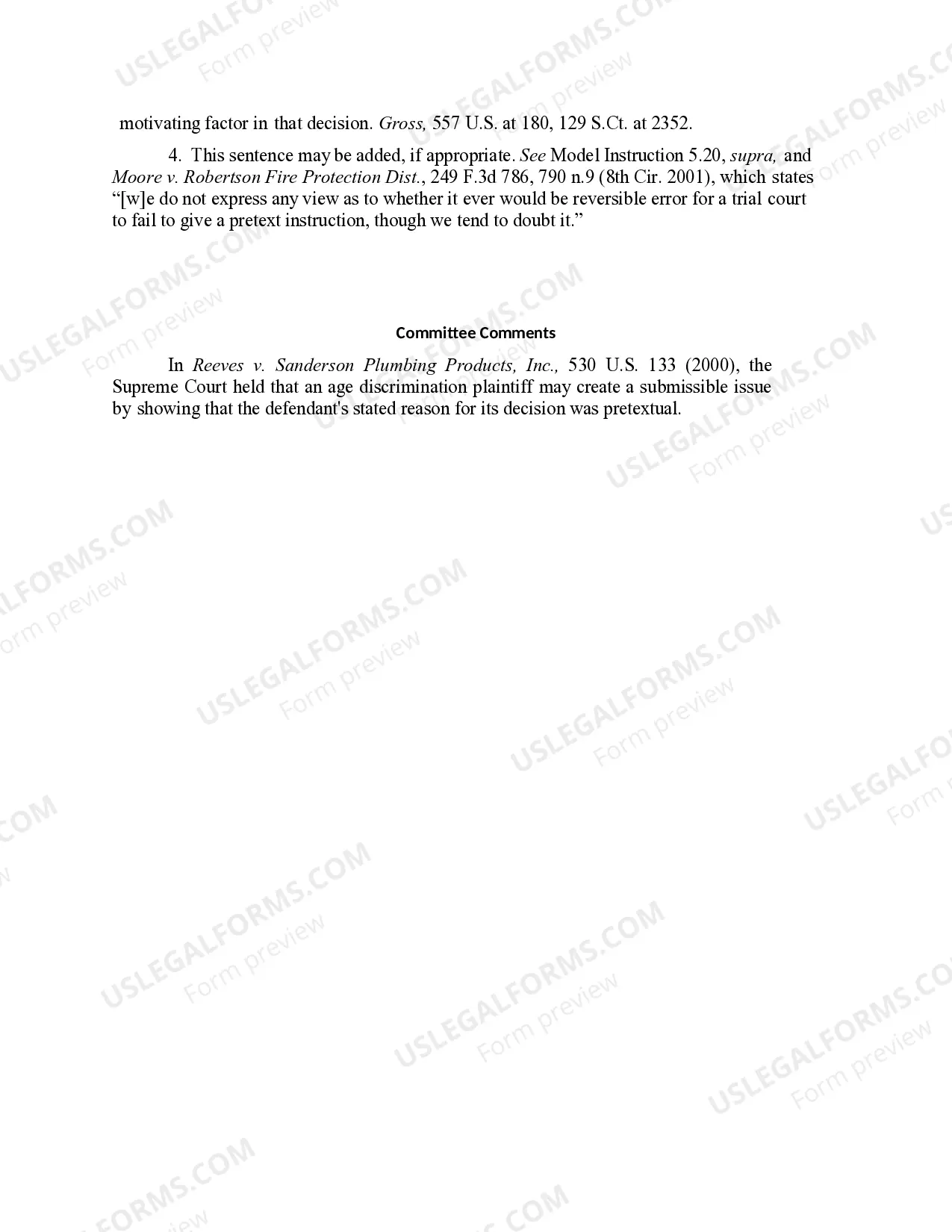
- Guidance on pretextual reasons for discharge to support claims of discrimination.
Situations where this form applies
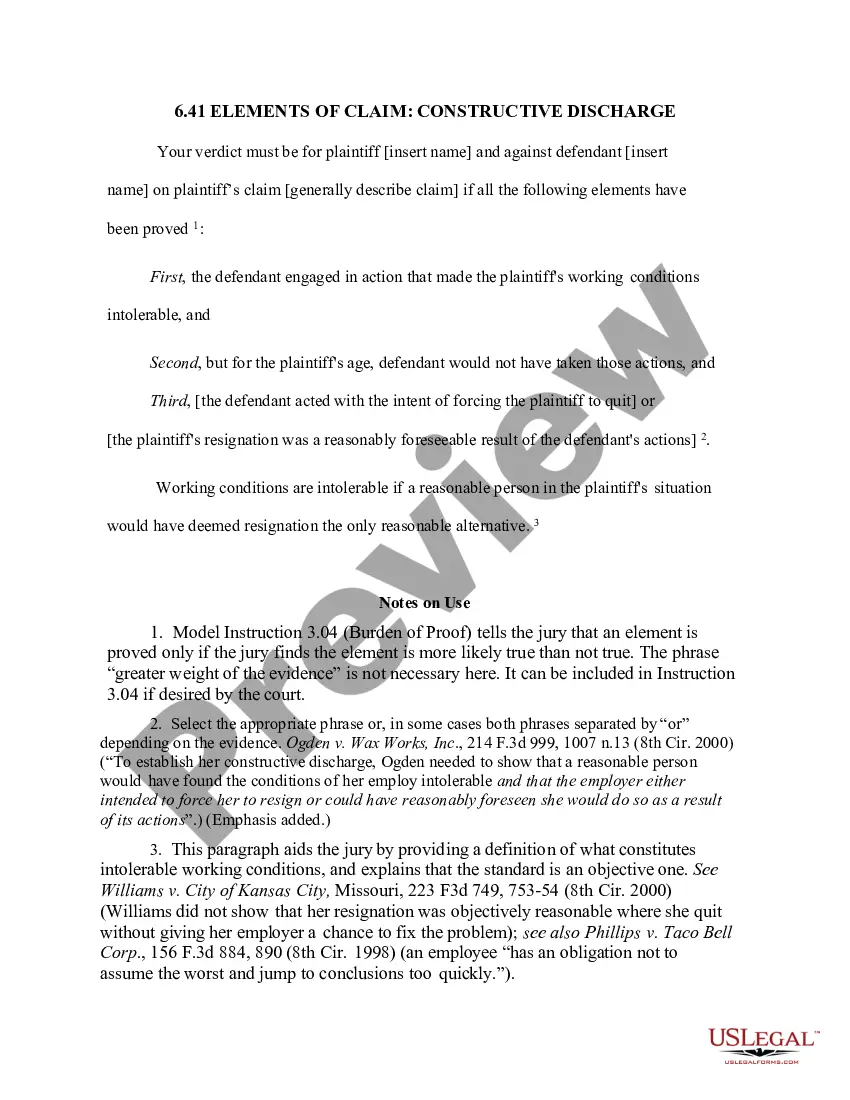
This form is necessary when someone believes they have been wrongfully terminated from their job based on their age. It can be used in situations where an employee has been discharged, or in cases of constructive discharge where the employee felt compelled to resign due to intolerable working conditions related to age discrimination. Utilizing this form helps structure the legal arguments needed to prove the elements of an age discrimination claim in court.
Who can use this document
- Individuals who have been discharged or feel constructively discharged due to age discrimination.
- Legal representatives preparing a case for age discrimination on behalf of clients.
- Employees seeking to understand the legal requirements for proving age discrimination in their specific situations.
Steps to complete this form
- Identify the names of the plaintiff and defendant in the designated fields.
- Clearly describe the nature of the claim involving age discrimination.
- Establish the facts surrounding the plaintiff's discharge by the defendant.
- Provide evidence or basis for proving that age was the determining factor in the discharge.
- Include any relevant information about pretextual reasons if applicable.
Is notarization required?
This form does not typically require notarization unless specified by local law. It is recommended to check jurisdiction-specific requirements to ensure compliance.
Get your form ready online
Our built-in tools help you complete, sign, share, and store your documents in one place.
Make edits, fill in missing information, and update formatting in US Legal Forms—just like you would in MS Word.
Download a copy, print it, send it by email, or mail it via USPS—whatever works best for your next step.
Sign and collect signatures with our SignNow integration. Send to multiple recipients, set reminders, and more. Go Premium to unlock E-Sign.
If this form requires notarization, complete it online through a secure video call—no need to meet a notary in person or wait for an appointment.
We protect your documents and personal data by following strict security and privacy standards.

Make edits, fill in missing information, and update formatting in US Legal Forms—just like you would in MS Word.

Download a copy, print it, send it by email, or mail it via USPS—whatever works best for your next step.

Sign and collect signatures with our SignNow integration. Send to multiple recipients, set reminders, and more. Go Premium to unlock E-Sign.

If this form requires notarization, complete it online through a secure video call—no need to meet a notary in person or wait for an appointment.

We protect your documents and personal data by following strict security and privacy standards.
Common mistakes to avoid
- Failing to provide clear evidence linking the discharge to age discrimination.
- Omitting critical information that demonstrates the âbut forâ causation.
- Not modifying the form to fit situations involving failure to hire or demotion.
Benefits of completing this form online
- Convenient access to legal forms that can be downloaded instantly.
- Editable templates allowing for easy customization to fit specific cases.
- Ensured reliability by using forms drafted by licensed attorneys.
Legal use & context
- This form is used in the context of age discrimination claims under the ADEA.
- It sets out the standard that must be met by plaintiffs in these types of cases.
- Case law, such as Gross v. FBL Financial Services, provides context for the use of this form.
Key takeaways
- The 6.40 Elements of Claim form outlines the necessary components for proving an age discrimination case.
- Properly completing this form is crucial for the success of a plaintiffâs claim.
- Understanding the âbut forâ causation is essential for establishing age discrimination.
Looking for another form?
Form popularity
FAQ
(a) Where Rule 4.1(a)(iv) or (c)(i) applies, the request shall indicate the name and address of the inventor or, if there are several inventors, of each of them. (b) If the applicant is the inventor, the request, in lieu of the indication under paragraph (a), shall contain a statement to that effect.
66.8 Form of Amendments. (a) Subject to paragraph (b) when amending the description or the drawings, the applicant shall be required to submit a replacement sheet for every sheet of the international application which, on account of an amendment, differs from the sheet previously filed.
The number should consist of at least four numerals enclosed in square brackets, including leading zeros (e.g., 0001). The numbers and enclosing brackets should appear to the right of the left margin as the first item in each paragraph, before the first word of the paragraph, and should be highlighted in bold.
Unlike at many patent offices, there is no limit or penalty on the number of claims that may be included in a PCT application.
Parts of a Claim A claim is generally presented in three parts, the preamble, a transitional phrase (or word), and the body.
(1) Any resident or national of a Contracting State may file an international application. (2) The Assembly may decide to allow the residents and the nationals of any country party to the Paris Convention for the Protection of Industrial Property which is not party to this Treaty to file international applications.
66.6 Informal Communications with the Applicant The International Preliminary Examining Authority may, at any time, communicate informally, over the telephone, in writing, or through personal interviews, with the applicant.
Article 6 - The Claims The claim or claims shall define the matter for which protection is sought. Claims shall be clear and concise. They shall be fully supported by the description.