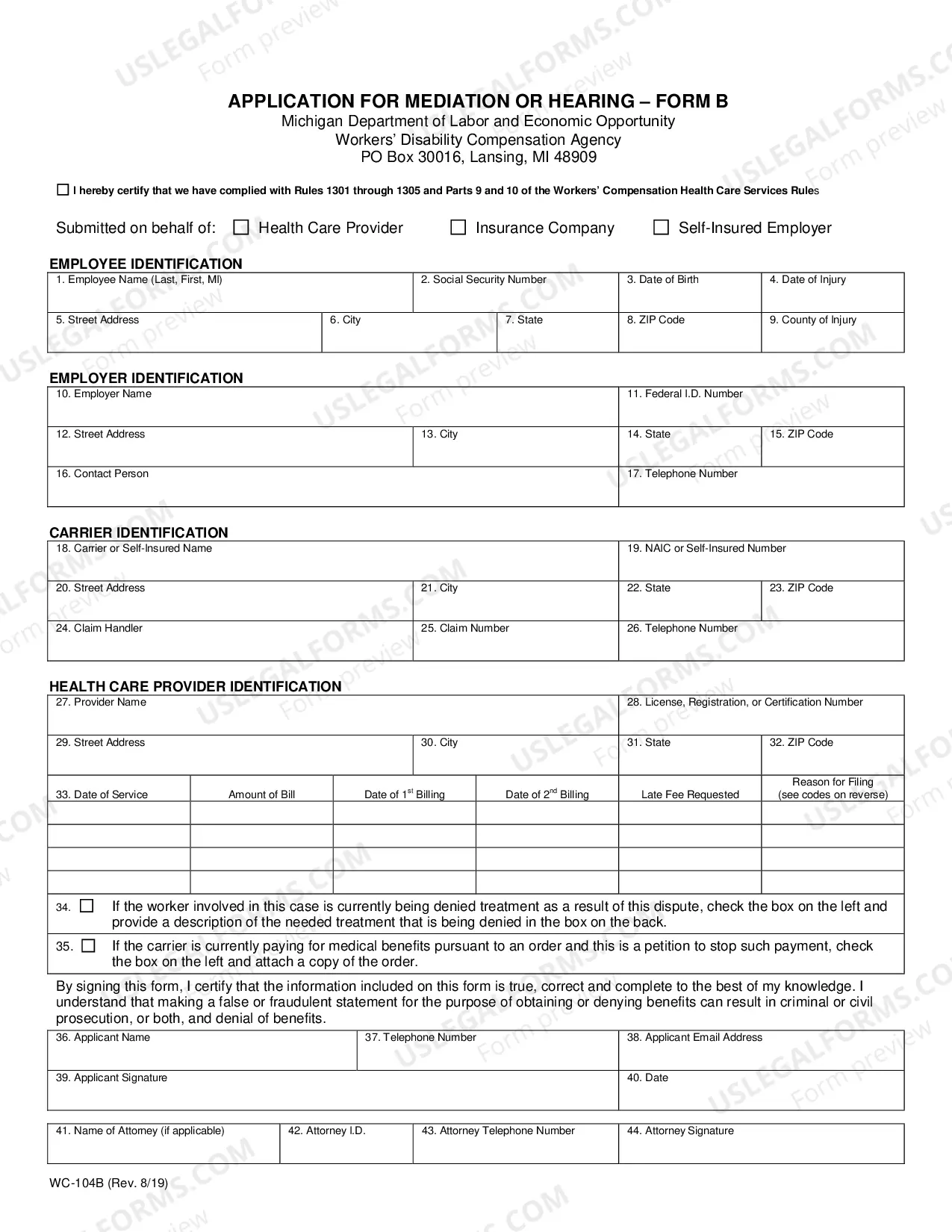
5.72 DAMAGES: PUNITIVE
Understanding this form
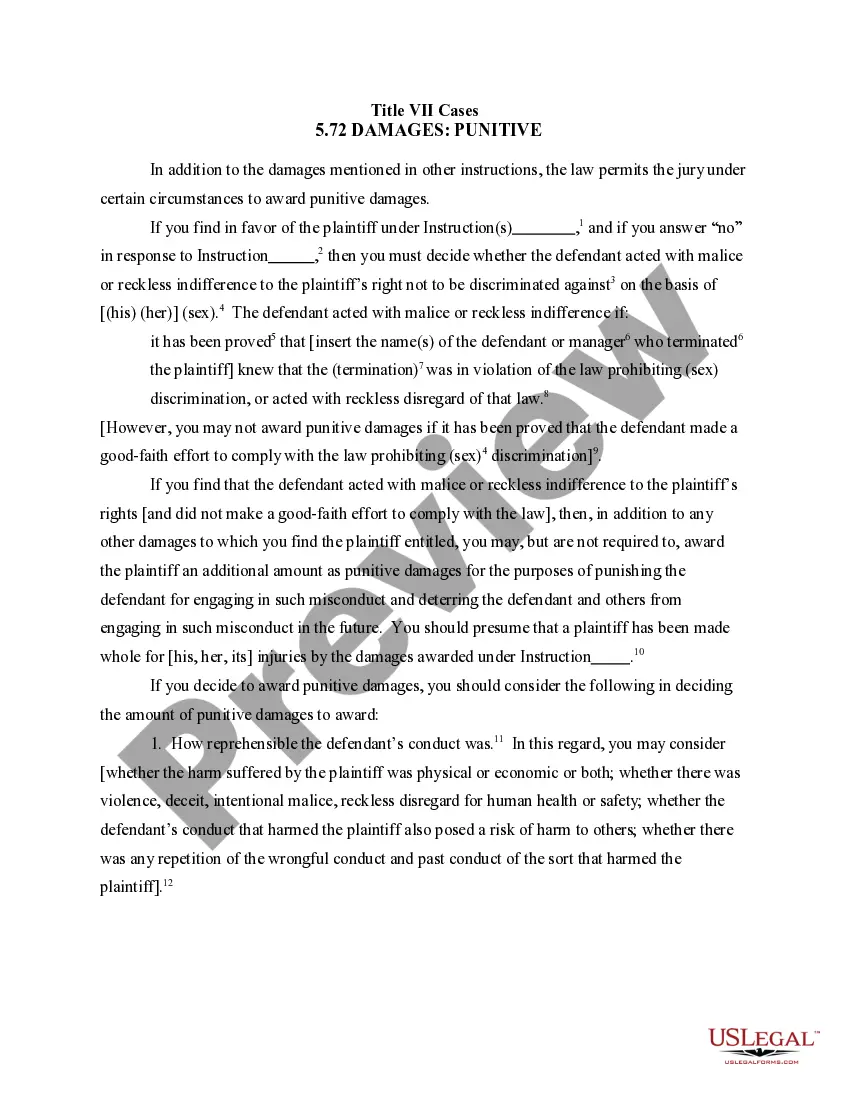
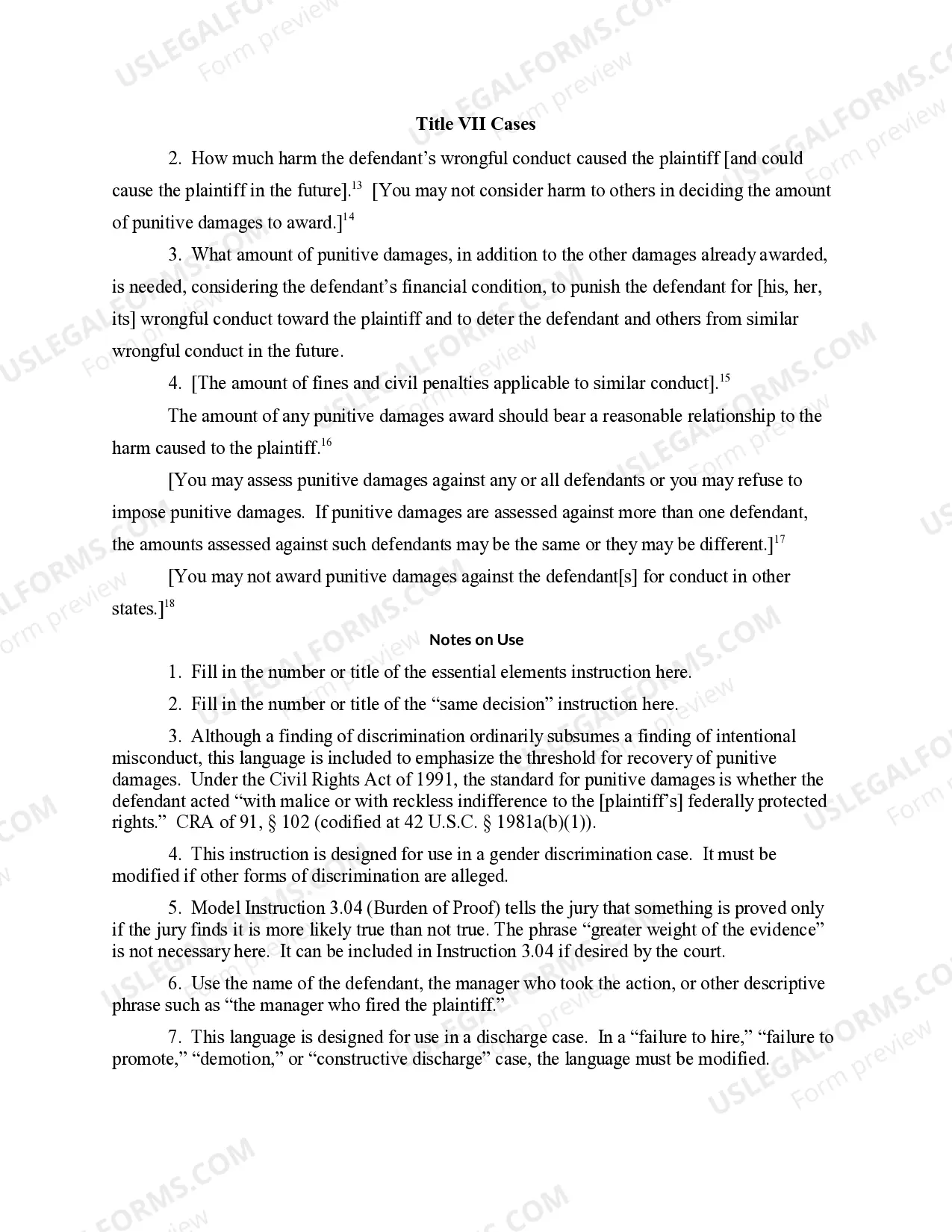
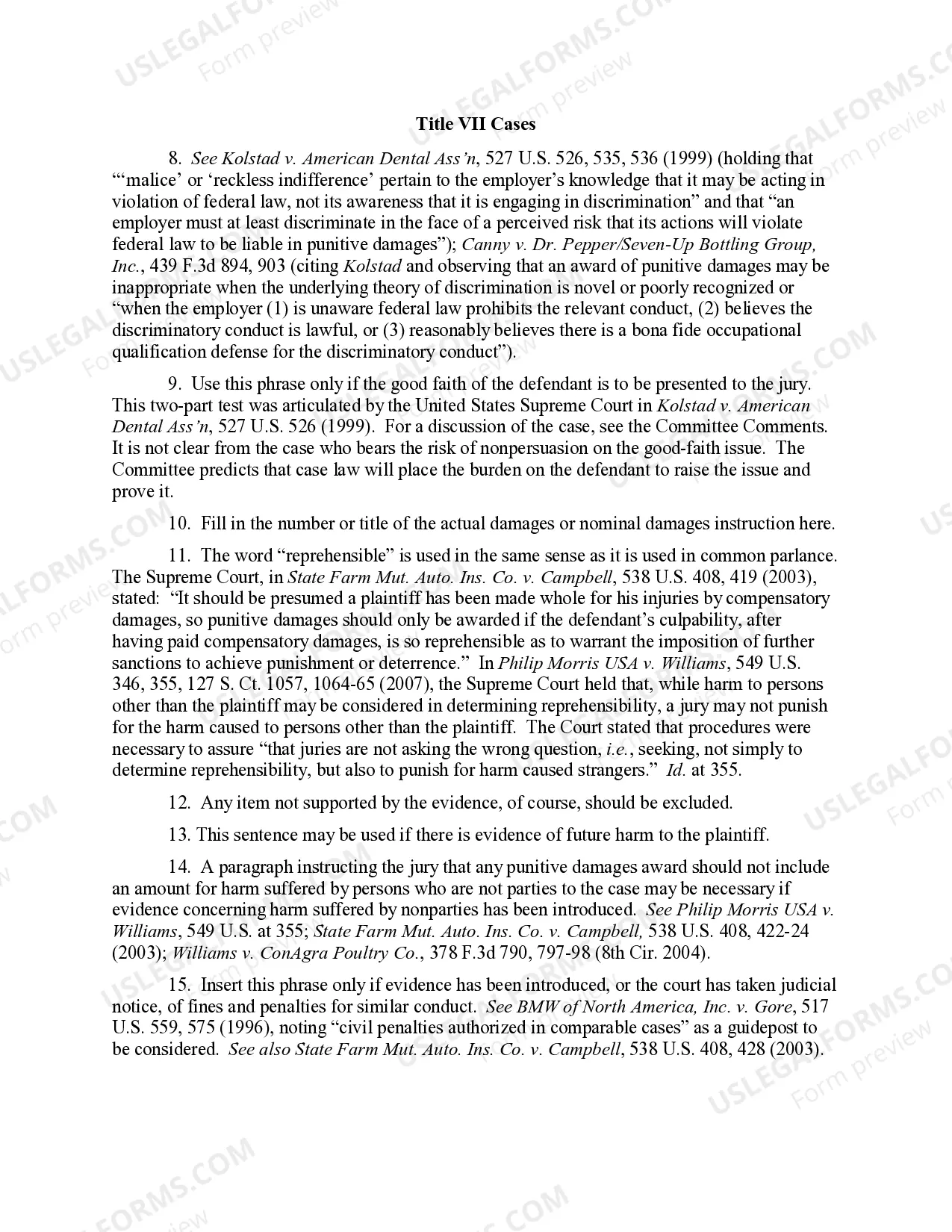
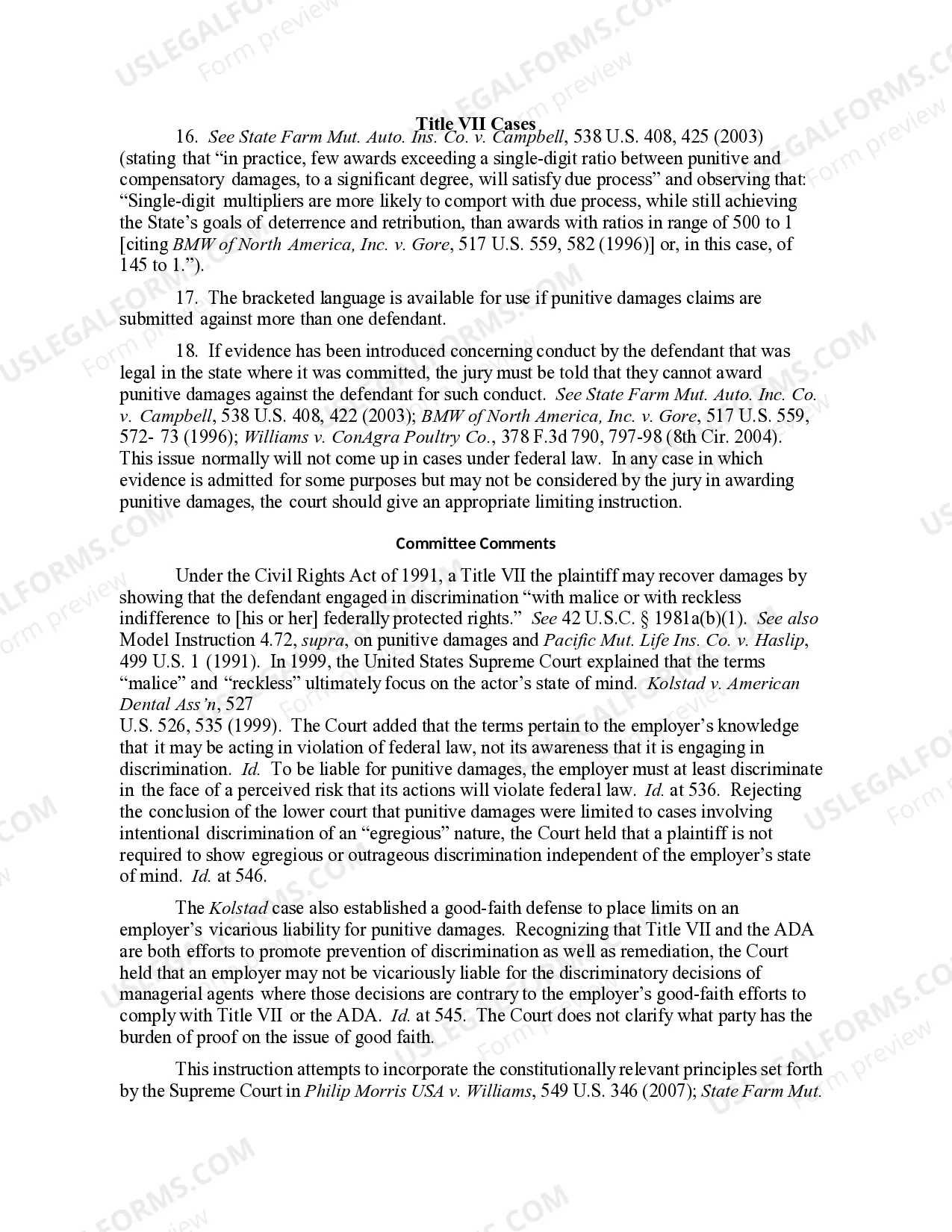
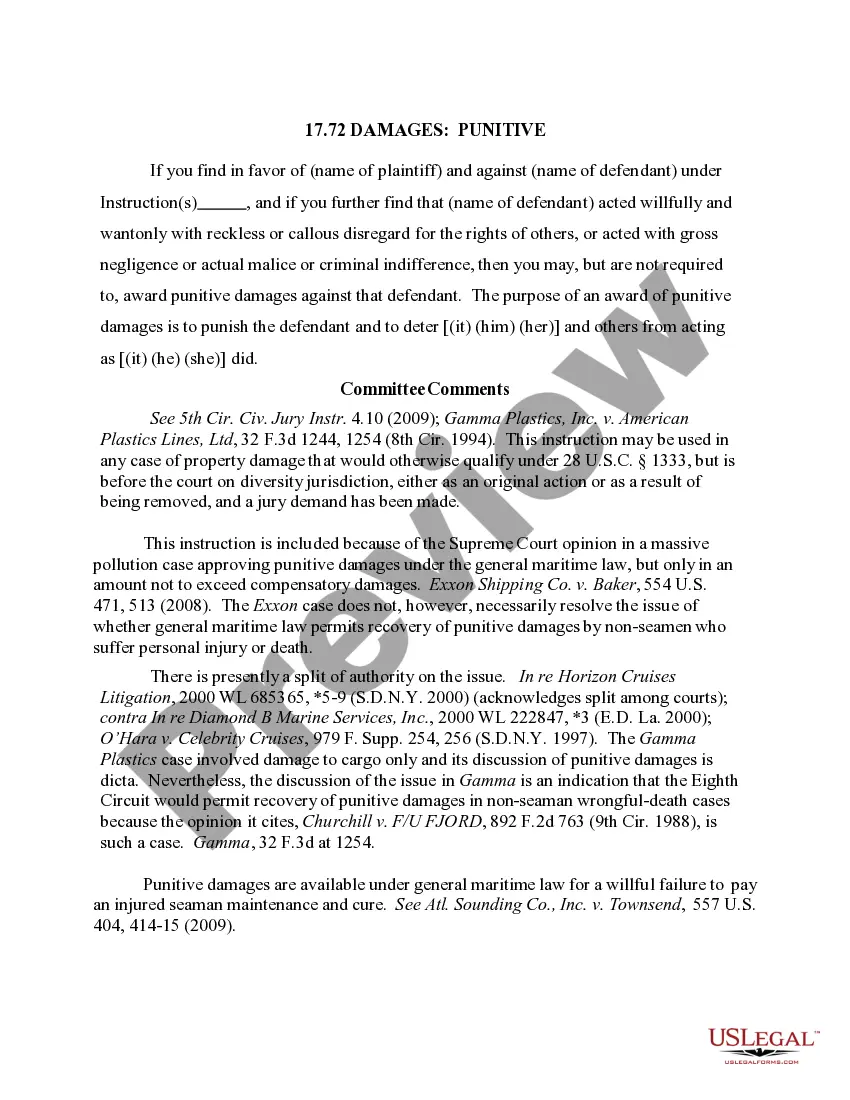
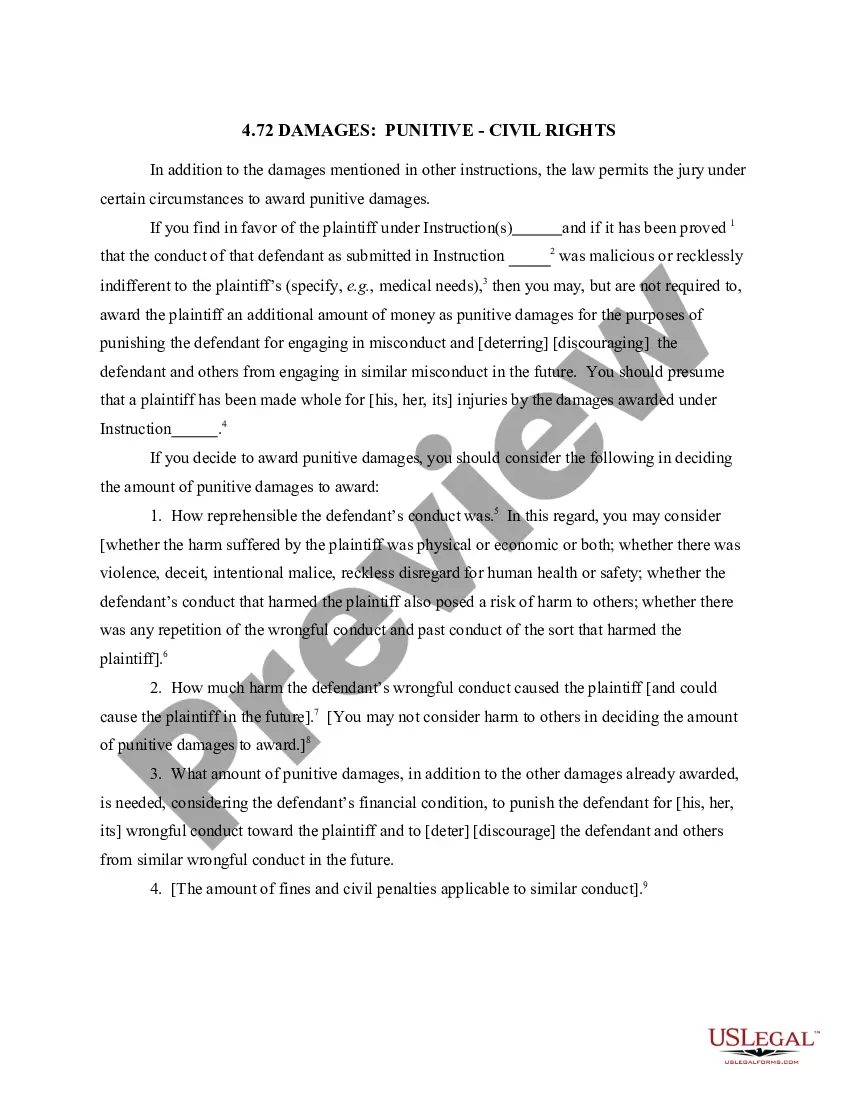
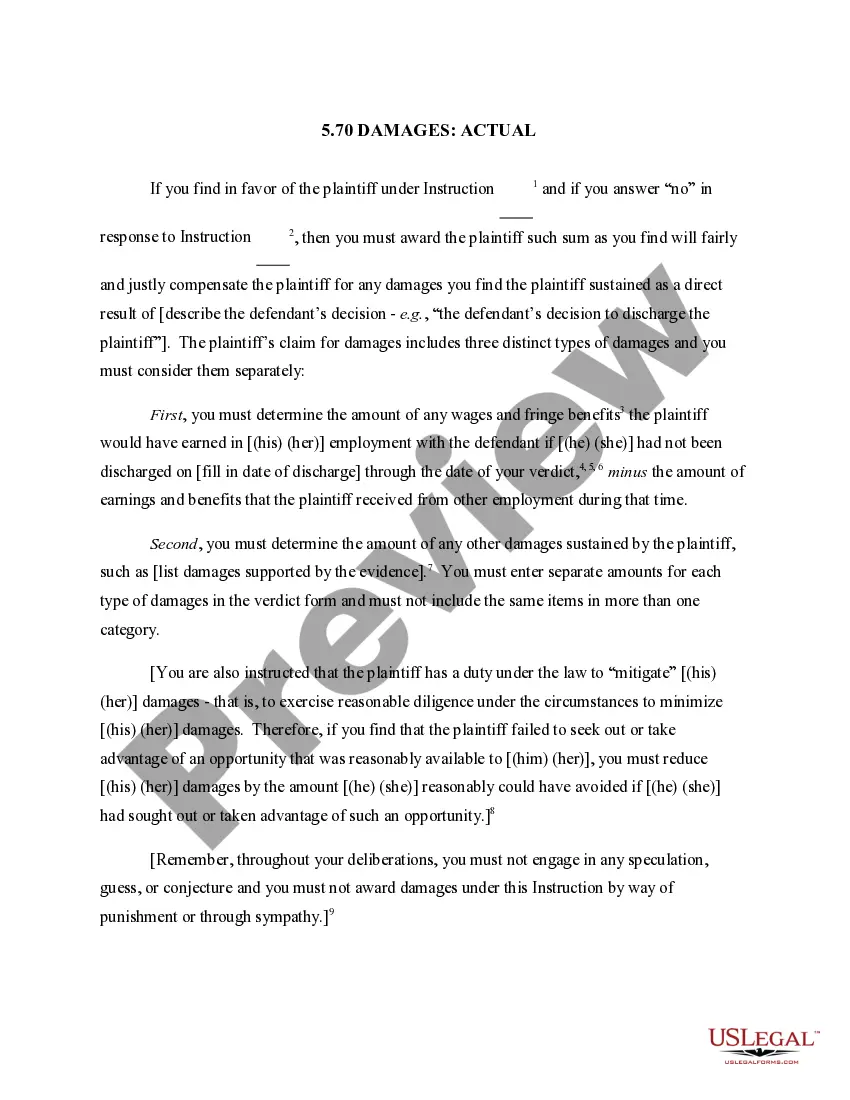
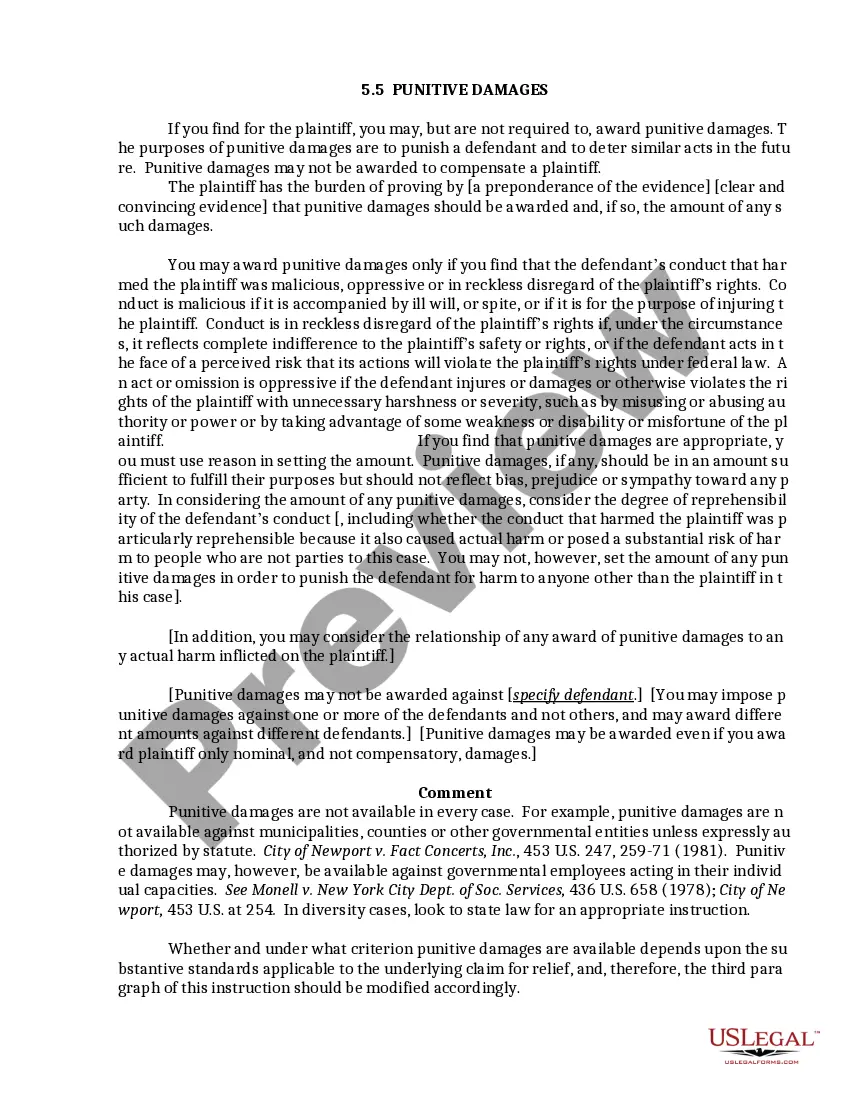
The 5.72 Punitive Damages form is used in civil jury cases to guide the jury in awarding punitive damages. These damages aim to punish a defendant for egregious behavior and deter similar actions in the future. This form is specifically applicable in cases involving allegations of discrimination, particularly sexual discrimination, and it provides a framework for determining if the defendant acted with malice or reckless indifference to the plaintiff's rights.
Key components of this form
- Criteria for awarding punitive damages based on the defendantâs conduct.
- Evaluation of whether the defendant acted with malice or reckless indifference.
- Instructions on considering the defendantâs financial condition in awarding damages.
- Guidance on the relationship between punitive damages and compensatory damages.
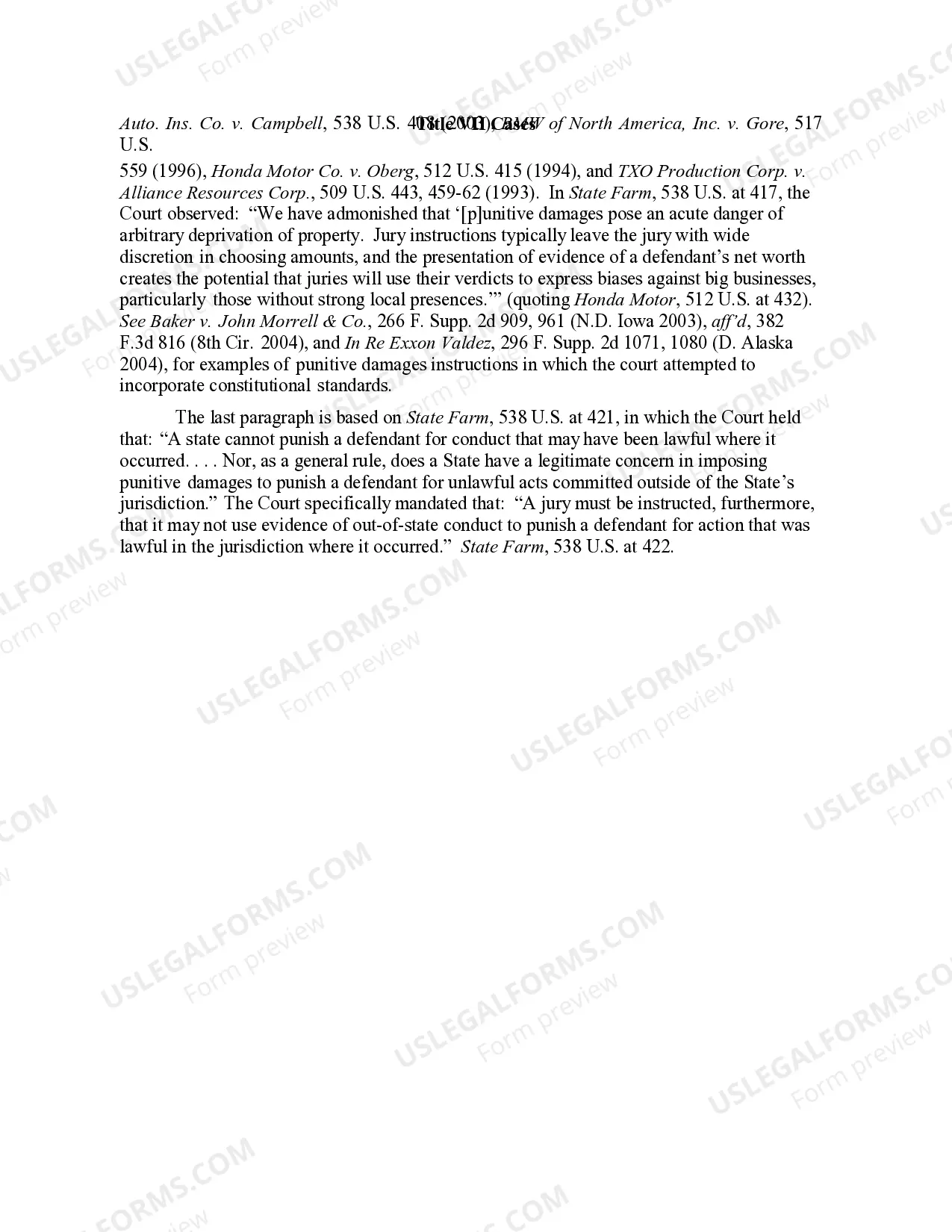
- Limits on awarding punitive damages for actions occurring in other states.
When to use this form
This form should be used in civil cases where the plaintiff seeks punitive damages against a defendant, particularly in instances of discrimination based on sex. It is applicable specifically when the jury needs guidance on assessing the severity of the defendantâs actions and whether they warrant additional punitive measures beyond compensatory damages.
Who should use this form
- Plaintiffs in civil lawsuits involving claims of discrimination.
- Attorneys representing clients seeking punitive damages.
- Juries tasked with determining the appropriateness of punitive damages in a case.
Steps to complete this form
- Identify and enter the names of the plaintiffs and defendants involved in the case.
- Determine and specify the actions taken by the defendant that led to the claim of malice or recklessness.
- Evaluate the financial condition of the defendant to decide on the amount of punitive damages.
- Consider any evidence of good-faith efforts by the defendant to comply with relevant laws.
- Review the total damages awarded to ensure punitive damages are not disproportionate.
Notarization guidance
In most cases, this form does not require notarization. However, some jurisdictions or signing circumstances might. US Legal Forms offers online notarization powered by Notarize, accessible 24/7 for a quick, remote process.
Get your form ready online
Our built-in tools help you complete, sign, share, and store your documents in one place.
Make edits, fill in missing information, and update formatting in US Legal Forms—just like you would in MS Word.
Download a copy, print it, send it by email, or mail it via USPS—whatever works best for your next step.
Sign and collect signatures with our SignNow integration. Send to multiple recipients, set reminders, and more. Go Premium to unlock E-Sign.
If this form requires notarization, complete it online through a secure video call—no need to meet a notary in person or wait for an appointment.
We protect your documents and personal data by following strict security and privacy standards.

Make edits, fill in missing information, and update formatting in US Legal Forms—just like you would in MS Word.

Download a copy, print it, send it by email, or mail it via USPS—whatever works best for your next step.

Sign and collect signatures with our SignNow integration. Send to multiple recipients, set reminders, and more. Go Premium to unlock E-Sign.

If this form requires notarization, complete it online through a secure video call—no need to meet a notary in person or wait for an appointment.

We protect your documents and personal data by following strict security and privacy standards.
Mistakes to watch out for
- Failing to clearly establish the defendant's malice or reckless behavior.
- Ignoring the financial condition of the defendant when deciding on punitive damages.
- Overlooking the evidence of good-faith compliance with discrimination laws.
Advantages of online completion
- Immediate access to downloadable templates drafted by legal professionals.
- Convenience of completing forms at your own pace, with no need for office visits.
- Ability to customize and print forms for your specific case requirements.
Legal use & context
- Punitive damages are intended to deter future misconduct by the defendant.
- Liability for punitive damages is contingent on proving that the defendant acted with malice.
- Each jurisdiction may have specific rules regarding the awarding of punitive damages.
Looking for another form?
Form popularity
FAQ
A typical cap on punitive damages is four times the amount of compensatory damages. Criteria for punitive damages differs from state to state, with some more likely to award punitive damages than others.
To determine the amount of punitive damages to award, the Book of Approved Jury Instructions (BAJI) states that the jury should consider: (1) The reprehensibility of the conduct of the defendant. (2) The defendant's financial condition and (3) the relationship to actual damages.
To determine the amount of punitive damages to award, the Book of Approved Jury Instructions (BAJI) states that the jury should consider: (1) The reprehensibility of the conduct of the defendant. (2) The defendant's financial condition and (3) the relationship to actual damages.
The U.S. Constitution limits punitive damages awards in all state and federal courts: punitive damages are permissible only to the extent they are proportionate, reasonably related to the harm the plaintiff suffered, and in response to reprehensible conduct.
The median amount of punitive damages that are awarded is around $64,000.
Individuals can also be ordered to pay punitive damages that injure someone else due to negligent behavior. Examples of this would be drunk driving or distracted driving. In both cases, the defendant would have made a conscious decision to engage in behavior that could easily harm another person.
In a number of cases, the Court has indicated that a ratio between punitive and compensatory damages is high enough to lead to a finding of constitutional impropriety and that any ratio of or higher is almost certainly unconstitutional.
Individuals can also be ordered to pay punitive damages that injure someone else due to negligent behavior. Examples of this would be drunk driving or distracted driving. In both cases, the defendant would have made a conscious decision to engage in behavior that could easily harm another person.