4.72 DAMAGES: PUNITIVE - CIVIL RIGHTS
Overview of this form
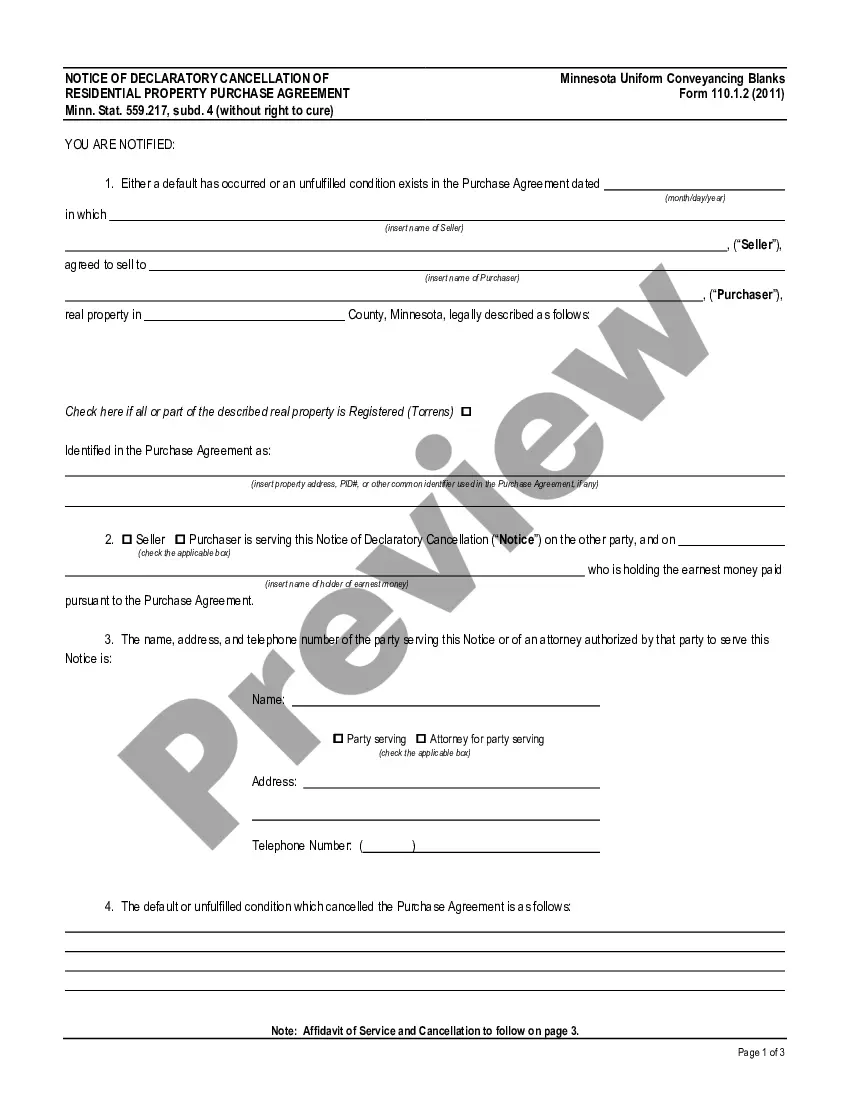
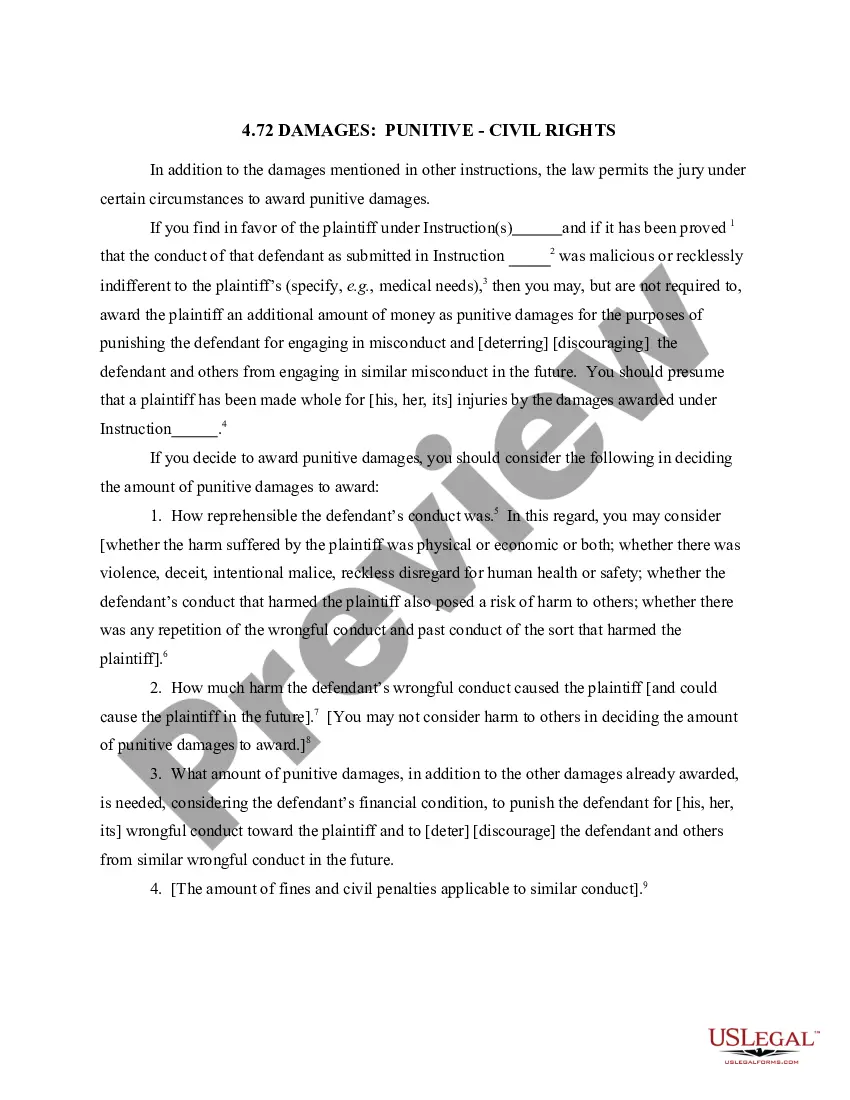
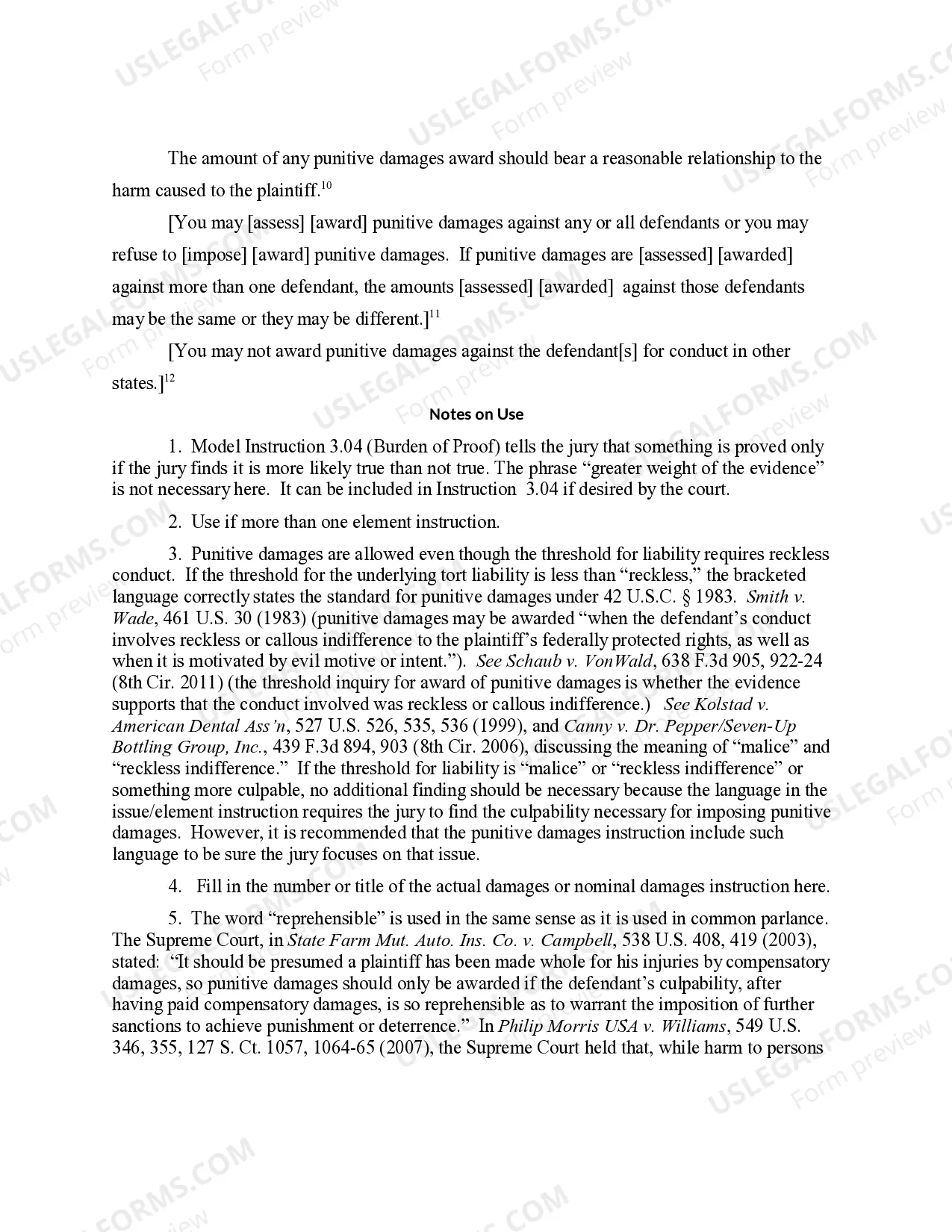
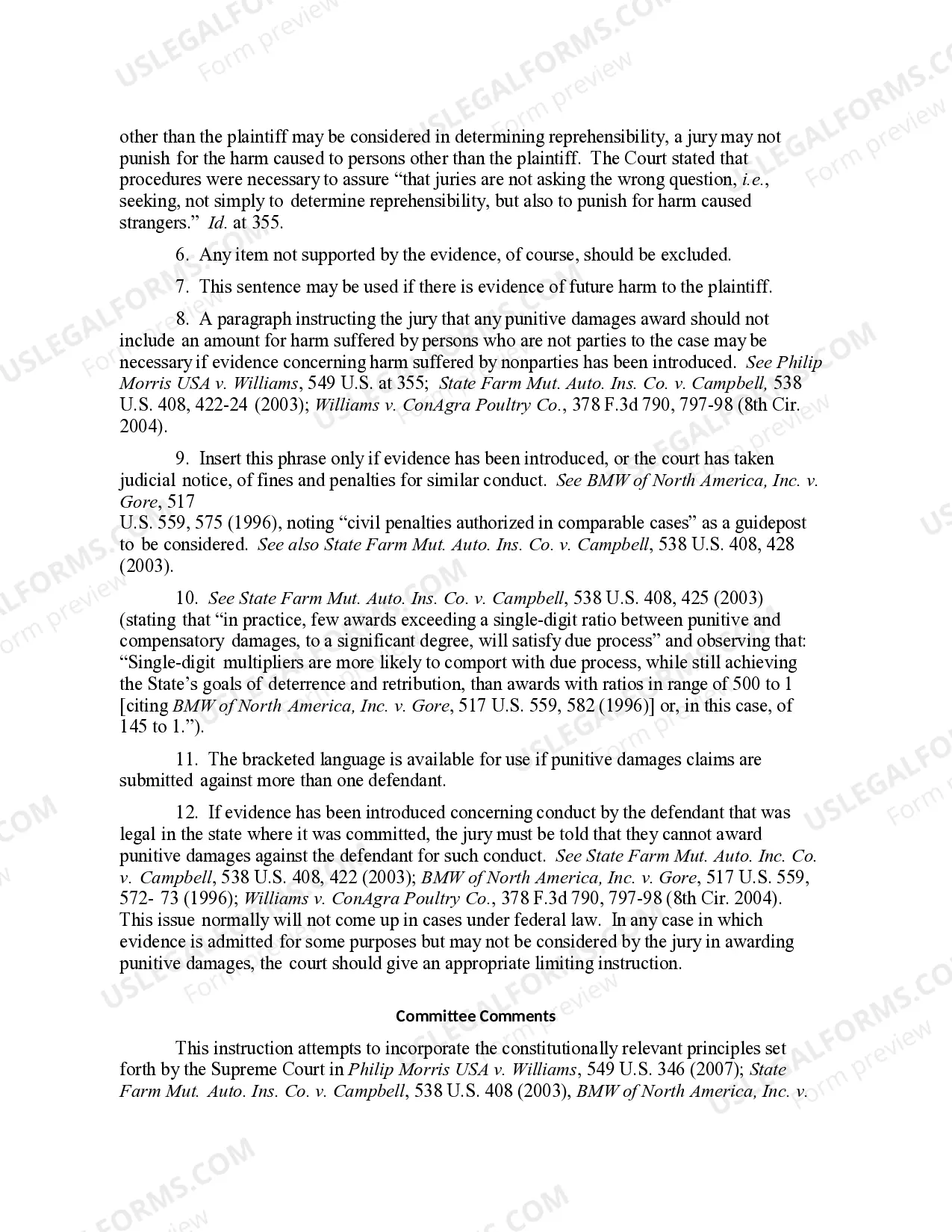
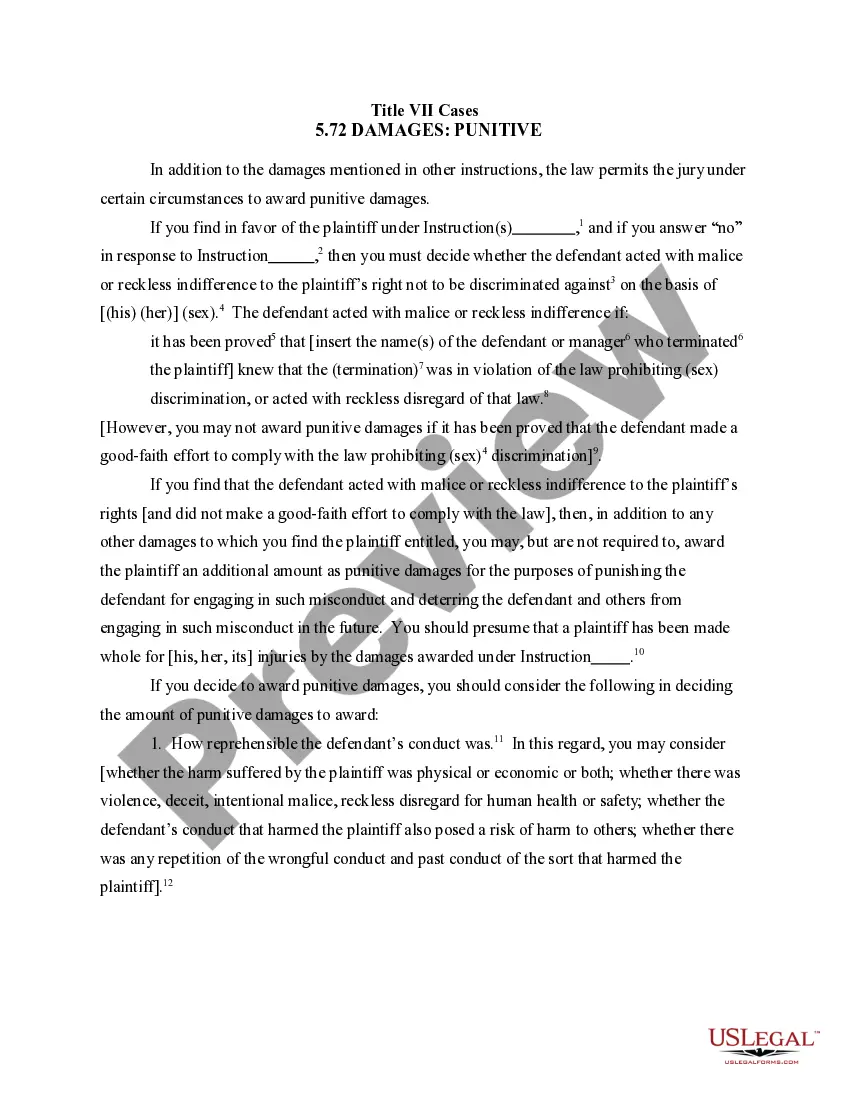
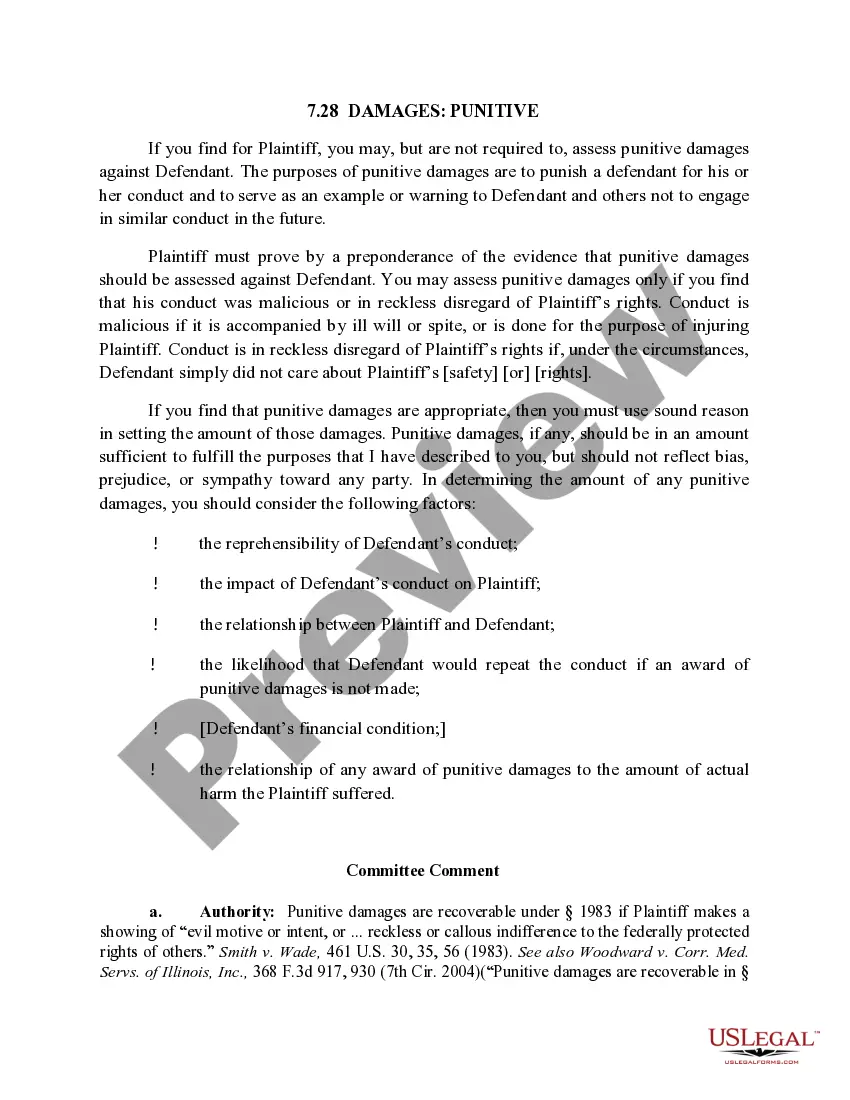
The 4.72 Damages: Punitive - Civil Rights form is a legal document used in civil rights cases to request punitive damages against a defendant whose actions are found to be malicious or recklessly indifferent to the plaintiff's rights. This form is significant as it seeks to not only compensate the plaintiff but also to punish the defendant and deter similar wrongful actions in the future. Unlike compensatory damages, punitive damages focus specifically on the conduct of the defendant and aim to address severe wrongdoing.
Key components of this form
- Definition of punitive damages and the conditions under which they may be awarded.
- Criteria for evaluating the defendant's conduct, focusing on recklessness or malice.
- Guidelines for the jury on determining the amount of punitive damages.
- Instructions on the relationship between punitive damages and the harm suffered by the plaintiff.
- Consideration of the defendantâs financial situation in deciding punitive damages.
When to use this form
This form should be used in situations where a plaintiff believes that the defendant's behavior not only caused harm but was also egregious enough to warrant additional punishment through punitive damages. Typical scenarios include cases involving civil rights violations where the defendant's actions demonstrated a disregard for the plaintiff's federally protected rights.
Who needs this form
This form is intended for:
- Individuals or entities pursuing a civil rights case.
- Plaintiffs seeking compensation beyond actual damages due to the defendant's malicious conduct.
- Lawyers representing clients in cases where punitive damages are applicable.
Instructions for completing this form
To complete the 4.72 Damages: Punitive - Civil Rights form, follow these steps:
- Identify the relevant parties involved in the case.
- Clearly state the unlawful actions of the defendant that led to the claim for punitive damages.
- Document evidence supporting the claim that the defendant acted maliciously or with reckless indifference.
- Detail the extent of harm suffered by the plaintiff and its potential future impacts.
- Include financial information that may be relevant to determining the appropriate amount of punitive damages.
Does this form need to be notarized?
Notarization is not commonly needed for this form. However, certain documents or local rules may make it necessary. Our notarization service, powered by Notarize, allows you to finalize it securely online anytime, day or night.
Get your form ready online
Our built-in tools help you complete, sign, share, and store your documents in one place.
Make edits, fill in missing information, and update formatting in US Legal Forms—just like you would in MS Word.
Download a copy, print it, send it by email, or mail it via USPS—whatever works best for your next step.
Sign and collect signatures with our SignNow integration. Send to multiple recipients, set reminders, and more. Go Premium to unlock E-Sign.
If this form requires notarization, complete it online through a secure video call—no need to meet a notary in person or wait for an appointment.
We protect your documents and personal data by following strict security and privacy standards.

Make edits, fill in missing information, and update formatting in US Legal Forms—just like you would in MS Word.

Download a copy, print it, send it by email, or mail it via USPS—whatever works best for your next step.

Sign and collect signatures with our SignNow integration. Send to multiple recipients, set reminders, and more. Go Premium to unlock E-Sign.

If this form requires notarization, complete it online through a secure video call—no need to meet a notary in person or wait for an appointment.

We protect your documents and personal data by following strict security and privacy standards.
Common mistakes to avoid
- Failing to provide sufficient evidence of the defendant's malicious intent or recklessness.
- Requesting punitive damages without a clear connection to the harm caused.
- Neglecting to consider the appropriate relationship between punitive damages and actual damages.
Advantages of online completion
- Convenience of drafting and customizing the form according to individual circumstances.
- Availability of comprehensive guidance on legal standards for punitive damages.
- Ability to ensure compliance with jurisdictional requirements through a user-friendly interface.
Legal use & context
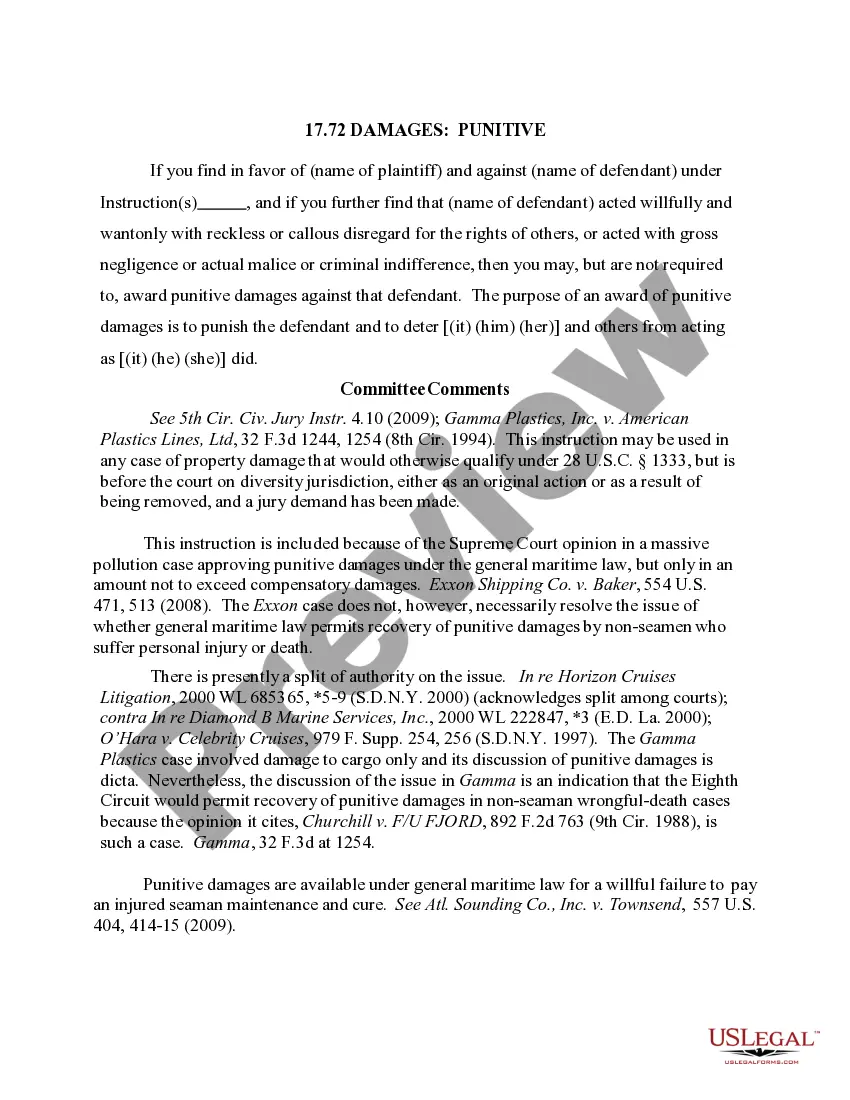
- Punitive damages are awarded primarily to punish wrongful conduct and deter future misbehavior.
- Jurors must follow strict guidelines to ensure fairness and adherence to legal standards.
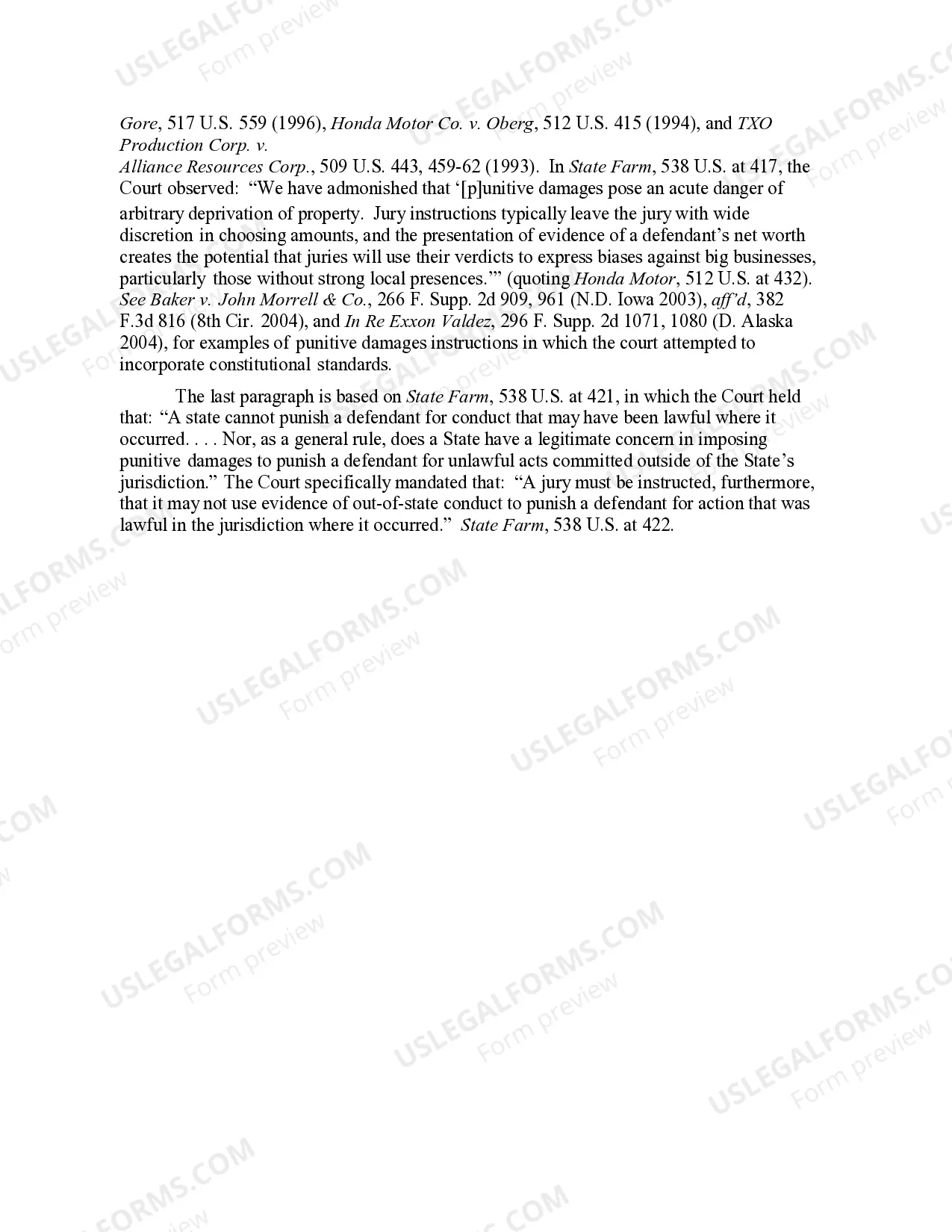
- Supreme Court rulings dictate that punitive damages cannot be awarded for actions lawful in the state where they occurred.
Key takeaways
- Punitive damages aim to punish the defendant's egregious conduct and deter future violations.
- It is essential to establish that the defendant acted either maliciously or with reckless indifference.
- The amount awarded must relate reasonably to the harm suffered by the plaintiff.
Looking for another form?
Form popularity
FAQ
If the court finds your civil rights have been violated, you may be entitled to recover lost wages, medical expenses, confinement compensation, out-of-pocket expenses, pain and suffering, humiliation, harm to your reputation, punitive damages, and attorney fees and costs.
What Are Punitive Damages in California? Much like a personal injury case, punitive damages in employment cases are designed to punish your employer and deter them (and other employers) from committing the same intentional and malicious discriminatory actions.
Title VII is subject to caps limiting the amount of compensatory and punitive damages an employer may be required to pay for violating the law. The applicable caps range from $50,000 to $300,000, depending on how many employees the employer has. 42 U.S.C. § 1981a(b)(3).
Punitive damages may be awarded to punish an employer who has committed an especially malicious or reckless act of discrimination.
If there was intentional discrimination, an employee may be able to recover compensatory and punitive damages. Compensatory and punitive damages under Title VII are subject to a combined cap based on the employer's size.
Which of the following is true regarding caps on punitive damages in Title VII cases based on discrimination other than race? Punitive damages are capped at $300,000 for employers of more than 500 employees.
In most state and federal discrimination cases, the employee is entitled to receive the following types of damages: back pay; front pay; lost benefits such as health, vacation, sick leave, and pension; reinstatement; reasonable accommodations; and compensatory and punitive damages. 2.
Punitive Damages: In employment cases, punitive damages are available. But they differ slightly from punitive damages in other types of cases. There is a cap on punitive damages sought under Title VII of the Civil Rights Act of 1964. Lastly, punitive damages are given in cases of intentional discrimination.