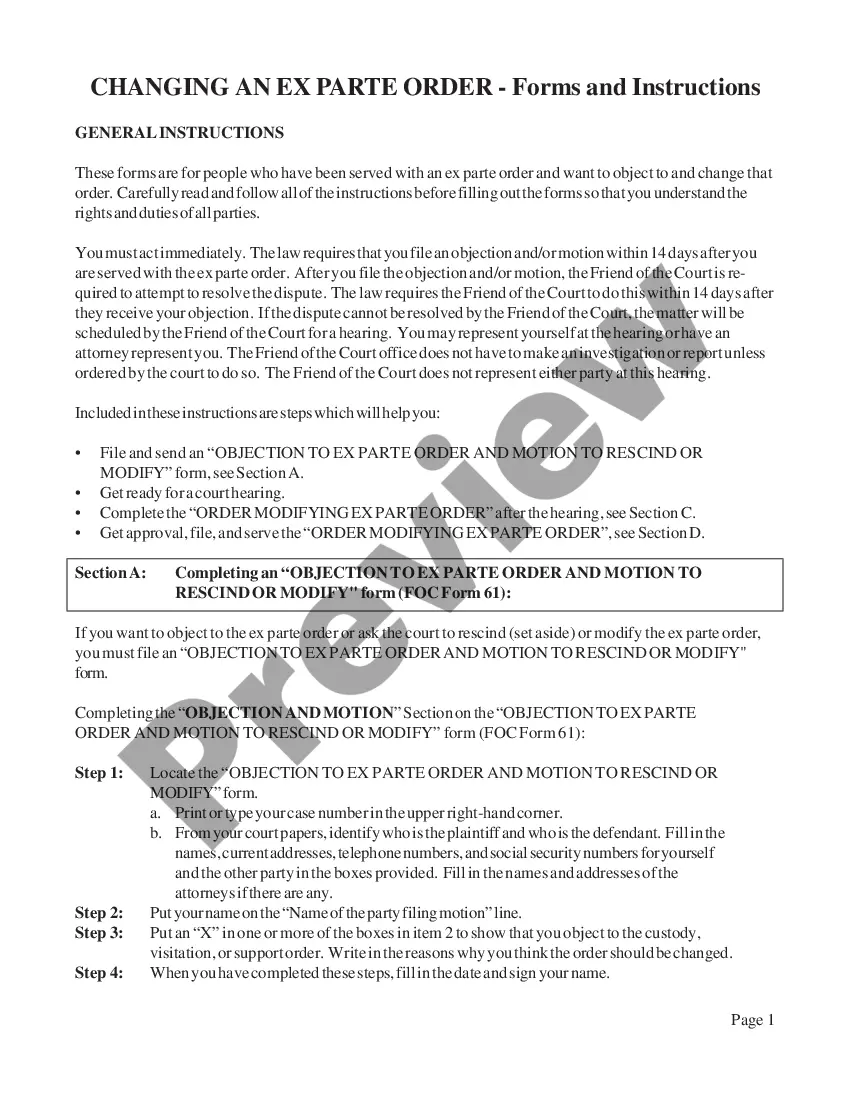
17.72 DAMAGES: PUNITIVE
Understanding this form
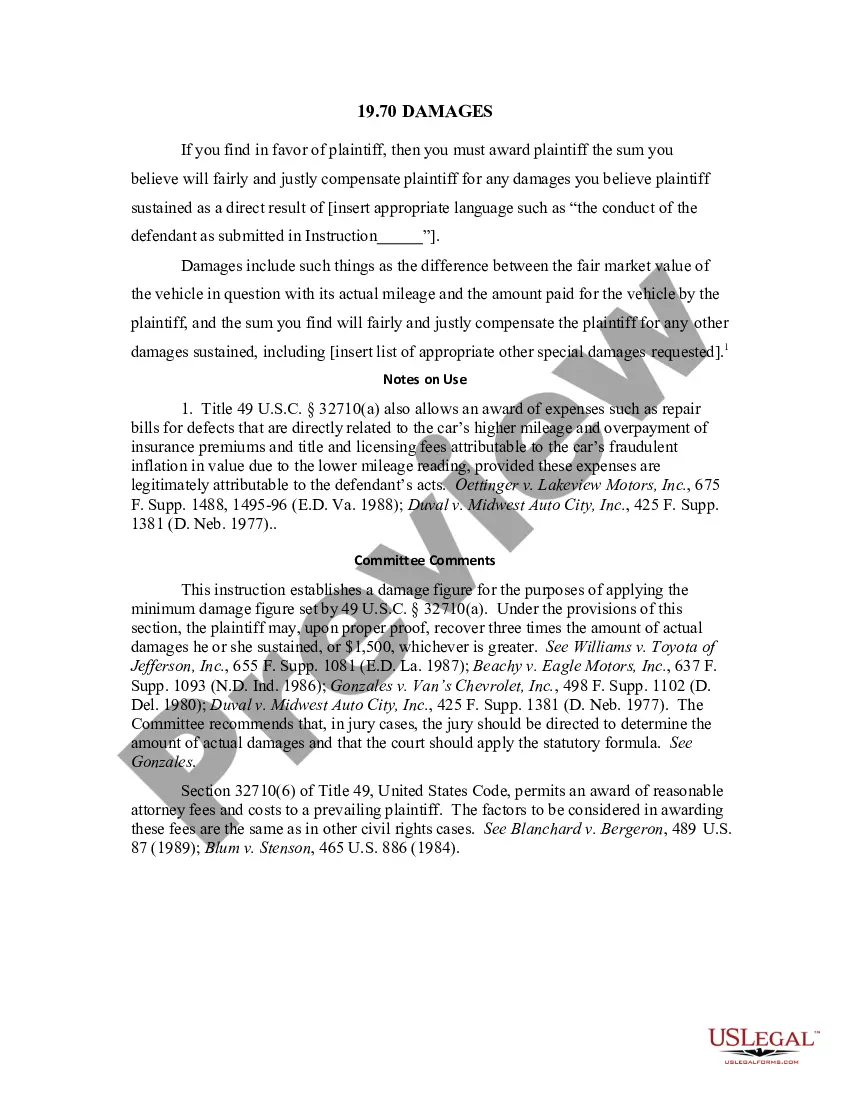
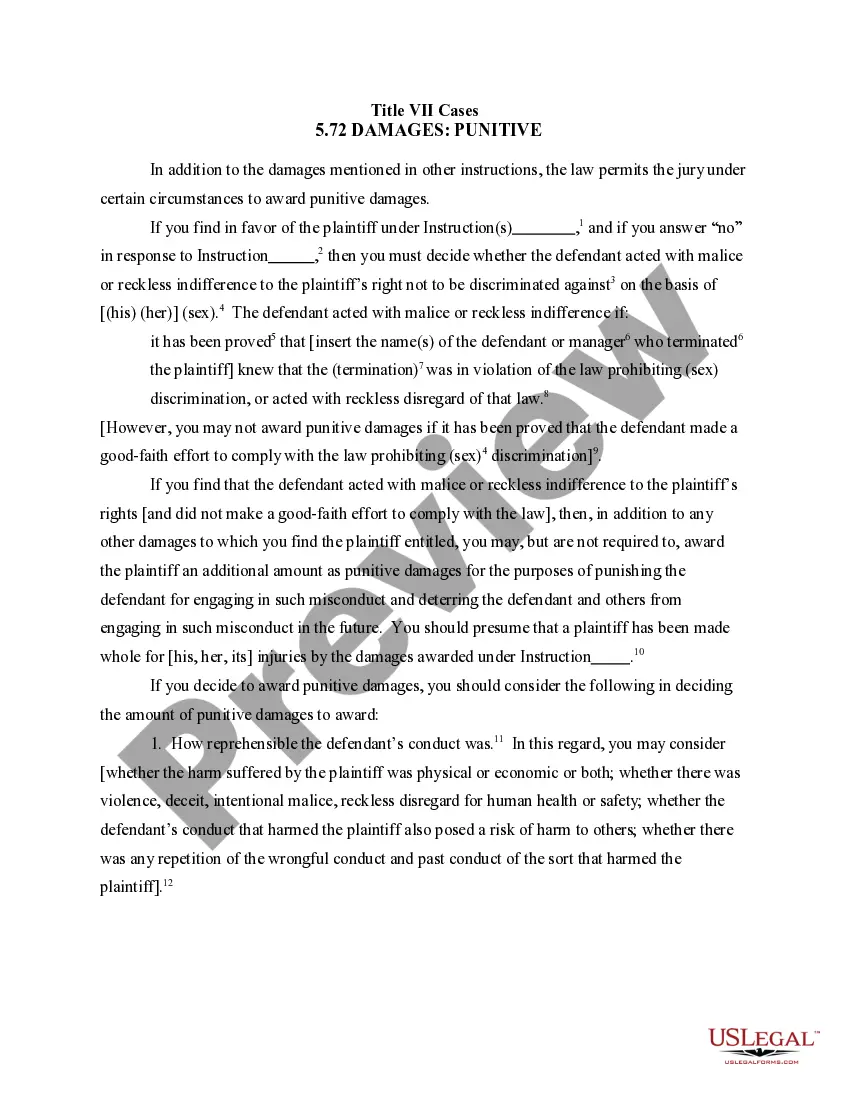
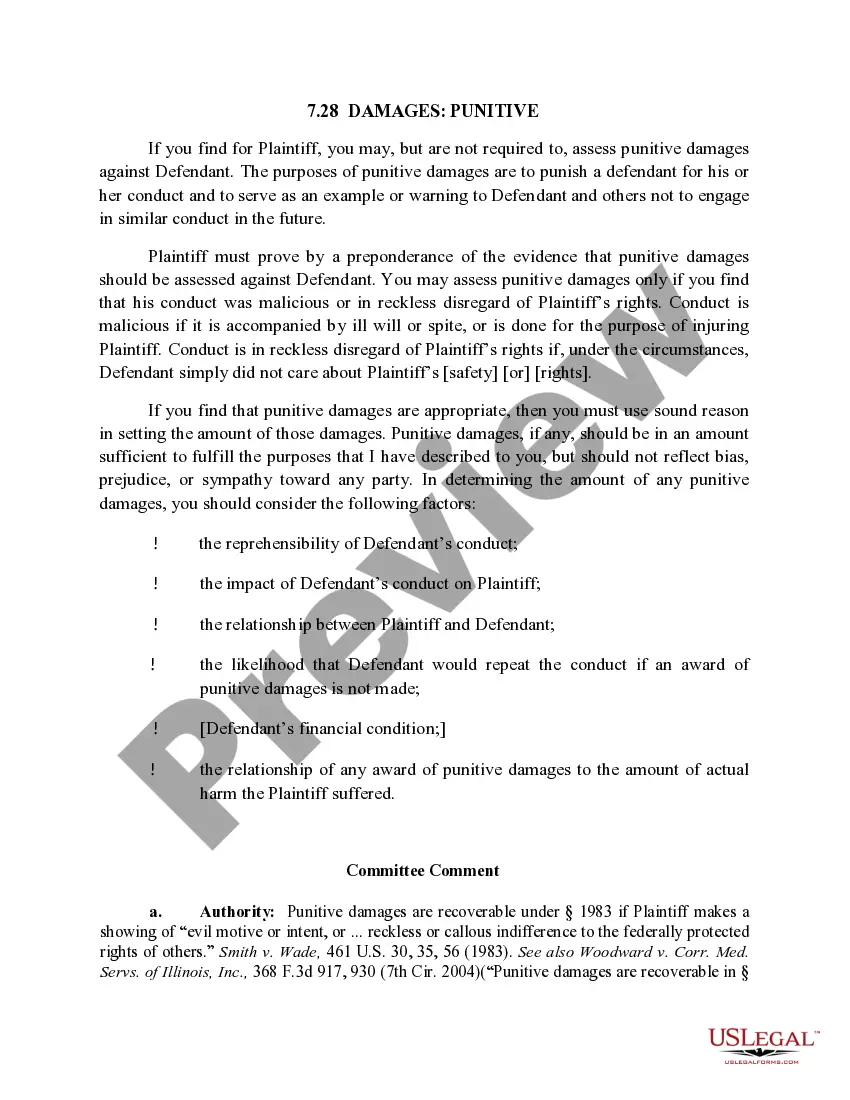
The 17.72 punitive damages form is a legal document used in civil jury trials to outline the circumstances under which a jury may award punitive damages against a defendant. These damages are intended not only to compensate victims but also to punish the defendant for willful misconduct or gross negligence, serving as a deterrent for similar behavior in the future. This form is distinct from compensatory damages forms, as it specifically addresses punitive damages in cases involving serious misconduct or disregard for the rights of others.
Key parts of this document
- Identification of the plaintiff and defendant.
- Statement of the criteria for awarding punitive damages, including willful and wanton behavior.
- Clarification that the jury is not required to award punitive damages.
- Purpose of punitive damages, including deterrence and punishment.
- References to applicable legal precedents and jurisdictional considerations.


When to use this form
This form should be used in cases where the plaintiff seeks punitive damages due to the defendant's egregious behavior, such as willful misconduct or gross negligence. Typical scenarios include personal injury lawsuits or cases involving property damage where the defendant's actions were particularly harmful or reckless. It is applicable in civil trials where the jury has been asked to consider punitive damages as part of the overall verdict.
Intended users of this form
- Plaintiffs who have been harmed due to the reckless actions of a defendant.
- Attorneys representing clients in civil jury trials involving potential punitive damages.
- Individuals seeking to understand the criteria necessary for awarding punitive damages in their case.
How to prepare this document
- Identify and list the names of the plaintiff and defendant at the beginning of the form.
- Clearly state the basis for claiming punitive damages, including details of the defendant's willful or reckless behavior.
- Determine the amount of punitive damages being requested, if applicable.
- Include relevant legal references or case precedents that support the claims made for punitive damages.
- Ensure all parties involved sign and date the document where required.
Notarization guidance
This form usually doesn’t need to be notarized. However, local laws or specific transactions may require it. Our online notarization service, powered by Notarize, lets you complete it remotely through a secure video session, available 24/7.
Get your form ready online
Our built-in tools help you complete, sign, share, and store your documents in one place.
Make edits, fill in missing information, and update formatting in US Legal Forms—just like you would in MS Word.
Download a copy, print it, send it by email, or mail it via USPS—whatever works best for your next step.
Sign and collect signatures with our SignNow integration. Send to multiple recipients, set reminders, and more. Go Premium to unlock E-Sign.
If this form requires notarization, complete it online through a secure video call—no need to meet a notary in person or wait for an appointment.
We protect your documents and personal data by following strict security and privacy standards.

Make edits, fill in missing information, and update formatting in US Legal Forms—just like you would in MS Word.

Download a copy, print it, send it by email, or mail it via USPS—whatever works best for your next step.

Sign and collect signatures with our SignNow integration. Send to multiple recipients, set reminders, and more. Go Premium to unlock E-Sign.

If this form requires notarization, complete it online through a secure video call—no need to meet a notary in person or wait for an appointment.

We protect your documents and personal data by following strict security and privacy standards.
Common mistakes
- Failing to provide sufficient evidence of willful or wanton behavior by the defendant.
- Not clearly distinguishing between compensatory and punitive damages in the claims.
- Leaving sections of the form incomplete, which can lead to delays or dismissals.
Advantages of online completion
- Easy access to legally compliant templates created by licensed attorneys.
- Convenient downloadable format for immediate use.
- Ability to edit and customize the document for specific case needs.
Looking for another form?
Form popularity
FAQ
Individuals can also be ordered to pay punitive damages that injure someone else due to negligent behavior. Examples of this would be drunk driving or distracted driving. In both cases, the defendant would have made a conscious decision to engage in behavior that could easily harm another person.
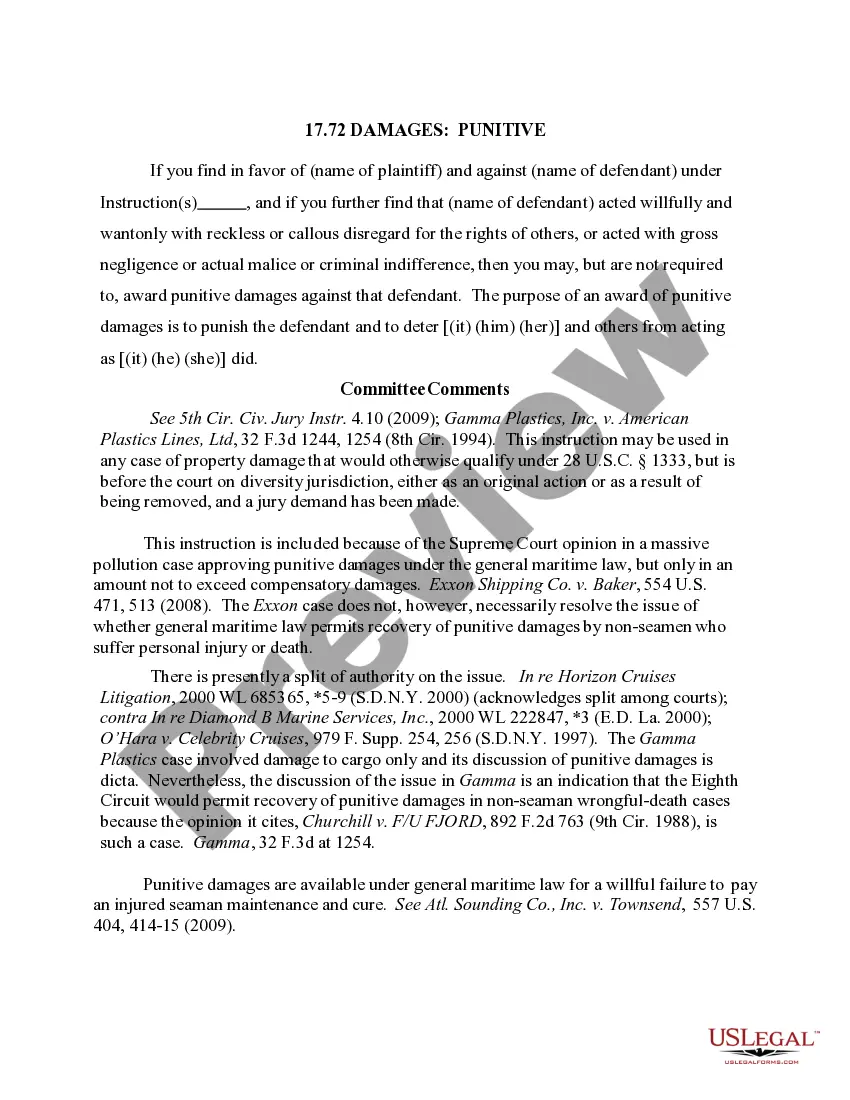
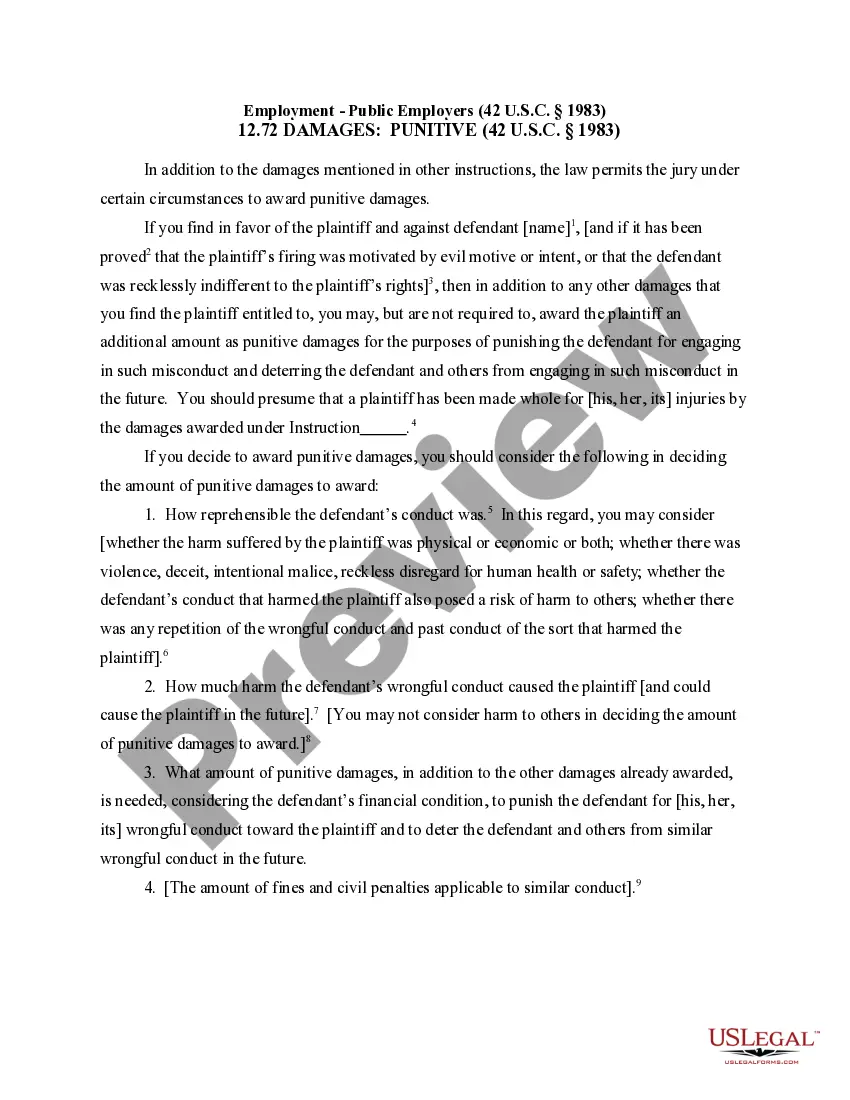
To determine the amount of punitive damages to award, the Book of Approved Jury Instructions (BAJI) states that the jury should consider: (1) The reprehensibility of the conduct of the defendant. (2) The defendant's financial condition and (3) the relationship to actual damages.
Punitive damages are considered punishment and are typically awarded at the court's discretion when the defendant's behavior is found to be especially harmful. Punitive damages are normally not awarded in the context of a breach of contract claim. See e.g. O'Gilvie Minors v.
These are (1) how reprehensible the defendant's conduct was, (2) the disparity between the harm experienced by the plaintiff and the punitive damages award, and (3) the difference between the punitive damages award and the civil penalties and remedies imposed in similar cases.
In a number of cases, the Court has indicated that a ratio between punitive and compensatory damages is high enough to lead to a finding of constitutional impropriety and that any ratio of or higher is almost certainly unconstitutional.
There is no set formula for determining the amount of punitive damages in California, but factors such as the severity of the defendant's conduct, the harm you suffered, and the defendant's financial status are taken into account.
Punitive damages are awarded in addition to actual damages in certain circumstances. Punitive damages are considered punishment and are typically awarded at the court's discretion when the defendant's behavior is found to be especially harmful.
Although there is no maximum sum, punitive damages typically do not exceed four times the amount of compensatory damages. For example, if a plaintiff recovers $100,000 in compensatory damages and is awarded punitive damages, they most likely will receive up to $400,000 in punitive damages.