19.70 DAMAGES
Understanding this form
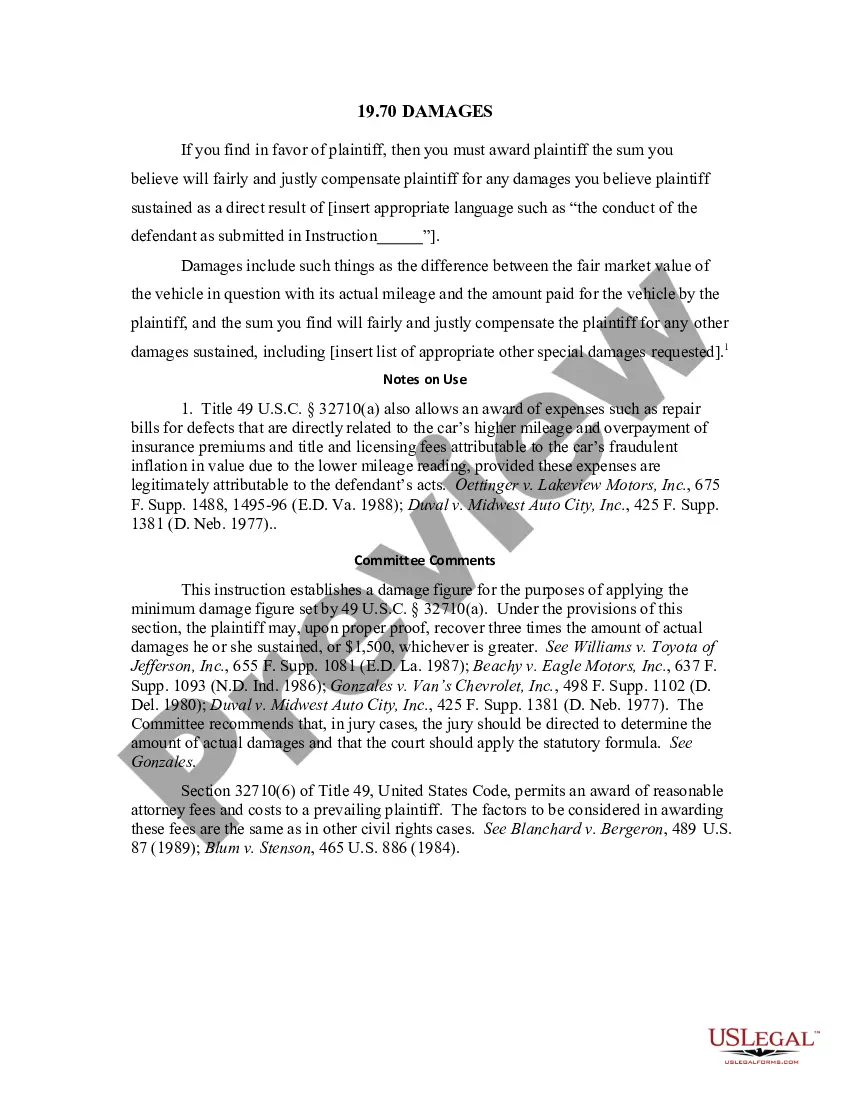
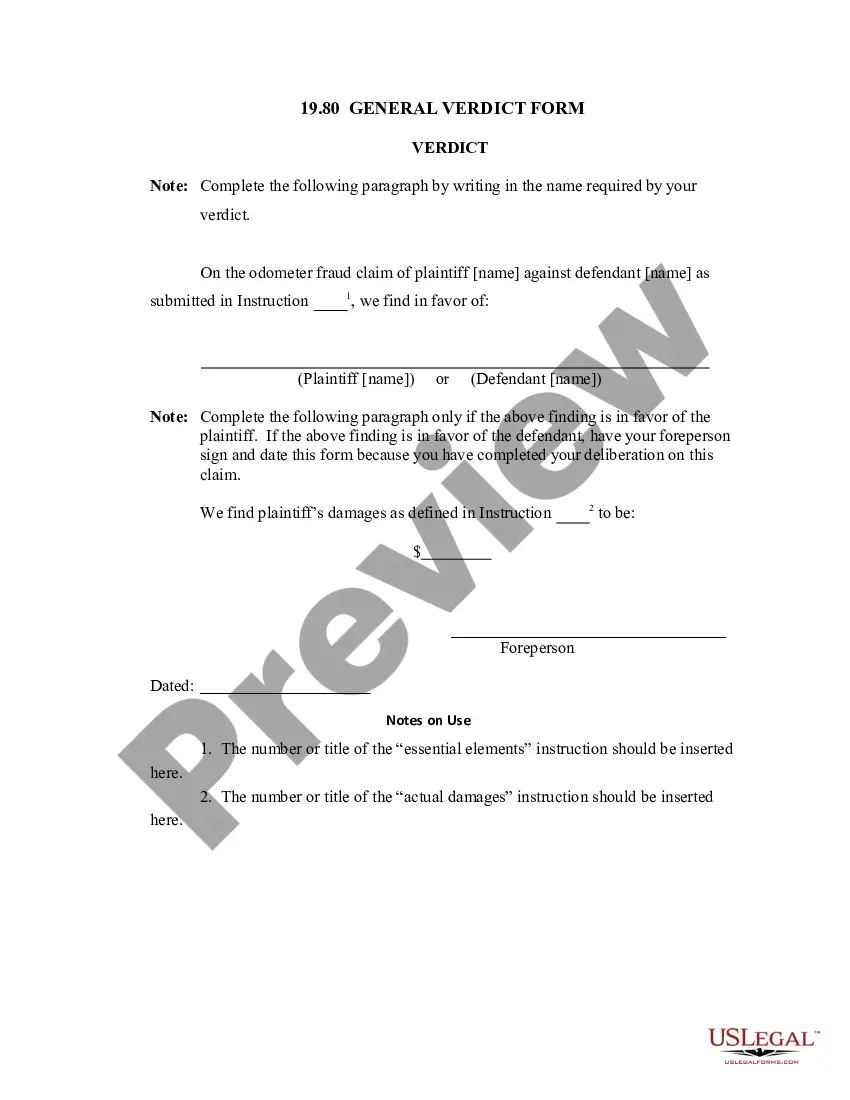
The 19.70 Damages form is a legal document used to establish the amount of damages awarded to a plaintiff in civil cases. This form is applicable when a jury needs to determine compensatory damages resulting from the conduct of a defendant. It serves as a guide for jurors to decide on the fair compensation owed to the plaintiff, distinguishing it from general damage claims by including specific calculations and legal requirements under Title 49 U.S.C. § 32710(a).
Main sections of this form
- Instructions for jury members on determining the appropriate award amount.
- Criteria for assessing damages, including vehicle value and additional losses.
- Reference to statutory provisions allowing recovery for various damages and attorney fees.
- Special damages listing applicable to the case.
Common use cases
This form is used in civil cases where a plaintiff claims damages resulting from the defendant's actions. It is particularly relevant in disputes involving property, such as vehicles, where the damages can include overpayment based on misrepresented values or conditions. Use this form when there is a need to provide jurors with a framework for calculating the compensation owed to a plaintiff.
Who should use this form
- Jury members determining damages in civil court cases.
- Attorneys representing plaintiffs seeking compensation for direct damages.
- Plaintiffs involved in civil litigation where damages are being claimed.
Instructions for completing this form
- Identify the plaintiff and defendant involved in the case.
- Specify the damages sustained by the plaintiff as a result of the defendant's actions.
- Include a fair market value assessment of the vehicle or property in question.
- List any additional special damages the plaintiff is claiming.
- Determine and document any statutory damages as outlined under the relevant law.
Does this document require notarization?
This form does not typically require notarization unless specified by local law. Always verify with local requirements to ensure adherence to any specific legal frameworks.
Get your form ready online
Our built-in tools help you complete, sign, share, and store your documents in one place.
Make edits, fill in missing information, and update formatting in US Legal Forms—just like you would in MS Word.
Download a copy, print it, send it by email, or mail it via USPS—whatever works best for your next step.
Sign and collect signatures with our SignNow integration. Send to multiple recipients, set reminders, and more. Go Premium to unlock E-Sign.
If this form requires notarization, complete it online through a secure video call—no need to meet a notary in person or wait for an appointment.
We protect your documents and personal data by following strict security and privacy standards.

Make edits, fill in missing information, and update formatting in US Legal Forms—just like you would in MS Word.

Download a copy, print it, send it by email, or mail it via USPS—whatever works best for your next step.

Sign and collect signatures with our SignNow integration. Send to multiple recipients, set reminders, and more. Go Premium to unlock E-Sign.

If this form requires notarization, complete it online through a secure video call—no need to meet a notary in person or wait for an appointment.

We protect your documents and personal data by following strict security and privacy standards.
Typical mistakes to avoid
- Failing to accurately assess the fair market value of the vehicle.
- Neglecting to list all applicable special damages.
- Not referencing the statutory provisions for damages correctly.
Benefits of completing this form online
- Convenient access to downloadable templates that save time.
- Editable content to tailor the form to specific case details.
- Reliable format drafted by licensed attorneys to ensure legal compliance.
Legal use & context
- This form establishes a basis for determining damage compensation in civil cases, as guided by Title 49 U.S.C. § 32710.
- It provides a framework for the jury or court to assess damages fairly and justly.
- The documentation of damages must be supported by factual evidence to be enforceable in court.
Main things to remember
- The 19.70 Damages form is essential for plaintiffs seeking compensation in civil cases.
- Accurate assessment and documentation of damages are crucial for a successful claim.
- Understanding local laws can enhance the effectiveness of using this form in different jurisdictions.
Looking for another form?


Form popularity
FAQ
Insurance companies and lawyers typically use a formula to determine the amount of non-economic damages you could claim. For this, the sum of your medical bills will be multiplied by a factor of 1.5 to 5. The more severe or long-lasting a victim's injuries are, the higher the multiplying factor will be.
12.11 There are four types of damages that may be awarded in a tort action: nominal damages, compensatory damages, aggravated damages and exemplary or punitive damages.
Generally speaking, there are four types of contract breaches: anticipatory, actual, minor and material.
Compensatory damages are money awarded to an injured party that compensate for damages, injury, or another incurred loss. Compensatory damages are awarded in civil court cases where loss has occurred as a result of the negligence or unlawful conduct of another party.
Today, we're looking into four types of damages you may be able to receive in a breach of contract case. Compensatory damages.Punitive damages.Nominal damages.Liquidated damages.
Today, we're looking into four types of damages you may be able to receive in a breach of contract case. Compensatory damages.Punitive damages.Nominal damages.Liquidated damages.
There are six different types of damages: compensatory, incidental, consequential, nominal, liquidated, and (sometimes) punitive.