Texas Small Business Startup Package
Understanding this form package
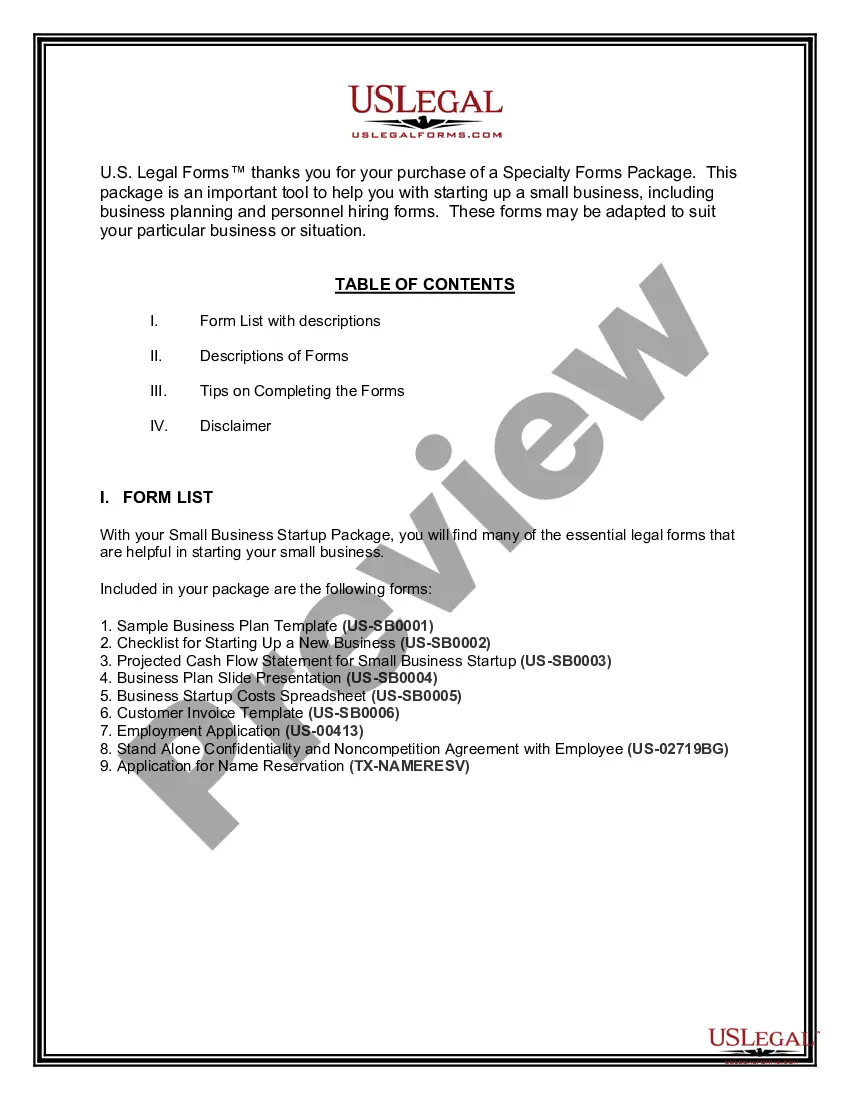
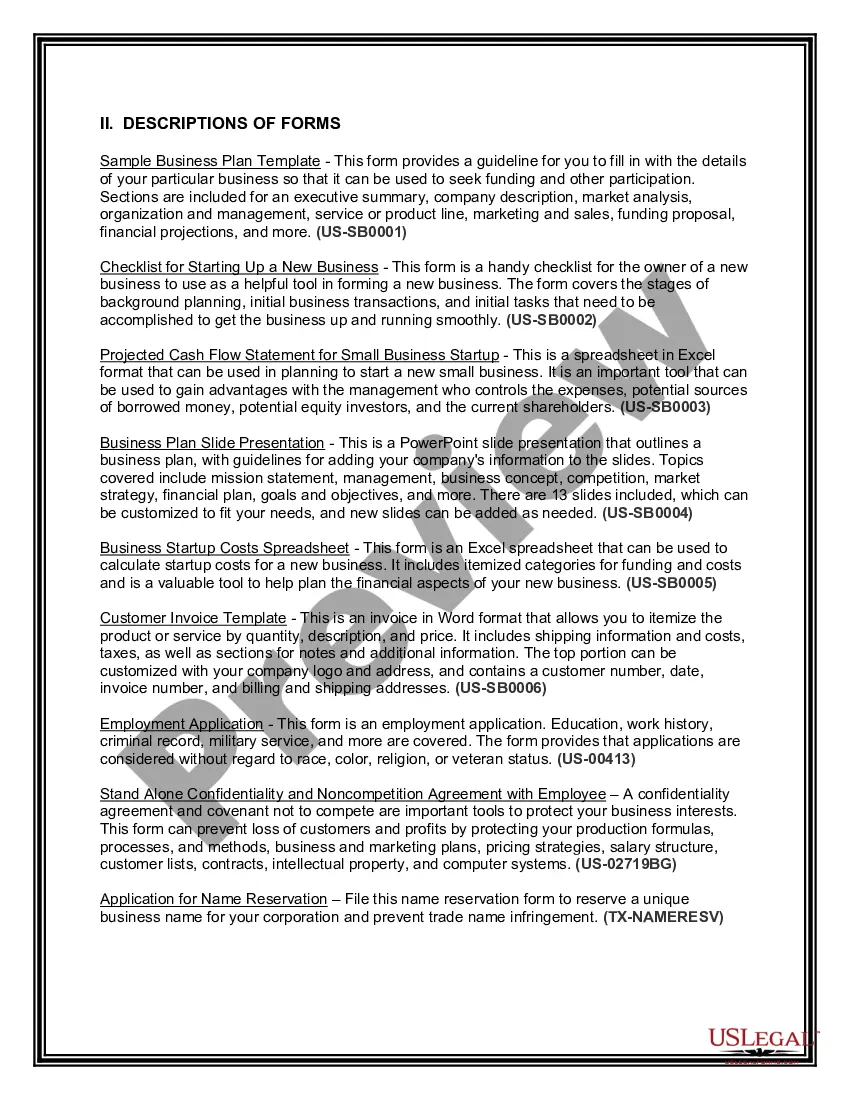
The Texas Small Business Startup Package is a comprehensive set of legal forms designed to assist aspiring entrepreneurs in launching their small businesses. Unlike generic templates, this package includes specialized documents crafted by licensed attorneys to ensure compliance with Texas laws. It serves as a valuable resource for organizing essential startup tasks, developing a solid business plan, and preparing for investor presentations.
What’s included in this form package
Situations where these forms applies
This form package is ideal for individuals who are in the initial stages of starting a small business in Texas. It can be used when you need to:
- Create a detailed business plan to secure funding.
- Establish a checklist to guide you through startup tasks.
- Calculate projected cash flow and startup costs.
- Design a professional presentation for potential investors.
- Implement essential employee agreements and applications.
- Reserve a unique business name to protect your brand.
Who can use this document
- New entrepreneurs starting a small business in Texas.
- Business owners seeking to formalize their operations.
- Individuals looking for comprehensive legal documentation tailored to Texas requirements.
- Startups in need of guidance on funding and planning.
Completing these forms step by step
- Review all forms included in the package.
- Fill in your business details in the Sample Business Plan Template.
- Use the Checklist for Starting Up a New Business to track required tasks.
- Complete the Projected Cash Flow Statement to outline your financial planning.
- Customize the Business Plan Slide Presentation to fit your company's vision.
- Prepare the Customer Invoice Template and Employment Application as needed.
Do documents in this package require notarization?
Most forms in this package do not require notarization. However, local laws or specific situations may demand it. Our online notarization service, powered by Notarize, lets you complete the process through a verified video call, available anytime.
Get your form ready online
Our built-in tools help you complete, sign, share, and store your documents in one place.
Make edits, fill in missing information, and update formatting in US Legal Forms—just like you would in MS Word.
Download a copy, print it, send it by email, or mail it via USPS—whatever works best for your next step.
Sign and collect signatures with our SignNow integration. Send to multiple recipients, set reminders, and more. Go Premium to unlock E-Sign.
If this form requires notarization, complete it online through a secure video call—no need to meet a notary in person or wait for an appointment.
We protect your documents and personal data by following strict security and privacy standards.

Make edits, fill in missing information, and update formatting in US Legal Forms—just like you would in MS Word.

Download a copy, print it, send it by email, or mail it via USPS—whatever works best for your next step.

Sign and collect signatures with our SignNow integration. Send to multiple recipients, set reminders, and more. Go Premium to unlock E-Sign.

If this form requires notarization, complete it online through a secure video call—no need to meet a notary in person or wait for an appointment.

We protect your documents and personal data by following strict security and privacy standards.
Typical mistakes to avoid
- Failing to customize the Sample Business Plan Template to reflect unique business goals.
- Overlooking critical tasks in the Startup Checklist, leading to delays.
- Underestimating costs in the Business Startup Costs Spreadsheet.
- Not adequately protecting sensitive business information in the Confidentiality Agreement.
Benefits of using this package online
- Convenient, instant access to essential legal forms for entrepreneurs.
- Edit and customize forms according to your specific business needs.
- Access legal documentation that complies with Texas state regulations.
- Save time and reduce costs associated with hiring an attorney for basic documents.
Key takeaways
- The Texas Small Business Startup Package offers a range of essential forms for launching a small business.
- It is specifically tailored for Texas, ensuring compliance with local laws.
- Utilizing these forms can streamline the startup process and increase chances of success.
- Follow the steps outlined to effectively complete each document included in the package.
Looking for another form?
Form popularity
FAQ
Actively encourage flexible work arrangements such as teleworking or staggered shifts. Perform routine environmental cleaning. Routinely clean and disinfect all frequently touched surfaces, such as workstations, countertops, handrails, and doorknobs. Discourage sharing of tools and equipment, if feasible.
EIDL Advance funds were originally calculated based on the number of employees indicated on an applicant's COVID-19 EIDL application: $1,000/employee, up to a maximum of $10,000. EIDL Advance does not have to be repaid. Recipients did not have to be approved for an EIDL loan to receive the EIDL Advance.
All small businesses with 500 or fewer employees are eligible, including self-employed individuals, sole proprietors, independents contractors, nonprofits, tribes, and veteran organizations. There is a very limited opportunity for larger businesses in certain industries.
The program is for any small business with less than 500 employees, including sole proprietorships, independent contractions, self-employed persons, private non-profit organizations or 501(c)(19) veterans organizations.Payroll costs are also capped at $100,000 annualized for each employee.
The Paycheck Protection Program is providing small businesses with the resources they need to maintain their payroll, hire back employees who may have been laid off, and cover applicable overhead.
EIDL Advance funds were originally calculated based on the number of employees indicated on an applicant's COVID-19 EIDL application: $1,000/employee, up to a maximum of $10,000. EIDL Advance does not have to be repaid. Recipients did not have to be approved for an EIDL loan to receive the EIDL Advance.
The Paycheck Protection Program is providing small businesses with the resources they need to maintain their payroll, hire back employees who may have been laid off, and cover applicable overhead.
More than half of the money from the Treasury Department's coronavirus emergency fund for small businesses went to just 5 percent of the recipients, according to data on more than 5 million loans that was released by the government Tuesday evening in response to a Freedom of Information Act request and lawsuit.