Responsibility for Substantive Offenses Committed by Co-Conspirators (Pinkerton Liability)
What is this form?
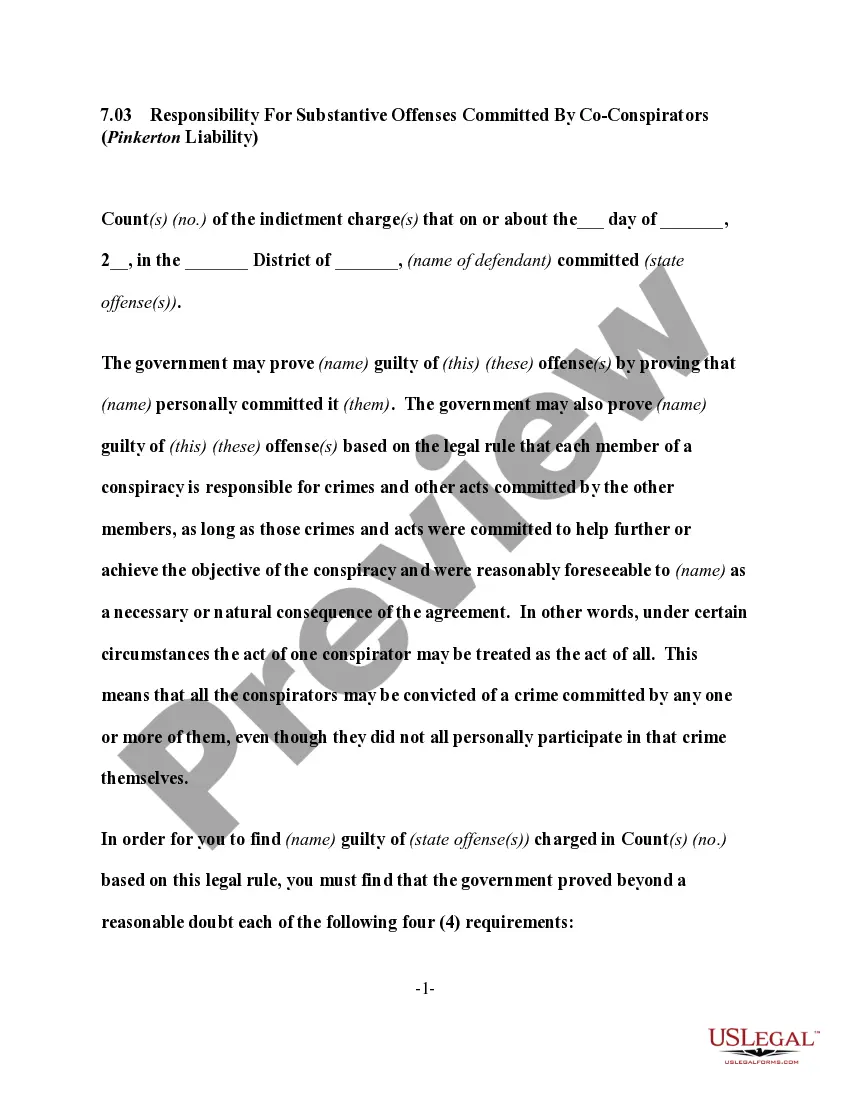
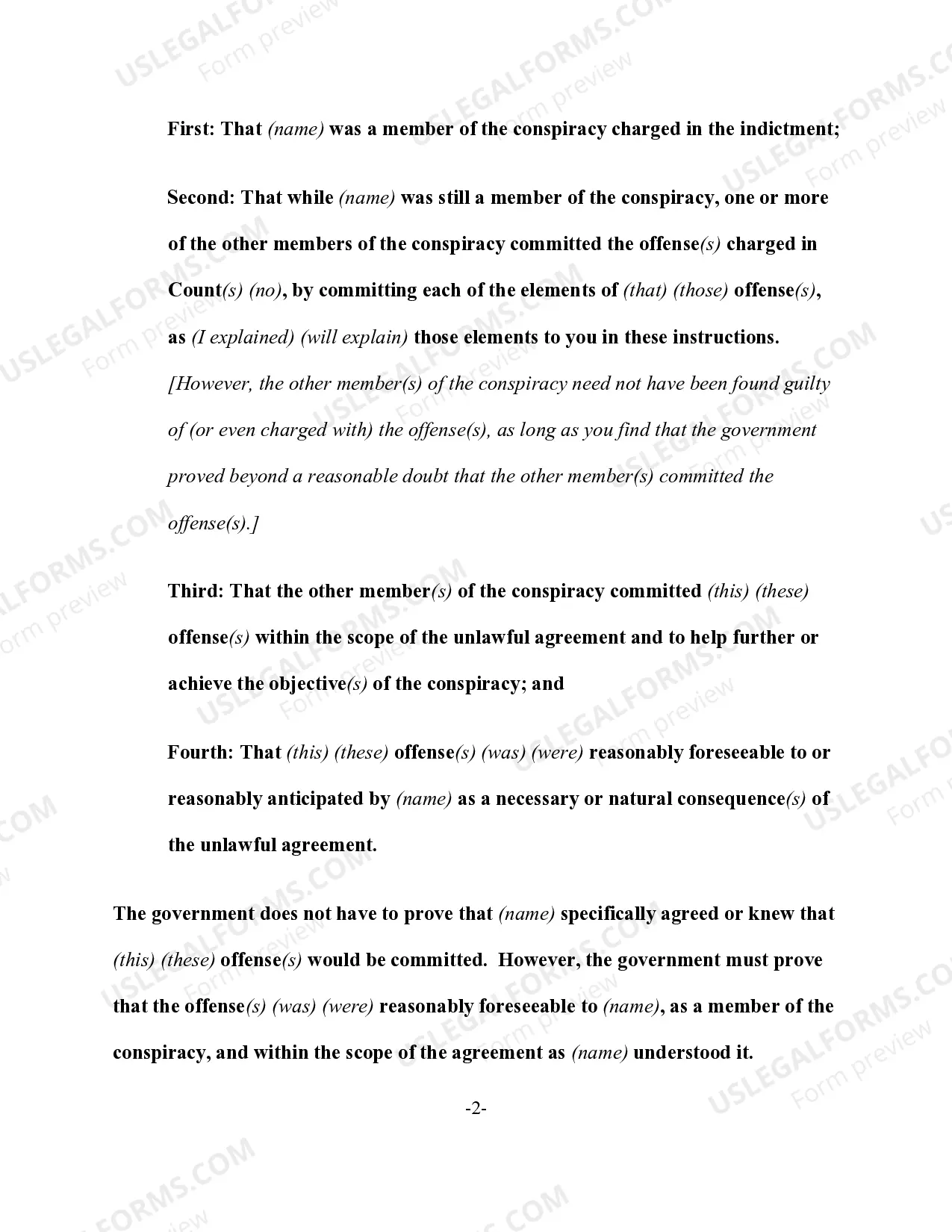
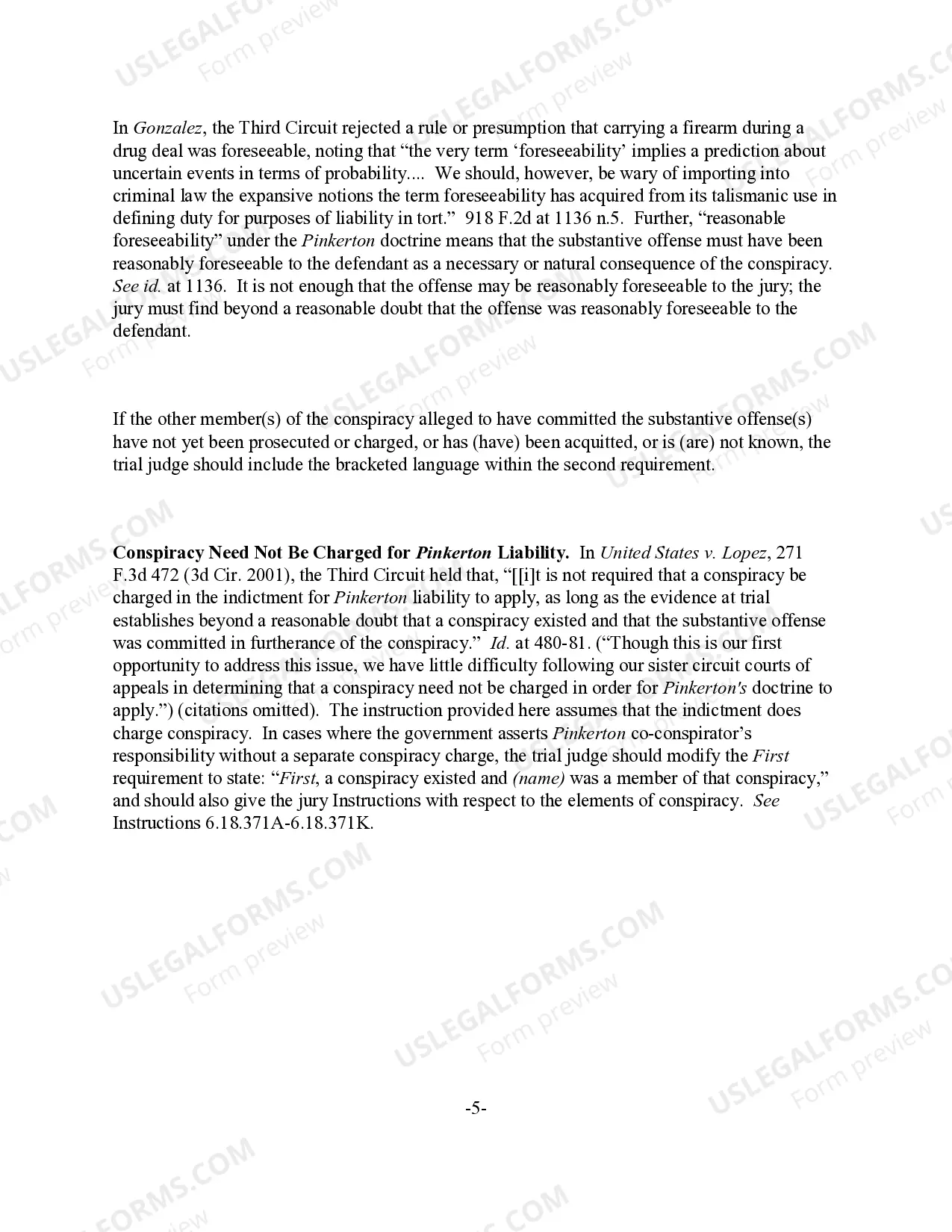
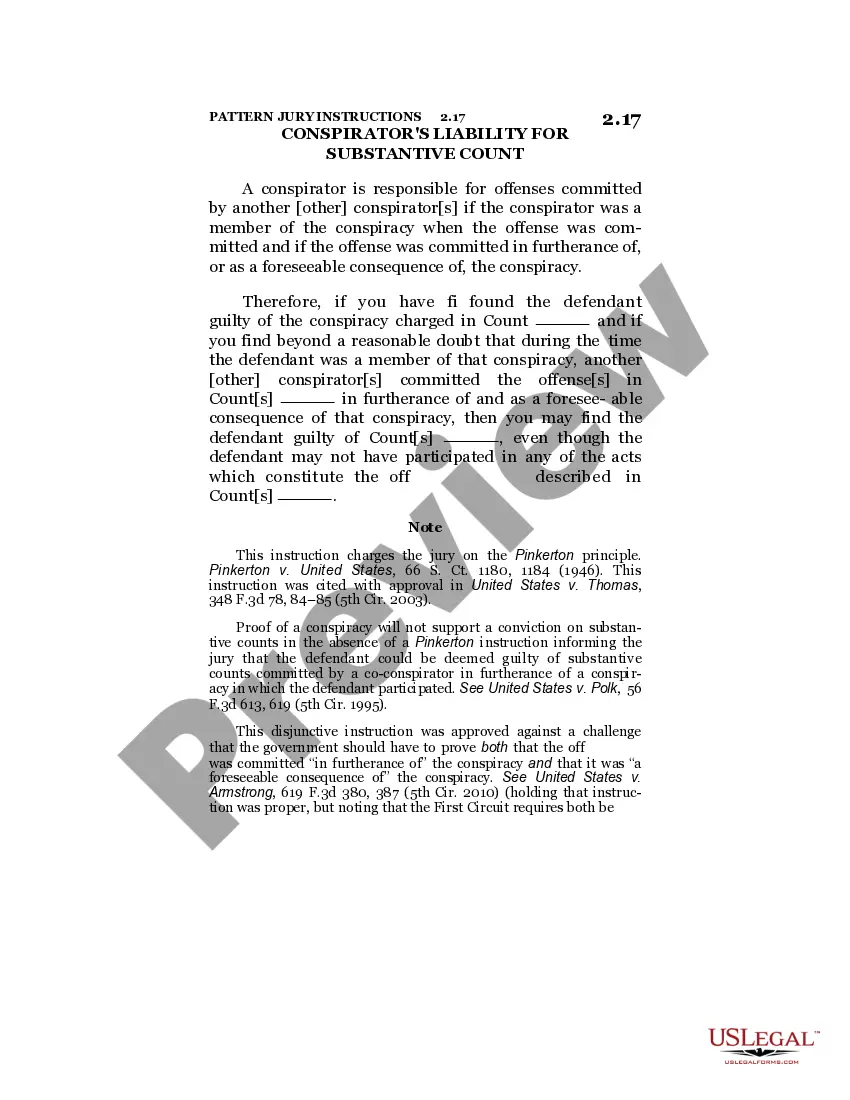
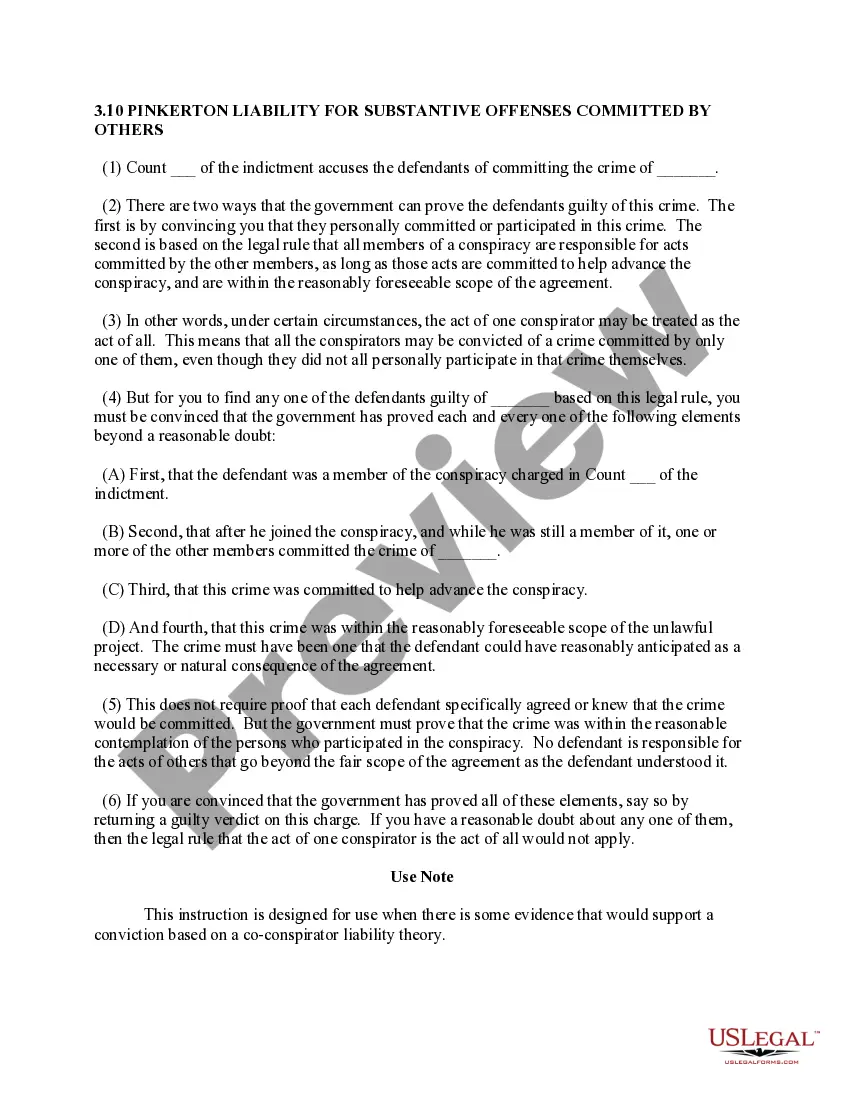
The Responsibility for Substantive Offenses Committed by Co-Conspirators form, commonly known as Pinkerton Liability, outlines the legal principles governing the accountability of co-conspirators for crimes committed within a conspiracy. Unlike standard criminal charges, this doctrine allows for the prosecution of all members of a conspiracy for acts committed by any single member, provided those acts were foreseeable consequences of the conspiracy's objectives. By using this form, legal practitioners can clearly articulate the responsibilities and potential liabilities associated with conspiratorial actions.
Key parts of this document
- Identification of the defendant and the specific charges involved.
- Description of the conspiracy and its objectives.
- Criteria for establishing membership in the conspiracy.
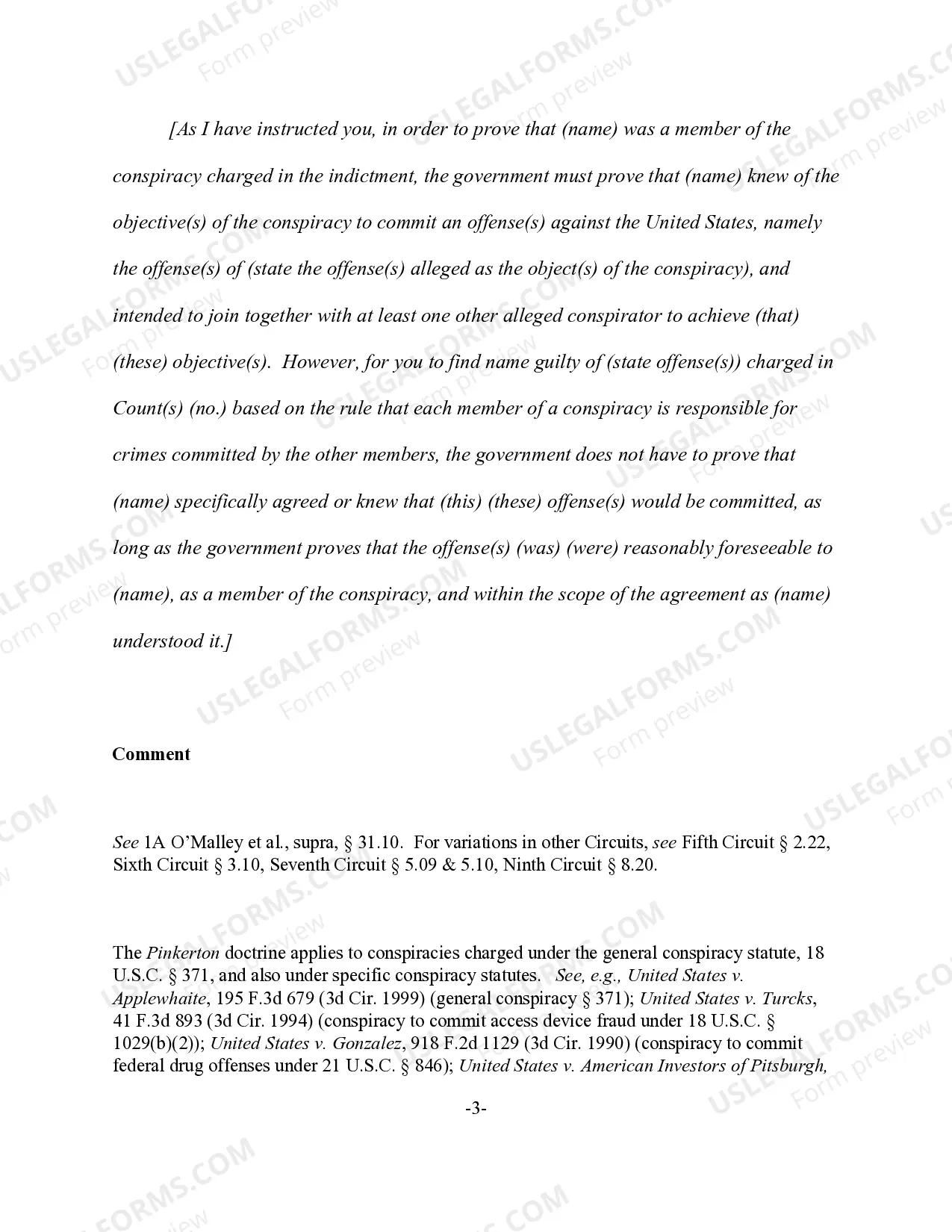
- Foreseeability and natural consequences of the co-conspirators' actions.
- Explanation of how substantive offenses relate to the conspiracy agreement.
When this form is needed
This form is essential in legal cases involving conspiracy charges where multiple defendants are implicated. It is particularly relevant when the prosecution aims to hold a defendant accountable for crimes committed by co-conspirators during the course of the conspiracy. Use this form to clarify legal arguments about the defendant's responsibilities, especially in complex cases where actions may not have been directly agreed upon by all parties involved.
Who should use this form
- Criminal defense attorneys representing clients charged with conspiracy.
- Prosecutors addressing co-conspirator liability in case presentations.
- Legal scholars or students analyzing conspiracy law and its applications.
- Judges reviewing jury instructions related to conspiracy trials.
Steps to complete this form
- Identify the defendant's name and the specific charges listed in the indictment.
- Outline the details of the conspiracy, including the date and place of the offense.
- Verify that the requirements for membership in the conspiracy are clearly met.
- Establish that the substantive offenses were committed by co-conspirators and were within the scope of the conspiracy.
- Ensure that all elements required to prove foreseeability are adequately documented.
Does this document require notarization?
Notarization is generally not required for this form. However, certain states or situations might demand it. You can complete notarization online through US Legal Forms, powered by Notarize, using a verified video call available anytime.
Get your form ready online
Our built-in tools help you complete, sign, share, and store your documents in one place.
Make edits, fill in missing information, and update formatting in US Legal Forms—just like you would in MS Word.
Download a copy, print it, send it by email, or mail it via USPS—whatever works best for your next step.
Sign and collect signatures with our SignNow integration. Send to multiple recipients, set reminders, and more. Go Premium to unlock E-Sign.
If this form requires notarization, complete it online through a secure video call—no need to meet a notary in person or wait for an appointment.
We protect your documents and personal data by following strict security and privacy standards.

Make edits, fill in missing information, and update formatting in US Legal Forms—just like you would in MS Word.

Download a copy, print it, send it by email, or mail it via USPS—whatever works best for your next step.

Sign and collect signatures with our SignNow integration. Send to multiple recipients, set reminders, and more. Go Premium to unlock E-Sign.

If this form requires notarization, complete it online through a secure video call—no need to meet a notary in person or wait for an appointment.

We protect your documents and personal data by following strict security and privacy standards.
Common mistakes
- Failing to establish clear links between the defendant and the conspiracy.
- Neglecting to provide evidence of foreseeability regarding the offenses committed by co-conspirators.
- Using vague language that doesn't specify the actions of the co-conspirators.
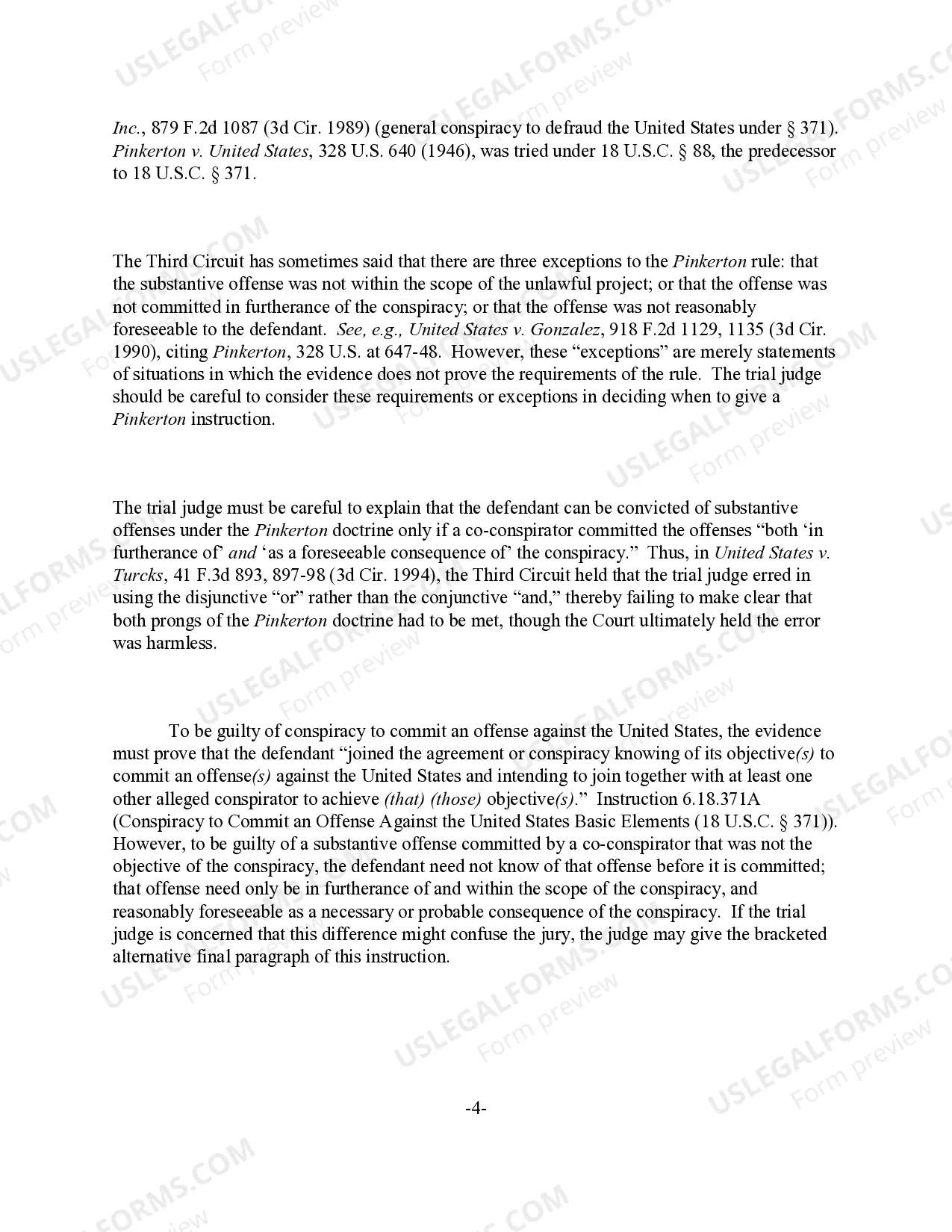
- Not addressing the exceptions to the Pinkerton doctrine when applicable.
Benefits of completing this form online
- Convenient access to legally vetted templates designed by licensed attorneys.
- Easy download and modification options to fit specific case needs.
- Reliable guidance, ensuring adherence to legal standards.
- Immediate availability, allowing for quick preparations in urgent cases.
Legal use & context
- The Pinkerton doctrine is applicable under various conspiracy statutes, enabling prosecution without a separate conspiracy charge.
- Definition of foreseeability is critical in determining liability for actions performed by co-conspirators.
- Legal outcomes can vary based on jurisdictional interpretations and case specifics.
Looking for another form?


Form popularity
FAQ
When a conspiracy is entered into to do an unlawful act, the conspirators are responsible for all that is said and done in furtherance of the conspiracy by their co-conspirators.
The Pinkerton rule determines when an individual can be convicted of a substantive crime they didn't directly commit. It upholds that all conspiracy members are liable for their co-conspirators' substantive crimes intended to further the conspiracy.
Pinkerton is a vicarious liability rule that makes conspirators criminally responsible for the foreseeable crimes of their coconspirators committed in furtherance of the conspiracy.
The Pinkerton doctrine is a judicially-created rule that makes each member of a conspiracy liable for crimes that other members commit to further their joint criminal design.
United States, 328 U.S. 640 (1946) Any crime in furtherance of a conspiracy that is reasonably foreseeable may lead to criminal liability for any member of the conspiracy.
The court concluded that if an overt act, which is an essential ingredient to a conspiracy, can be supplied by one conspirator, then likewise the same or other acts in furtherance of the conspiracy should be attributable to the others for the purpose of holding them responsible for the substantive offense(s).
A defendant can be held vicariously liable for a substantive offense committed by another member of a conspiracy if: (1) the defendant was a party to the conspiracy; (2) the offense was ?within the scope of the unlawful project?; (3) the offense was committed in furtherance of the conspiracy; and (4) the defendant