PINKERTON LIABILITY FOR SUBSTANTIVE OFFENSES COMMITTED BY OTHERS
What this document covers
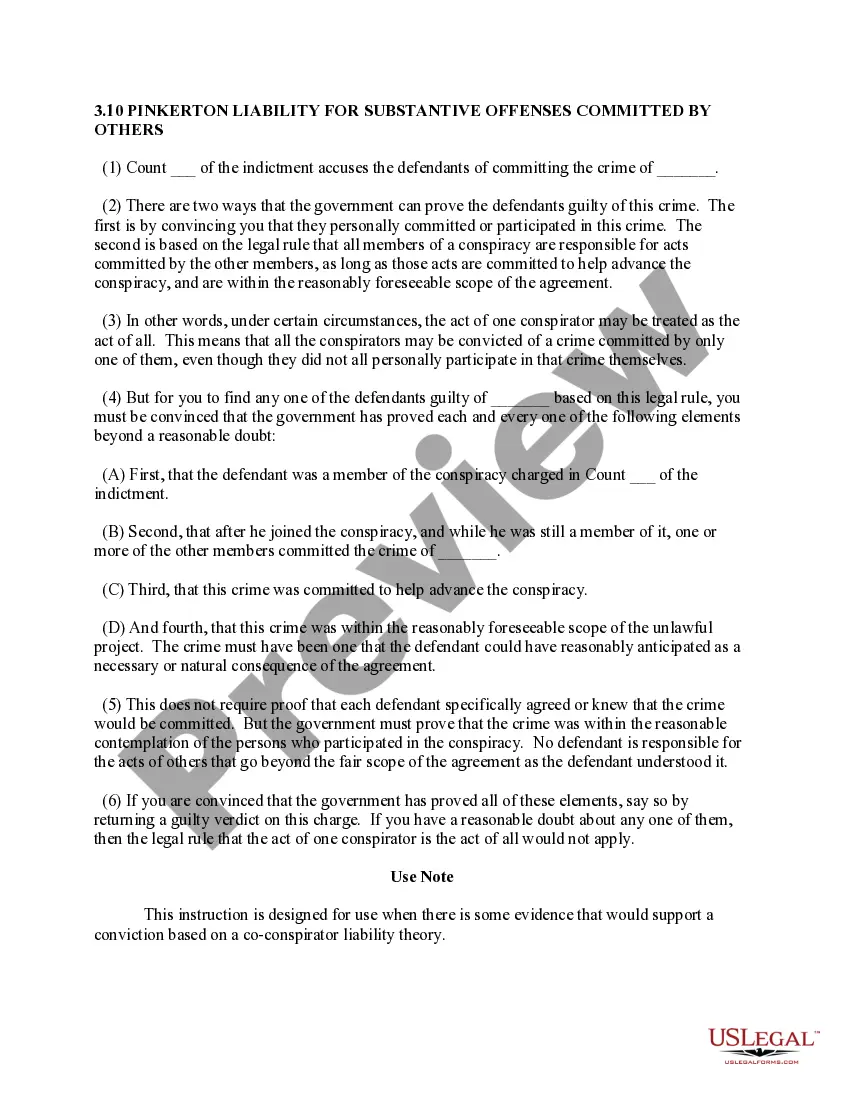
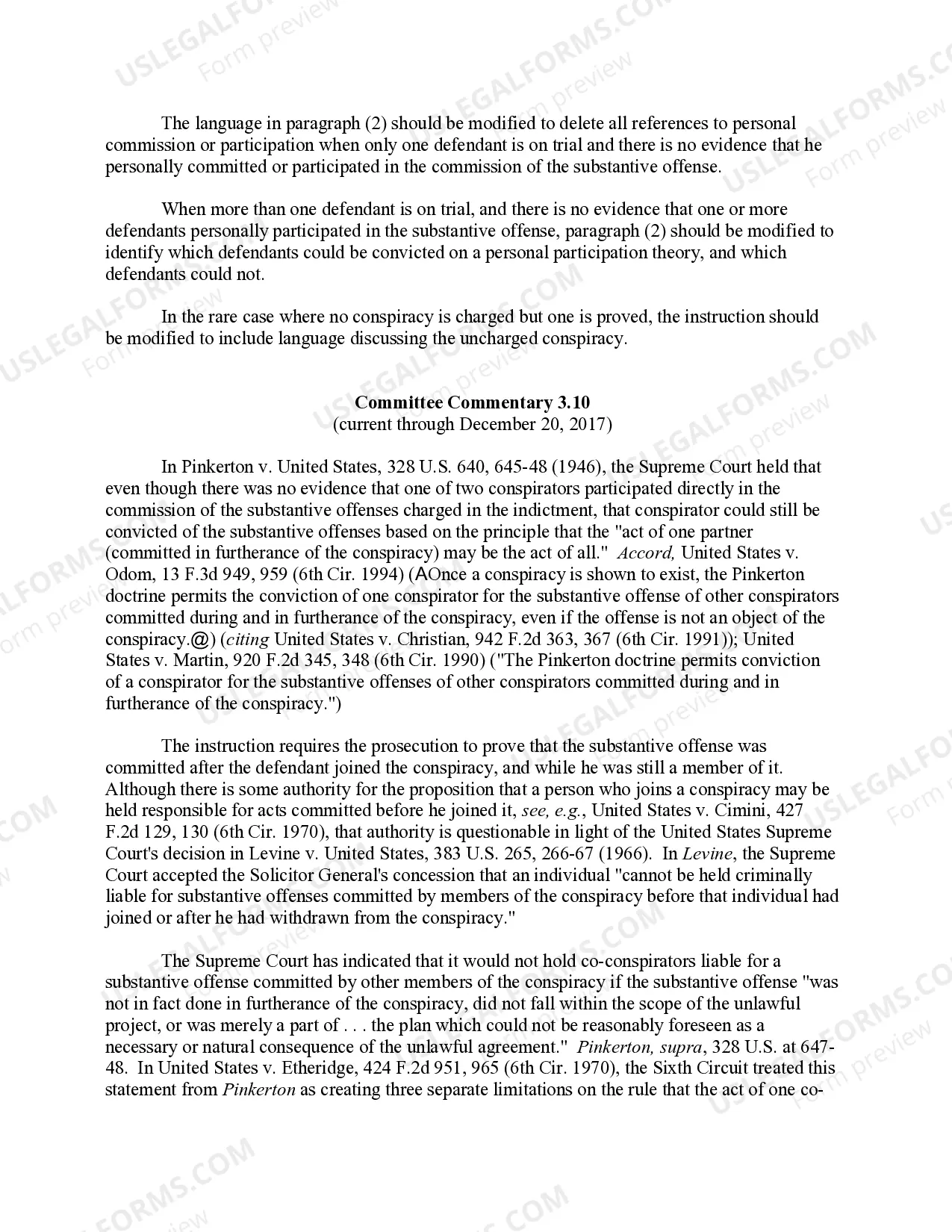
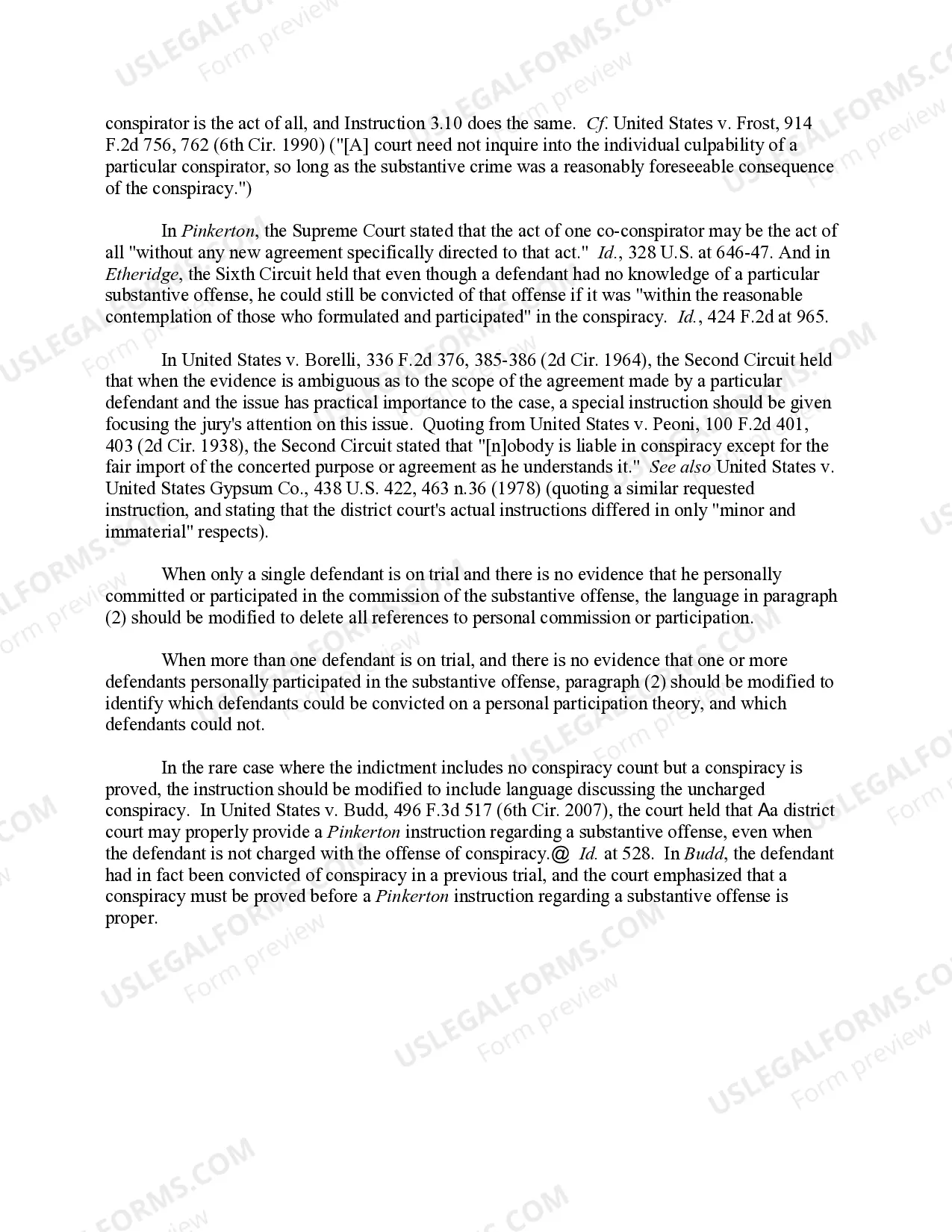
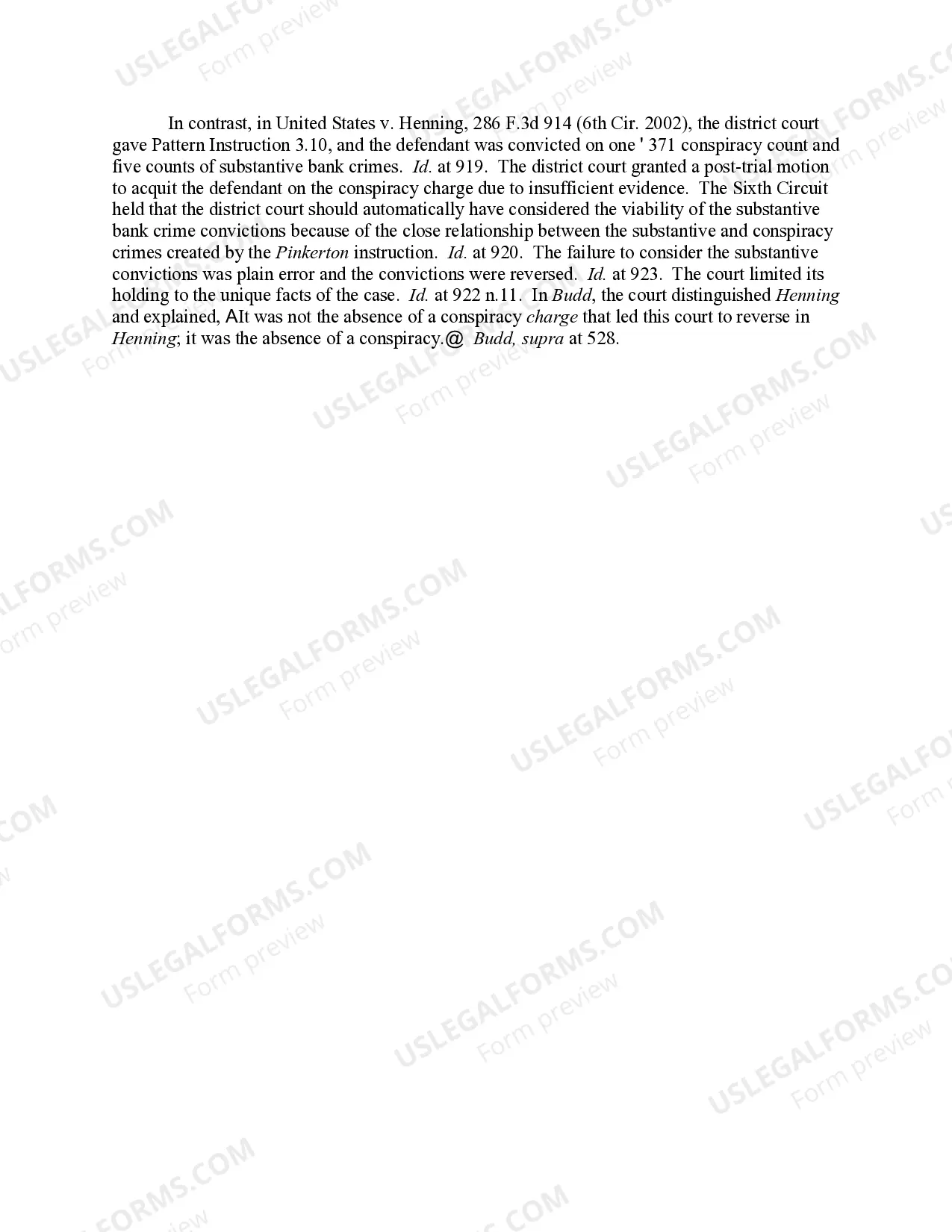
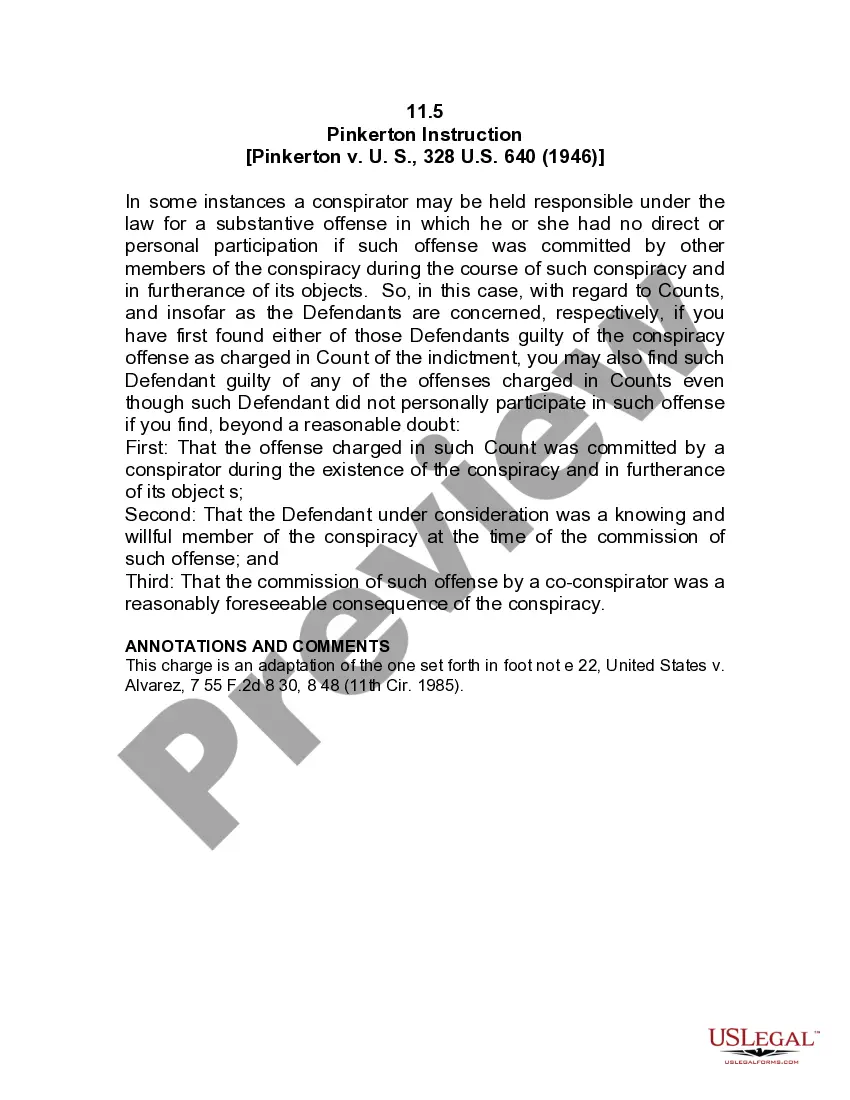
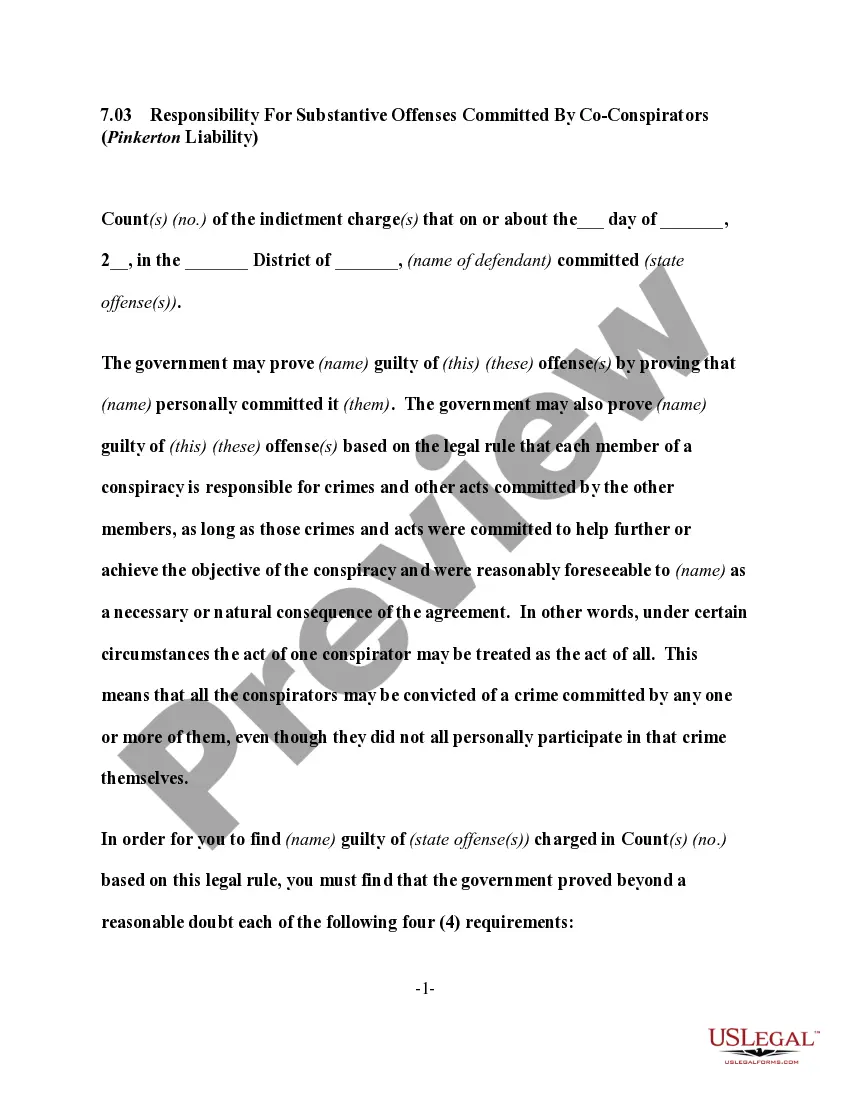
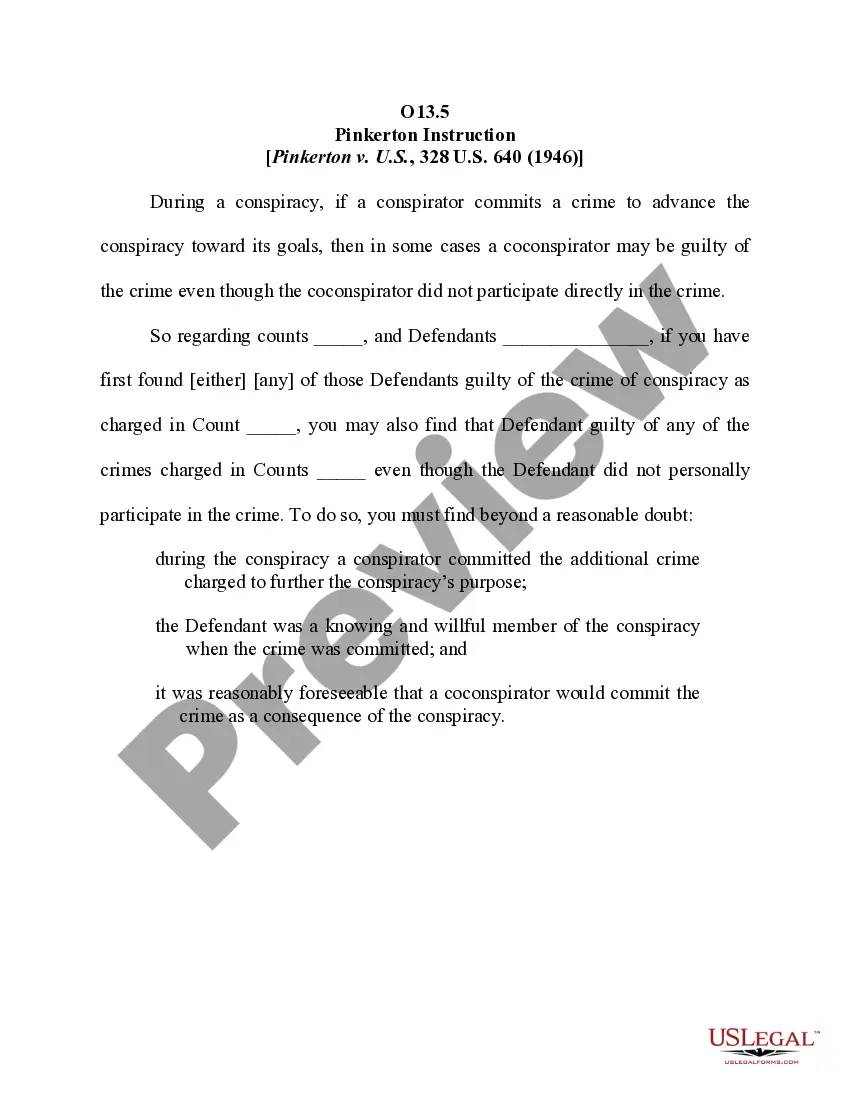
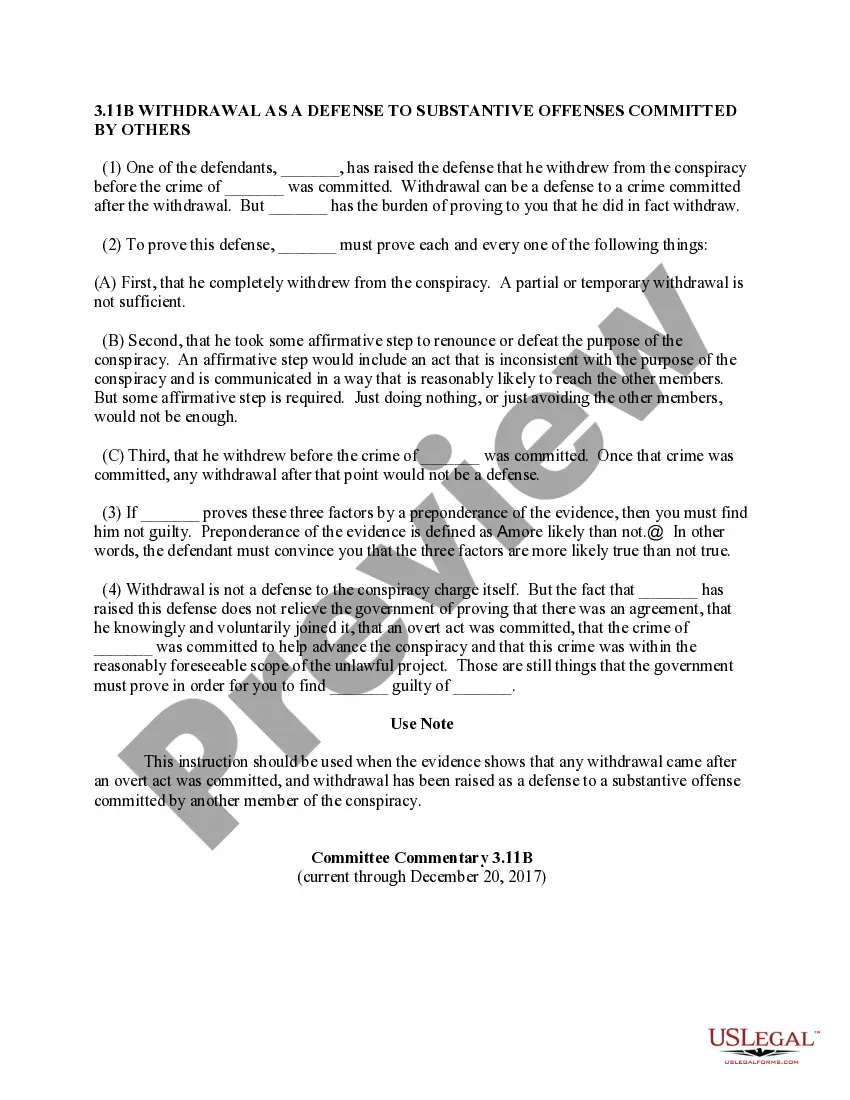
The Pinkerton liability for substantive offenses committed by others form establishes the legal basis for holding co-conspirators accountable for offenses committed by fellow conspirators. This form clarifies how members of a conspiracy can be liable for crimes they did not personally commit if those crimes were committed in furtherance of the conspiracy. It is essential for legal professionals and defendants involved in conspiracy cases to understand and utilize this form to navigate complex liability issues effectively.
What’s included in this form
- Definition of the substantive offense being charged.
- Criteria for proving guilty based on personal participation and co-conspirator liability.
- List of elements the prosecution must establish beyond a reasonable doubt.
- Clarification on the scope of liability for each co-conspirator.
- Instructions for jury deliberation regarding the evidence provided.
When this form is needed
This form is used in criminal cases involving conspiracy charges. It is applicable when the prosecution seeks to hold defendants liable for crimes committed by their co-conspirators. Situations include drug trafficking, organized crime, or any case where members of a conspiracy may be implicated in offenses not directly attributed to their individual actions. Utilizing this form helps clarify legal standards around liability among co-defendants.
Who should use this form
- Attorneys representing clients involved in conspiracy cases.
- Prosecutors preparing for conspiracy-related trials.
- Defendants charged with conspiracy who need to understand their legal position.
- Legal scholars and students studying conspiracy law.
How to prepare this document
- Identify the defendants and specify their involvement in the conspiracy.
- Clearly state the substantive offenses being charged.
- Provide evidence supporting the elements of co-conspirator liability.
- Outline the connection between the actions of the conspirators and the advancement of the conspiracy.
- Review the completed form for clarity and legal sufficiency.
Notarization requirements for this form
Notarization is generally not required for this form. However, certain states or situations might demand it. You can complete notarization online through US Legal Forms, powered by Notarize, using a verified video call available anytime.
Get your form ready online
Our built-in tools help you complete, sign, share, and store your documents in one place.
Make edits, fill in missing information, and update formatting in US Legal Forms—just like you would in MS Word.
Download a copy, print it, send it by email, or mail it via USPS—whatever works best for your next step.
Sign and collect signatures with our SignNow integration. Send to multiple recipients, set reminders, and more. Go Premium to unlock E-Sign.
If this form requires notarization, complete it online through a secure video call—no need to meet a notary in person or wait for an appointment.
We protect your documents and personal data by following strict security and privacy standards.

Make edits, fill in missing information, and update formatting in US Legal Forms—just like you would in MS Word.

Download a copy, print it, send it by email, or mail it via USPS—whatever works best for your next step.

Sign and collect signatures with our SignNow integration. Send to multiple recipients, set reminders, and more. Go Premium to unlock E-Sign.

If this form requires notarization, complete it online through a secure video call—no need to meet a notary in person or wait for an appointment.

We protect your documents and personal data by following strict security and privacy standards.
Common mistakes to avoid
- Failing to establish a clear link between the conspiracy and the substantive offenses.
- Overlooking the need for jurors to understand the principles of co-conspirator liability.
- Neglecting to specify which offenses apply to which defendants in multi-defendant cases.
- Assuming all conspirators are liable without evidence of complicity in the specific offense.
Benefits of using this form online
- Easy access to legally vetted templates drafted by licensed attorneys.
- Convenient downloading options for immediate use in legal proceedings.
- Ability to customize forms to fit specific cases without legal jargon.
- Streamlined online completion can save time and ensure accuracy.
Legal use & context
- Establishes a framework for prosecutorial use of the Pinkerton doctrine in conspiracy cases.
- Ensures defendants have access to their rights and defenses under conspiracy liability rules.
- Provides clarity on the required proof for conviction in cases involving multiple defendants.
Looking for another form?


Form popularity
FAQ
The court concluded that if an overt act, which is an essential ingredient to a conspiracy, can be supplied by one conspirator, then likewise the same or other acts in furtherance of the conspiracy should be attributable to the others for the purpose of holding them responsible for the substantive offense(s).
The Pinkerton doctrine is a judicially-created rule that makes each member of a conspiracy liable for crimes that other members commit to further their joint criminal design.
United States, 328 U.S. 640 (1946) Any crime in furtherance of a conspiracy that is reasonably foreseeable may lead to criminal liability for any member of the conspiracy.
Wharton's Rule teaches that where the substantive crime itself is aimed at the evils traditionally addressed by the law of conspiracy, separability should not be found unless the clearest legislative statement demands it.
The Pinkerton rule determines when an individual can be convicted of a substantive crime they didn't directly commit. It upholds that all conspiracy members are liable for their co-conspirators' substantive crimes intended to further the conspiracy.
Overview. In both tort and criminal law, strict liability exists when a defendant is liable for committing an action, regardless of what his/her intent or mental state was when committing the action. In criminal law, possession crimes and statutory rape are both examples of strict liability offenses.
A defendant can be held vicariously liable for a substantive offense committed by another member of a conspiracy if: (1) the defendant was a party to the conspiracy; (2) the offense was ?within the scope of the unlawful project?; (3) the offense was committed in furtherance of the conspiracy; and (4) the defendant