Nevada Request for Summary Disposition - Family Name Change
What this document covers
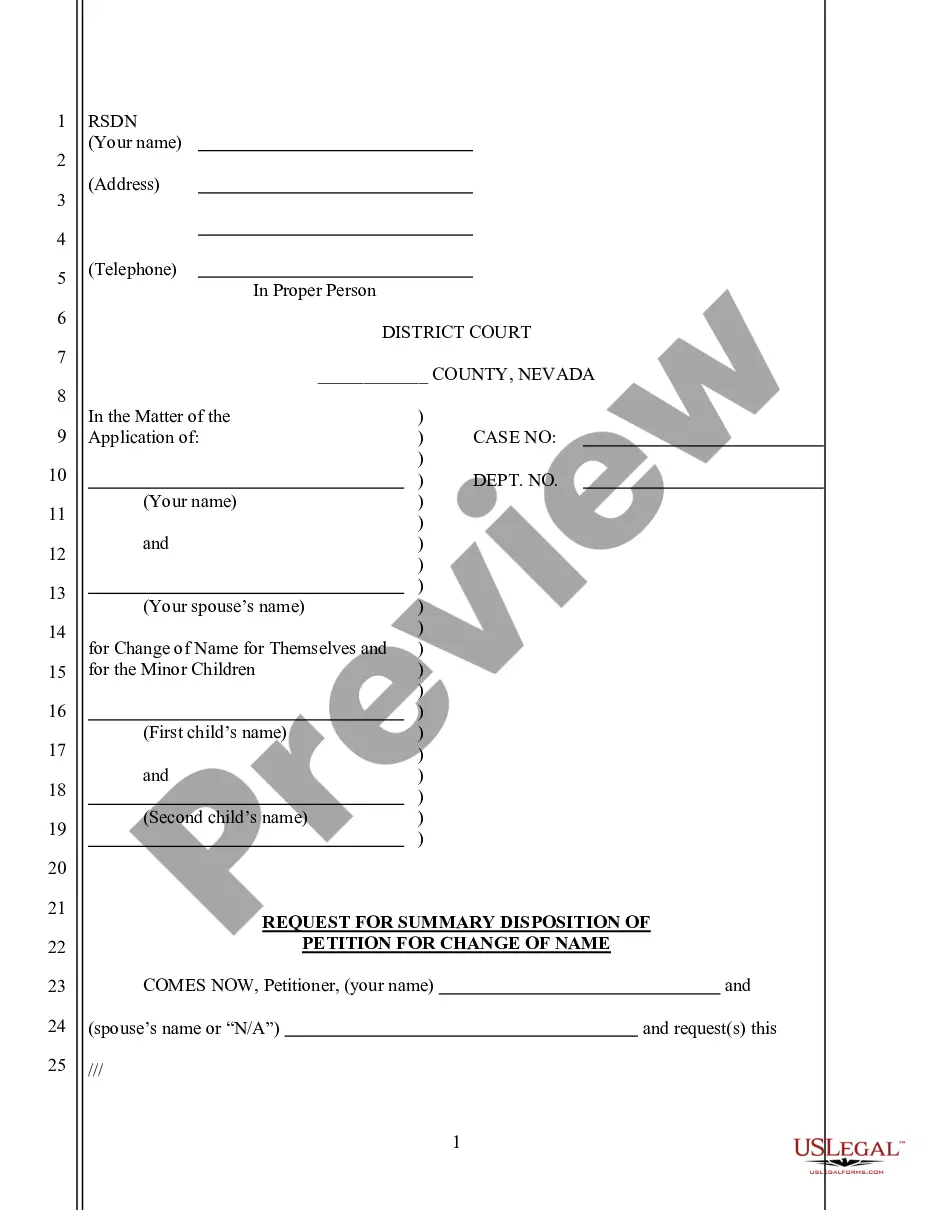
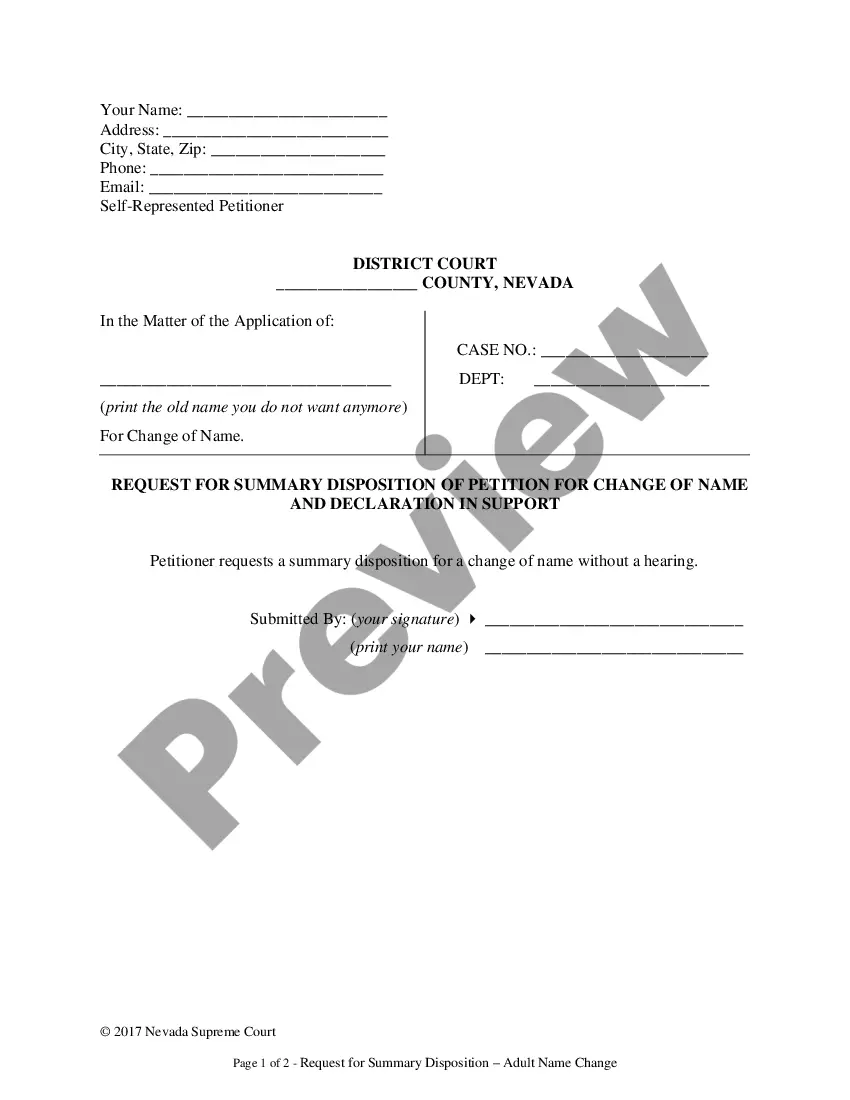
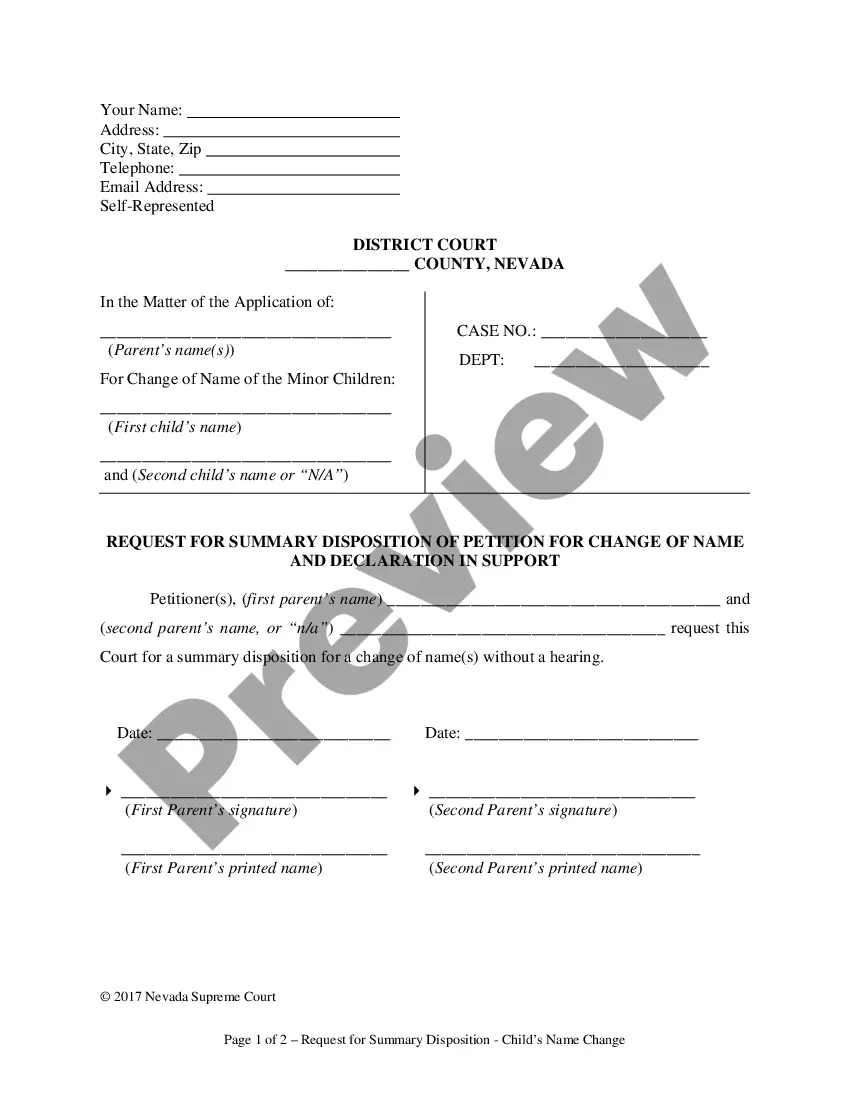
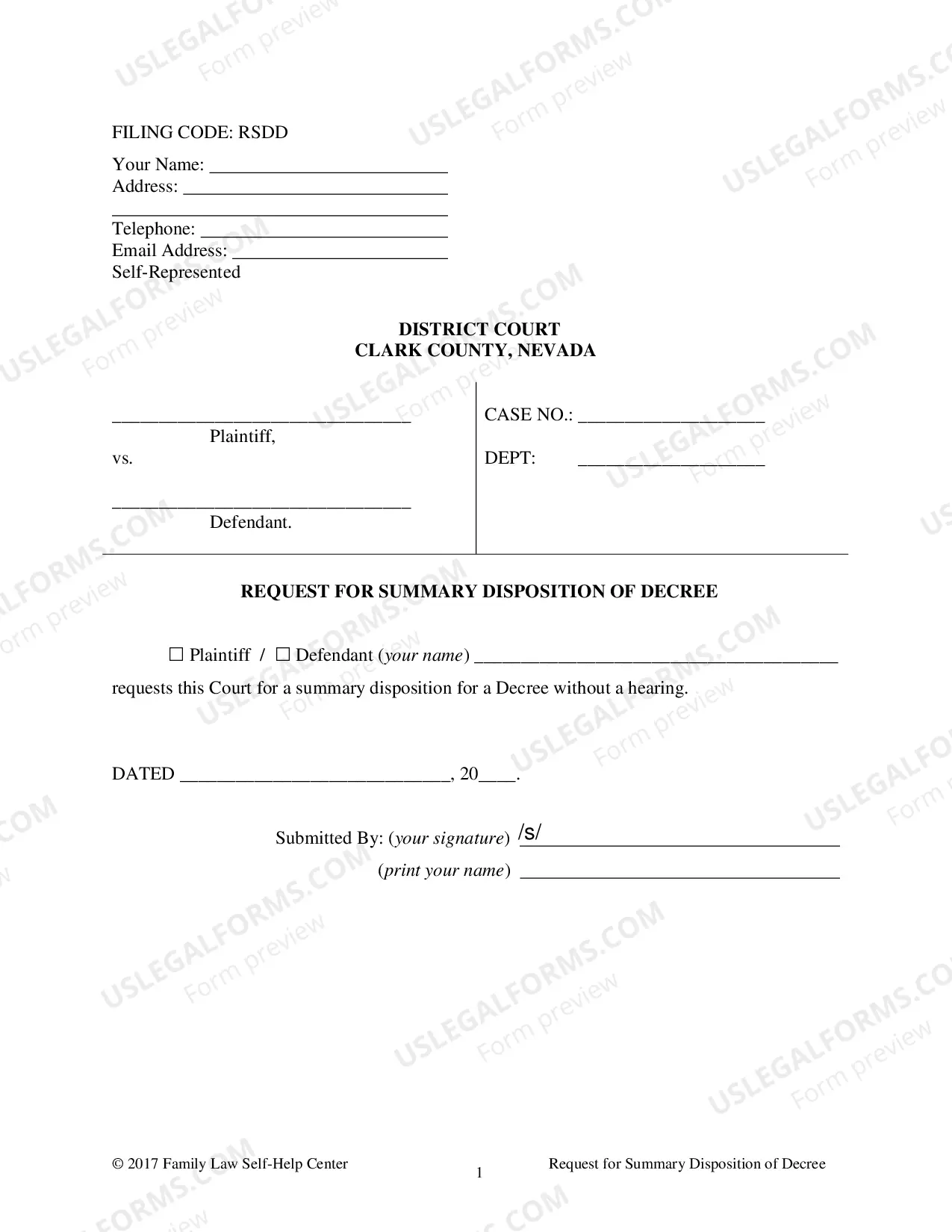
The Request for Summary Disposition - Family Name Change is a legal document that requests a court to decide your case without a formal hearing. This form is useful for individuals seeking to change their family name efficiently, as it allows for a quicker resolution compared to standard hearing procedures.
What’s included in this form
- Request statement for summary disposition
- Information about the individual's current name
- Details regarding the desired new name
- Supporting declarations or evidence for the name change
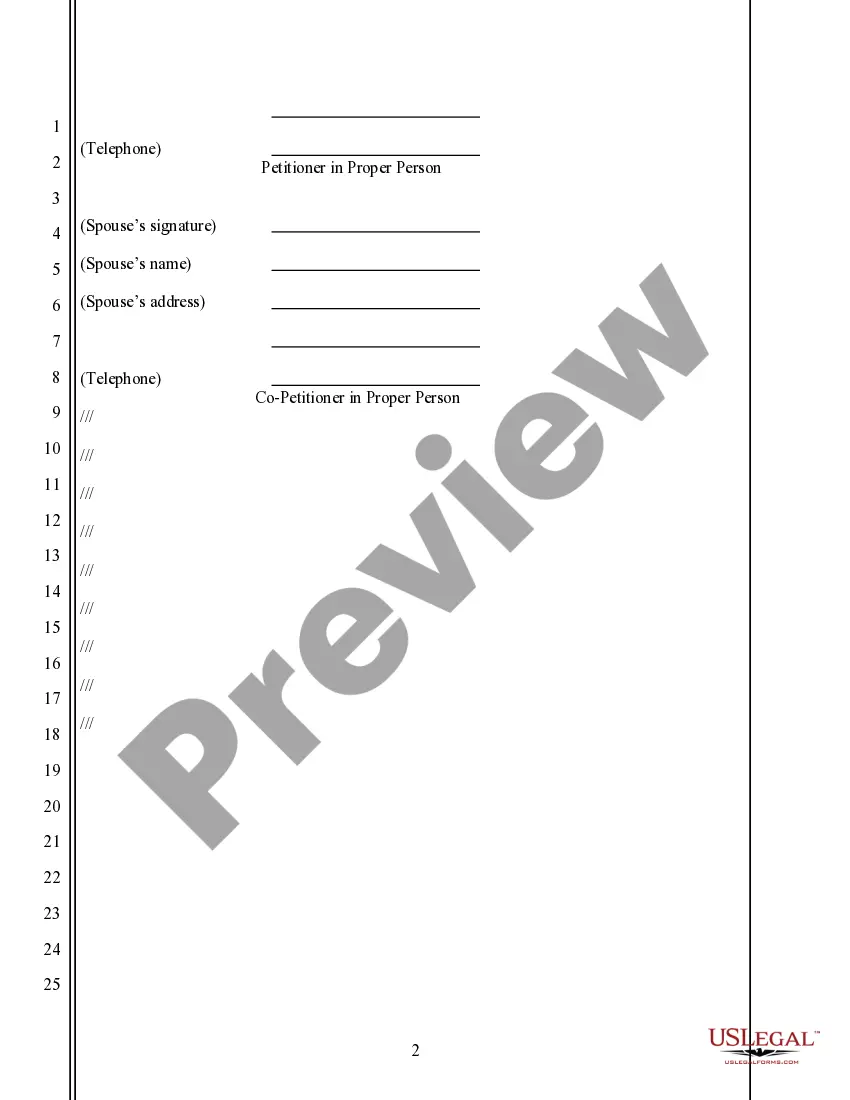
- Signature and date fields
When to use this document
This form should be used when you wish to change your family name but prefer to avoid a traditional court hearing. Situations may include personal reasons, marriage, divorce, or adoption, where a name change is necessary and you can provide sufficient justification to the court for the name change through this request.
Who needs this form
- Individuals looking to change their family name
- Parents seeking to change their child's surname
- People undergoing a divorce or remarrying
- Anyone needing a legal name change for personal reasons
How to complete this form
- Identify yourself by entering your current name and contact information.
- Provide the new name you wish to adopt as part of the name change.
- Include any relevant information or declarations that support your request.
- Sign and date the form to validate your request.
- Submit the completed form to the appropriate court as guided by local laws.
Is notarization required?
This form does not typically require notarization unless specified by local law. However, it's always advisable to check your jurisdiction's specific requirements.
Get your form ready online
Our built-in tools help you complete, sign, share, and store your documents in one place.
Make edits, fill in missing information, and update formatting in US Legal Forms—just like you would in MS Word.
Download a copy, print it, send it by email, or mail it via USPS—whatever works best for your next step.
Sign and collect signatures with our SignNow integration. Send to multiple recipients, set reminders, and more. Go Premium to unlock E-Sign.
If this form requires notarization, complete it online through a secure video call—no need to meet a notary in person or wait for an appointment.
We protect your documents and personal data by following strict security and privacy standards.

Make edits, fill in missing information, and update formatting in US Legal Forms—just like you would in MS Word.

Download a copy, print it, send it by email, or mail it via USPS—whatever works best for your next step.

Sign and collect signatures with our SignNow integration. Send to multiple recipients, set reminders, and more. Go Premium to unlock E-Sign.

If this form requires notarization, complete it online through a secure video call—no need to meet a notary in person or wait for an appointment.

We protect your documents and personal data by following strict security and privacy standards.
Common mistakes
- Failing to provide adequate justification for the name change.
- Omitting necessary fields or signatures on the form.
- Not submitting the request to the correct court.
- Ignoring specific state requirements regarding name changes.
Why use this form online
- Convenience of downloading and completing the form from home.
- Editability before finalizing the form for submission.
- Access to templates drafted by licensed attorneys for legal accuracy.
- Time-saving compared to traditional court procedures.
Looking for another form?

Form popularity
FAQ
Children who live in Nevada can have their names legally changed through the district court. The parents must file for the name change on behalf of the child and explain the reason for the name change. Typically, both parents must agree to have a child's name changed.
6. How Much Does It Cost To Legally Change My Name In Nevada? If you are filing your name change in Clark County, Nevada, the filing fee is $270 to file your paperwork with the Court. In addition to the filing fees, you should expect to pay at least $100 for publishing your name change.
If you have sole parental responsibility, you will be able to change your child's name without anyone else's consent or a Court approval. You will still need to seek legal advice from a solicitor to make a formal deed to change their name.
6. How Much Does It Cost To Legally Change My Name In Nevada? If you are filing your name change in Clark County, Nevada, the filing fee is $270 to file your paperwork with the Court. In addition to the filing fees, you should expect to pay at least $100 for publishing your name change.
Note: In California, you generally have the legal right to change your name simply by using a new name in all aspects of your life, also known as the "usage method." BUT, with few exceptions, government agencies require a court order as official proof of a name change so getting a court order is the best way to make
To honour or recognise another person, for example a family member or ancestor. to restore a family surname that has been changed in the past. as part of a change of gender. because you dislike your current name.
Generally, you will not be able to change your child's surname without the permission of the other parent if: the other parent is listed on the Child's Birth Certificate, and.
Both parents must applyBoth parents named on the child's birth certificate must apply to change their child's name.
In most states, men and women can legally change their last name to their new spouse's surname, hyphenate their two surnames, or create a new amalgamation of their surnames (like when actors Alexa Vega and Carlos Pena got married in 2014, and changed both of their last names to PenaVega).