Product Defect Notice
About this form
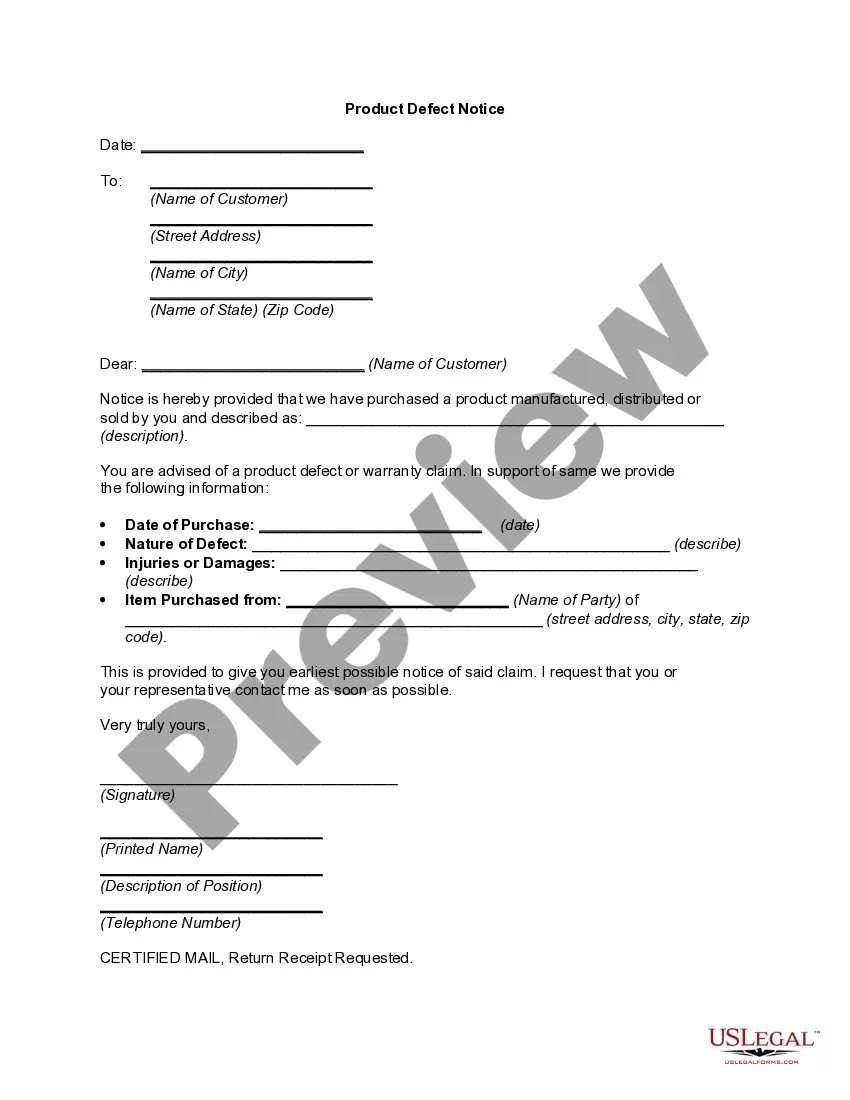
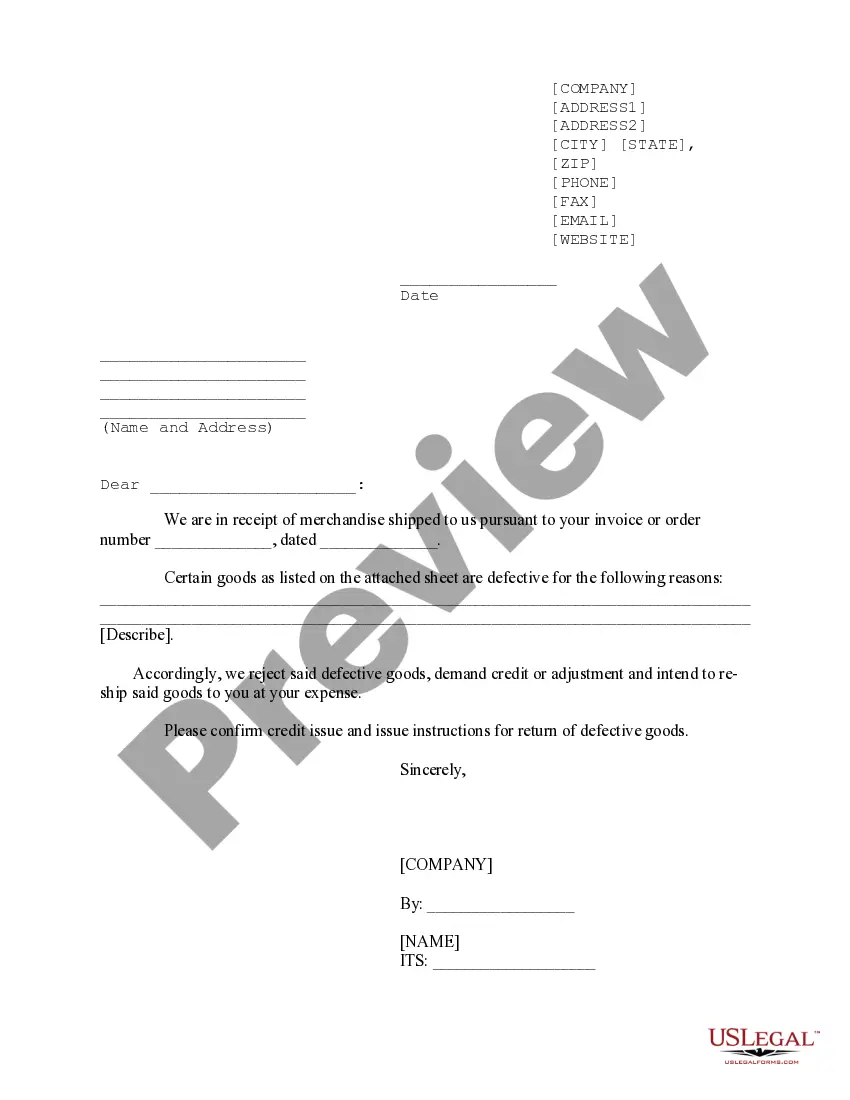
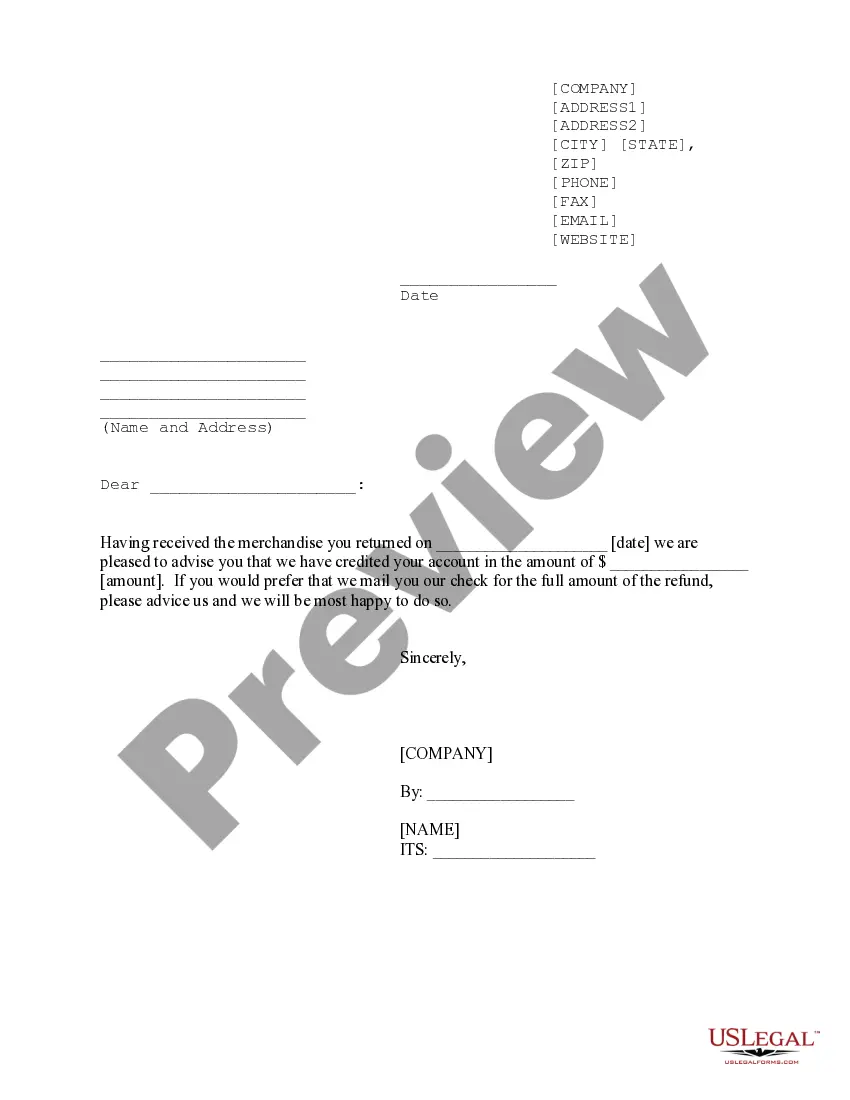
The Product Defect Notice is a legal document used to inform a manufacturer, distributor, or seller about a defect in a purchased product. This notice is crucial for consumers seeking compensation for injuries or damages caused by the defect. By providing this formal notification, consumers can initiate the process of holding the responsible party accountable. It is essential to understand that while sending this notice via certified mail is not legally required in most states, it can help ensure that the notification is received and documented properly.
Key components of this form
- Date of the notice.
- Recipient's name and address.
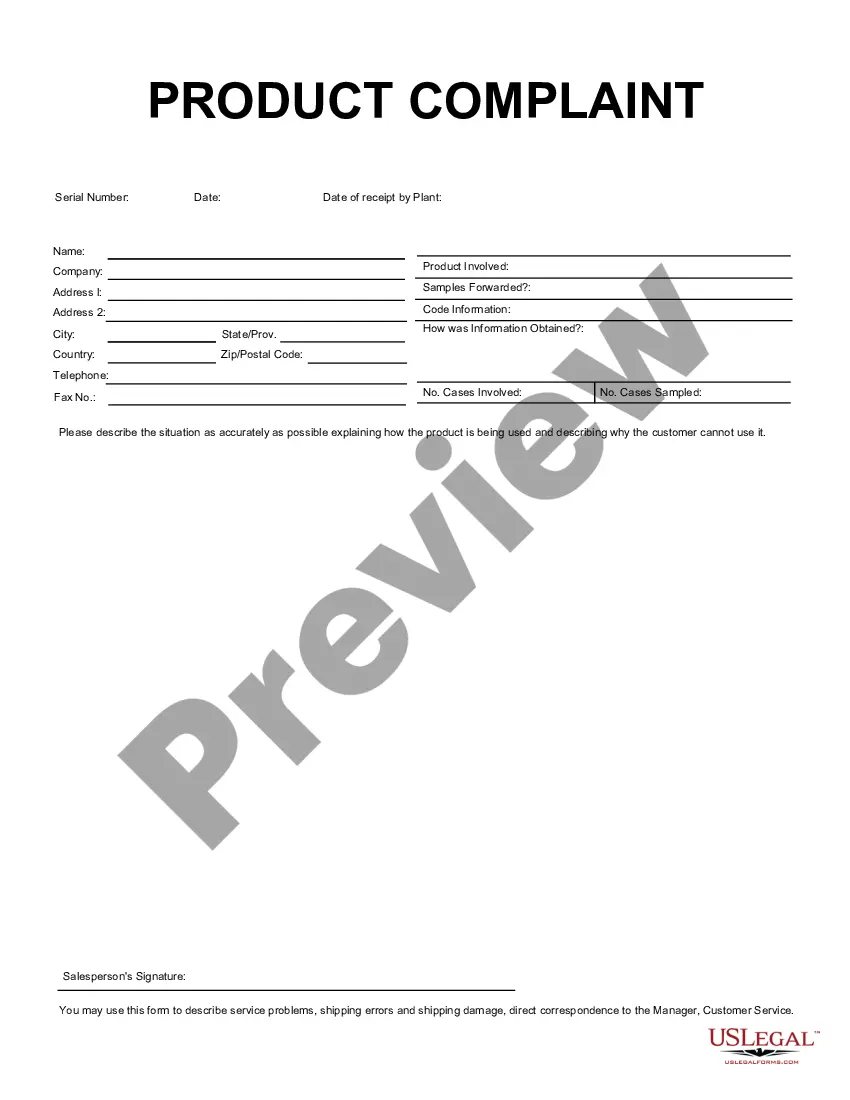
- Description of the defective product.
- Date of purchase.
- Detailed description of the defect.
- Account of any injuries or damages incurred.
- Contact details of the sender.
- Certification of mailing request.
When to use this document
This form should be used when a consumer discovers a defect in a product that he or she has purchased, which has led to injury or damage. It is particularly useful in situations where the consumer intends to seek compensation from the manufacturer or seller. The notice acts as a formal alert to the responsible party, initiating their obligation to respond and address the issue of the defect.
Who needs this form
- Consumers who have experienced injuries or damages from a defective product.
- Individuals seeking compensation from a manufacturer, distributor, or seller.
- Those who want to formally document their claim of a product defect.
- People accustomed to legal documentation who need guidance on how to notify responsible parties.
How to prepare this document
- Enter the date of the notice at the top of the form.
- Fill in the name and address of the consumer (sender).
- Clearly describe the defective product, including any details necessary for identification.
- Provide the date of purchase and describe the nature of the defect.
- Detail any injuries or damages that resulted from the defect.
- Sign the notice and include contact information.
Is notarization required?
This form does not typically require notarization unless specified by local law. However, sending it via certified mail is recommended for tracking purposes, providing proof of delivery.
Get your form ready online
Our built-in tools help you complete, sign, share, and store your documents in one place.
Make edits, fill in missing information, and update formatting in US Legal Forms—just like you would in MS Word.
Download a copy, print it, send it by email, or mail it via USPS—whatever works best for your next step.
Sign and collect signatures with our SignNow integration. Send to multiple recipients, set reminders, and more. Go Premium to unlock E-Sign.
If this form requires notarization, complete it online through a secure video call—no need to meet a notary in person or wait for an appointment.
We protect your documents and personal data by following strict security and privacy standards.

Make edits, fill in missing information, and update formatting in US Legal Forms—just like you would in MS Word.

Download a copy, print it, send it by email, or mail it via USPS—whatever works best for your next step.

Sign and collect signatures with our SignNow integration. Send to multiple recipients, set reminders, and more. Go Premium to unlock E-Sign.

If this form requires notarization, complete it online through a secure video call—no need to meet a notary in person or wait for an appointment.

We protect your documents and personal data by following strict security and privacy standards.
Common mistakes
- Failing to provide a complete description of the defect.
- Not including specific details about injuries or damages.
- Omitting to sign the notice before sending it.
- Sending the notice without retaining a copy for personal records.
Why complete this form online
- Immediate access to professionally drafted templates.
- Convenient download and edit options ensure accuracy.
- Time-saving compared to creating forms from scratch.
- Availability of legal forms that cater to specific state requirements, ensuring compliance.
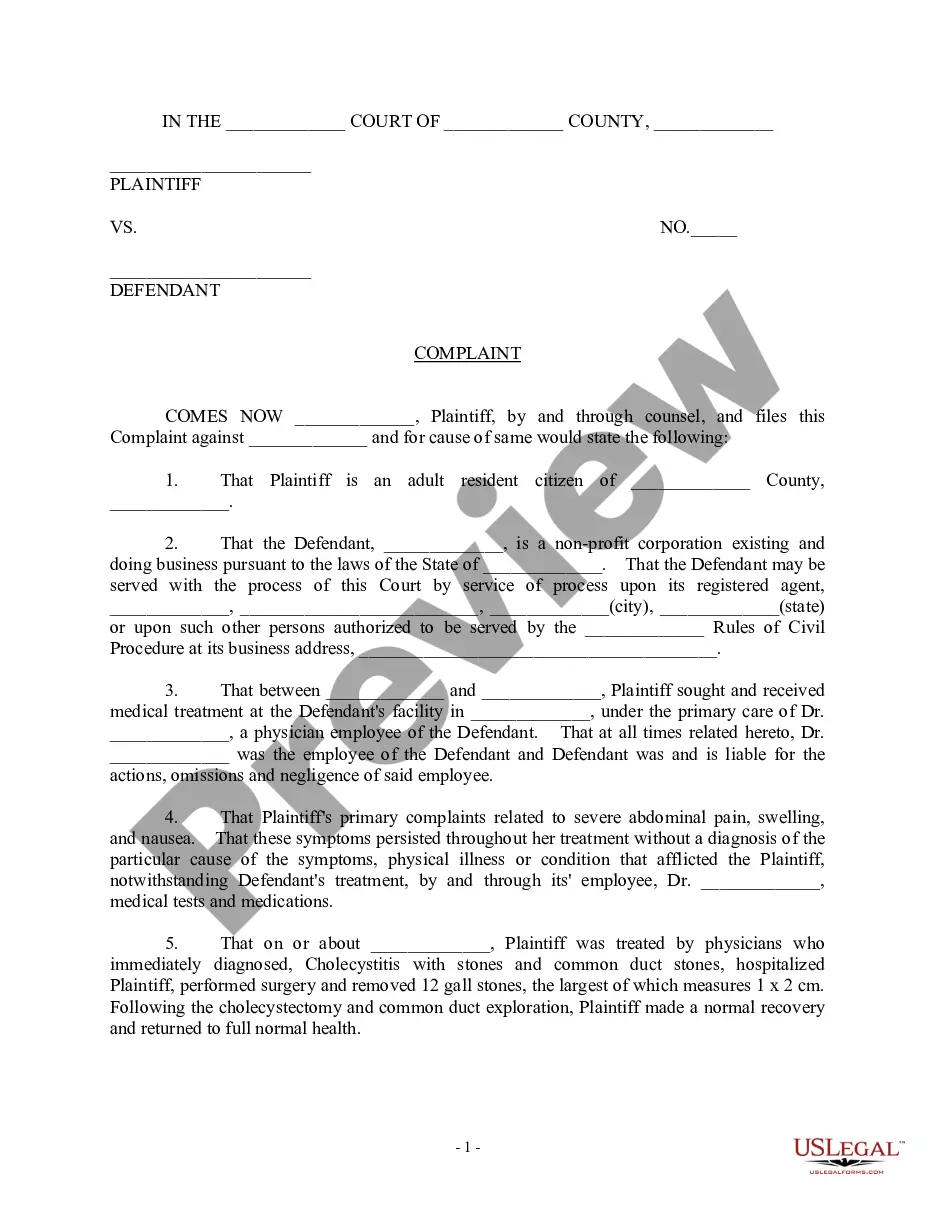
Looking for another form?

Form popularity
FAQ
A defective product can be defined as any product that is unreasonably dangerous when being used for its intended purpose, without any alterations or interference.Some of the most common examples of defective products include food items, medical devices, and children's toys.
Stop Using the Product Immediately. The moment you realize a product is defective, stop using it. Check Your Receipts. Return Rejected Goods. Contact an Attorney.
There are usually three main types of defects when it comes to products: manufacturing defects, design defects, and inadequate warnings.
In the law of products liability, a manufacturing defect is a defect in a product that was not intended. This kind of defect occurs when a product departs from its intended design and is more dangerous than consumers expect the product to be. accidents & injuries (tort law) product liability law.
Defective Product is an imperfection in a product that has a manufacturing or design defect, or is faulty because of inadequate instructions or warnings. A product is in a defective condition if it is unreasonably dangerous to the user or to consumer who purchases the product and causes physical harm.
Quality control professionals typically classify quality defects into three main categories: minor, major and critical. The nature and severity of a defect determines in which of the three categories it belongs.
In general, there are three types of defects which could render a product unreasonably dangerous: Manufacturing defect - Error in product manufacture or assembly. Design defect - Faulty product design. Manufacturer or seller's failure to warn of danger associated with use of the product.
Poor design. Lack of testing. Lack of danger warnings. Poor installation instructions. Improper maintenance of the individual components. Assembly or construction error. Delivery damage.
Though there are numerous instances in which a defective product could injure a person, defects that give rise to supplier, seller, or manufacturer liability are categorized by three types of product defects: design defects, manufacturing defects, and marketing defects.