Withdrawal as a Defense to Substantive Offenses Committed by Co-Conspirators
What is this form?
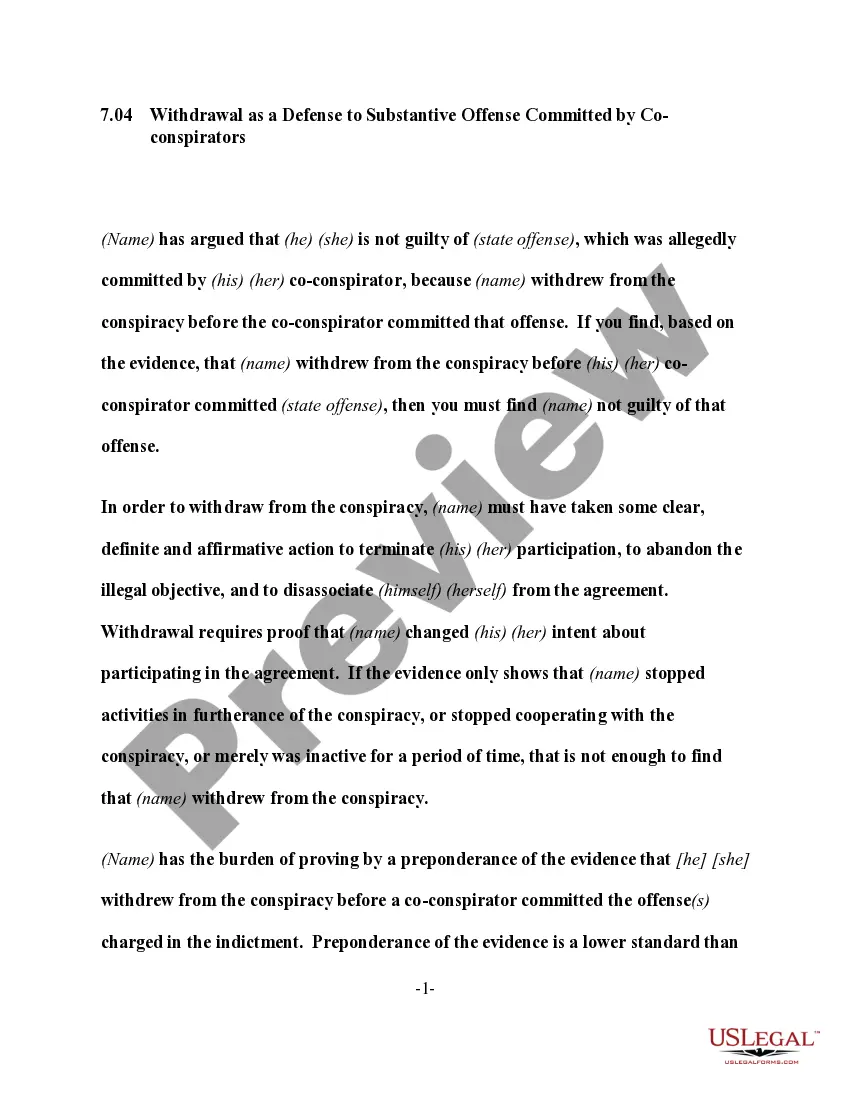
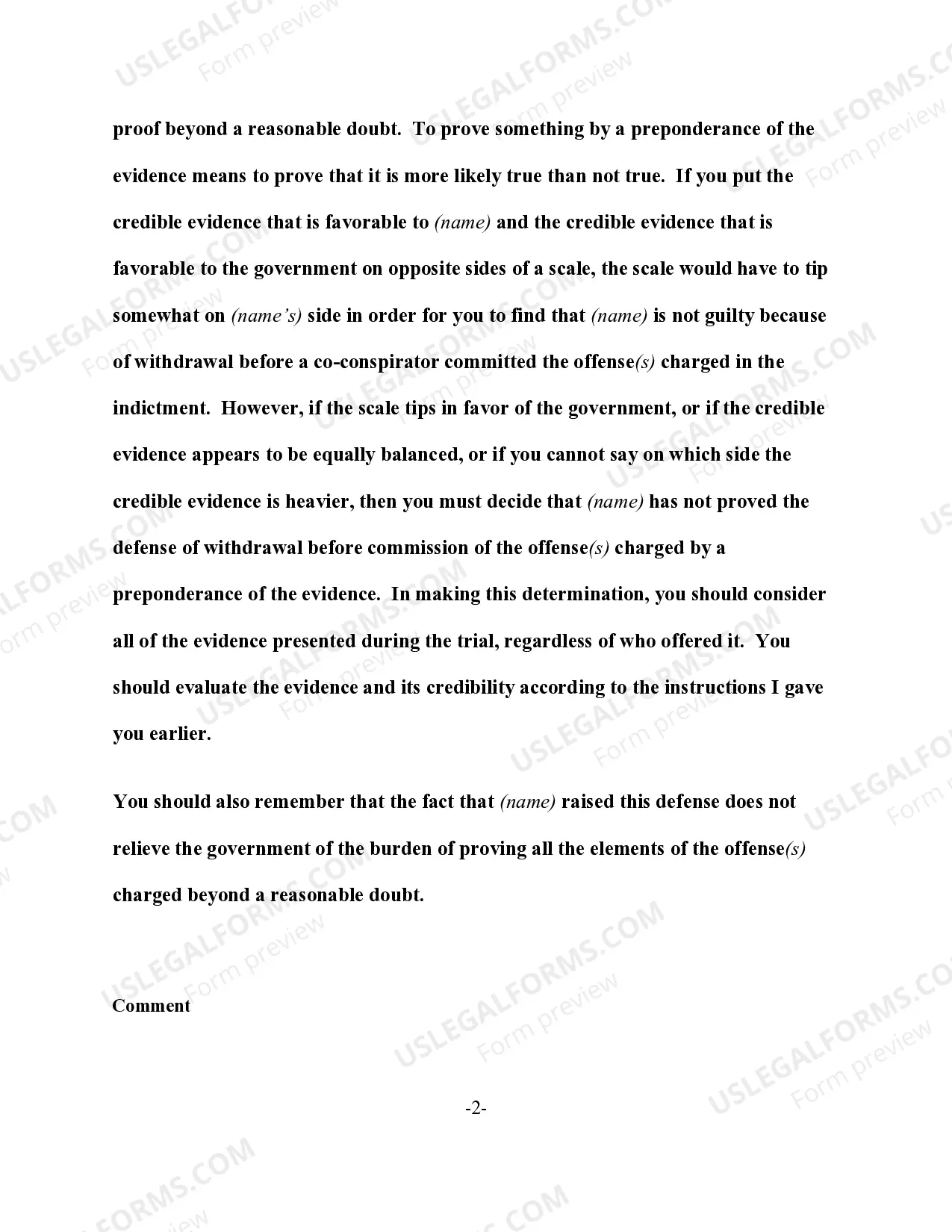
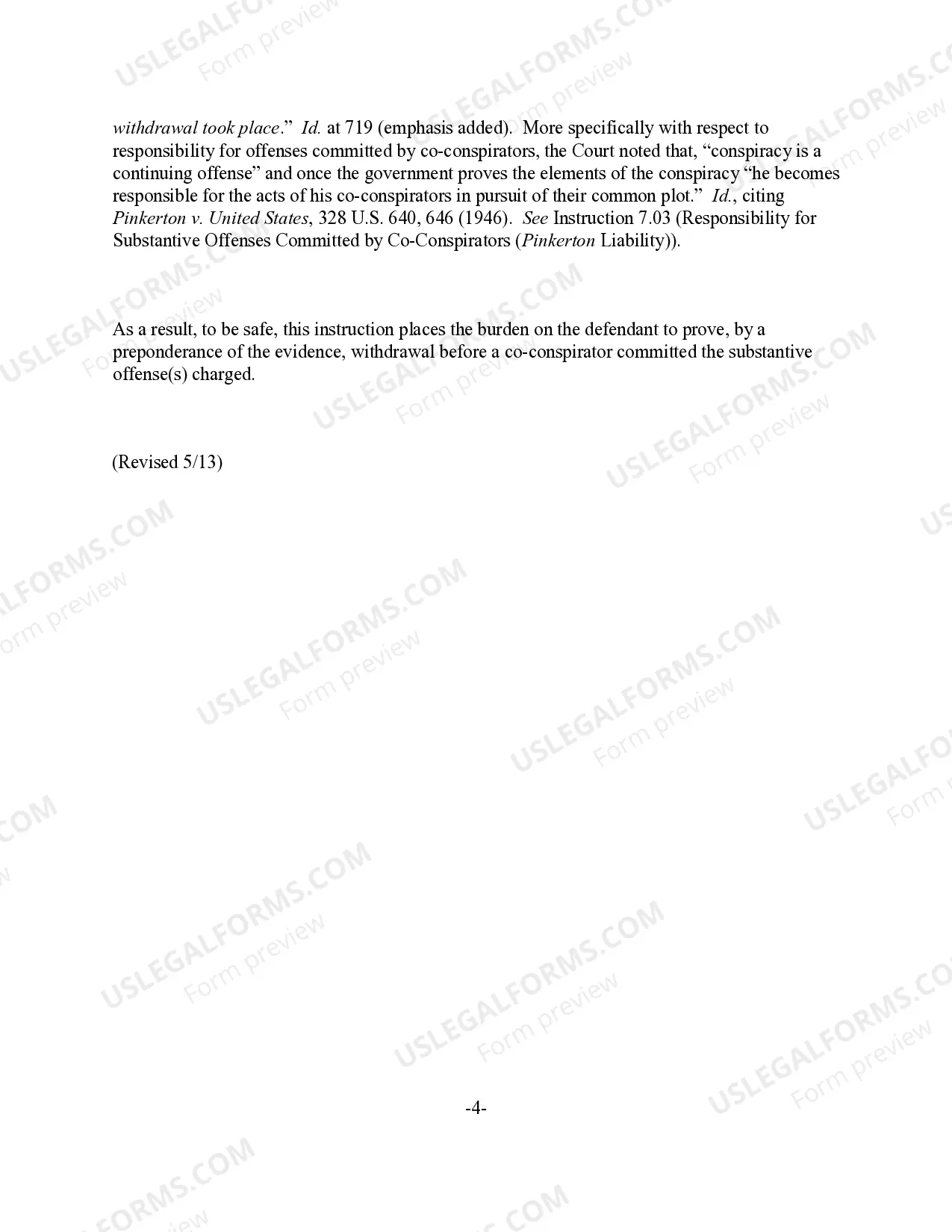
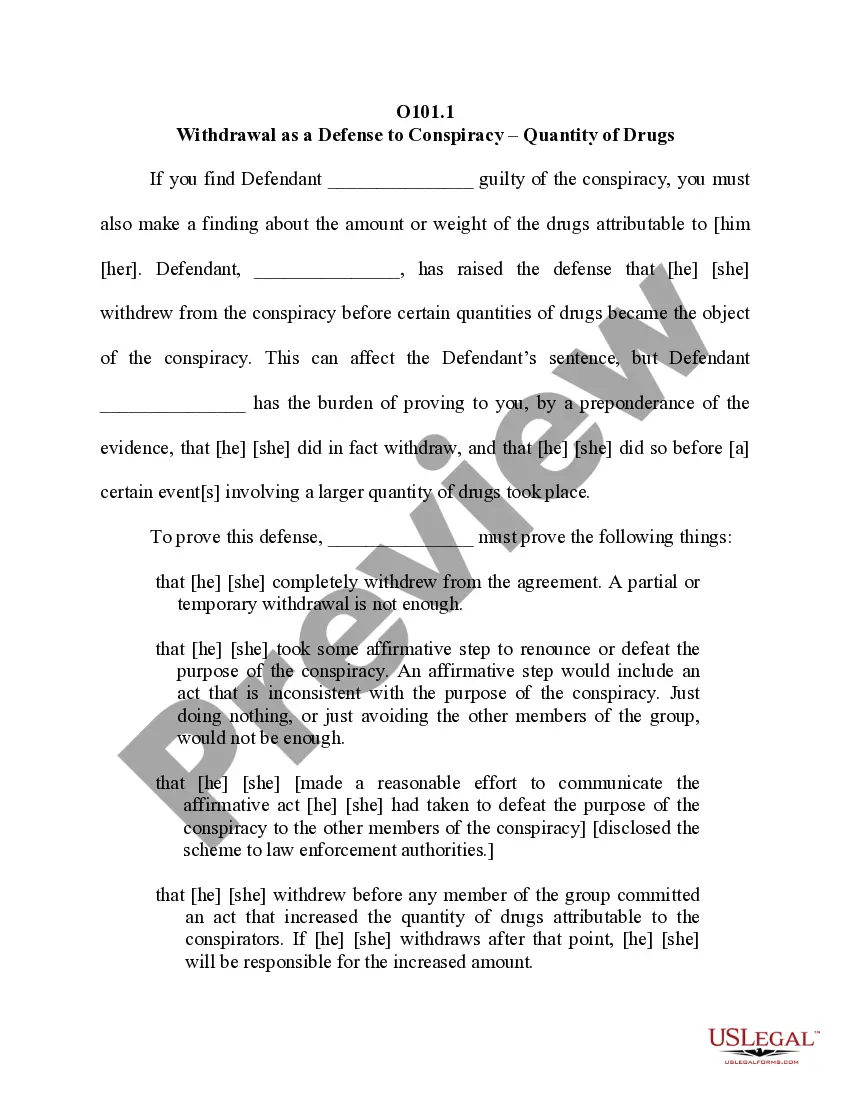
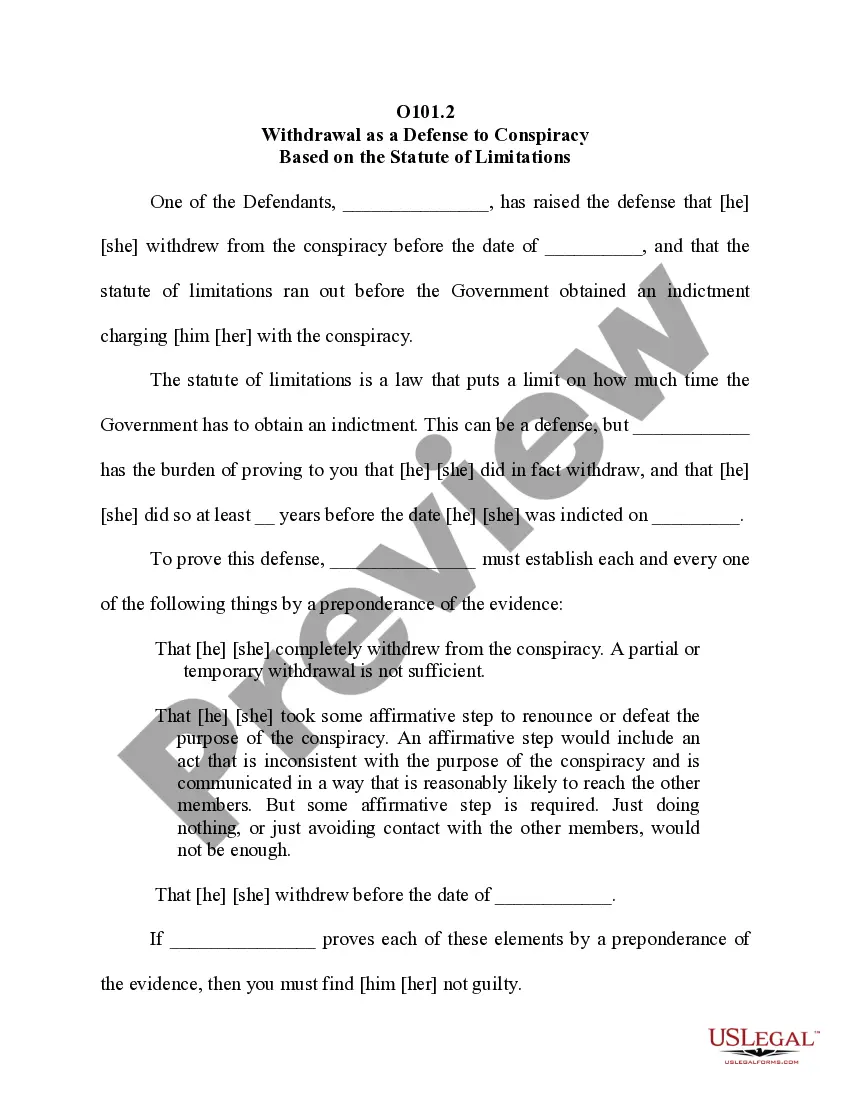
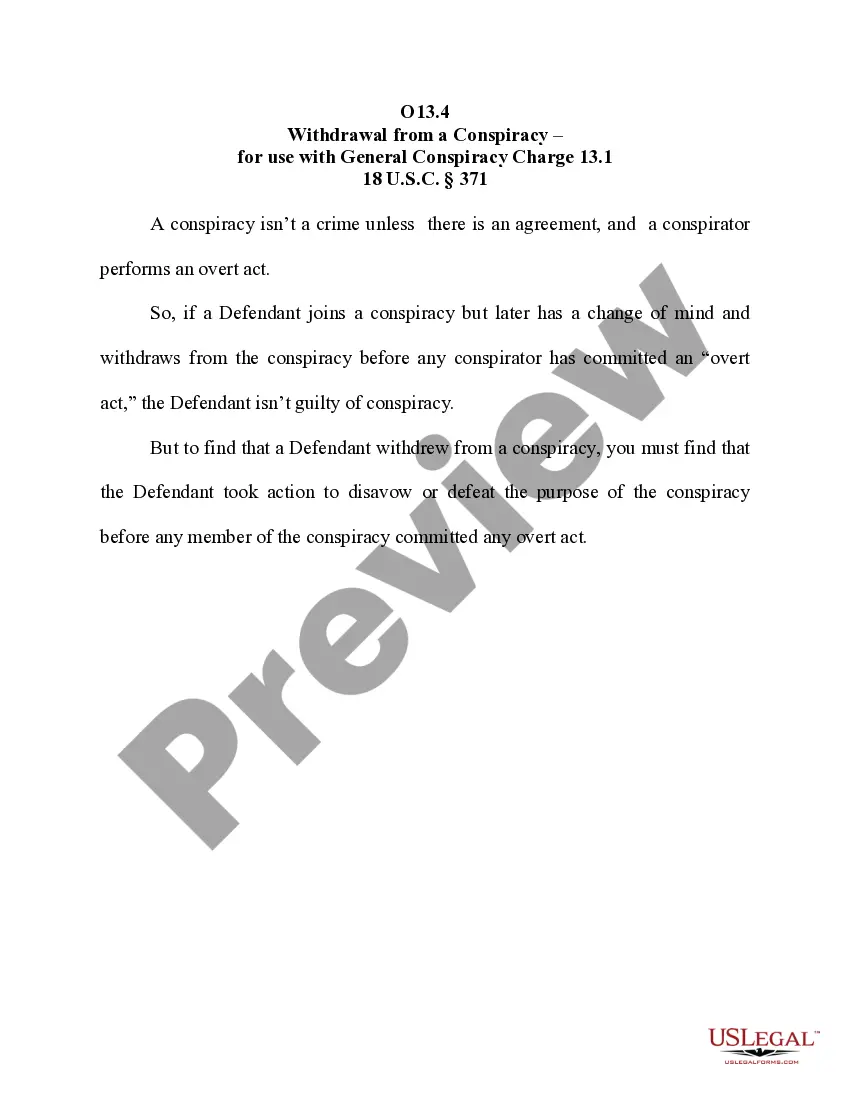
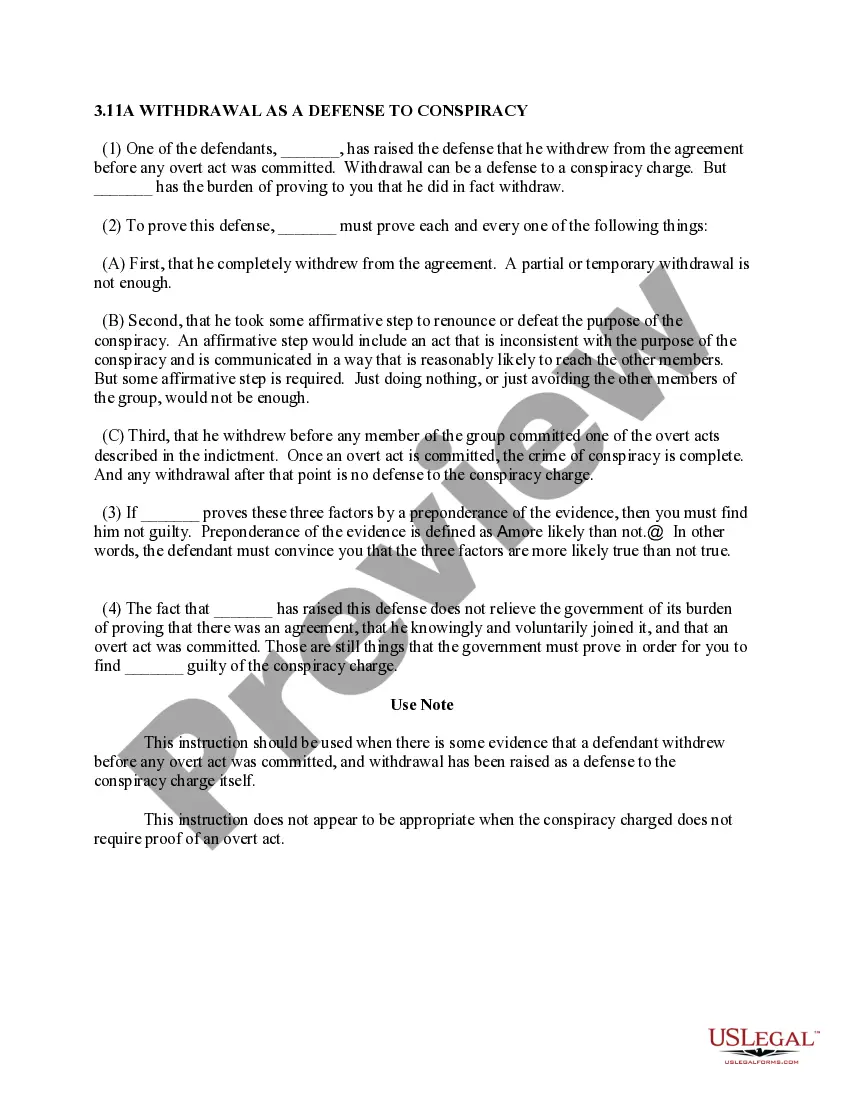
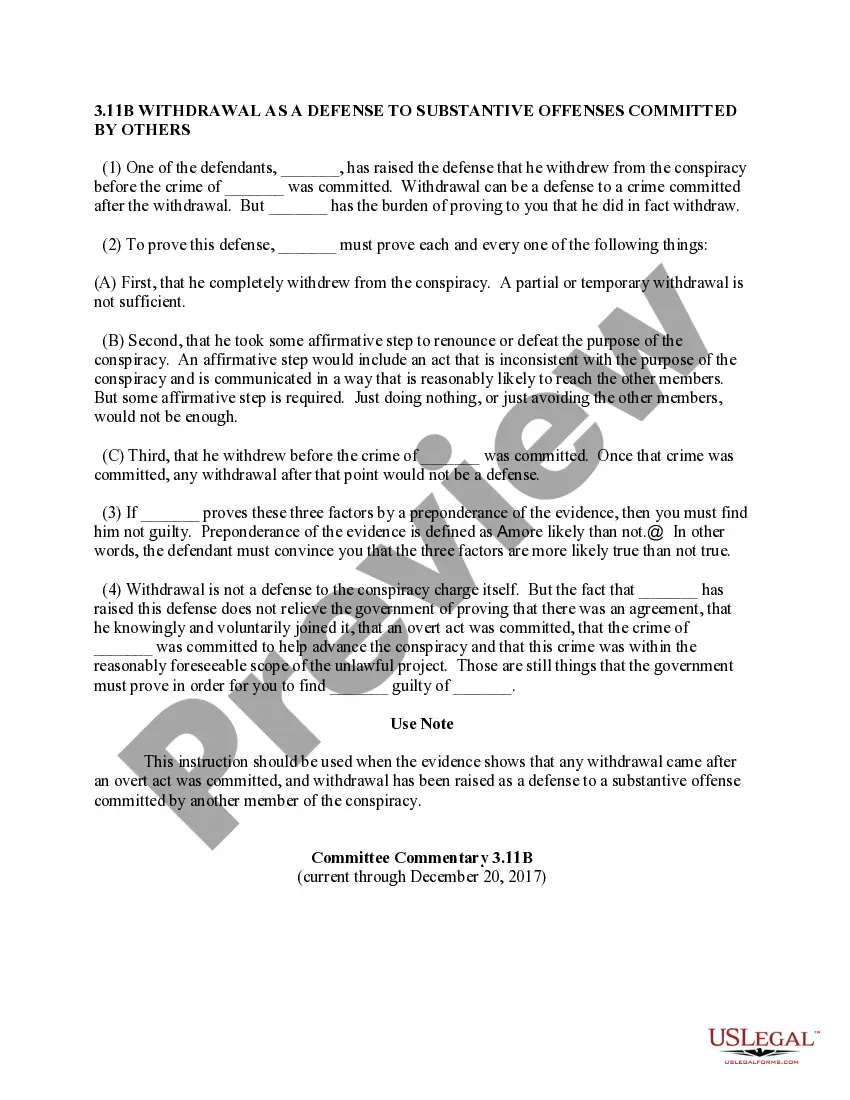
This form, titled "Withdrawal as a Defense to Substantive Offenses Committed by Co-Conspirators," is a legal document that asserts a defendant's withdrawal from a conspiracy before a co-conspirator commits a crime. It helps establish that the defendant cannot be held responsible for the actions of others if they have actively distanced themselves from the conspiracy. This withdrawal defense is crucial in criminal law, differentiating it from other defenses by focusing specifically on the timing and nature of the withdrawal.
What’s included in this form
- Defendant's statement of non-guilt regarding the substantive offense
- Evidence of clear and affirmative action to withdraw from the conspiracy
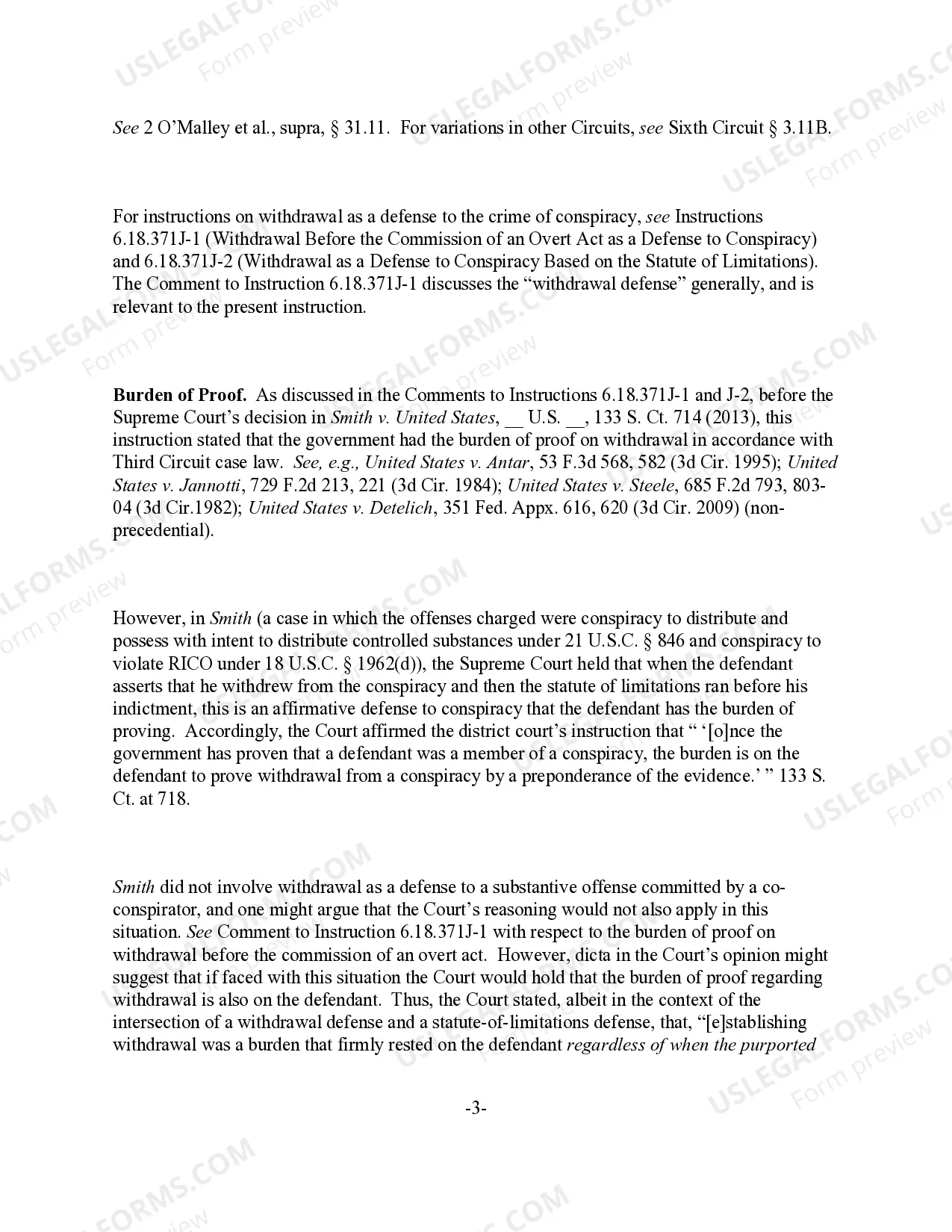
- Burden of proof placed on the defendant to show withdrawal occurred
- Explanation of the standard of "preponderance of the evidence"
- Consideration of all evidence presented during the trial
Situations where this form applies
This form is needed when a defendant claims they withdrew from a conspiracy before their co-conspirator committed a crime. It is relevant in cases involving multiple defendants or when an individual is accused of participating in a conspiracy but wishes to argue they are not guilty due to their timely withdrawal. Using this form can be important in cases related to drug offenses, racketeering, or any conspiracy-based allegations where co-conspirators are involved.
Who this form is for
- Defendants facing charges related to conspiracy and substantive offenses
- Individuals who have previously participated in a conspiracy but have since withdrawn
- Defense attorneys seeking to present a withdrawal defense in court
How to prepare this document
- Identify the defendant and state the specific offense they are charged with.
- Provide evidence showing when and how the defendant withdrew from the conspiracy.
- Clearly state the intent of the defendant to disassociate from the conspiracy.
- Include a description of actions taken to abandon the illegal objective.
- Document any testimony or evidence that supports the claim of withdrawal.
Does this document require notarization?
This form does not typically require notarization unless specified by local law. Users should consult relevant state regulations to determine if notarization is necessary for their specific situation.
Get your form ready online
Our built-in tools help you complete, sign, share, and store your documents in one place.
Make edits, fill in missing information, and update formatting in US Legal Forms—just like you would in MS Word.
Download a copy, print it, send it by email, or mail it via USPS—whatever works best for your next step.
Sign and collect signatures with our SignNow integration. Send to multiple recipients, set reminders, and more. Go Premium to unlock E-Sign.
If this form requires notarization, complete it online through a secure video call—no need to meet a notary in person or wait for an appointment.
We protect your documents and personal data by following strict security and privacy standards.

Make edits, fill in missing information, and update formatting in US Legal Forms—just like you would in MS Word.

Download a copy, print it, send it by email, or mail it via USPS—whatever works best for your next step.

Sign and collect signatures with our SignNow integration. Send to multiple recipients, set reminders, and more. Go Premium to unlock E-Sign.

If this form requires notarization, complete it online through a secure video call—no need to meet a notary in person or wait for an appointment.

We protect your documents and personal data by following strict security and privacy standards.
Typical mistakes to avoid
- Failing to demonstrate clear and affirmative actions of withdrawal.
- Neglecting to meet the burden of proof required to establish withdrawal.
- Not considering all evidence presented during the trial.
- Assuming mere inactivity is sufficient for withdrawal.
Benefits of completing this form online
- Convenience of immediate access to a legally vetted document.
- Editability allows users to customize the form to their specific needs.
- Reliability of materials provided by licensed attorneys.
Legal use & context
- This form is used in criminal proceedings related to conspiracy.
- The validity of the withdrawal defense can vary by jurisdiction and case specifics.
- Defendants must show a clear break from the conspiracy to avoid liability for co-conspirator actions.
Summary of main points
- This form is essential for defendants wishing to assert a withdrawal defense in conspiracy cases.
- It focuses on the defendant's actions to remove themselves from the conspiracy before any offenses occur.
- The burden of proof lies with the defendant to demonstrate withdrawal by a preponderance of evidence.
Looking for another form?
Form popularity
FAQ
The Model Penal Code recognizes withdrawal as an affirmative defense to a conspiracy charge, but requires that the putative conspirator must have "thwarted the success of the conspiracy, under circumstances manifesting a complete and voluntary renunciation of his criminal purpose." Model Penal Code § 5.03(6).
The Pinkerton rule determines when an individual can be convicted of a substantive crime they didn't directly commit. It upholds that all conspiracy members are liable for their co-conspirators' substantive crimes intended to further the conspiracy.
Abandonment or withdrawal from conspiracy is a defense available to a conspirator to escape liability. In cases of conspiracy requiring an overt act for conviction, a defendant can escape from the liability if s/he proves that they have withdrawn from the conspiracy prior to the performance of an overt acti.
1. Removing cash or any other asset from the place where it is held. 2. In the context of a criminal conspiracy, leaving the conspiracy before the target crime has been committed. State laws differ on the culpability of co-conspirators who withdraw.
Like other inchoate crimes such as attempt, a defendant charged with conspiracy can raise the defense of abandonment or withdrawal. In order to do so, a defendant must show that he affirmatively communicated his withdrawal to his co-conspirators and took some positive action to withdraw from the conspiracy.
Once a person becomes a member of a conspiracy, that person remains a member until that person withdraws from it. One may withdraw by doing acts which are inconsistent with the purpose of the conspiracy and by making reasonable efforts to tell the co-conspirators about those acts.
Abandonment or withdrawal from conspiracy is a defense available to a conspirator to escape liability. In cases of conspiracy requiring an overt act for conviction, a defendant can escape from the liability if s/he proves that they have withdrawn from the conspiracy prior to the performance of an overt acti.