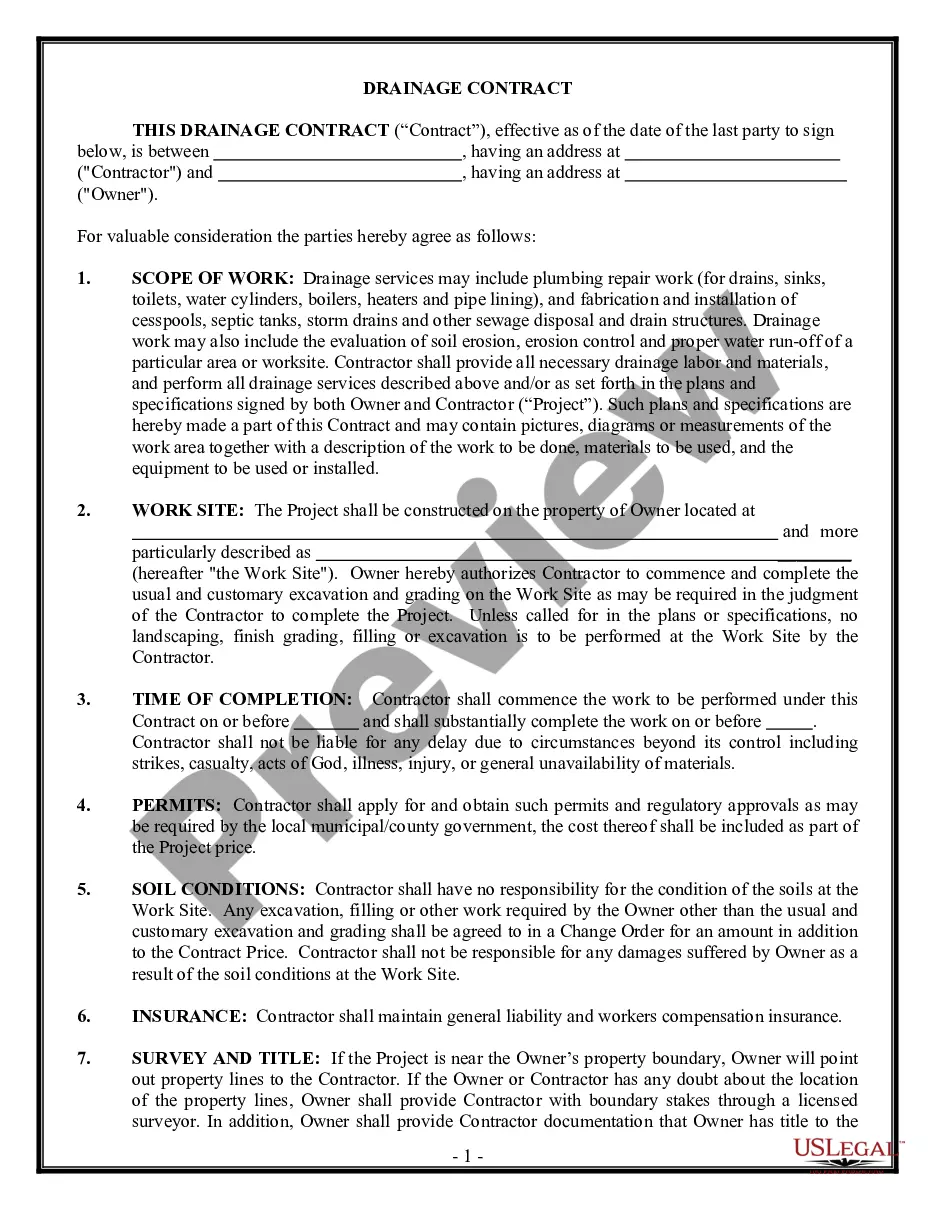
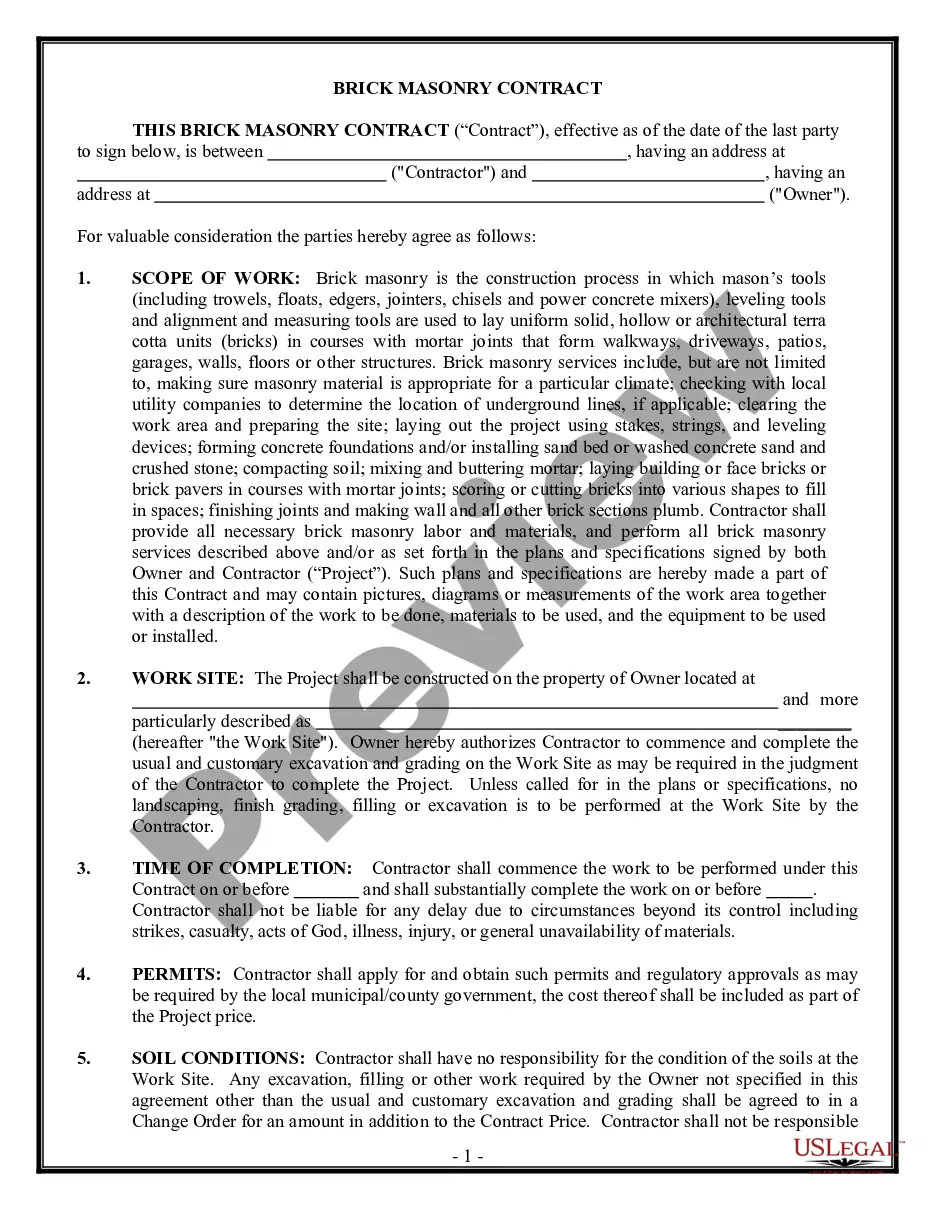
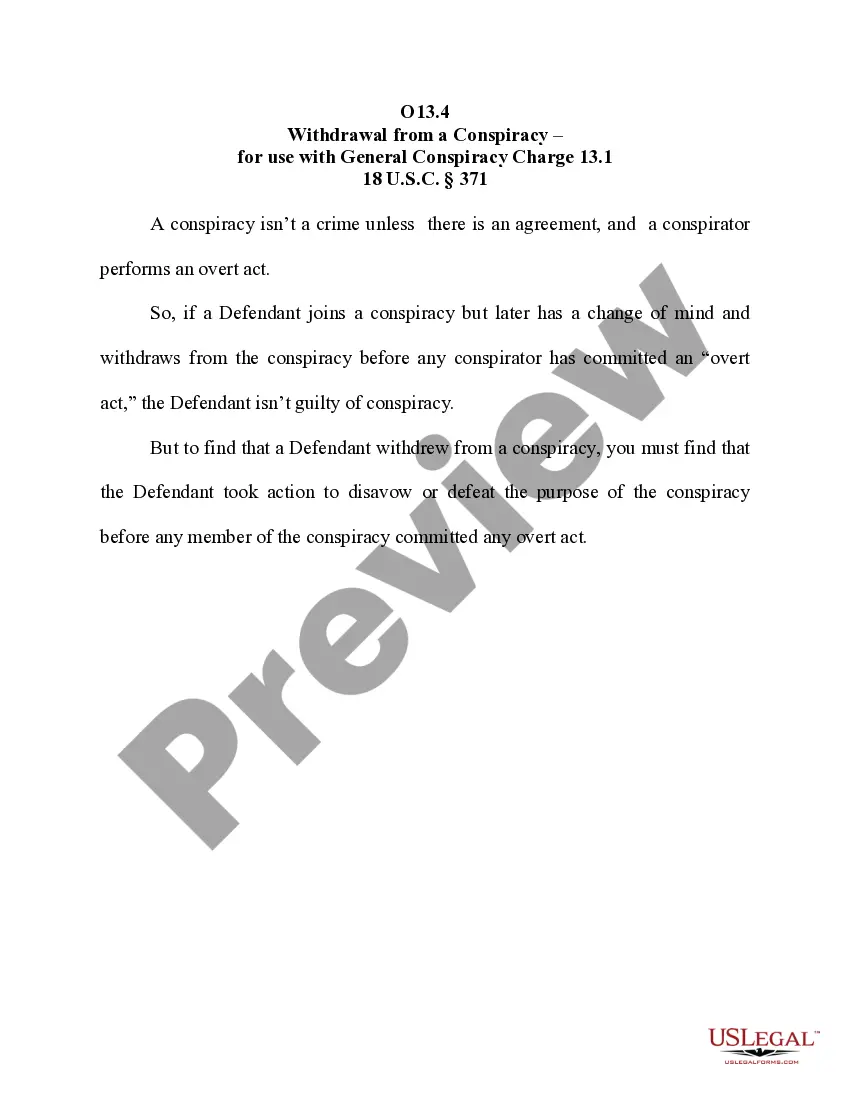
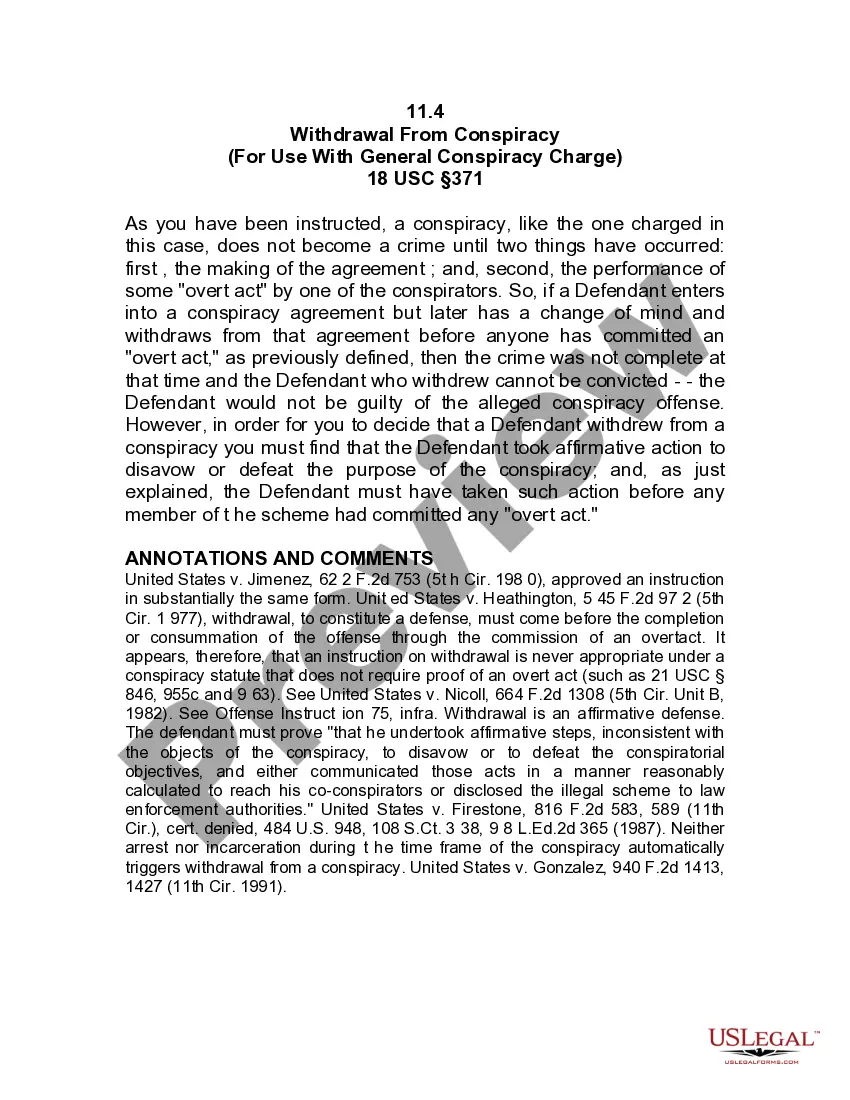
Withdrawal from a Conspiracy - for use with General Conspiracy Charge
What this document covers
The Withdrawal from a Conspiracy form is a legal document used by defendants who have participated in a conspiracy but wish to formally withdraw from it. This form is specifically designed for individuals facing a General Conspiracy Charge under 18 U.S.C. § 371. Completing this form helps establish that the defendant disavowed the conspiracy before any overt acts were committed, thereby clarifying their lack of guilt in the conspiracy charge.
Form components explained
- Identification of the defendant and the conspiracy
- Declaration of withdrawal from the conspiracy
- Evidence or actions taken to disavow the conspiracy
- A date indicating when the withdrawal occurred
- Signature of the defendant
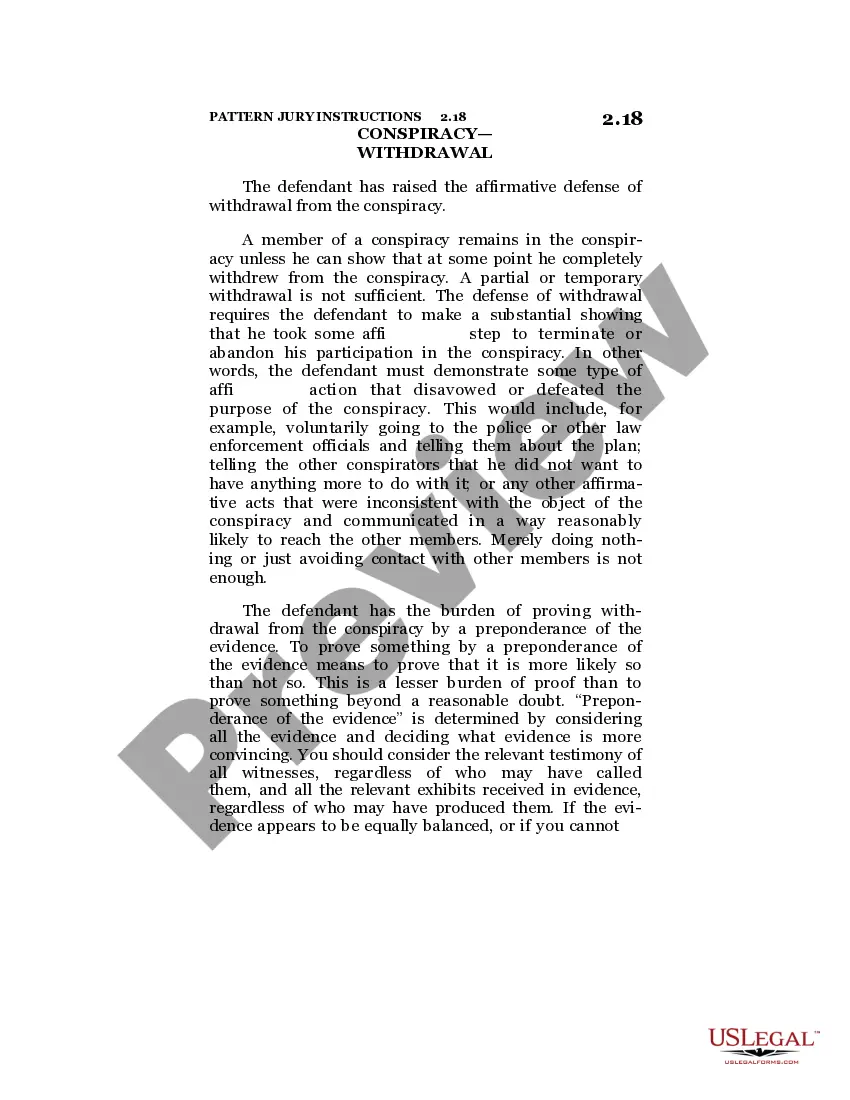
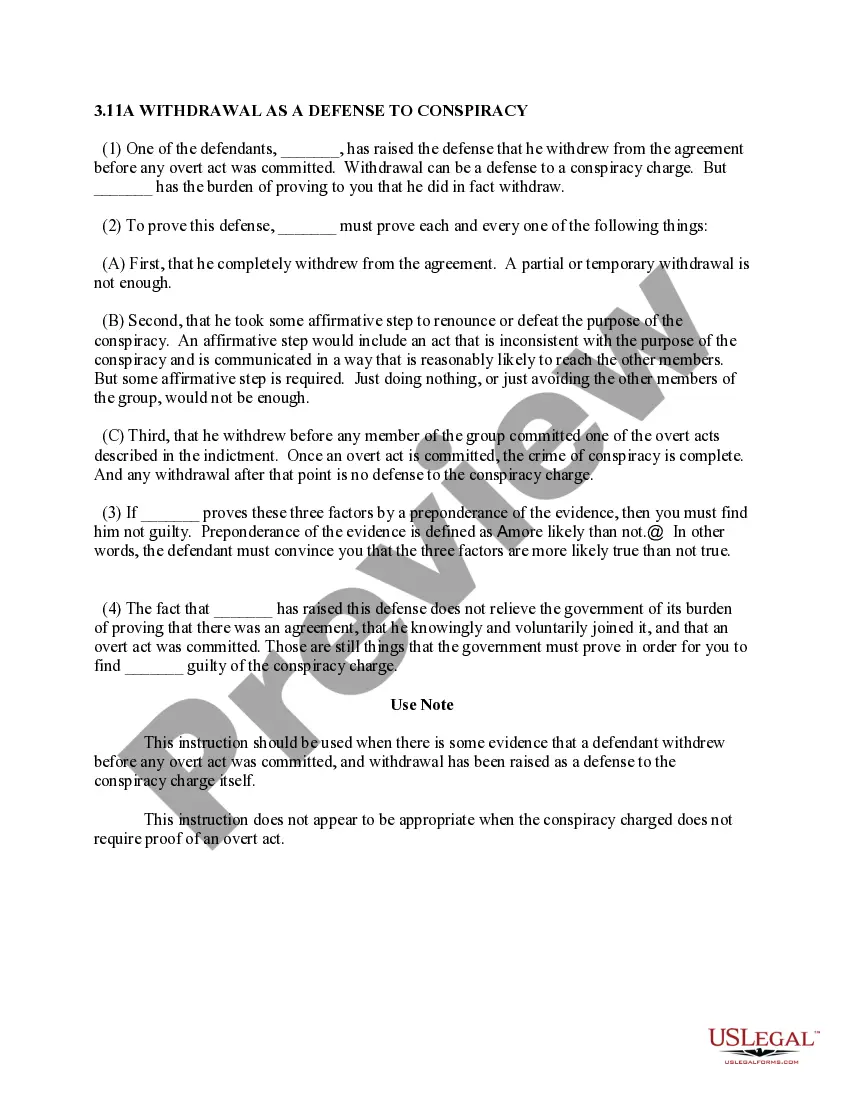
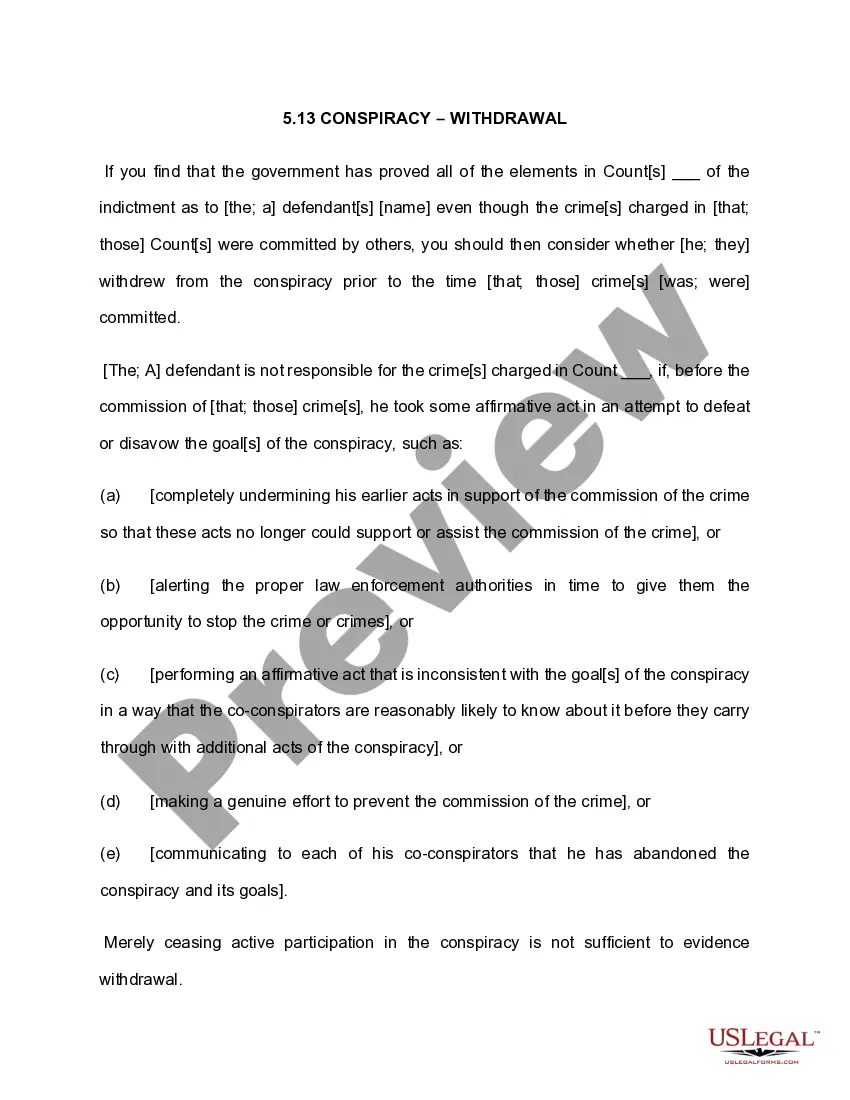
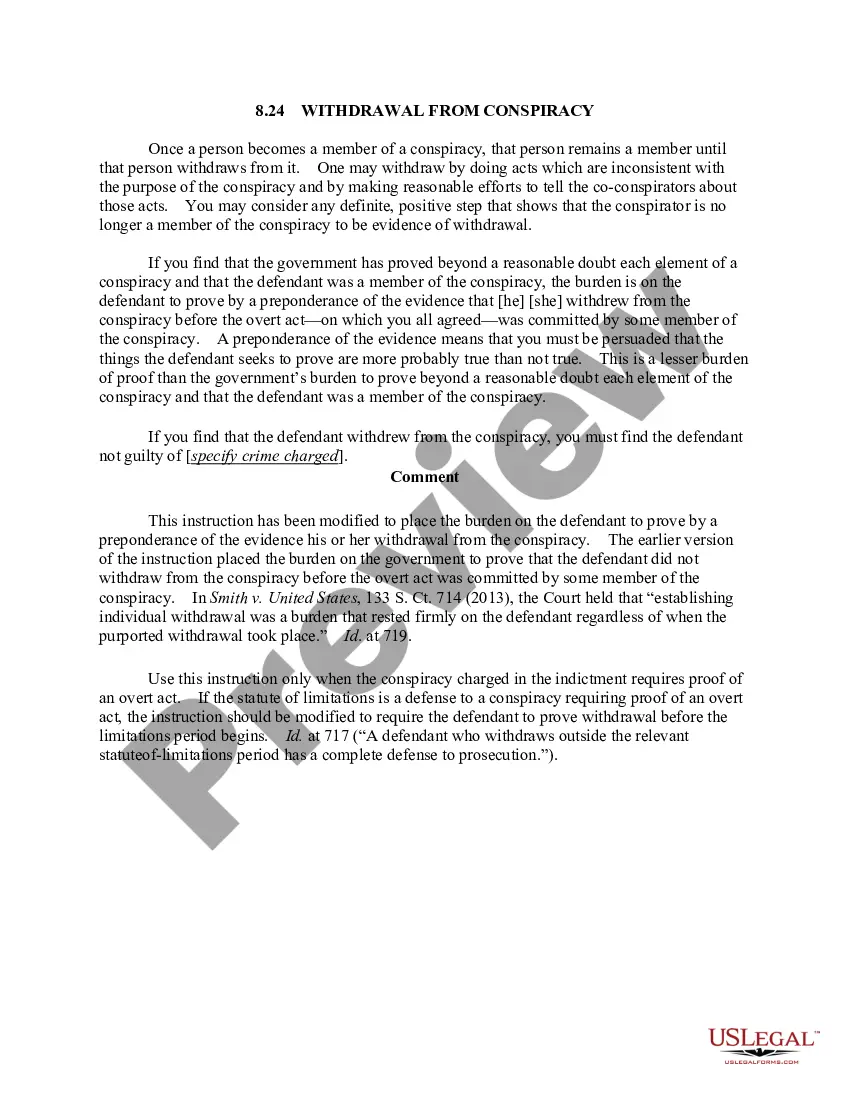
When to use this document
This form should be used when a defendant has joined a conspiracy but later decides to withdraw. It is essential for establishing a legal defense against a conspiracy charge, especially before any overt acts related to the conspiracy have taken place. This form is critical during legal proceedings where the defendant seeks to demonstrate their non-involvement in any criminal activity stemming from the conspiracy.
Who needs this form
This form is intended for:
- Defendants who are charged with general conspiracy as defined under 18 U.S.C. § 371
- Individuals who participated in a conspiracy but wish to clarify their withdrawal
- Legal representatives or attorneys assisting defendants in conspiracy cases
Completing this form step by step
- Identify the parties involved, including the defendant and any co-conspirators.
- Clearly state your intention to withdraw from the conspiracy.
- Provide details of any actions taken to publicly or formally disavow the conspiracy.
- Enter the date of withdrawal accurately.
- Sign the document where indicated.
Notarization requirements for this form
This form does not typically require notarization unless specified by local law.
Get your form ready online
Our built-in tools help you complete, sign, share, and store your documents in one place.
Make edits, fill in missing information, and update formatting in US Legal Forms—just like you would in MS Word.
Download a copy, print it, send it by email, or mail it via USPS—whatever works best for your next step.
Sign and collect signatures with our SignNow integration. Send to multiple recipients, set reminders, and more. Go Premium to unlock E-Sign.
If this form requires notarization, complete it online through a secure video call—no need to meet a notary in person or wait for an appointment.
We protect your documents and personal data by following strict security and privacy standards.

Make edits, fill in missing information, and update formatting in US Legal Forms—just like you would in MS Word.

Download a copy, print it, send it by email, or mail it via USPS—whatever works best for your next step.

Sign and collect signatures with our SignNow integration. Send to multiple recipients, set reminders, and more. Go Premium to unlock E-Sign.

If this form requires notarization, complete it online through a secure video call—no need to meet a notary in person or wait for an appointment.

We protect your documents and personal data by following strict security and privacy standards.
Common mistakes
- Failing to document actions taken to withdraw from the conspiracy.
- Not including the date of withdrawal.
- Leaving the form unsigned.
- Providing vague language that does not clearly articulate the withdrawal intention.
Why use this form online
- Convenience of downloading and completing the form at your own pace.
- Ability to edit the document to reflect your specific situation accurately.
- Access to reliable legal templates drafted by licensed attorneys.
Legal use & context
- Establishes the defendant's withdrawal from a conspiracy prior to any illegal actions.
- May be used in both criminal defense and plea negotiations.
- Helps mitigate risk of legal liability associated with conspiratorial agreements.
Summary of main points
- This form is crucial for defendants wishing to disavow involvement in a conspiracy.
- Accurate completion of the form can aid in building a strong legal defense.
- Understanding the implications of withdrawal is essential for all users of this form.
Looking for another form?

Form popularity
FAQ
Like other inchoate crimes such as attempt, a defendant charged with conspiracy can raise the defense of abandonment or withdrawal. In order to do so, a defendant must show that he affirmatively communicated his withdrawal to his co-conspirators and took some positive action to withdraw from the conspiracy.
Abandonment or withdrawal from conspiracy is a defense available to a conspirator to escape liability. In cases of conspiracy requiring an overt act for conviction, a defendant can escape from the liability if s/he proves that they have withdrawn from the conspiracy prior to the performance of an overt acti.
For example, a charge of assault on a police officer may be negated by genuine (and perhaps reasonable) mistake of fact that the person the defendant assaulted was a criminal and not an officer, thus allowing a defense of use of force to prevent a violent crime (generally part of self-defense/defense of person).
Withdrawal from conspiracy is a defense when a person to conspiracy changes his/her mind and withdraws from that conspiracy before anyone commits an overt act. The person who withdraws from conspiracy must have taken affirmative action to defeat the purpose of the conspiracy.
Effective conspiracy defense strategies can rely on proving that: You did not get involved in any agreement to commit a crime, so the conspiracy did not exist. You had no intent to commit a crime. You did not know the plan involved criminal activity.
All that is required is that the parties had a mutual understanding to undertake an unlawful plan. Second, all conspirators must have the specific intent to commit the objective of the conspiracy.
What is an example of a conspiracy charge? An example of a conspiracy charge could be two people that make an agreement to kill someone and buy the weapons to do it. They are charged with conspiracy, even if they never fully follow through on killing the person.
You must have 2 or more persons who 2. Intentionally 3. make an agreement 4. to violate federal law or defraud the United states, and then 5. Commit some overt act in furtherance of the agreement.