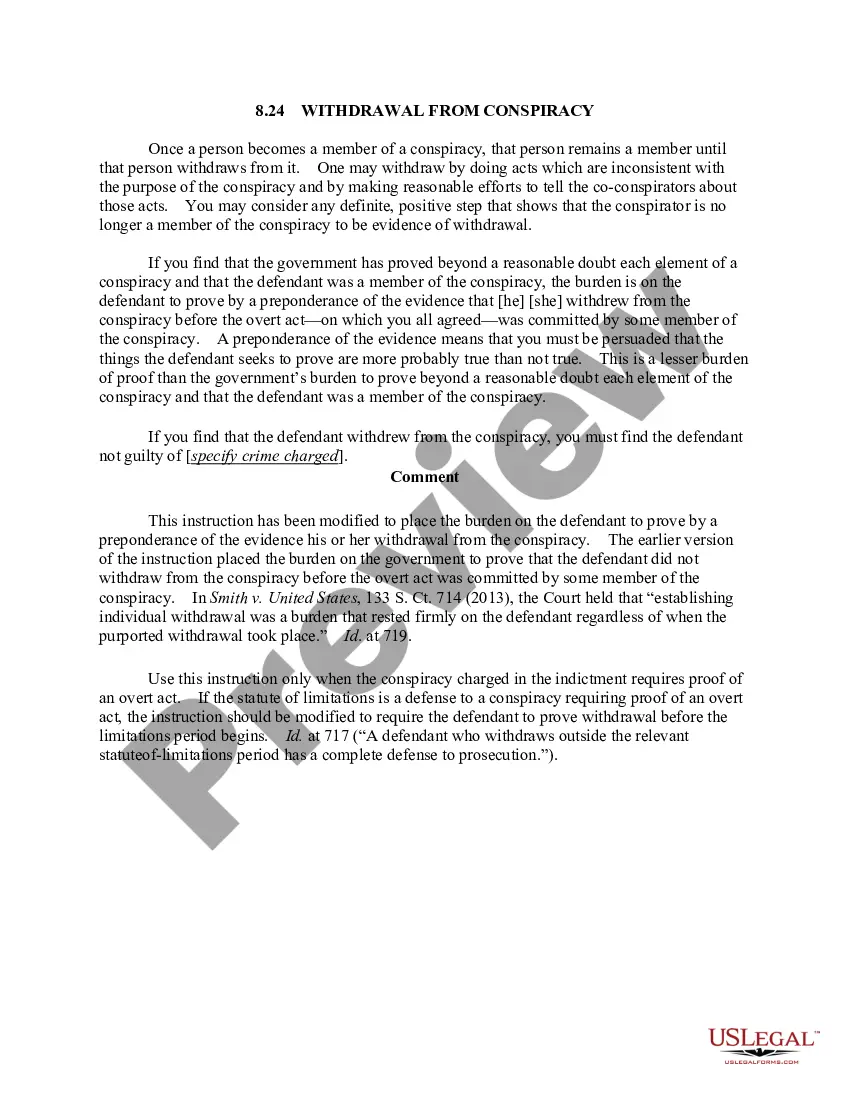
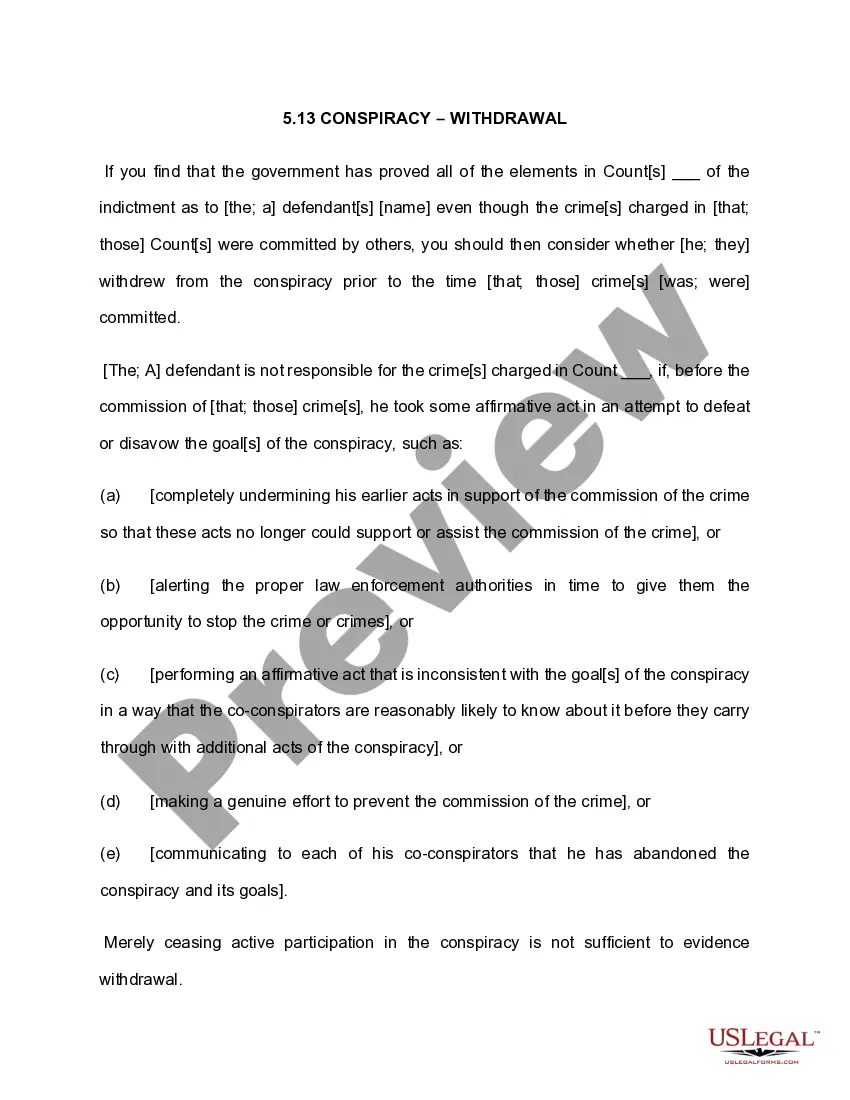
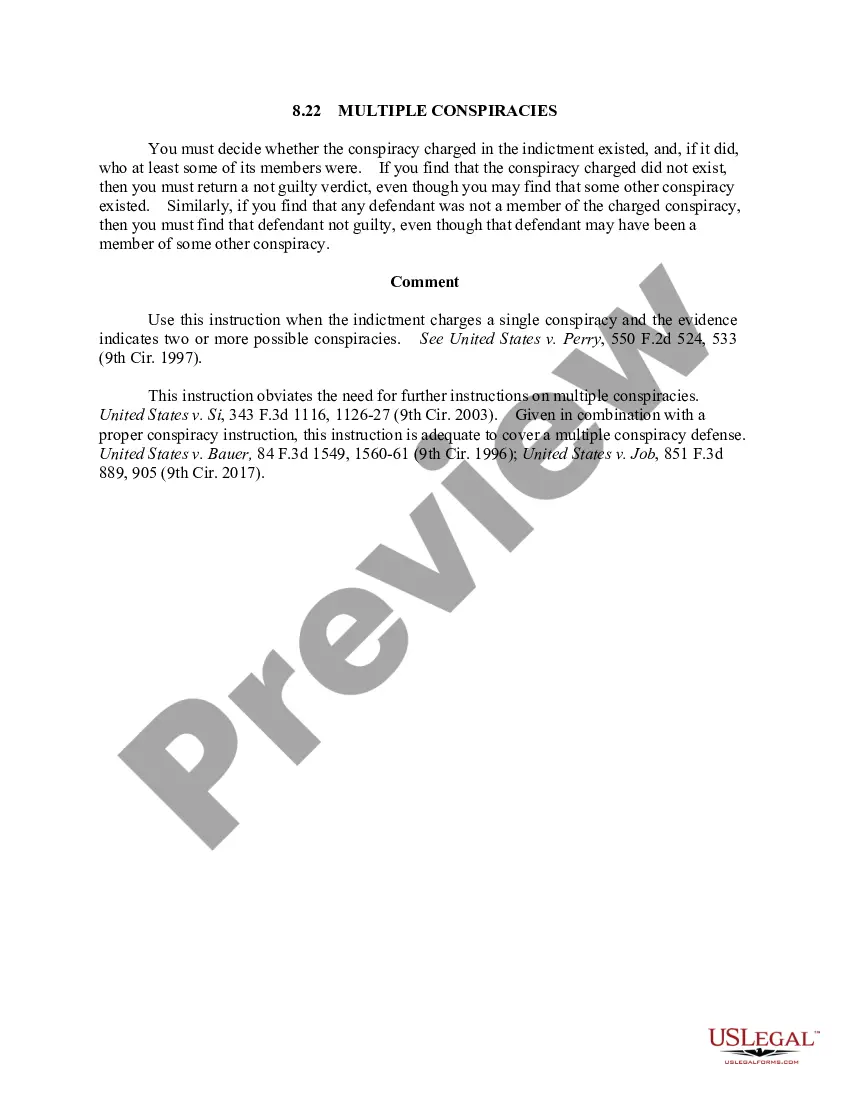
8.24 Withdrawal from Conspiracy
Does this document require notarization?
In most cases, this form does not require notarization. However, some jurisdictions or signing circumstances might. US Legal Forms offers online notarization powered by Notarize, accessible 24/7 for a quick, remote process.
Get your form ready online
Our built-in tools help you complete, sign, share, and store your documents in one place.
Make edits, fill in missing information, and update formatting in US Legal Forms—just like you would in MS Word.
Download a copy, print it, send it by email, or mail it via USPS—whatever works best for your next step.
Sign and collect signatures with our SignNow integration. Send to multiple recipients, set reminders, and more. Go Premium to unlock E-Sign.
If this form requires notarization, complete it online through a secure video call—no need to meet a notary in person or wait for an appointment.
We protect your documents and personal data by following strict security and privacy standards.

Make edits, fill in missing information, and update formatting in US Legal Forms—just like you would in MS Word.

Download a copy, print it, send it by email, or mail it via USPS—whatever works best for your next step.

Sign and collect signatures with our SignNow integration. Send to multiple recipients, set reminders, and more. Go Premium to unlock E-Sign.

If this form requires notarization, complete it online through a secure video call—no need to meet a notary in person or wait for an appointment.

We protect your documents and personal data by following strict security and privacy standards.
Looking for another form?

Form popularity
FAQ
With prison sentences ranging up to 40 years, a drug conspiracy conviction can significantly affect your life and freedom. If you are facing drug conspiracy charges, you will be fighting a difficult battle against a legal system that has been intentionally set up in favor of the prosecutor.
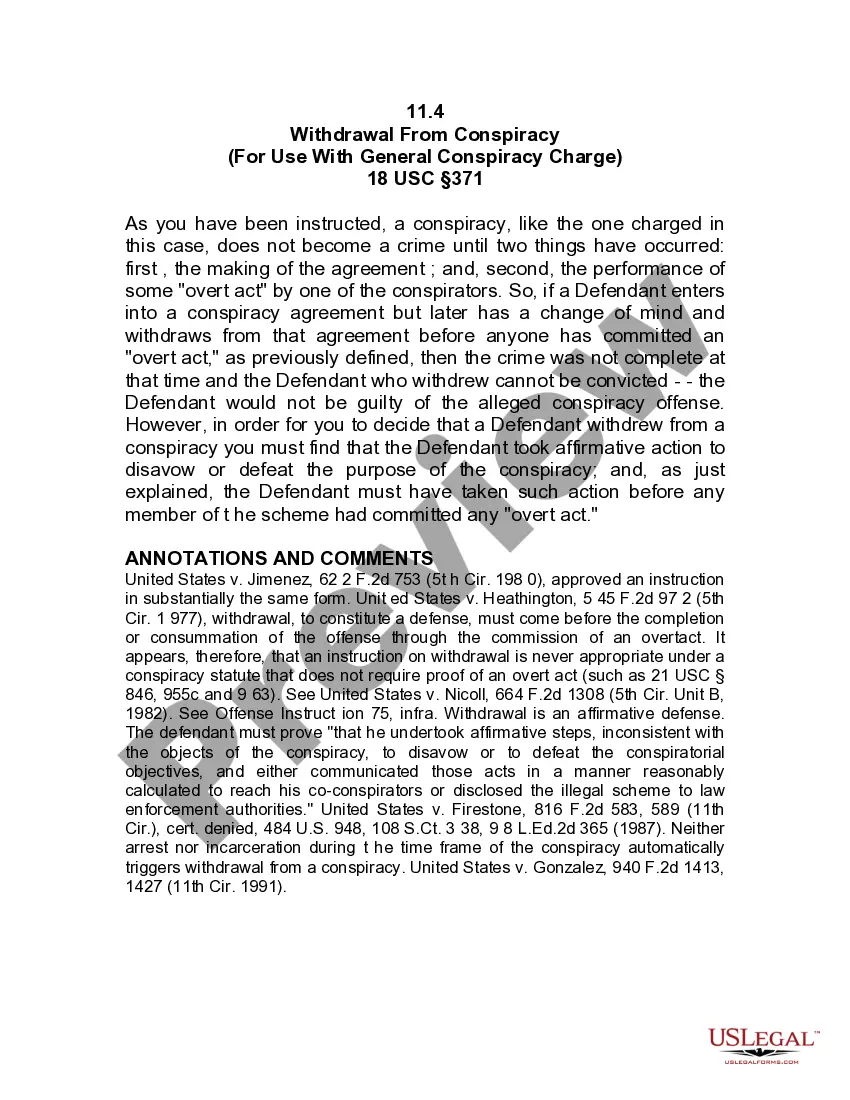
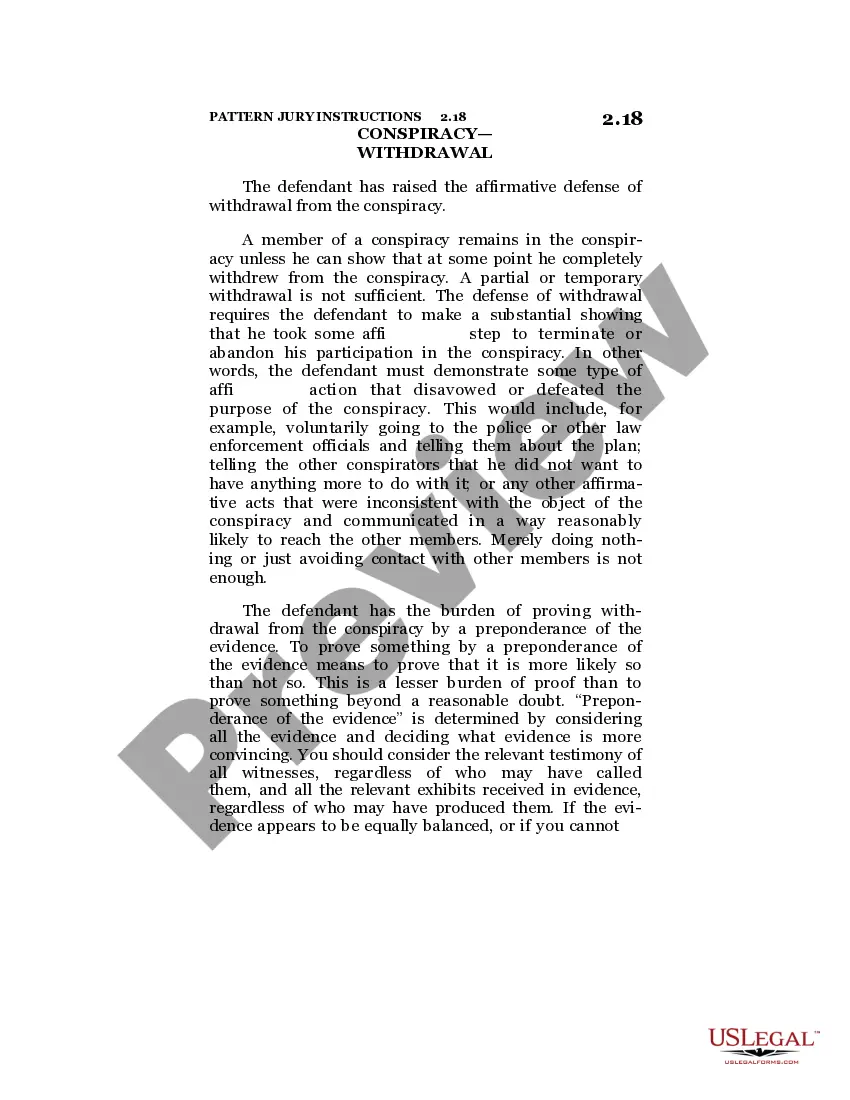
In order to withdraw from a conspiracy, a co-conspirator must: Take an affirmative action withdrawing from the conspiracy; Timely communicate to all co-conspirators the withdrawal; and. Withdraw prior to the completion of the objective of the conspiracy.
Some reasons for recognizing the abandonment defense are: (1) the abandoning person was not trying to violate substantive rules; (2) abandonment negates the dangerousness of the attempt; (3) abandoners are not culpable; (4) availability of the defense encourages attempters to abandon; and (5) abandonment negates the
Abandonment or withdrawal from conspiracy is a defense available to a conspirator to escape liability. In cases of conspiracy requiring an overt act for conviction, a defendant can escape from the liability if s/he proves that they have withdrawn from the conspiracy prior to the performance of an overt acti.
Abandonment or withdrawal from conspiracy is a defense available to a conspirator to escape liability. In cases of conspiracy requiring an overt act for conviction, a defendant can escape from the liability if s/he proves that they have withdrawn from the conspiracy prior to the performance of an overt acti.
A punishable conspiracy exists when at least two people form an agreement to commit a crime, and at least one of them does some act in furtherance to committing the crime. Each person is punishable in the same manner and to the same extent as is provided for the punishment of the crime itself.
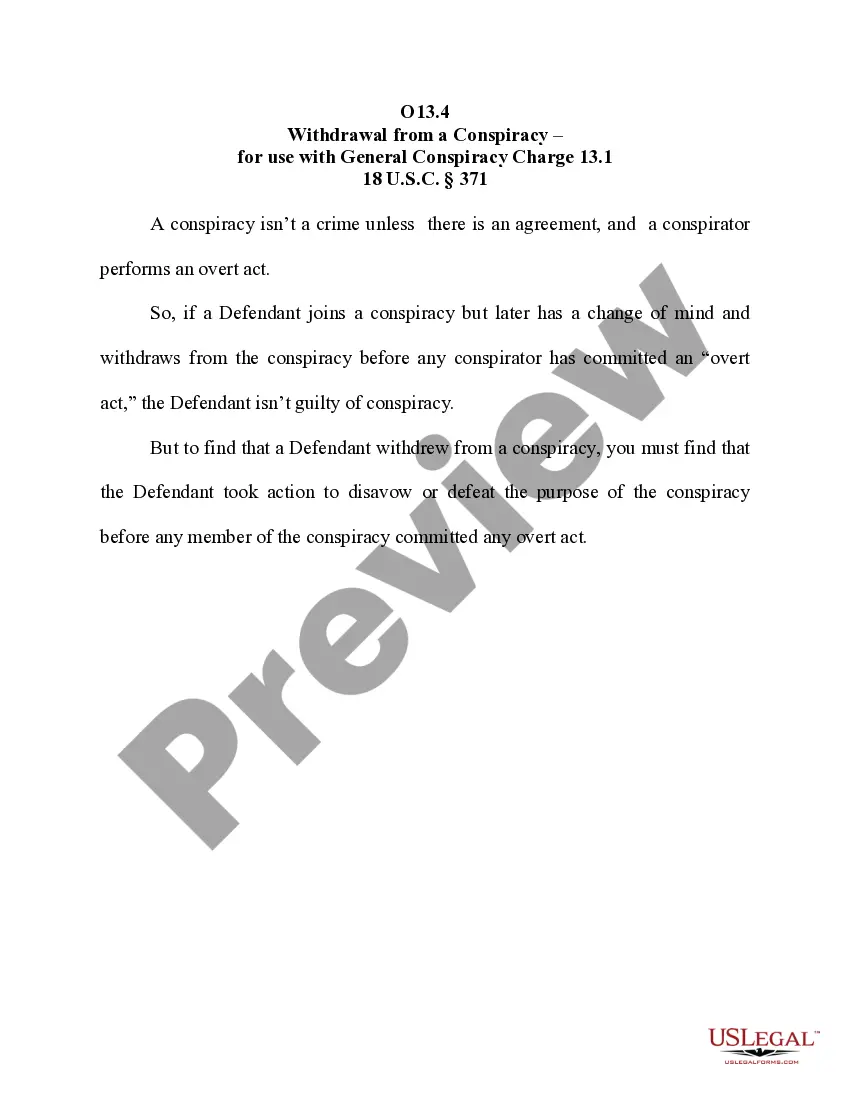
Withdrawal from conspiracy is a defense when a person to conspiracy changes his/her mind and withdraws from that conspiracy before anyone commits an overt act. The person who withdraws from conspiracy must have taken affirmative action to defeat the purpose of the conspiracy.
1. Removing cash or any other asset from the place where it is held. 2. In the context of a criminal conspiracy, leaving the conspiracy before the target crime has been committed. State laws differ on the culpability of co-conspirators who withdraw.