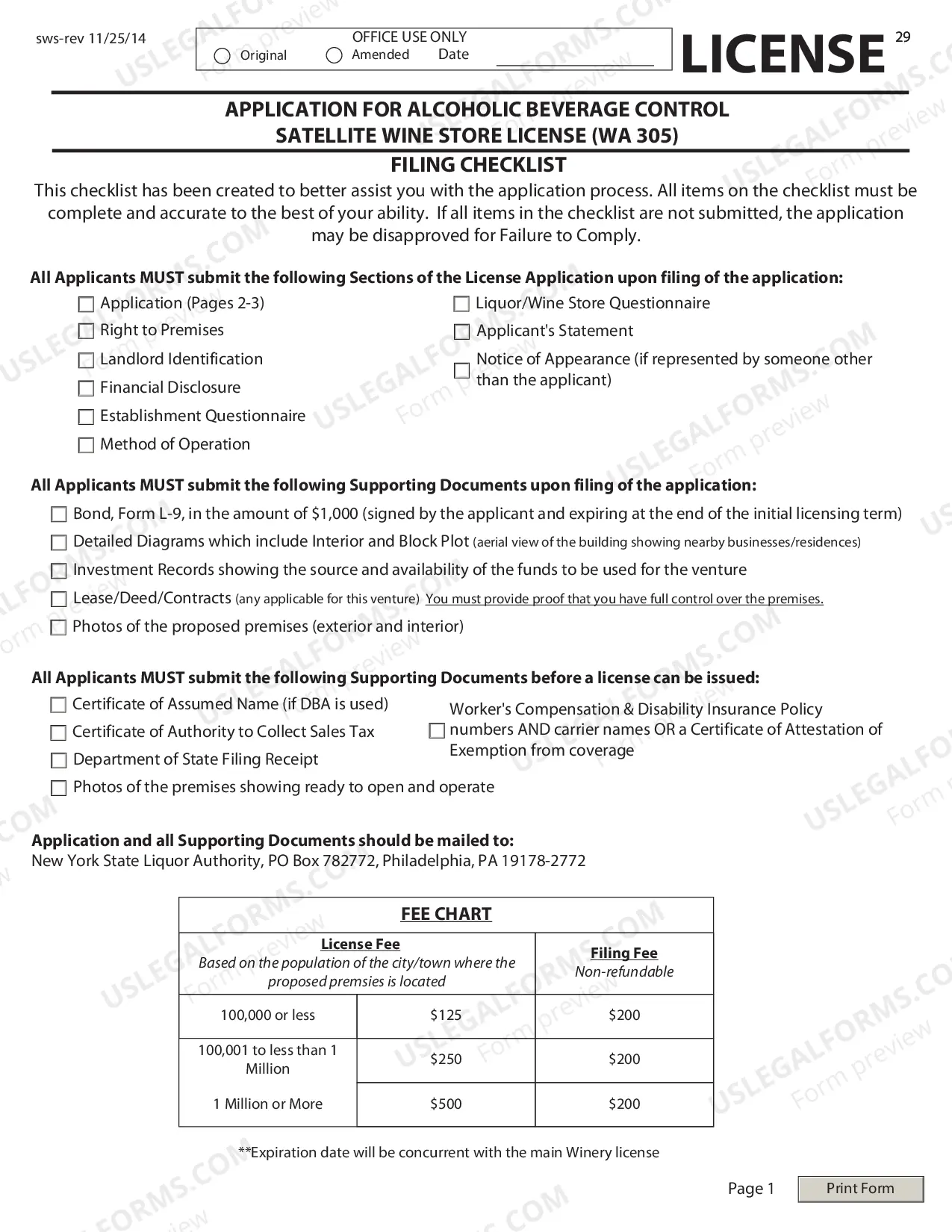
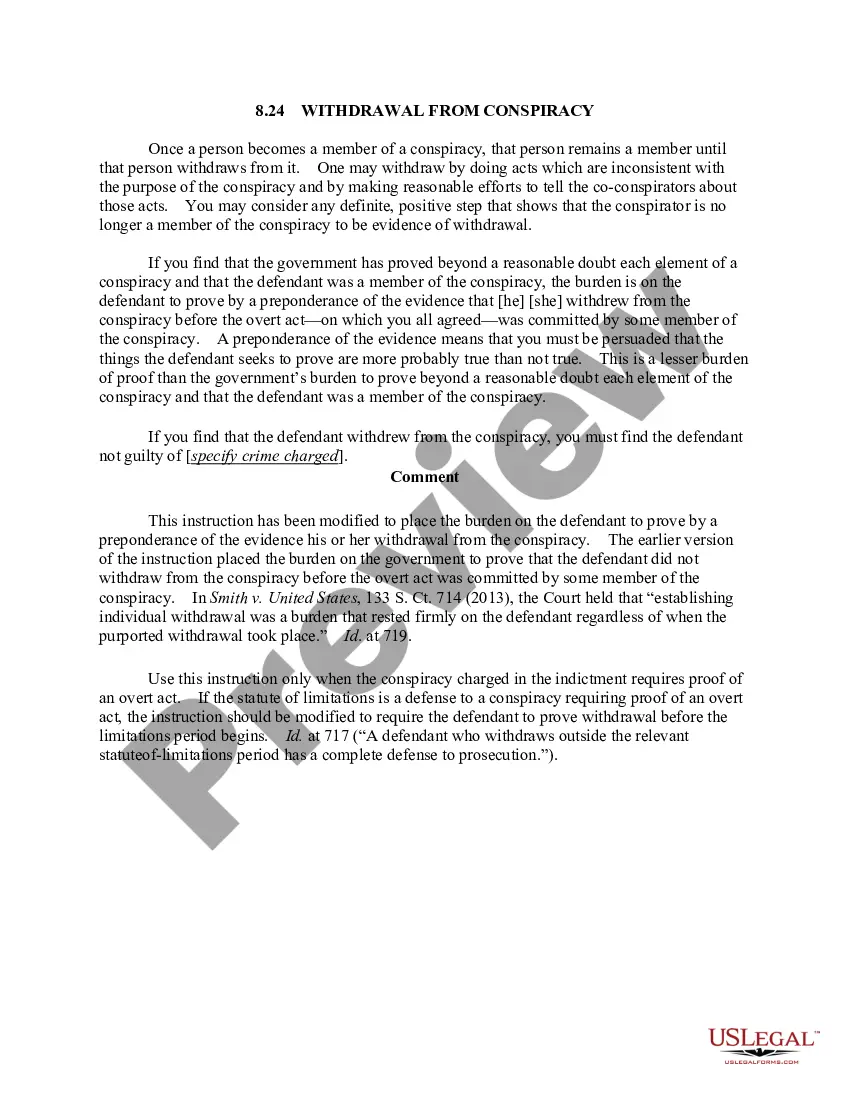
5.13 CONSPIRACY - WITHDRAWAL
What this document covers
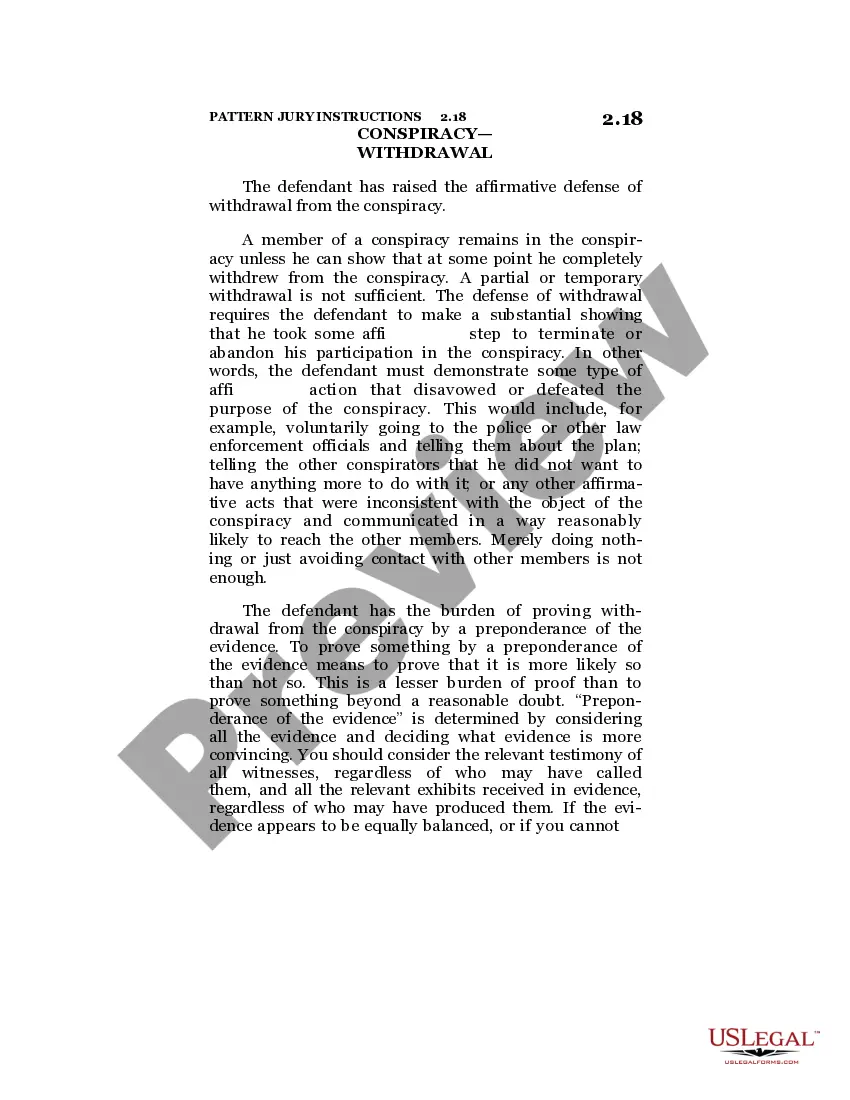
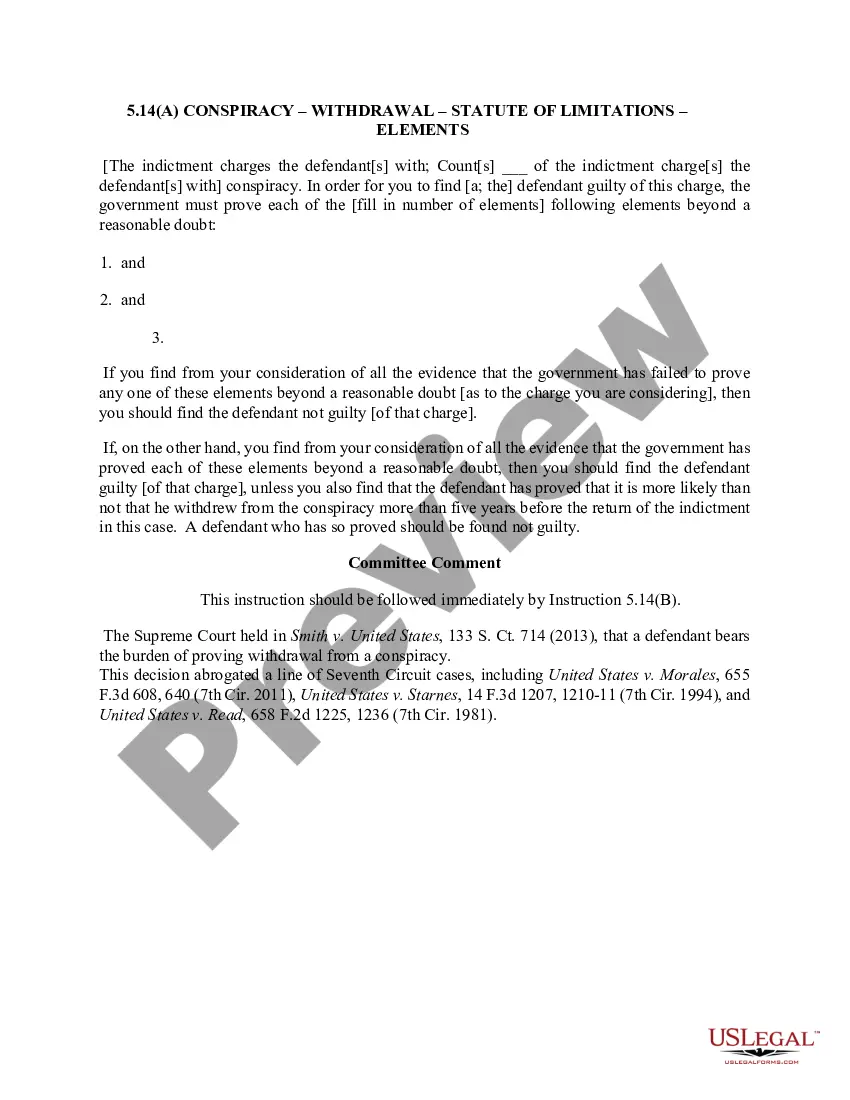
The 5.13 Conspiracy - Withdrawal form is a legal instruction used in criminal cases involving conspiracy charges. This form outlines the criteria that a defendant must meet to demonstrate that they have successfully withdrawn from a conspiracy before the commission of any related crimes. It differs from other conspiracy-related forms by focusing specifically on the withdrawal aspect, helping courts determine whether the defendant can be held responsible for the actions of co-conspirators after a legitimate withdrawal has occurred.
Main sections of this form
- Definition of conspiracy withdrawal and its implications on criminal responsibility.
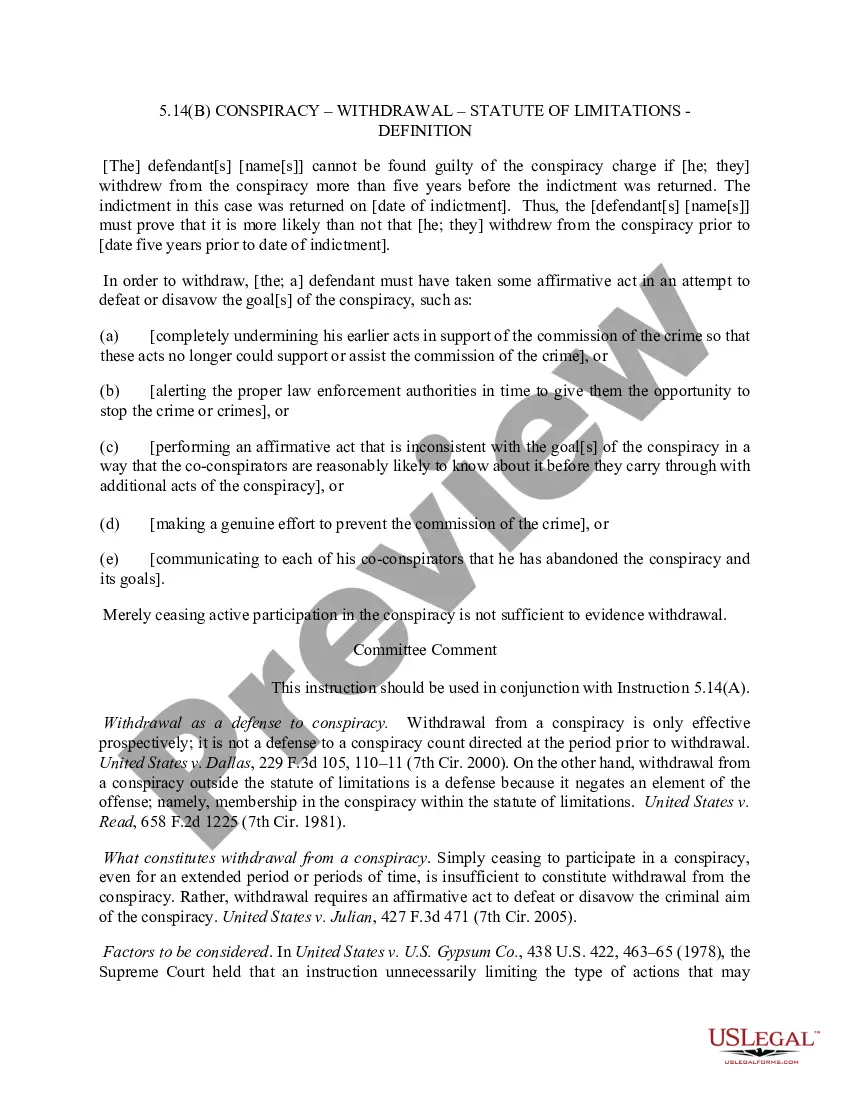
- Criteria for demonstrating withdrawal through affirmative actions.
- Clarification that mere cessation of participation in the conspiracy is not sufficient.
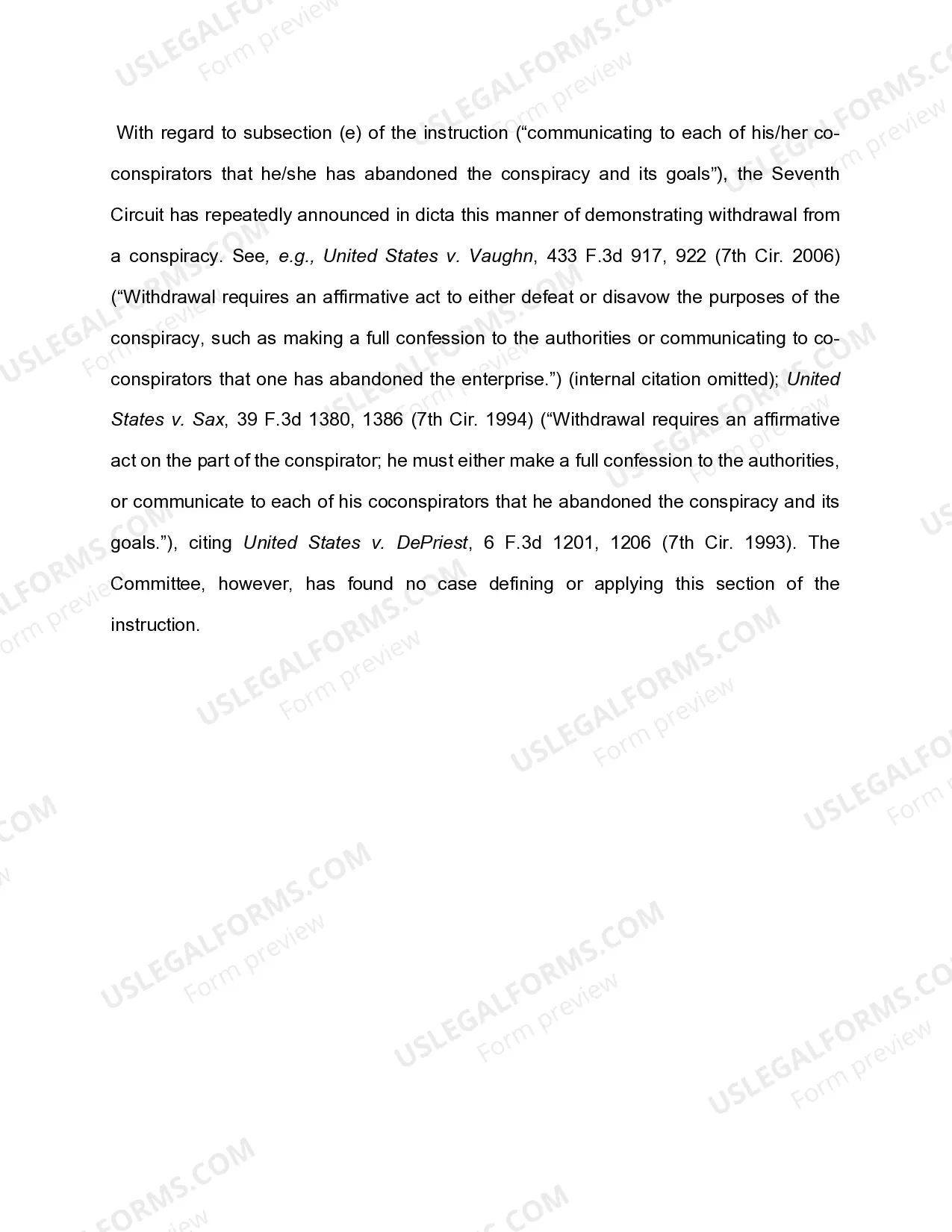
- Enumerated actions that can prove withdrawal, such as alerting law enforcement or informing co-conspirators.
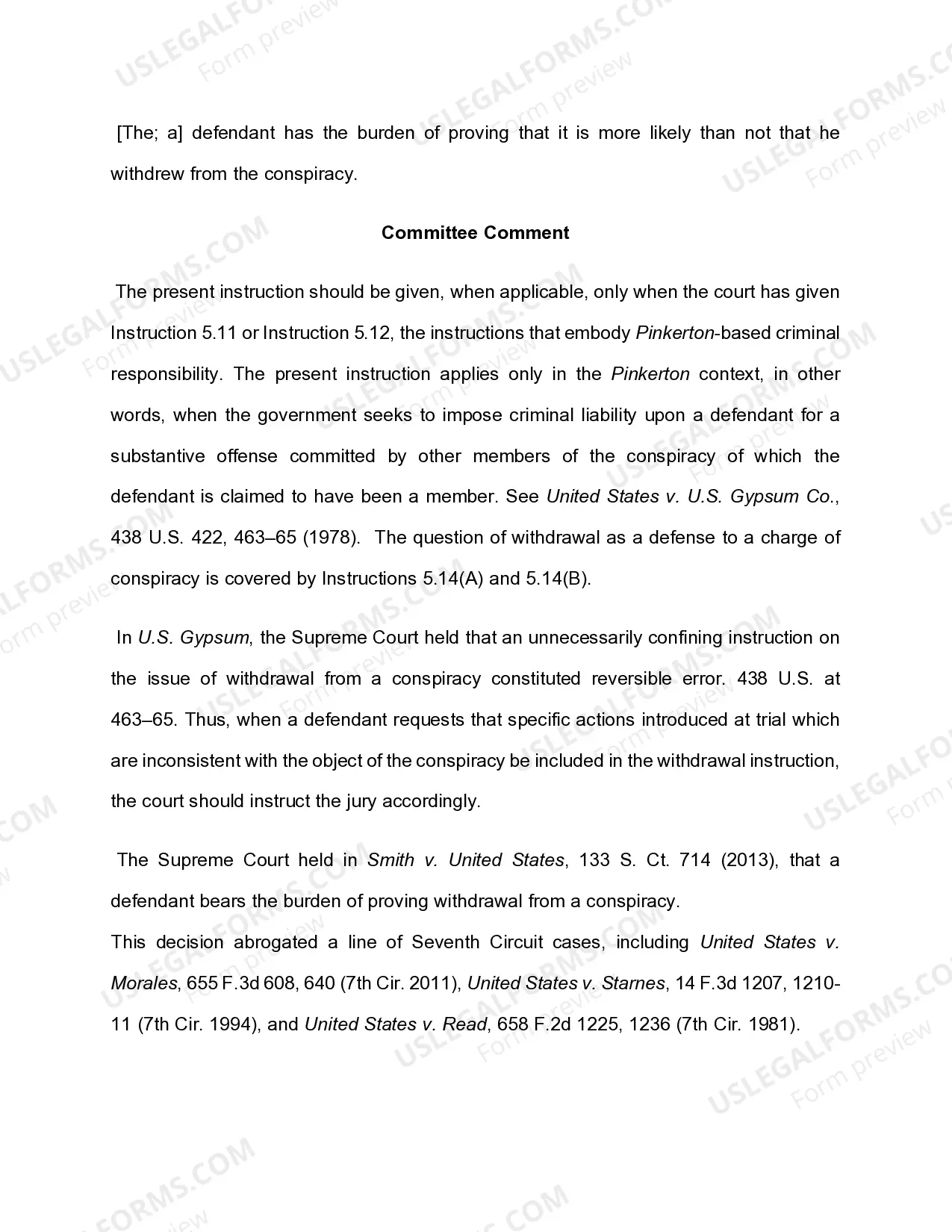
- Legal burden placed on the defendant to prove withdrawal occurred.
When to use this form
This form should be used in situations where a defendant is charged with conspiracy but asserts that they have withdrawn from the conspiracy prior to any crimes being committed. It applies in criminal cases where the prosecution relies on a conspiracy theory for liability, especially in cases where the actions of others are at issue. The withdrawal instruction is particularly relevant in cases of federal conspiracy allegations following the guidelines set by the Federal 7th Circuit Court.
Who this form is for
- Defendants facing conspiracy charges who believe they have withdrawn from the conspiracy.
- Defense attorneys seeking to present a withdrawal defense in court.
- Legal practitioners involved in criminal law who need to instruct juries on the concept of withdrawal from conspiracy.
How to prepare this document
- Review the charges in the indictment to understand the specific count(s) involved.
- Gather evidence or information demonstrating the affirmative act taken to withdraw from the conspiracy.
- Prepare to present this evidence in court, focusing on communication to co-conspirators or actions taken against the goals of the conspiracy.
- Ensure you understand the burden of proof required to establish withdrawal.
- Consult legal guidance if needed to adequately prepare your defense or argument regarding withdrawal.
Notarization guidance
Notarization is generally not required for this form. However, certain states or situations might demand it. You can complete notarization online through US Legal Forms, powered by Notarize, using a verified video call available anytime.
Get your form ready online
Our built-in tools help you complete, sign, share, and store your documents in one place.
Make edits, fill in missing information, and update formatting in US Legal Forms—just like you would in MS Word.
Download a copy, print it, send it by email, or mail it via USPS—whatever works best for your next step.
Sign and collect signatures with our SignNow integration. Send to multiple recipients, set reminders, and more. Go Premium to unlock E-Sign.
If this form requires notarization, complete it online through a secure video call—no need to meet a notary in person or wait for an appointment.
We protect your documents and personal data by following strict security and privacy standards.

Make edits, fill in missing information, and update formatting in US Legal Forms—just like you would in MS Word.

Download a copy, print it, send it by email, or mail it via USPS—whatever works best for your next step.

Sign and collect signatures with our SignNow integration. Send to multiple recipients, set reminders, and more. Go Premium to unlock E-Sign.

If this form requires notarization, complete it online through a secure video call—no need to meet a notary in person or wait for an appointment.

We protect your documents and personal data by following strict security and privacy standards.
Avoid these common issues
- Believing that simply stopping participation in the conspiracy is enough to prove withdrawal.
- Failing to document actions taken to withdraw, which may weaken the defense.
- Not informing co-conspirators about the withdrawal, which can lead to confusion regarding intentions.
Why use this form online
- Convenient access to legal instructions without needing to visit a law office.
- Editable format allows users to customize the form to their specific needs.
- Reliable content drafted by licensed attorneys, ensuring legal accuracy.
Legal use & context
- This form is recognized within the framework of federal criminal law as a means to assert withdrawal from conspiracy charges.
- This instruction is critical when the prosecution's case relies on proving the defendant's continued involvement in the conspiracy after withdrawal.
- Withdrawal must be established through clear and affirmative actions, as defined in this instruction.
Looking for another form?



Form popularity
FAQ
A punishable conspiracy exists when at least two people form an agreement to commit a crime, and at least one of them does some act in furtherance to committing the crime. Each person is punishable in the same manner and to the same extent as is provided for the punishment of the crime itself.
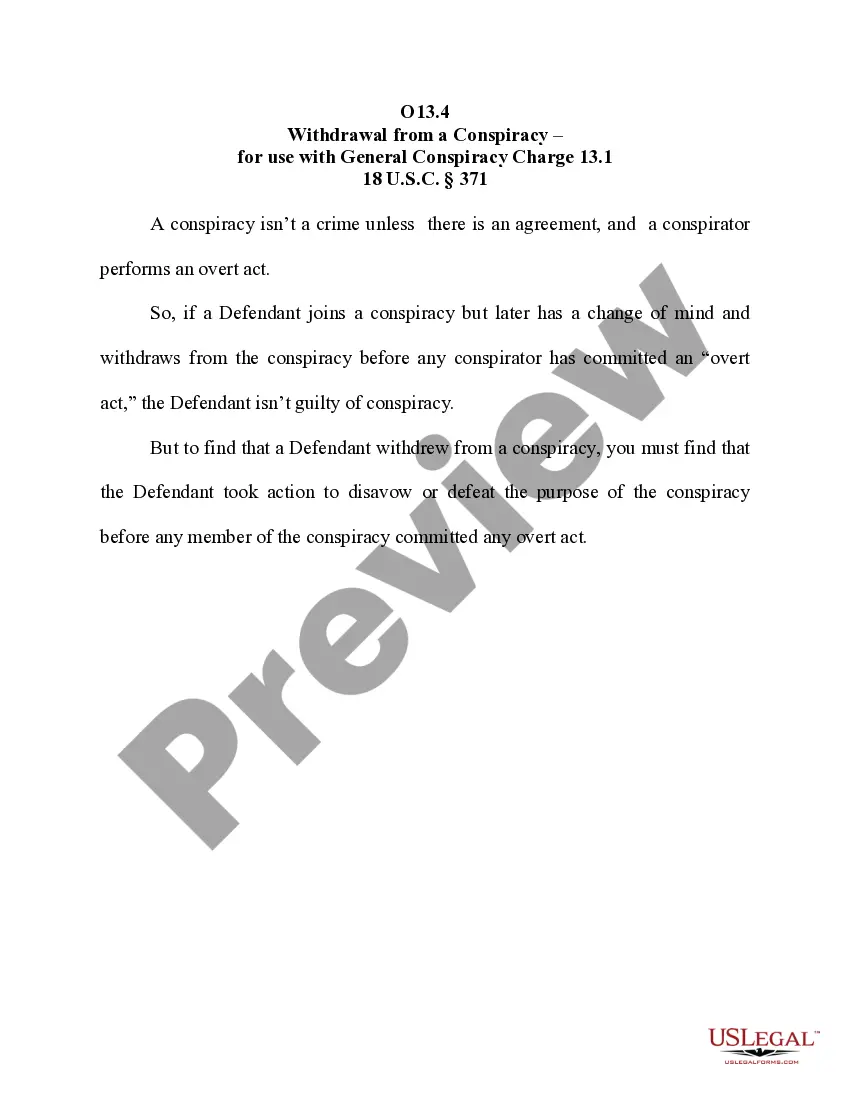
Withdrawal from conspiracy is a defense when a person to conspiracy changes his/her mind and withdraws from that conspiracy before anyone commits an overt act. The person who withdraws from conspiracy must have taken affirmative action to defeat the purpose of the conspiracy.
THE INCHOATE CRIMES ARE ATTEMPT--ACTION TOWARD THE COMMISSION OF A CRIME; CONSPIRACY--AGREEMENT TO COMMIT A CRIME; AND SOLICITATION--INCITEMENT OF ANOTHER TO COMMIT A CRIME. NO FEDERAL COMMON LAW EXISTS TO GOVERN SUCH CRIMES, AND PRESENT FEDERAL STATUTES TREAT INCHOATE OFFENSES HAPHAZARDLY.
Many federal conspiracy charges carry a 5, 10 or 20-year mandatory minimum prison sentence. However, the important thing to remember is that these sentences can be negotiated based on the information you have to give.
1. Removing cash or any other asset from the place where it is held. 2. In the context of a criminal conspiracy, leaving the conspiracy before the target crime has been committed. State laws differ on the culpability of co-conspirators who withdraw.
In order to withdraw from a conspiracy, a co-conspirator must: Take an affirmative action withdrawing from the conspiracy; Timely communicate to all co-conspirators the withdrawal; and. Withdraw prior to the completion of the objective of the conspiracy.
Some reasons for recognizing the abandonment defense are: (1) the abandoning person was not trying to violate substantive rules; (2) abandonment negates the dangerousness of the attempt; (3) abandoners are not culpable; (4) availability of the defense encourages attempters to abandon; and (5) abandonment negates the
Abandonment or withdrawal from conspiracy is a defense available to a conspirator to escape liability. In cases of conspiracy requiring an overt act for conviction, a defendant can escape from the liability if s/he proves that they have withdrawn from the conspiracy prior to the performance of an overt acti.