Conspiracy - Withdrawl
Understanding this form
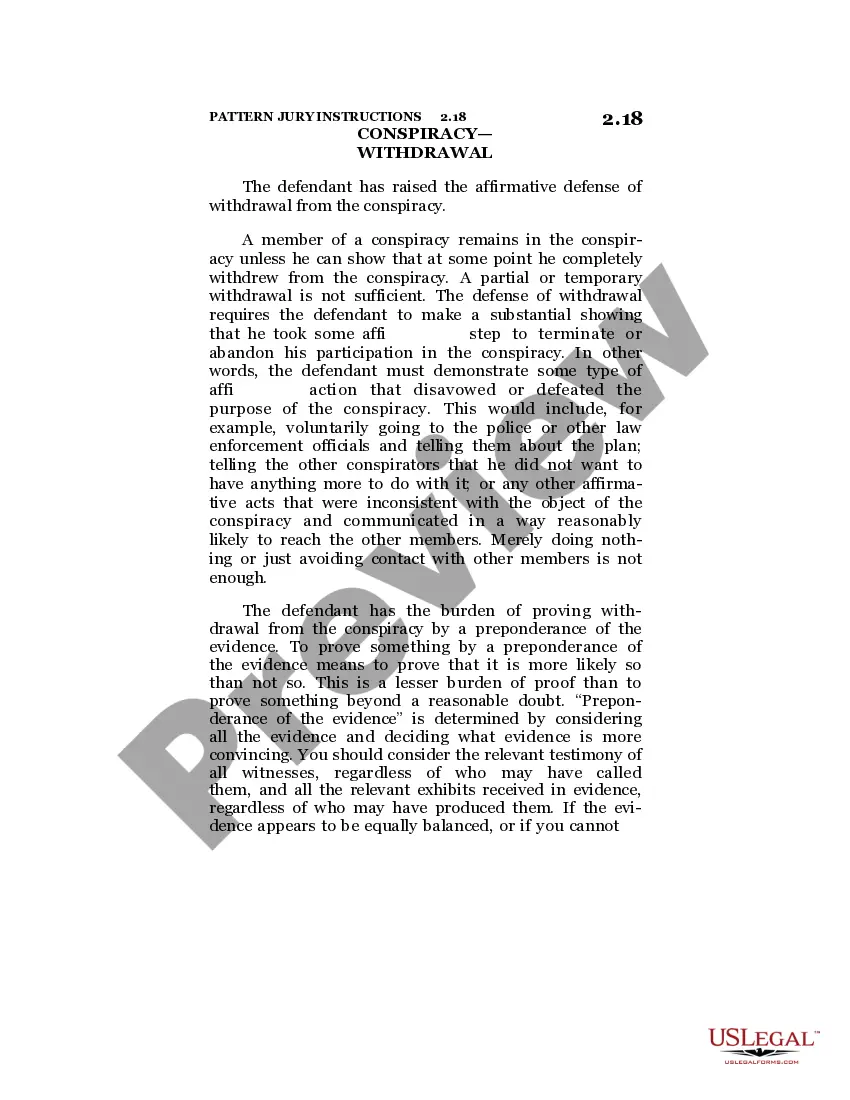
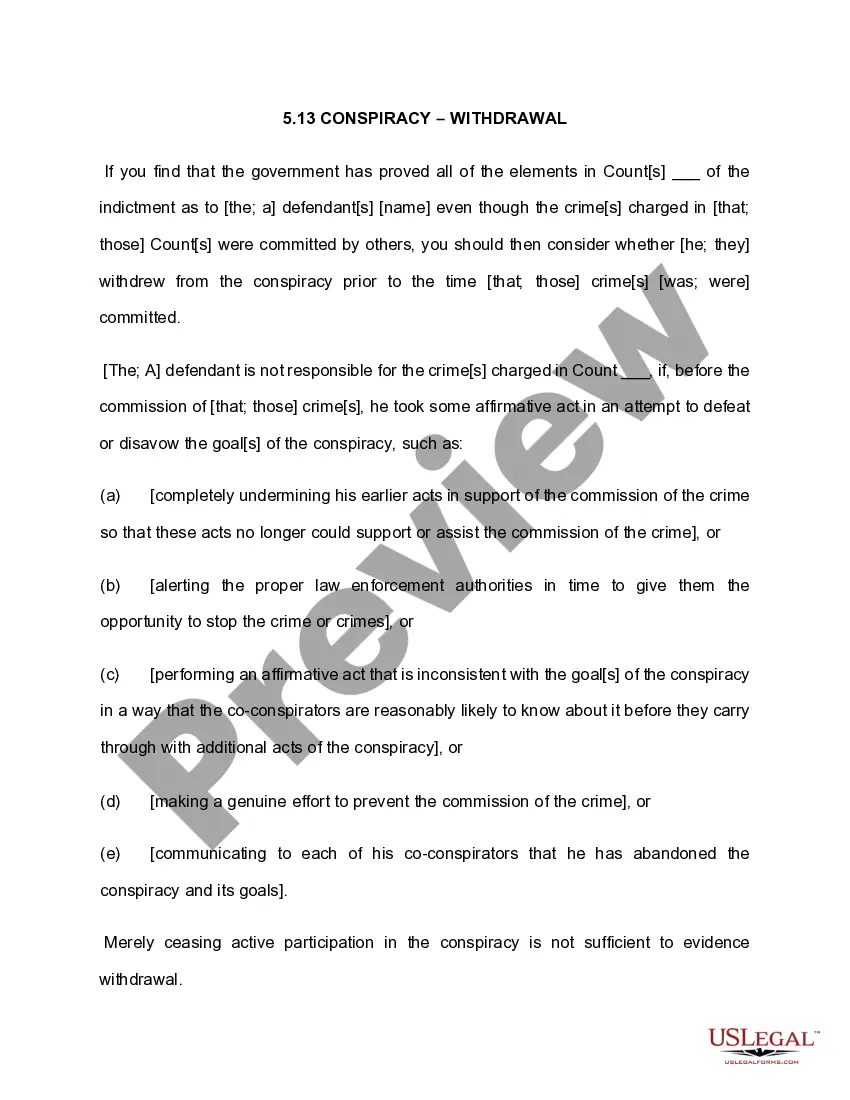
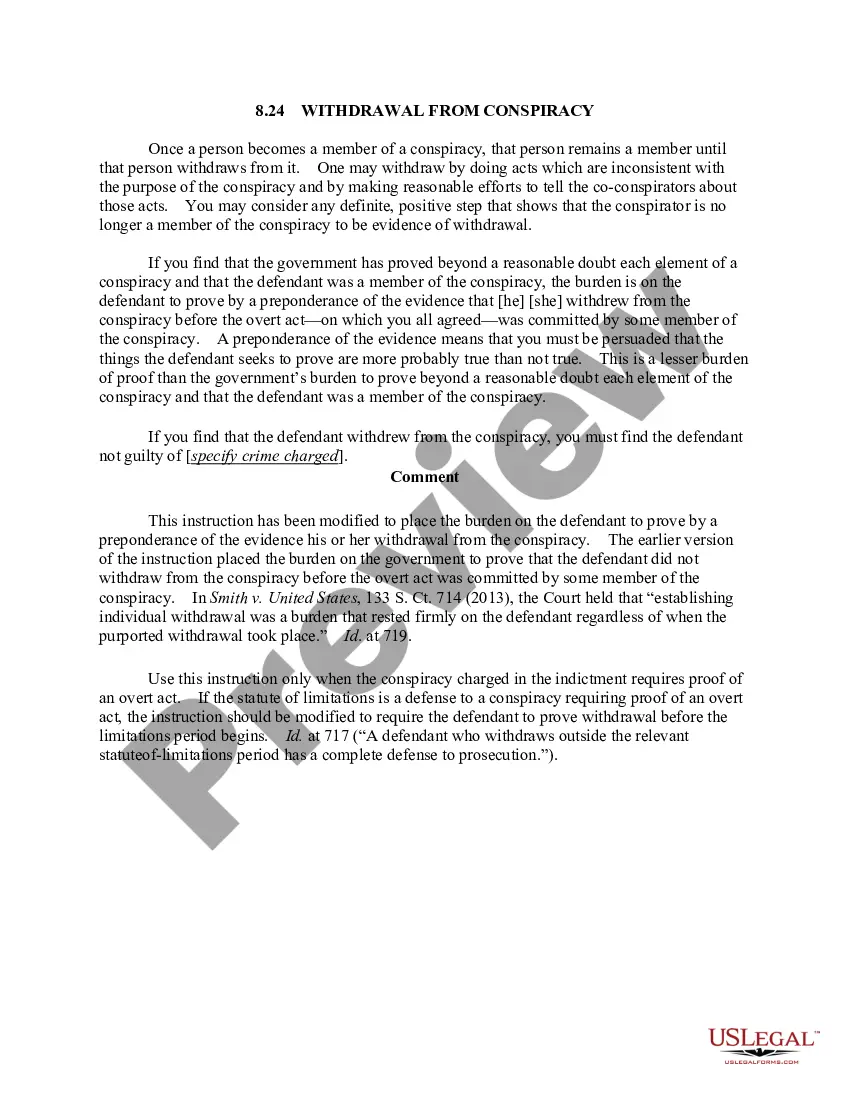
The Conspiracy - Withdrawal form is a legal document that allows a defendant to assert the affirmative defense of withdrawal from a conspiracy. This form is crucial for demonstrating that the defendant took substantial steps to disavow their involvement in a conspiracy, which can impact the legal proceedings. Unlike other legal forms, this form specifically addresses the requirements for proving withdrawal and the necessary evidence needed to establish this defense in court.
Key components of this form
- Section outlining the definitions and requirements for claiming withdrawal from a conspiracy.
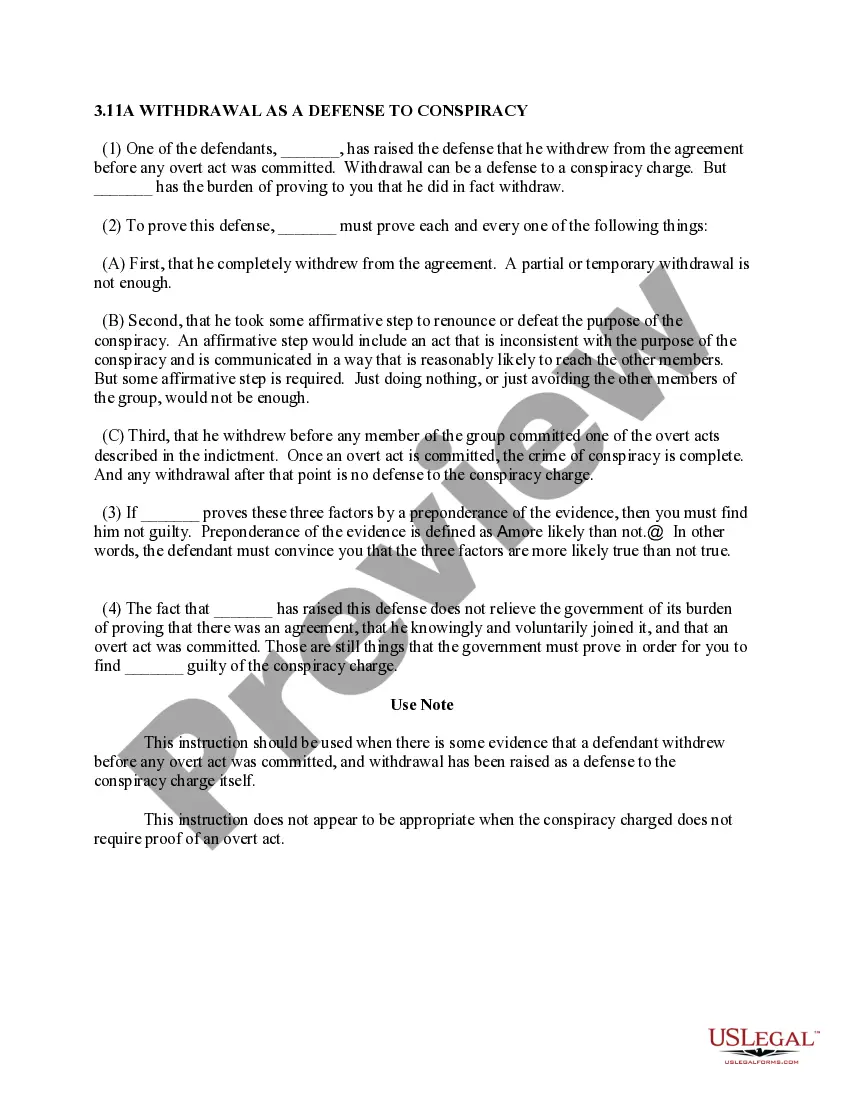
- Details on the burden of proof needed to establish that withdrawal occurred.
- Information on what constitutes sufficient and insufficient actions for withdrawal.
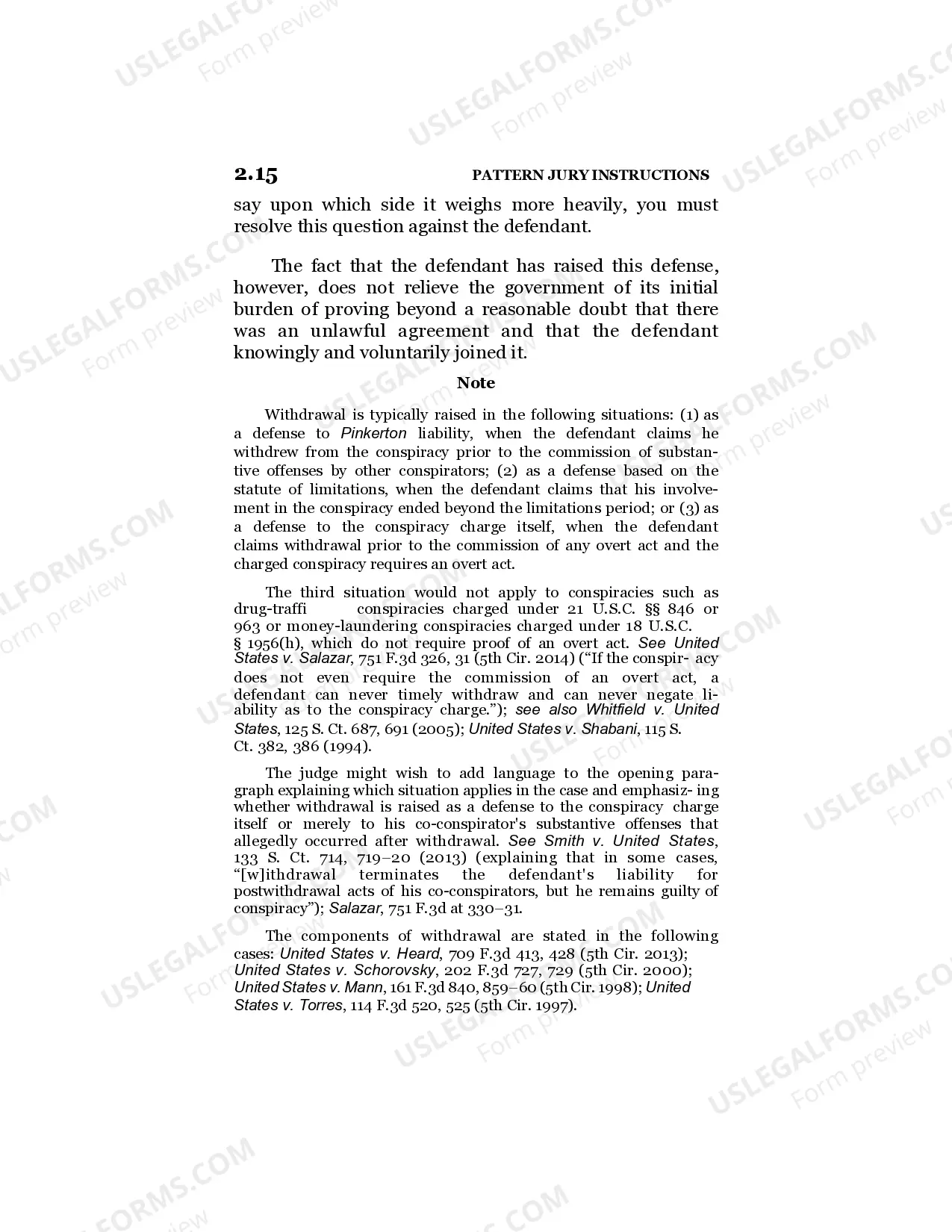
- Clarification of the legal implications of withdrawal concerning liability for co-conspiratorsâ actions.
- Guidance on the circumstances under which withdrawal can serve as a defense, including applicable legal precedents.


When this form is needed
This form should be used in situations where a defendant intends to claim they have withdrawn from a conspiracy. It is relevant in cases involving an affirmative defense against charges that may have arisen after their withdrawal. This includes instances where the defendant seeks to avoid liability for subsequent actions taken by co-conspirators or when addressing limitations based on the timeline of their participation in the conspiracy.
Intended users of this form
- Defendants facing conspiracy charges who believe they have withdrawn from the conspiracy.
- Legal representatives preparing a defense strategy that includes withdrawal as a key argument.
- Individuals involved in conspiracy allegations who need to document their withdrawal for legal purposes.
Steps to complete this form
- Identify all parties involved in the conspiracy as well as the specific charges against the defendant.
- Clearly describe the actions taken by the defendant to withdraw from the conspiracy.
- Provide detailed evidence supporting the claim of withdrawal, including any communications with co-conspirators or law enforcement.
- Document the timeline of events related to the conspiracy and the defendantâs withdrawal.
- Sign and date the form to affirm the accuracy of the information provided.
Does this document require notarization?
This form does not typically require notarization unless specified by local law. However, verifying requirements in the relevant jurisdiction is advisable to ensure compliance with legal standards.
Get your form ready online
Our built-in tools help you complete, sign, share, and store your documents in one place.
Make edits, fill in missing information, and update formatting in US Legal Forms—just like you would in MS Word.
Download a copy, print it, send it by email, or mail it via USPS—whatever works best for your next step.
Sign and collect signatures with our SignNow integration. Send to multiple recipients, set reminders, and more. Go Premium to unlock E-Sign.
If this form requires notarization, complete it online through a secure video call—no need to meet a notary in person or wait for an appointment.
We protect your documents and personal data by following strict security and privacy standards.

Make edits, fill in missing information, and update formatting in US Legal Forms—just like you would in MS Word.

Download a copy, print it, send it by email, or mail it via USPS—whatever works best for your next step.

Sign and collect signatures with our SignNow integration. Send to multiple recipients, set reminders, and more. Go Premium to unlock E-Sign.

If this form requires notarization, complete it online through a secure video call—no need to meet a notary in person or wait for an appointment.

We protect your documents and personal data by following strict security and privacy standards.
Common mistakes to avoid
- Failing to provide sufficient evidence of withdrawal actions.
- Assuming that mere absence from the conspiracy is enough to establish withdrawal.
- Neglecting to document the timing and nature of actions taken in relation to the conspiracy.
Why complete this form online
- Convenient access to legally vetted documents from licensed attorneys.
- Editability allows users to customize the form according to their specific situation.
- Secure storage and easy retrieval of completed forms for future reference.
- The withdrawal defense is valid only if the defendant can prove they took significant steps to disengage from the conspiracy.
- Evidence of withdrawal must be presented in court, and the burden of proof lies with the defendant.
- The effectiveness of the withdrawal may vary based on specific circumstances and jurisdictional interpretations.
Main things to remember
- The Conspiracy - Withdrawal form is essential for defendants seeking to assert a withdrawal defense.
- A complete withdrawal must be demonstrable through affirmative actions, not mere inaction.
- Documenting actions taken to disassociate from the conspiracy is critical to the effectiveness of the defense.
- This form can significantly impact the legal strategy in conspiracy-related charges.
Looking for another form?


Form popularity
FAQ
What is an example of a conspiracy charge? An example of a conspiracy charge could be two people that make an agreement to kill someone and buy the weapons to do it. They are charged with conspiracy, even if they never fully follow through on killing the person.
Once a person becomes a member of a conspiracy, that person remains a member until that person withdraws from it. One may withdraw by doing acts which are inconsistent with the purpose of the conspiracy and by making reasonable efforts to tell the co-conspirators about those acts.
The criminal intent element required for attempt is specific intent or purposely to commit the crime at issue. Aside from failure of proof defenses to attempt act and intent, two potential defenses to attempt are legal impossibility and voluntary abandonment.
For example, if you are charged with conspiring to commit a felony, you could face a sentence of life in prison. Many federal conspiracy charges carry a 5, 10 or 20-year mandatory minimum prison sentence.
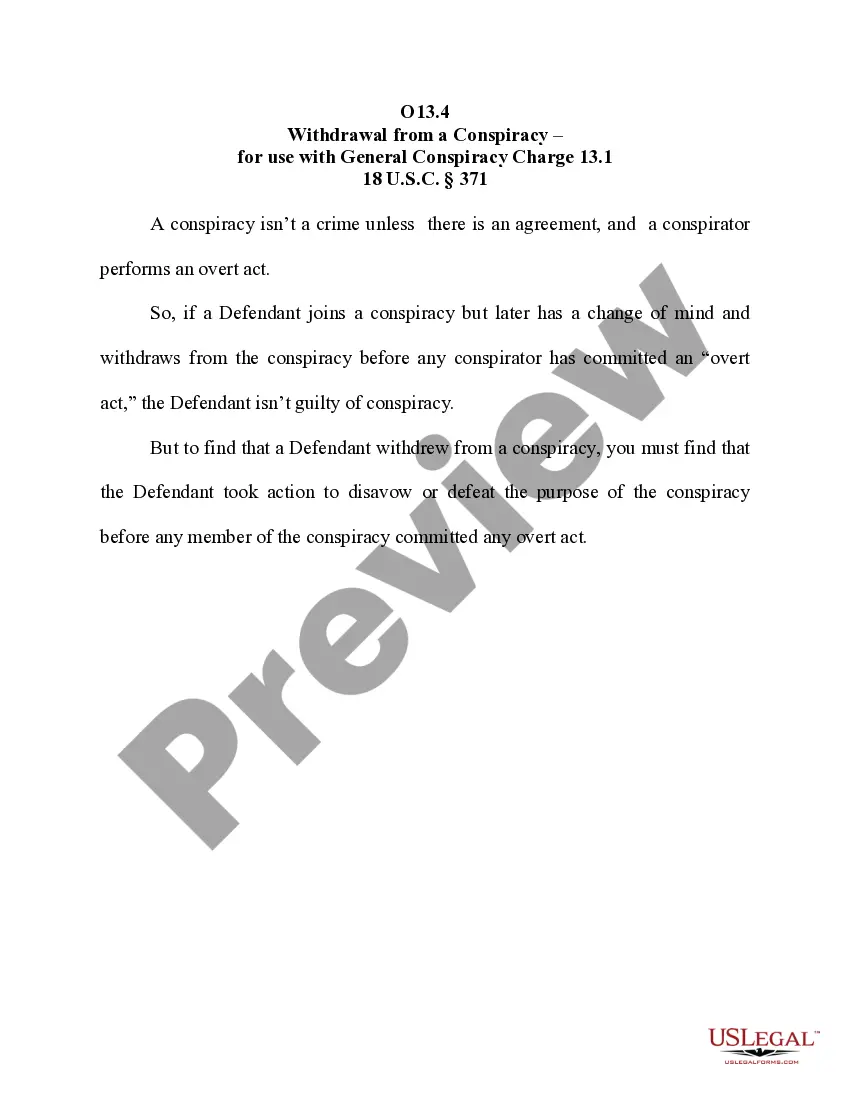
Abandonment or withdrawal from conspiracy is a defense available to a conspirator to escape liability. In cases of conspiracy requiring an overt act for conviction, a defendant can escape from the liability if s/he proves that they have withdrawn from the conspiracy prior to the performance of an overt acti.
Abandonment can occur when a defendant is planning to commit a crime on his or her own and later decides not to commit the crime, or when he or she is participating in a crime with other co-criminals and decides to no longer participate.
Abandonment - An accomplice may abandon a conspiracy and thereby eliminate accomplice liability. In order to do so, the accomplice must generally 1) notify the principal that he or she is withdrawing from the conspiracy and 2) take some action to neutralize whatever steps he took to assist in the crime.
1. Removing cash or any other asset from the place where it is held. 2. In the context of a criminal conspiracy, leaving the conspiracy before the target crime has been committed. State laws differ on the culpability of co-conspirators who withdraw.