Confidentiality Agreement with Regard to Employee Inventions
What is this form?
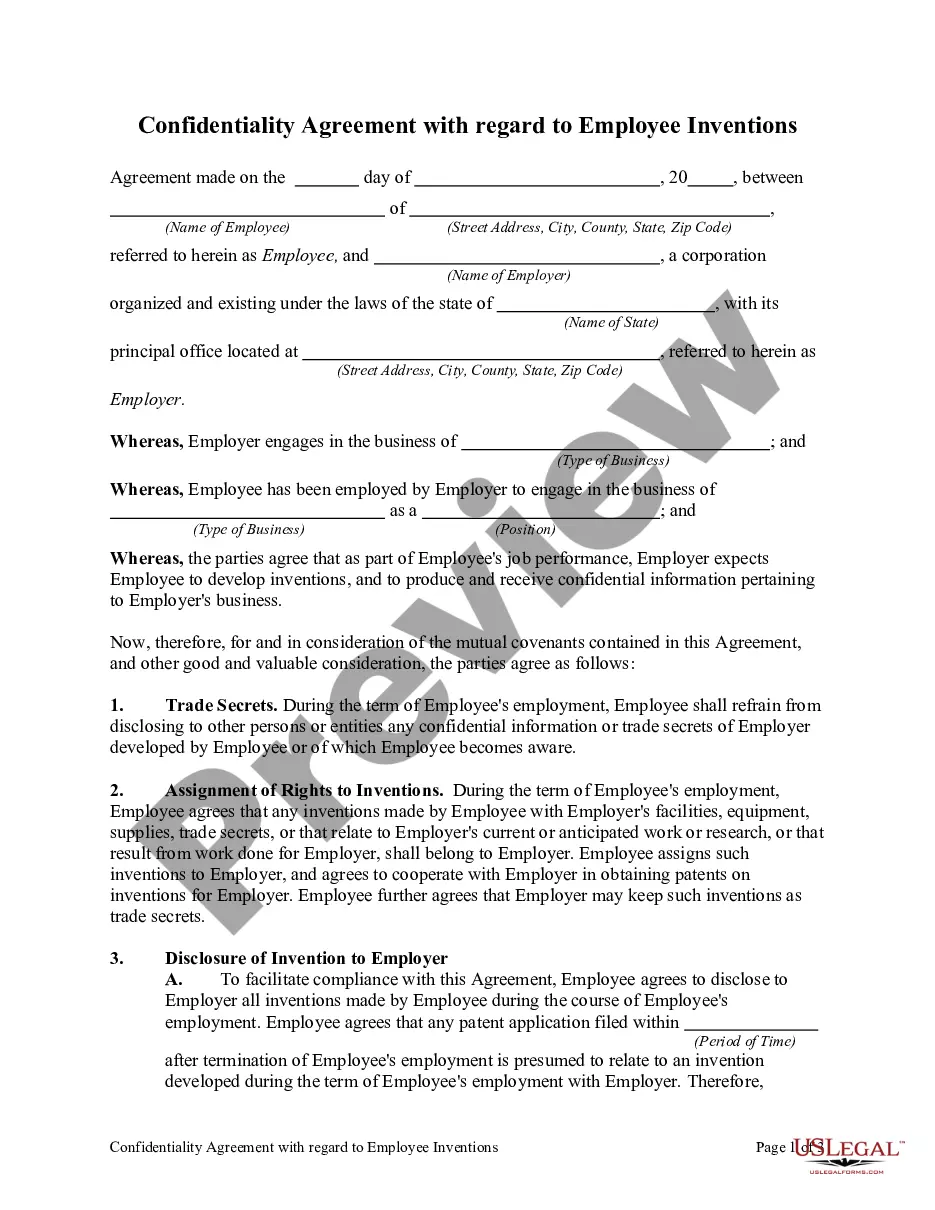
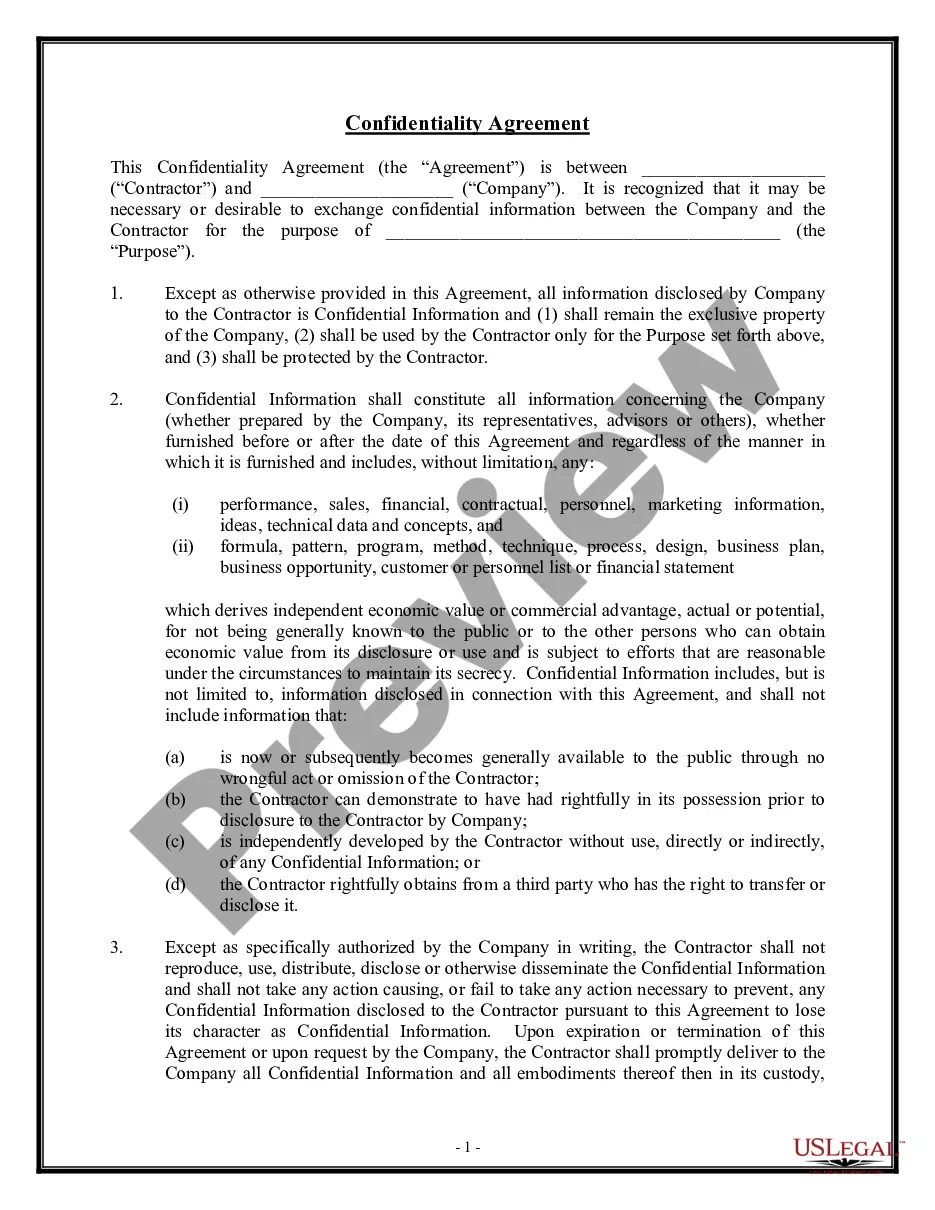
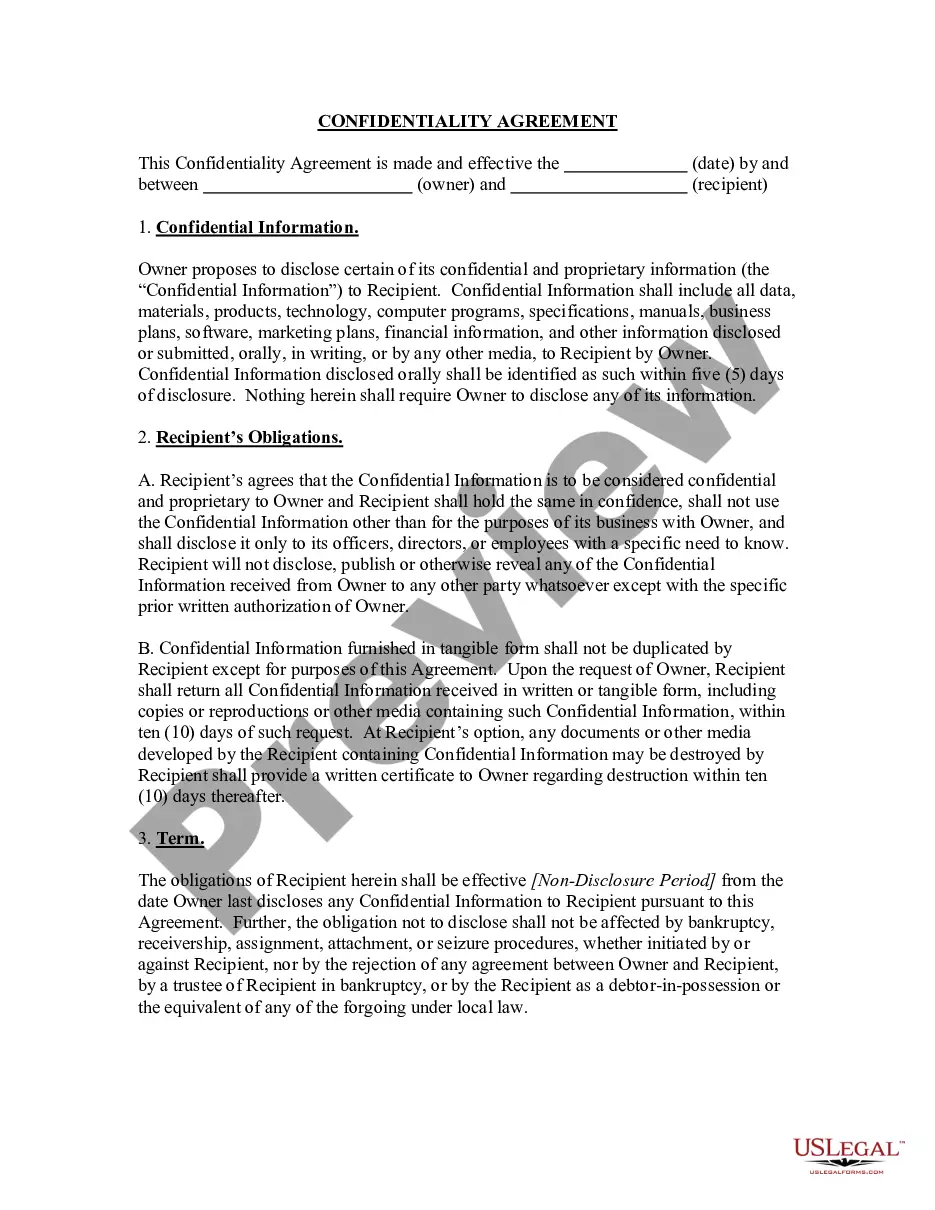
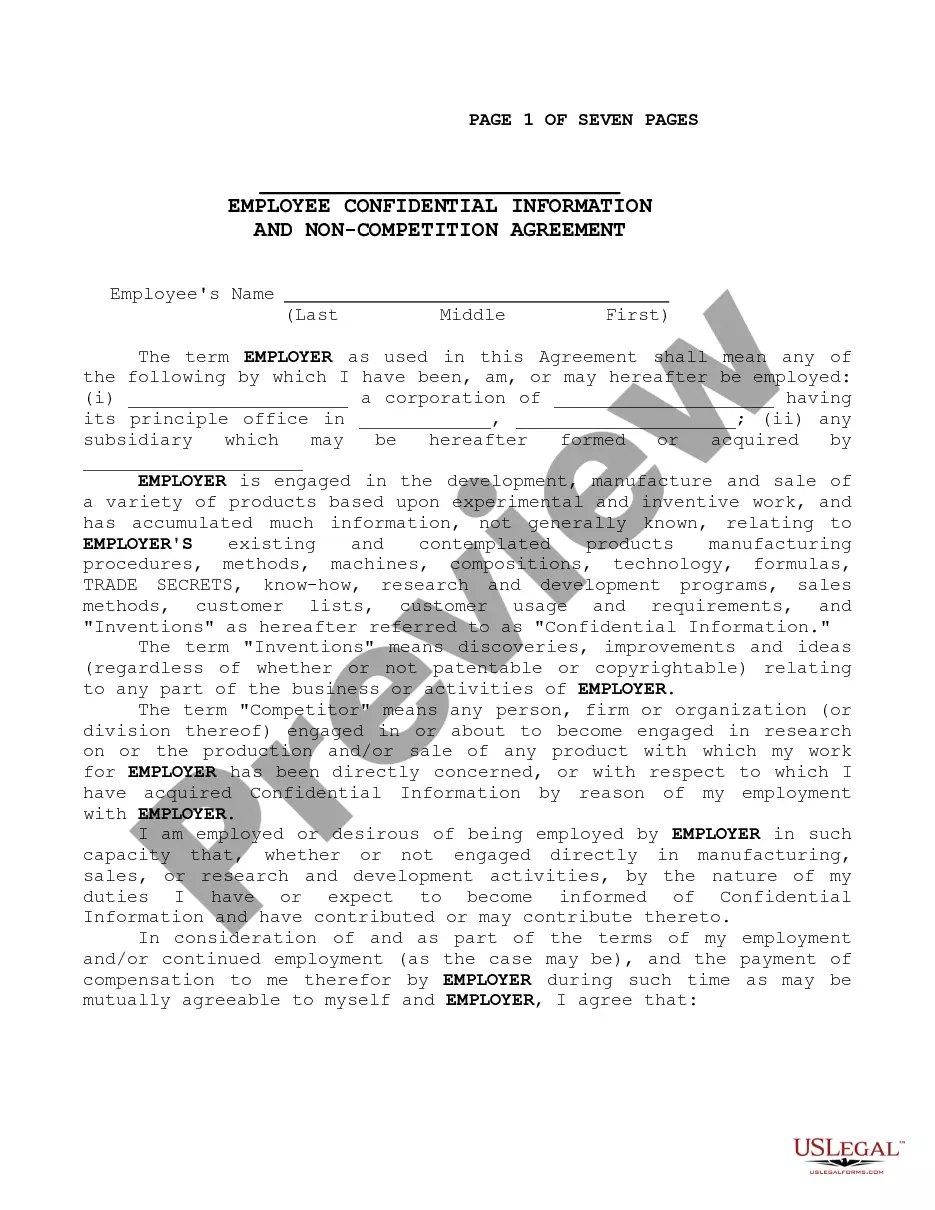
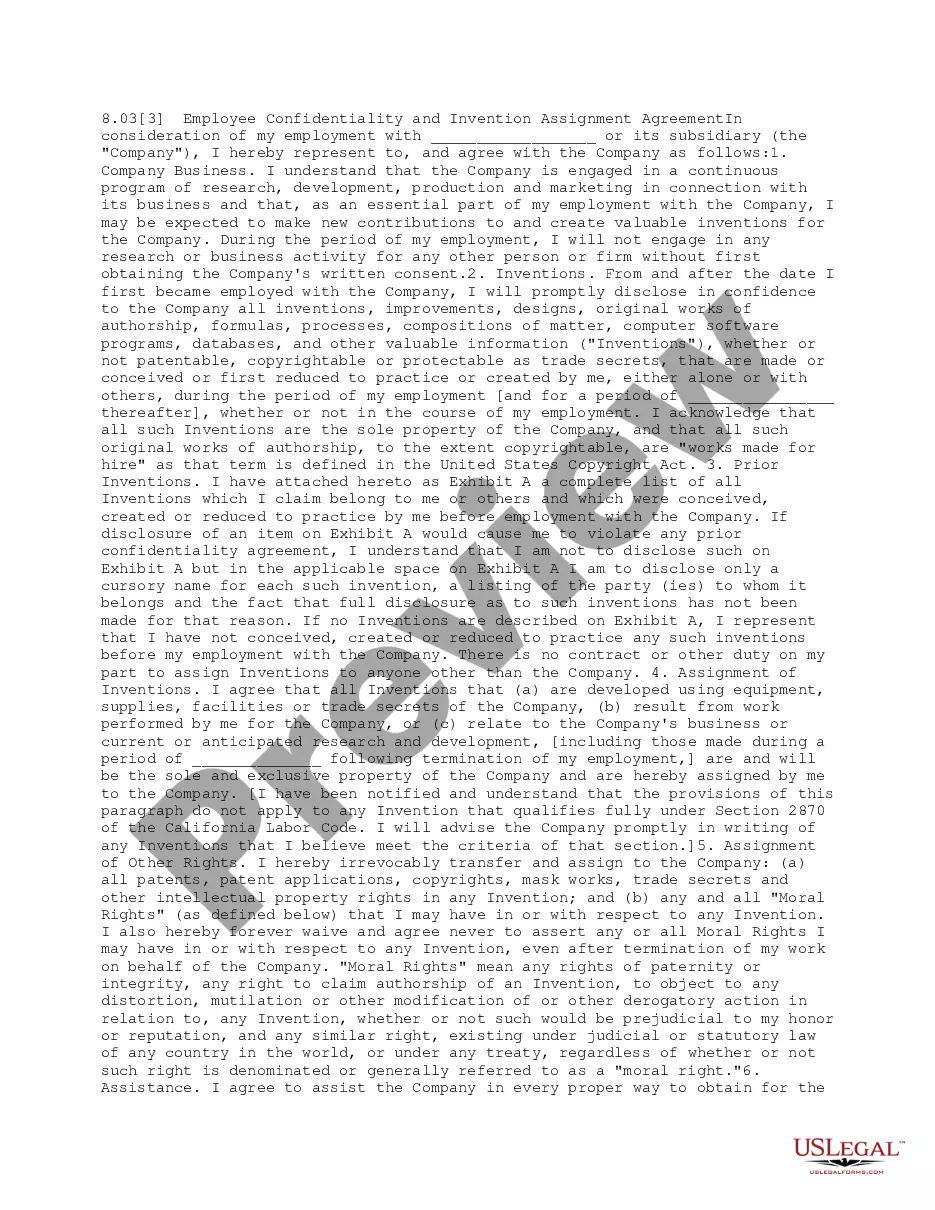
The Confidentiality Agreement with Regard to Employee Inventions is a legal document designed to establish a confidential relationship between employers and employees regarding proprietary information and inventions. This form facilitates the protection of sensitive information and intellectual property developed during employment, ensuring that any inventions or ideas produced by employees using the employer's resources are assigned to the employer. Unlike standard confidentiality agreements, this form specifically addresses inventions and inventions' ownership, making it crucial for businesses that rely on innovation.
What’s included in this form
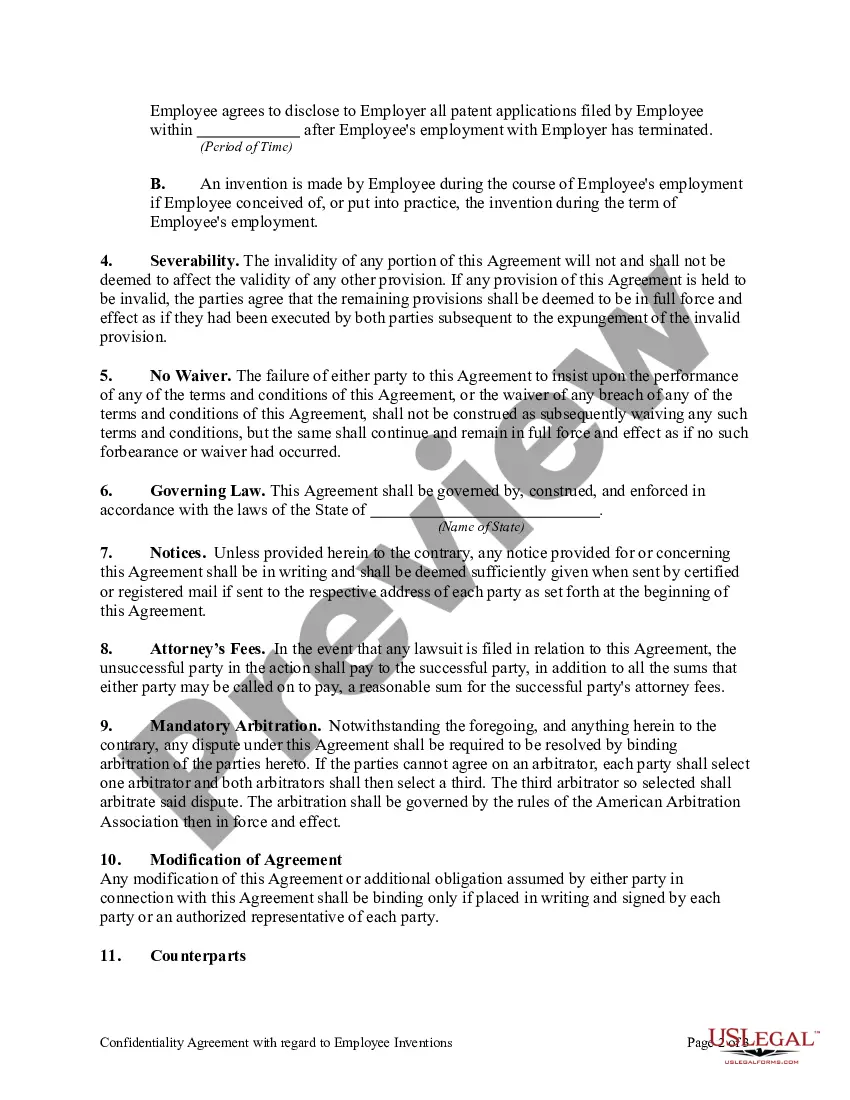
- Trade secrets clause: Outlines the obligation of employees to refrain from disclosing any confidential information.
- Assignment of rights: Clarifies that any inventions created during employment belong to the employer.
- Severability clause: Specifies that if any part of the agreement is invalid, the rest remains effective.
- No waiver clause: States that not enforcing a provision does not waive the right to enforce it later.
- Attorneys' fees: Covers the potential for the payment of legal fees in case of disputes.
When to use this form
This form should be used when hiring employees who will have access to trade secrets or when employees are expected to create intellectual property during their employment. It is particularly important for startups and technology companies, as it helps prevent the unauthorized use or disclosure of sensitive information, encourages innovation, and clarifies ownership of inventions that arise from employment activities.
Who can use this document
- Business owners looking to protect their intellectual property.
- Employers who want to mitigate risks related to trade secret disclosure.
- Companies in fields such as technology, research, and development.
- Employees creating new inventions or improvements as part of their job.
Completing this form step by step
- Identify the parties involved: Fill in the names and addresses of the employer and employee.
- Review the trade secrets section: Make sure it accurately reflects the information considered confidential by the employer.
- Specify the assignment of inventions: Ensure clarity on what constitutes an invention or product of work done during employment.
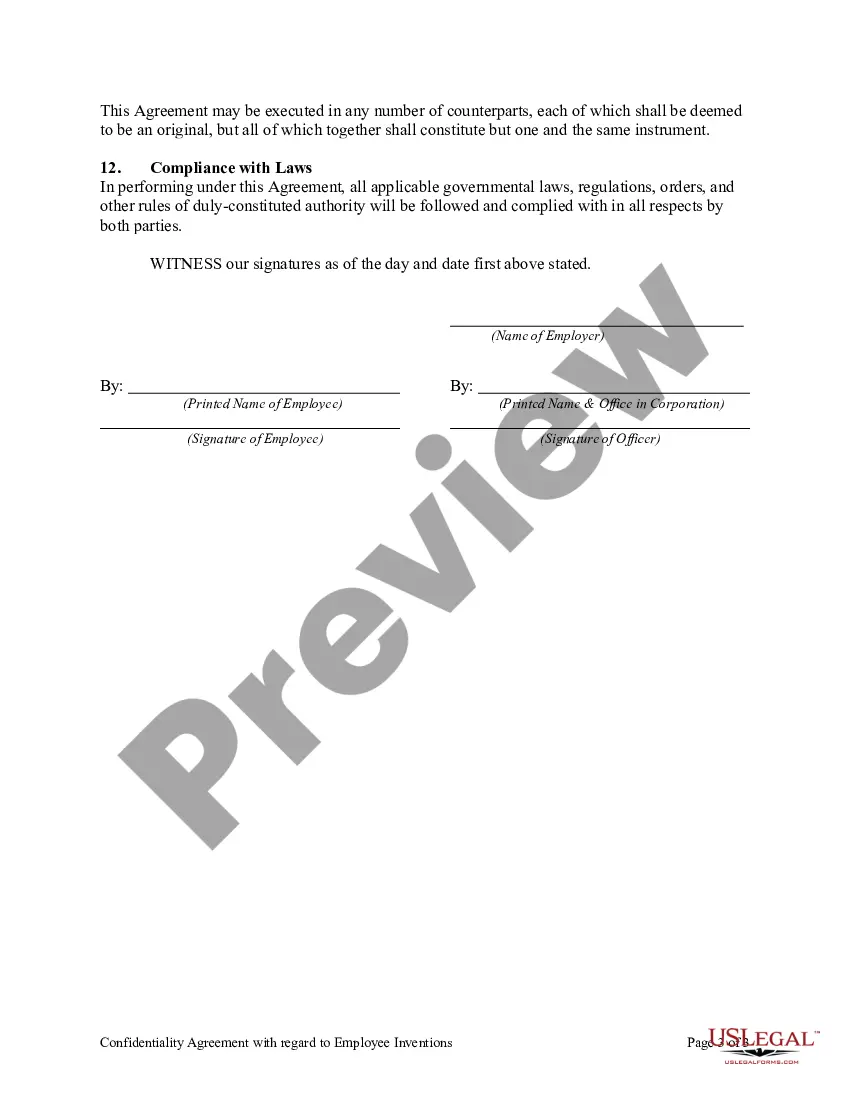
- Include necessary signatures: Both parties should sign and date the agreement to acknowledge its terms.
- Retain a copy: Ensure both parties keep a signed copy for their records.
Is notarization required?
This form does not typically require notarization unless specified by local law. It is advisable to check your jurisdiction's requirements to ensure validity.
Get your form ready online
Our built-in tools help you complete, sign, share, and store your documents in one place.
Make edits, fill in missing information, and update formatting in US Legal Forms—just like you would in MS Word.
Download a copy, print it, send it by email, or mail it via USPS—whatever works best for your next step.
Sign and collect signatures with our SignNow integration. Send to multiple recipients, set reminders, and more. Go Premium to unlock E-Sign.
If this form requires notarization, complete it online through a secure video call—no need to meet a notary in person or wait for an appointment.
We protect your documents and personal data by following strict security and privacy standards.

Make edits, fill in missing information, and update formatting in US Legal Forms—just like you would in MS Word.

Download a copy, print it, send it by email, or mail it via USPS—whatever works best for your next step.

Sign and collect signatures with our SignNow integration. Send to multiple recipients, set reminders, and more. Go Premium to unlock E-Sign.

If this form requires notarization, complete it online through a secure video call—no need to meet a notary in person or wait for an appointment.

We protect your documents and personal data by following strict security and privacy standards.
Avoid these common issues
- Forgetting to specify all inventions are assigned to the employer.
- Not updating the form for changes in employment status or role.
- Failing to have the agreement signed by both parties.
- Neglecting to review state-specific employment laws that may affect the agreement.
Benefits of using this form online
- Convenience of downloading and completing the form at your own pace.
- Editability allows for customization based on specific employer needs.
- Access to professionally drafted templates ensures legal compliance and reliability.
Legal use & context
- This agreement is enforceable in most jurisdictions, provided it meets local legal standards.
- Agreements should clearly outline what constitutes "confidential information" and "inventions" to avoid disputes.
- Careful drafting helps protect both the employer's proprietary interests and the employee's rights.
What to keep in mind
- The Confidentiality Agreement with Regard to Employee Inventions protects company trade secrets and intellectual property.
- It is essential for employers in industries that rely heavily on innovations and inventions.
- Proper execution includes clearly defining terms and obtaining signatures from both parties.
Looking for another form?

Form popularity
FAQ
Also known as Proprietary Information and Inventions Assignment Agreements (or PIIAAs), Confidential Information and Inventions Assignment Agreements ensure that intellectual property and other proprietary rights created by employees during the course of their employment are assigned to the employer.
An invention assignment agreement is a contract that gives the employer certain rights to inventions created or conceptualized by the employee during the employment relationship.
A confidentiality agreement is a written legal contract between an employer and an employee. The confidentiality agreement lays out binding terms and conditions that prohibit the employee from disclosing company confidential and proprietary information.
To prevent employees from revealing sensitive information that could jeopardize your business, you might have them sign an employee confidentiality agreement. Businesses use employee confidentiality agreements to protect their innovative ideas, effective processes, unique products, or customer information.
Set the date of the agreement. Describe the two parties, sometimes called the Disclosing Party and the Receiving Party.7feff Include names and identification, so there can be no misunderstanding about who signed the agreement.
While an employer has the right to demand its employees sign a NDA when those employees have access to valuable company data (e.g. product formulas, private customer lists, financial reports, etc.), the employer should not ask an employee to sign a confidentiality agreement if the purpose is to protect information that
An employment contract is an agreement that covers the working relationship of a company and an employee. 1feff It allows both parties to clearly understand their obligations and the terms of employment.Salary or wages: Contracts will itemize the salary, wage, or commission that has been agreed upon.
An employment agreement is a binding contract between an employer and that employer's employee. The contract covers specific aspects of employment. These include wages, health insurance benefits, pension benefits, and bonuses. The agreement provides grounds for termination.
Title the employment contract. Give your employment contract a title so the person who reviews or signs the document understands what it is. Identify the parties. List the term and conditions. Outline the job responsibilities. Include compensation details. Use specific contract terms. Consult with an employment lawyer.