New Mexico Writ of Garnishment
About this form
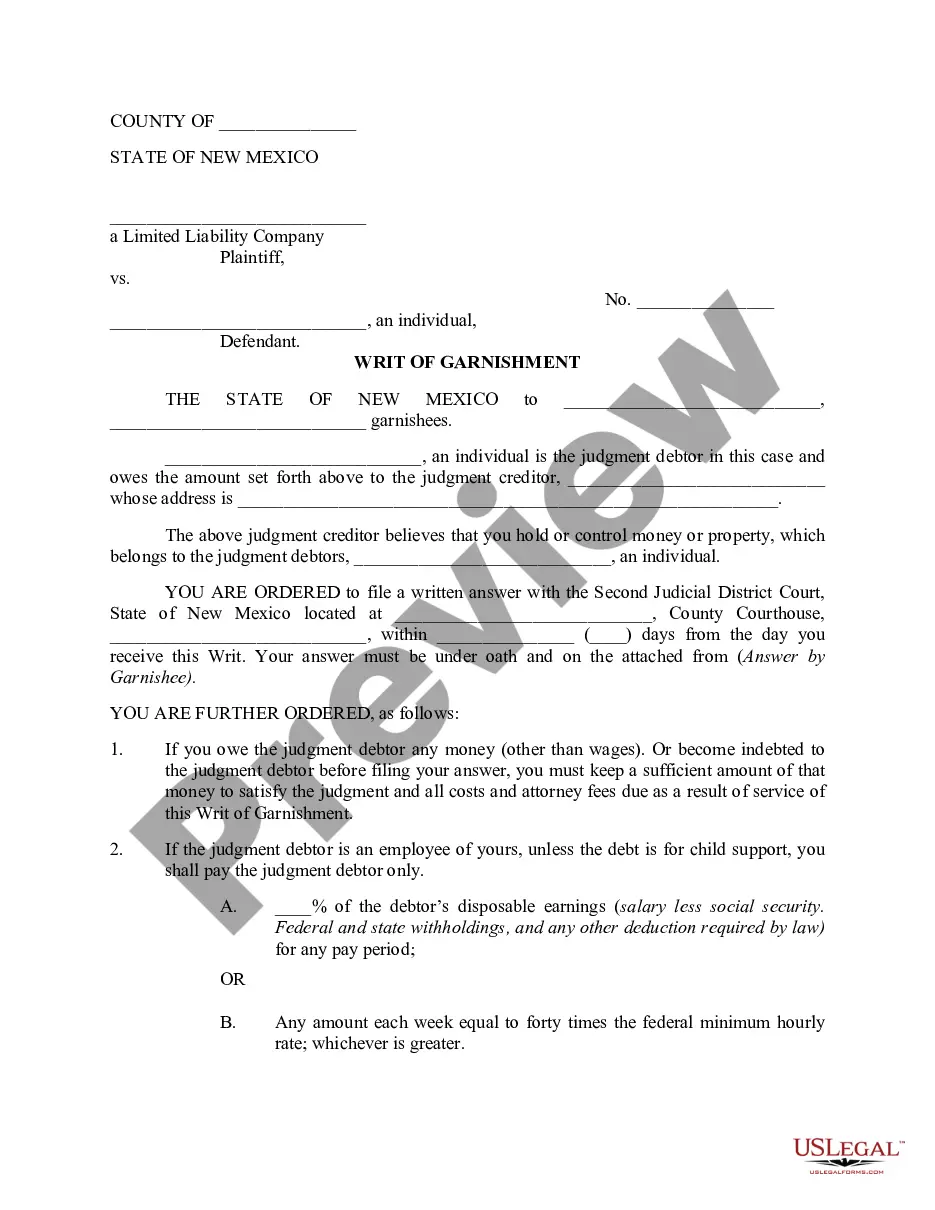
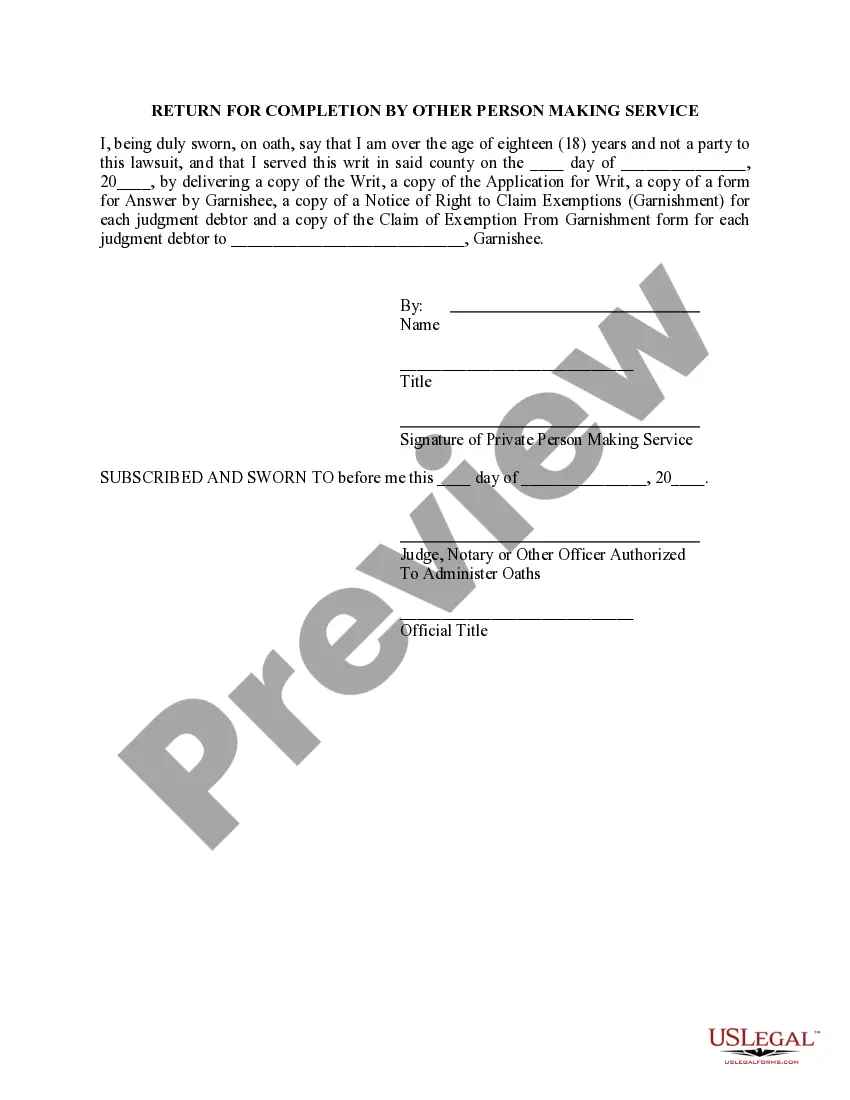
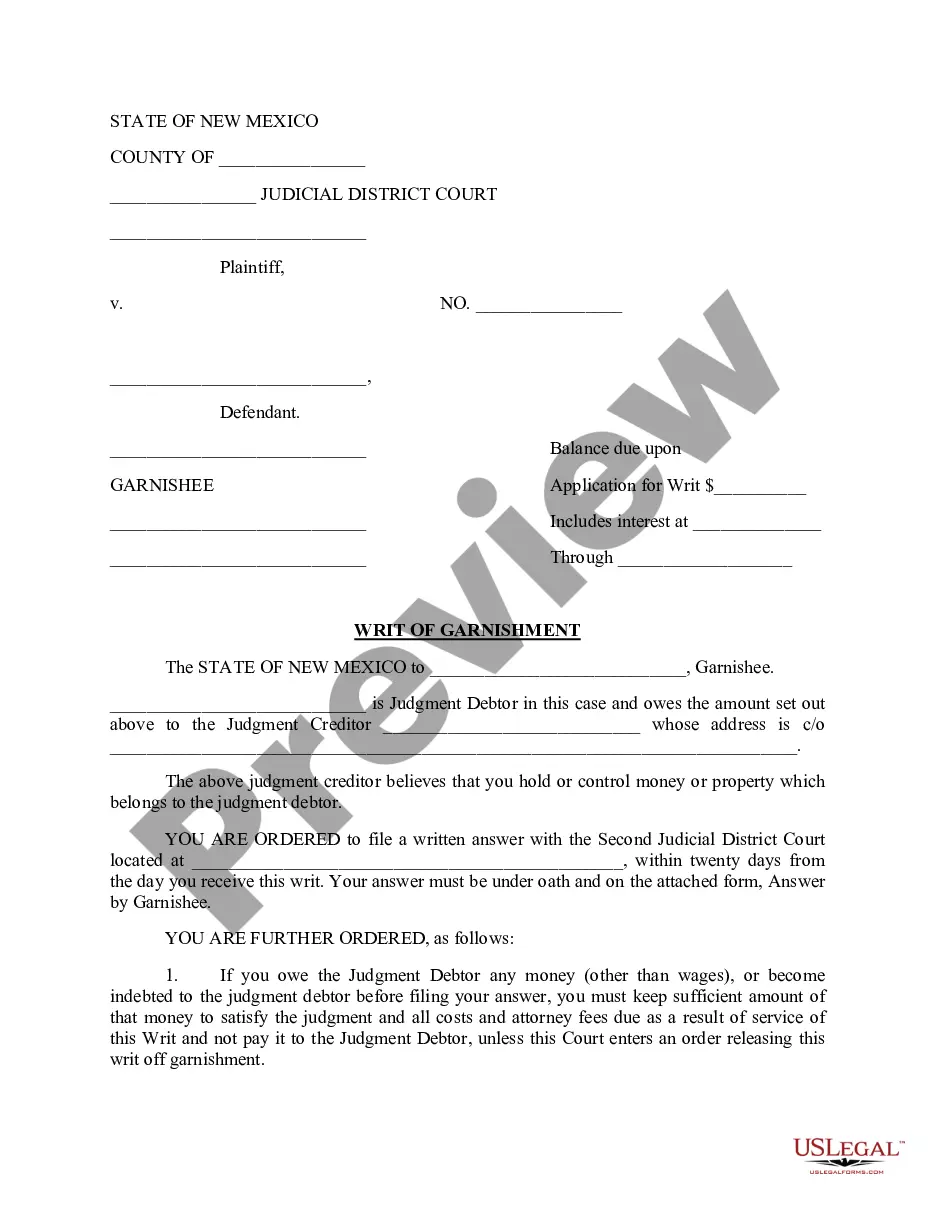
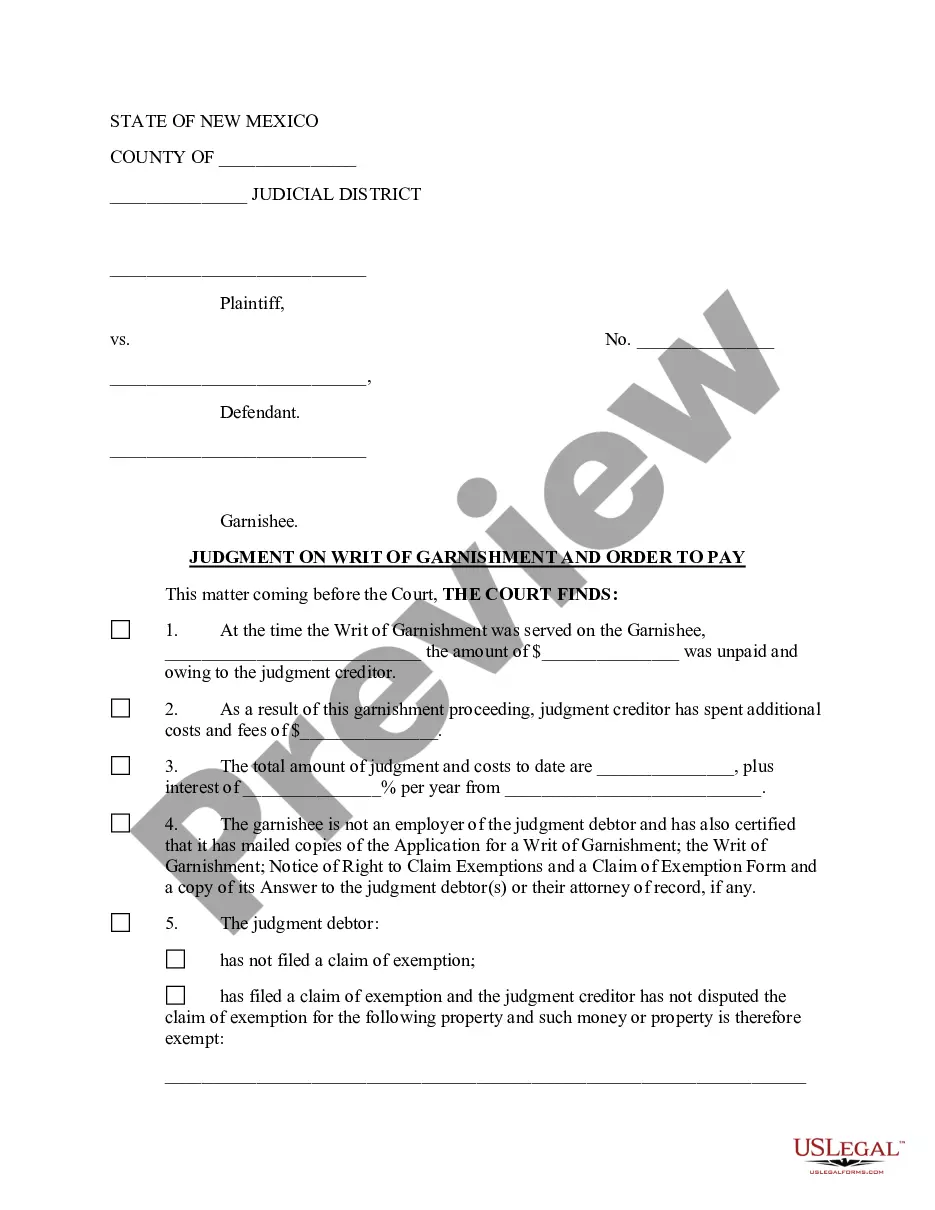
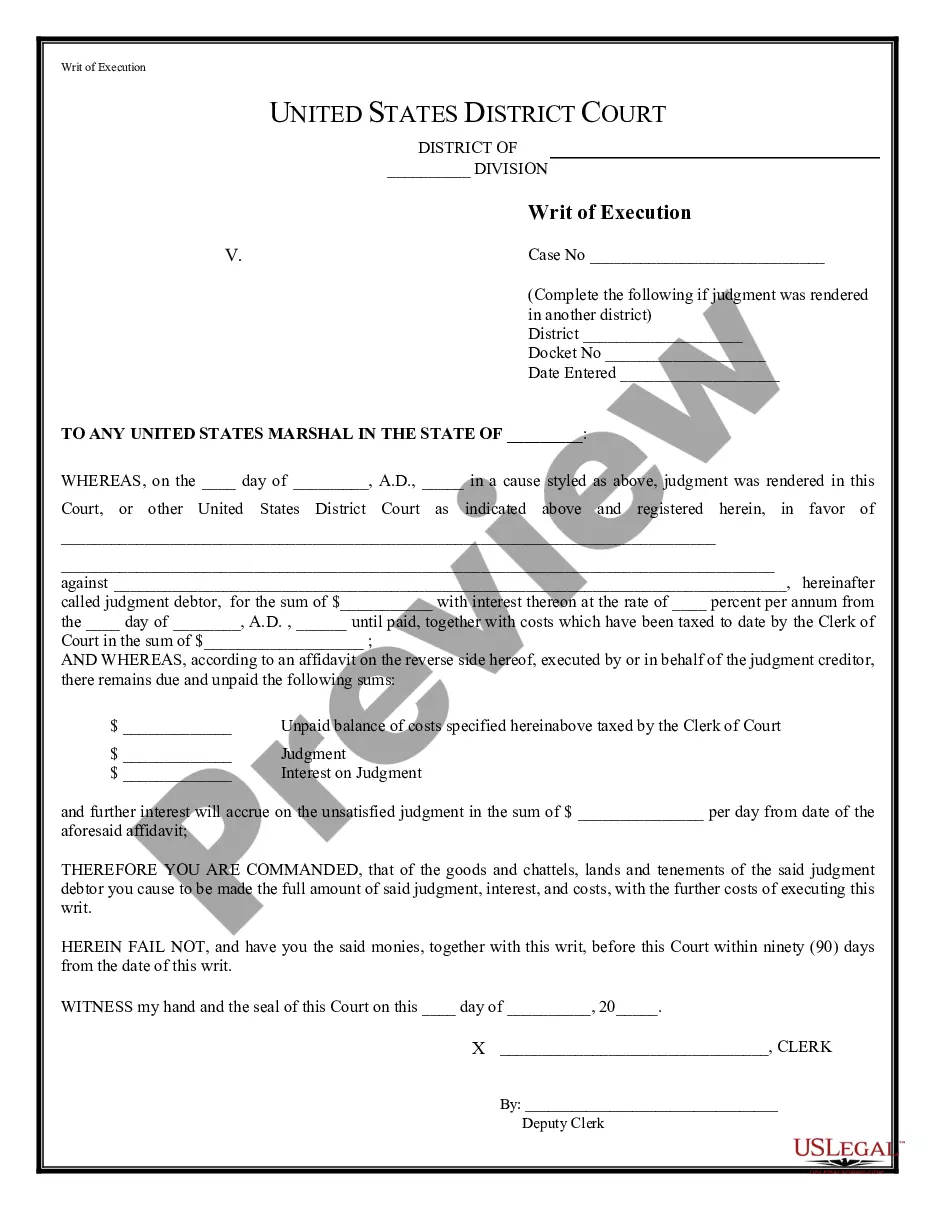
A writ of garnishment is a legal document that allows a creditor to collect money owed to them by taking funds directly from the debtor's wages or bank accounts. This form specifically orders the garnishee, typically an employer or financial institution, to withhold or turn over the debtor's assets to satisfy a court judgment. Unlike other collection processes, a writ of garnishment provides a direct means for creditors to access funds owed to them, offering a more efficient way to recover debts.
What’s included in this form
- Identification of the court case and parties involved.
- Details regarding the judgment debtor and the amount owed.
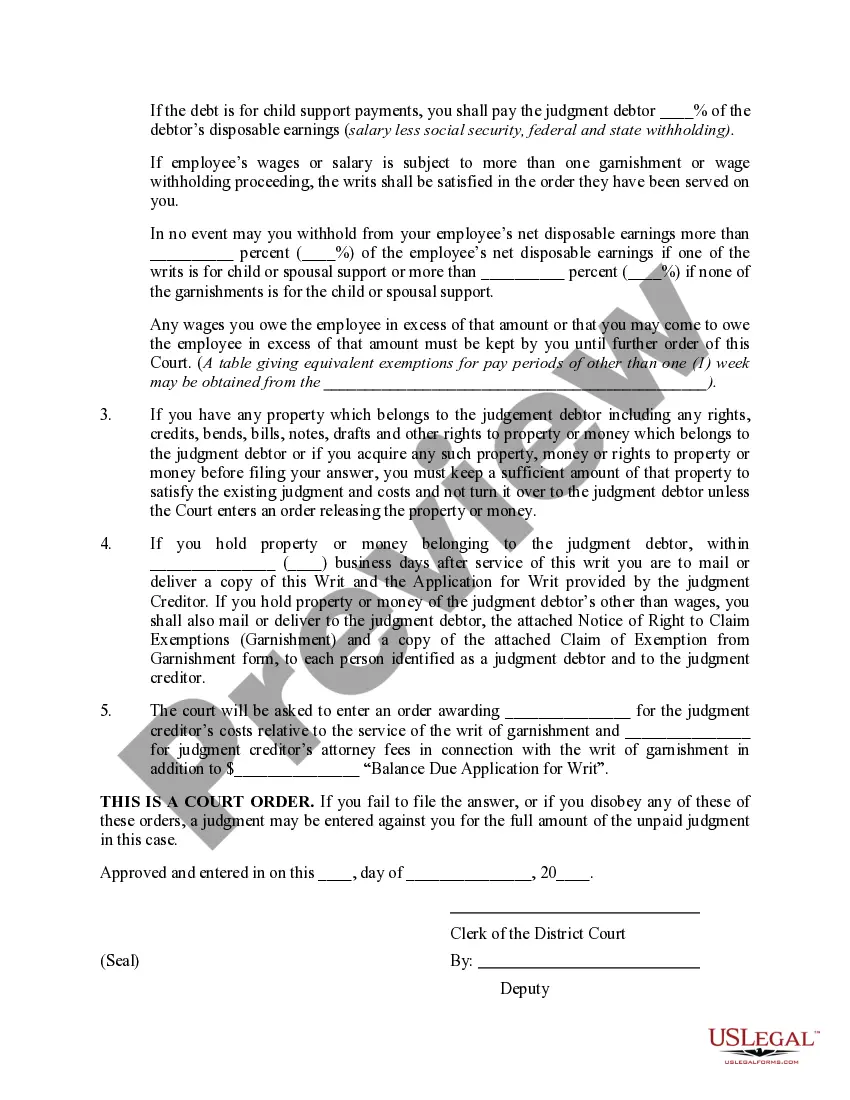
- Instructions for the garnishee on how to respond to the writ.
- Conditions under which the garnishee must withhold funds from the debtorâs wages.
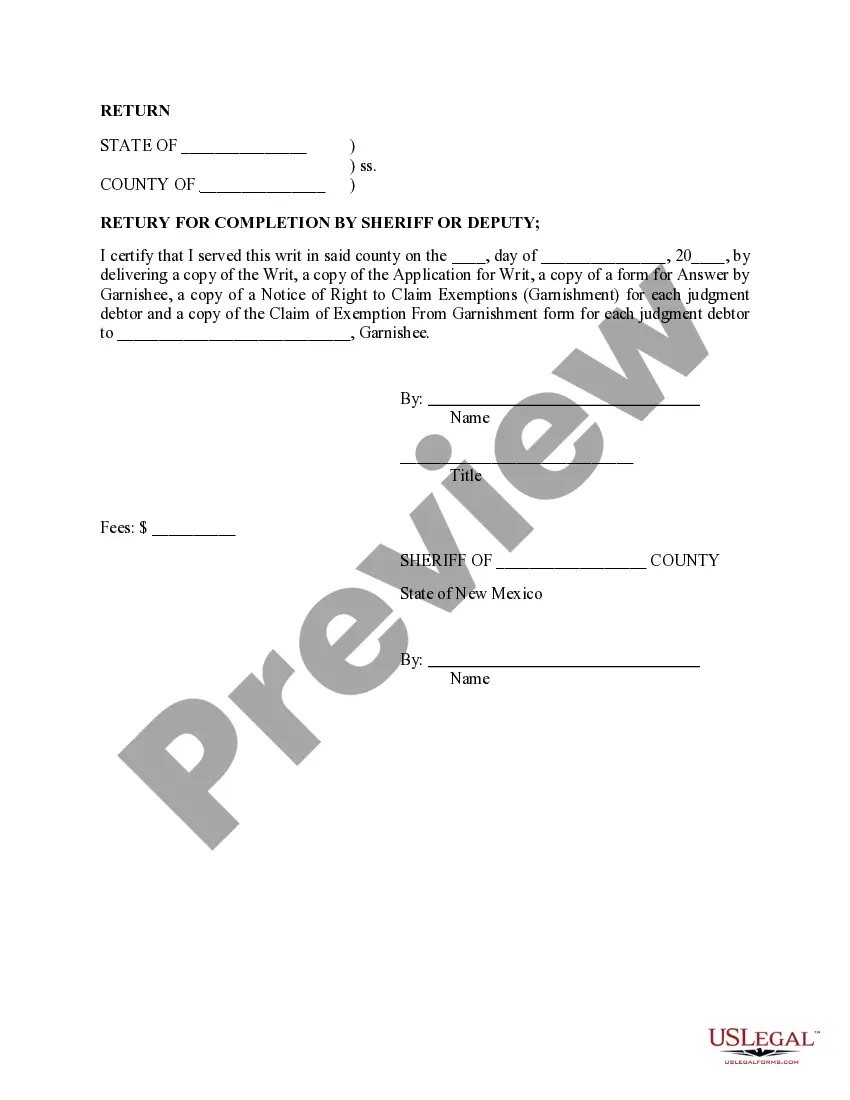
- Procedures for notifying the debtor about the garnishment.
- Consequences of failing to comply with the writ.
Common use cases
This form is used when a creditor has obtained a court judgment against a debtor but has been unable to collect the owed amount directly. It should be employed when the creditor believes that the debtor has a consistent income or other assets held by a third party, such as an employer or financial institution. The writ of garnishment allows the creditor to legally seize a portion of the debtorâs earnings or assets until the judgment is fully satisfied.
Who needs this form
- Creditors who have obtained a judgment in court and need to collect the debt.
- Employers who have been notified that they owe money to an employee as part of a court ruling.
- Financial institutions that hold funds belonging to a judgment debtor.
How to prepare this document
- Identify all parties involved in the case, including the plaintiff and defendant.
- Clearly state the amount owed by the judgment debtor to the judgment creditor.
- Provide details about the garnishee, including their name and address.
- Specify the amount of money or percentage of wages to be withheld from the debtor's earnings.
- Ensure all legal notices are properly delivered to both the garnishee and the debtor.
Is notarization required?
This form does not typically require notarization unless specified by local law. It's advisable to check local regulations regarding the need for notarization to ensure the writ is valid in court.
Get your form ready online
Our built-in tools help you complete, sign, share, and store your documents in one place.
Make edits, fill in missing information, and update formatting in US Legal Forms—just like you would in MS Word.
Download a copy, print it, send it by email, or mail it via USPS—whatever works best for your next step.
Sign and collect signatures with our SignNow integration. Send to multiple recipients, set reminders, and more. Go Premium to unlock E-Sign.
If this form requires notarization, complete it online through a secure video call—no need to meet a notary in person or wait for an appointment.
We protect your documents and personal data by following strict security and privacy standards.

Make edits, fill in missing information, and update formatting in US Legal Forms—just like you would in MS Word.

Download a copy, print it, send it by email, or mail it via USPS—whatever works best for your next step.

Sign and collect signatures with our SignNow integration. Send to multiple recipients, set reminders, and more. Go Premium to unlock E-Sign.

If this form requires notarization, complete it online through a secure video call—no need to meet a notary in person or wait for an appointment.

We protect your documents and personal data by following strict security and privacy standards.
Common mistakes to avoid
- Failing to include all necessary party information and case numbers.
- Neglecting to specify the correct amount to be garnished.
- Not delivering the writ and notices to the garnishee properly.
- Missing deadlines for filing or responses from the garnishee.
Advantages of online completion
- Convenient access to legal forms from anywhere with an internet connection.
- Easily editable templates allow for quick customization.
- Access to forms drafted by licensed attorneys, ensuring legal compliance.
- Secure storage and download options for managing legal documents.
Looking for another form?
Form popularity
FAQ
In Alberta, for instance, you keep the first $800 of your monthly net income, then creditors can garnish 50% of your monthly net income between $800 and $2400, and 100% of any net income above $2400. Then these exemption limits are increased by $200 for each dependent you support.
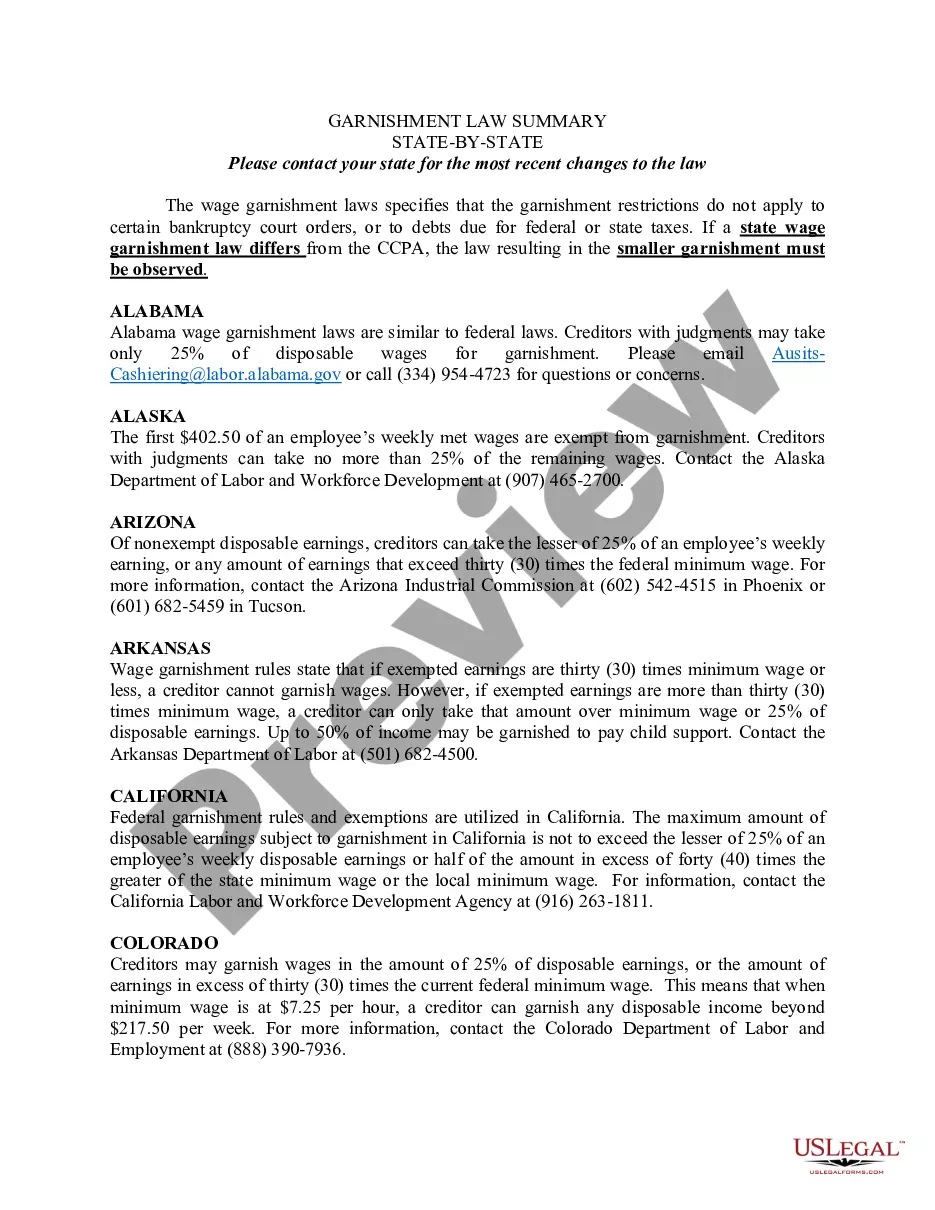
What you can do about wage garnishment.You have to be legally notified of the garnishment. You can file a dispute if the notice has inaccurate information or you believe you don't owe the debt. Some forms of income, such as Social Security and veterans benefits, are exempt from garnishment as income.
If you are served with a garnishment summons, do not ignore these documents because they do not directly involve a debt that you owe. Instead, you should immediately freeze any payments to the debtor, retain the necessary property, and provide the required written disclosure.
It means that the court order to your employer to garnish your wages is dismissed. However, if you still owe money to the creditor, the creditor still can pursue you through other channels including if you start a new job elsewhere.
Respond to the Creditor's Demand Letter. Seek State-Specific Remedies. Get Debt Counseling. Object to the Garnishment. Attend the Objection Hearing (and Negotiate if Necessary) Challenge the Underlying Judgment. Continue Negotiating.
It releases your garnishment! When a creditor sues you, they eventually get a judgment in court. With this judgment, they can send a letter to your employer so that they can garnish your wages.A release of garnishment would stop any future garnishments.
The Order dissolves the existing writ of garnishment. It means that whatever was being garnished, wages or bank accounts, are no longer subject to the writ of garnishment.
Once a garnishment is approved in court, the creditor will notify you before contacting your bank to begin the actual garnishment. However, the bank itself has no legal obligation to inform you when money is withdrawn due to an account garnishment.