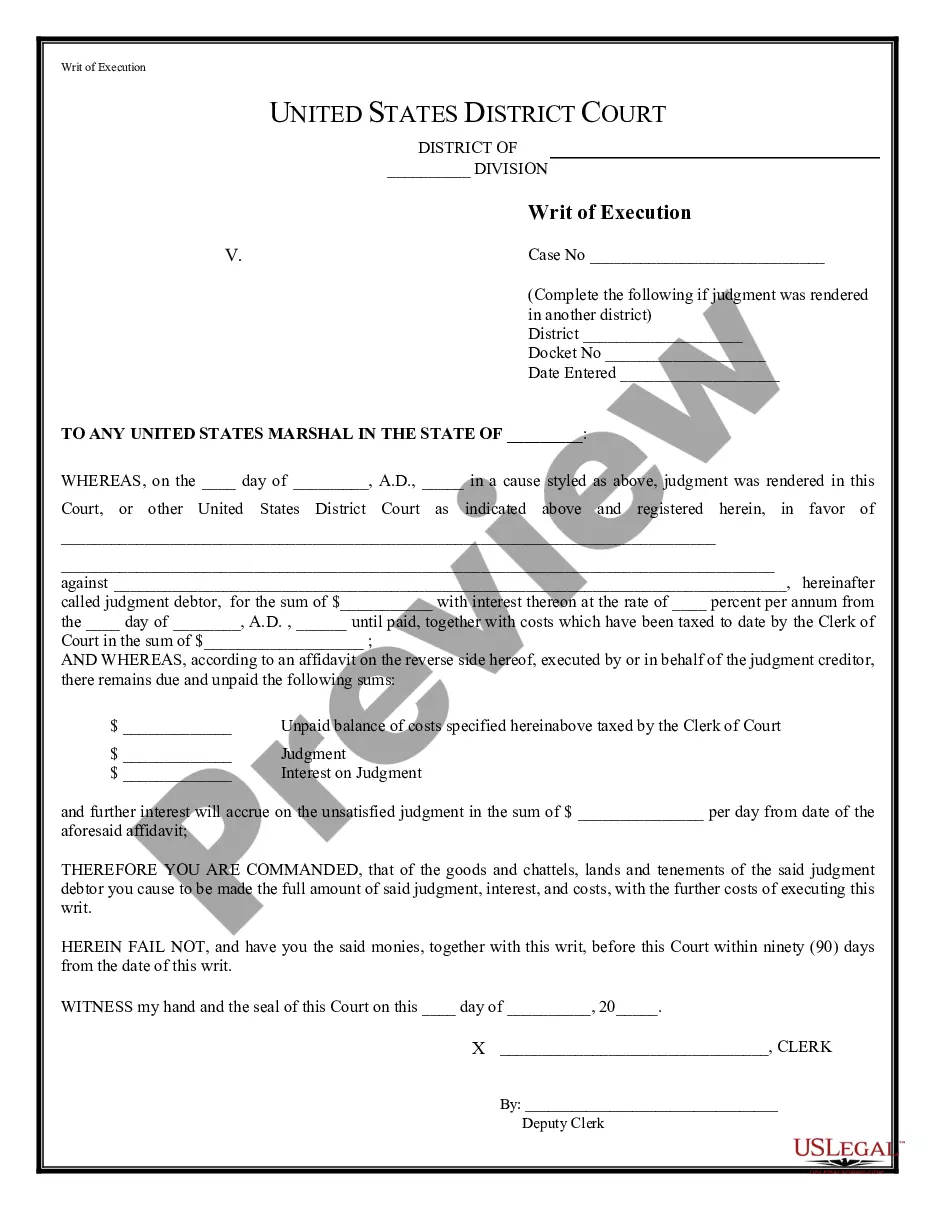
Writ of Execution
Understanding this form
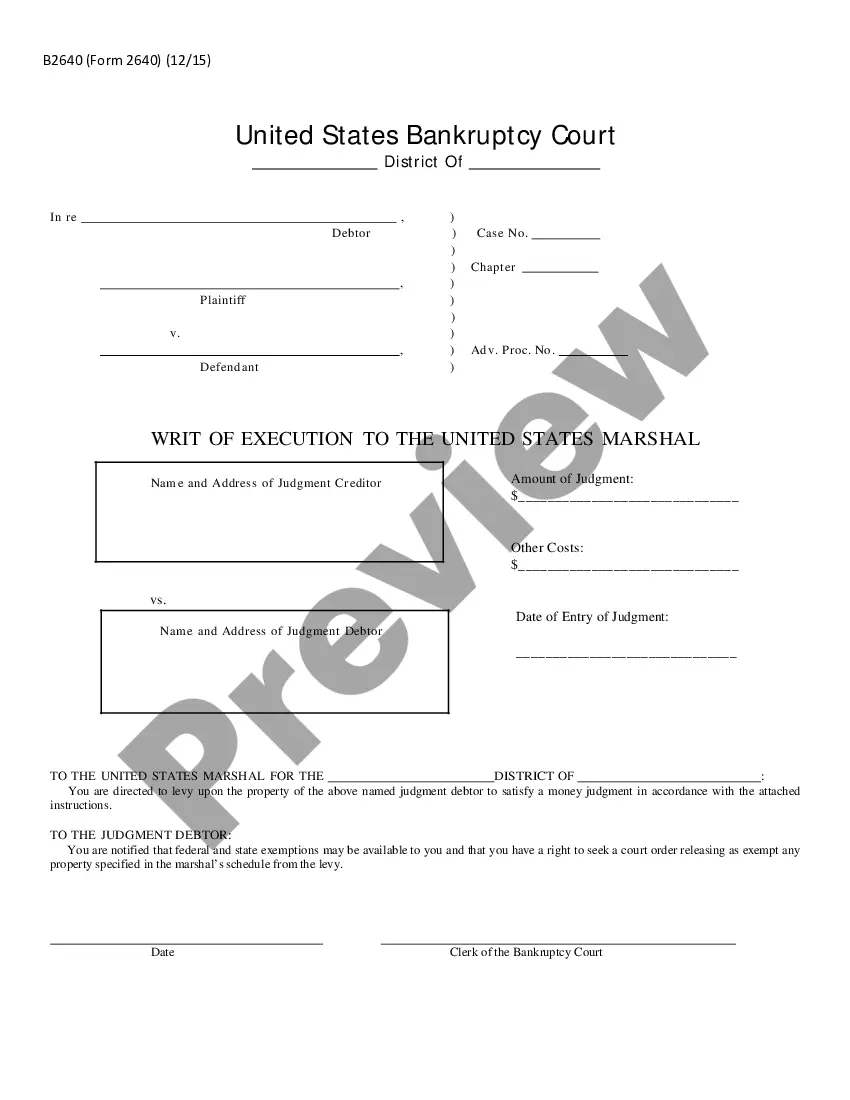
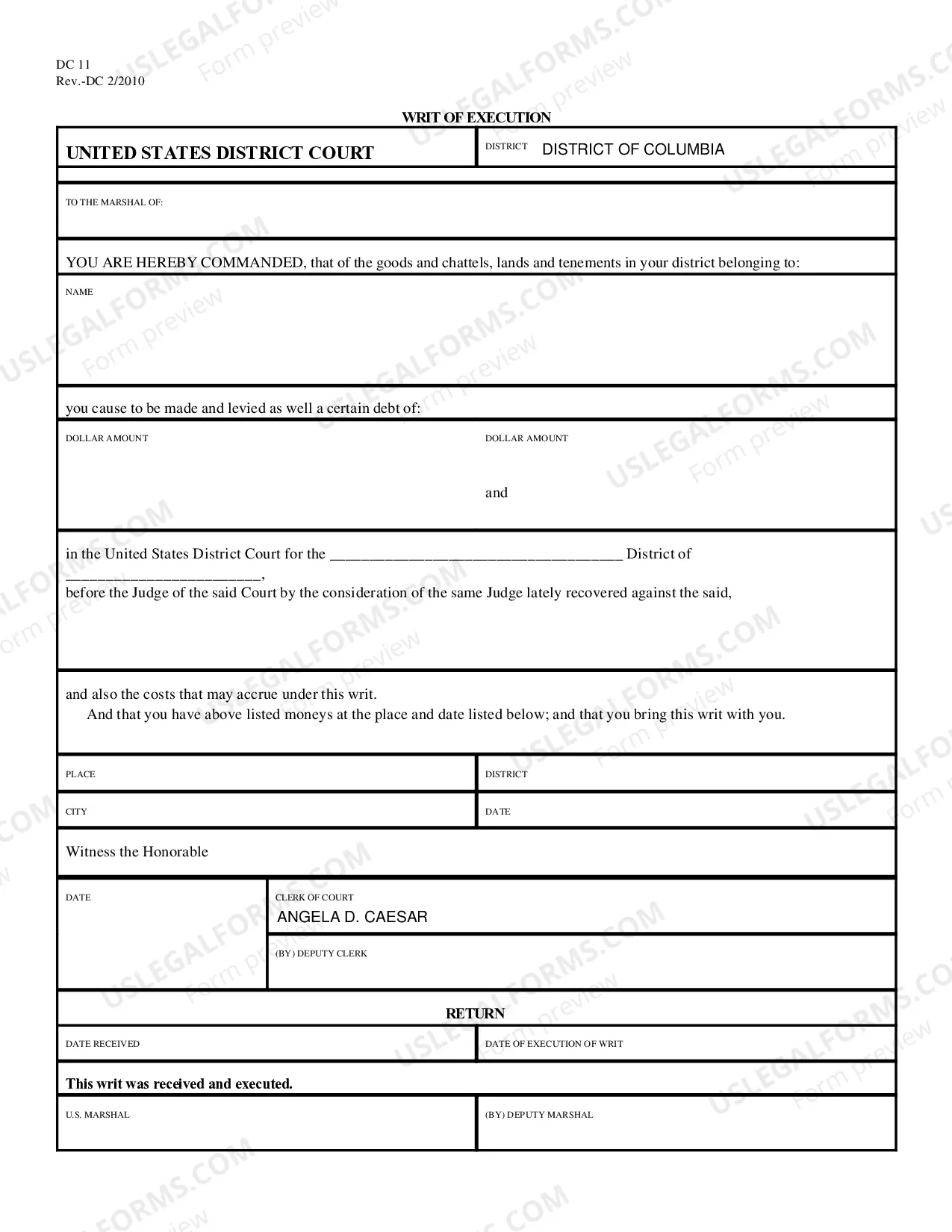
A writ of execution is a legal document that authorizes the enforcement of a court judgment. This form is specifically used in federal court proceedings to facilitate the collection of a monetary judgment awarded to a creditor. Unlike other legal documents, the writ of execution directs a U.S. Marshal to seize the property or assets of the judgment debtor to satisfy the outstanding judgment. Understanding this form is crucial for creditors seeking to enforce their rights after winning a legal case.
What’s included in this form
- Case number and district for reference.
- Names of the judgment creditor and the judgment debtor.
- Details of the judgment amount, including interest and costs.
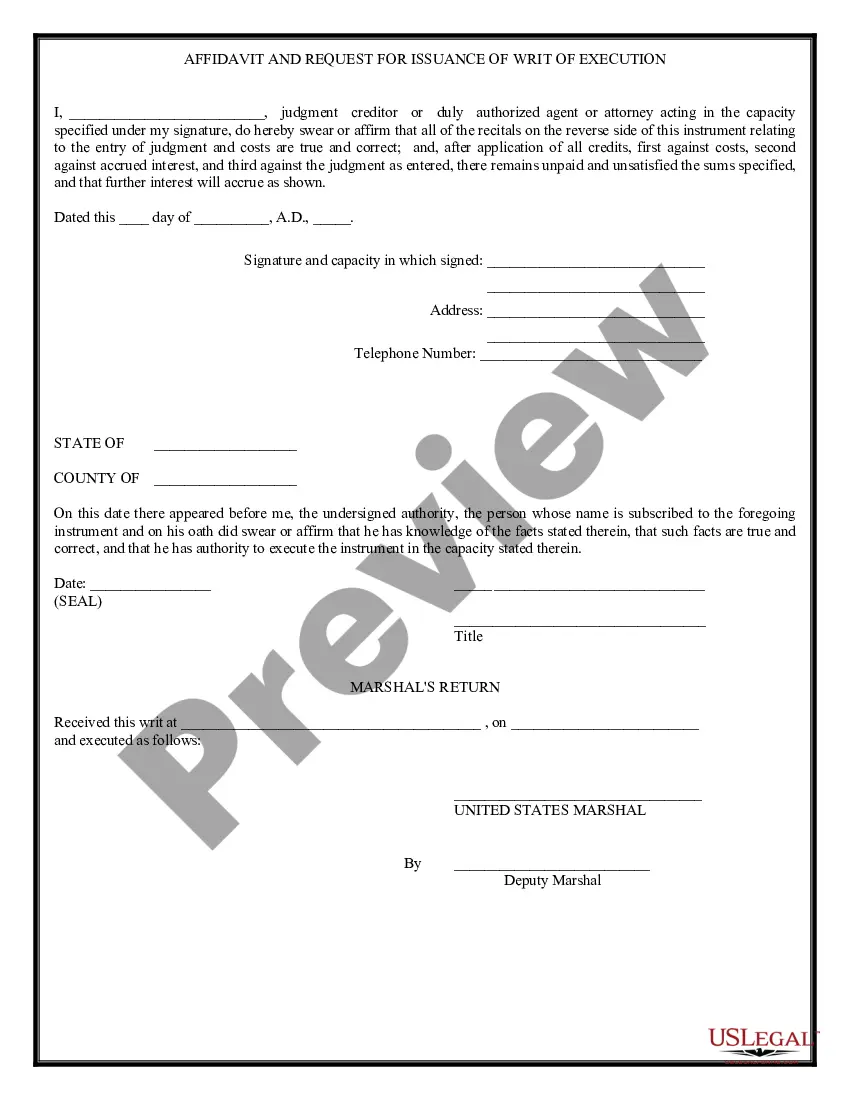
- Affidavit and request for the issuance of the writ by the judgment creditor.
- Marshals return section for execution confirmation.
When to use this form
This form should be used when a court has granted a monetary judgment in favor of a creditor, and the creditor is seeking to enforce that judgment through property seizure. It is necessary when previous attempts to collect the debt have failed, as it empowers law enforcement to intervene and ensure compliance with the court's decision.
Who should use this form
- Creditors who have obtained a monetary judgment in federal court.
- Attorneys representing creditors in enforcement actions.
- Duly authorized agents of creditors seeking to collect payments.
Steps to complete this form
- Enter the case number and district where the judgment was rendered.
- Fill in the names of both the judgment creditor and judgment debtor.
- Specify the total judgment amount along with applicable interest and costs.
- Complete the affidavit section, confirming the amounts due and your authority to file this action.
- Have the clerk of the court sign and seal the document to validate its issuance.
Is notarization required?
This document requires notarization to meet legal standards. US Legal Forms provides secure online notarization powered by Notarize, allowing you to complete the process through a verified video call, available 24/7.
Get your form ready online
Our built-in tools help you complete, sign, share, and store your documents in one place.
Make edits, fill in missing information, and update formatting in US Legal Forms—just like you would in MS Word.
Download a copy, print it, send it by email, or mail it via USPS—whatever works best for your next step.
Sign and collect signatures with our SignNow integration. Send to multiple recipients, set reminders, and more. Go Premium to unlock E-Sign.
If this form requires notarization, complete it online through a secure video call—no need to meet a notary in person or wait for an appointment.
We protect your documents and personal data by following strict security and privacy standards.

Make edits, fill in missing information, and update formatting in US Legal Forms—just like you would in MS Word.

Download a copy, print it, send it by email, or mail it via USPS—whatever works best for your next step.

Sign and collect signatures with our SignNow integration. Send to multiple recipients, set reminders, and more. Go Premium to unlock E-Sign.

If this form requires notarization, complete it online through a secure video call—no need to meet a notary in person or wait for an appointment.

We protect your documents and personal data by following strict security and privacy standards.
Mistakes to watch out for
- Failing to accurately complete the case number and district information.
- Not including all owed amounts, such as interest and costs.
- Omitting the affidavit or not having it properly witnessed or notarized when necessary.
Why use this form online
- Convenience of instant access and immediate downloads.
- Editable forms that can be tailored to individual cases.
- Secure and reliable format with guidance from licensed attorneys.
What to keep in mind
- The Writ of Execution empowers the marshal to enforce court judgments.
- Proper completion of the form is essential to avoid delays in enforcement.
- It is crucial for creditors seeking to collect owed amounts after a judgment is rendered.
Looking for another form?


Form popularity
FAQ
A Writ of Execution is a federal court document that authorizes the enforcement of a monetary judgment. This standard form is used in federal district court to help collect the judgment by directing a U.S. Marshal to seize the judgment debtor’s property or assets. Use it after a monetary judgment is entered when collection must be enforced.
This form lists the case number and district for reference, identifies the judgment creditor and judgment debtor, states the judgment amount (including interest and costs), includes an affidavit and request for the issuance of the writ by the judgment creditor, and provides a marshal’s return section for execution confirmation.
This form is intended for creditors who have obtained a monetary judgment in federal court, as well as attorneys representing those creditors and duly authorized agents acting on their behalf to collect payments. It supports initiating enforcement through federal channels by documenting the parties and the judgment.
You should use this form after a court has granted a monetary judgment in favor of a creditor and enforcement through property seizure is needed. It is intended when previous attempts to collect have failed, because the writ empowers law enforcement to enforce the court’s decision.
The marshal’s return section provides a designated area to record the actions taken by the U.S. Marshal to execute the writ and to confirm whether the property seizure or other enforcement steps occurred. This section documents completion and helps close the enforcement process.
This form is filed in federal district court and directs a U.S. Marshal to enforce the judgment, reflecting federal enforcement procedures and a marshal’s return section. State writs typically rely on different processes and enforcement channels, without the federal marshal reference or federal court structure.