New Mexico Judgment on Writ of Garnishment and Order to Pay
What this document covers
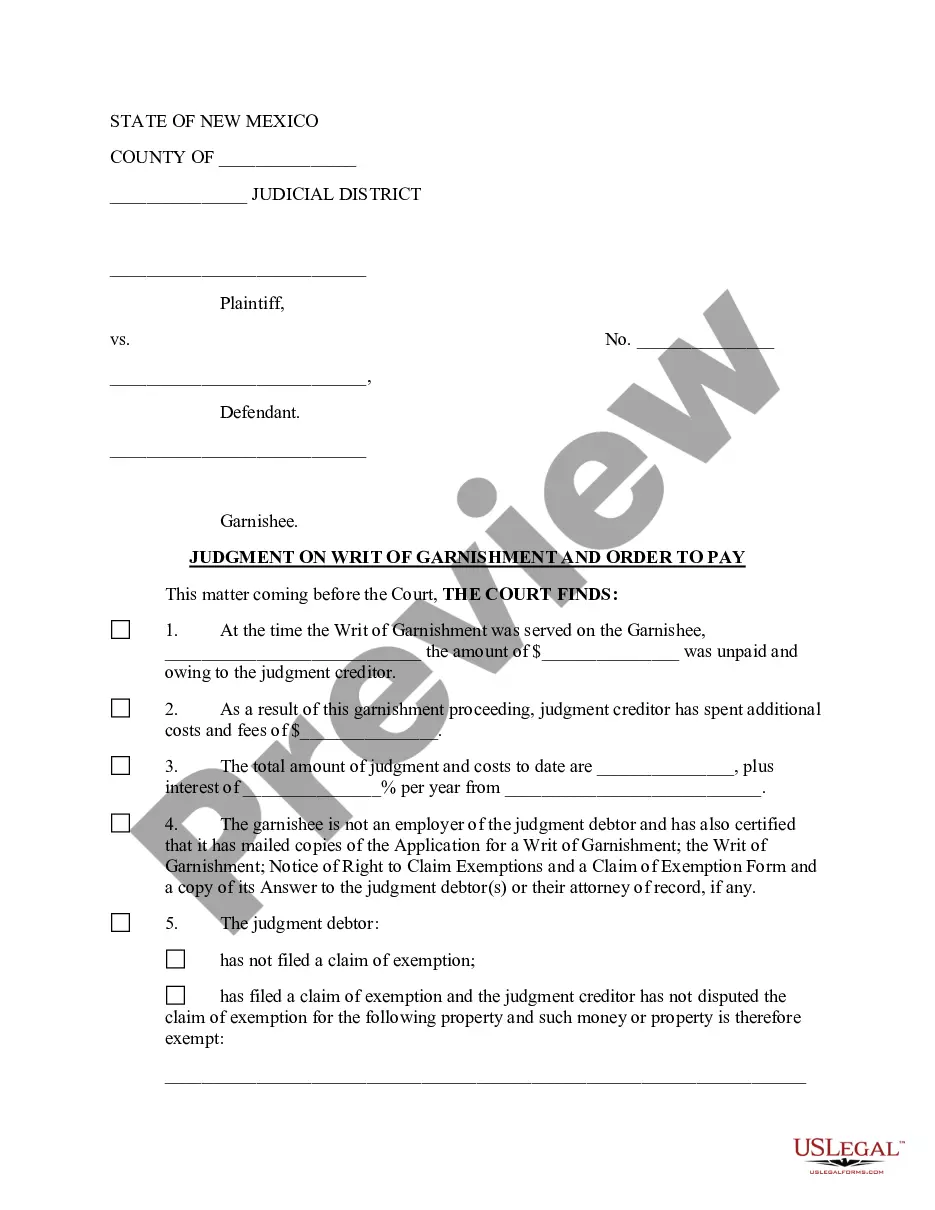
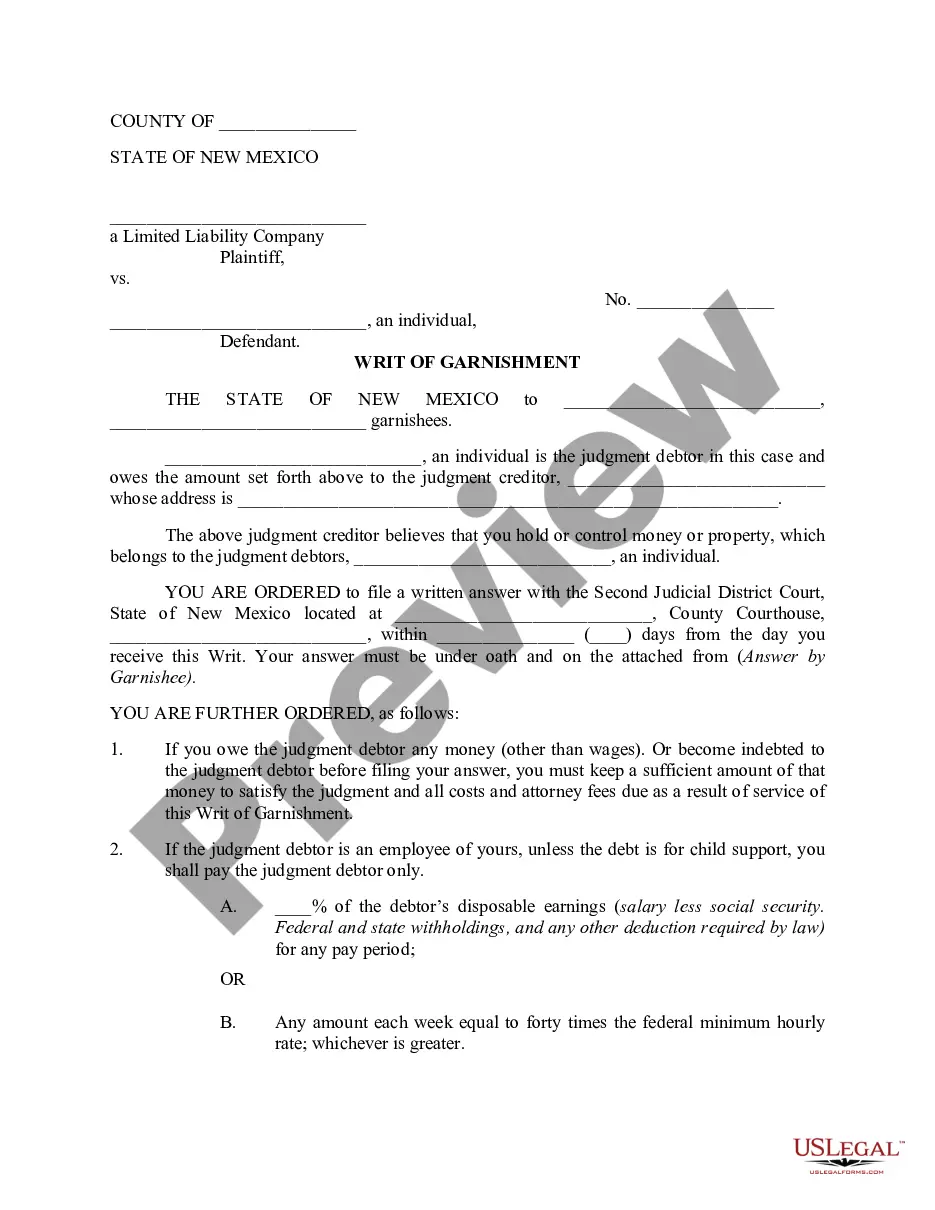
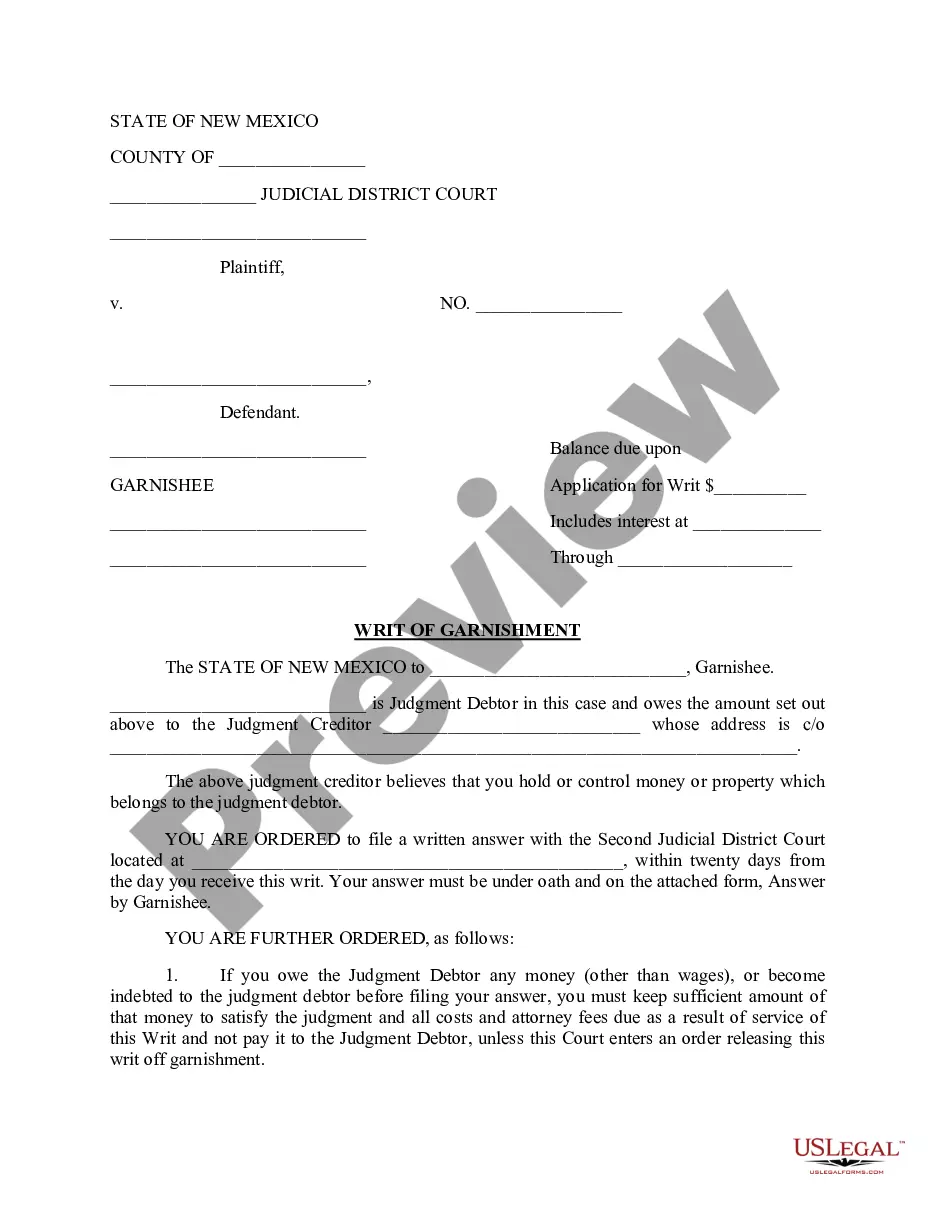
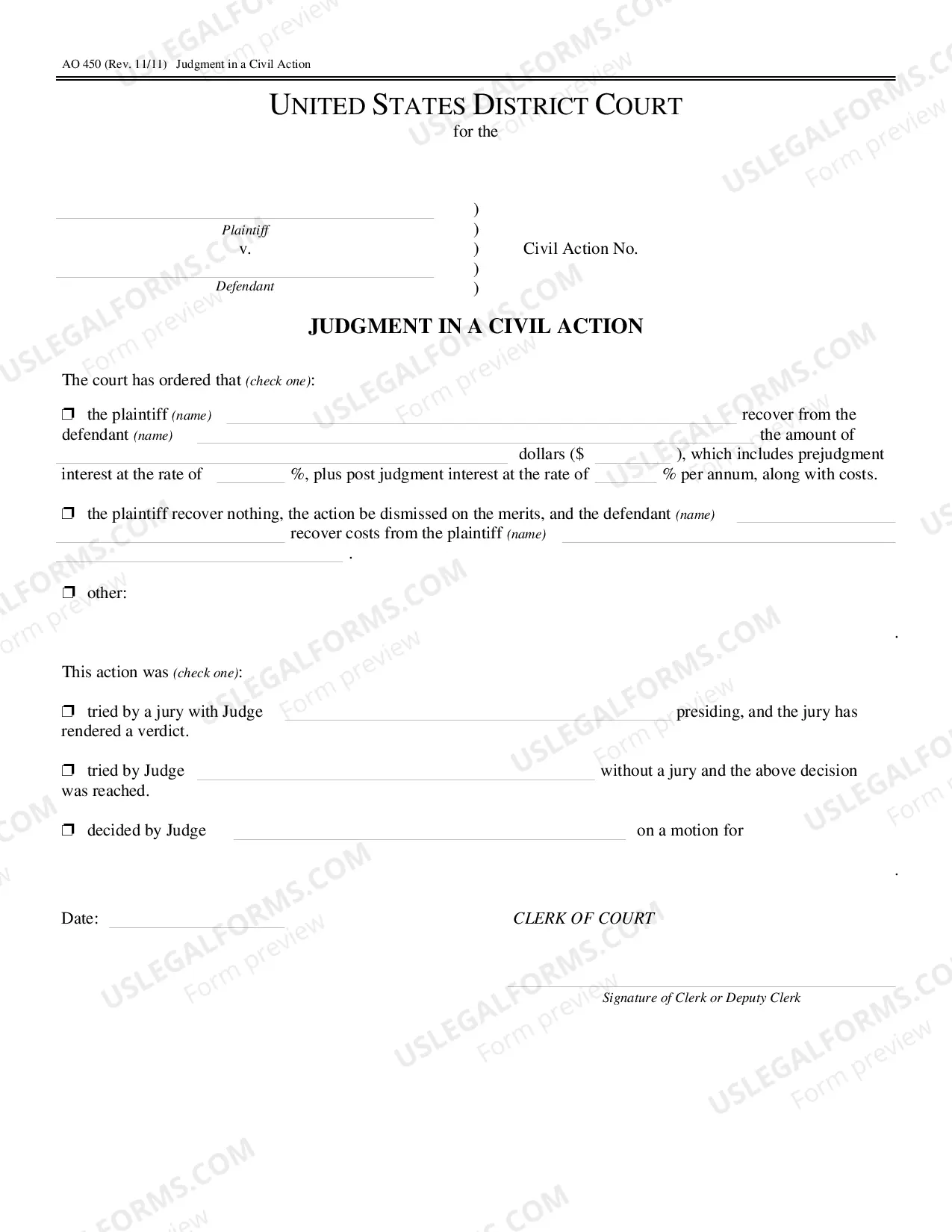
The Judgment on Writ of Garnishment and Order to Pay is a legal document issued by a court to formalize the process of garnishment, allowing a creditor to collect outstanding debts from a debtor's wages or other sources. This form is distinct from similar documents as it not only orders the garnishee to pay a specified amount but also includes findings of fact regarding the debtor's financial situation. It is a crucial tool for creditors seeking to enforce a judgment legally.
Key components of this form
- Case information: Includes names of the plaintiff, defendant, and garnishee.
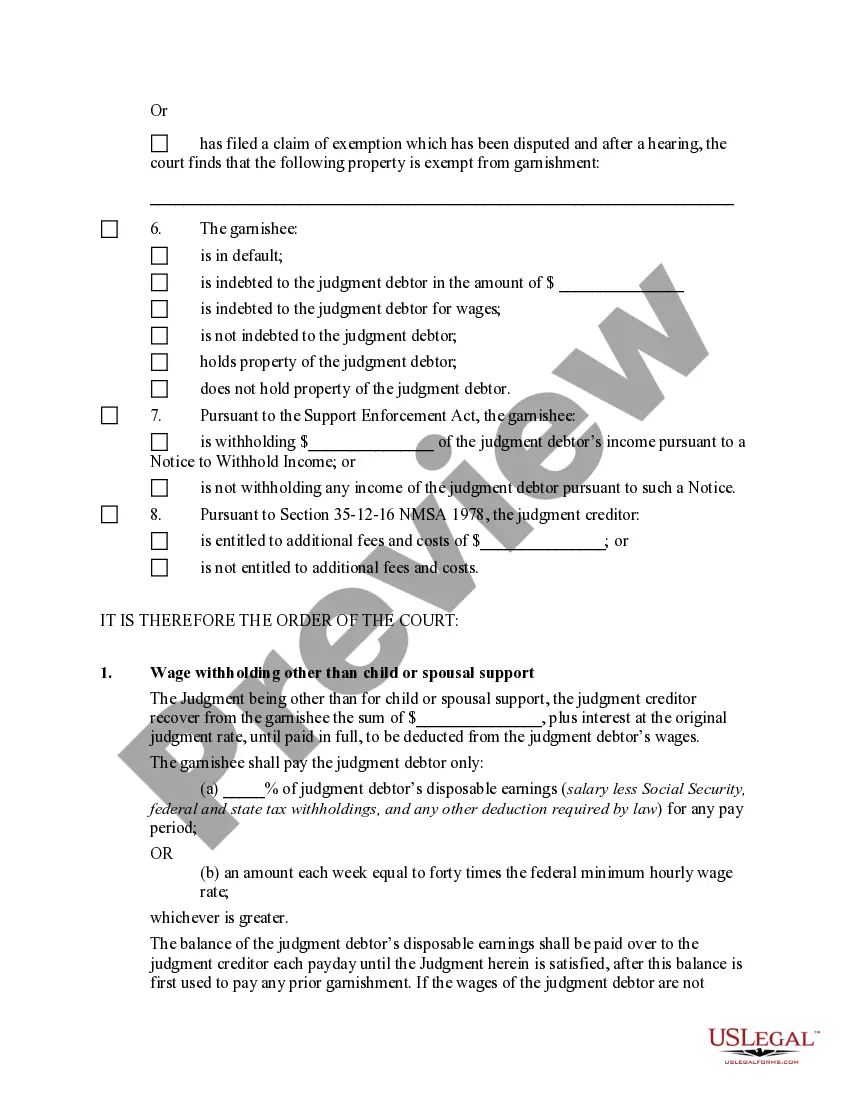
- Court findings: Details about unpaid debts, costs, and exemptions claimed by the debtor.
- Garnishee's obligations: Specifies the amount to be withheld and the terms of payment to the creditor.
- Exemption claims: Indicates whether the debtor has filed a claim for exemptions from garnishment.
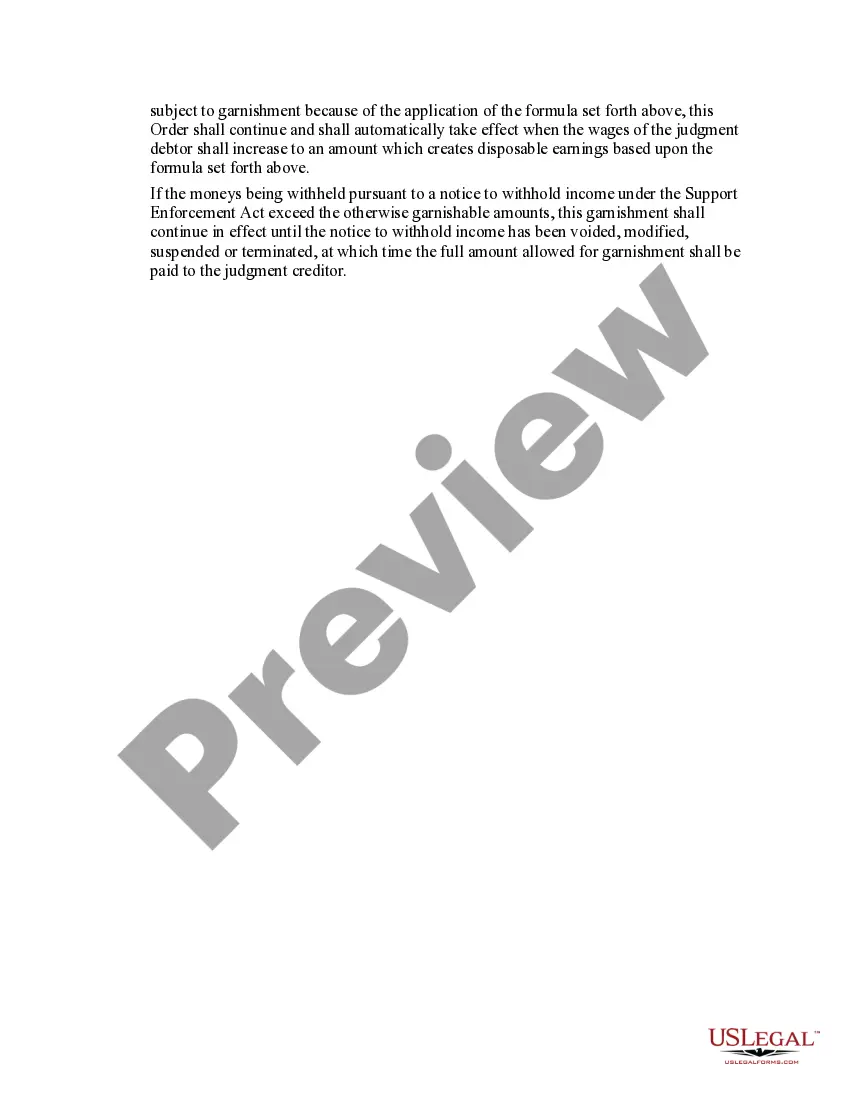
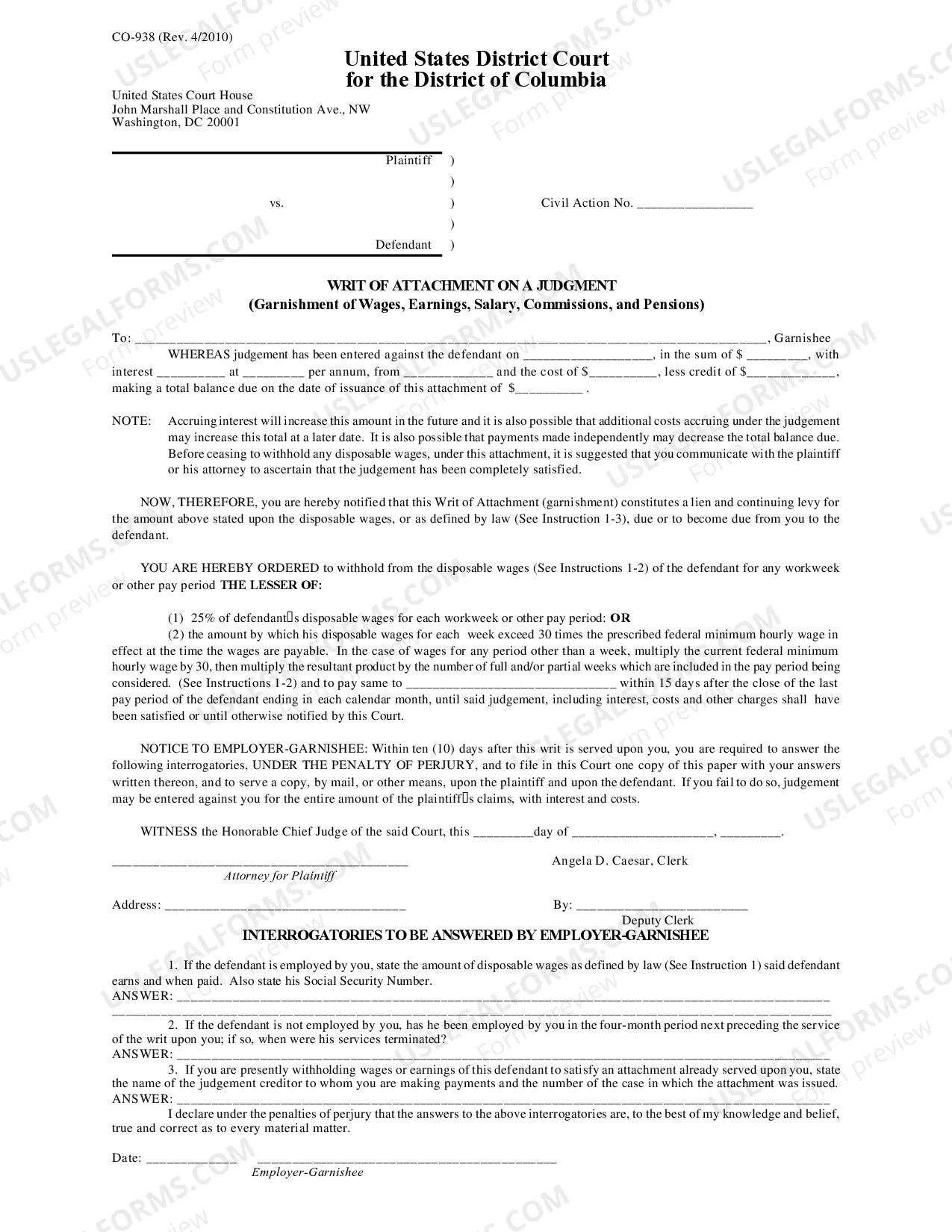
- Wage withholding directives: Clarifies how much of the debtor's wages can be garnished and outlines the process for payments.
Common use cases
This form should be used when a court has issued a Writ of Garnishment to collect unpaid debts from a judgment debtor. It is applicable in scenarios where a creditor has obtained a judgment against a debtor and is seeking to recover funds directly from the debtor's wages or other income sources. It is essential when proceeding with garnishment to ensure that the creditor is legally entitled to the specified amounts.
Who should use this form
This form is intended for:
- Creditors seeking to recover debts through wage garnishment.
- Legal representatives or attorneys acting on behalf of a creditor.
- Garnishees (third parties) who have been ordered to withhold payments from a debtor's wages.
Steps to complete this form
- Provide case information: Enter the names of the plaintiff, defendant, and garnishee, along with the corresponding court details.
- Detail the debt: Specify the amount owed by the debtor and any additional costs incurred during the garnishment process.
- Indicate exemption claims: Check off whether the debtor has filed a claim for exemption and include relevant details.
- Define garnishee's obligations: State how much the garnishee is withholding and set the payment terms for the judgment creditor.
- Sign and date the document: Ensure all relevant parties review and sign the form as required.
Notarization requirements for this form
This form does not typically require notarization unless specified by local law. However, it is important to verify any additional requirements based on the jurisdiction where the judgment is being enforced.
Get your form ready online
Our built-in tools help you complete, sign, share, and store your documents in one place.
Make edits, fill in missing information, and update formatting in US Legal Forms—just like you would in MS Word.
Download a copy, print it, send it by email, or mail it via USPS—whatever works best for your next step.
Sign and collect signatures with our SignNow integration. Send to multiple recipients, set reminders, and more. Go Premium to unlock E-Sign.
If this form requires notarization, complete it online through a secure video call—no need to meet a notary in person or wait for an appointment.
We protect your documents and personal data by following strict security and privacy standards.

Make edits, fill in missing information, and update formatting in US Legal Forms—just like you would in MS Word.

Download a copy, print it, send it by email, or mail it via USPS—whatever works best for your next step.

Sign and collect signatures with our SignNow integration. Send to multiple recipients, set reminders, and more. Go Premium to unlock E-Sign.

If this form requires notarization, complete it online through a secure video call—no need to meet a notary in person or wait for an appointment.

We protect your documents and personal data by following strict security and privacy standards.
Typical mistakes to avoid
- Failing to provide complete case information, which may delay processing.
- Not accurately calculating total debts and costs, leading to potential disputes.
- Neglecting to check for any exemptions claimed by the debtor, which could invalidate the garnishment.
- Not having the garnishee properly notified about their obligations under the garnishment order.
Benefits of using this form online
- Instant download: Quickly access the necessary legal form without having to visit a courthouse.
- Editability: Customize the form as required to fit specific details related to your case.
- Legal validity: All forms are drafted by licensed attorneys, ensuring compliance with current laws.
Looking for another form?
Form popularity
FAQ
Respond to the Creditor's Demand Letter. Seek State-Specific Remedies. Get Debt Counseling. Object to the Garnishment. Attend the Objection Hearing (and Negotiate if Necessary) Challenge the Underlying Judgment. Continue Negotiating.
It releases your garnishment! When a creditor sues you, they eventually get a judgment in court. With this judgment, they can send a letter to your employer so that they can garnish your wages.A release of garnishment would stop any future garnishments.
Respond to the Creditor's Demand Letter. Seek State-Specific Remedies. Get Debt Counseling. Object to the Garnishment. Attend the Objection Hearing (and Negotiate if Necessary) Challenge the Underlying Judgment. Continue Negotiating.
Once a judgment is issued and the creditor is able to receive payment through wage garnishment, you have little leverage for negotiating a settlement. At this point, the creditor has sufficiently proven the debt is valid and the court has ordered you to repay it.
Generally, any creditor can garnish your wages.Specifically, most must file a lawsuit and obtain a money judgment and court order before garnishing your wages. However, not all creditors need a court order. It depends on the type of debt.
You can stop a garnishment by paying the debt in full. You can stop a wage garnishment by asking the court to order installment payments in your case. Read Getting an Installment Payment Plan to learn more. Objecting to a garnishment will stop it until the objection is decided.
Call the creditor and negotiate payment terms and have them remove the garnishment; Liquidate assets or obtain a loan to pay off the creditor in full; Ceasing employment with that employer, though not often the best option, will not give the creditor any income to garnish;
If it's already started, you can try to challenge the judgment or negotiate with the creditor. But, they're in the driver's seat, and if they don't allow you to stop a garnishment by agreeing to make voluntary payments, you can't really force them to. You can, however, stop the garnishment by filing a bankruptcy case.
If you are served with a garnishment summons, do not ignore these documents because they do not directly involve a debt that you owe. Instead, you should immediately freeze any payments to the debtor, retain the necessary property, and provide the required written disclosure.