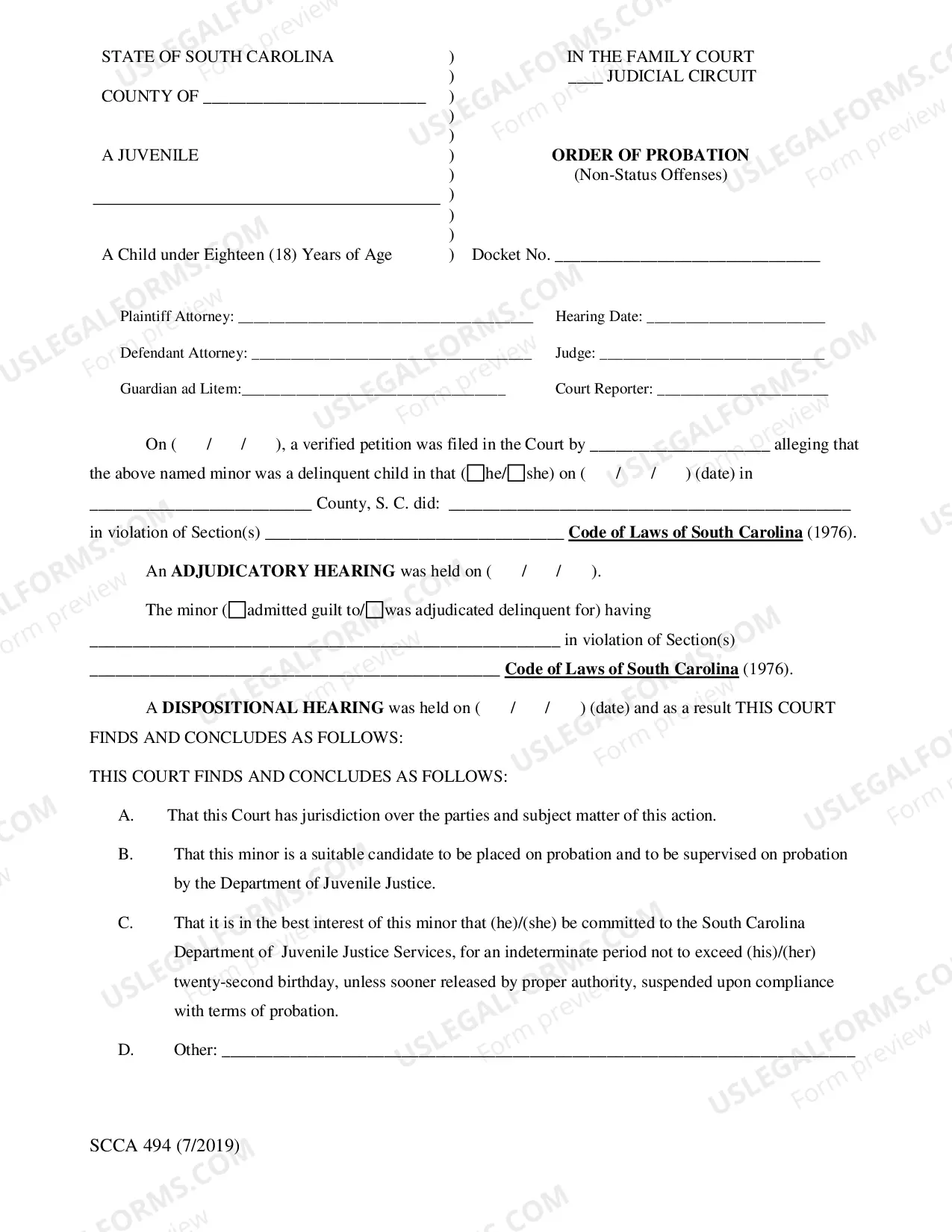
New Mexico Complaint for Personal Injury and Insurance Bad Faith
About this form
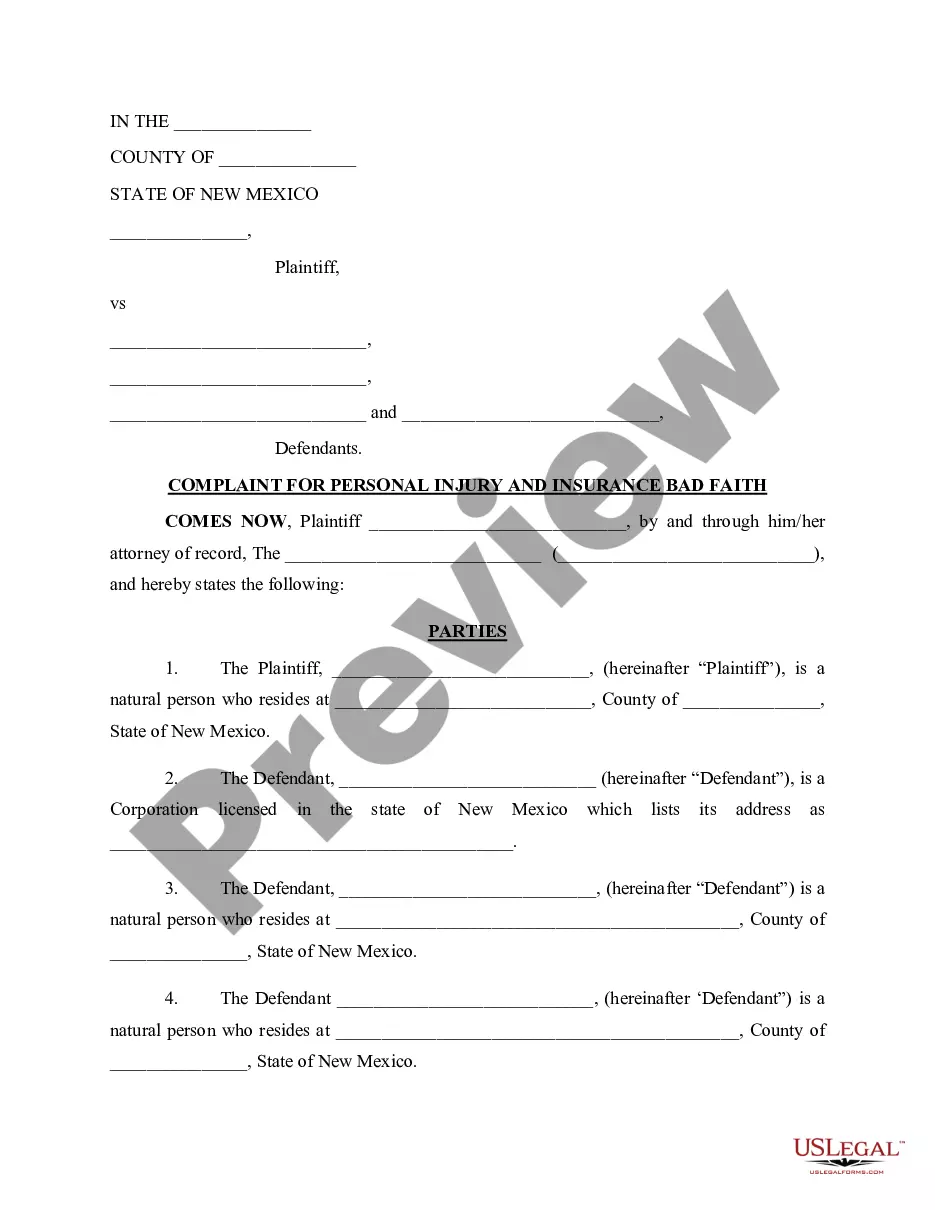
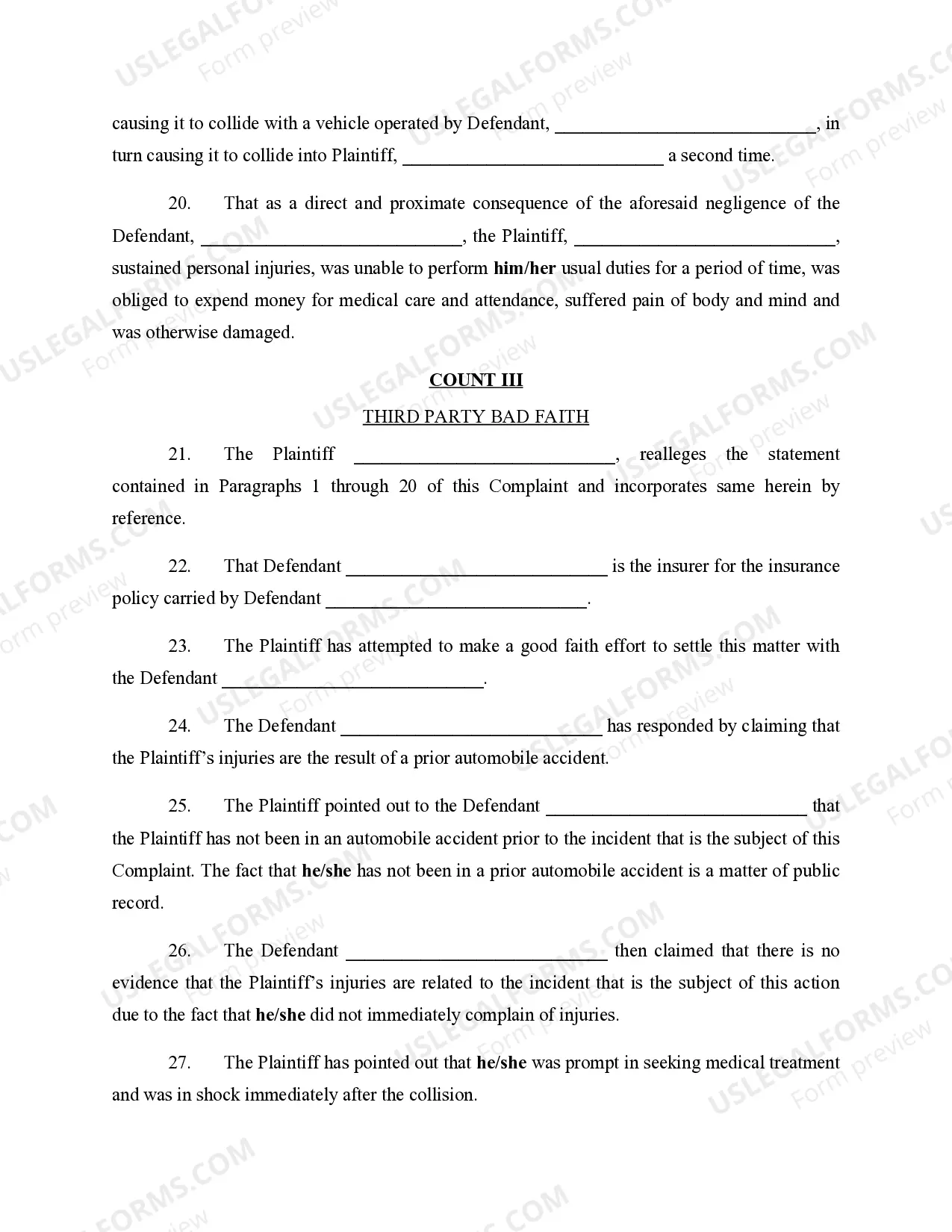
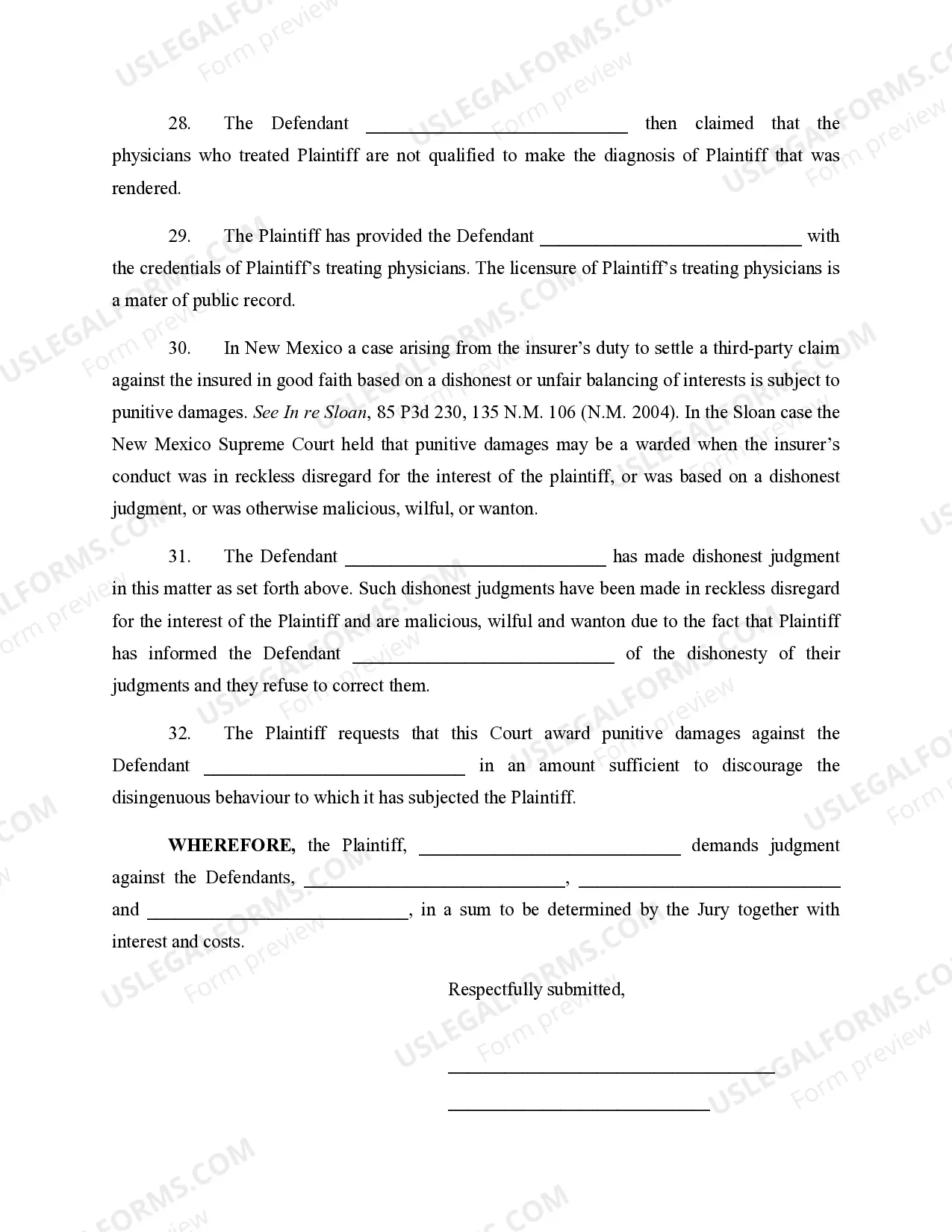
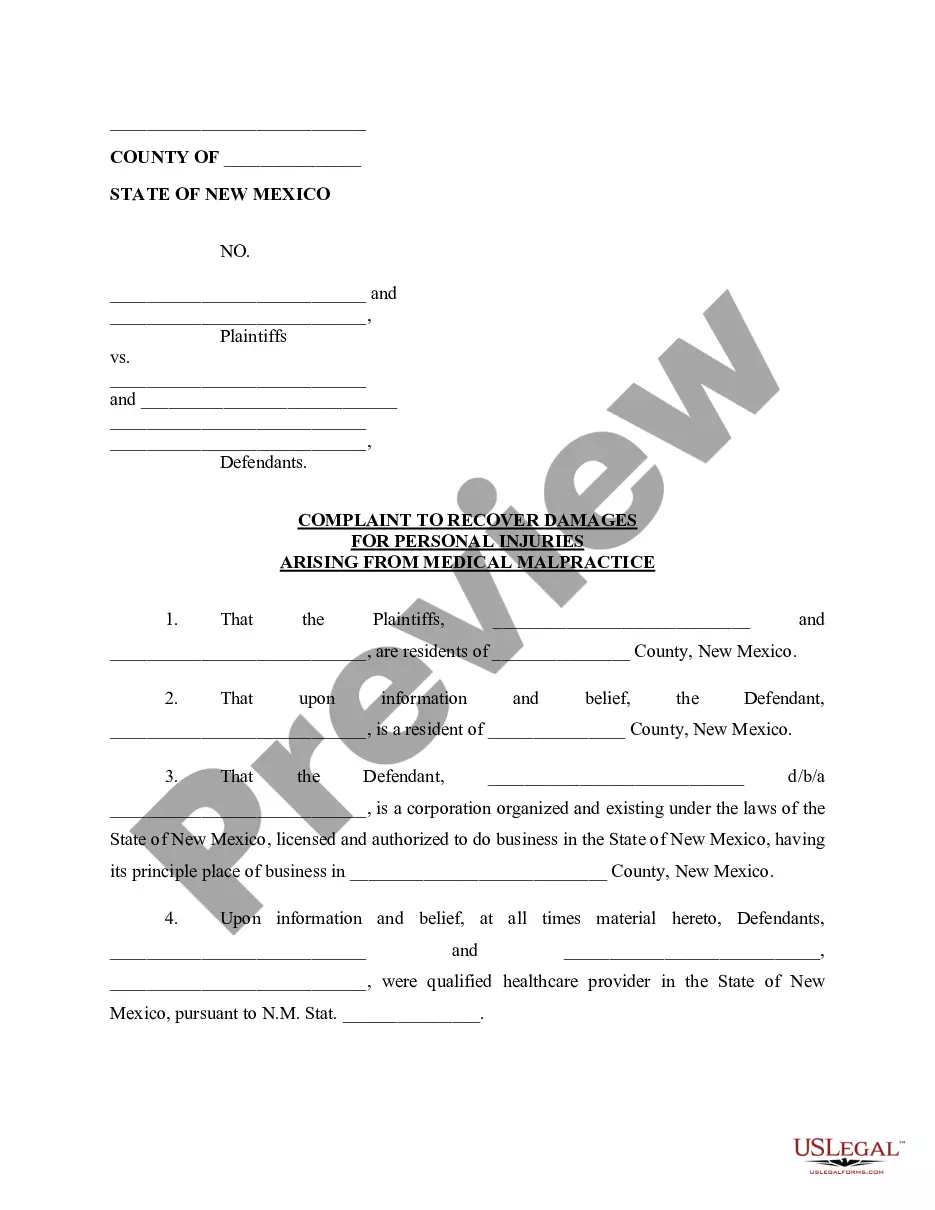
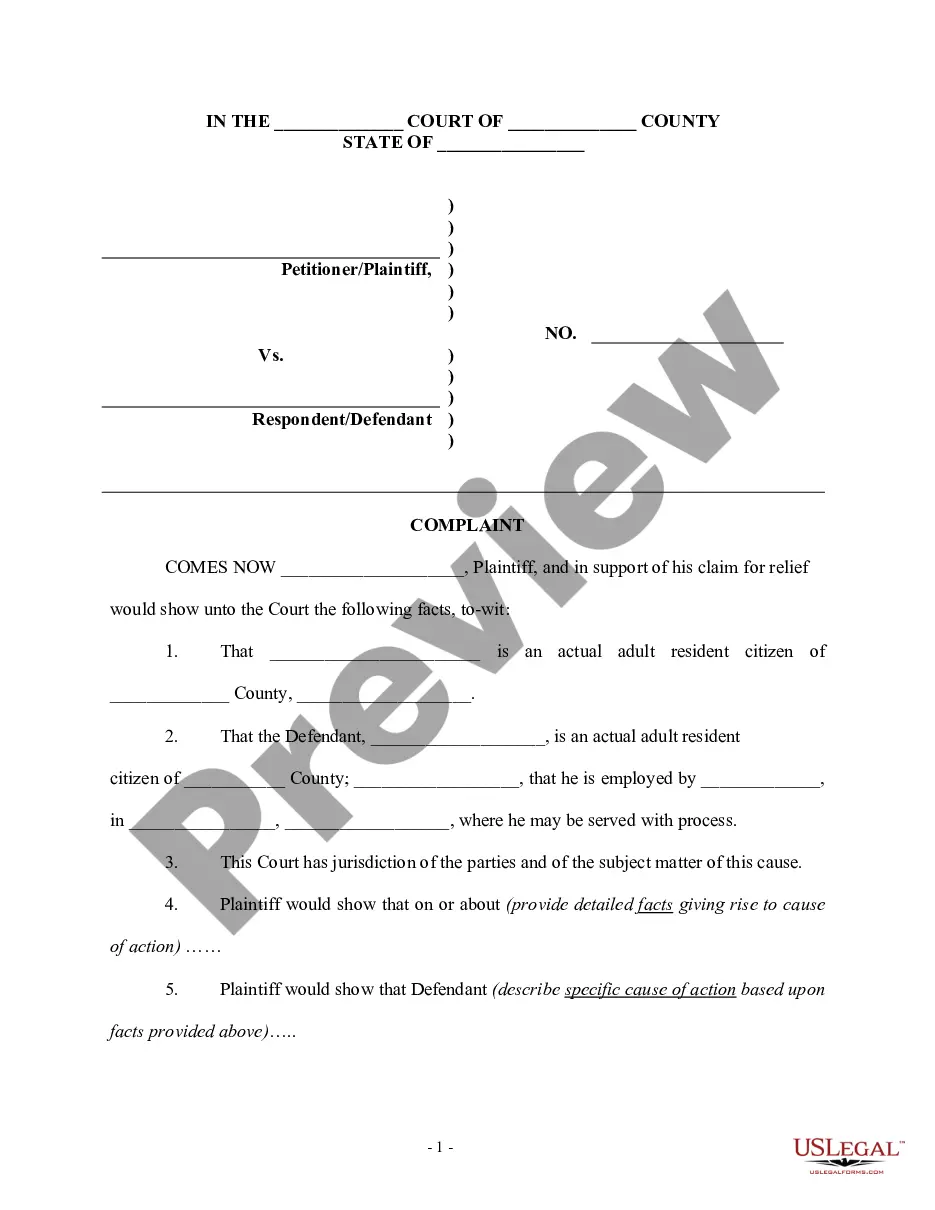
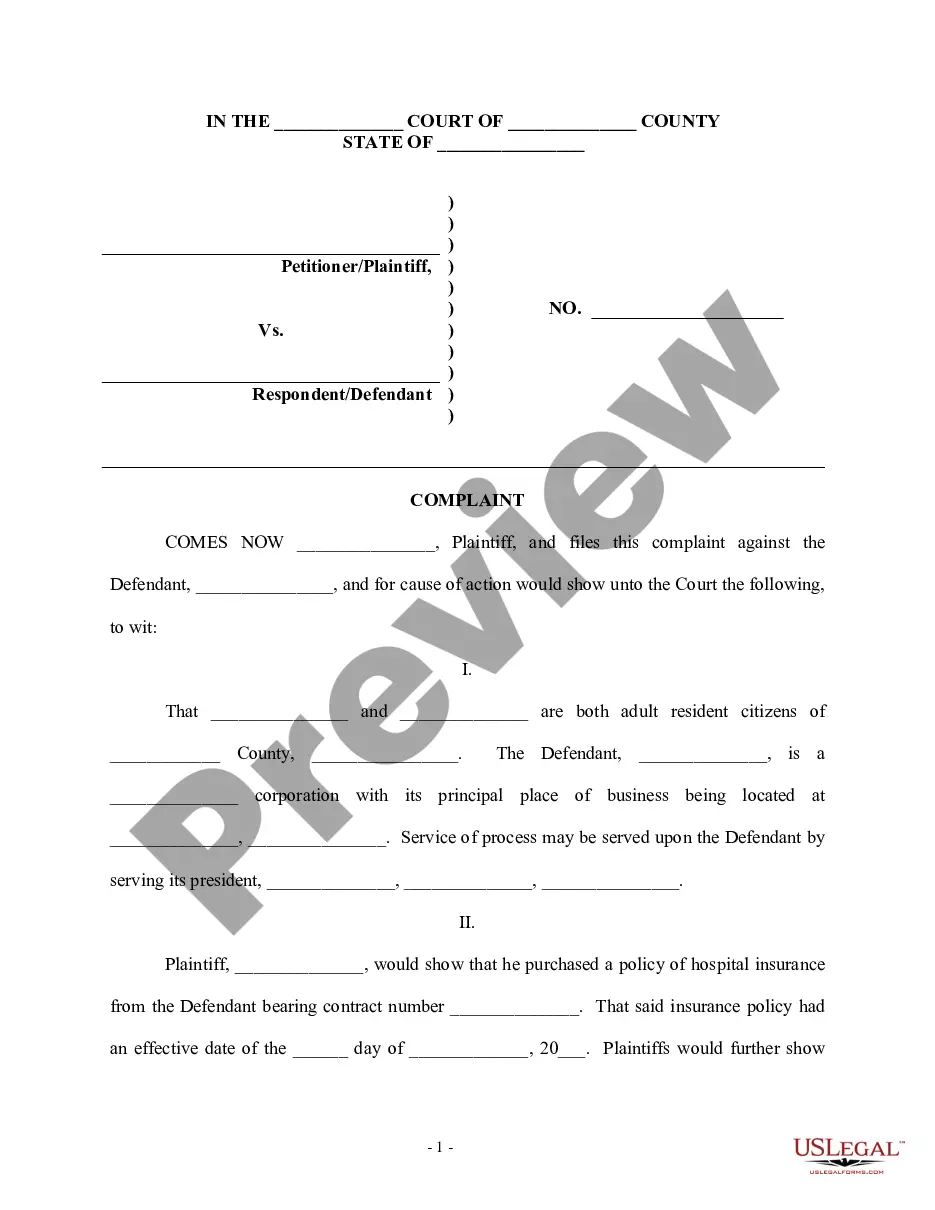
The Complaint for Personal Injury and Insurance Bad Faith is a legal document used to initiate a lawsuit following a motor vehicle accident. This form allows a plaintiff to file claims for personal injuries sustained in the accident while also alleging bad faith practices by the defendant's insurance company. Unlike standard personal injury forms, this complaint encompasses claims against both the individual responsible for the accident and their insurer, addressing issues of negligence and the duty of fair treatment by the insurer.
Key parts of this document
- Parties: Identifies the plaintiff and defendants, including their respective addresses and roles.
- Statement of Facts: Provides details surrounding the accident, including dates and circumstances that led to the injuries.
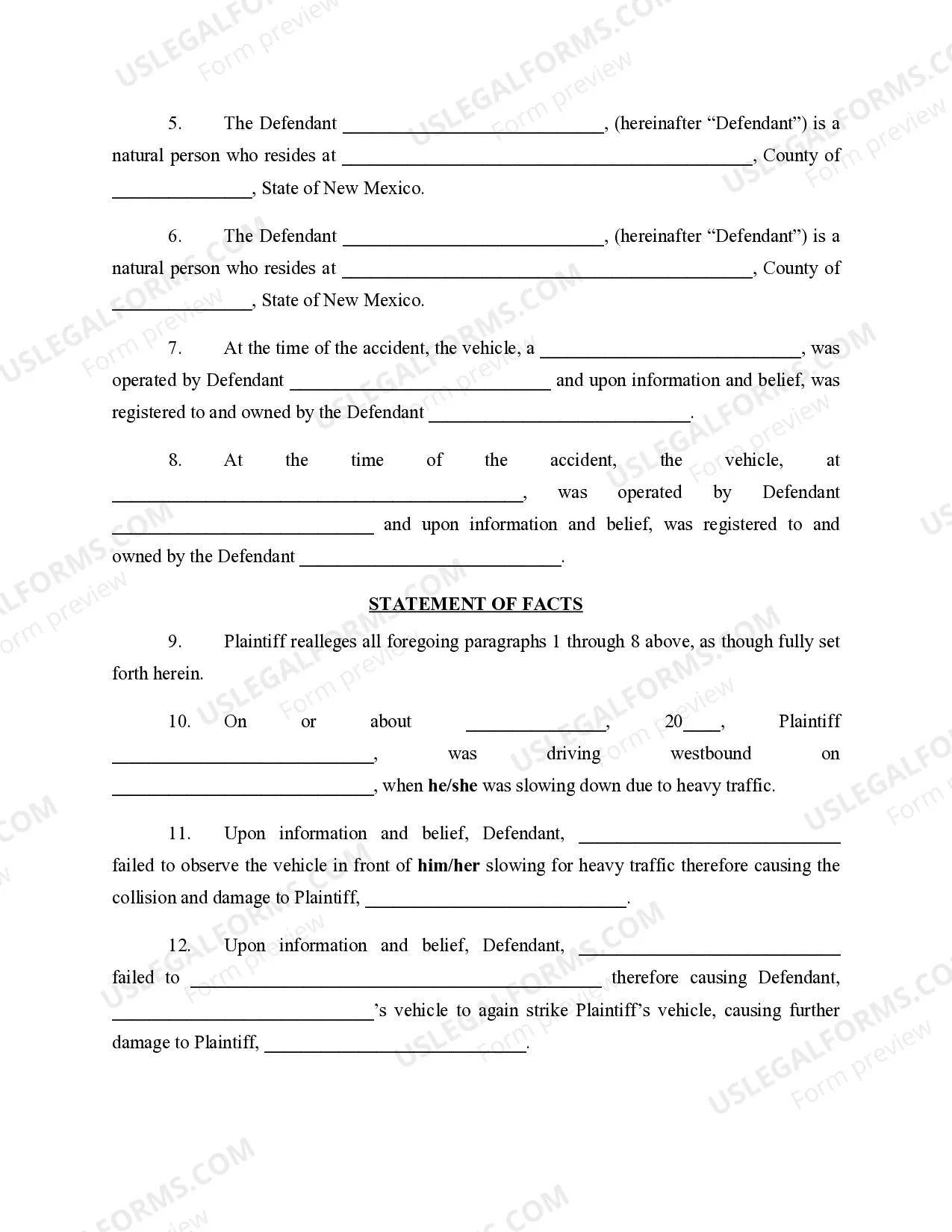
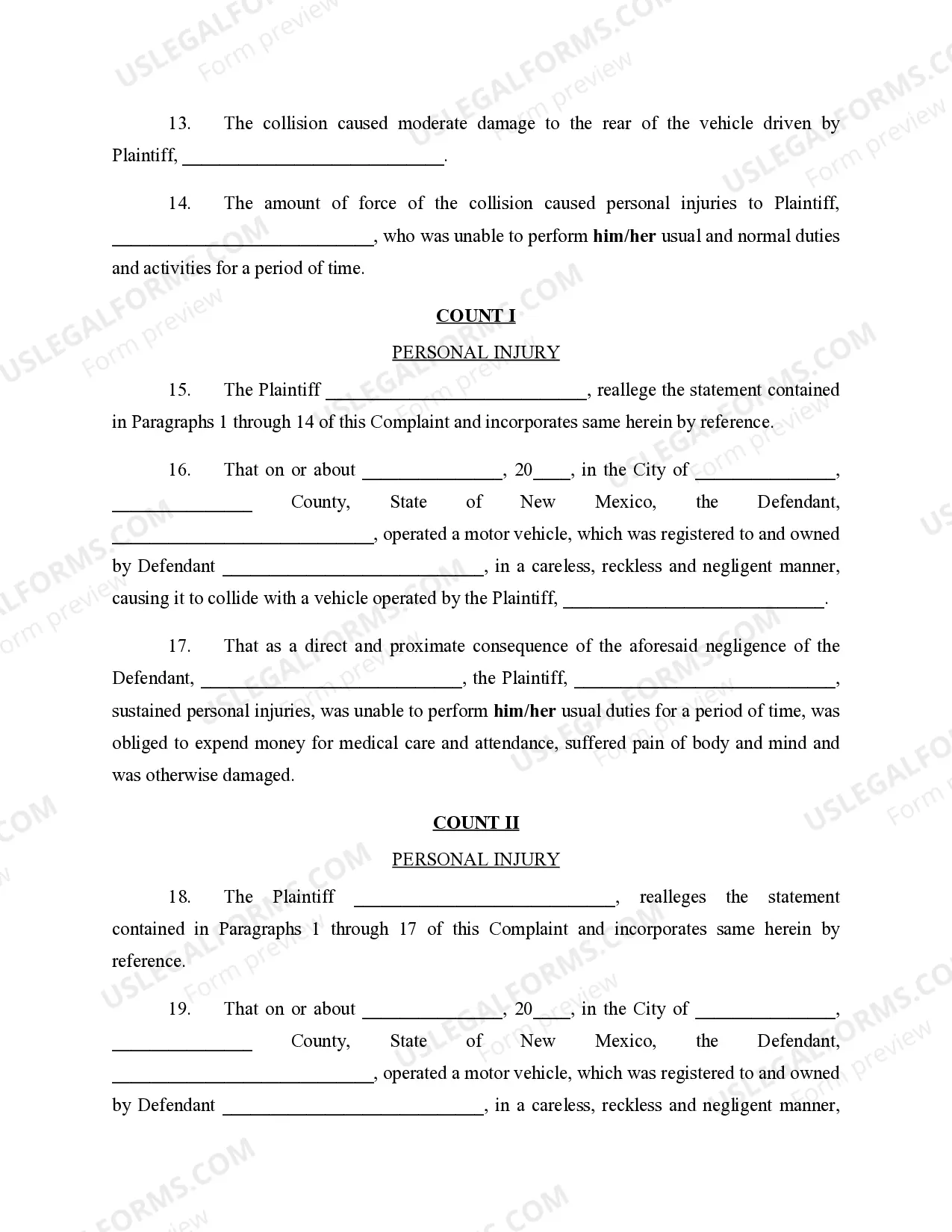
- Count I: Personal Injury claim addressing the direct actions of the defendant that caused harm.
- Count II: Additional claim for personal injury due to repeated negligent actions by another defendant.
- Count III: Allegation of third-party bad faith practices by the defendant's insurance company.
- Prayer for Relief: Concludes with the plaintiff's request for damages and legal costs.


When this form is needed
This form is essential when an individual wants to seek legal action after being injured in a motor vehicle accident caused by another party's negligence. It is particularly relevant when there is an additional issue of the insurance company acting in bad faith, such as refusing to acknowledge the validity of the plaintiffâs claims or unfairly delaying settlement offers.
Intended users of this form
This form is intended for:
- Individuals who have sustained injuries in a motor vehicle accident.
- Claimants who believe their insurance company acted in bad faith regarding their claims.
- Legal representatives acting on behalf of injured parties seeking to file a lawsuit.
How to complete this form
To complete this form, follow these steps:
- Identify the parties involved by filling in the names and addresses of the plaintiff and defendants.
- Detail the circumstances of the accident in the statement of facts, including the date, location, and how the accident occurred.
- Specify the personal injuries sustained in the counts, outlining how the defendants' actions directly led to those injuries.
- Include particulars of the alleged insurance bad faith practices in Count III, citing the specific actions of the insurer.
- Sign the form with the name and contact information of the attorney representing the plaintiff.
Does this document require notarization?
This form does not typically require notarization unless specified by local law. However, seeking notarization could add an additional layer of validation to the document when filing in court.
Get your form ready online
Our built-in tools help you complete, sign, share, and store your documents in one place.
Make edits, fill in missing information, and update formatting in US Legal Forms—just like you would in MS Word.
Download a copy, print it, send it by email, or mail it via USPS—whatever works best for your next step.
Sign and collect signatures with our SignNow integration. Send to multiple recipients, set reminders, and more. Go Premium to unlock E-Sign.
If this form requires notarization, complete it online through a secure video call—no need to meet a notary in person or wait for an appointment.
We protect your documents and personal data by following strict security and privacy standards.

Make edits, fill in missing information, and update formatting in US Legal Forms—just like you would in MS Word.

Download a copy, print it, send it by email, or mail it via USPS—whatever works best for your next step.

Sign and collect signatures with our SignNow integration. Send to multiple recipients, set reminders, and more. Go Premium to unlock E-Sign.

If this form requires notarization, complete it online through a secure video call—no need to meet a notary in person or wait for an appointment.

We protect your documents and personal data by following strict security and privacy standards.
Common mistakes to avoid
- Failing to provide complete and accurate contact information for all parties involved.
- Neglecting to include specific details about the accident, which can lead to a lack of clarity in the complaint.
- Not outlining all injuries and their impacts on daily activities in sufficient detail.
- Omitting critical evidence or documentation that could support claims of bad faith by the insurer.
Benefits of completing this form online
- Conveniently download and fill out the form at your own pace from home.
- Forms are drafted by licensed attorneys, ensuring compliance with legal requirements.
- Edit and customize the document to suit your specific circumstances easily.
- Access resources and support to understand the legal process better.
Looking for another form?



Form popularity
FAQ
Bad Faith Insurance Claims As a policyholder, you have the right to file a lawsuit against the insurance company if it acts in bad faith toward you.By refusing to pay out on your policy with no explanation, or holding your payment back for one or several months, the insurance company is operating in bad faith.
In California, insurance companies breach the implied covenant of good faith and fair dealing, commonly referred to as acting in bad faith, when they unreasonably or willfully deny benefits under an existing and enforceable California insurance policy on a valid claim.
Step 1: Review Your Insurance Contract. Step 2: Keep Logs on Your Claim. Step 3: Document Denial of Claim. Step 4: Make a Final Demand. Step 5: File a Complaint with Your State's Department of Insurance. Step 6: Initiate a Bad Faith Lawsuit.
Sign 1) Refusal to Pay a Claim Without a Reasonable Basis. Sign 2) Refusal to Properly Investigate Your Claim In A Timely Manner. Sign 3) The Insurance Company Tries to Settle for Less than You Deserve. Sign 4) Your Insurer Demands a Stupid Amount of Paperwork or Evidence.
Step 1: Review Your Insurance Contract. Step 2: Keep Logs on Your Claim. Step 3: Document Denial of Claim. Step 4: Make a Final Demand. Step 5: File a Complaint with Your State's Department of Insurance. Step 6: Initiate a Bad Faith Lawsuit.
Bad faith insurance refers to an insurer's attempt to renege on its obligations to its clients, either through refusal to pay a policyholder's legitimate claim or investigate and process a policyholder's claim within a reasonable period.There are many ways in which an insurance company may act in bad faith.