New Jersey Contractors Forms Package
Overview of this form package
The New Jersey Contractors Forms Package is a comprehensive collection of legal documents specifically designed for use by contractors, owners, suppliers, and subcontractors involved in construction projects within New Jersey. This package includes essential forms tailored to address the unique legal requirements and issues that arise in the construction industry, making it a valuable resource for ensuring legal compliance and safeguarding your rights.
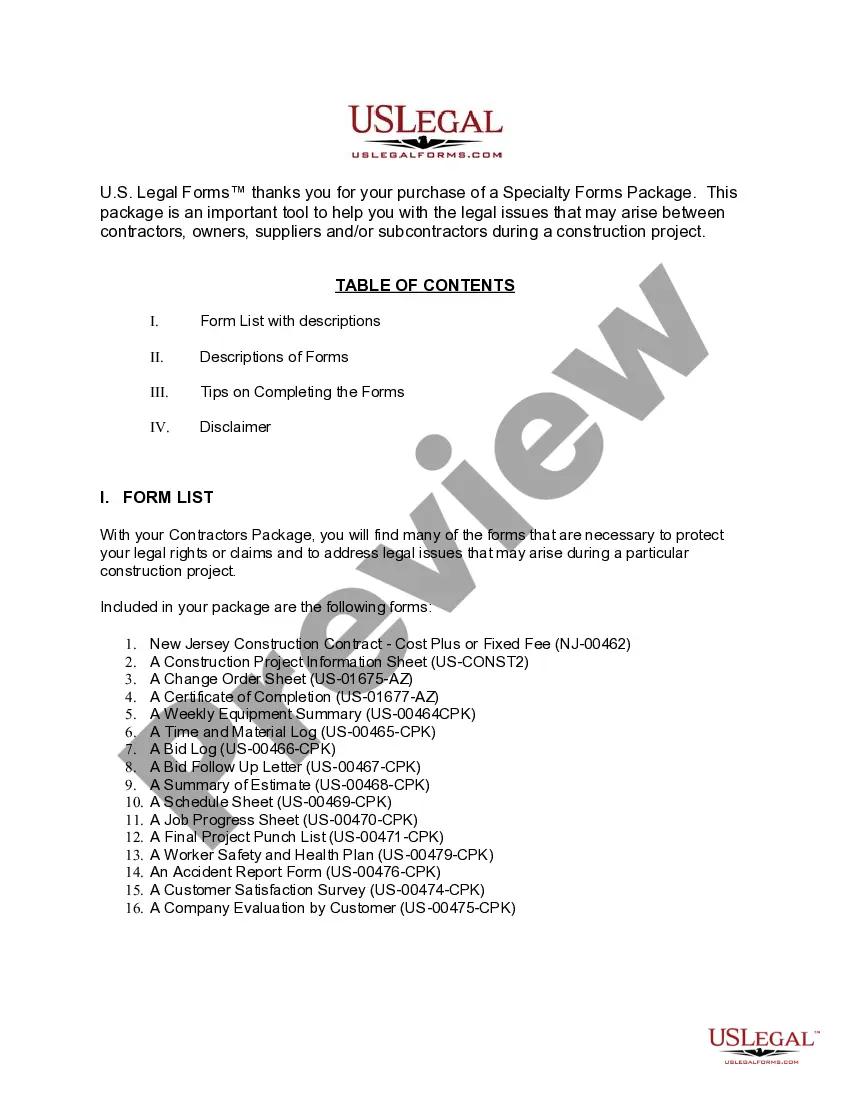
Forms you’ll find in this package
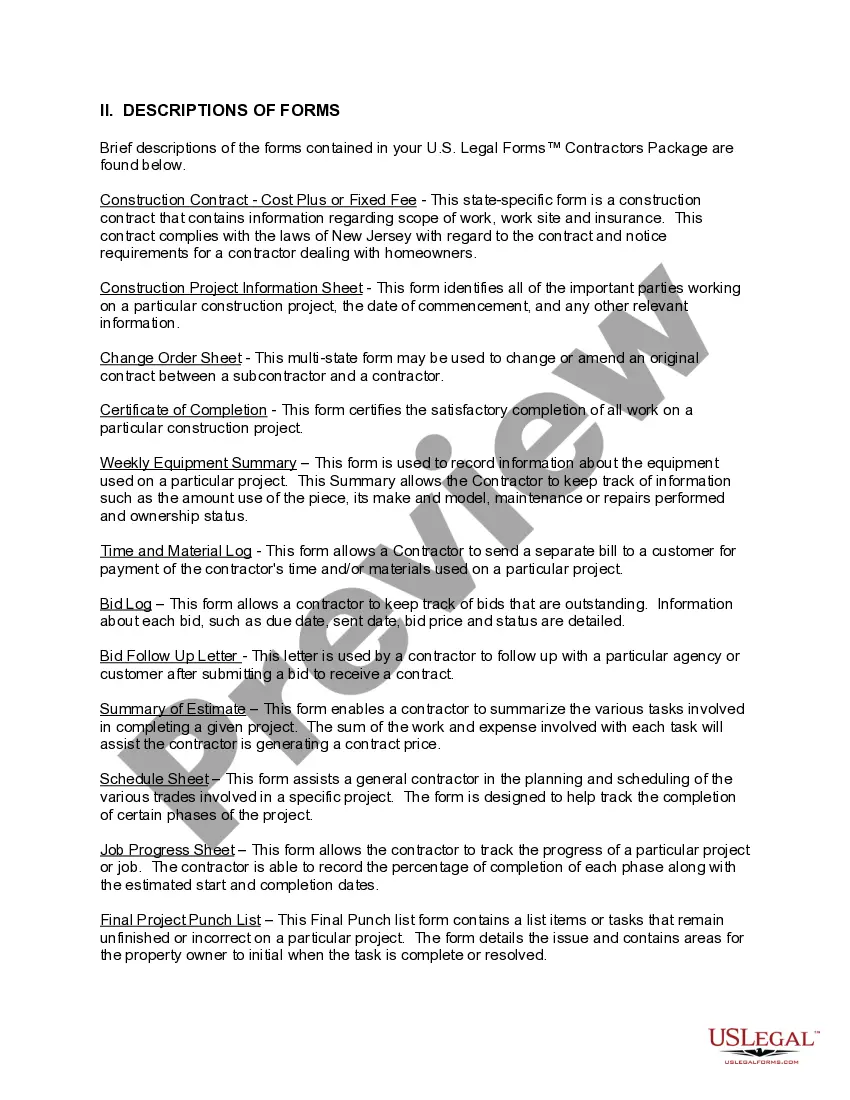
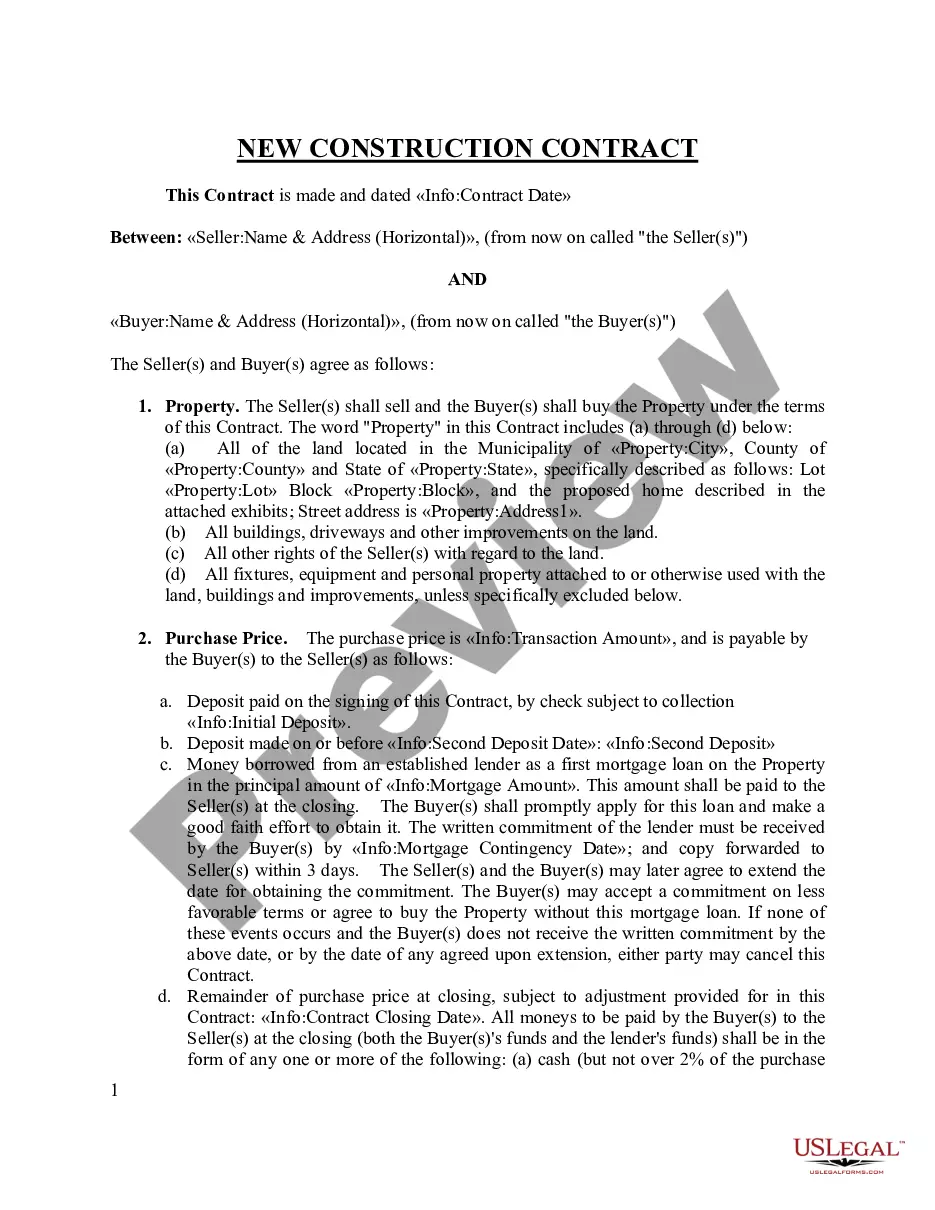
- Construction Contract Cost Plus or Fixed Fee
- Contractor's Weekly Equipment Summary
- Contractor's Time and Materials Log
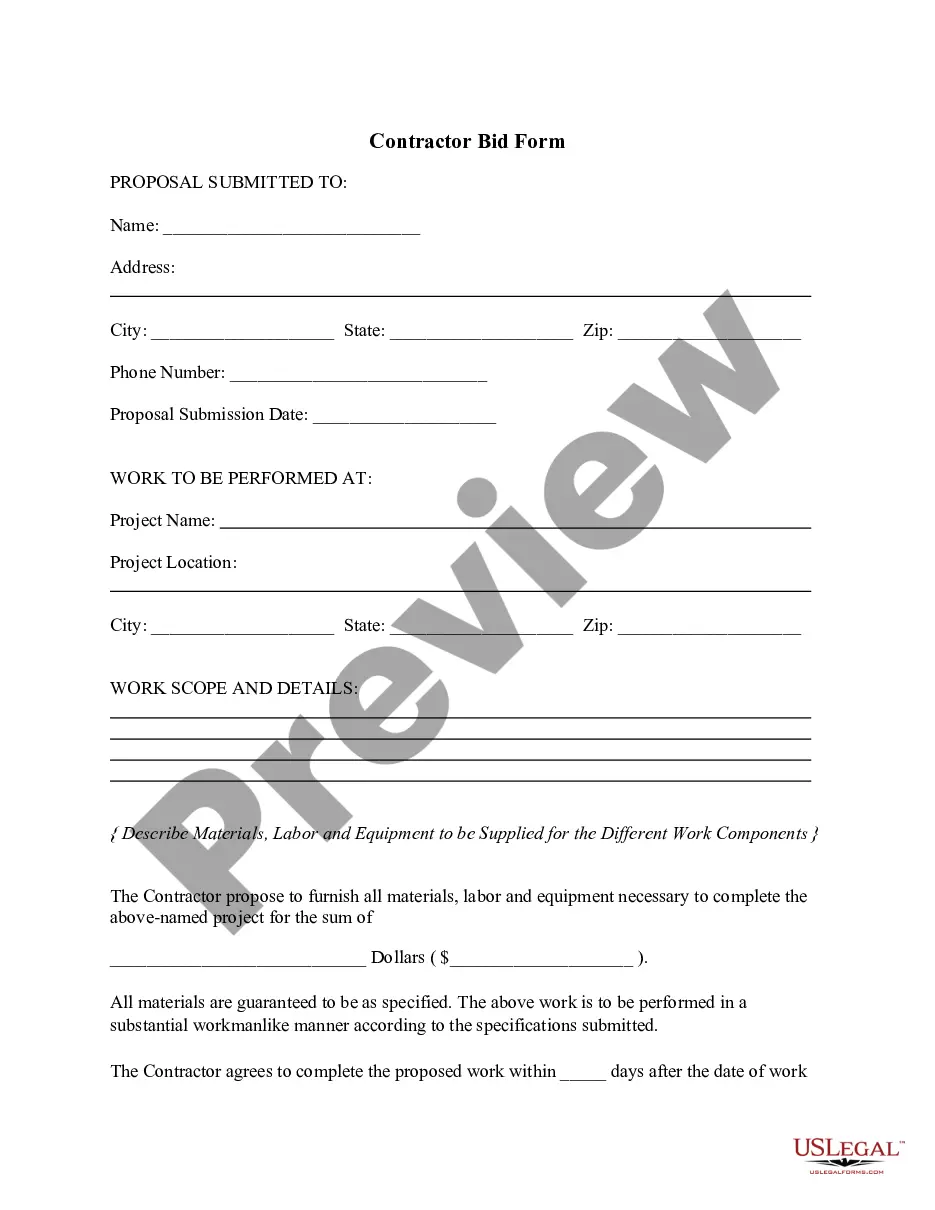
- Contractor's Bid Log
- Contractor's Bid Follow Up Letter
- Contractor's Summary of an Estimate
- Contractor's Schedule Sheet
- Contractor's Job Progress Sheet
- Contractor's Final Punch List
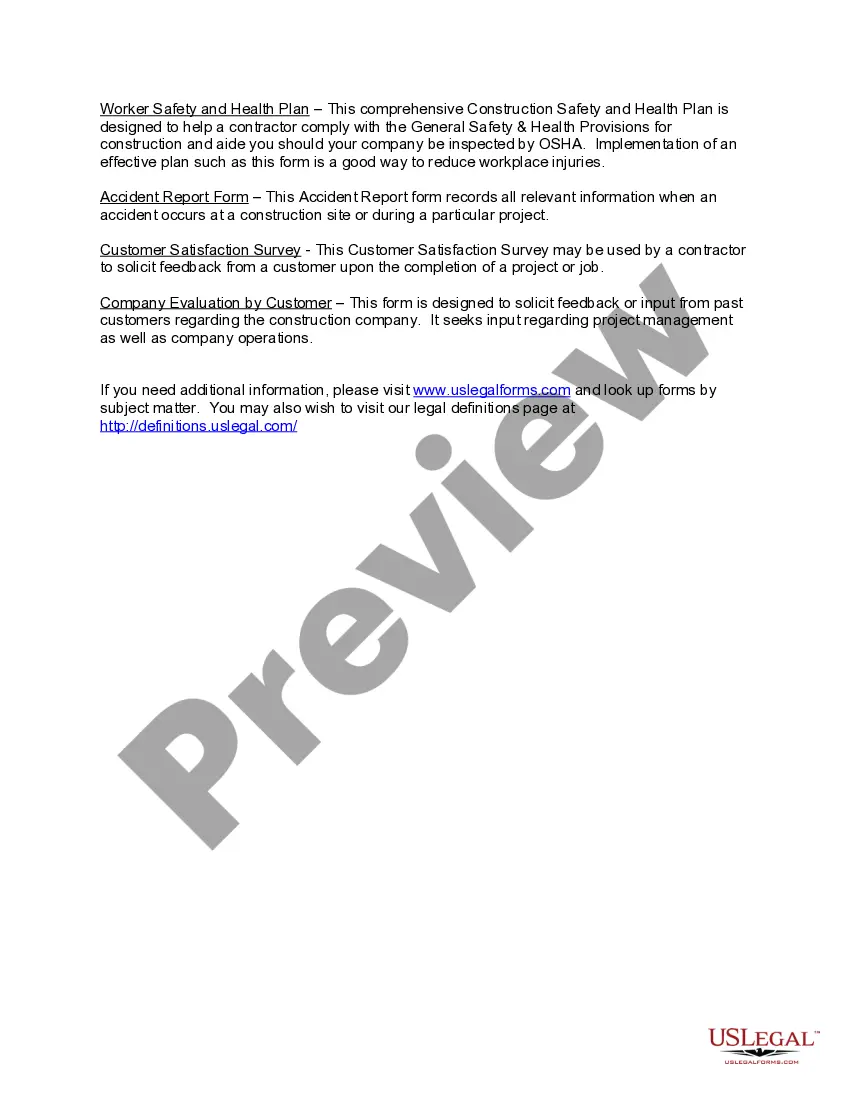
- Customer Satisfaction Survey
- Construction Company Evaluation by a Customer
- Construction Accident Report
- Construction Safety and Health Plan
- Change Order for Construction or Repairs by Contractor
- Certification of Completion by Contractor
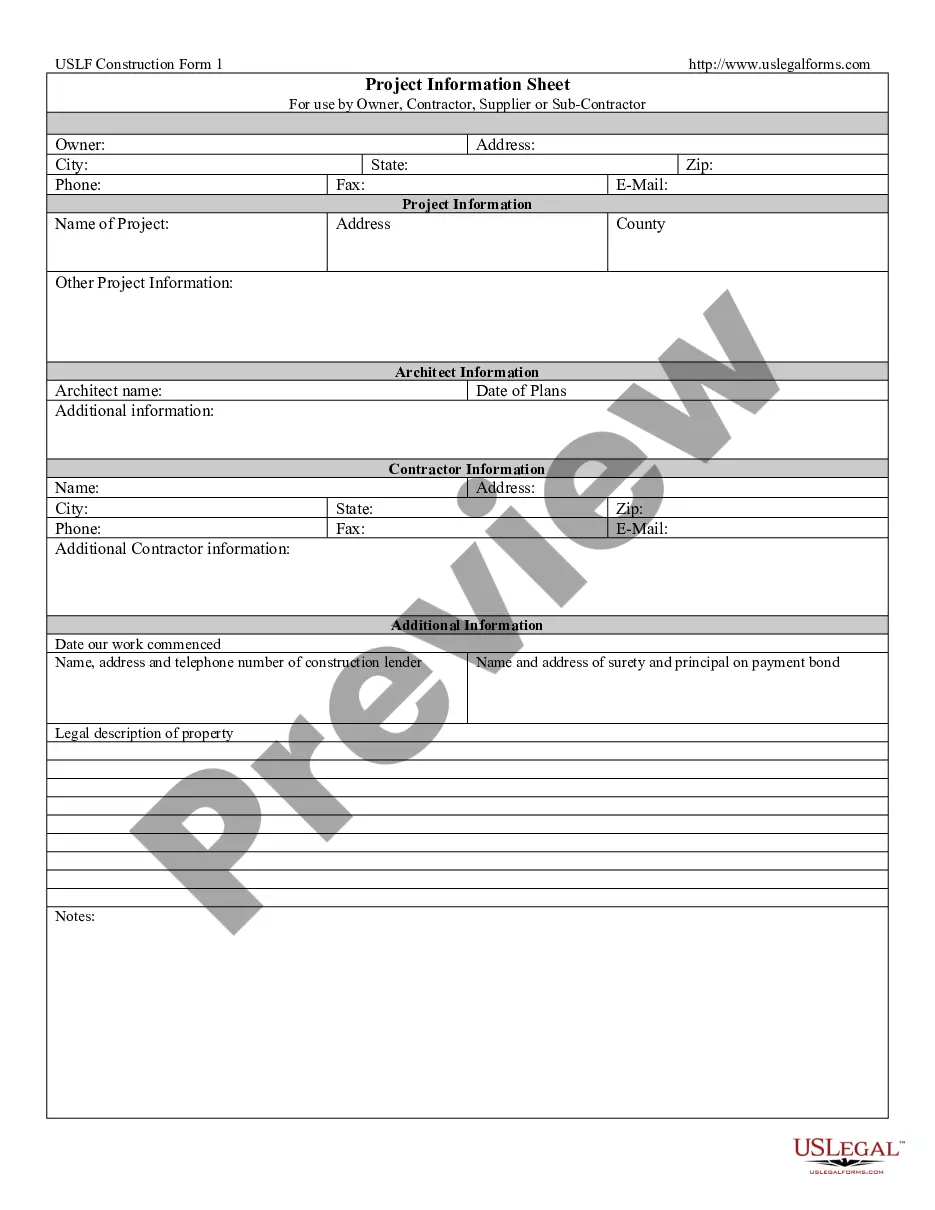
- Construction Project Information Sheet
Common use cases
This form package should be utilized in various scenarios, including:
- When entering into construction agreements.
- To track project progress and manage timelines.
- When making changes to contracts or project specifications.
- To document project completion and client satisfaction.
- When recording workplace safety measures and accidents.
Intended users of this form package
- General contractors managing construction projects.
- Subcontractors providing specialized services.
- Project owners overseeing construction work.
- Suppliers involved in providing materials for construction.
- Construction project managers seeking thorough documentation.
How to prepare this document
- Review each form included in the package carefully to understand its purpose.
- Identify all parties involved in the construction project and their respective roles.
- Accurately input dates, descriptions, and any other specific information required.
- Ensure all necessary parties sign the relevant forms to validate them.
- Keep a copy of each completed form for your records.
Notarization guidance for this package
Notarization is not commonly needed for forms in this package. However, if your state’s laws require it, our notarization service, powered by Notarize, allows you to finalize documents online 24/7 without in-person visits.
Get your form ready online
Our built-in tools help you complete, sign, share, and store your documents in one place.
Make edits, fill in missing information, and update formatting in US Legal Forms—just like you would in MS Word.
Download a copy, print it, send it by email, or mail it via USPS—whatever works best for your next step.
Sign and collect signatures with our SignNow integration. Send to multiple recipients, set reminders, and more. Go Premium to unlock E-Sign.
If this form requires notarization, complete it online through a secure video call—no need to meet a notary in person or wait for an appointment.
We protect your documents and personal data by following strict security and privacy standards.

Make edits, fill in missing information, and update formatting in US Legal Forms—just like you would in MS Word.

Download a copy, print it, send it by email, or mail it via USPS—whatever works best for your next step.

Sign and collect signatures with our SignNow integration. Send to multiple recipients, set reminders, and more. Go Premium to unlock E-Sign.

If this form requires notarization, complete it online through a secure video call—no need to meet a notary in person or wait for an appointment.

We protect your documents and personal data by following strict security and privacy standards.
Avoid these common issues
- Failing to complete all required fields in the forms.
- Not obtaining signatures from all necessary parties.
- Overlooking state-specific legal requirements or changes.
- Neglecting to keep copies of forms for future reference.
- Using outdated or incorrect versions of the forms.
Benefits of using this package online
- Convenience of instant download and access to legal forms.
- Editability allows for customization to fit specific project needs.
- Reliability of documents created by licensed attorneys.
- Cost savings of over 50% compared to purchasing forms separately.
Legal use & context
- Each form is designed to protect the legal rights of all parties involved in construction projects.
- Documents are enforceable within the jurisdiction of New Jersey, following its construction laws.
- Using these forms helps mitigate potential disputes by providing clear agreements and documentation.
Summary of main points
- The New Jersey Contractors Forms Package provides essential documentation for construction projects.
- It is specifically tailored to meet the legal requirements of New Jersey.
- Using these forms can help avoid common legal pitfalls during construction.
- Always ensure forms are filled out completely and correctly to maintain their legal validity.
Looking for another form?

Form popularity
FAQ
The applicant must wait for permit approval to start any work. The building department legally has 20 business days after submittal to issue the permit, however this process does not normally take this long unless there are incompletions with the application.
No permit is required for a garden type utility shed that is 200 square feet or under provided it does not have electric, water, gas, oil or sewer connections.
Local governments (city, town, or county) will issue your New Jersey contractor license, but first you must register with the Division of Consumer Affairs. In order to get your HVAC, electrical, plumbing, or alarm system license, you will need to meet the requirements and take the New Jersey Business and Law exam.
$25 for each additional 25. (example: 1- to 50 = $65; 51 to 75 = $90; 76 to 100 = $115; 101 to 125 = $140, etc.) $65 for service up to 200 amp. $50 minimum fee for appliances (example: Washing machine, stove, etc.)
Do I need to get permits to finish a basement?Yes, a building permit from your local township is required. Having these inspections can also protect you from substandard workmanship.
If your bathroom remodeling project only includes new interior flooring and wall finishes, replacement of existing bathtub/shower and fixtures, replacing old cabinetry and sinks with modern styles, along with the replacement of existing windows and doors then no building permit or inspections are likely required.
The applicant must wait for permit approval to start any work. The building department legally has 20 business days after submittal to issue the permit, however this process does not normally take this long unless there are incompletions with the application.
No permit required: That roofing and siding job just got cheaper in New Jersey.Other tasks that no longer require a permit are installing alarm systems, outdoor irrigation, chimney lining, indoor Sheetrock and drywall and the replacement of indoor plumbing fixtures.
In general anything major related to structure, electrical and plumbing require permits. This applies to work both inside and outside of a house and includes things like moving gas lines, replacing or expanding electrical systems, foundation repair, removing walls and so much more.