Arkansas Employment Employee Personnel File Package
About this form package
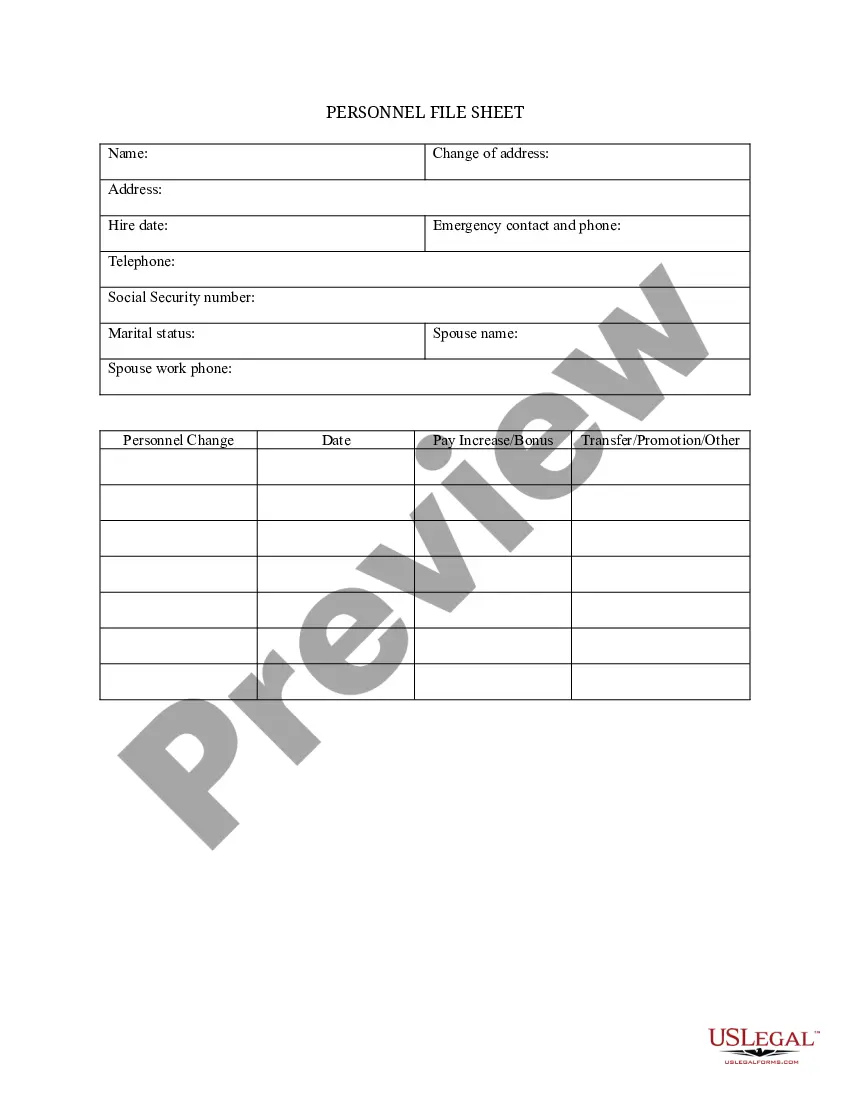
The Arkansas Employment Employee Personnel File Package is designed to provide employers with essential personnel forms that facilitate accurate record keeping of all personnel-related matters. This package is distinct from other legal forms because it focuses specifically on compliance with Arkansas state laws and essential employee management. By using this package, companies can avoid costly errors and ensure they adhere to important federal regulations regarding employment practices.
Documents contained in this package
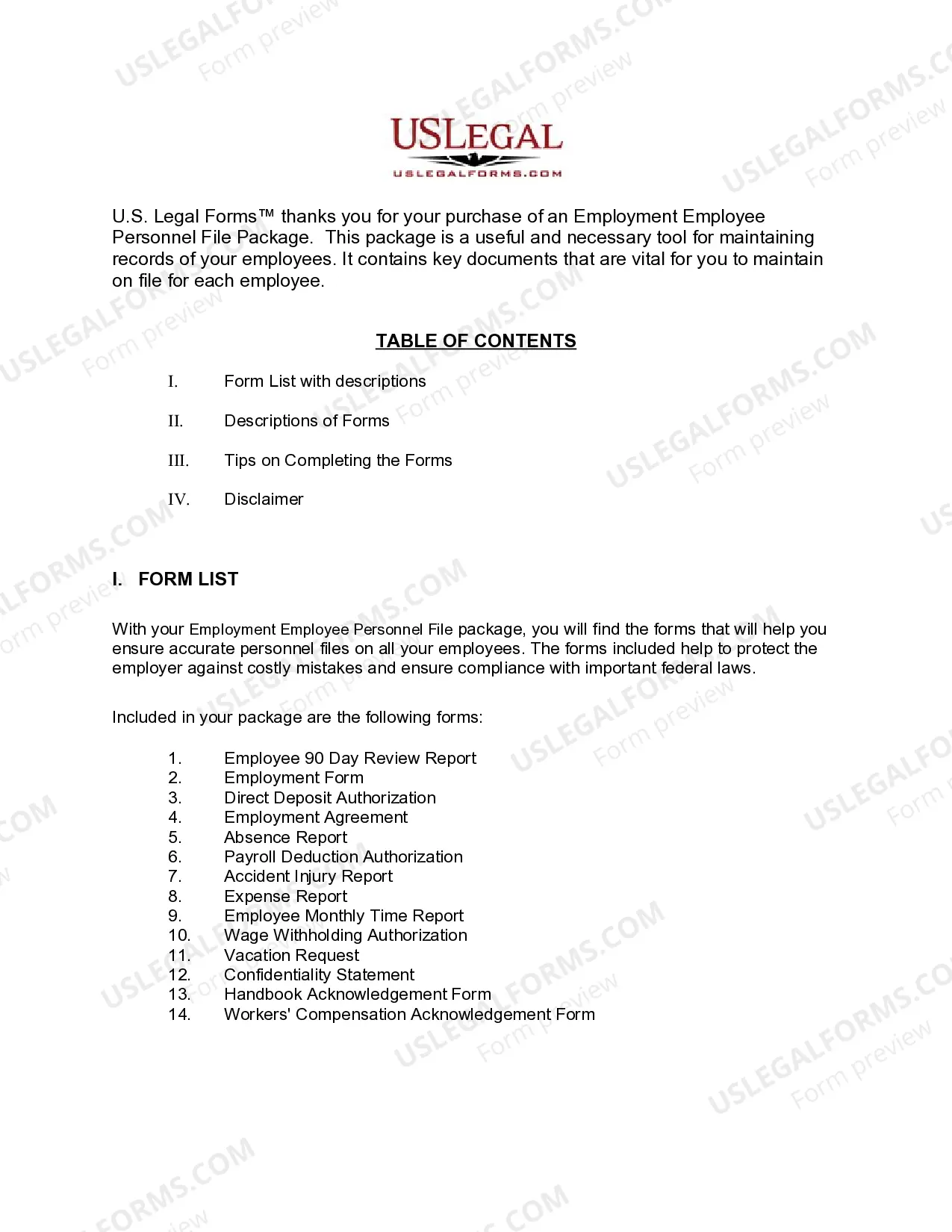
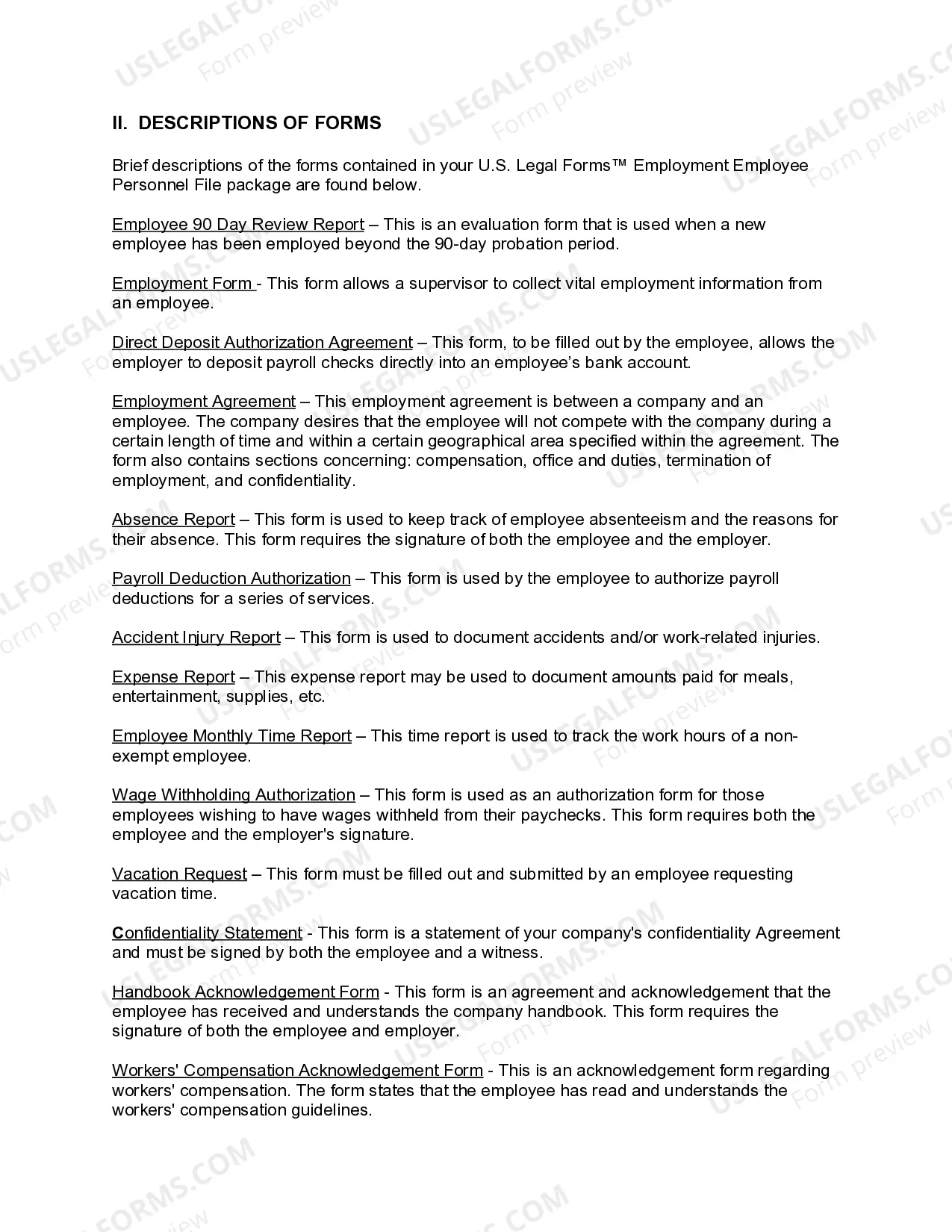
- Employment Agreement between a company and an employee
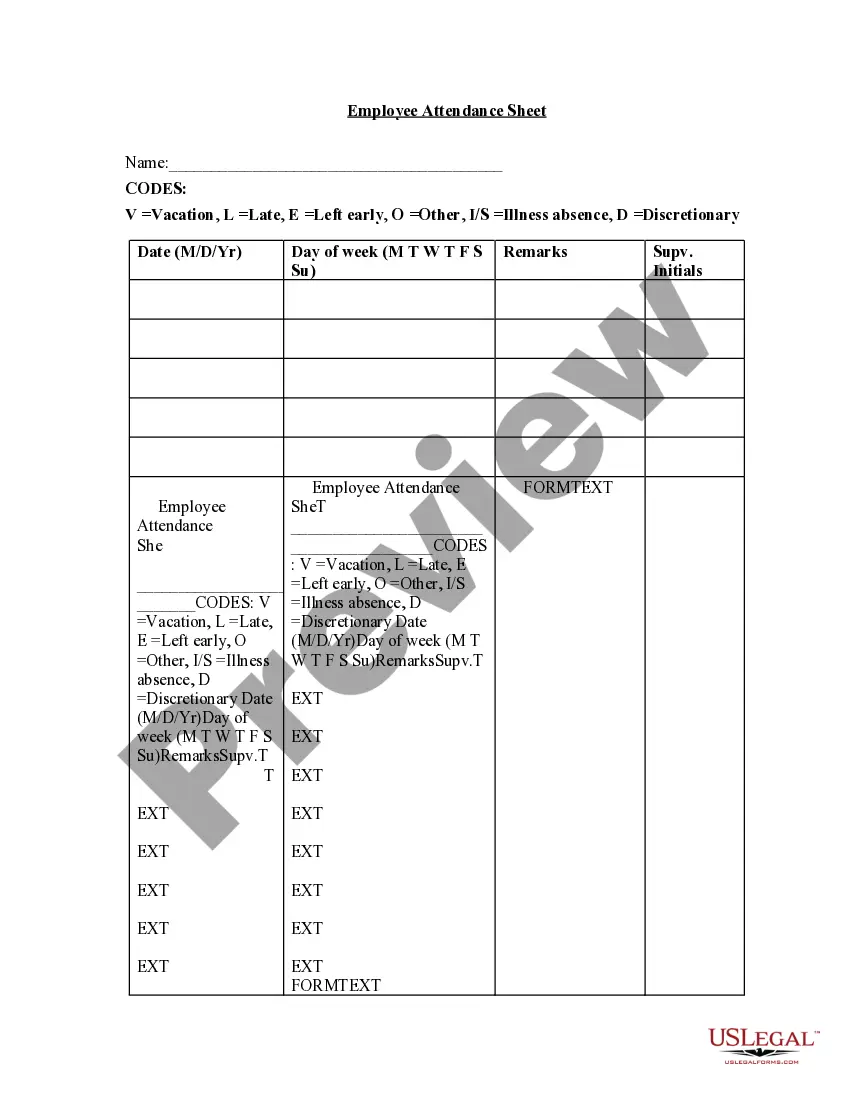
- Absence Report
- Payroll Deduction Authorization Form
- Accident - Injury Report
- Direct Deposit Authorization
- Nonexempt Employee Time Report
- Employee 90 day Review Report
- Wage Withholding Authorization
- Confidentiality Statement and Agreement for an Employee
- Employee Agreement and Handbook Acknowledgment Form
- Workers' Compensation Acknowledgment Form
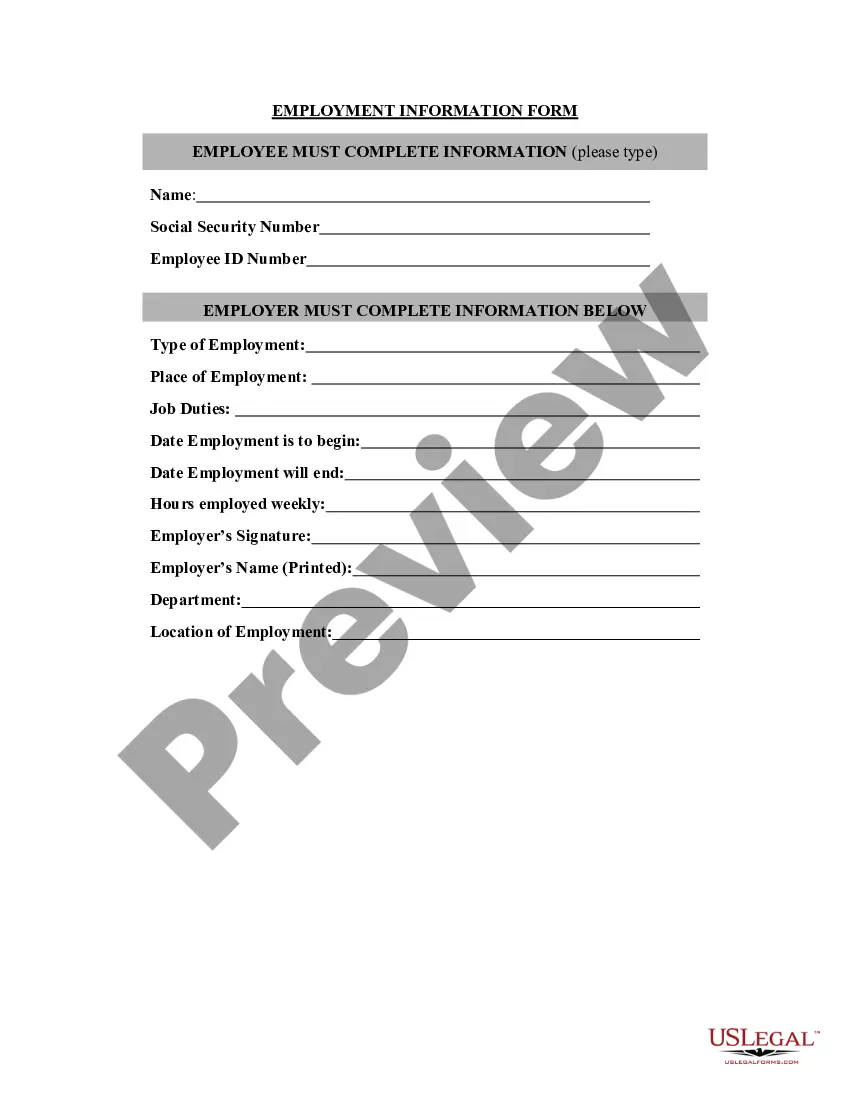
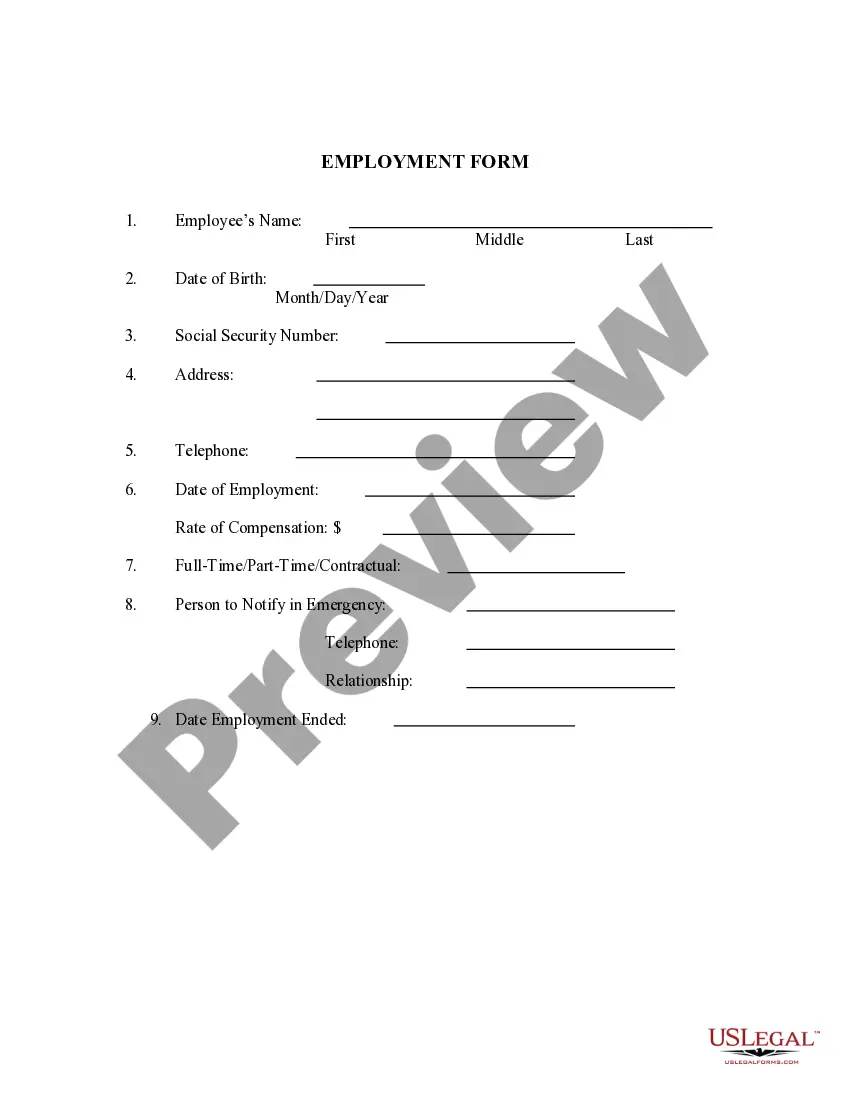
- Employment Form
- Vacation Request Form
When to use this document
This form package is useful during various stages of the employment process, including:
- Onboarding new employees
- Conducting performance reviews
- Tracking employee attendance and absences
- Documenting injuries or accidents in the workplace
- Processing payroll and benefit deductions
- Managing employee requests for vacation or time off
Intended users of this form package
- Employers and human resources personnel in Arkansas
- Business owners seeking to implement standardized employment practices
- Managers responsible for employee oversight and record keeping
- Legal professionals advising businesses on employment law compliance
How to prepare this document
- Review all included forms to understand their purposes and requirements.
- Gather the necessary information for each form, such as employee details and signatures.
- Fill out the forms using either a computer or by hand, ensuring clarity and accuracy.
- Have the forms signed by the relevant parties where required.
- Keep copies of completed forms in each employee's personnel file for record keeping.
Do documents in this package require notarization?
Most forms in this package do not require notarization. However, local laws or specific situations may demand it. Our online notarization service, powered by Notarize, lets you complete the process through a verified video call, available anytime.
Get your form ready online
Our built-in tools help you complete, sign, share, and store your documents in one place.
Make edits, fill in missing information, and update formatting in US Legal Forms—just like you would in MS Word.
Download a copy, print it, send it by email, or mail it via USPS—whatever works best for your next step.
Sign and collect signatures with our SignNow integration. Send to multiple recipients, set reminders, and more. Go Premium to unlock E-Sign.
If this form requires notarization, complete it online through a secure video call—no need to meet a notary in person or wait for an appointment.
We protect your documents and personal data by following strict security and privacy standards.

Make edits, fill in missing information, and update formatting in US Legal Forms—just like you would in MS Word.

Download a copy, print it, send it by email, or mail it via USPS—whatever works best for your next step.

Sign and collect signatures with our SignNow integration. Send to multiple recipients, set reminders, and more. Go Premium to unlock E-Sign.

If this form requires notarization, complete it online through a secure video call—no need to meet a notary in person or wait for an appointment.

We protect your documents and personal data by following strict security and privacy standards.
Typical mistakes to avoid
- Failing to obtain required signatures on key documents.
- Not keeping copies of completed forms for employee records.
- Missing deadlines for performance reviews or other timely documentation.
- Overlooking state-specific compliance issues when filling out forms.
Advantages of online completion
- Convenient access to all necessary employment forms in one package.
- Easy to fill out and edit the forms online before printing them.
- Reliable documents crafted by licensed attorneys to ensure legal compliance.
- Immediate download, allowing for prompt use in your business operations.
Looking for another form?
Form popularity
FAQ
In Arkansas, there is no state law requiring employers to provide 15-minute breaks. However, many employers opt to offer breaks as a best practice for employee well-being. Understanding your rights and benefits in the context of the Arkansas Employment Employee Personnel File Package can help you navigate workplace policies more effectively.
In Canada, the right to access personnel files is not universal and can vary by province. Employees may request their files, depending on local privacy laws and organizational policies. If you are considering accessing your records, tools like the Arkansas Employment Employee Personnel File Package can help streamline this process.
The records kept on an employee usually include personal identification information, job performance evaluations, disciplinary actions, and benefits enrollment documents. These records create a comprehensive overview of an employee's history and contributions within an organization. Understanding these elements is essential, especially when working with the Arkansas Employment Employee Personnel File Package.
Employees may request their personnel file for several reasons, including verifying the accuracy of their records, preparing for a performance review, or ensuring all documents are complete. Having access to your personnel file can empower you to address any discrepancies and advocate for yourself effectively. The Arkansas Employment Employee Personnel File Package can provide a structured way to handle such requests.
In Texas, employees do not have a statutory right to access their personnel files, unlike some other states. However, employers often allow employees to request access as a courtesy, promoting transparency. For those managing their records under the Arkansas Employment Employee Personnel File Package, knowing your rights is crucial.
A personal file, often referred to as a personnel file, contains important employee-related documents. These documents typically include job application materials, performance reviews, disciplinary records, and other relevant employment information. Understanding the contents of your personnel file is key to managing your professional record, especially when navigating the Arkansas Employment Employee Personnel File Package.
In Arkansas, there is no specific law governing how long someone can work without a break. However, it is common practice for employers to encourage breaks to promote employee well-being. If you have questions about your own working hours or wish to assert your rights, the Arkansas Employment Employee Personnel File Package can provide the necessary information. Always remember to check with your employer on their specific break policies.
Typically, full-time employment is classified as 40 hours per week in many Arkansas companies. However, some employers may consider 32 hours as full-time, particularly in part-time or flexible job arrangements. To determine your employment status, refer to your employer's specific policies or the Arkansas Employment Employee Personnel File Package for more insights. Understanding your employment classification is crucial for knowing your rights and benefits.
An employee record file contains all the documentation associated with your employment, including personal details, job performance reviews, and disciplinary actions. This file is important for ensuring compliance with labor laws and company policies. You can obtain a copy of your employee record file through the Arkansas Employment Employee Personnel File Package. This package helps you understand what should be included and how to access your files.
In Arkansas, employees are generally considered at-will, meaning they can be fired for almost any reason. However, if your termination violates discrimination laws or breaches a contract, you may have grounds to sue. The Arkansas Employment Employee Personnel File Package can assist you in reviewing the details of your case. It is essential to gather all related documents and evidence to support your claim.