Idaho Lease Subordination Agreement
What is this form?
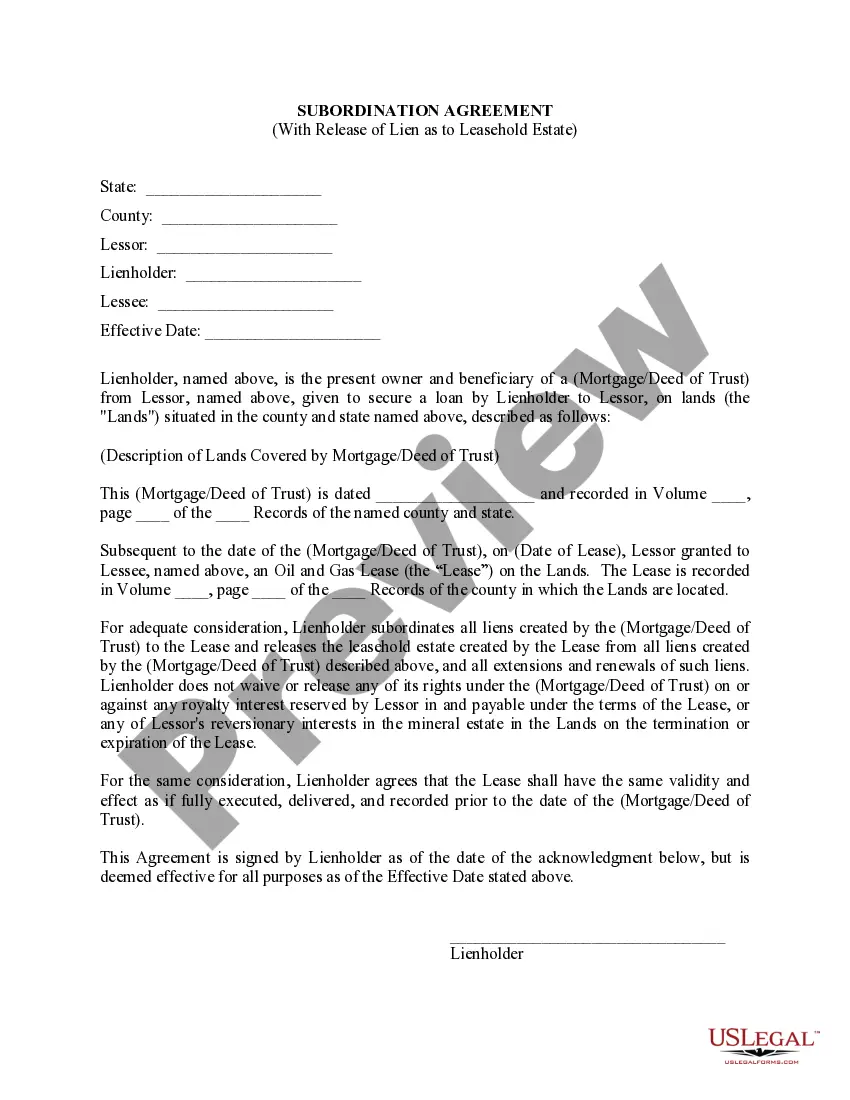
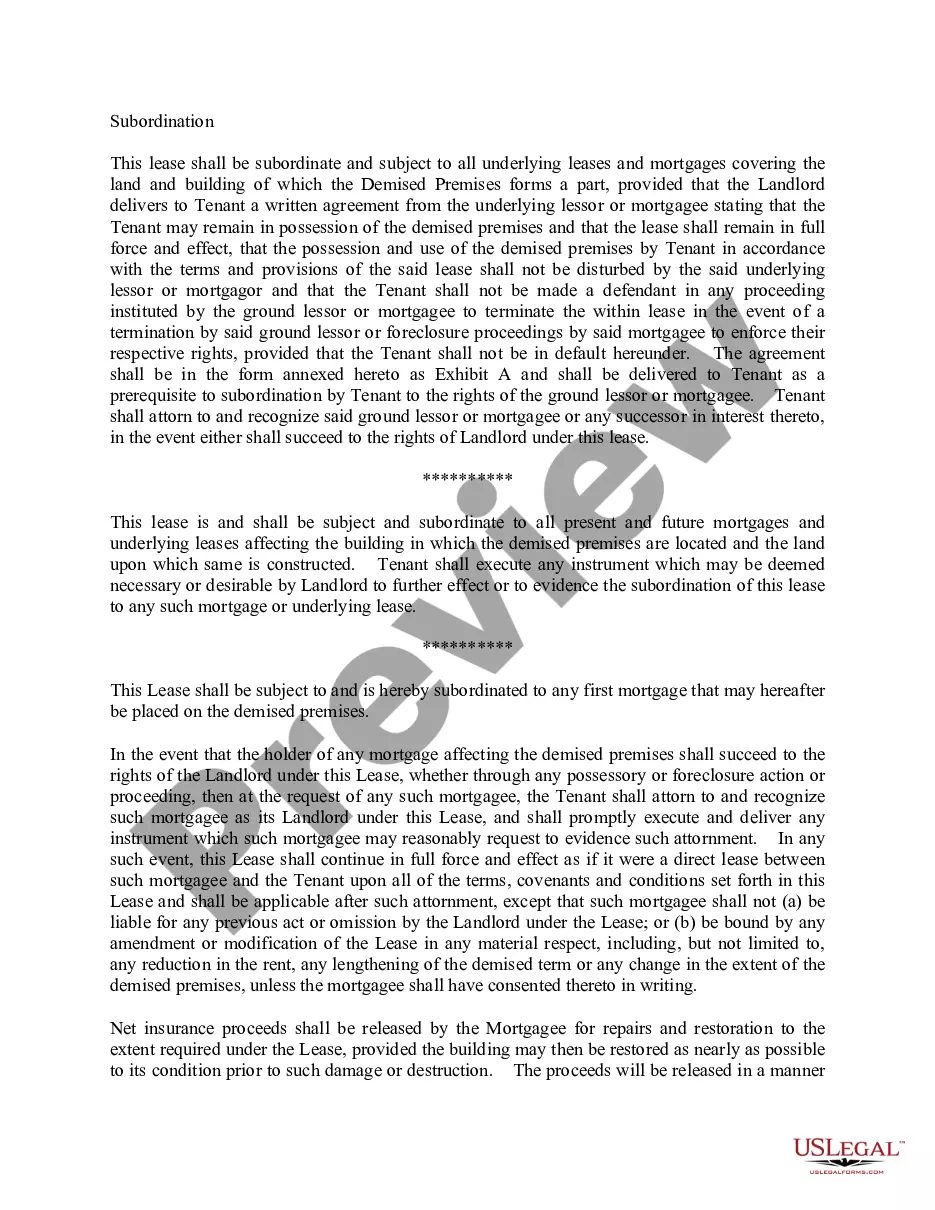
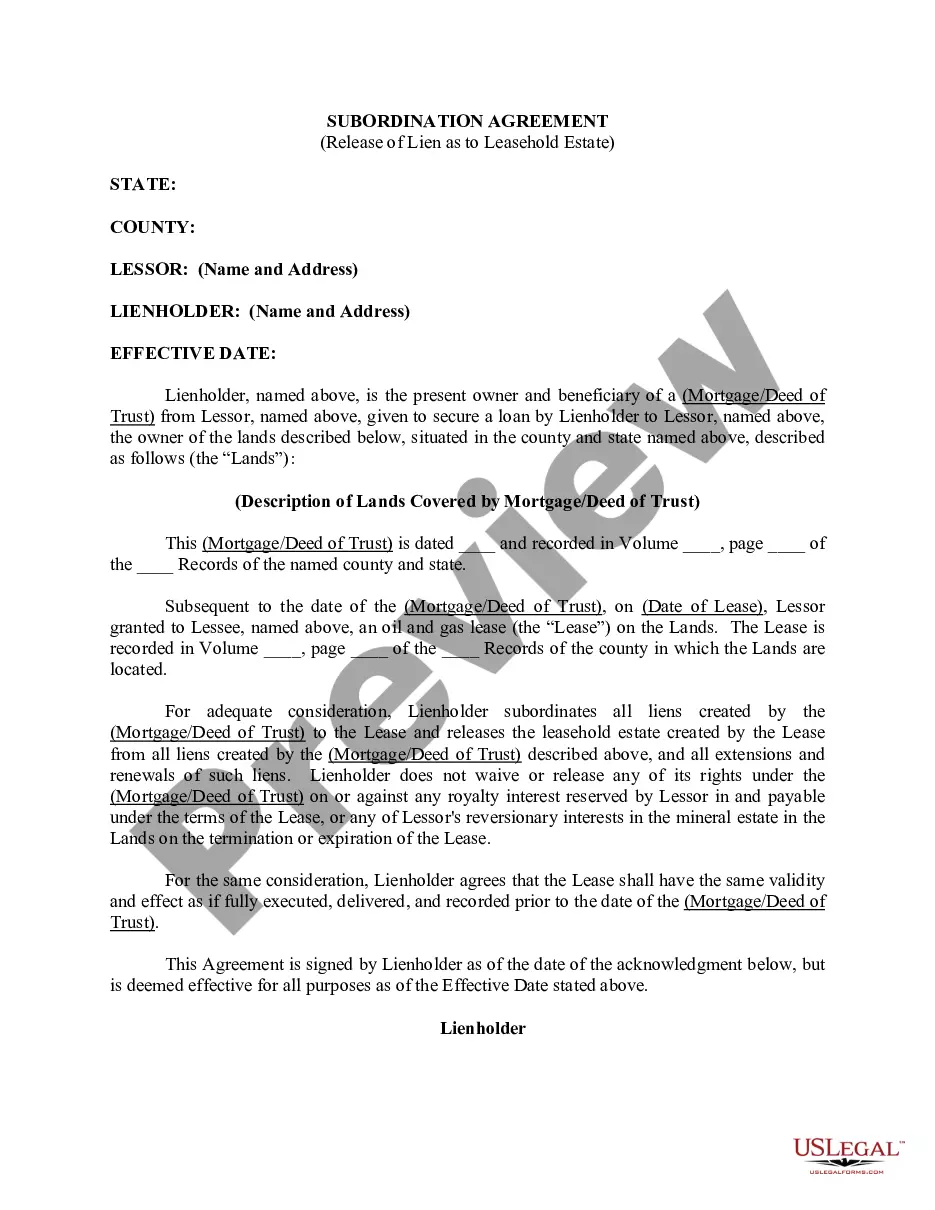
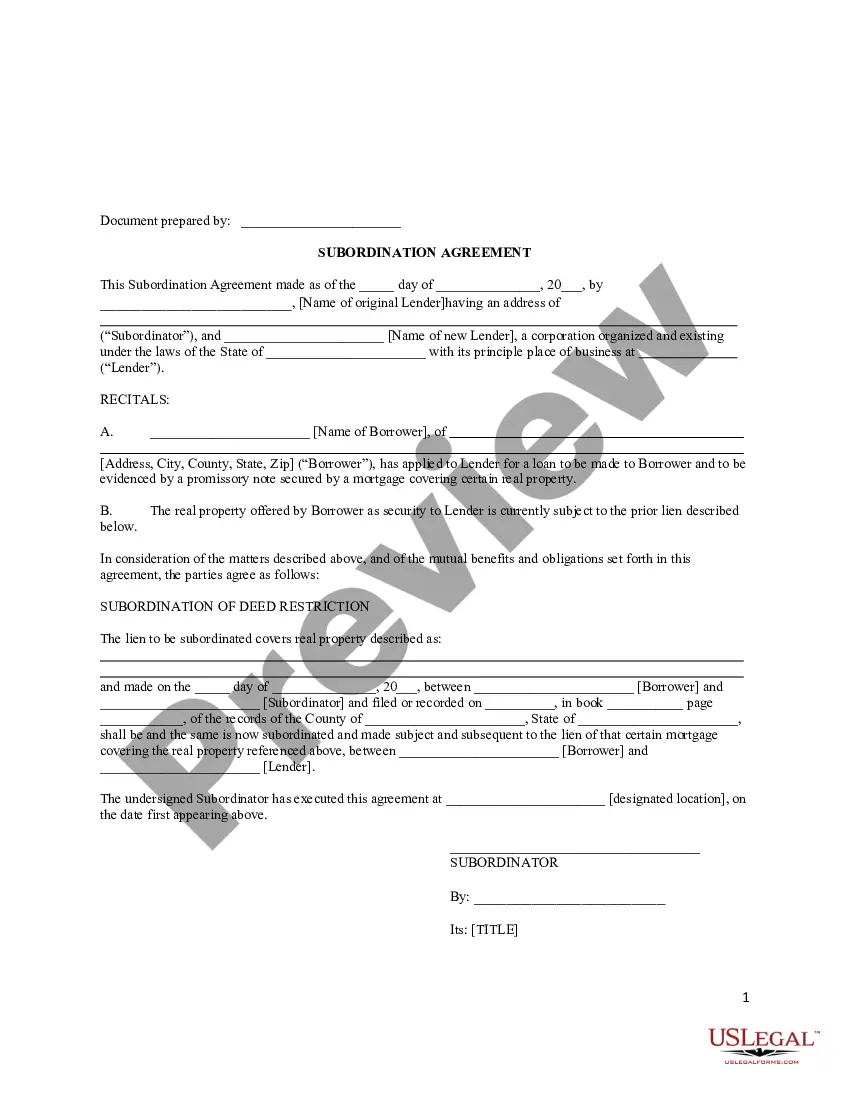
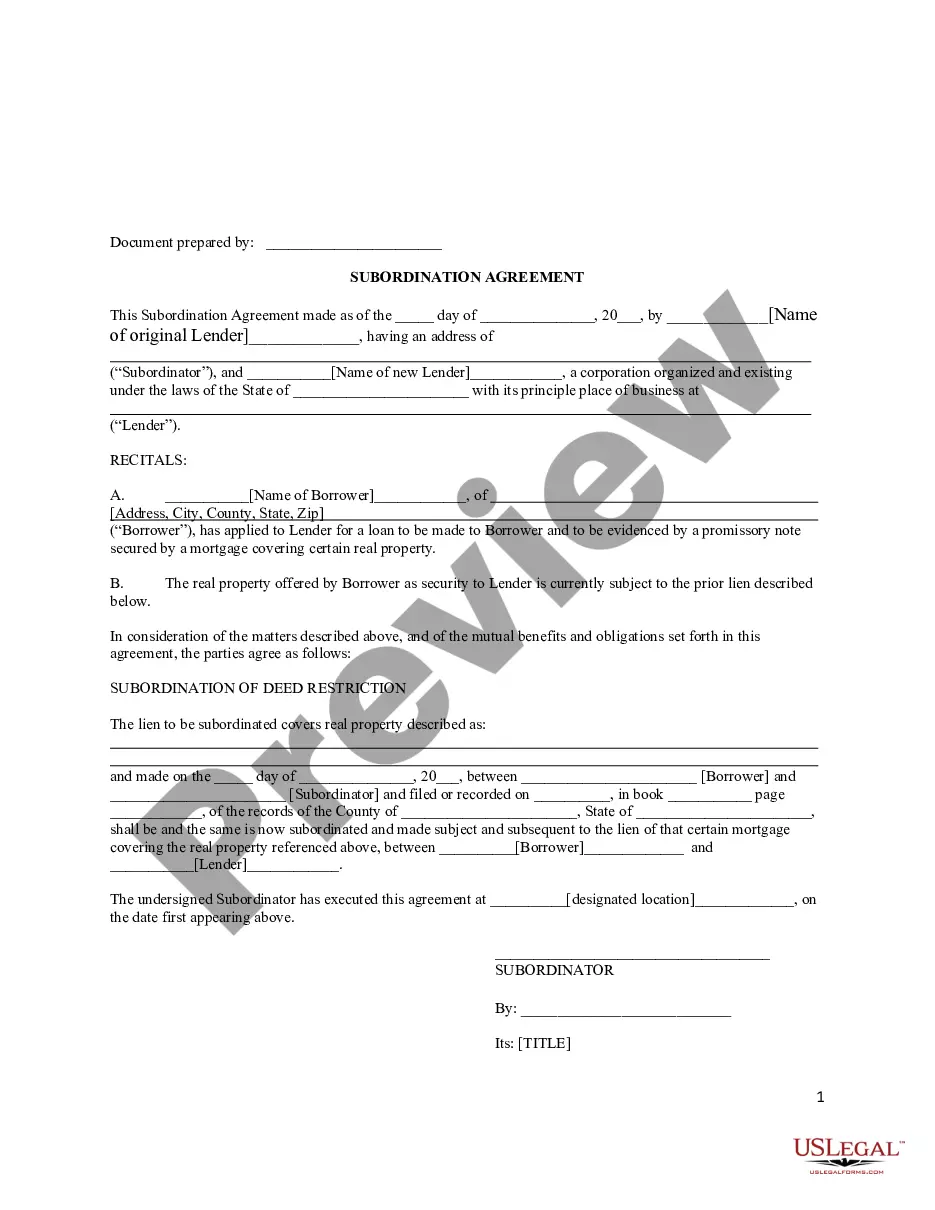
A Lease Subordination Agreement is a legal document that establishes the priority of a mineral, oil, or gas lease over existing liens, particularly those secured by a mortgage or deed of trust. This agreement allows the lienholder to subordinate their rights, ensuring that the lease remains valid and enforceable despite the underlying mortgage. This form is essential for property owners seeking to obtain a second mortgage while preserving their lease rights.
What’s included in this form
- Identification of the parties involved: Lessor, Lienholder, and Lessee.
- Details of the mortgage or deed of trust securing the loan.
- Description of the lands covered by the mortgage.
- Effective date of the agreement.
- Terms under which the lienholder releases the leasehold from their existing liens.
When this form is needed
This form should be utilized when a property owner wishes to secure a second mortgage while having existing liens from a mortgage or deed of trust. It ensures that the oil, gas, or mineral lease can still be effective, facilitating potential financing for repairs or enhancements to the property without jeopardizing existing lease agreements.
Who should use this form
- Property owners seeking financing through a second mortgage.
- Lienholders who want to confirm their subordinate position regarding existing leases.
- Lessee who wants assurance that their lease rights are preserved.
Completing this form step by step
- Identify all parties: Lessor, Lienholder, and Lessee.
- Specify the property details, including the description of lands involved.
- Enter the effective date of the agreement.
- Include the relevant details of the mortgage or deed of trust.
- Have all parties sign the agreement to validate the terms.
Does this document require notarization?
To make this form legally binding, it must be notarized. Our online notarization service, powered by Notarize, lets you verify and sign documents remotely through an encrypted video session.
Get your form ready online
Our built-in tools help you complete, sign, share, and store your documents in one place.
Make edits, fill in missing information, and update formatting in US Legal Forms—just like you would in MS Word.
Download a copy, print it, send it by email, or mail it via USPS—whatever works best for your next step.
Sign and collect signatures with our SignNow integration. Send to multiple recipients, set reminders, and more. Go Premium to unlock E-Sign.
If this form requires notarization, complete it online through a secure video call—no need to meet a notary in person or wait for an appointment.
We protect your documents and personal data by following strict security and privacy standards.

Make edits, fill in missing information, and update formatting in US Legal Forms—just like you would in MS Word.

Download a copy, print it, send it by email, or mail it via USPS—whatever works best for your next step.

Sign and collect signatures with our SignNow integration. Send to multiple recipients, set reminders, and more. Go Premium to unlock E-Sign.

If this form requires notarization, complete it online through a secure video call—no need to meet a notary in person or wait for an appointment.

We protect your documents and personal data by following strict security and privacy standards.
Mistakes to watch out for
- Failing to accurately describe the property involved.
- Not identifying all parties correctly.
- Missing signatures from all necessary parties.
- Overlooking the effective date, which can impact the validity of the agreement.
Advantages of online completion
- Convenience of downloading and filling out at your own pace.
- Editability allows you to customize the document according to your needs.
- Access to templates created by licensed attorneys ensures legal compliance.
Legal use & context
- The Lease Subordination Agreement helps clarify the priority of claims on the property.
- This form must be correctly executed to avoid disputes over property rights.
- Being legally binding, the agreement protects the interests of both lenders and lessors in case of lease default.
Quick recap
- The Lease Subordination Agreement clarifies lien priorities on leased property.
- Accurate completion of the form is critical to its effectiveness and legality.
- It can benefit property owners seeking new financing and ensures protection for all parties involved.
Definitions you should know
- Subordination: Agreement to place a debt or claim in a lower priority compared to another obligation.
- Lienholder: A person or entity that holds a legal claim against a property as collateral for a debt.
- Lessee: An individual or entity that rents or leases a property.
- Lessor: The person or organization granting the lease of the property.
Looking for another form?

Form popularity
FAQ
A Subordination and Non-Disturbance Agreement (SNDA) commonly called a non-disturb is an agreement that your landlord asks its lender to provide. The agreement basically says that if the building goes bankrupt and the lender takes control of the building from the landlord, the lender will honor your lease.
Who Can Amend the Lease? When a landlord and tenant sign a lease agreement it forms a legally binding contract. The lease cannot be altered except through another written agreement signed by both parties unless the original lease specifically gives a party the power to change something on their own.
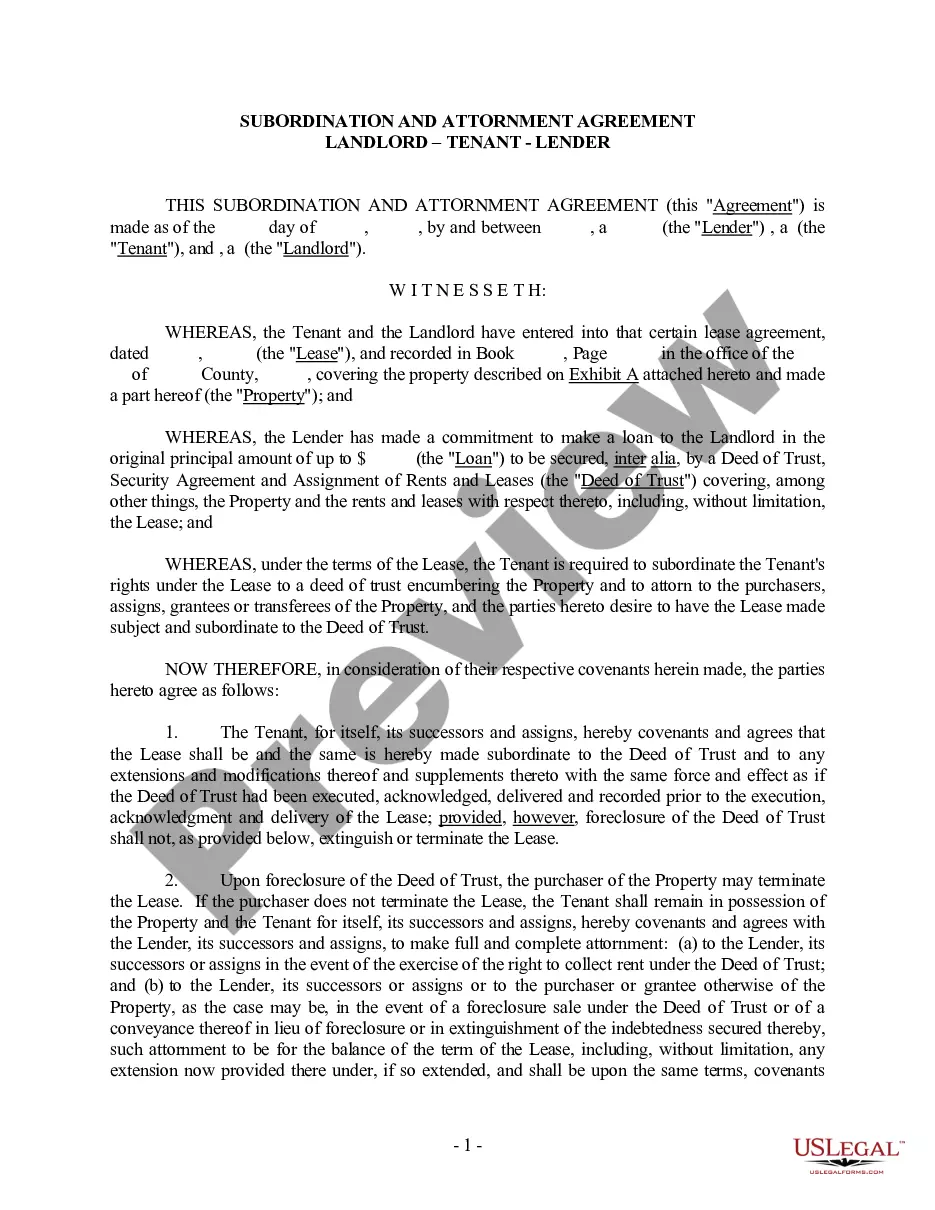
Subordination is the tenant's agreement that its interest under the lease will be subordinate to that of the lender.Attornment is the tenant's agreement to become the tenant of someone other than the original landlord and who has now taken title to the property.
A lease is automatically void when it is against the law, such as a lease for an illegal purpose. In other circumstances, like fraud or duress, a lease can be declared void at the request of one party but not the other.
When writing your own renters agreement you are able to include your own classes, such as tenants aren't allowed to have pets. However, these added clauses must be in line with both the landlord's and tenants' rights and if they infringe on these rights then they are void and can't stand up in a court of law.
Collect each party's information. Include specifics about your property. Consider all of the property's utilities and services. Know the terms of your lease. Set the monthly rent amount and due date. Calculate any additional fees. Determine a payment method. Consider your rights and obligations.
Despite its technical-sounding name, the subordination agreement has one simple purpose. It assigns your new mortgage to first lien position, making it possible to refinance with a home equity loan or line of credit. Signing your agreement is a positive step forward in your refinancing journey.
The Lease Must be in Writing It does not matter if the lease is handwritten or typed. If the lease is for more than one year, it must be in written form and contain the following terms.
A rental agreement will be void and unenforceable if it allows the landlord to terminate the tenancy of a tenant for a crime committed in relation to the rental property if it does not also include the new domestic abuse protection language set forth in sec. 704.