Subordination Clause
What this document covers
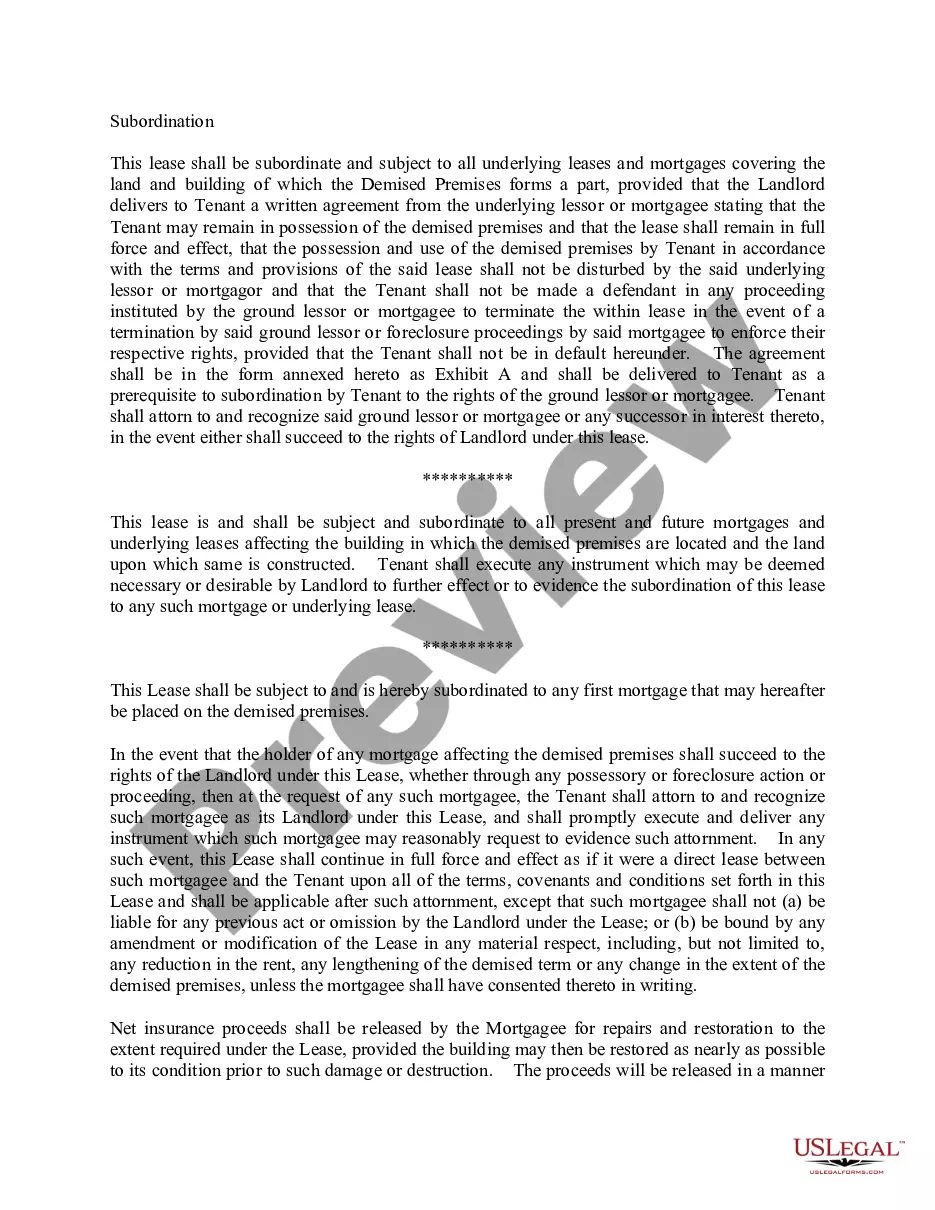
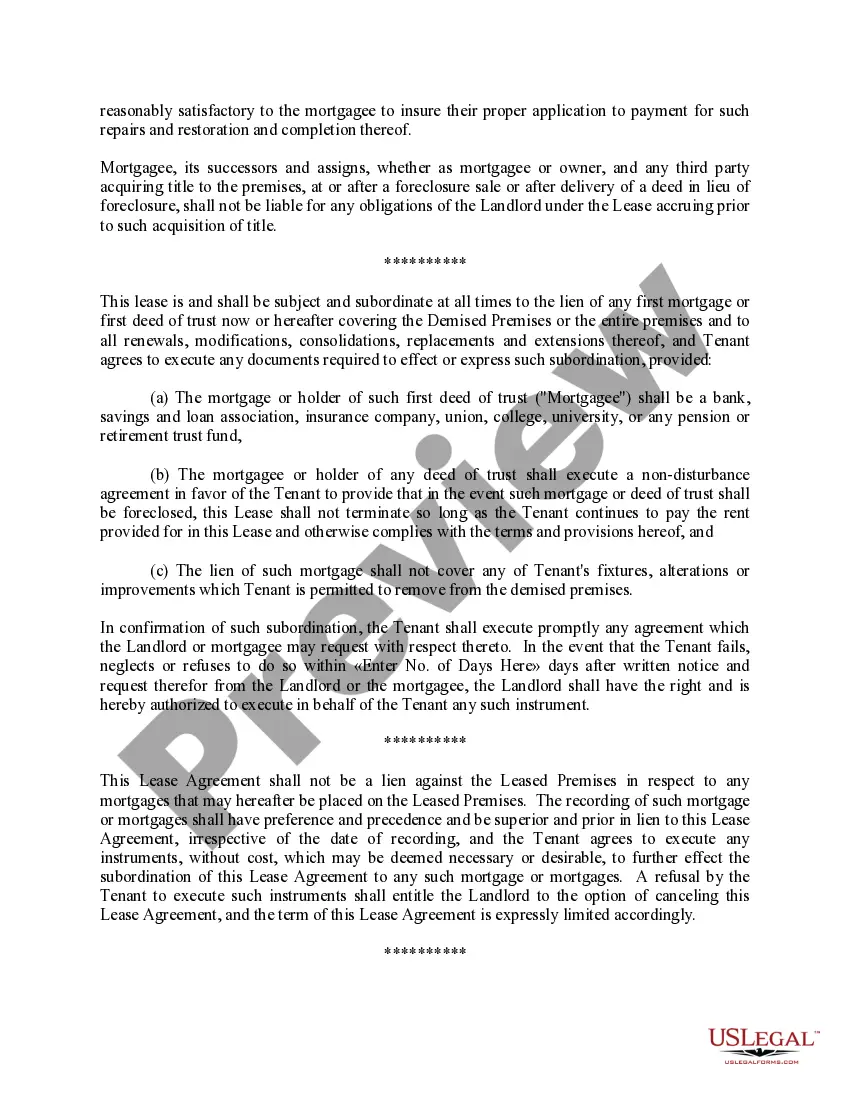
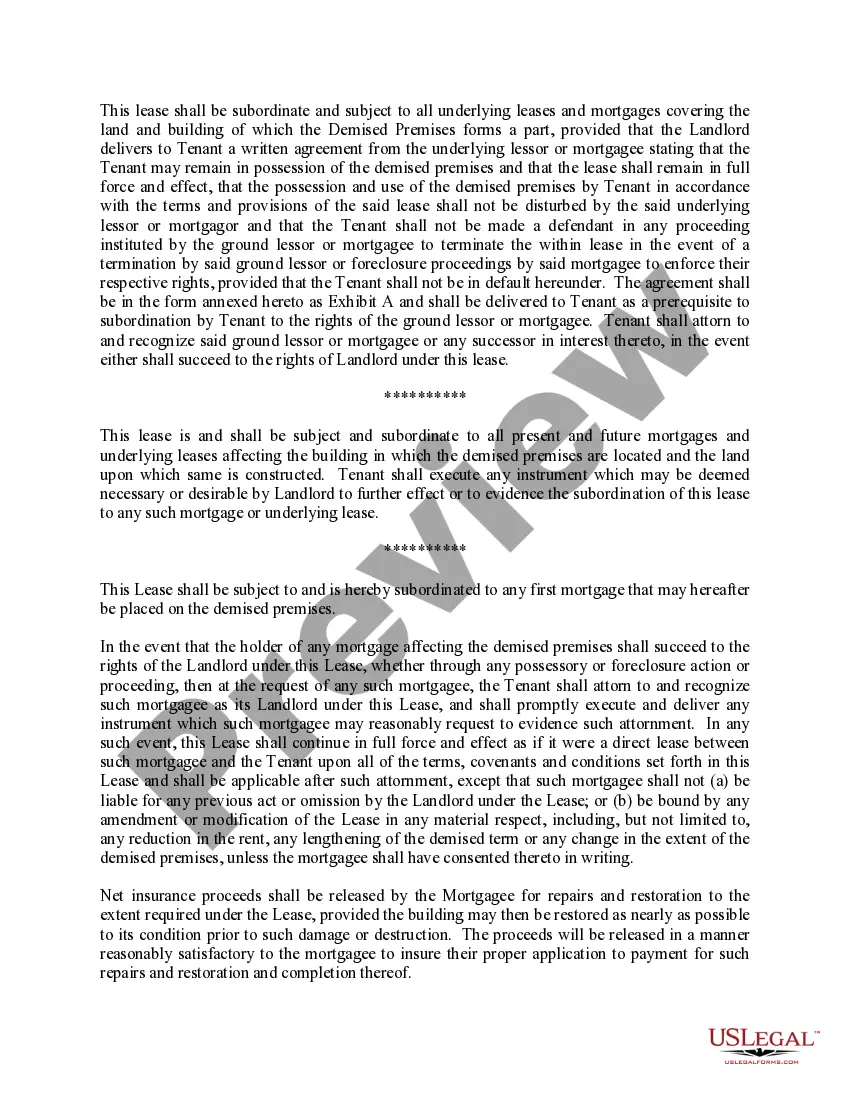
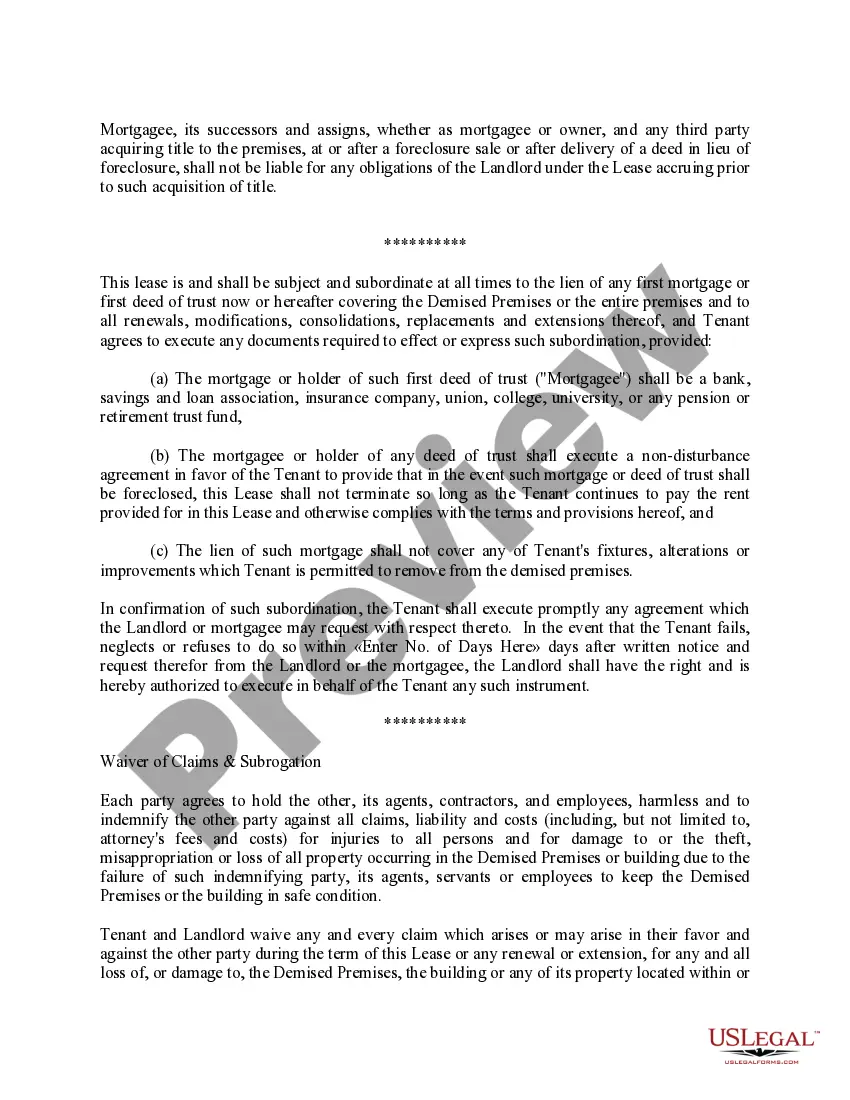
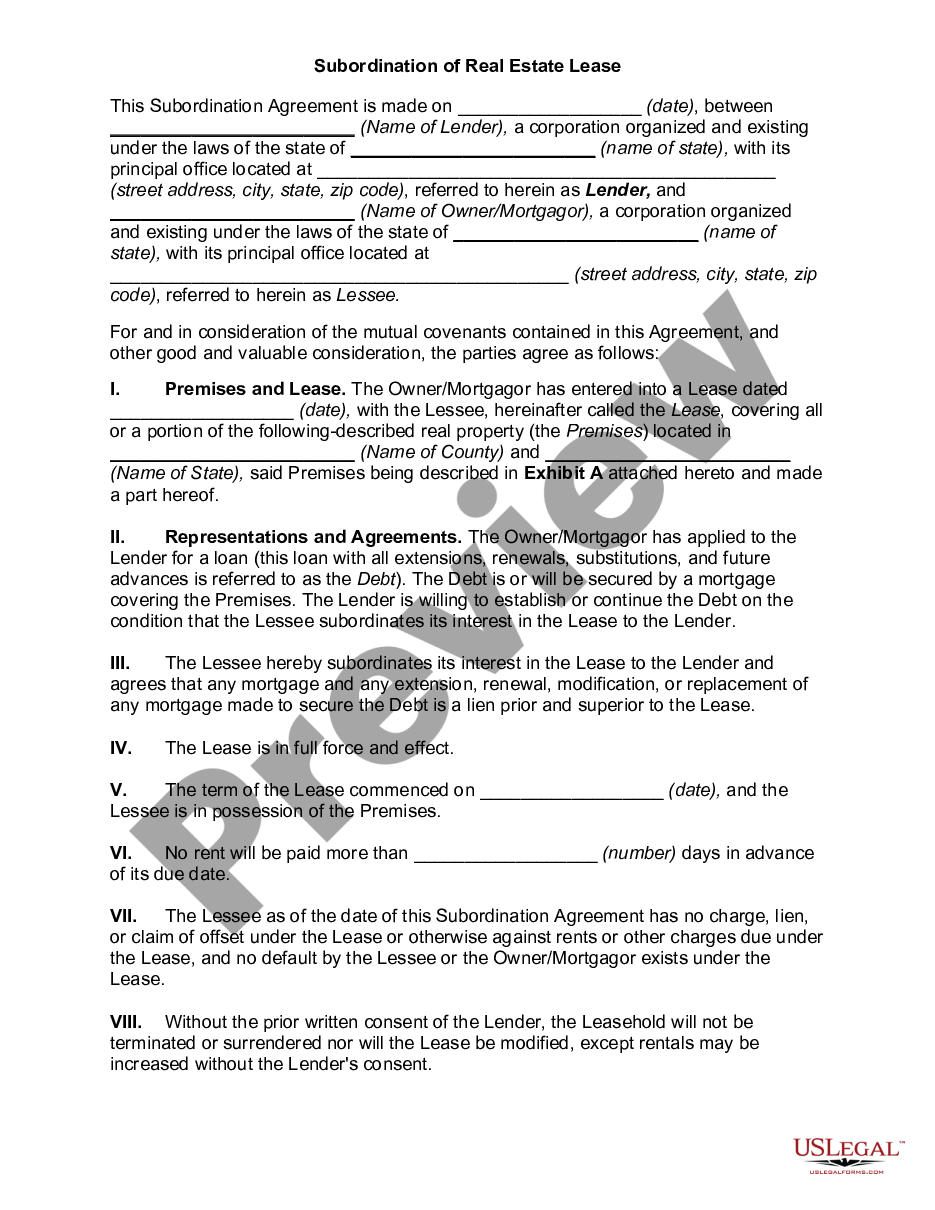
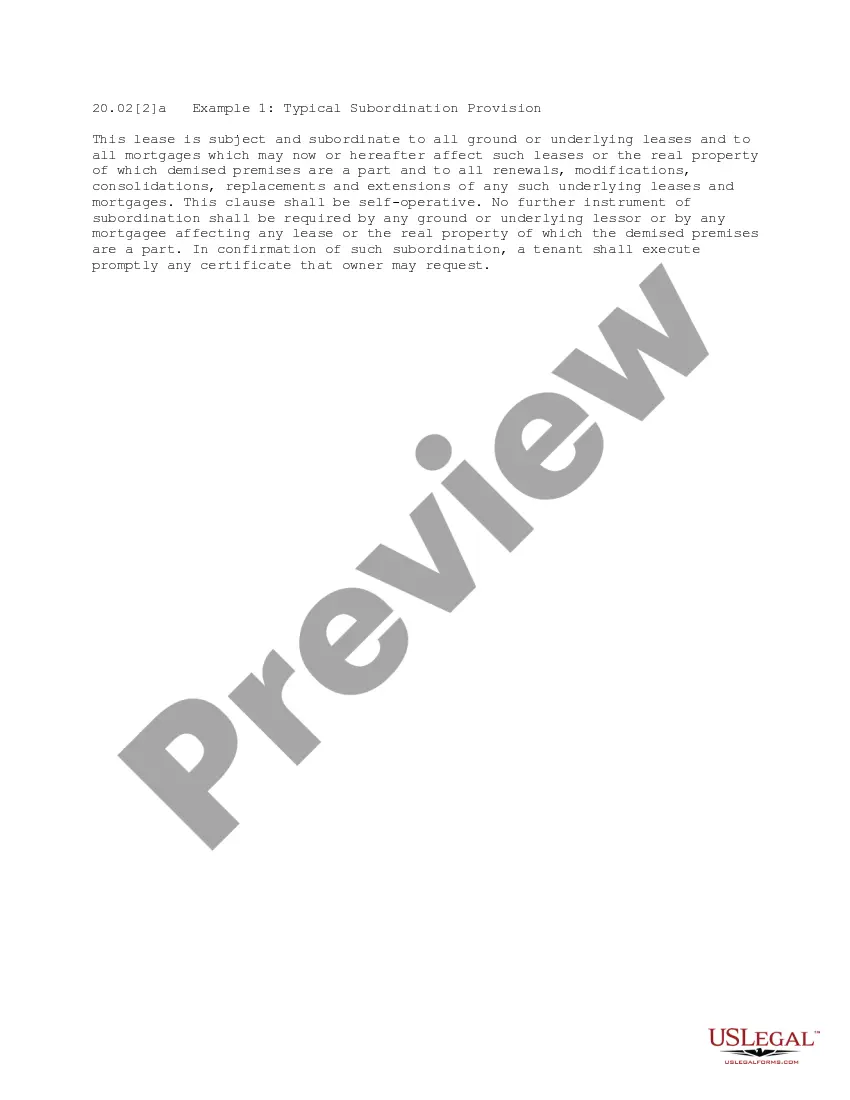
The subordination clause is a critical legal component in leasing agreements. It establishes that the lease will be subordinate to any existing and future mortgages or leases affecting the property. This clause is essential as it protects the rights of mortgage lenders by ensuring that their claims take precedence over those of the tenant, which is an important consideration in real estate transactions.
Form components explained
- Subordination declaration: States that the lease is subordinate to any underlying mortgages or leases.
- Non-disturbance agreement: Requires the landlord to ensure the tenant can remain in possession of the leased premises despite mortgage proceedings.
- Attornment clause: The tenant agrees to recognize the mortgagee or the successor as their new landlord if foreclosure occurs.
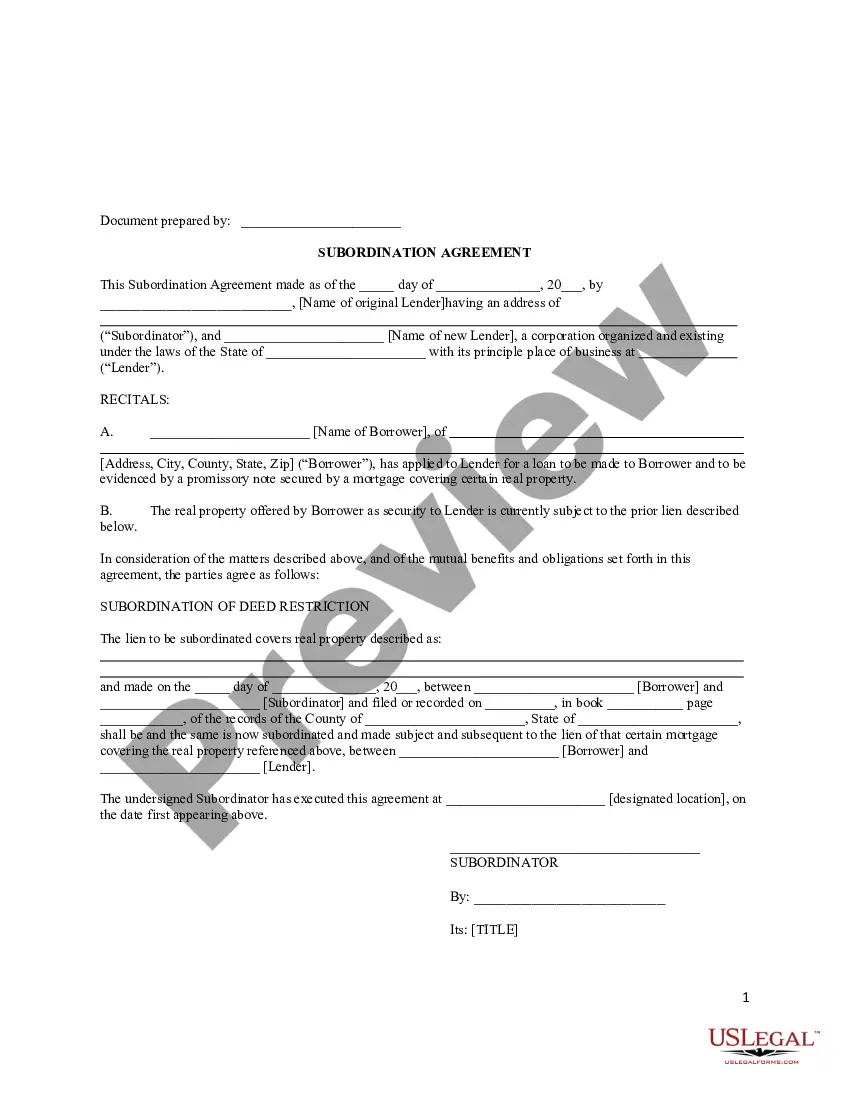
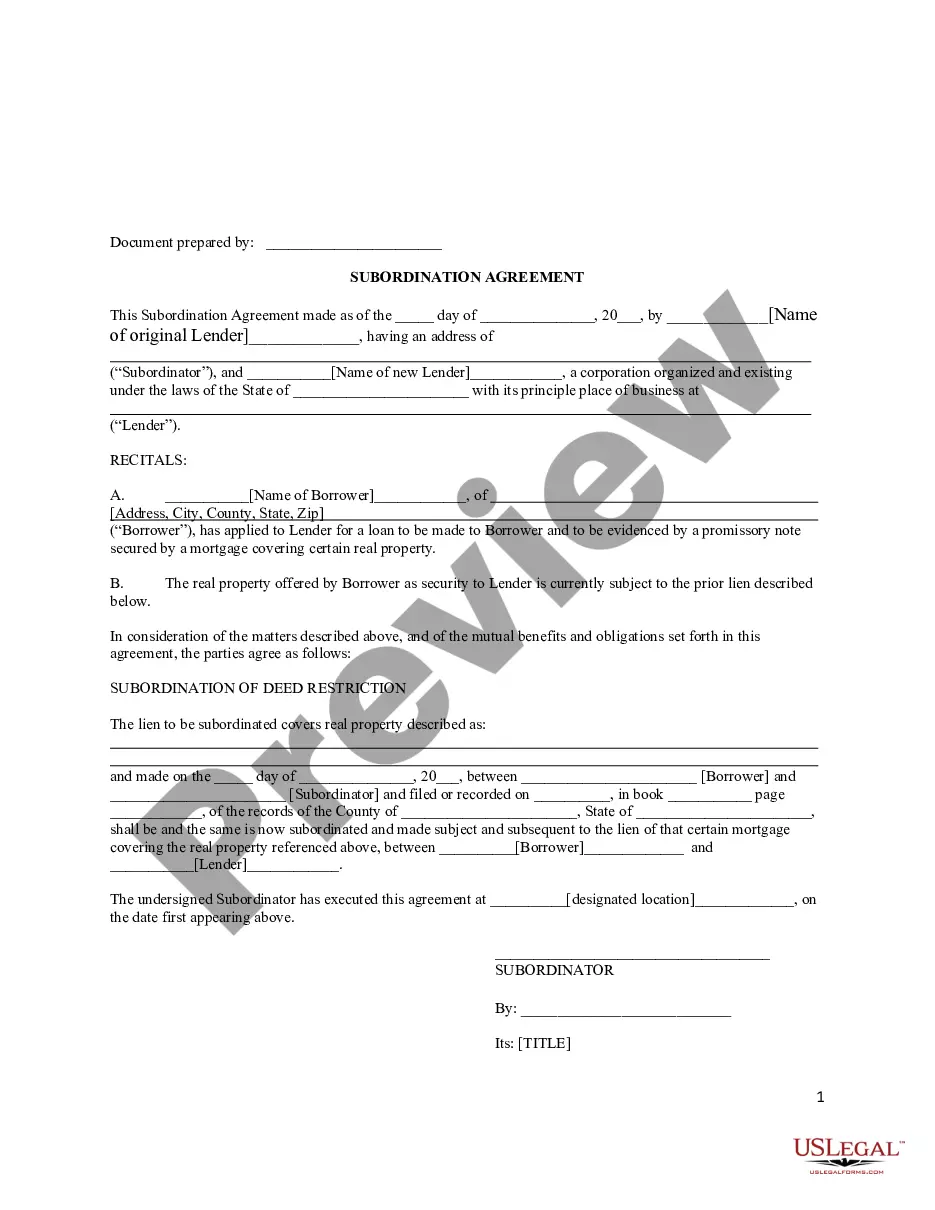
- Signature and execution: Outlines the requirement for signatures of both parties and any necessary documents to confirm subordination.
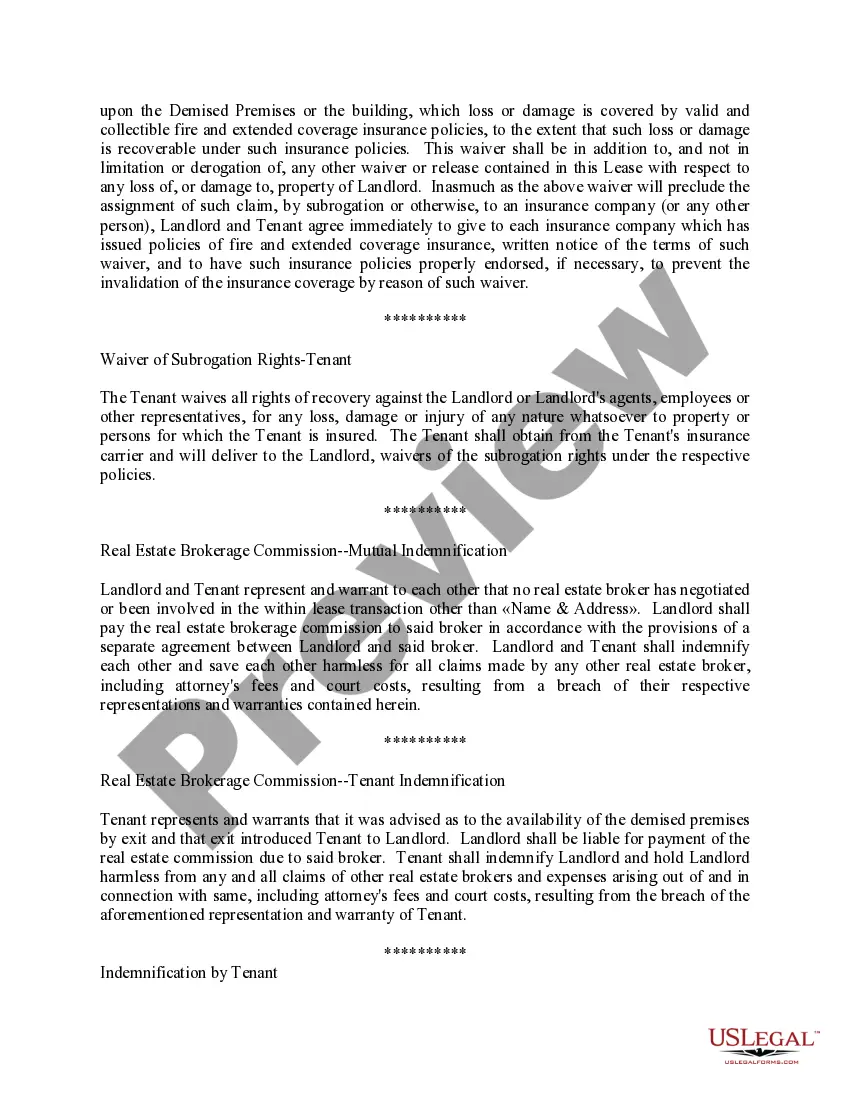
- Insurance provisions: Addresses the release of insurance proceeds for repairs and specific tenant rights related to personal property.

Situations where this form applies
This form should be used when entering into a lease agreement that could be affected by existing or future mortgages. It is especially pertinent for tenants occupying commercial spaces subject to financing arrangements, ensuring their rights are protected in the event of foreclosure. Additionally, landlords can use this form to clarify the hierarchy of rights associated with the property.
Who can use this document
This form is suitable for:
- Landlords who wish to secure their property while ensuring tenant rights amidst mortgage agreements.
- Tenants entering a lease agreement that may be subject to prior or future financial encumbrances.
- Real estate professionals involved in drafting leases for commercial properties.
Steps to complete this form
- Identify the landlord and tenant's details, including full names and contact information.
- Specify the property to which the lease and subordination clause applies.
- Review and confirm the recognition of all mortgages or leases that may affect the premises.
- Include any non-disturbance provisions to safeguard tenant rights during foreclosure.
- Have all parties sign and date the agreement, ensuring proper execution for legal validity.
Is notarization required?
This form does not typically require notarization unless specified by local law. However, it is advisable to have the signatures notarized to add an additional layer of authenticity.
Get your form ready online
Our built-in tools help you complete, sign, share, and store your documents in one place.
Make edits, fill in missing information, and update formatting in US Legal Forms—just like you would in MS Word.
Download a copy, print it, send it by email, or mail it via USPS—whatever works best for your next step.
Sign and collect signatures with our SignNow integration. Send to multiple recipients, set reminders, and more. Go Premium to unlock E-Sign.
If this form requires notarization, complete it online through a secure video call—no need to meet a notary in person or wait for an appointment.
We protect your documents and personal data by following strict security and privacy standards.

Make edits, fill in missing information, and update formatting in US Legal Forms—just like you would in MS Word.

Download a copy, print it, send it by email, or mail it via USPS—whatever works best for your next step.

Sign and collect signatures with our SignNow integration. Send to multiple recipients, set reminders, and more. Go Premium to unlock E-Sign.

If this form requires notarization, complete it online through a secure video call—no need to meet a notary in person or wait for an appointment.

We protect your documents and personal data by following strict security and privacy standards.
Avoid these common issues
- Failing to include a clear description of the property involved.
- Neglecting to secure the necessary signatures from all parties.
- Not having a non-disturbance agreement when required, leaving tenants vulnerable.
Benefits of completing this form online
- Convenient access to legally vetted templates that save time and ensure proper formatting.
- The ability to edit and customize the form to meet specific needs before downloading.
- Reliable updates reflecting changes in law, ensuring you remain compliant.
Looking for another form?

Form popularity
FAQ
For example, "my brother loves hamburgers." Subordinate clauses (or dependent clauses) add extra information to the main clause and cannot exist on their own. For example, "unlike my brother, I don't eat meat." Here the bolded text - the subordinate clause - gives us additional information about the main clause.
A subordination clause serves to protect the lender if a homeowner defaults. If this happens, the lender then has the legal standing to repossess the home and cover their loan's outstanding balance first. If other subordinate mortgages are involved, the secondary liens will take a backseat in this process.
Example sentences using a subordinate clause If you win the award, I will buy you a new video game. Since the sun will shine today, we will go to the beach. When she was sick, her teacher gave the exam. Because mom said so, I apologized to Cecilia.
Subordination is the process of ranking home loans (mortgage, HELOC or home equity loan) by order of importance. When you have a home equity line of credit, for example, you actually have two loans ? your mortgage and HELOC. Both are secured by the collateral in your home at the same time.
The three main kinds of subordinate clause in English are the relative clause, the comparative clause, and the content clause.
Identifying Subordinate Clauses Subordinate clauses begin with certain words or short phrases called subordinating words (also known as dependent words, or subordinating/subordinate conjunctions). If a clause begins with a subordinating word, that clause is a subordinate clause and cannot stand alone as a sentence.
Subordinate clauses will often begin with subordinating conjunctions, which are words that link dependent clauses to independent clauses, such as for, as, since, therefore, hence, consequently, though, due to, provided that, because, unless, once, while, when, whenever, where, wherever, before, and after.
1 Subordination. To the extent and in the manner hereinafter set forth in this Agreement, each Obligor signatory hereto (on behalf of itself and each other Obligor) and each Junior Creditor agrees that payment of the Junior Debt is expressly subordinated to the prior Final Payment of all Senior Debt.