Subordination Provision
Overview of this form
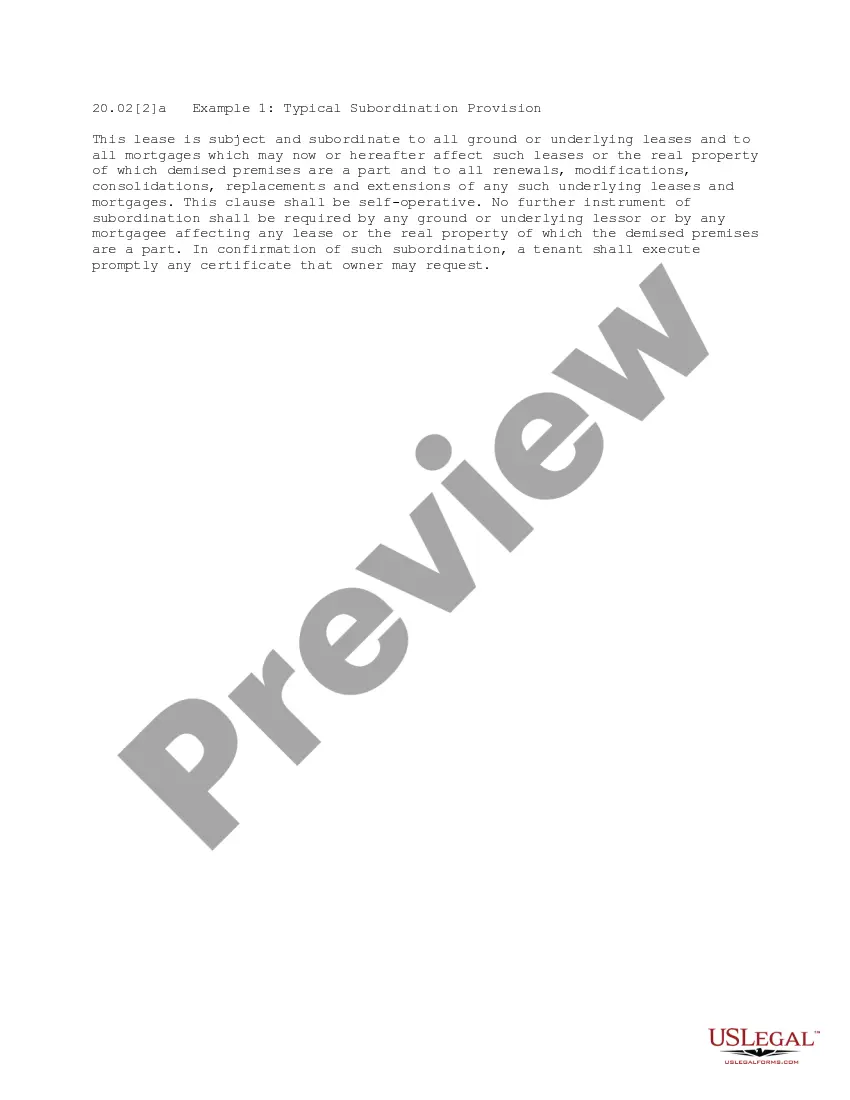
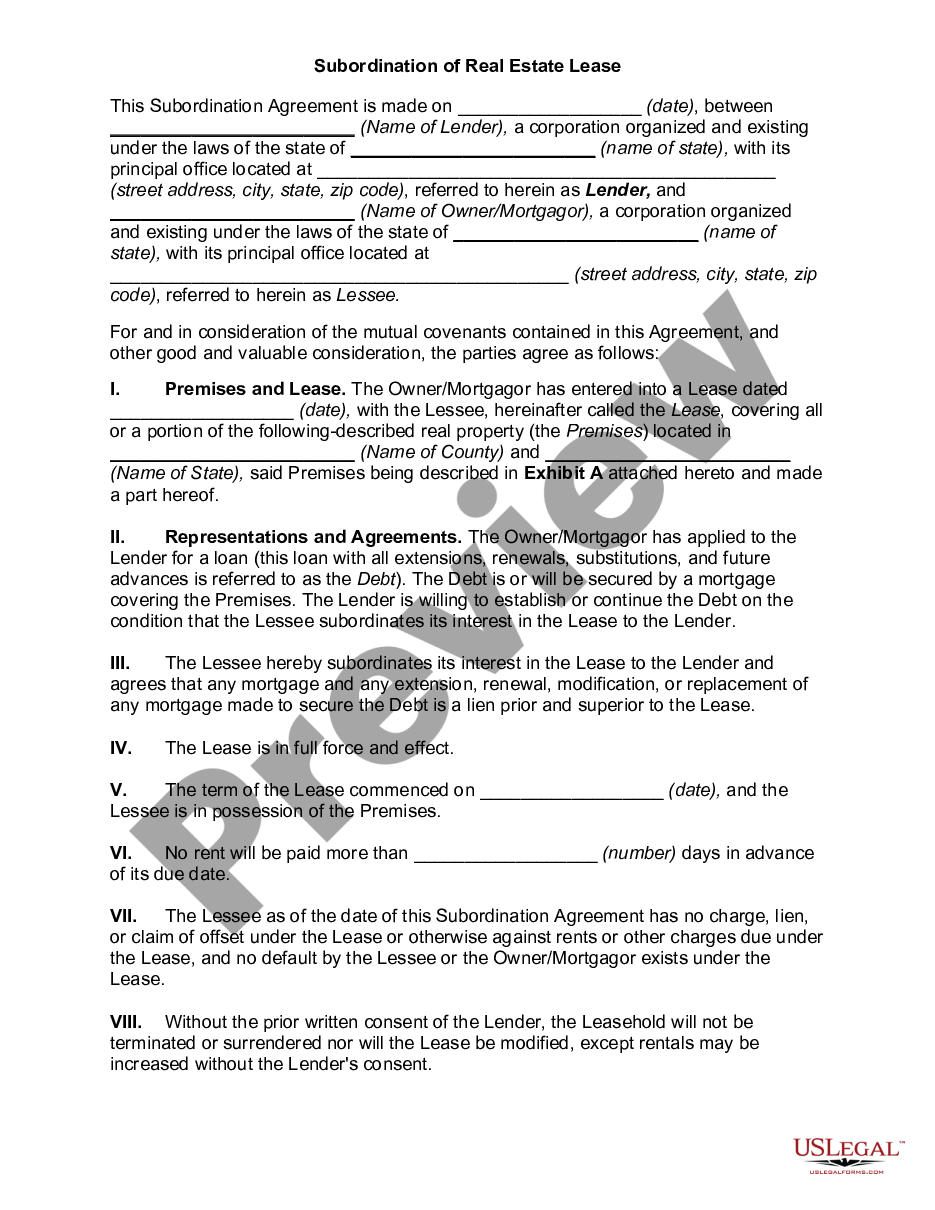
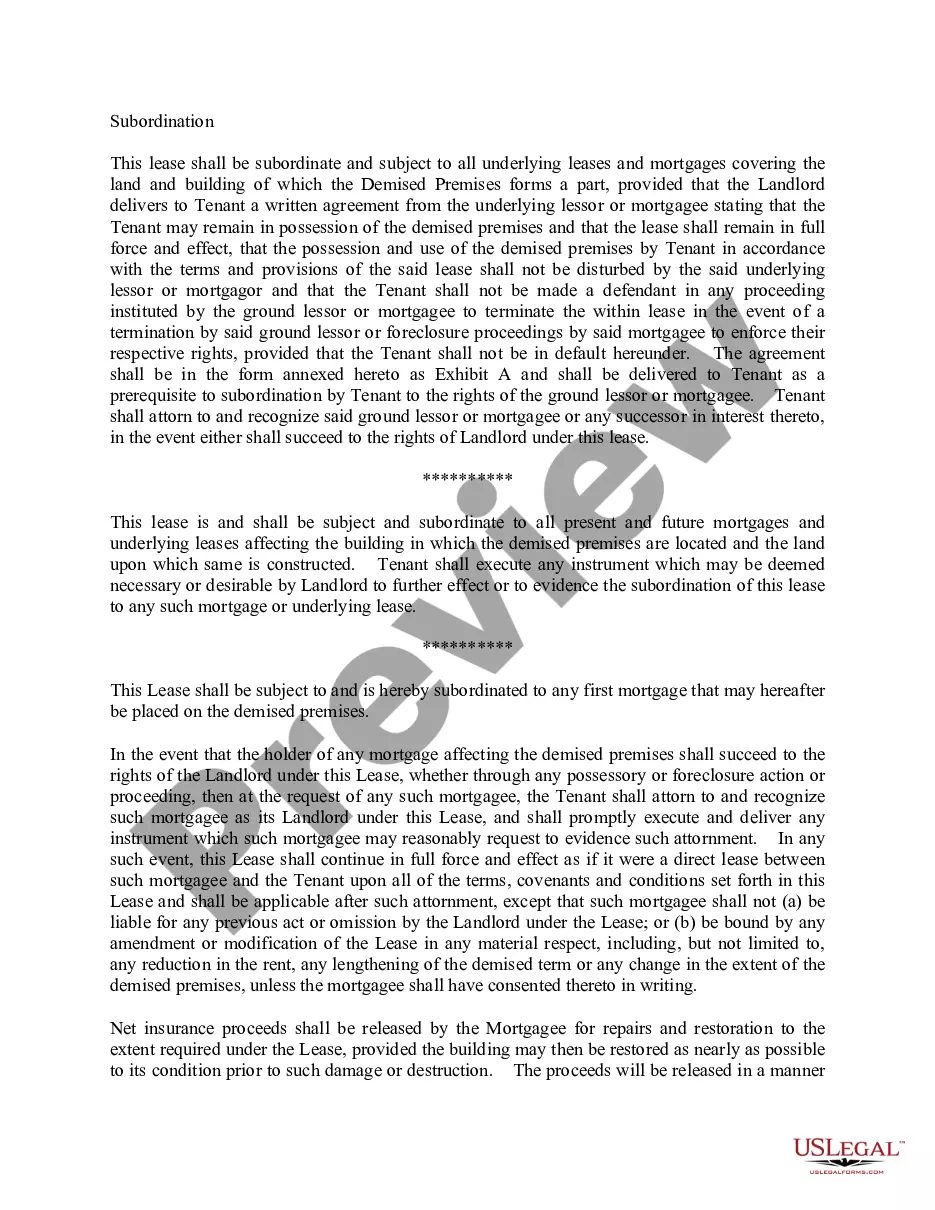
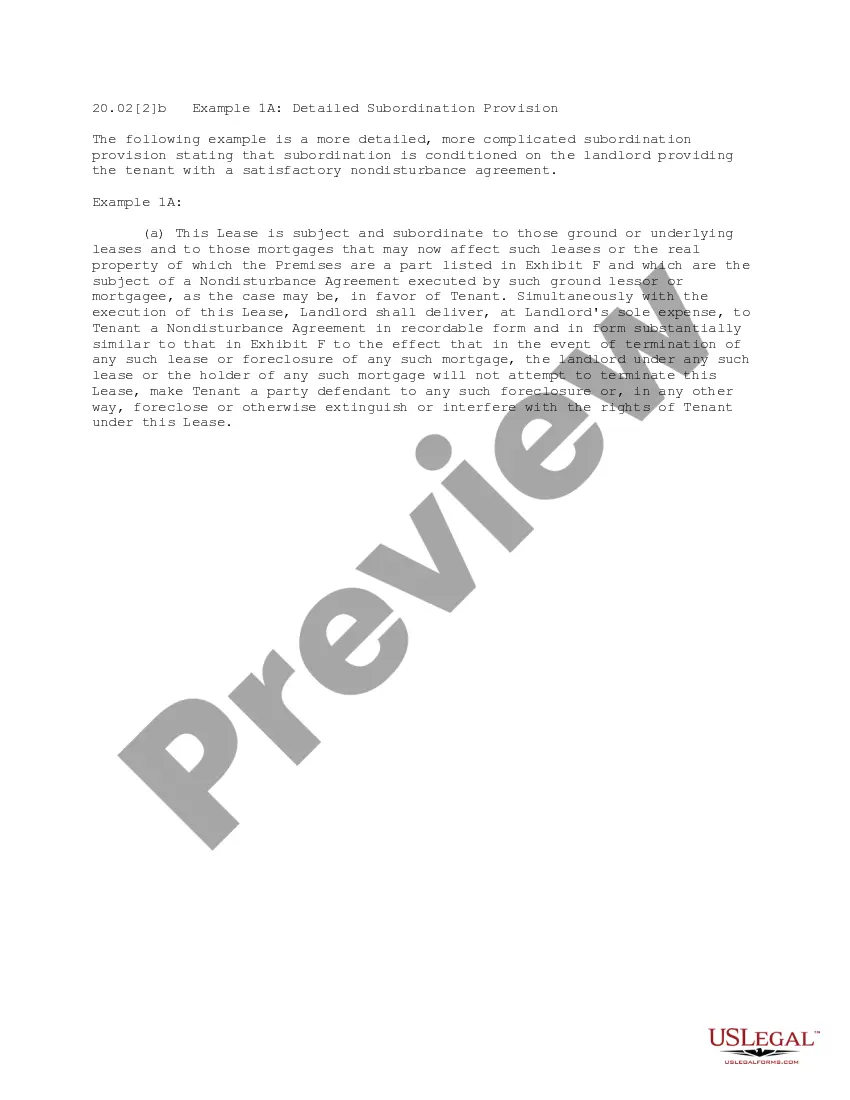
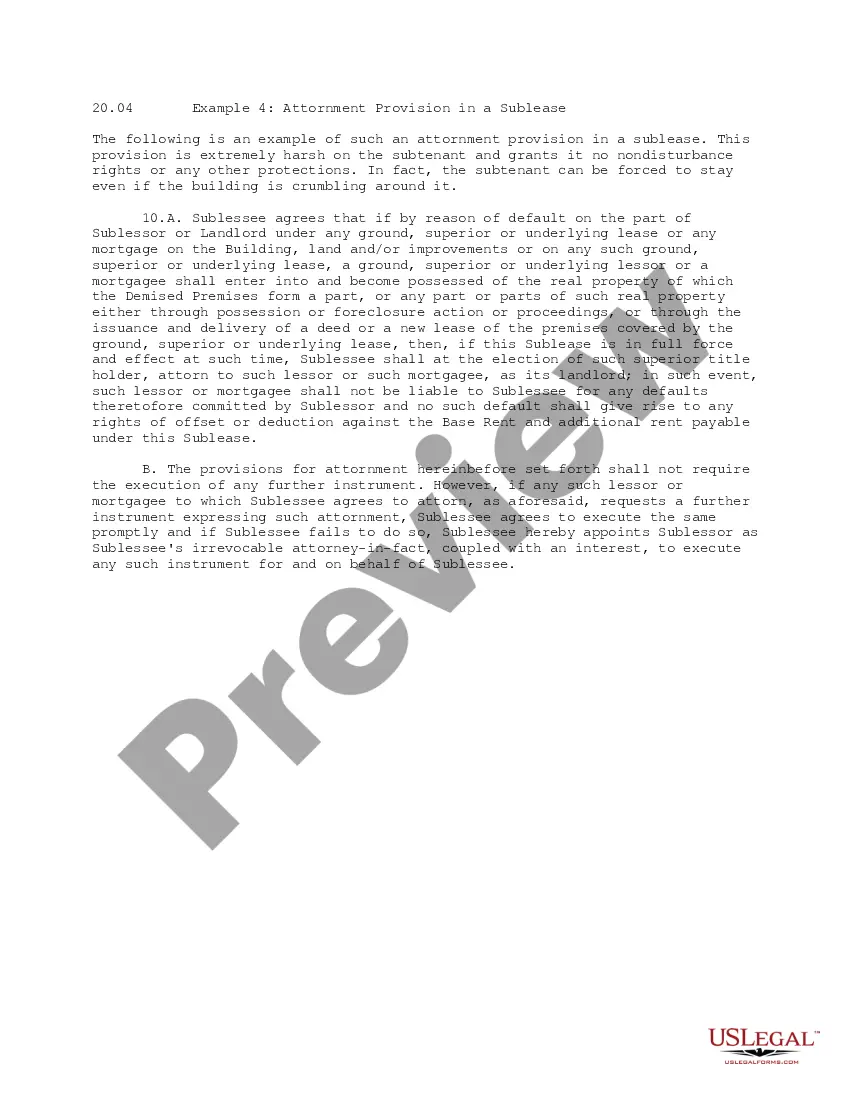
The subordination provision is a clause within an office lease, establishing that the lease is subordinate to any ground or underlying leases and mortgages that may impact the property. This form ensures that the leaseholder understands their position concerning these financial obligations, making it clear how their rights are prioritized in relation to prior agreements. It is essential for protecting the interests of both the tenant and any lenders involved.
What’s included in this form
- Description of subordination to ground or underlying leases.
- Clarification regarding future mortgages that may affect the lease.
- Self-operative nature of the subordination clause.
- Requirements for the tenant to confirm subordination upon request.
When to use this form
This form is necessary when entering into an office lease where there are existing or potential underlying leases and mortgages. It is typically used when a property owner wants to secure mortgage financing, ensuring that all leases are subordinate to the mortgage terms. The form protects tenants by outlining the conditions under which their lease remains in effect despite changes in property ownership or financing.
Who needs this form
- Property owners seeking to establish clear lease terms with tenants.
- Tenant businesses looking to understand their legal position related to the property lease.
- Real estate professionals involved in property management and leasing agreements.
- Individuals or entities entering into office leases that may be affected by existing mortgages.
Instructions for completing this form
- Identify the parties involved in the lease agreement.
- Specify the property that is subject to the lease.
- Review and confirm the terms of subordination in context with existing mortgages.
- Enter relevant dates for the lease commencement and any applicable extensions.
- Sign the document and ensure all parties receive a copy for their records.
Does this document require notarization?
This form does not typically require notarization unless specified by local law. Always check with your legal advisor to confirm whether notarization is necessary in your jurisdiction.
Get your form ready online
Our built-in tools help you complete, sign, share, and store your documents in one place.
Make edits, fill in missing information, and update formatting in US Legal Forms—just like you would in MS Word.
Download a copy, print it, send it by email, or mail it via USPS—whatever works best for your next step.
Sign and collect signatures with our SignNow integration. Send to multiple recipients, set reminders, and more. Go Premium to unlock E-Sign.
If this form requires notarization, complete it online through a secure video call—no need to meet a notary in person or wait for an appointment.
We protect your documents and personal data by following strict security and privacy standards.

Make edits, fill in missing information, and update formatting in US Legal Forms—just like you would in MS Word.

Download a copy, print it, send it by email, or mail it via USPS—whatever works best for your next step.

Sign and collect signatures with our SignNow integration. Send to multiple recipients, set reminders, and more. Go Premium to unlock E-Sign.

If this form requires notarization, complete it online through a secure video call—no need to meet a notary in person or wait for an appointment.

We protect your documents and personal data by following strict security and privacy standards.
Mistakes to watch out for
- Failing to read and understand the implications of the subordination clause.
- Not confirming existing mortgages or leases prior to signing.
- Overlooking the need for tenant certification upon request.
Advantages of online completion
- Easy access to up-to-date legal form templates drafted by attorneys.
- Convenience of downloading and completing forms at your own pace.
- Ability to edit and customize the form to meet specific needs.
Legal use & context
- The subordination provision is legally enforceable under real estate law.
- Understand that the rights of tenants may be affected by the subordination clause.
- Consult with a legal expert if there are concerns regarding the implications of this provision.
Key takeaways
- The subordination provision clarifies the legal hierarchy of leases and mortgages.
- It's crucial for both landlords and tenants to understand their obligations under this clause.
- Ensure all parties are aware of and agree to the terms outlined in the subordination provision.
Looking for another form?


Form popularity
FAQ
Subordination is the tenant's agreement that its interest under the lease will be subordinate to that of the lender.Attornment is the tenant's agreement to become the tenant of someone other than the original landlord and who has now taken title to the property.
A subordinate clause (or dependent clause) is a clause that cannot stand alone as a complete sentence because it does not express a complete thought. Like all clauses, a subordinate clause has a subject and verb.
A subordinate clausealso called a dependent clausewill begin with a subordinate conjunction or a relative pronoun. Like all clauses, it will have both a subject and a verb. This combination of words will not form a complete sentence. It will instead make a reader want additional information to finish the thought.
There are three different kinds of subordinate clauses: adverb clauses, adjective clauses, and noun clauses. Each of these clauses are introduced by certain words.
A subordinate clause has a subject and a verb, but it cannot stand alone as a complete sentence. Let's look at some examples;When she was sick (she=subject; was=verb) Because mom said so (mom=subject; said=verb)
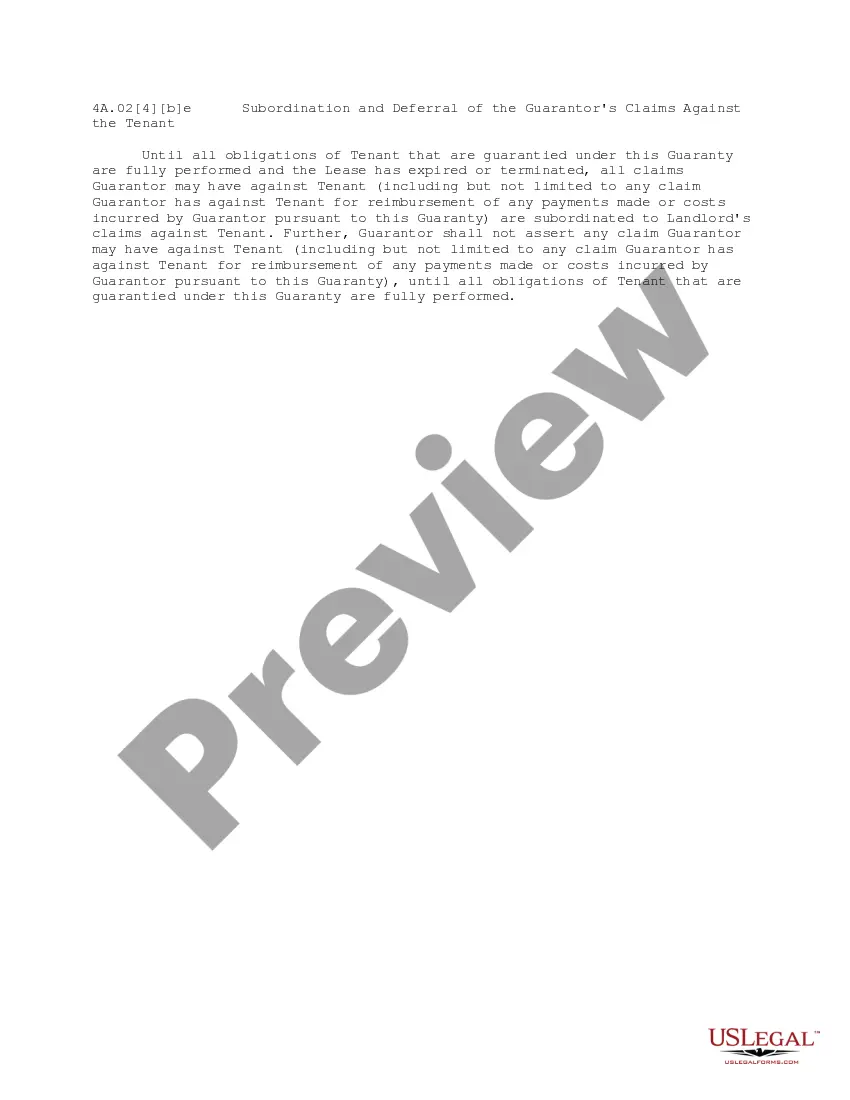
Subordination clauses in mortgages refer to the portion of your agreement with the mortgage company that says their lien takes precedence over any other liens you may have on your property.However, it's also possible to have other liens. You might have some placed by contractors until work is paid off.
Despite its technical-sounding name, the subordination agreement has one simple purpose. It assigns your new mortgage to first lien position, making it possible to refinance with a home equity loan or line of credit.
For example, in the sentence 'I played out until it went dark', the phrase 'until it went dark' is the subordinate clause because it requires additional information in order to make sense. Subordinate clauses contain a subject noun and a verb.