Sample Letter for Incorrect Documents Concerning Foreclosure proceedings
Overview of this form
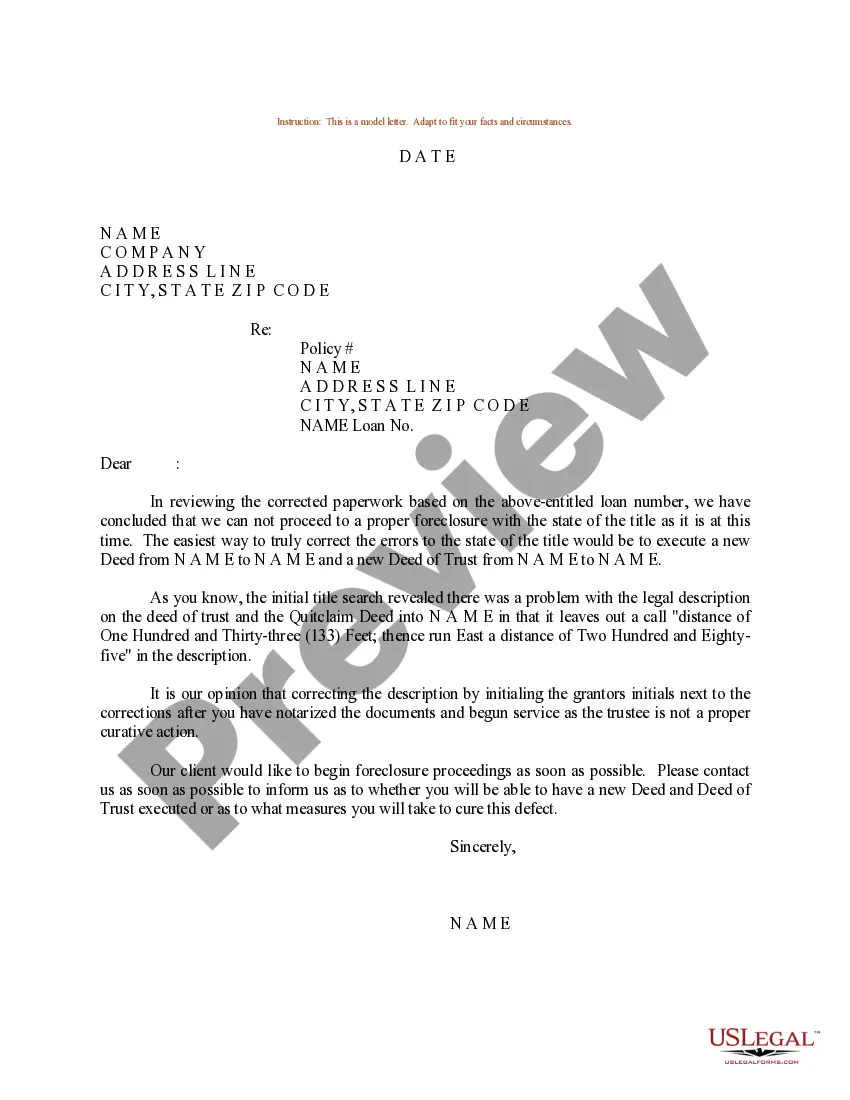
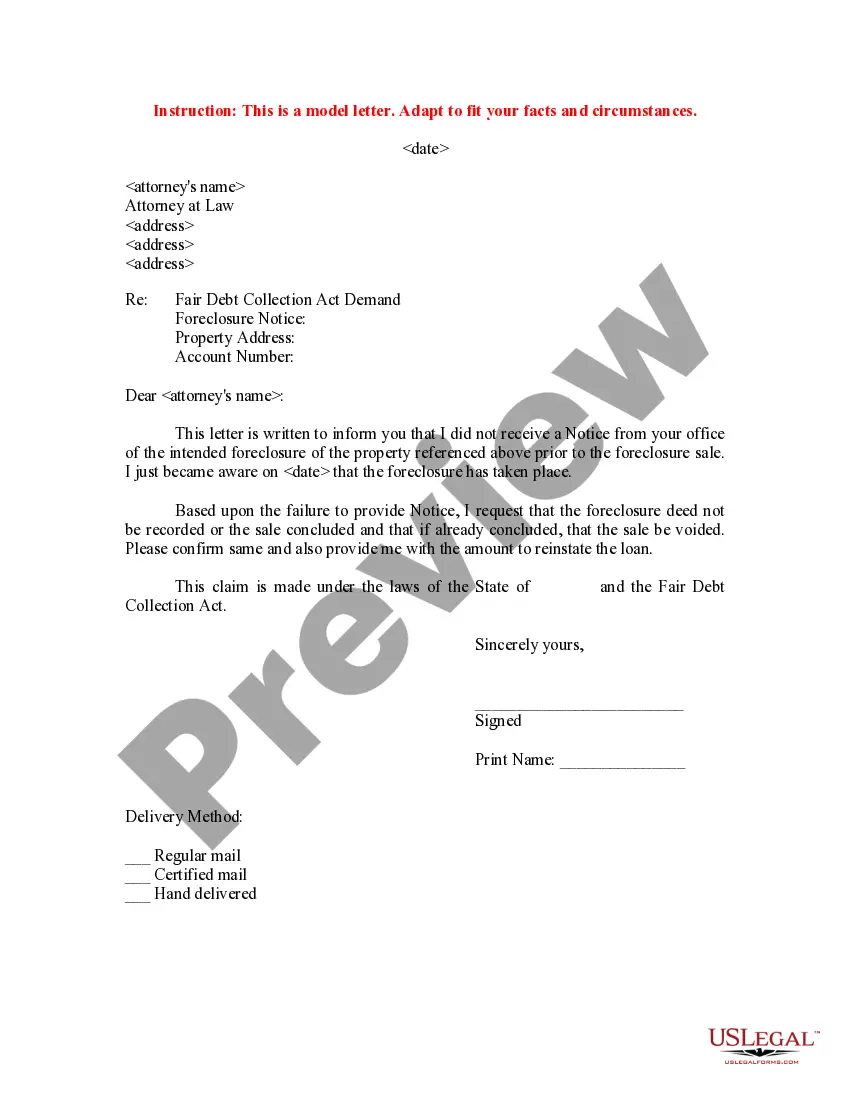
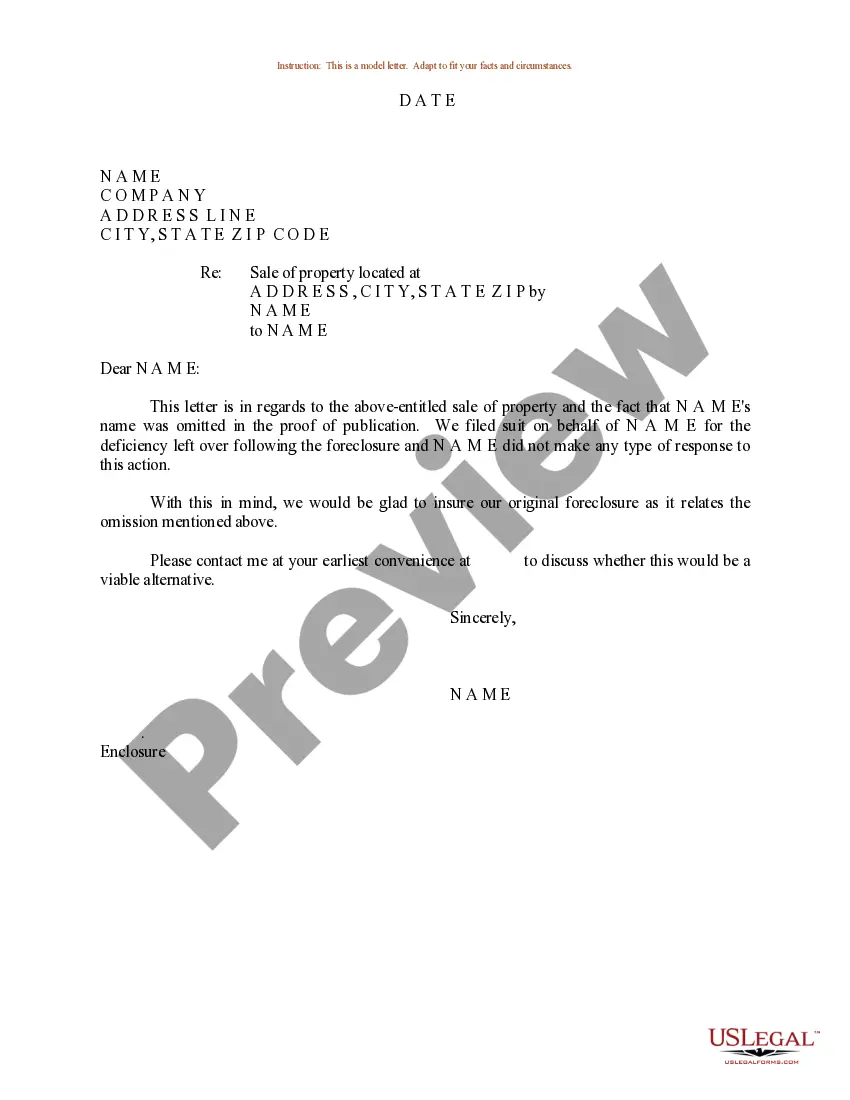
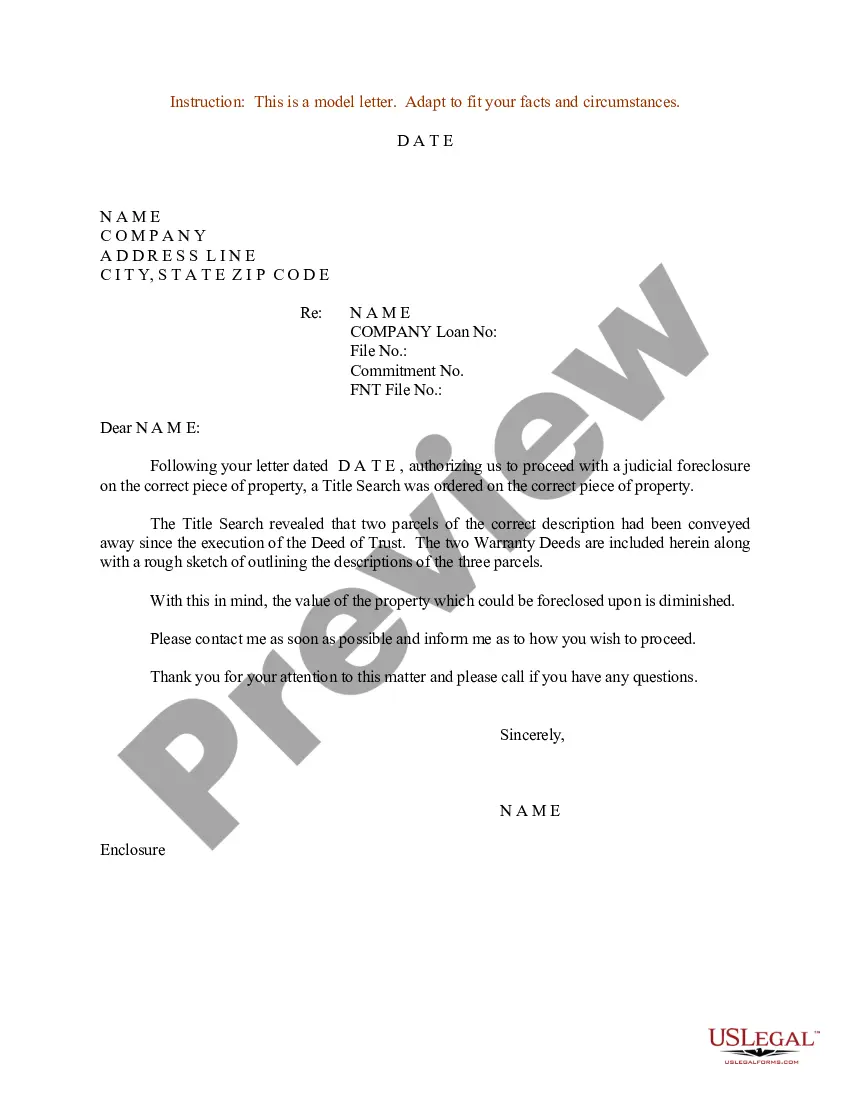
This form is a sample letter for addressing issues related to incorrect documents concerning foreclosure proceedings. It serves as a template for communicating discrepancies in legal property documents, specifically related to a deed of trust. Unlike other foreclosure forms, which may focus on the initiation of proceedings, this letter emphasizes the need to correct legal descriptions before progressing with foreclosure actions.
Key components of this form
- Date: The date the letter is being sent.
- Recipient information: Name and address of the company or individual receiving the letter.
- Legal description issue: Details of the discrepancy in the deed of trust.
- Correction opinion: Your assessment of the necessary legal corrections.
- Request for action: A prompt for the recipient to address the issue and confirm the next steps.
Common use cases
Who needs this form
- Property owners facing foreclosure.
- Attorneys representing clients in foreclosure cases.
- Trustees involved in the foreclosure process.
- Companies handling real estate transactions.
How to complete this form
- Fill in the date at the top of the letter.
- Enter the recipient's full name and address.
- Clearly state the issue with the legal description.
- Provide your opinion on the necessary corrections.
- Request timely communication on how the issue will be resolved.
- Sign the letter with your name and title as appropriate.
Does this document require notarization?
This form needs to be notarized to ensure legal validity. US Legal Forms provides secure online notarization powered by Notarize, allowing you to complete the process through a verified video call, available anytime.
Get your form ready online
Our built-in tools help you complete, sign, share, and store your documents in one place.
Make edits, fill in missing information, and update formatting in US Legal Forms—just like you would in MS Word.
Download a copy, print it, send it by email, or mail it via USPS—whatever works best for your next step.
Sign and collect signatures with our SignNow integration. Send to multiple recipients, set reminders, and more. Go Premium to unlock E-Sign.
If this form requires notarization, complete it online through a secure video call—no need to meet a notary in person or wait for an appointment.
We protect your documents and personal data by following strict security and privacy standards.

Make edits, fill in missing information, and update formatting in US Legal Forms—just like you would in MS Word.

Download a copy, print it, send it by email, or mail it via USPS—whatever works best for your next step.

Sign and collect signatures with our SignNow integration. Send to multiple recipients, set reminders, and more. Go Premium to unlock E-Sign.

If this form requires notarization, complete it online through a secure video call—no need to meet a notary in person or wait for an appointment.

We protect your documents and personal data by following strict security and privacy standards.
Typical mistakes to avoid
- Neglecting to include specific details about the legal description issue.
- Failing to address the correct recipient or using incorrect address information.
- Not providing a clear call to action regarding the necessary corrections.
- Omitting your contact information for follow-up.
Why use this form online
- Easy access to a professionally drafted template tailored for legal communication.
- Downloadable in Word format, allowing for quick edits to personalize the letter.
- Available 24/7, so you can address legal matters at your convenience.
- Provides peace of mind by ensuring the form meets basic legal requirements.
Quick recap
- This sample letter is designed to address inaccuracies in foreclosure documentation.
- It is essential for initiating corrective actions with the rightful parties.
- Completing the form correctly can expedite the foreclosure process.
- Ensure compliance with your state's requirements for legal documents.
Looking for another form?
Form popularity
FAQ
In situations where a foreclosure has already occurred, the California Supreme Court held that a borrower has standing to sue for wrongful foreclosure based on an allegedly void assignment of his or her mortgage.
To contest a judicial foreclosure, you have to file a written answer to the complaint (the lawsuit). You'll need to present your defenses and explain the reasons why the lender shouldn't be able to foreclose. You might need to defend yourself against a motion for summary judgment and at trial.
You can stop the foreclosure process by informing your lender that you will pay off the default amount and extra fees. Your lender would prefer to have the money much more than they would have your home, so unless there are extenuating circumstances, this should work.
Negotiate With Your Lender. If you are having financial difficulties, the worst thing that you can do is bury your head in the sand. Request a Forbearance. Modify Your Loan. Make a Claim. Get a Housing Counselor. Declare Bankruptcy. Use A Foreclosure Defense Strategy. Make Them Produce The Not.
Power of sale foreclosures are also known as nonjudicial foreclosures.
Explain precisely what your request is. Mention the reason for the request. Use polite language and a professional tone. Demonstrate respect and gratitude to the reader. The content of the letter should be official. You may provide contact information where you can be reached.
The start of the letter should be with a warm greeting, then you should introduce yourself properly, that who are you, your name, job, position and name of the organization. It will make it easy for the reader to understand who is asking for a letter of request.
Eviction After the Foreclosure SaleOnce your legal right to stay in the home ends, if you don't vacate the property, the new owner (again, often the lender) will start eviction proceedings to remove you from the property.Other times it might have to file a separate eviction action with the court.
Proving Wrongful Foreclosure If you wish to sue the bank for wrongful foreclosure, you must prove the following: The lender owed you, the borrower, a legal duty. The lender breached that duty. The breach of duty caused your injury or loss (damages)