Sample Letter for How to Submit an Editorial
What is this form?
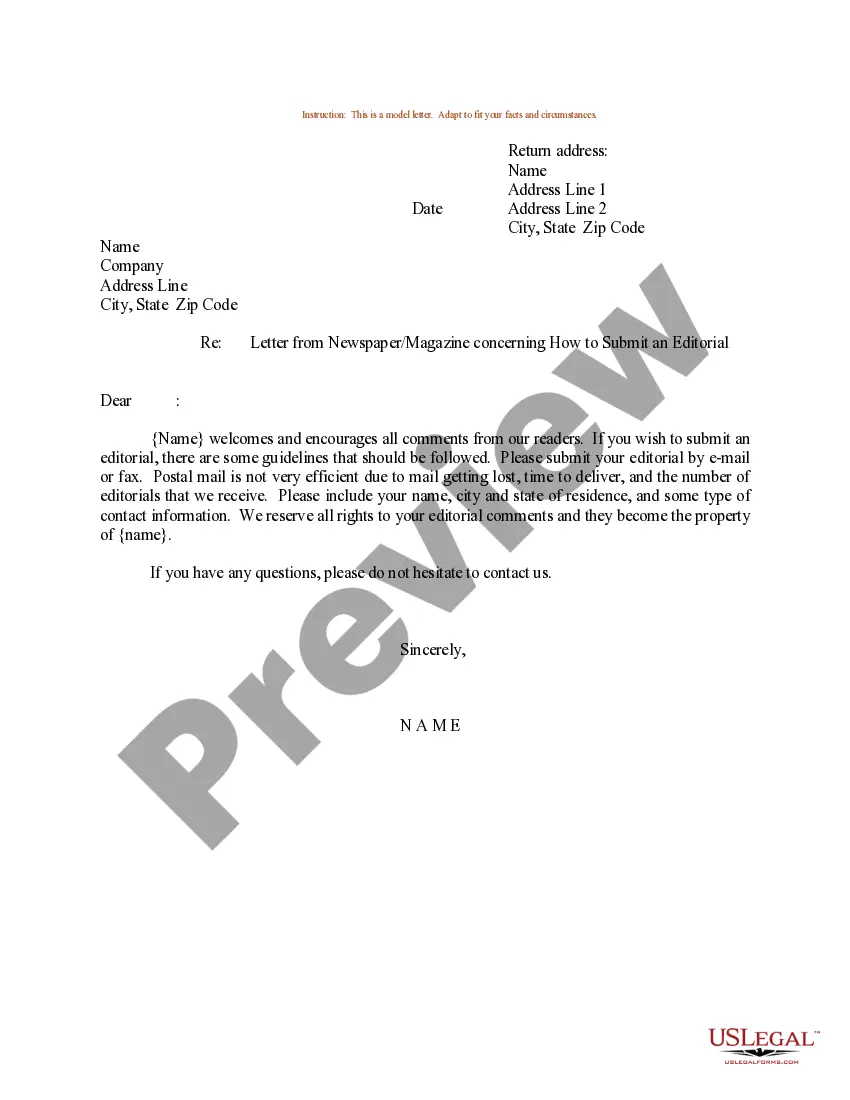
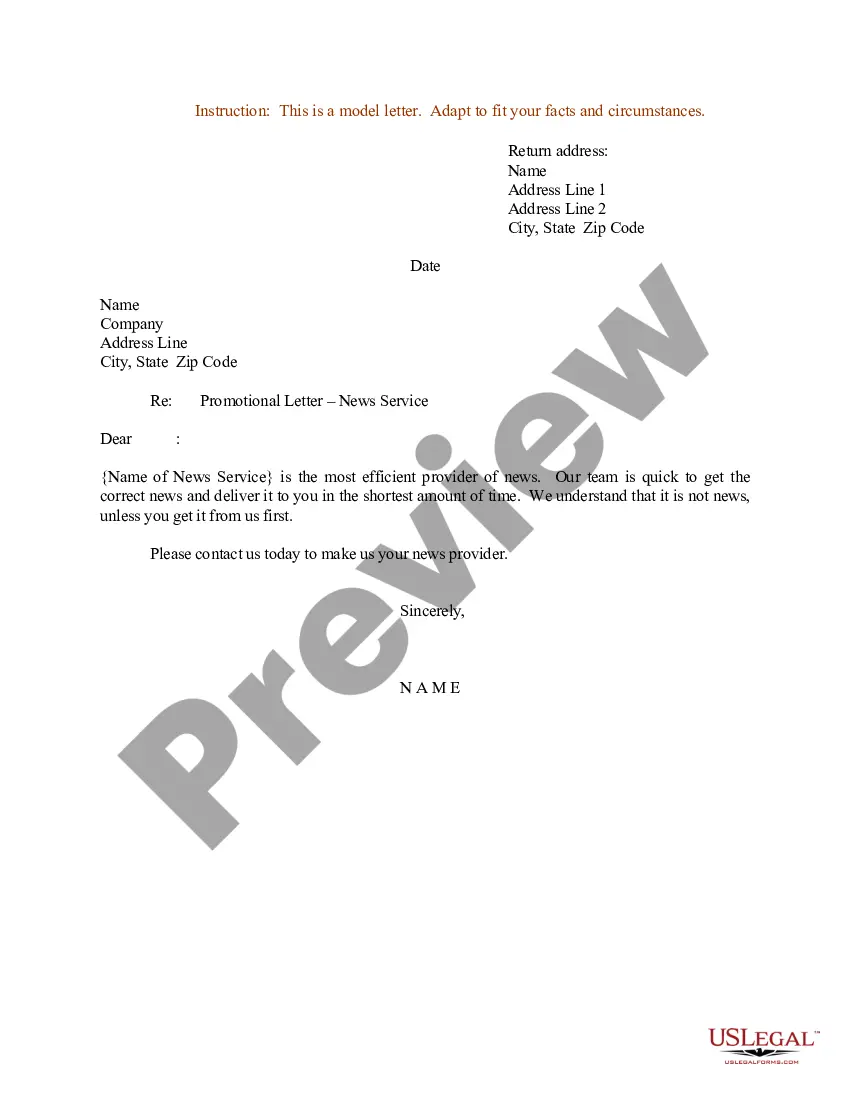
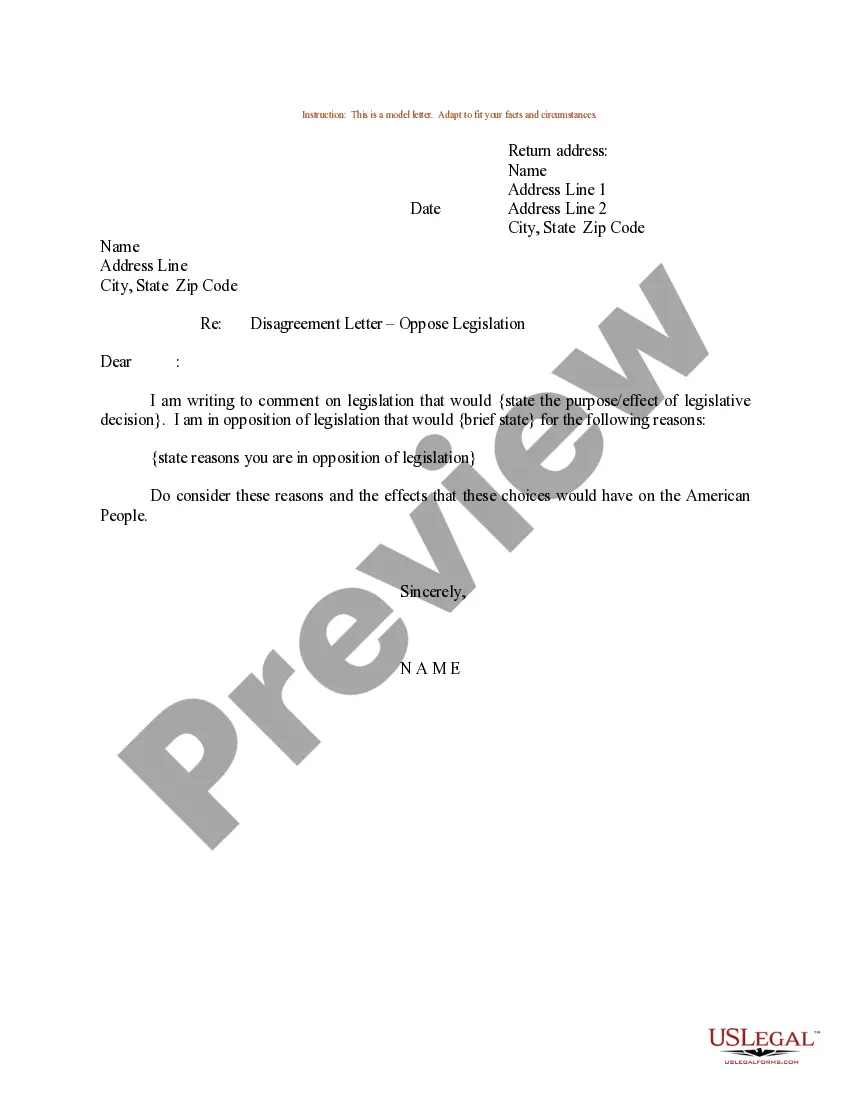
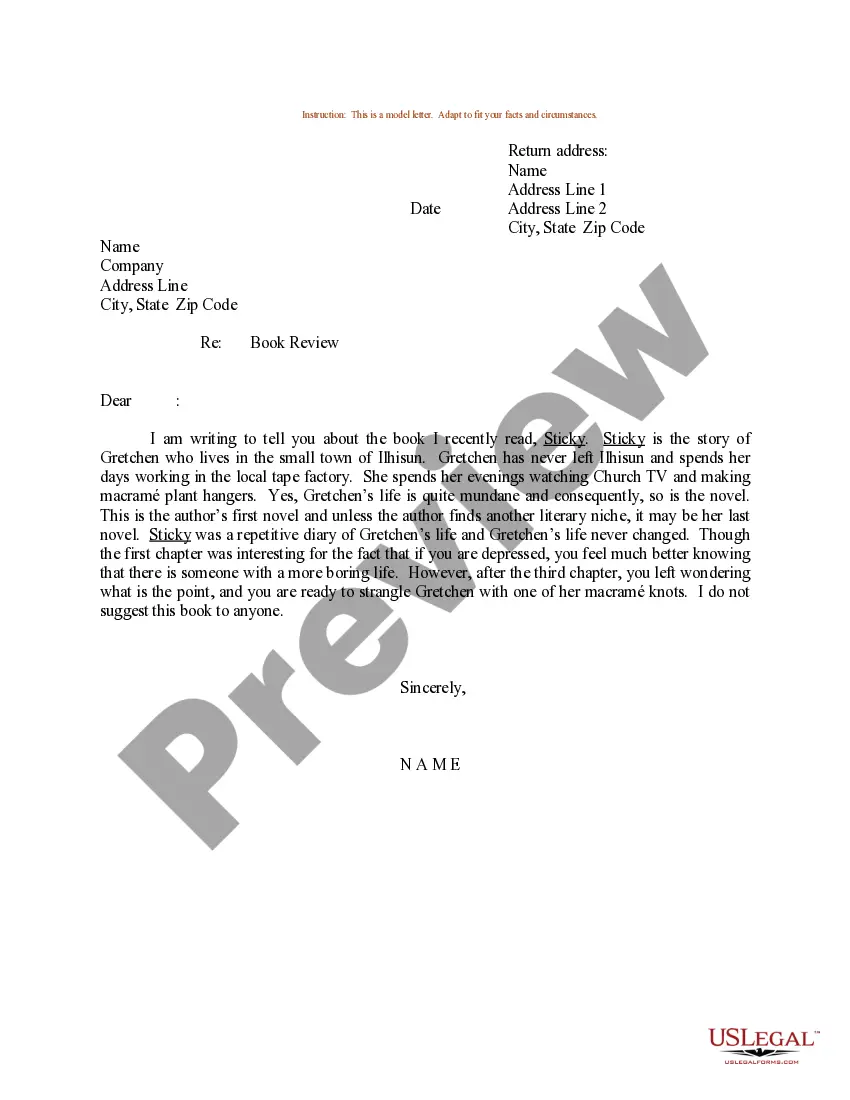
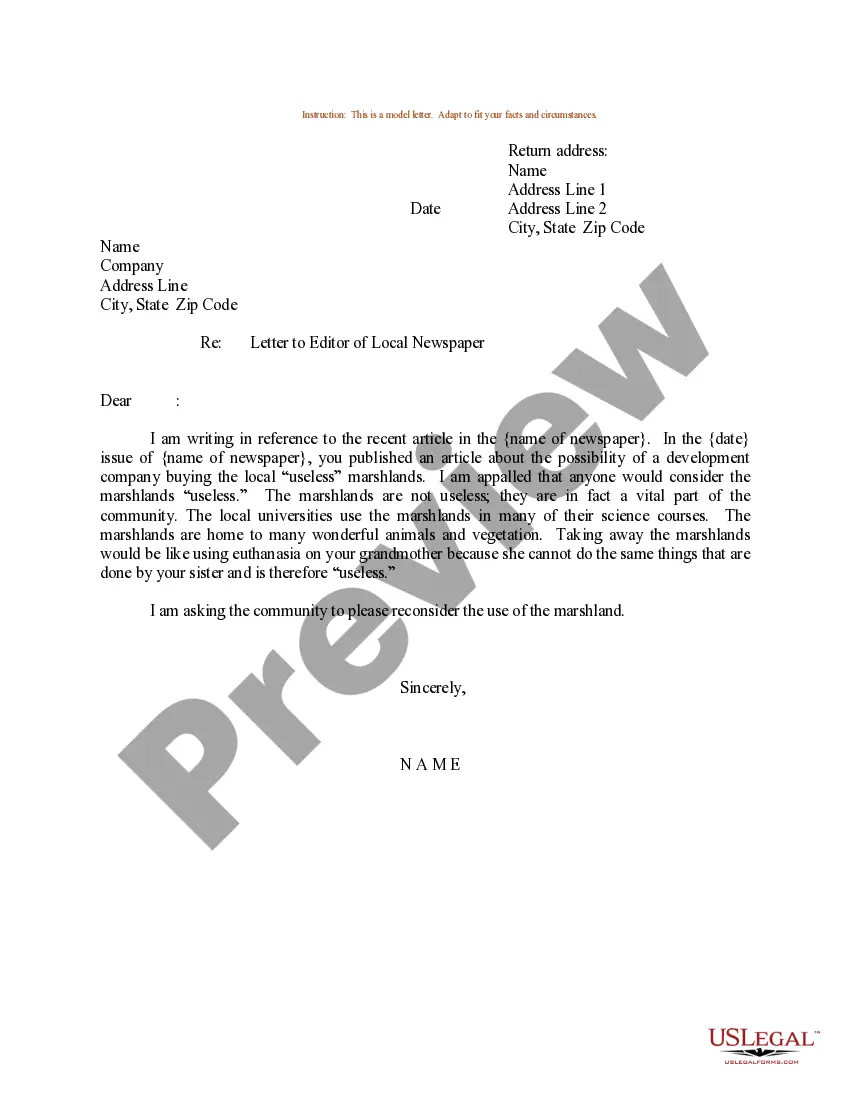
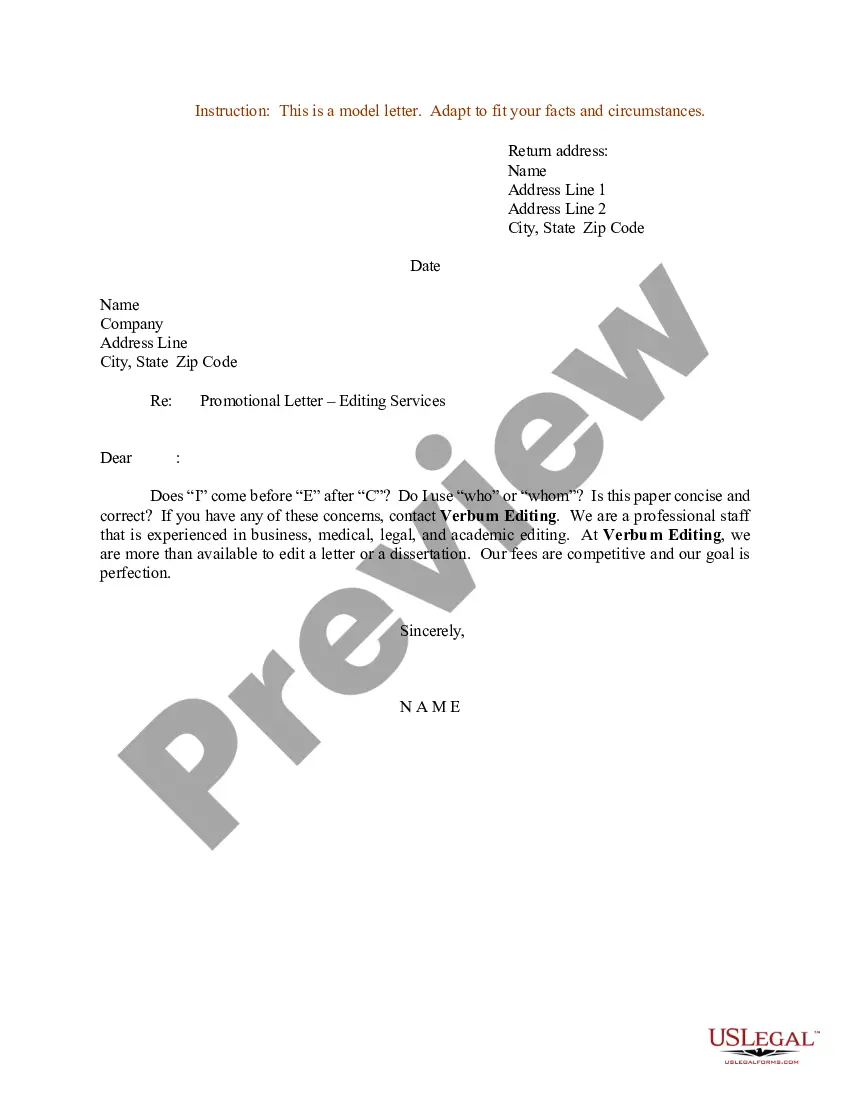
This Sample Letter for How to Submit an Editorial is a template that guides individuals in crafting a professional correspondence to a newspaper or magazine. Unlike general editorial submission advice, this form provides a clear structure and essential content elements, ensuring your message is effectively communicated to the publication's editorial team.
What’s included in this form
- Return address: Your address for correspondence.
- Date: The date when you are sending the letter.
- Recipient's address: The name and address of the publication's representative.
- Subject line: Clearly states the purpose of the letter.
- Body: Includes your message regarding editorial submission and any additional notes.
- Closing: Your name to formally sign off the letter.
When this form is needed
This form should be used when you want to submit an editorial piece to a newspaper or magazine, and need a structured way to communicate your submission. It is applicable when you have completed your editorial draft and are ready to present it to the editorial staff for consideration.
Who this form is for
This form is suitable for:
- Writers looking to submit opinion pieces, news articles, or editorials.
- Authors wishing to communicate directly with media outlets.
- Individuals or organizations that want to advocate for specific issues through editorial submissions.
Steps to complete this form
- Identify your return address and enter your name and contact information at the top.
- Fill in the current date of the letter.
- Add the recipient's name and address in the designated section.
- Clearly state the subject line to highlight your purpose.
- Compose the body of the letter, ensuring it includes your main points and any relevant questions.
- Sign off with your name and any necessary contact details.
Notarization requirements for this form
This form does not typically require notarization unless specified by local law. Ensure you check any additional requirements that may apply to your submission.
Get your form ready online
Our built-in tools help you complete, sign, share, and store your documents in one place.
Make edits, fill in missing information, and update formatting in US Legal Forms—just like you would in MS Word.
Download a copy, print it, send it by email, or mail it via USPS—whatever works best for your next step.
Sign and collect signatures with our SignNow integration. Send to multiple recipients, set reminders, and more. Go Premium to unlock E-Sign.
If this form requires notarization, complete it online through a secure video call—no need to meet a notary in person or wait for an appointment.
We protect your documents and personal data by following strict security and privacy standards.

Make edits, fill in missing information, and update formatting in US Legal Forms—just like you would in MS Word.

Download a copy, print it, send it by email, or mail it via USPS—whatever works best for your next step.

Sign and collect signatures with our SignNow integration. Send to multiple recipients, set reminders, and more. Go Premium to unlock E-Sign.

If this form requires notarization, complete it online through a secure video call—no need to meet a notary in person or wait for an appointment.

We protect your documents and personal data by following strict security and privacy standards.
Avoid these common issues
- Forgetting to include your return address.
- Not addressing the recipient specifically, which can seem impersonal.
- Neglecting to proofread the letter for grammar and clarity.
- Not stating the subject line clearly, leading to confusion about your submission.
Why use this form online
- Easy customization to fit your needs and personal style.
- Instant access and download capabilities for immediate use.
- Drafting and editing features allow for efficient completion.
Main things to remember
- This form is a structured template for submitting editorials to publications.
- Clear communication, specific formatting, and adherence to submission guidelines are vital.
- Review your submission for errors to enhance professionalism.
Looking for another form?
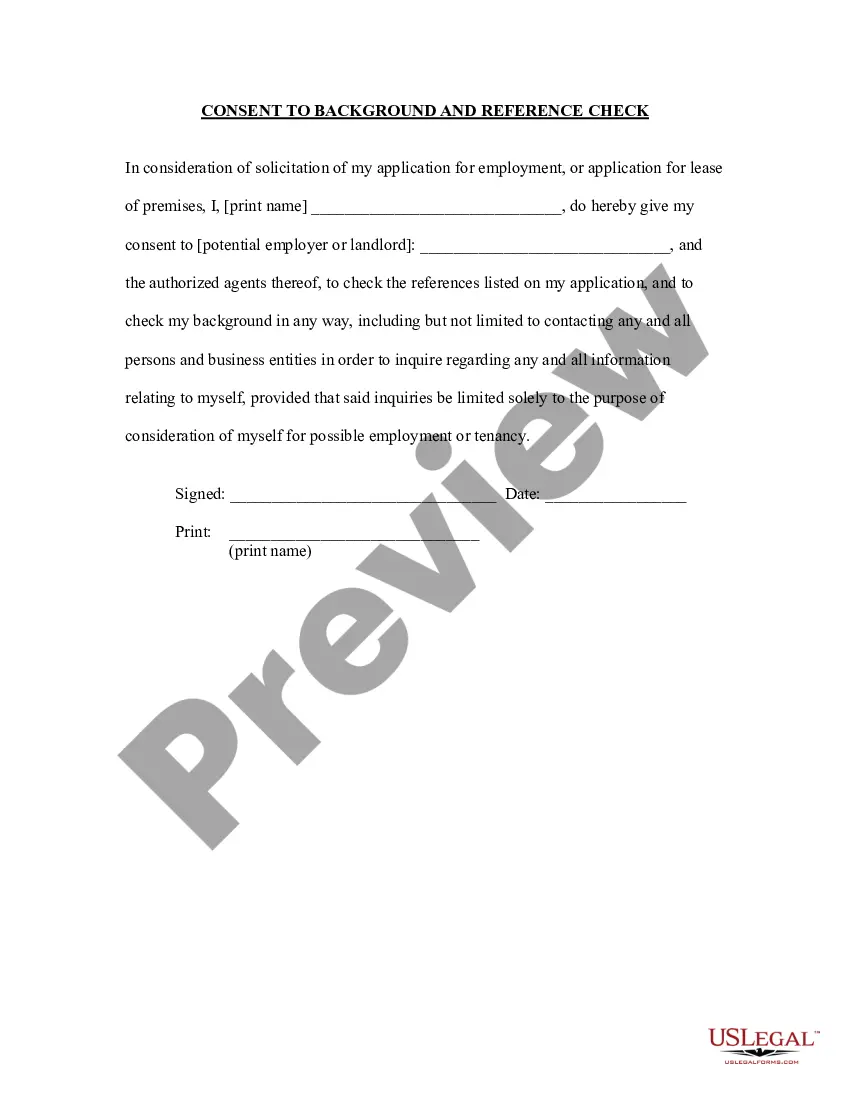

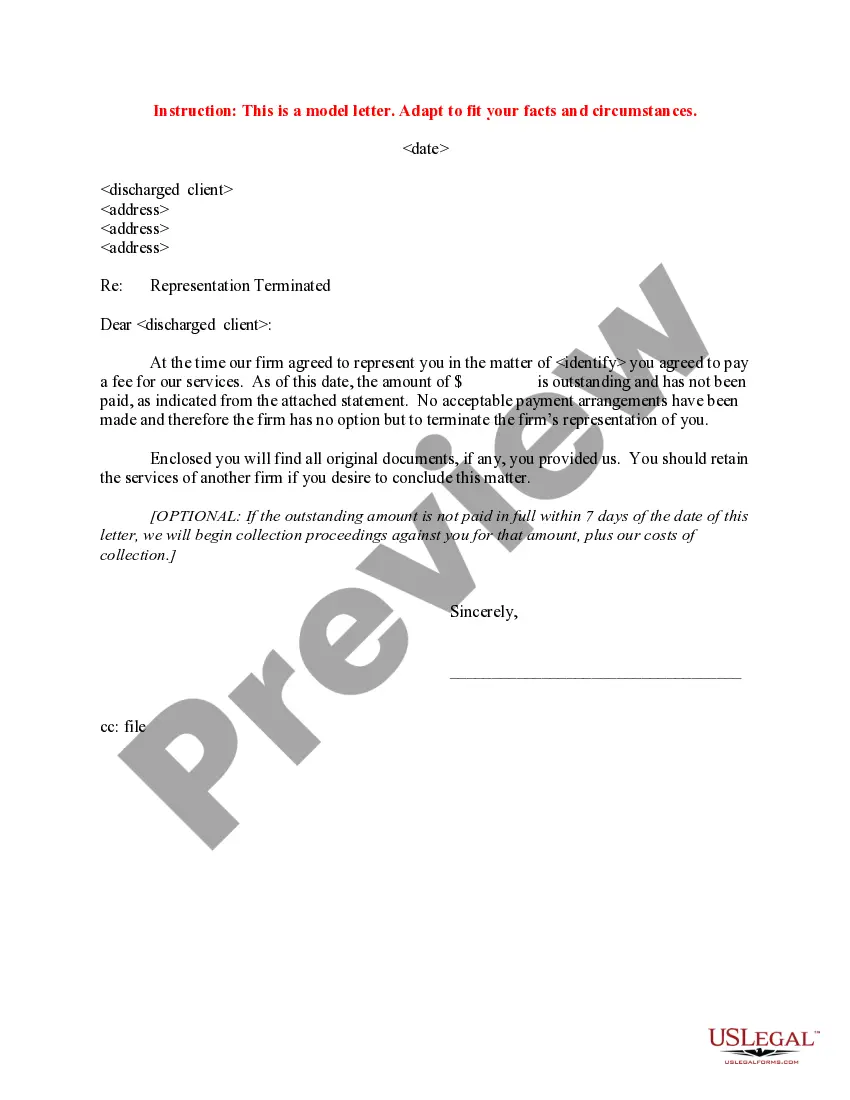
Form popularity
FAQ
As my Article includes the importance of cleanliness and the awareness about cleanliness.As in our country the cleanliness is decreased, the people should get to know about the harmness. So I think my Article will held for it . I request you to publish my Article in your newspaper. Thank you and regards.
Editor's name (when known) Name of the journal to which you are submitting. Your manuscript's title. Article type (review, research, case study, etc.) Submission date. Brief background of your study and the research question you sought to answer. Brief overview of methodology used.
Editor's name (when known) Name of the journal to which you are submitting. Your manuscript's title. Article type (review, research, case study, etc.) Submission date. Brief background of your study and the research question you sought to answer. Brief overview of methodology used.
Open the letter with a simple salutation. Grab the reader's attention. Explain what the letter is about at the start. Explain why the issue is important. Give evidence for any praise or criticism. State your opinion about what should be done. Keep it brief. Sign the letter.
Keep it short and on one subject. Many newspapers have strict limits on the length of letters and have limited space to publish them. Make it legible. Send letters to weekly community newspapers too. Be sure to include your contact information. Make references to the newspaper.
Respond to an article in the paper. Follow the paper's directions. Share your expertise. Refer to the legislator or corporation you are trying to influence by name. Write the letter in your own words. Refute, advocate, and make a call to action. Include your contact information.
Begin your cover letter with a paragraph that states the name of the manuscript and the names of the authors. You can also describe what type of manuscript your submission is (research article, review, case report, etc.).
Letter to the Editor or Correspondence is considered a post publication peer review.They are generally listed in the scientific databases as a publication. Therefore, the evidence against or in favor of the discussed subject should be strong enough to attract the journal editors and readers.
1. Letters to the Editor start with a SALUTATION, usually 'Dear Editor' or 'Dear Sir/Madam'. 2. Letters to the Editor are usually written in a response to a previous letter, or in response to a current issue.