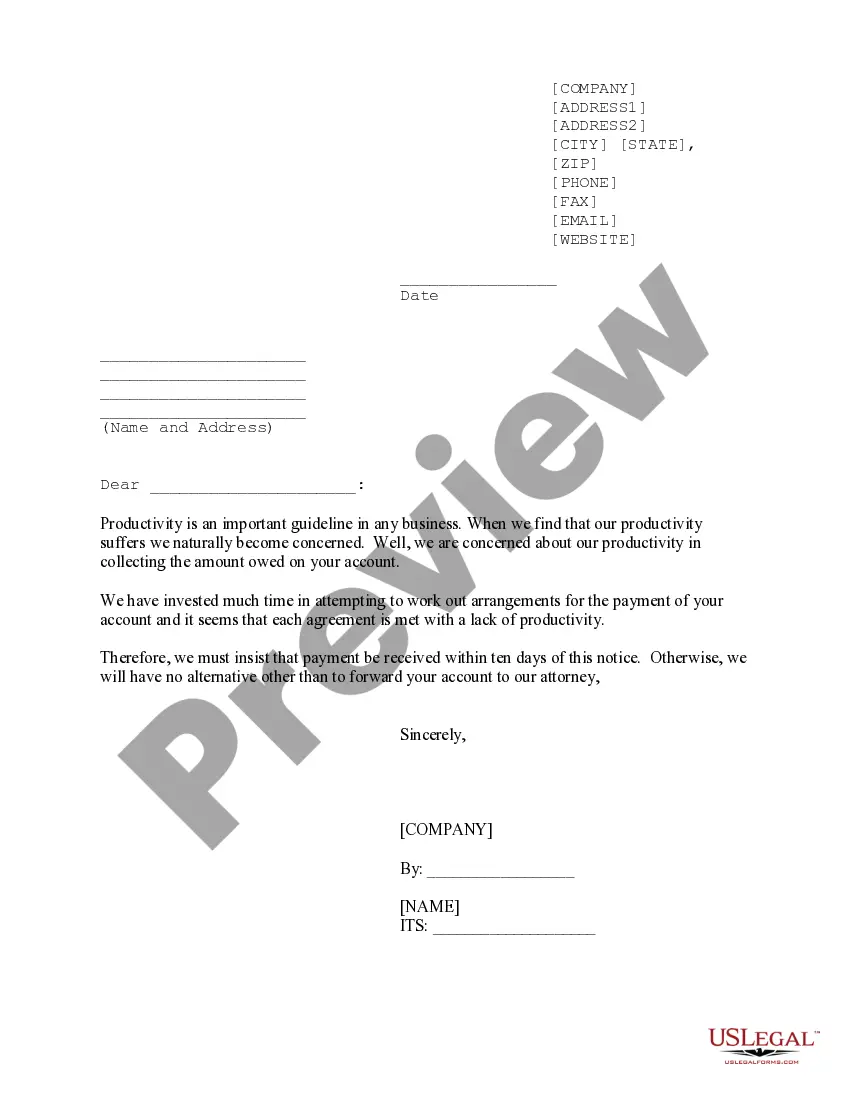
Virginia Notice of Default in Payment of Rent as Warning Prior to Demand to Pay or Terminate for Nonresidential or Commercial Property
Overview of this form
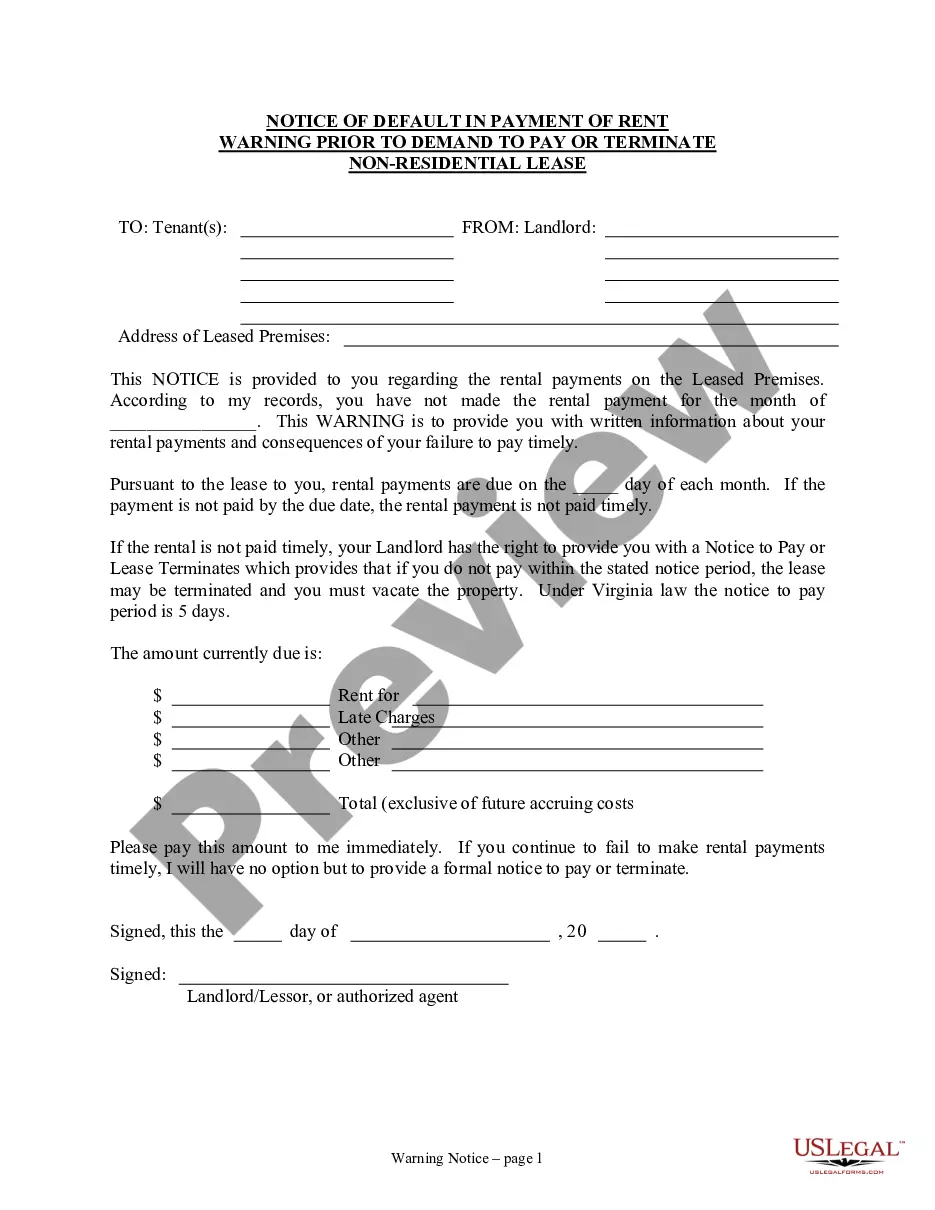
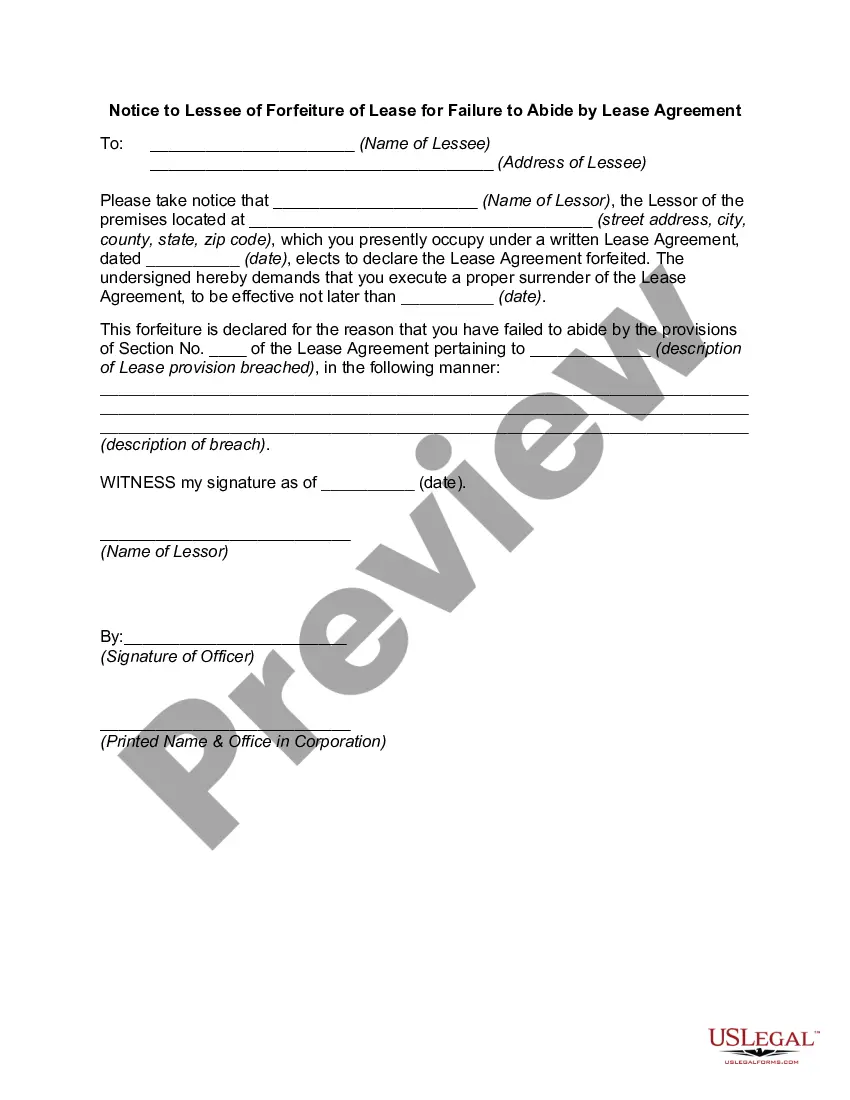
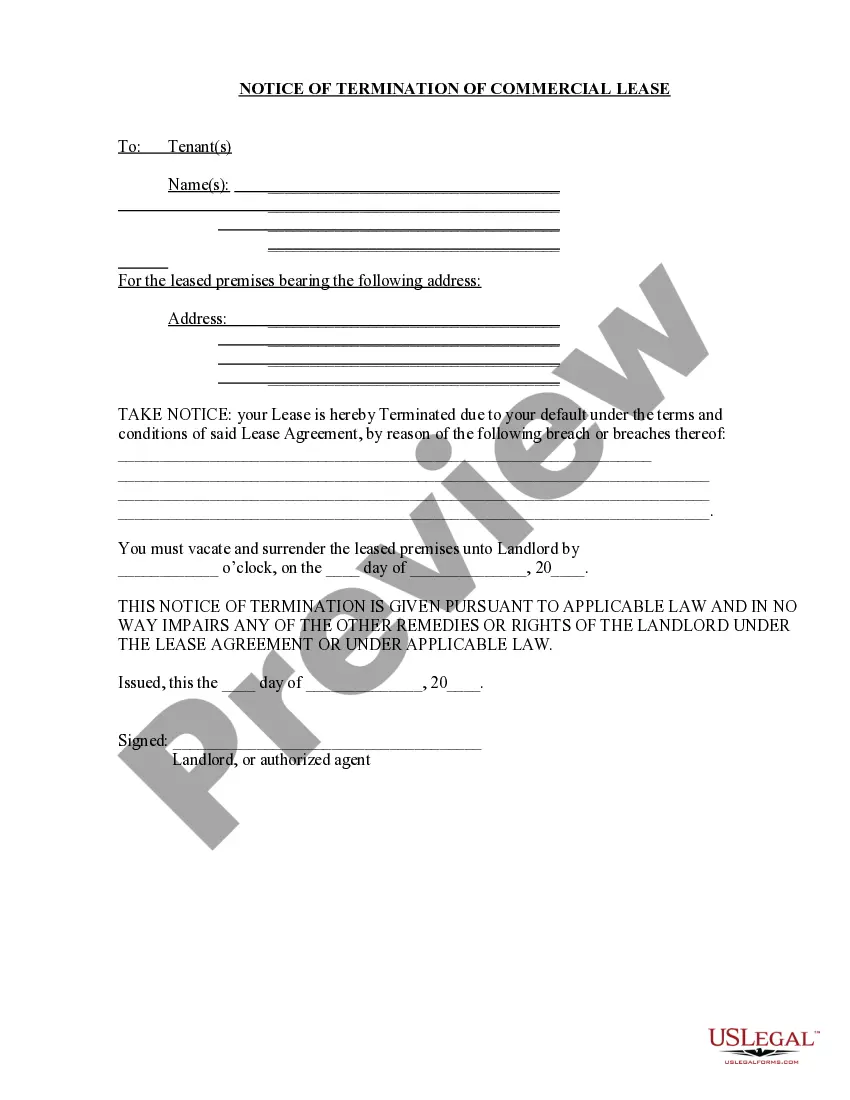
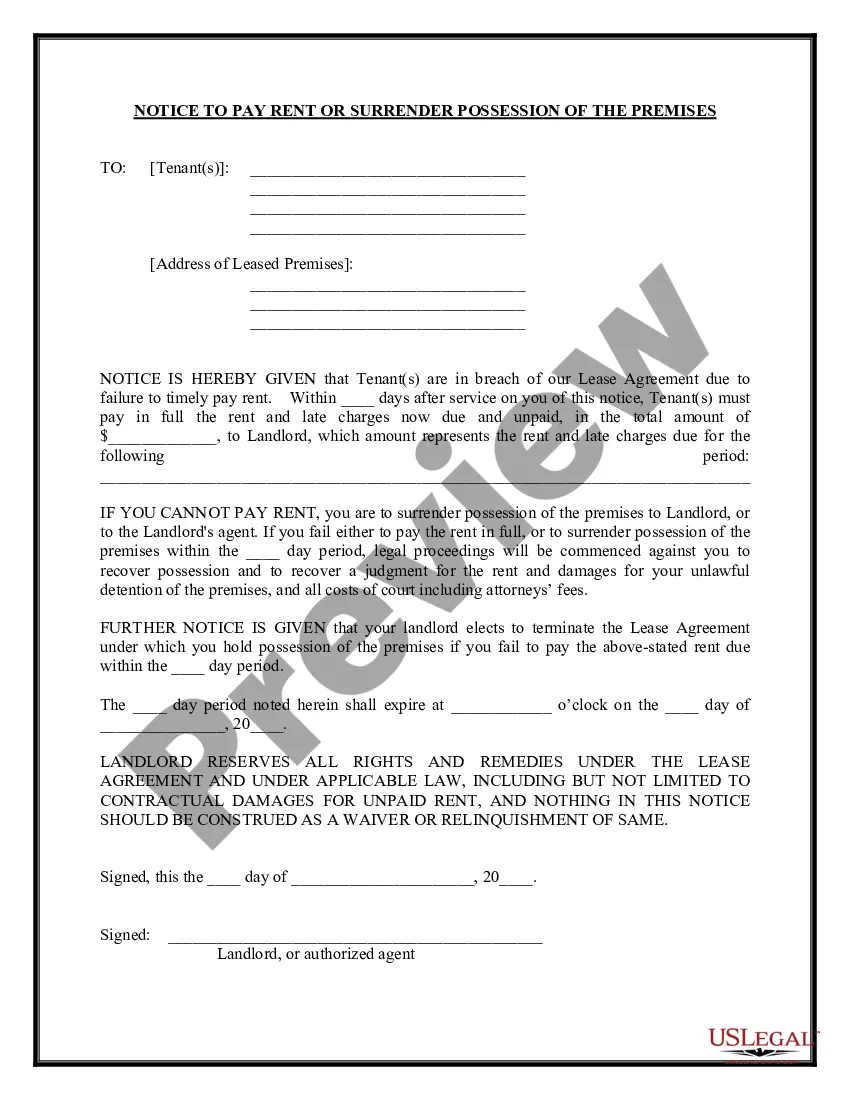
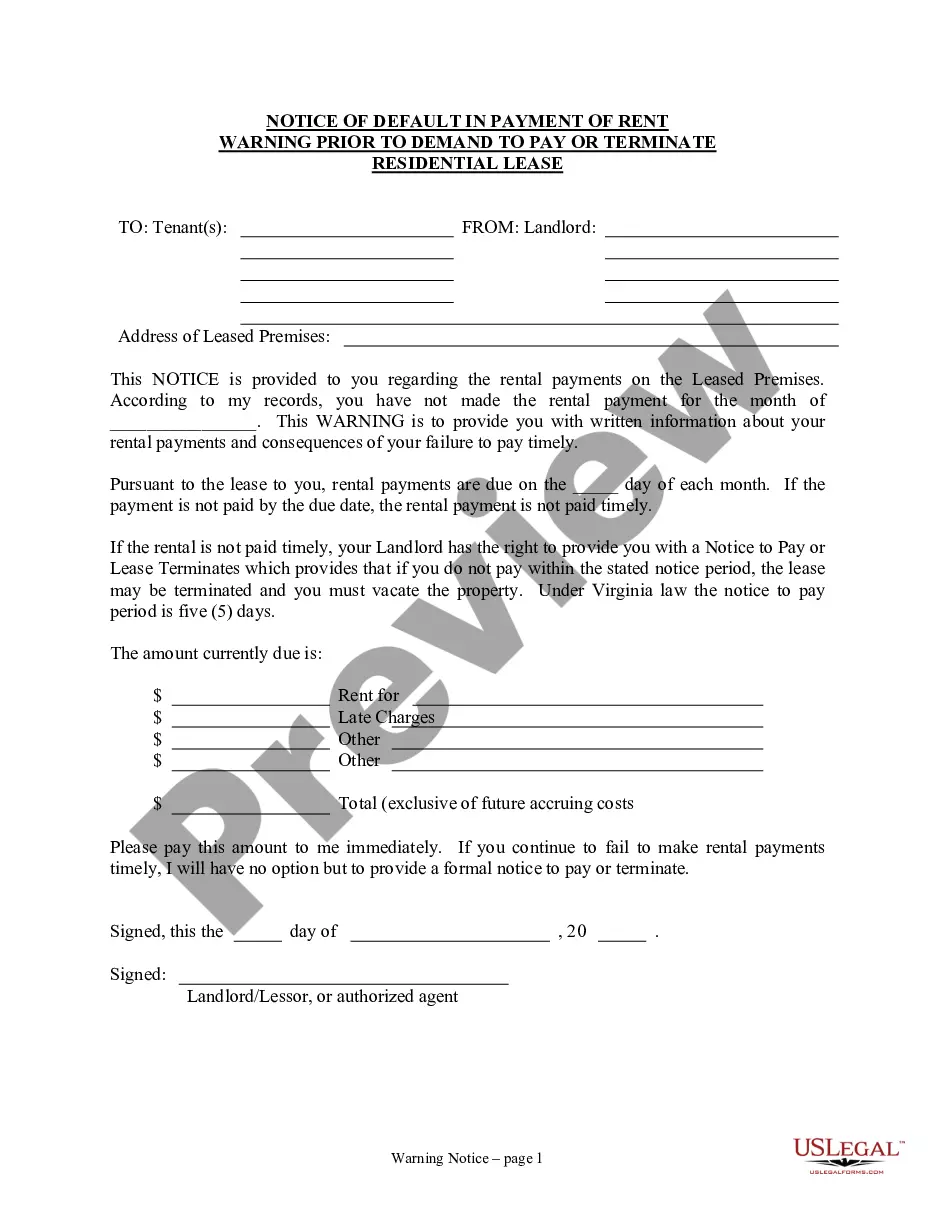
This Notice of Default in Payment of Rent serves as a formal warning from a landlord to a tenant regarding a missed rental payment for non-residential or commercial property. This form is an essential step prior to issuing a pay or terminate notice. It outlines the legal consequences of failing to meet rent obligations and reinforces the terms of the lease agreement, distinguishing it from standard rent reminders or late payment notices.
Key components of this form
- Identification of the parties involved: Landlord and Tenant.
- Address of the leased premises being referenced.
- Details about the missed rental payment, including the due date and total amount due.
- Warning of potential lease termination if payment is not made.
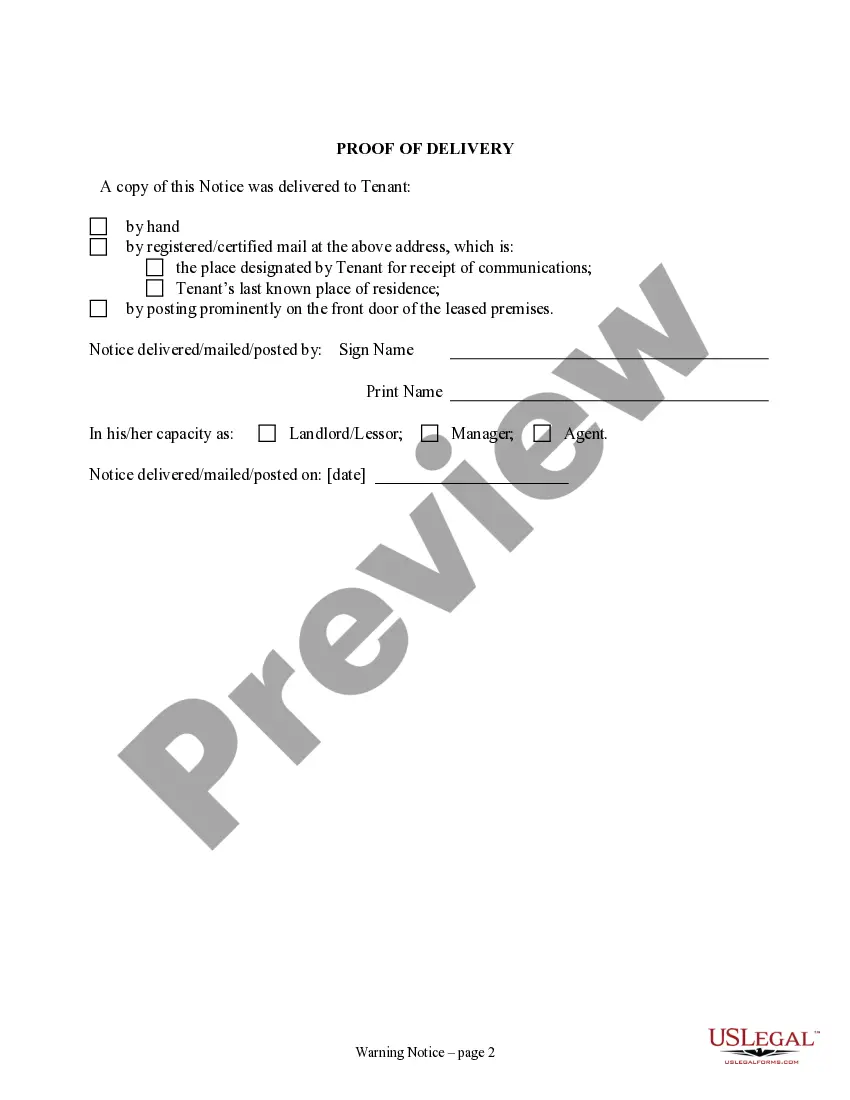
- Proof of delivery methods for the notice to the tenant.
When this form is needed
This form should be used when a tenant has not made their rent payment for a non-residential or commercial property. It is a proactive measure to remind the tenant of their obligations under the lease and to warn them about the consequences of continued non-payment, helping to avoid more drastic legal actions such as eviction.
Who this form is for
This form is intended for:
- Landlords of non-residential or commercial properties.
- Property managers acting on behalf of landlords.
- Real estate professionals overseeing lease agreements.
Steps to complete this form
- Identify the landlord and tenant by entering their names and addresses.
- Specify the address of the leased premises in question.
- Enter the month for which rent is overdue and the due date of the rent payment.
- Specify the total amount owed, including any late charges if applicable.
- Sign and date the document, ensuring you have followed the correct proof of delivery method.
Is notarization required?
Notarization is not commonly needed for this form. However, certain documents or local rules may make it necessary. Our notarization service, powered by Notarize, allows you to finalize it securely online anytime, day or night.
Get your form ready online
Our built-in tools help you complete, sign, share, and store your documents in one place.
Make edits, fill in missing information, and update formatting in US Legal Forms—just like you would in MS Word.
Download a copy, print it, send it by email, or mail it via USPS—whatever works best for your next step.
Sign and collect signatures with our SignNow integration. Send to multiple recipients, set reminders, and more. Go Premium to unlock E-Sign.
If this form requires notarization, complete it online through a secure video call—no need to meet a notary in person or wait for an appointment.
We protect your documents and personal data by following strict security and privacy standards.

Make edits, fill in missing information, and update formatting in US Legal Forms—just like you would in MS Word.

Download a copy, print it, send it by email, or mail it via USPS—whatever works best for your next step.

Sign and collect signatures with our SignNow integration. Send to multiple recipients, set reminders, and more. Go Premium to unlock E-Sign.

If this form requires notarization, complete it online through a secure video call—no need to meet a notary in person or wait for an appointment.

We protect your documents and personal data by following strict security and privacy standards.
Mistakes to watch out for
- Failing to provide the correct address of the leased premises.
- Not including the specific month for which rent is due.
- Omitting the total amount due, including late charges.
- Neglecting to follow the correct delivery procedures to the tenant.
Why use this form online
- Convenient and quick access to the template without the need for in-person meetings.
- Editable format allows landlords to customize details according to specific needs.
- Drafted by licensed attorneys to ensure compliance with legal standards.
Legal use & context
- Enforceability of the notice under local rental laws.
- Clarification of tenant responsibilities per lease agreements.
- Establishing a formal record of communication regarding payment issues.
Main things to remember
- The Notice of Default in Payment of Rent is vital for landlords managing commercial properties.
- Provide precise details to avoid legal complications.
- Using this form online offers convenience and reliability in managing rental agreements.
Looking for another form?





Form popularity
FAQ
NOTE: Under Virginia law, if you do not have a lease, and you do not pay rent, you are considered a tenant at sufferance. This means you can be evicted for any reason at all, at any time, and no notice needs to be given to you.If the rent is paid by the week, only a 7-day written notice is required.
This notice will inform the tenant that the tenant has 21 days to either remedy the violation or move out of the rental unit. If the tenant does not remedy the violation or move, then the landlord can file an eviction lawsuit against the tenant at the end of the 30 days. (Va. Code Ann.
TERMINATING OR ENDING YOUR TENANCY If you have no written lease and you pay rent by the month, the tenancy can be terminated by either you or the landlord for any reason or no reason at all, by giving at least 30 days written notice before the next rental due date.
NOTE: Under Virginia law, if you do not have a lease, and you do not pay rent, you are considered a tenant at sufferance. This means you can be evicted for any reason at all, at any time, and no notice needs to be given to you.If the rent is paid by the week, only a 7-day written notice is required.
Yes, in Virginia, you can evict unwanted family members from your home.However, in most cases, Virginia still considers them to be a tenant. The courts will most likely treat them as a month-to-month tenant even if they have no lease, and pay no rent.
When you want to evict a tenant who is occupying the premises on a month-to-month basis, give the tenant a 30-day notice to quit, get a summons for unlawful detainer from the court, and appear at the hearing to argue the case. If you win, obtain a writ of possession and have the sheriff evict the tenants.
As a renter in Virginia, you have legal protections under the Virginia Residential Landlord and Tenant Act (VRLTA) that include the right to: A fair application fee. A fair security deposit. A decent and safe place to live.
Virginia residents do not have the right to withhold rent from the landlord, but for properties that do not meet health or safety standards or for material breaches of the lease agreement, tenants are able to take specific steps and then pay their rent into the court's escrow account instead of the landlord.