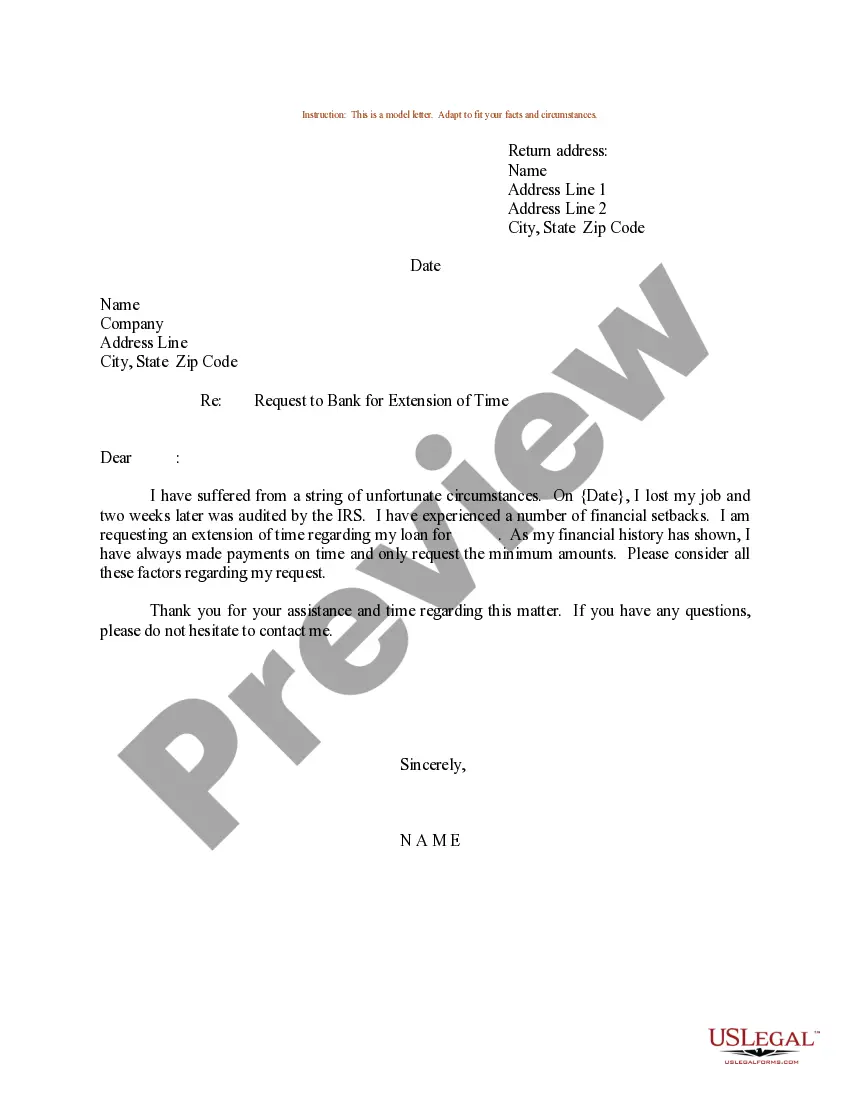
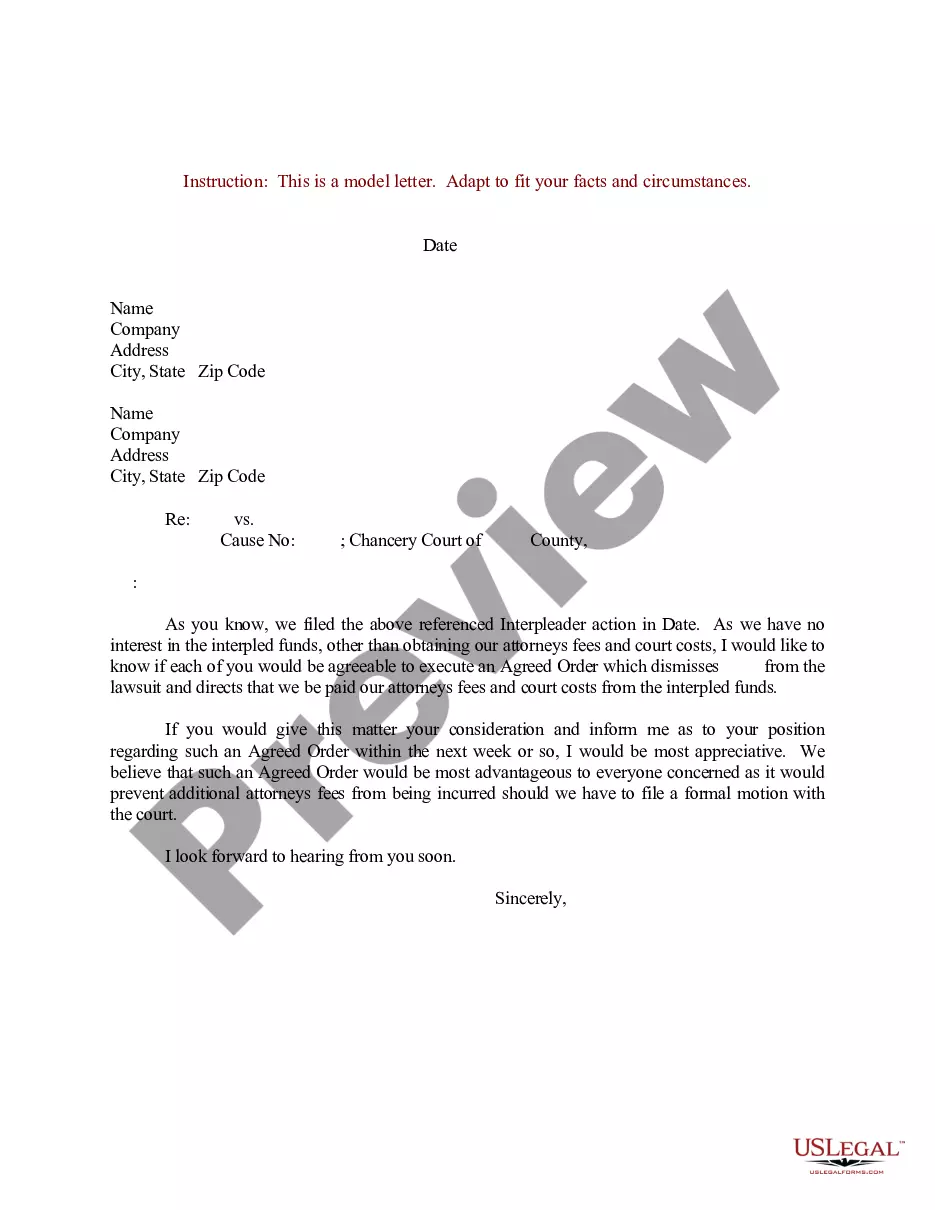
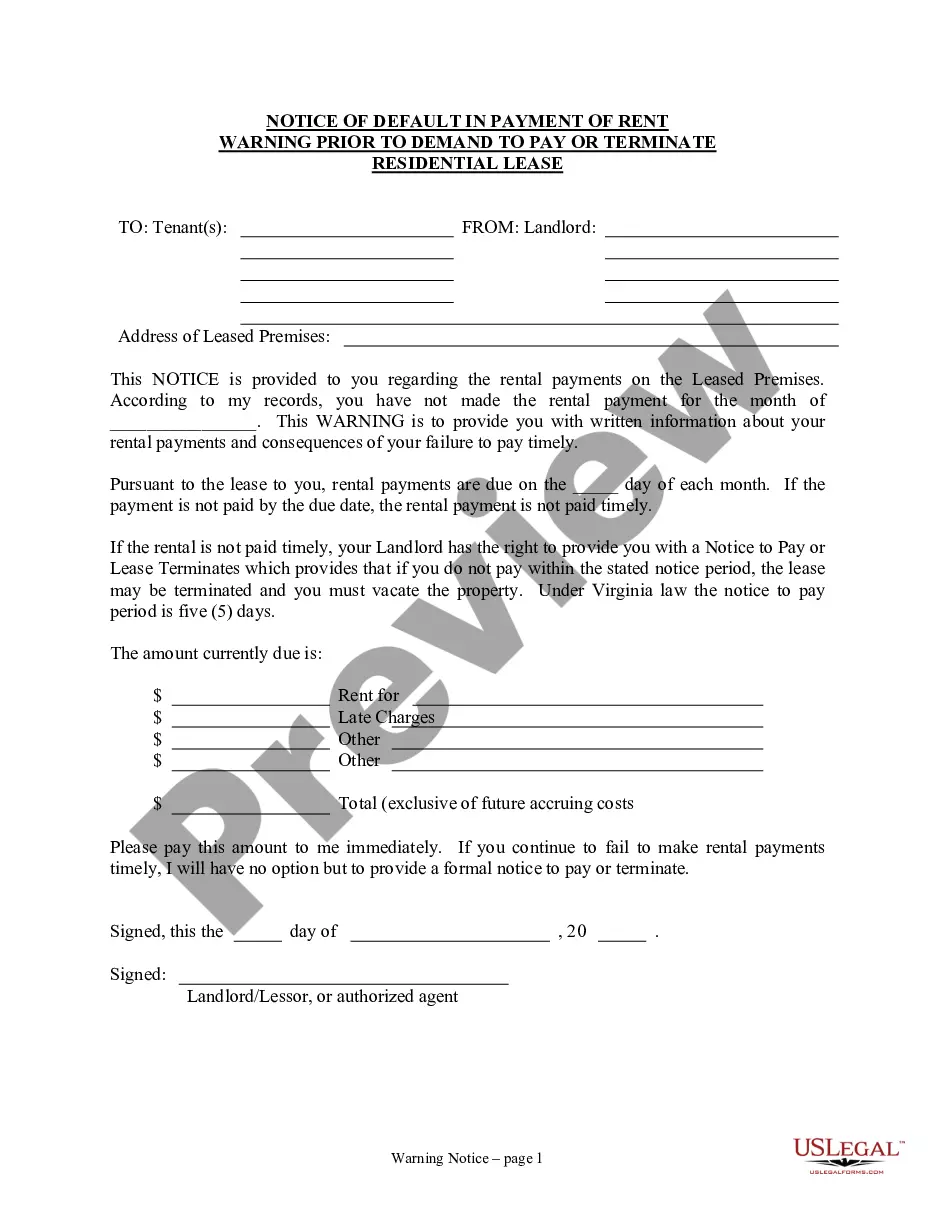
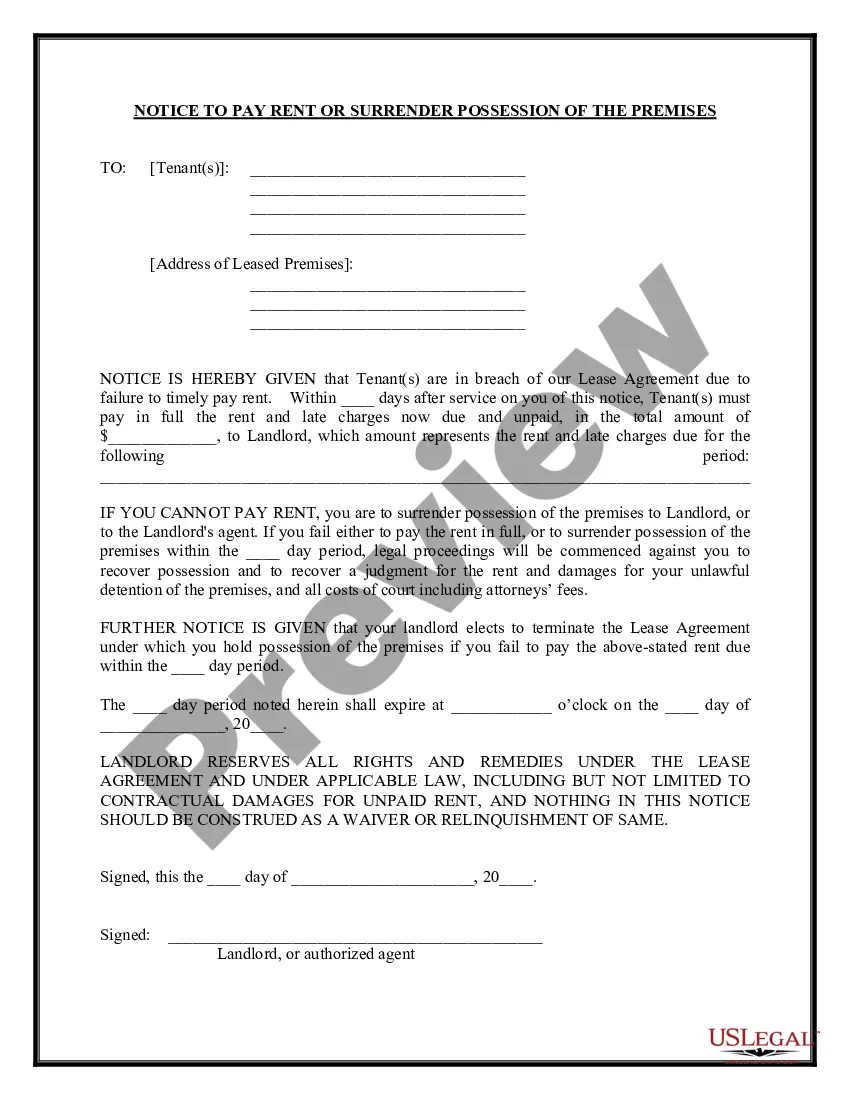
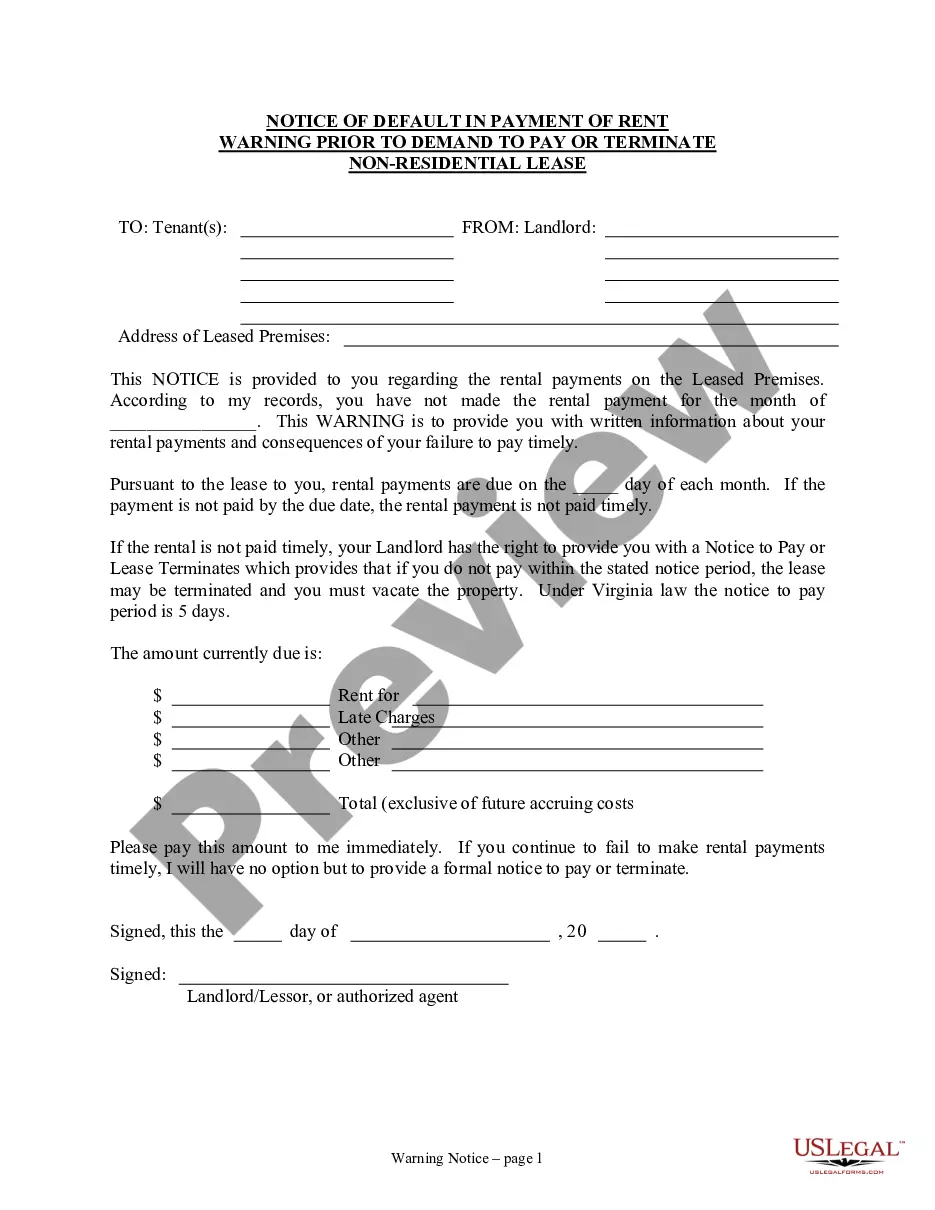
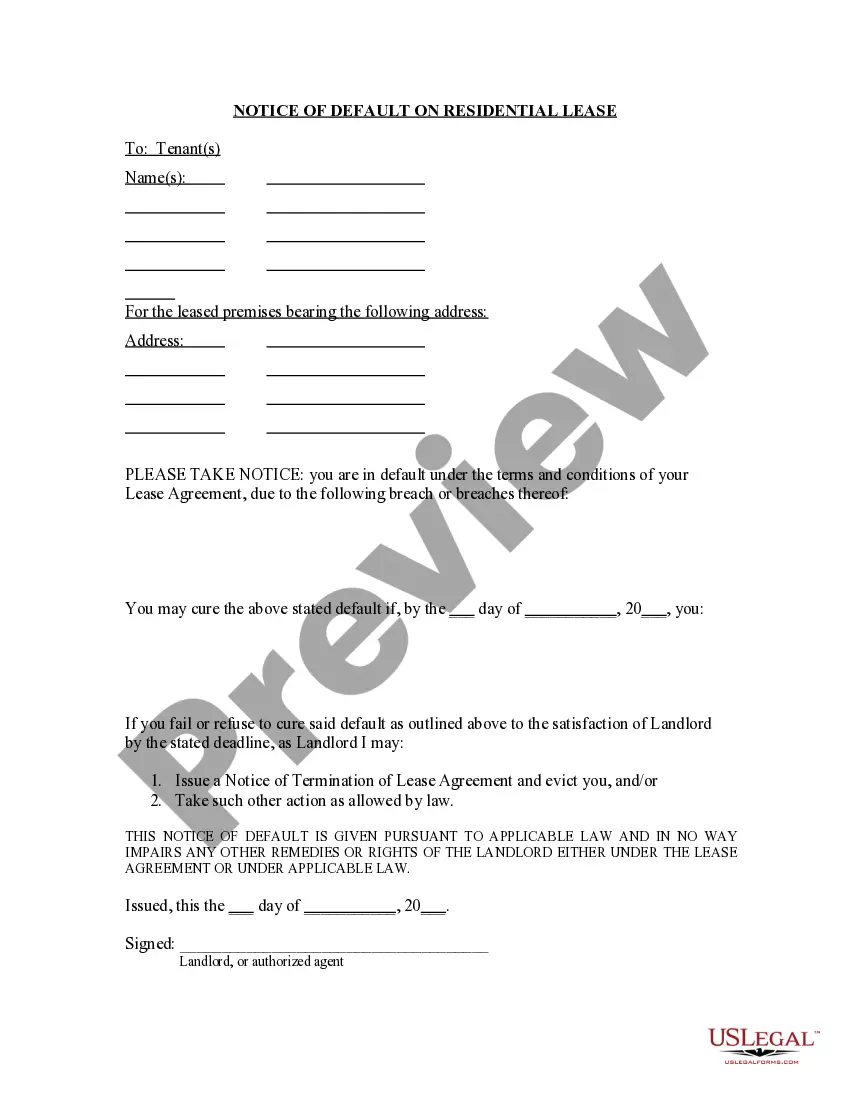
This Notice of Default in Payment of Rent as Warning Prior to Demand to Pay or Terminate for Non-Residential or Commercial Property form is for use by a Landlord to inform Tenant of Tenant's default in the payment of rent as a warning prior to a pay or terminate notice. The form advises the Tenant of the due date of rent and the consequences of late payment. This form may be used where you desire to remind the Tenant of payment terms, the default, demand payment and inform the Tenant that under the laws of this state or lease the Landlord may terminate in rent is not paid timely.
Virginia Notice of Default in Payment of Rent as Warning Prior to Demand to Pay or Terminate for Residential Property
State:
Virginia
Control #:
VA-1300LT
Format:
Word;
Rich Text
Instant download
Description
Free preview


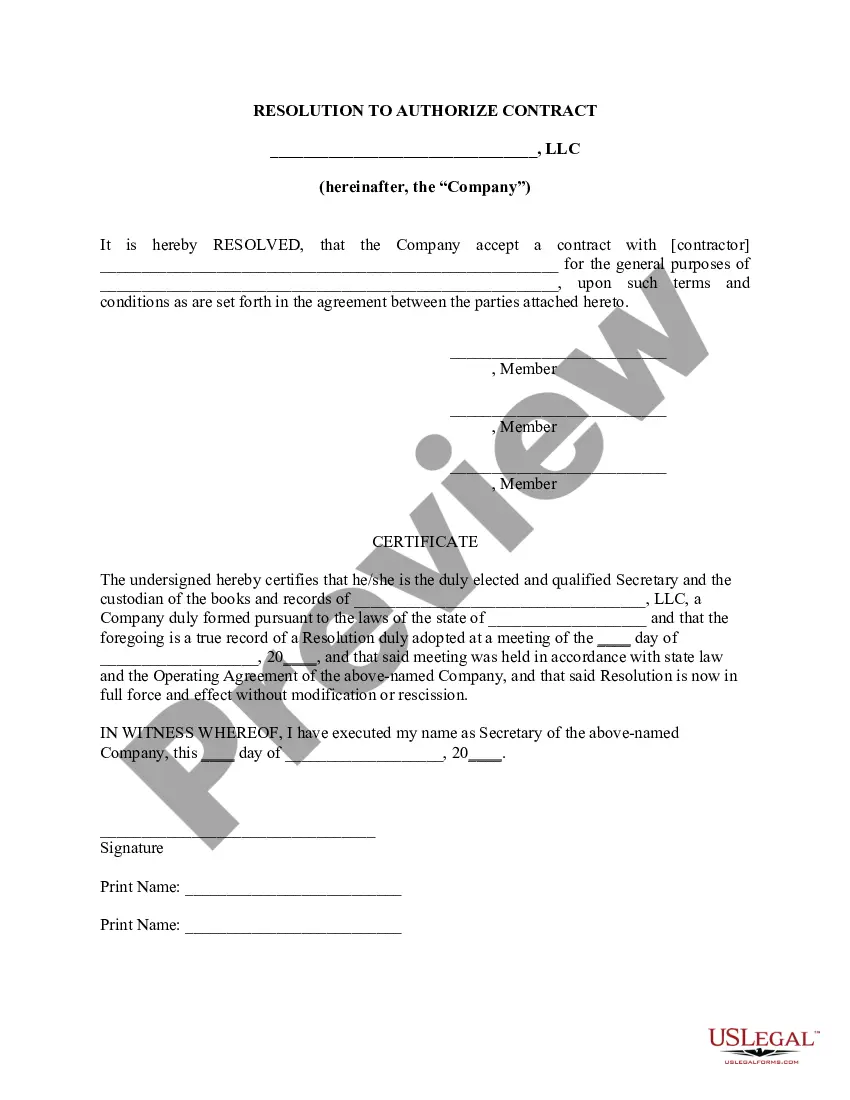
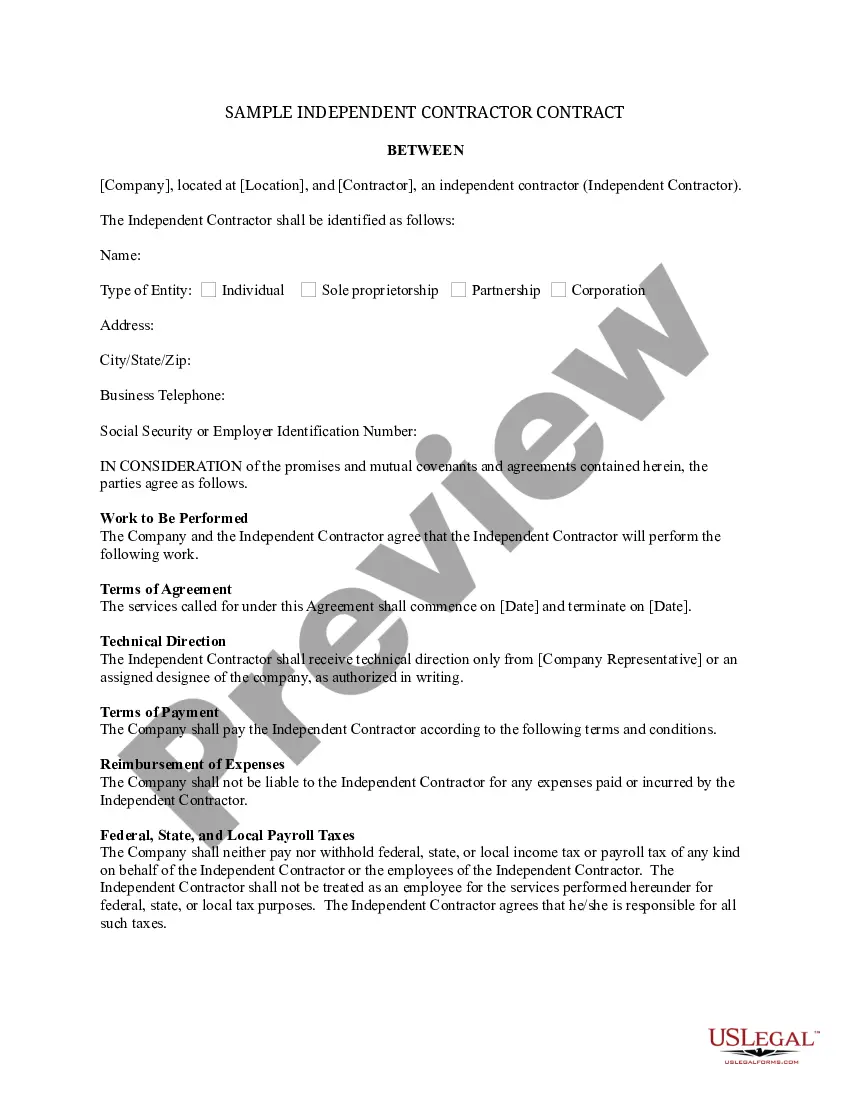
How to fill out Virginia Notice Of Default In Payment Of Rent As Warning Prior To Demand To Pay Or Terminate For Residential Property?
Searching for a Virginia Notice of Default in Payment of Rent as Warning Prior to Demand to Pay or Terminate for Residential Property on the internet might be stressful. All too often, you find files which you think are alright to use, but find out afterwards they are not. US Legal Forms offers more than 85,000 state-specific legal and tax documents drafted by professional attorneys in accordance with state requirements. Have any document you are looking for quickly, hassle free.
If you already have the US Legal Forms subscription, merely log in and download the sample. It will immediately be added in your My Forms section. In case you do not have an account, you need to register and pick a subscription plan first.
Follow the step-by-step recommendations listed below to download Virginia Notice of Default in Payment of Rent as Warning Prior to Demand to Pay or Terminate for Residential Property from the website:
- Read the document description and click Preview (if available) to check whether the template meets your expectations or not.
- In case the form is not what you need, get others using the Search field or the provided recommendations.
- If it is appropriate, just click Buy Now.
- Choose a subscription plan and create an account.
- Pay via credit card or PayPal and download the document in a preferable format.
- After downloading it, you are able to fill it out, sign and print it.
Obtain access to 85,000 legal forms straight from our US Legal Forms library. Besides professionally drafted templates, customers will also be supported with step-by-step guidelines concerning how to get, download, and fill out forms.
Form popularity
FAQ
This notice will inform the tenant that the tenant has 21 days to either remedy the violation or move out of the rental unit. If the tenant does not remedy the violation or move, then the landlord can file an eviction lawsuit against the tenant at the end of the 30 days. (Va. Code Ann.
As a renter in Virginia, you have legal protections under the Virginia Residential Landlord and Tenant Act (VRLTA) that include the right to: A fair application fee. A fair security deposit.A certain level of security.
TERMINATING OR ENDING YOUR TENANCY If you have no written lease and you pay rent by the month, the tenancy can be terminated by either you or the landlord for any reason or no reason at all, by giving at least 30 days written notice before the next rental due date.
Yes, in Virginia, you can evict unwanted family members from your home.However, in most cases, Virginia still considers them to be a tenant. The courts will most likely treat them as a month-to-month tenant even if they have no lease, and pay no rent.
When you want to evict a tenant who is occupying the premises on a month-to-month basis, give the tenant a 30-day notice to quit, get a summons for unlawful detainer from the court, and appear at the hearing to argue the case. If you win, obtain a writ of possession and have the sheriff evict the tenants.
A. In a month-to-month tenancy, the landlord may raise the rent after giving the tenant 45 days' written notice.
NOTE: Under Virginia law, if you do not have a lease, and you do not pay rent, you are considered a tenant at sufferance. This means you can be evicted for any reason at all, at any time, and no notice needs to be given to you.If the rent is paid by the week, only a 7-day written notice is required.
As a renter in Virginia, you have legal protections under the Virginia Residential Landlord and Tenant Act (VRLTA) that include the right to: A fair application fee. A fair security deposit. A decent and safe place to live.