Church administration or management has to do with the organization of church ministry, and with the operations that govern that organization.
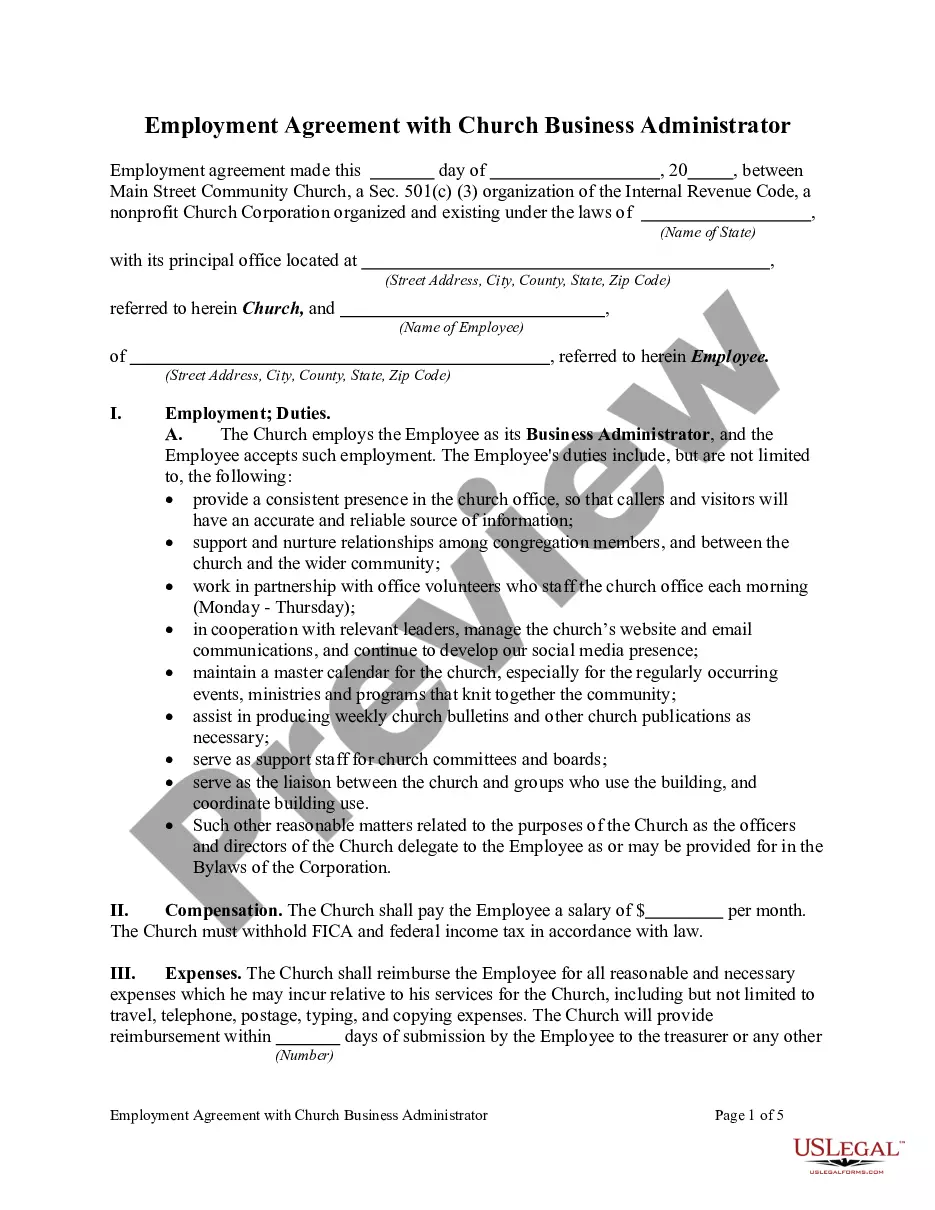
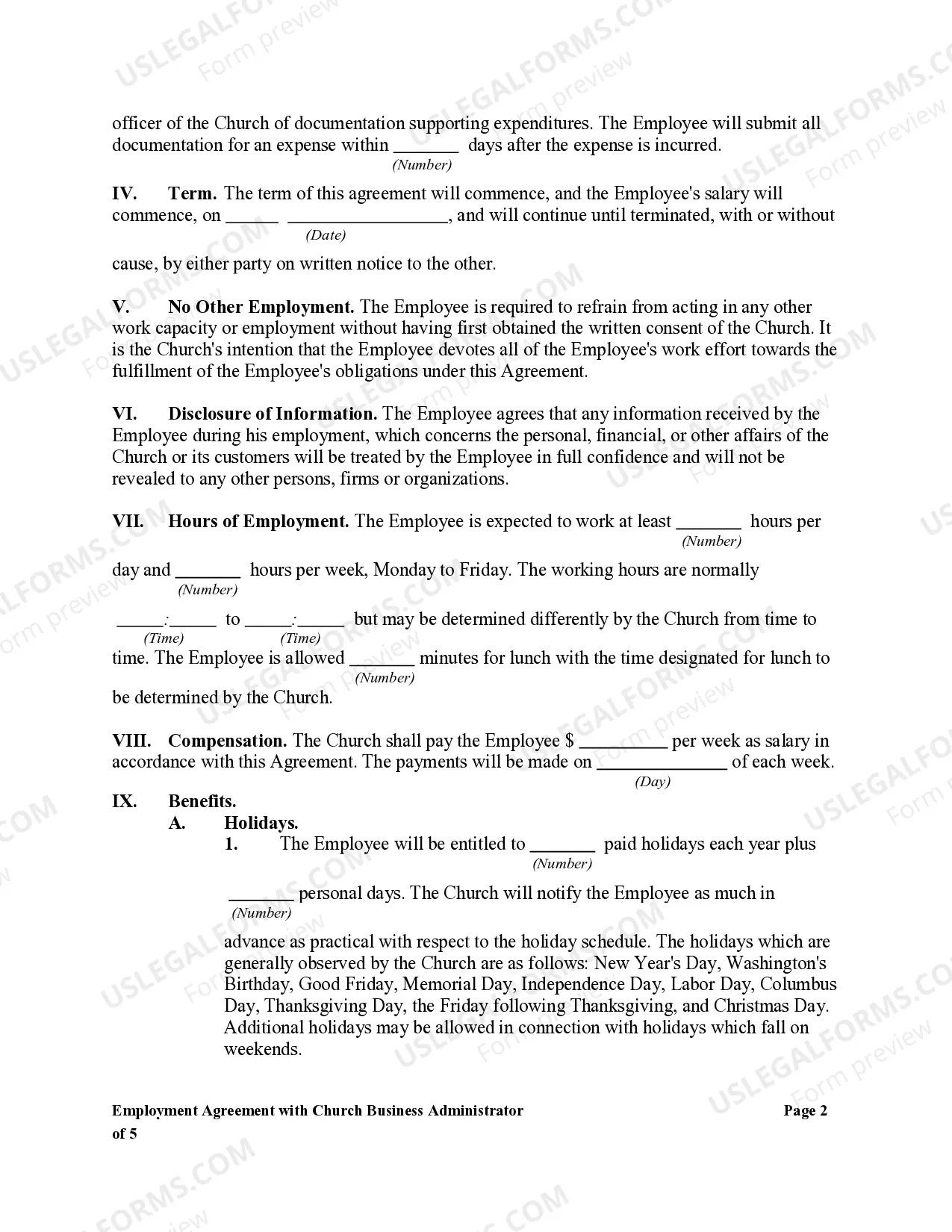
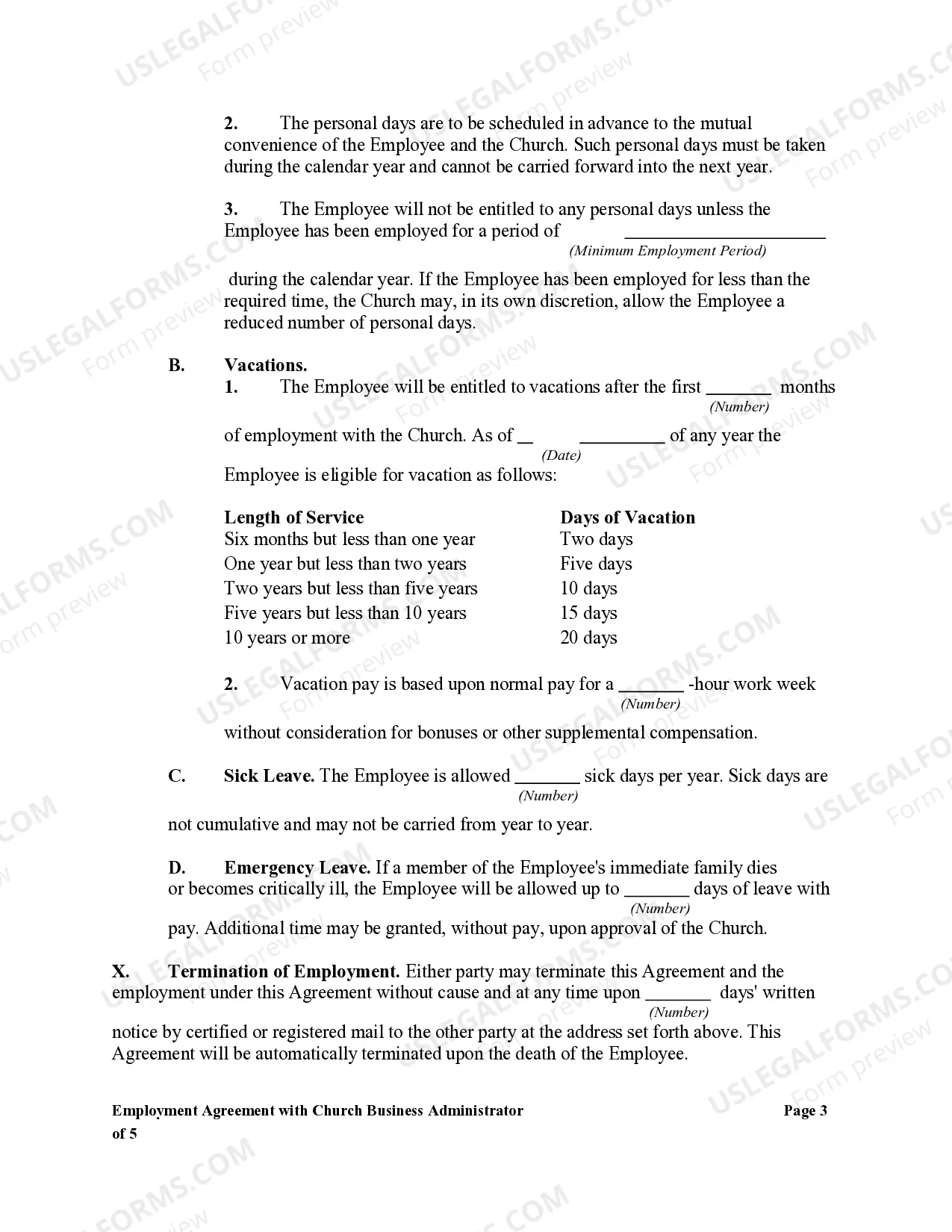
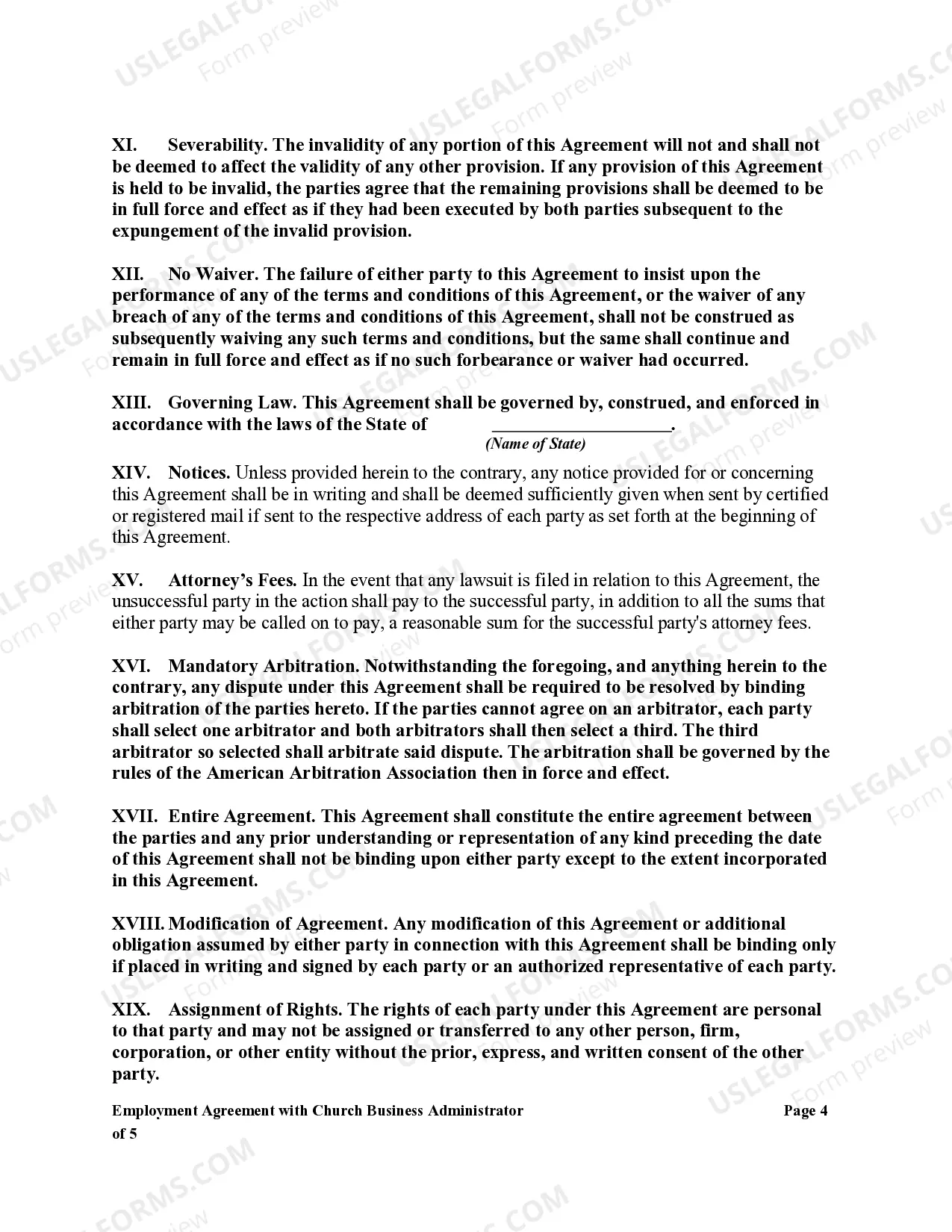
Employment Agreement with Church Business Administrator
Category:
State:
Multi-State
Control #:
US-04561BG
Format:
Word;
Rich Text
Instant download
Description
Free preview
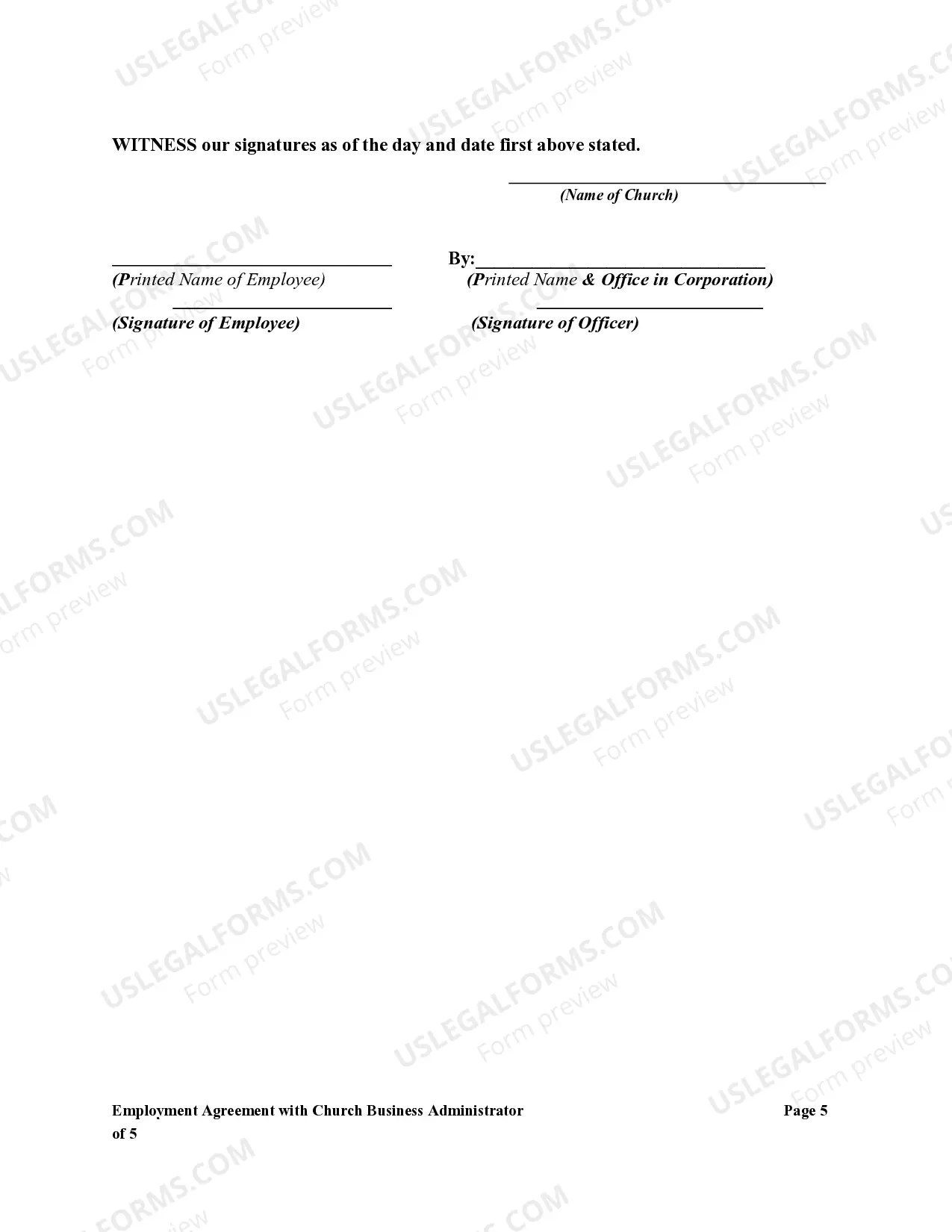
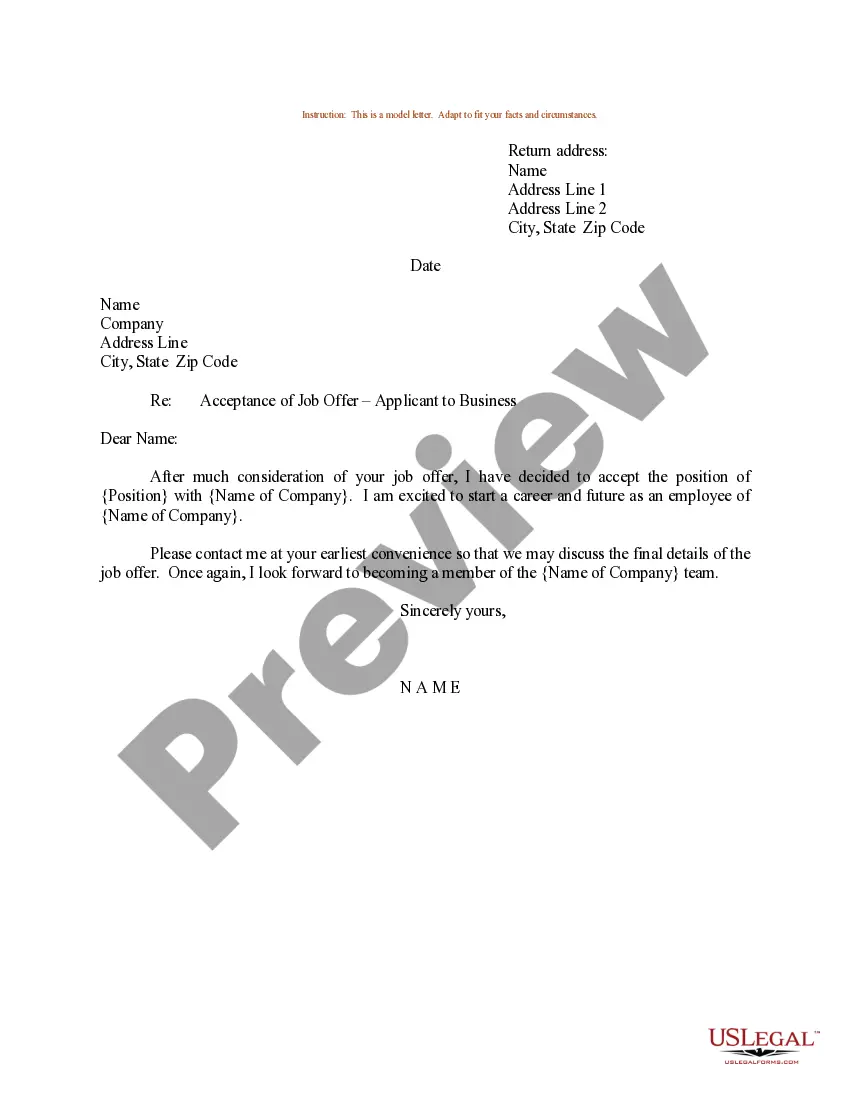
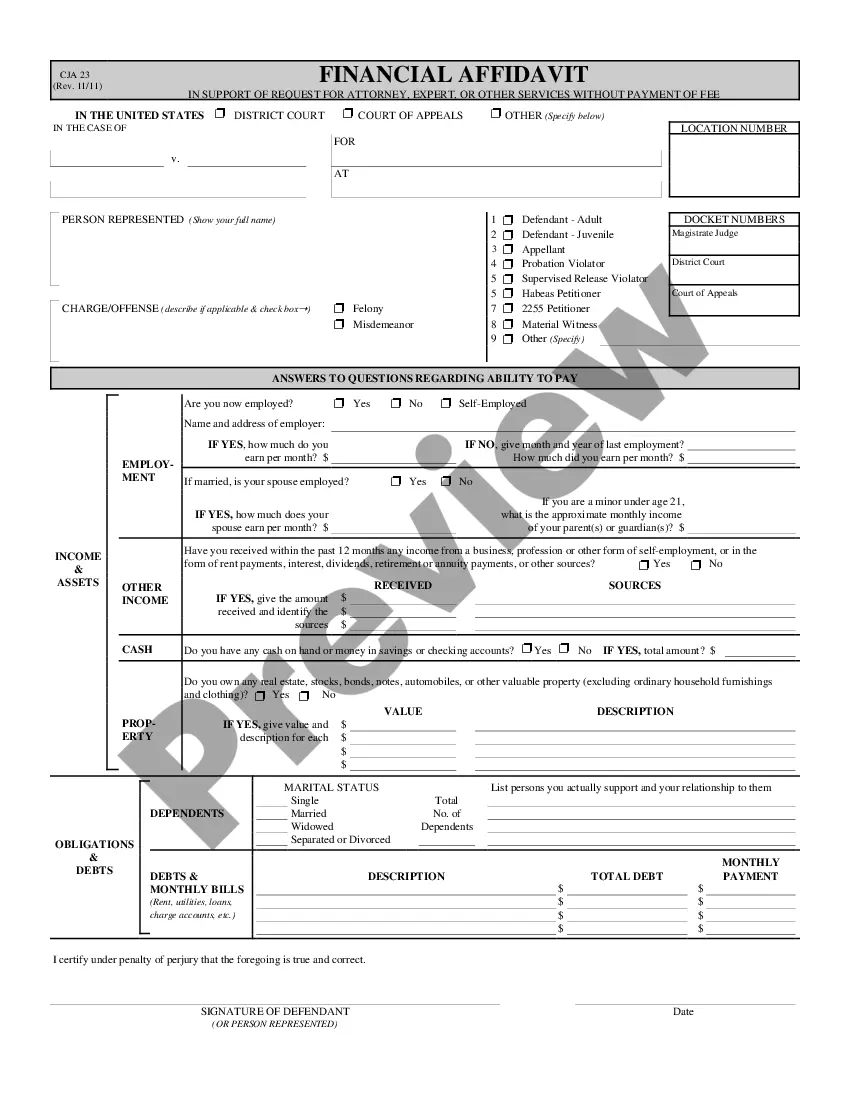
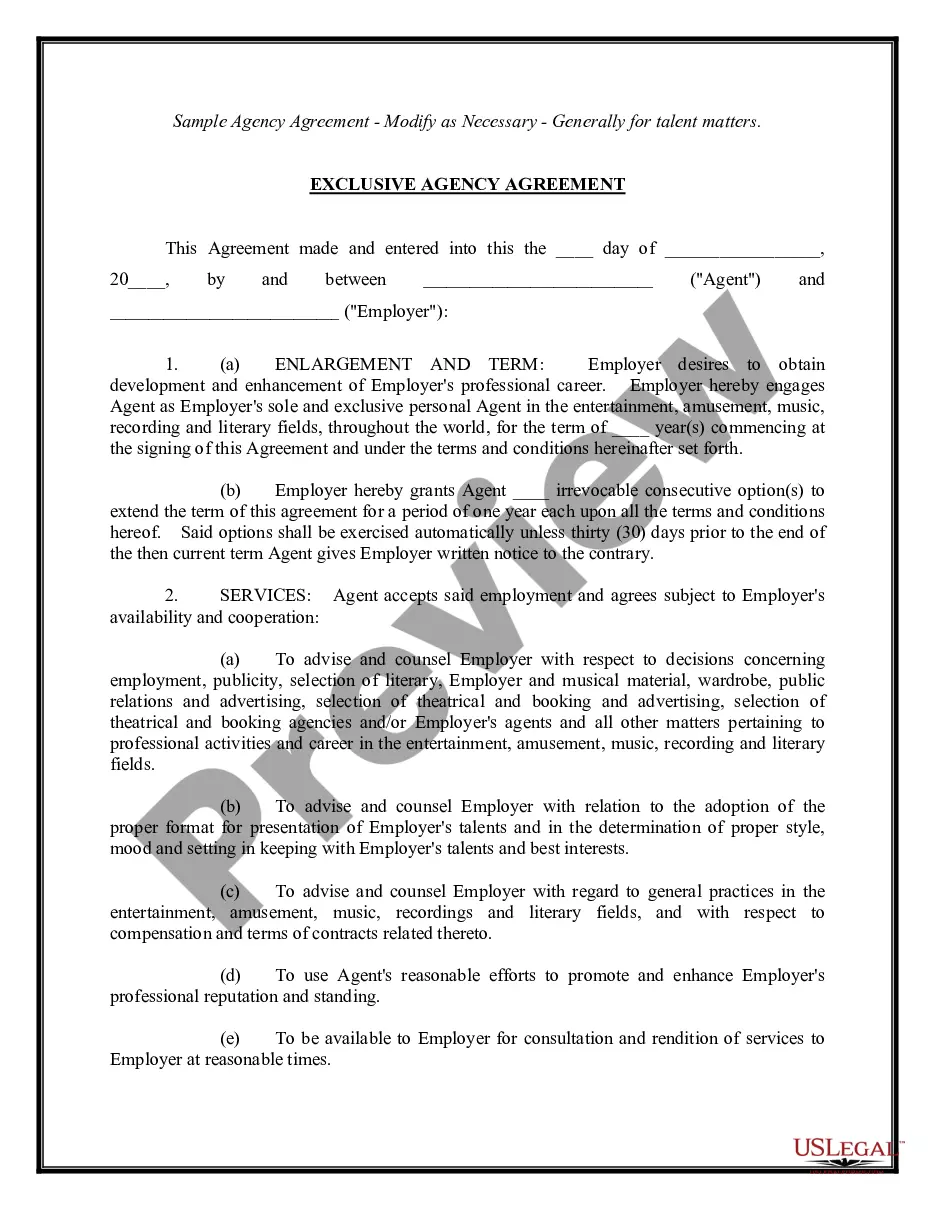



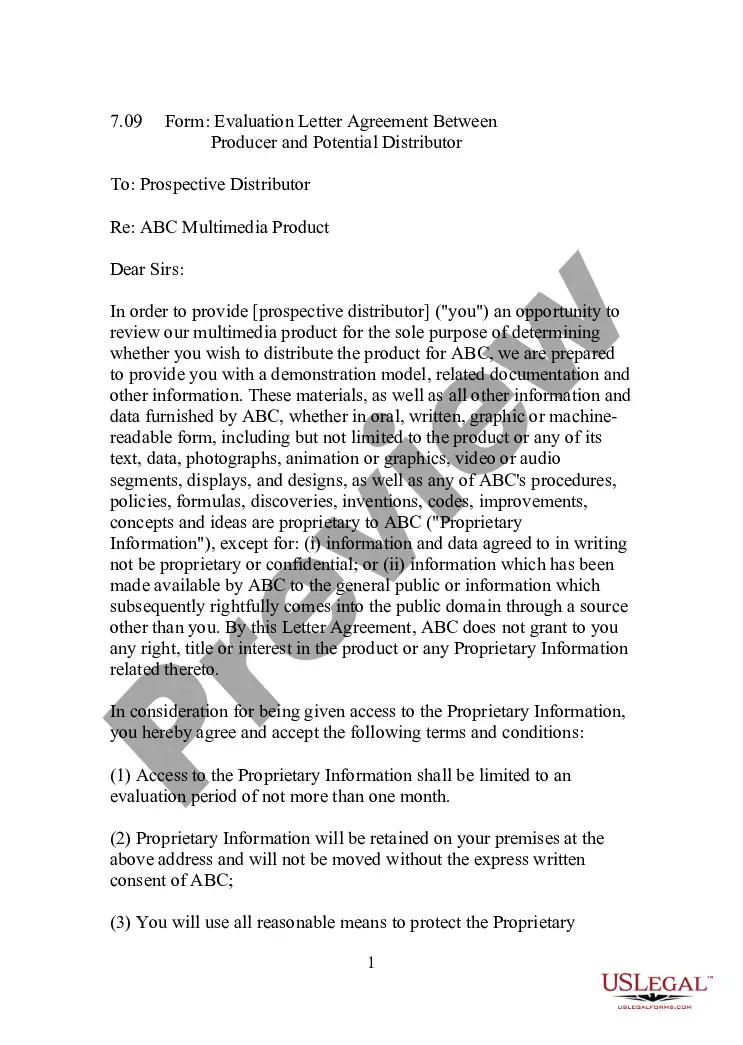
How to fill out Employment Agreement With Church Business Administrator?
Make use of the most extensive legal catalogue of forms. US Legal Forms is the perfect platform for finding up-to-date Employment Agreement with Church Business Administrator templates. Our service provides thousands of legal documents drafted by certified legal professionals and categorized by state.
To download a template from US Legal Forms, users just need to sign up for a free account first. If you are already registered on our platform, log in and select the document you need and buy it. Right after buying templates, users can see them in the My Forms section.
To obtain a US Legal Forms subscription on-line, follow the guidelines below:
- Check if the Form name you have found is state-specific and suits your needs.
- In case the template has a Preview function, use it to check the sample.
- In case the sample doesn’t suit you, use the search bar to find a better one.
- PressClick Buy Now if the sample corresponds to your needs.
- Choose a pricing plan.
- Create a free account.
- Pay with the help of PayPal or with the debit/credit card.
- Choose a document format and download the template.
- After it is downloaded, print it and fill it out.
Save your effort and time using our platform to find, download, and complete the Form name. Join thousands of satisfied clients who’re already using US Legal Forms!
Form popularity
FAQ
Is it legal to work two jobs? Legally, there's nothing stopping you from having a second job, but you'll need to think about: Legally how many hours you can work. Paying tax for two jobs.
What Do Church Business Administrators Do? Develop church budget and manage church funds, administer payroll and employee benefits. Manage church property and facilities, overseeing maintenance and planning long-term improvement projects. Work with pastor and financial committees to develop the church budget.
A written contract of employment would include the following : Terms and Conditions of Employment : being items such: Name and address of employer. Name and address of employee.
The guidance from HM Revenue and Customs is that it is possible for an employee who has two contracts with the same employer to be incapable of work under one of them but capable of carrying out the other.
The guidance from HM Revenue and Customs is that it is possible for an employee who has two contracts with the same employer to be incapable of work under one of them but capable of carrying out the other.
Names and addresses. It's important that it is very clear who the parties are that the agreement is between. Job title. You don't want to include too much information about the actual role itself. Salary. Location. Hours of work. Benefits. Disciplinary and grievance procedures.
Yes - you can earn additional income and claim JobKeeper through your original employer as long as you maintain your employment with them. You may find our article about JobKeeper helpful if you have further queries.
A clear job description. This should set out the role and duties of the employee. Salary or wage details. The nature of the employment. The reporting structure. Leave entitlements. Confidentiality. Non-compete/restraint of trade. Protection of intellectual property.
The nature and description of the job. As an employee you will be required to provide your services to the employer. Remuneration and benefits. Duration. Leave. Termination.