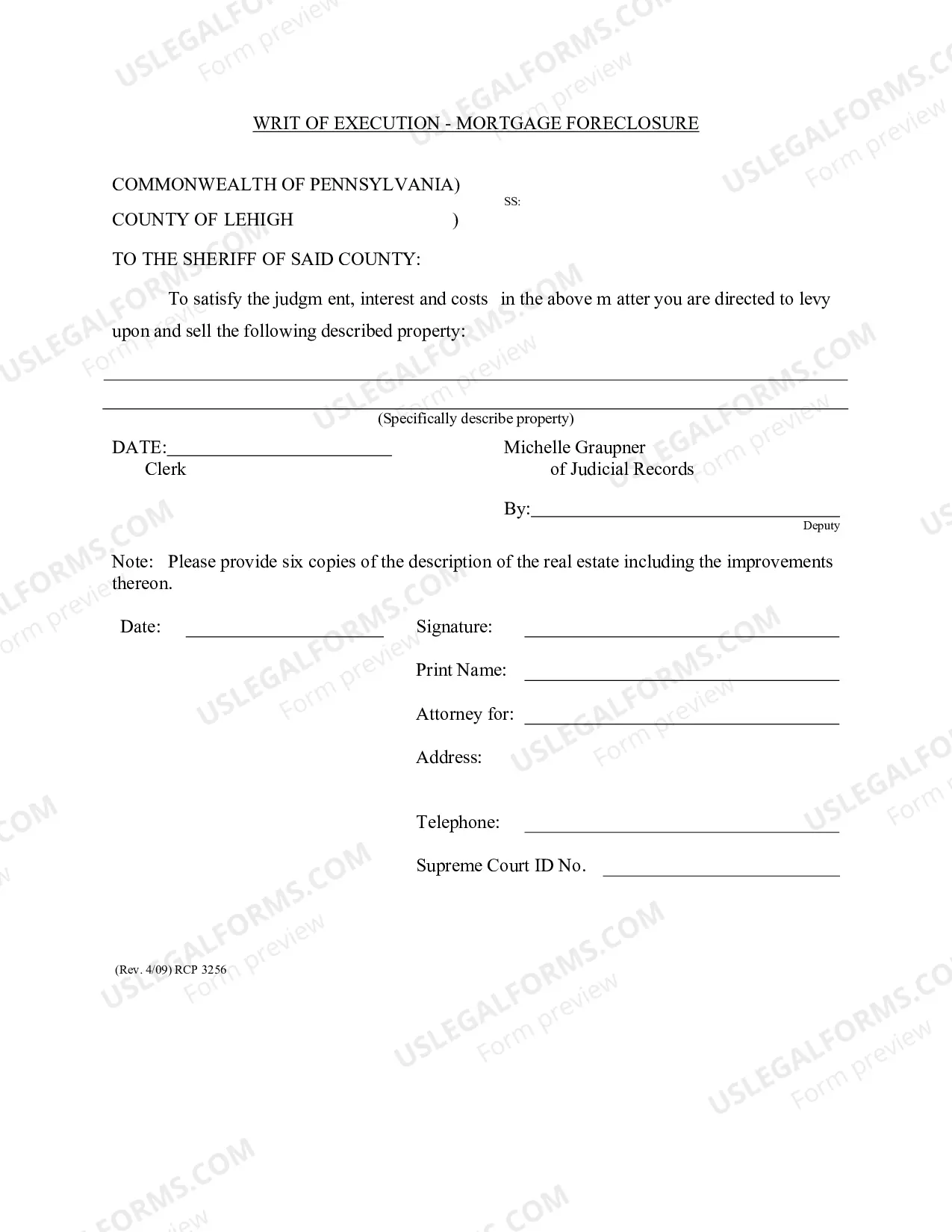
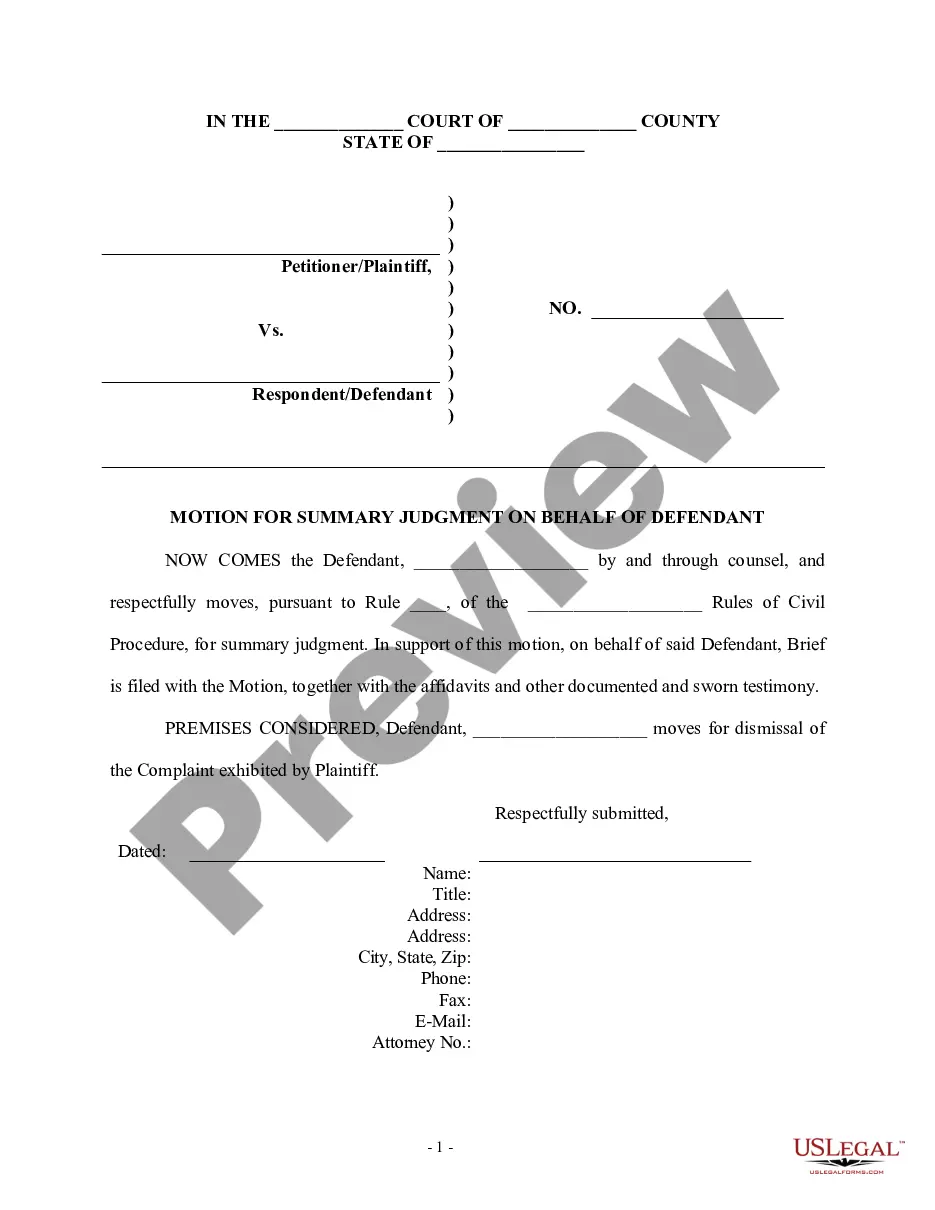
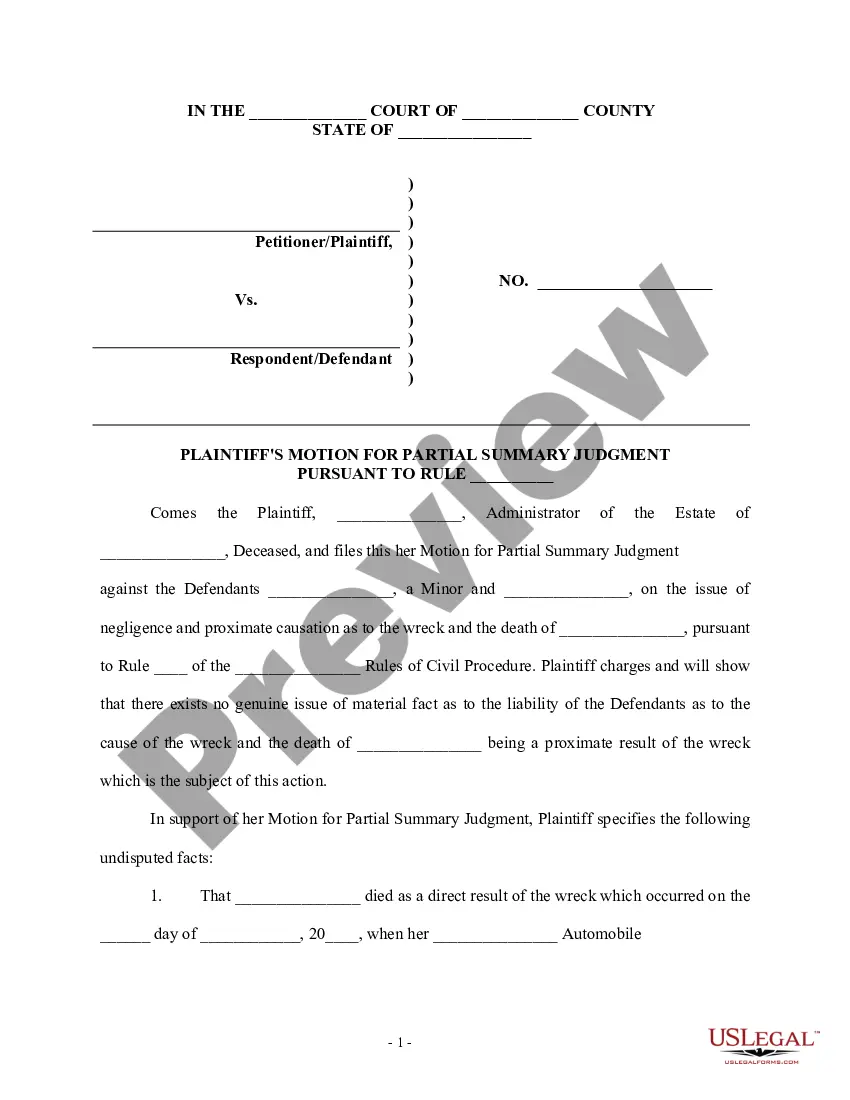
Memorandum of Law in Support of Motion for Partial Summary Judgment on the Issue of Liability
What is this form?
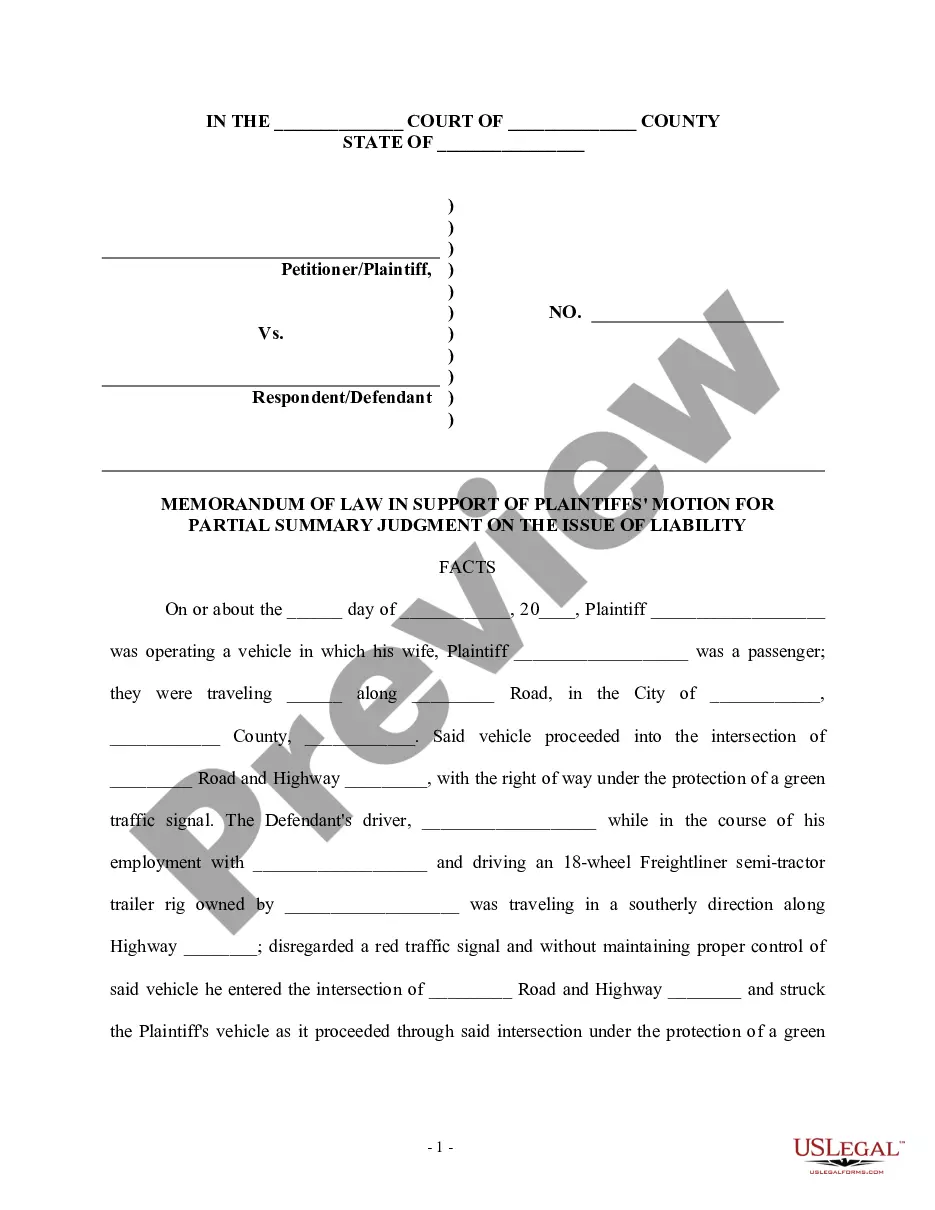
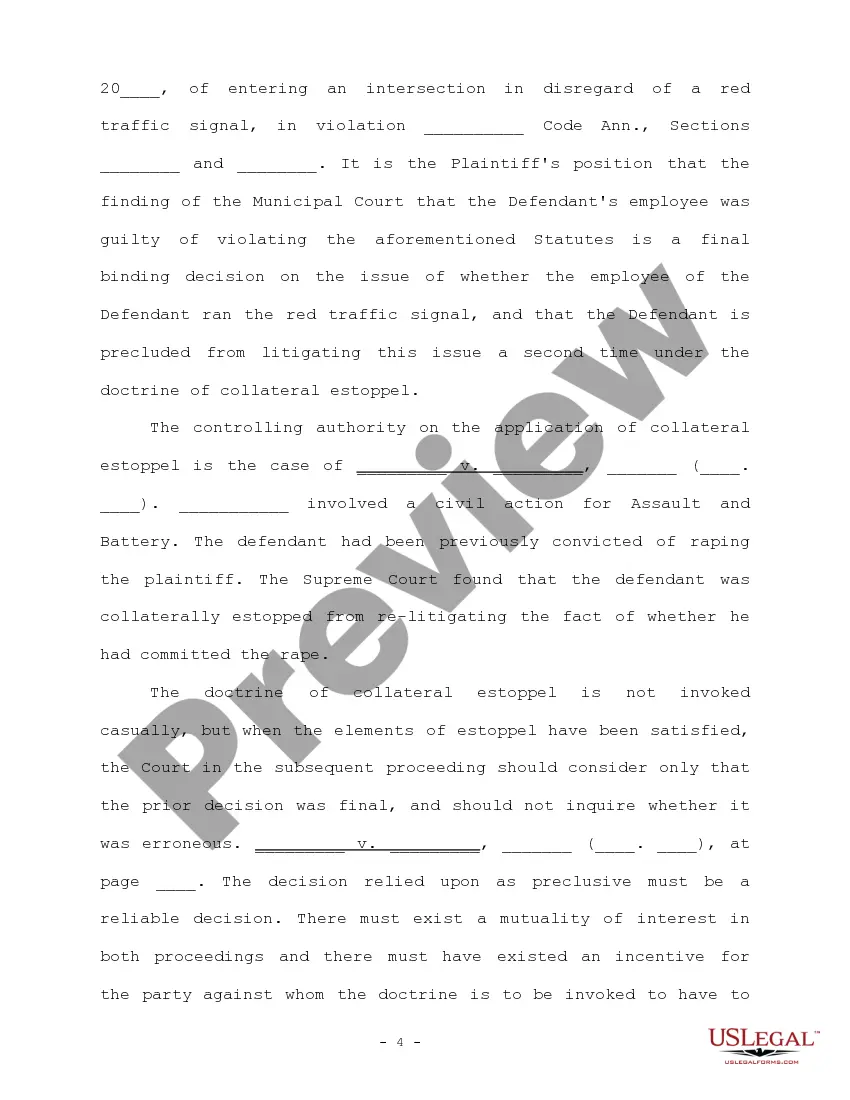
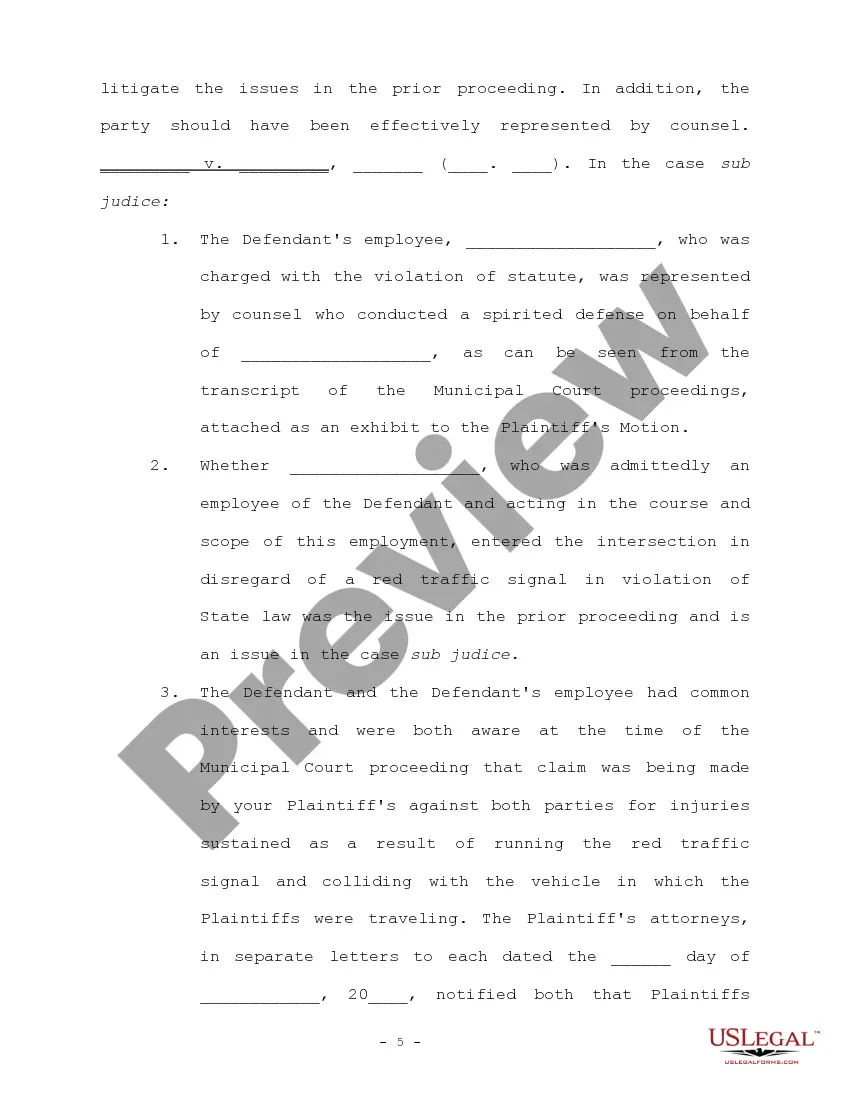
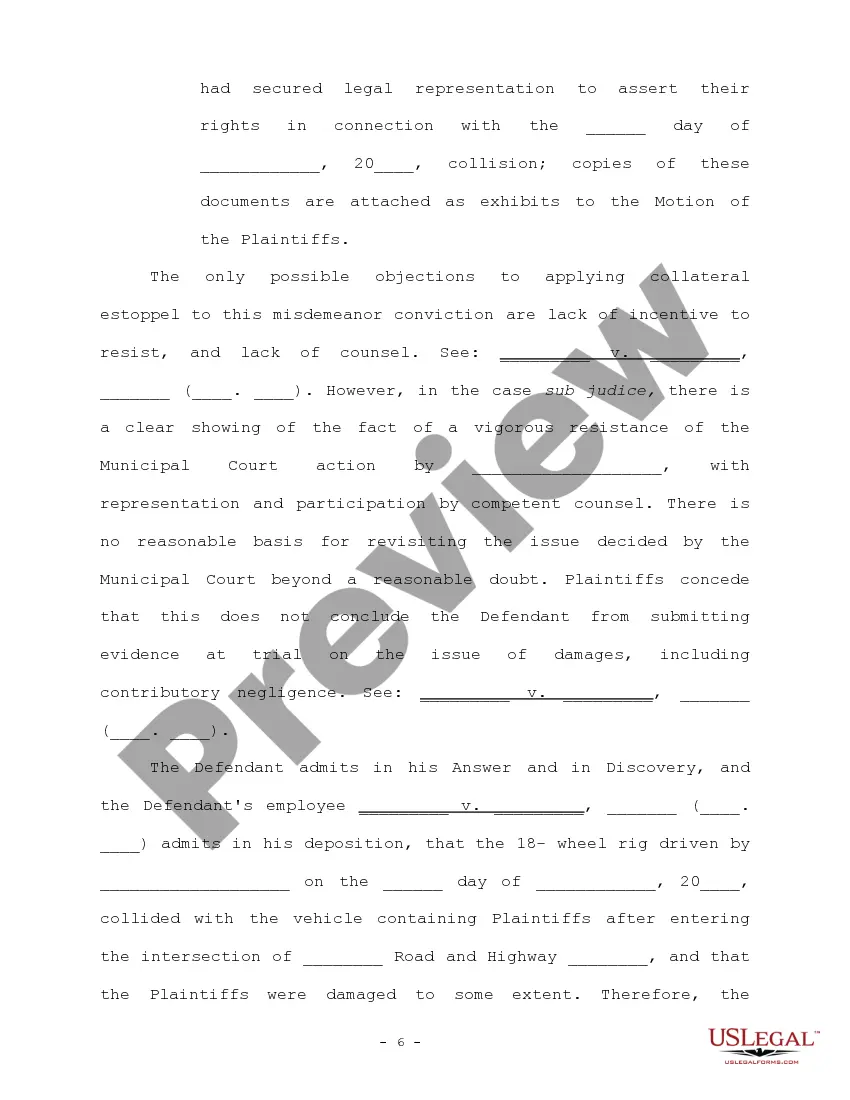
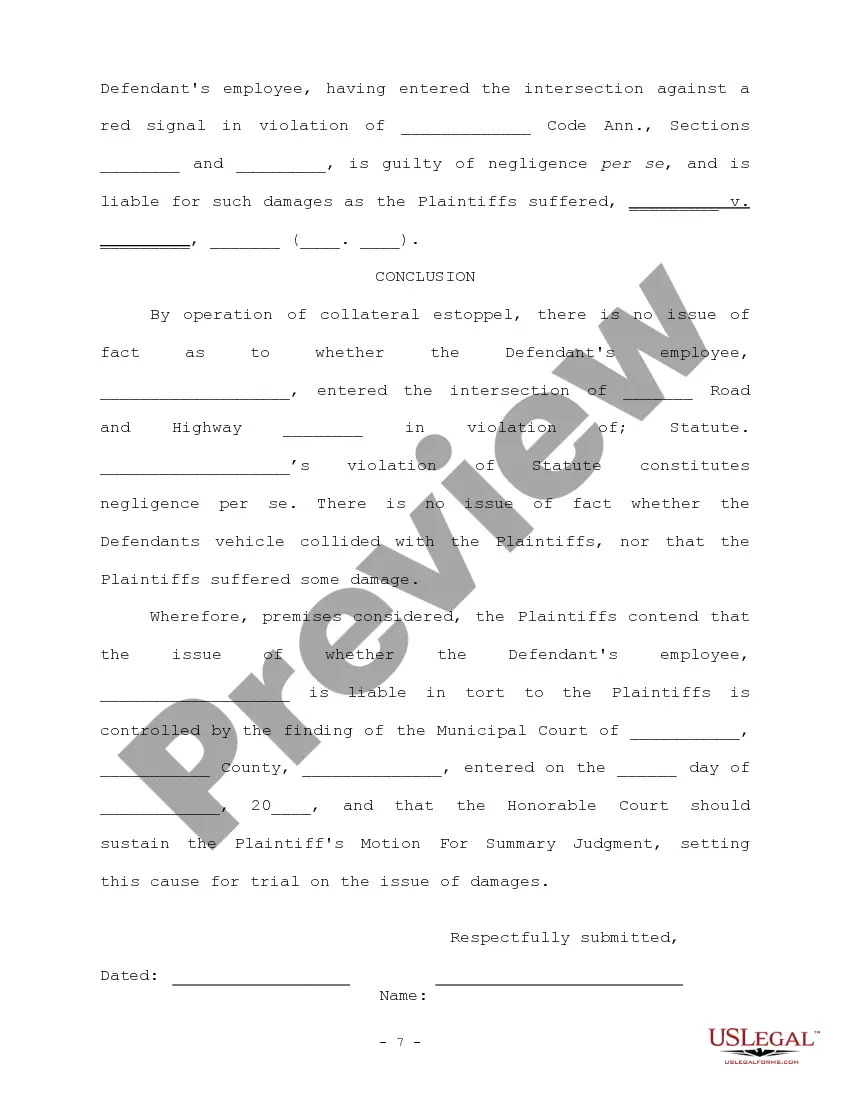
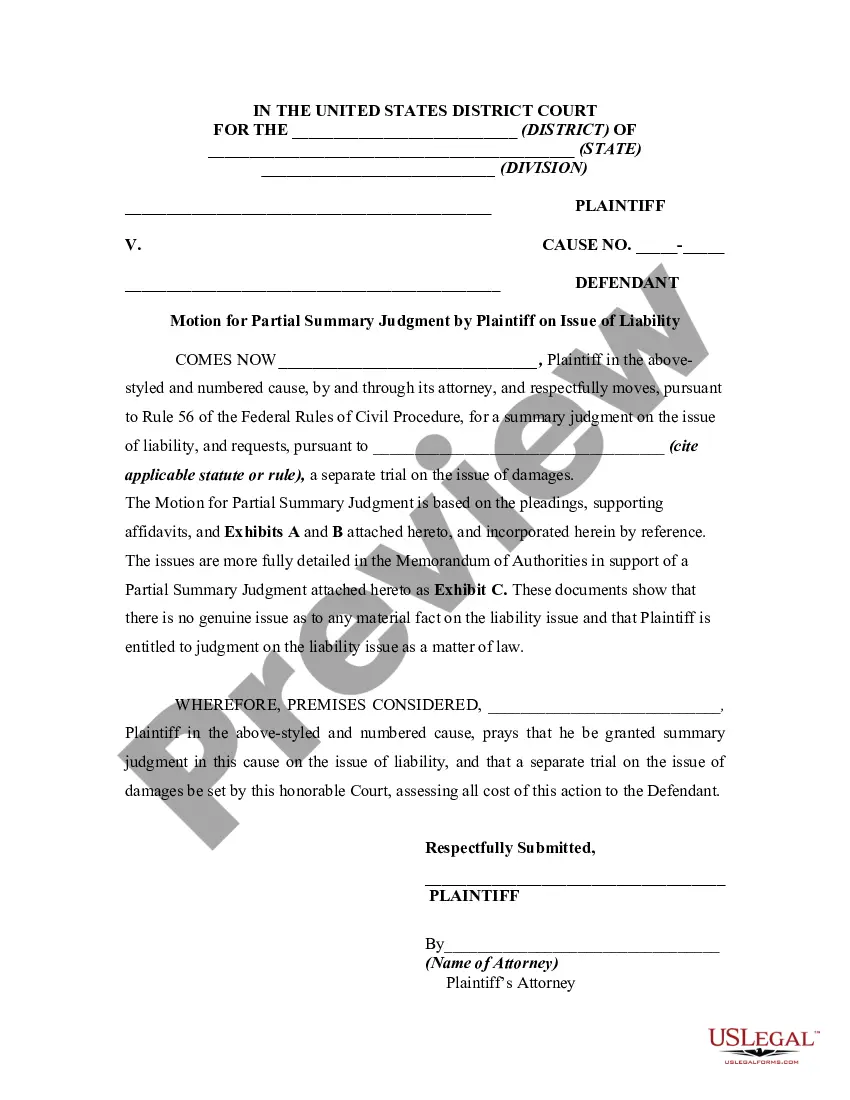
The Memorandum of Law in Support of Motion for Partial Summary Judgment on the Issue of Liability is a legal document used by plaintiffs in civil litigation, particularly in cases involving automobile accidents. This form supports a motion for summary judgment, which is a request for the court to rule in favor of the plaintiff on the issue of liability without a full trial. It helps clarify the legal basis for the motion using evidence from previous court proceedings and establishes negligence per se based on traffic violations committed by the defendant's employee.
Main sections of this form
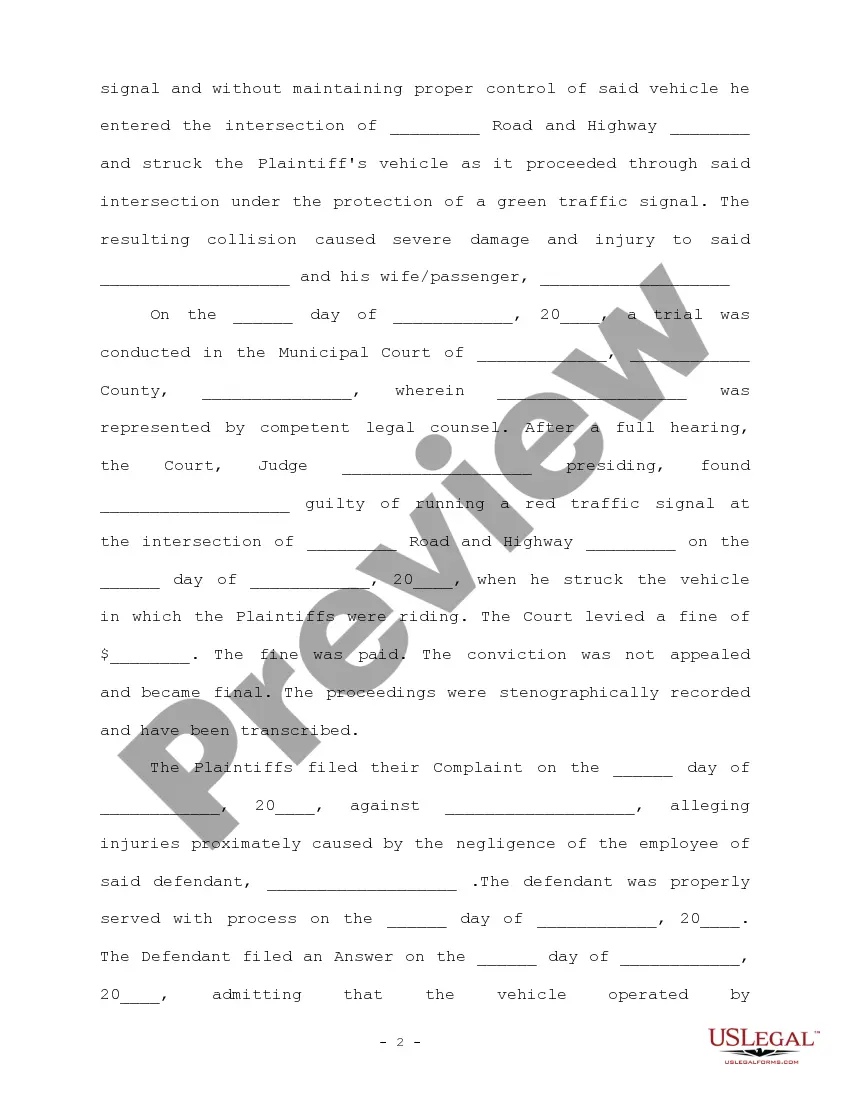
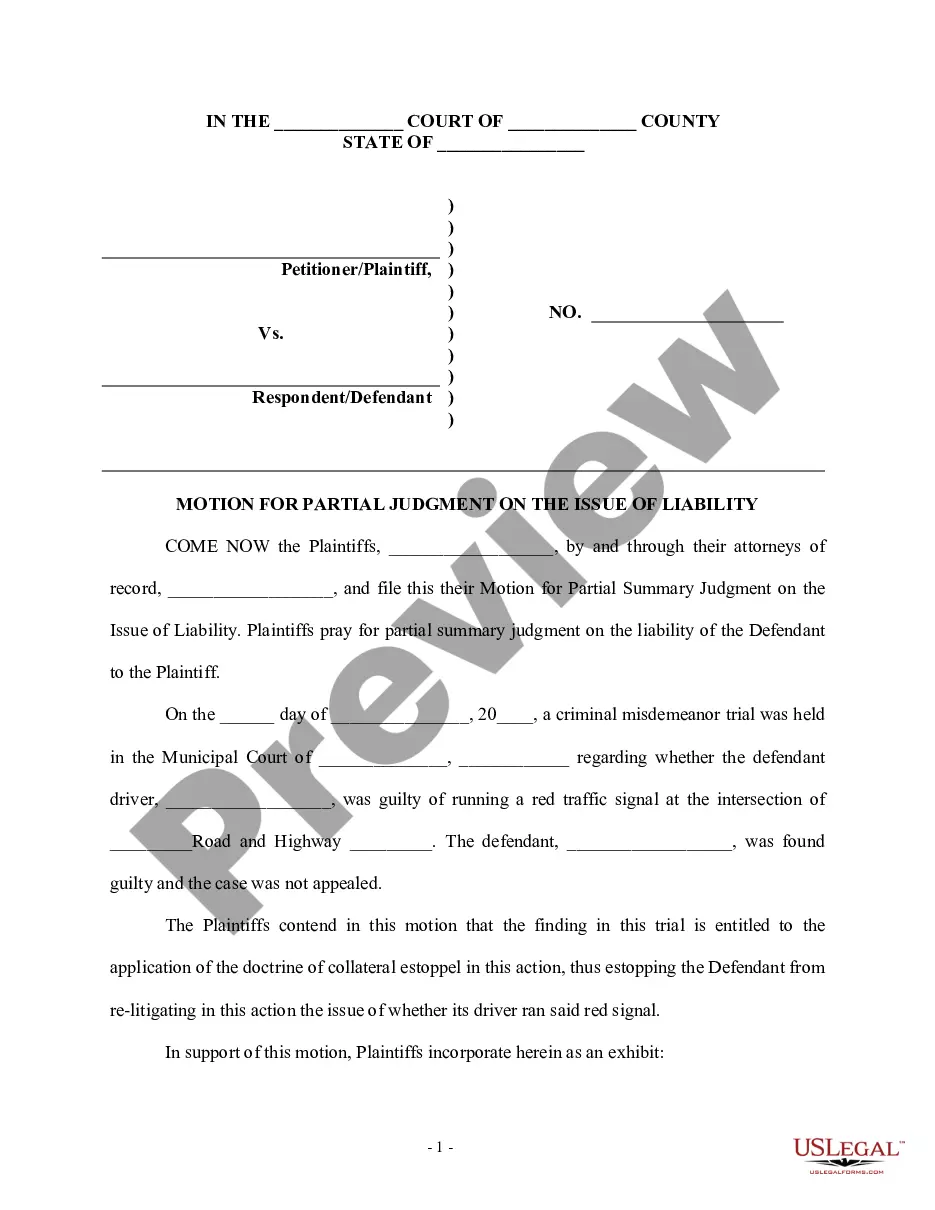
- Details of the trial conducted and the court's findings.
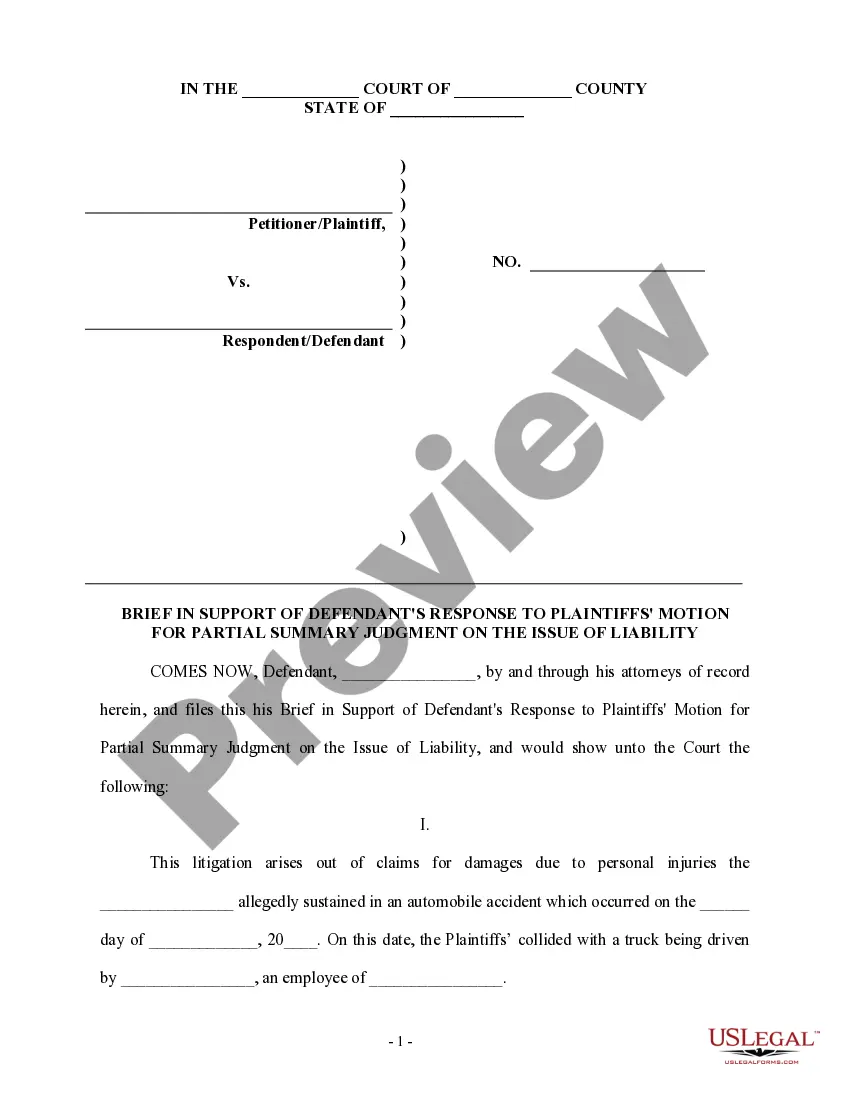
- Allegations of negligence against the defendant's employee.
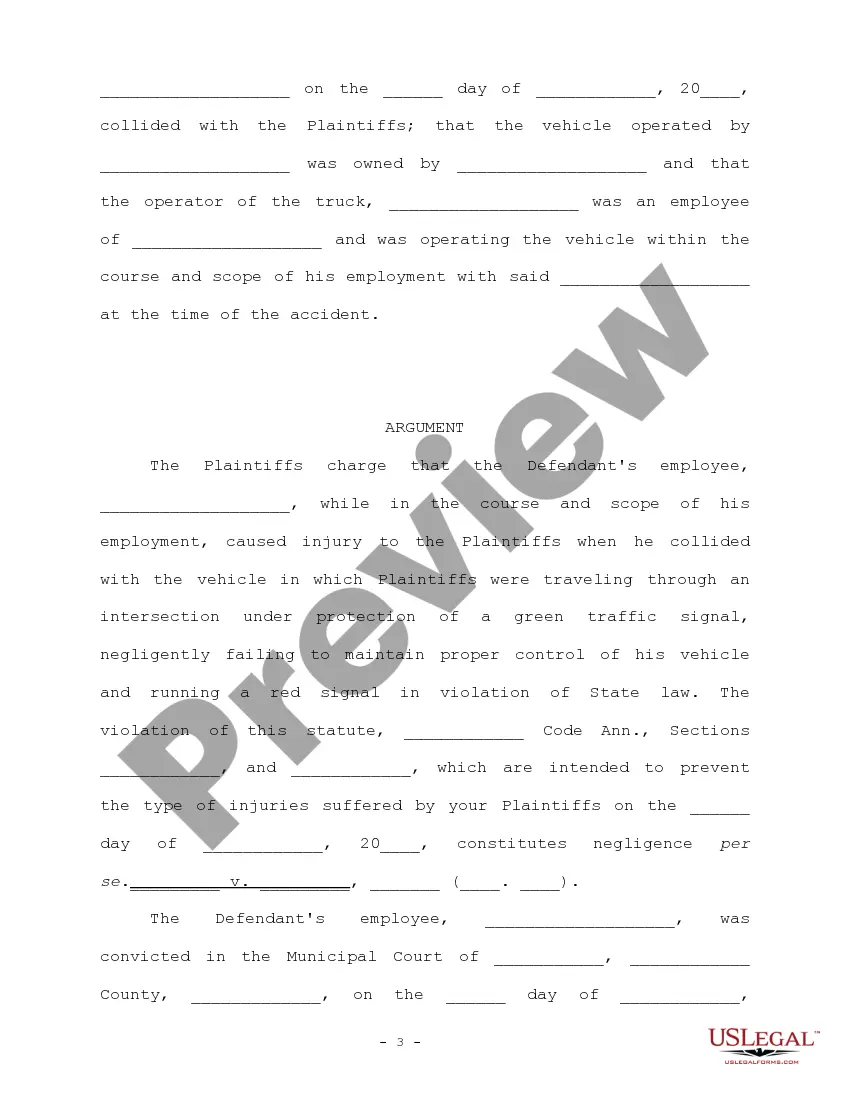
- Arguments supporting the motion for summary judgment, including citations of applicable statutes.
- Evidence of the defendant's employee's prior conviction related to the incident.
- Citations and legal precedents that establish the doctrine of collateral estoppel.
- Conclusions that summarize the grounds for liability and damages claimed.
When this form is needed
This form should be used when a plaintiff seeks to obtain a ruling from the court on the issue of liability in a civil case regarding an automobile accident. It is applicable when there is evidence of negligence, such as a traffic violation (e.g., running a red light), and when the defendant's employee has previously been convicted of a related charge. This form helps facilitate a streamlined court process by determining fault without the need for a full trial.
Intended users of this form
- Plaintiffs in civil litigation involving automobile accidents.
- Legal representatives and attorneys acting on behalf of plaintiffs.
- Any party needing to establish negligence per se in cases of traffic violations.
Steps to complete this form
- Identify the parties involved, including the plaintiff and defendant(s).
- Detail the date and circumstances of the accident, including location and vehicles involved.
- Provide evidence of the defendant's employee's traffic violation and any relevant legal citations.
- Draft comprehensive arguments supporting the motion for summary judgment.
- Include any necessary attachments, such as transcripts from prior court proceedings or other relevant exhibits.
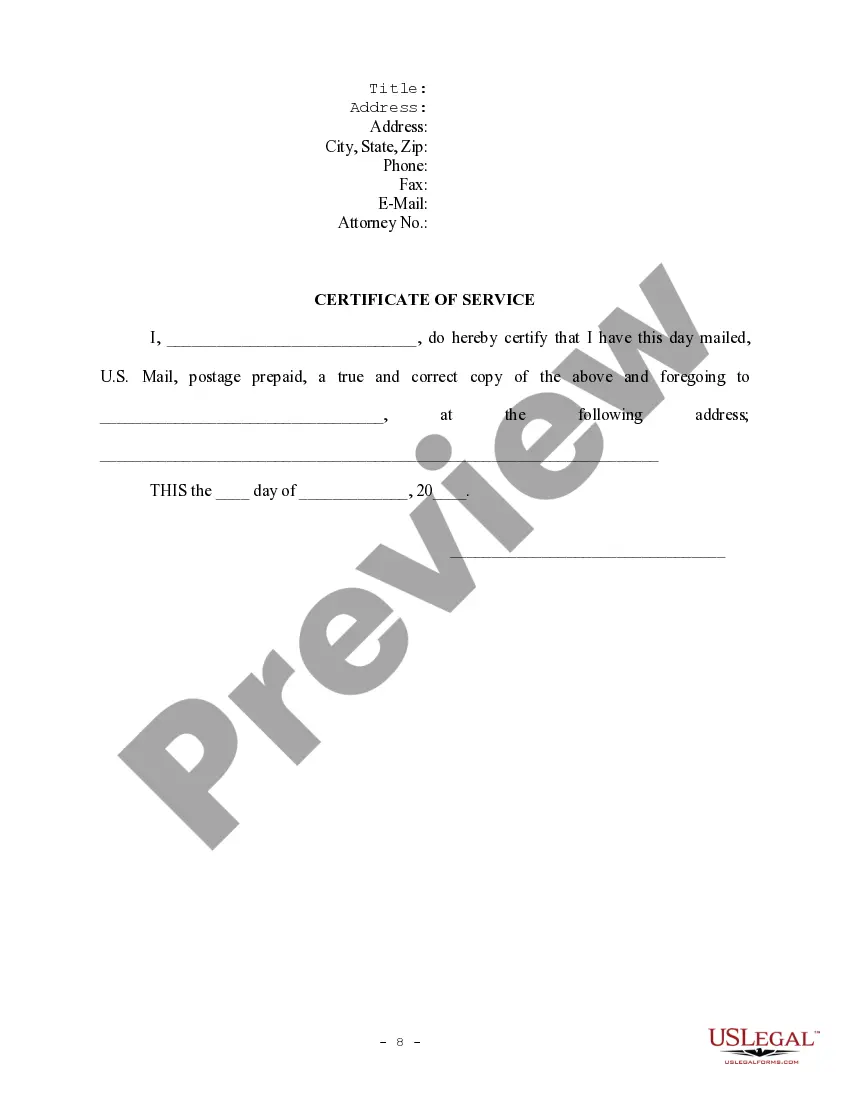
- Sign and date the document before submission to the court.
Does this document require notarization?
Notarization is generally not required for this form. However, certain states or situations might demand it. You can complete notarization online through US Legal Forms, powered by Notarize, using a verified video call available anytime.
Get your form ready online
Our built-in tools help you complete, sign, share, and store your documents in one place.
Make edits, fill in missing information, and update formatting in US Legal Forms—just like you would in MS Word.
Download a copy, print it, send it by email, or mail it via USPS—whatever works best for your next step.
Sign and collect signatures with our SignNow integration. Send to multiple recipients, set reminders, and more. Go Premium to unlock E-Sign.
If this form requires notarization, complete it online through a secure video call—no need to meet a notary in person or wait for an appointment.
We protect your documents and personal data by following strict security and privacy standards.

Make edits, fill in missing information, and update formatting in US Legal Forms—just like you would in MS Word.

Download a copy, print it, send it by email, or mail it via USPS—whatever works best for your next step.

Sign and collect signatures with our SignNow integration. Send to multiple recipients, set reminders, and more. Go Premium to unlock E-Sign.

If this form requires notarization, complete it online through a secure video call—no need to meet a notary in person or wait for an appointment.

We protect your documents and personal data by following strict security and privacy standards.
Mistakes to watch out for
- Failing to include all necessary evidence supporting the claim for summary judgment.
- Neglecting to accurately cite applicable state laws and statutes.
- Omitting attachments or exhibits that provide further context to the argument.
- Submitting the form without proper signatures and dates, which can lead to procedural errors.
Benefits of using this form online
- Convenience of downloading and filling out the form at your own pace.
- Editability allows users to customize the form to fit their specific case details.
- Reliability of templates drafted by licensed attorneys, ensuring legal compliance.
Looking for another form?
Form popularity
FAQ
Rule 56 of the Federal Rules of Civil Procedure governs summary judgment for federal courts. Under Rule 56, in order to succeed in a motion for summary judgment, a movant must show 1) that there is no genuine dispute as to any material fact, and 2) that the movant is entitled to judgment as a matter of law.
Introduction/Issue. Facts. Rule (e.g. standard for summary judgment) Analysis/Argument. Issue #1 Heading. Issue #1 (summary statement or paragraph) Rule (law that applies to your issue) Conclusion of Memo (summarize why the court should grant your motion)
A memorandum of law is also often called a brief. It is essentially a written legal argument.A memoranum of law in opposition to defendant's motion to strike would usually be plaintiff's legal argument about why the court should not do that.
A procedural device used during civil litigation to promptly and expeditiously dispose of a case without a trial.For example, a court might grant partial summary judgment in a personal injury case on the issue of liability. A trial would still be necessary to determine the amount of damages.
N. a court order ruling that no factual issues remain to be tried and therefore a cause of action or all causes of action in a complaint can be decided upon certain facts without trial.
An MSJ is the defendant's effort to show conclusively that there is no merit to the plaintiff's case. The motion is based on evidence and it is the defendant's attempt to defeat the plaintiff's case prior to trial. Sometimes, a defendant will file knowing full well there is zero hope of prevailing.
An informal record, in the form of a brief written note or outline, of a particular legal transaction or document for the purpose of aiding the parties in remembering particular points or for future reference. A memorandum may be used in court to prove that a particular contract was made.
A document that cites (refers to) legal authorities such as statutes and court cases, and explains how those authorities support the position advocated by the party who wrote the memorandum. Often written to support a motion.
A "memorandum of law" or a "memorandum of points and authorities" "briefs" the court, i.e., explains to the court the legal authority, consisting of both decisional and statutory law, which supports the moving party's request.