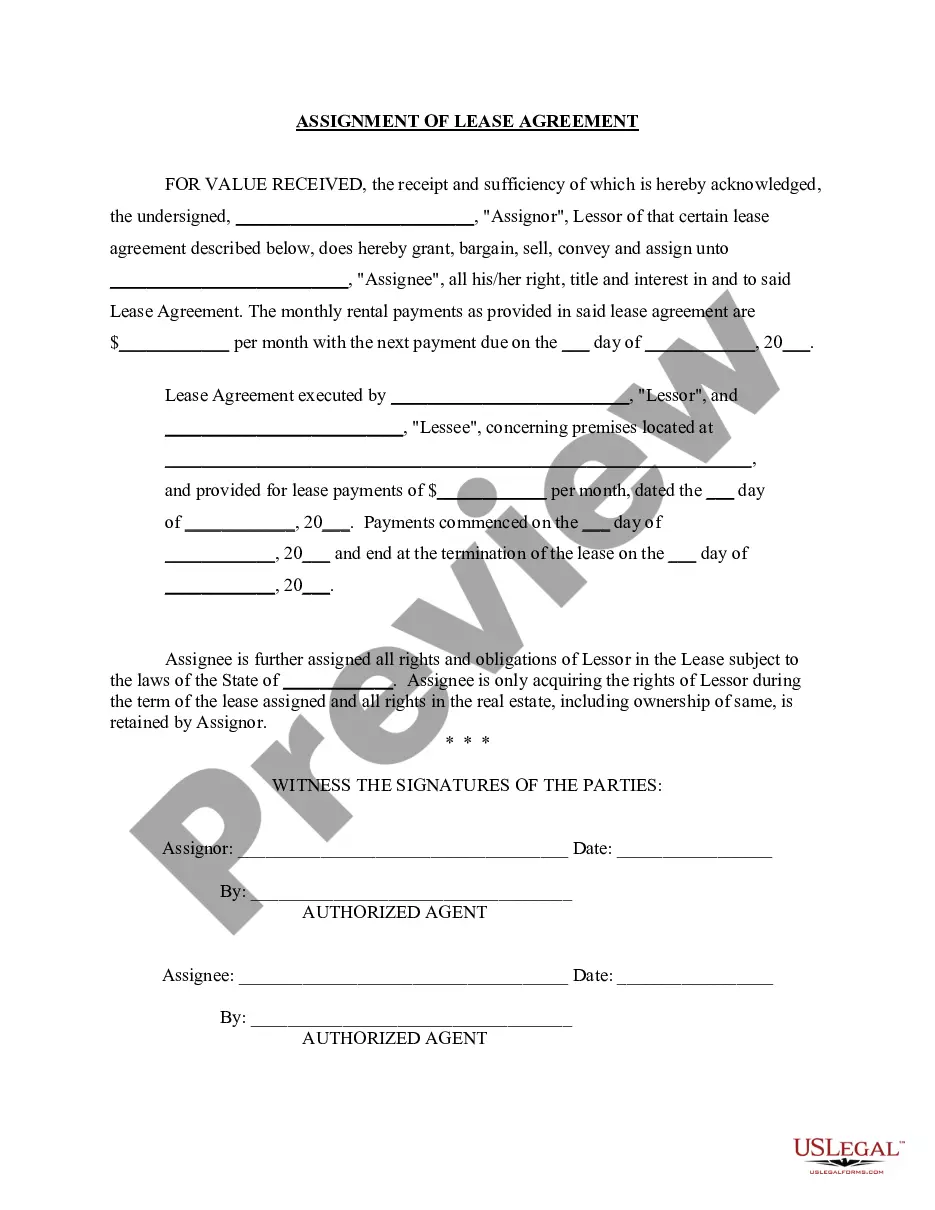
Tennessee Warranty Deed for Trust to Trust
What this document covers
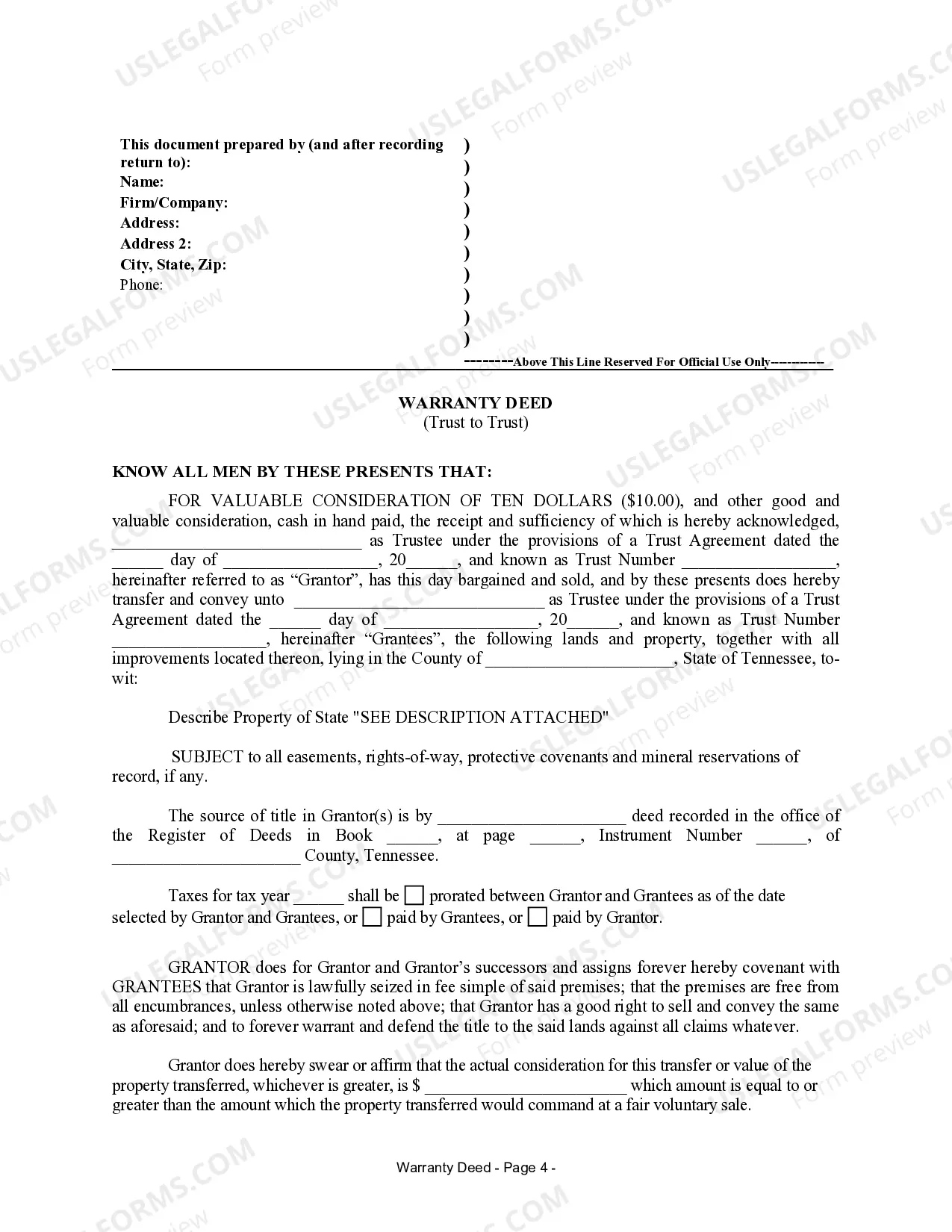
The Warranty Deed for Trust to Trust is a legal document used to transfer property ownership from one trust to another. This type of warranty deed ensures that the grantor (the trust transferring the property) legally guarantees they have clear title to the property and the right to convey it. This form is unique as it involves trusts rather than individual persons as parties to the transaction, providing a framework for the management of assets held in these fiduciary arrangements.
Form components explained
- Identification of the Grantor and Grantee trusts.
- Description of the property being transferred.
- Legal affirmations regarding ownership and the absence of encumbrances.
- Tax proration agreement between Grantor and Grantee.
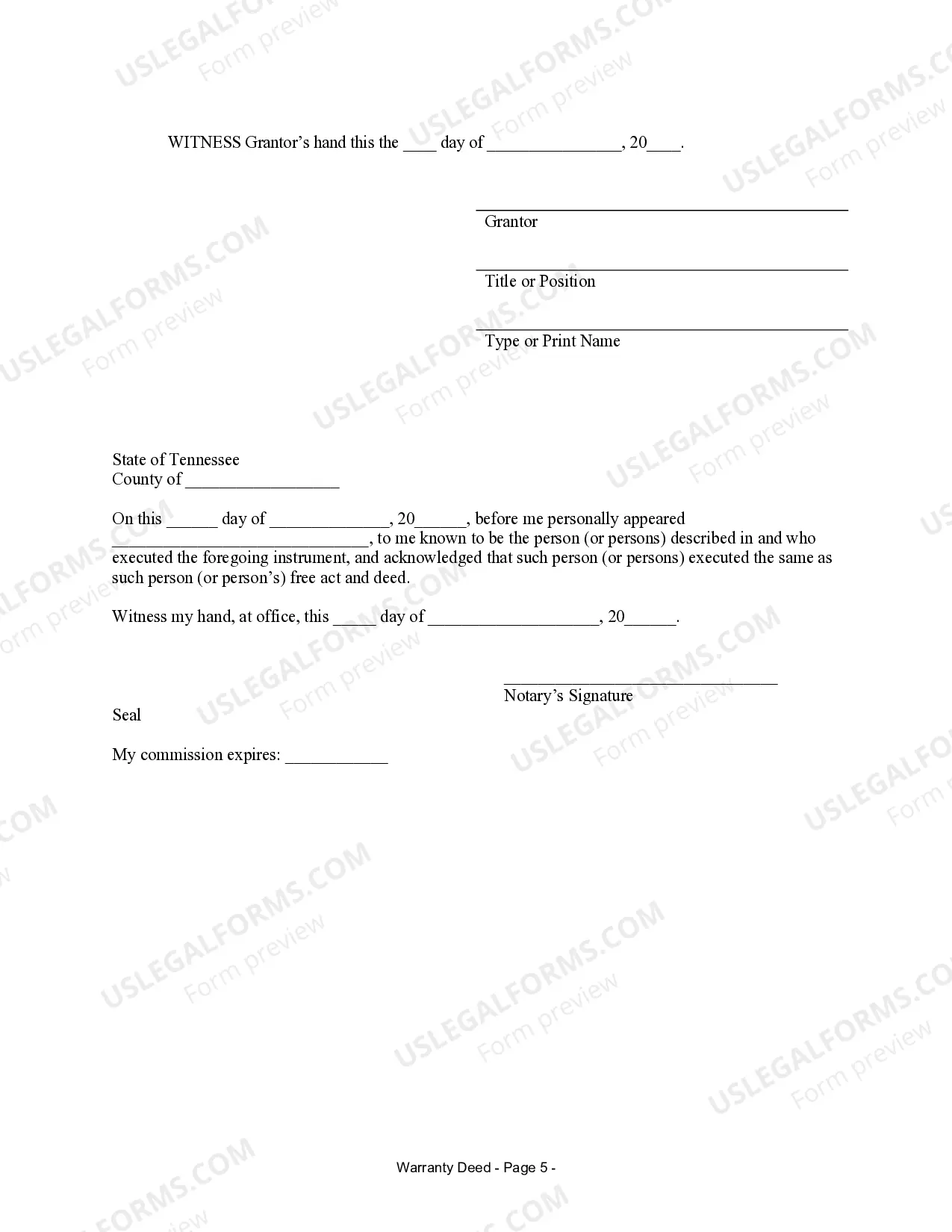
- Notary acknowledgement section for legal validation.





Common use cases
This form should be used when a property owned by one trust needs to be transferred to another trust. Common scenarios include consolidating trust assets, changing the trust structure for estate planning purposes, or managing property through a trust for beneficiaries. It is essential to use this form to ensure that the transfer is legally binding and properly documented.
Who should use this form
Eligibility for using the Warranty Deed for Trust to Trust includes:
- Trustees of a trust looking to transfer property to another trust.
- Beneficiaries involved in the trust restructuring process.
- Estate planners managing multiple trusts for clients.
How to complete this form
- Identify the parties involved: the Grantor and Grantee trusts.
- Clearly describe the property being transferred, including any attached legal descriptions.
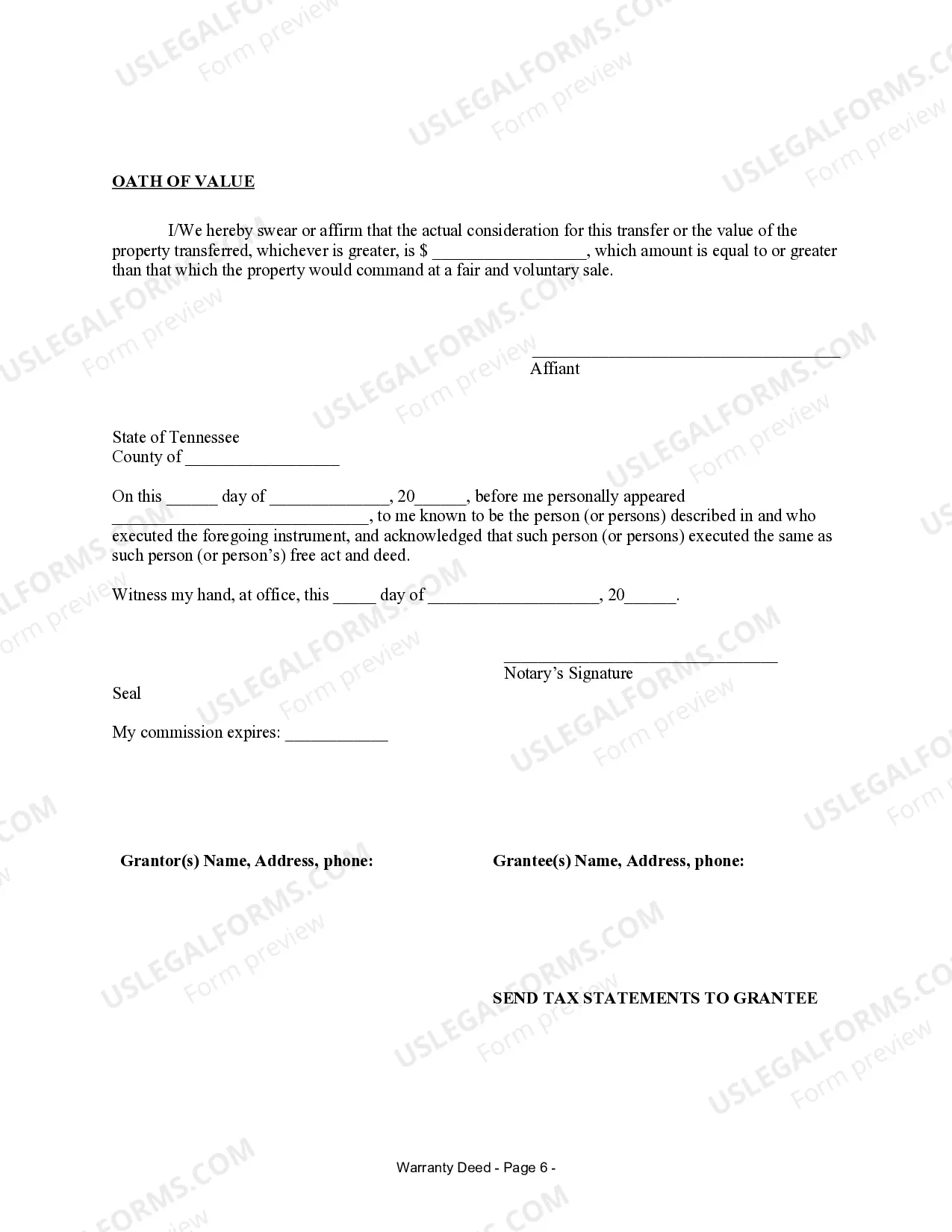
- Enter the specific value or consideration for the property transfer.
- Fill in the date of the transfer and sign in the appropriate fields.
- Include the notary information and secure notarization as required.
Notarization requirements for this form
Yes, this form must be notarized to be legally valid. Notarization ensures that the identities of the parties involved are verified and adds a layer of authenticity to the document. US Legal Forms offers integrated online notarization services, allowing you to complete this process securely via video call, available 24/7, without the need for travel.
Get your form ready online
Our built-in tools help you complete, sign, share, and store your documents in one place.
Make edits, fill in missing information, and update formatting in US Legal Forms—just like you would in MS Word.
Download a copy, print it, send it by email, or mail it via USPS—whatever works best for your next step.
Sign and collect signatures with our SignNow integration. Send to multiple recipients, set reminders, and more. Go Premium to unlock E-Sign.
If this form requires notarization, complete it online through a secure video call—no need to meet a notary in person or wait for an appointment.
We protect your documents and personal data by following strict security and privacy standards.

Make edits, fill in missing information, and update formatting in US Legal Forms—just like you would in MS Word.

Download a copy, print it, send it by email, or mail it via USPS—whatever works best for your next step.

Sign and collect signatures with our SignNow integration. Send to multiple recipients, set reminders, and more. Go Premium to unlock E-Sign.

If this form requires notarization, complete it online through a secure video call—no need to meet a notary in person or wait for an appointment.

We protect your documents and personal data by following strict security and privacy standards.
Typical mistakes to avoid
- Failing to accurately describe the property being transferred.
- Not securing notarization when required by local law.
- Omitting signatures or dates, which can invalidate the deed.
- Not confirming that the Grantor has the authority to transfer the property.
Why complete this form online
- Convenient access to the form anytime and anywhere.
- Easy to complete using a computer with fillable fields.
- Time-saving as there's no need for in-person visits or lengthy legal consultations.
- Reliable templates drafted by licensed attorneys ensure legal compliance.
What to keep in mind
- The Warranty Deed for Trust to Trust is critical for transferring property between trusts.
- It is vital to include accurate information and secure notarization.
- This form is designed for use in Tennessee, and users should be aware of state-specific regulations.
- Online access to the form streamlines the process and ensures compliance.
Looking for another form?
Form popularity
FAQ
A deed of trust (DOT), is a document that conveys title to real property to a trustee as security for a loan until the grantor (borrower) repays the lender according to terms defined in an attached promissory note.In Tennessee, a Deed of Trust is the most commonly used instrument to secure a loan.
Typically, the lender will provide you with a copy of the deed of trust after the closing. The original warranty deeds are often mailed to the grantee after they are recorded. These are your original copies and should be kept in a safe place, such as a fireproof lockbox or a safe deposit box at a financial institution.
A warranty deed protects property owners from future claims that someone else actually owns a portion (or all) of their property, while trustee deeds protect lenders when borrowers default on their mortgage loans.
A trustee deed offers no such warranties about the title.
The mortgage company usually prepares this deed as part of the loan package and delivers it to the title company for you to sign at closing. The title company is commonly the trustee to the deed and holds legal title to the property until the loan gets fully repaid.
When recorded, a special warranty deed conveys an interest in real property to the named grantee with limited warranties of title. In Tennessee, special warranty deeds are statutory.This means that the deed will not protect the grantee against title issues that arose prior to the time the grantor acquired title.
A special warranty deed to real estate offers protection to the buyer through the seller's guarantee that the title has been free and clear of encumbrances during their ownership of the property. It does not guarantee clear title beyond their ownership.
Trustee's deeds convey real estate out of a trust.This type of conveyance is named for the person using the form the trustee who stands in for the beneficiary of the trust and holds title to the property.
The deed of trust is currently used in Alabama, Alaska, Arkansas, Arizona, California, Colorado, District of Columbia, Georgia, Hawaii, Idaho, Iowa, Michigan, Minnesota, Mississippi, Missouri, Montana, Nevada, New Hampshire, North Carolina, Oklahoma, Oregon, Rhode Island, South Dakota, Tennessee, Texas, Utah, Virginia,