Pennsylvania Essential Legal Life Documents for Newlyweds
What is this form package?
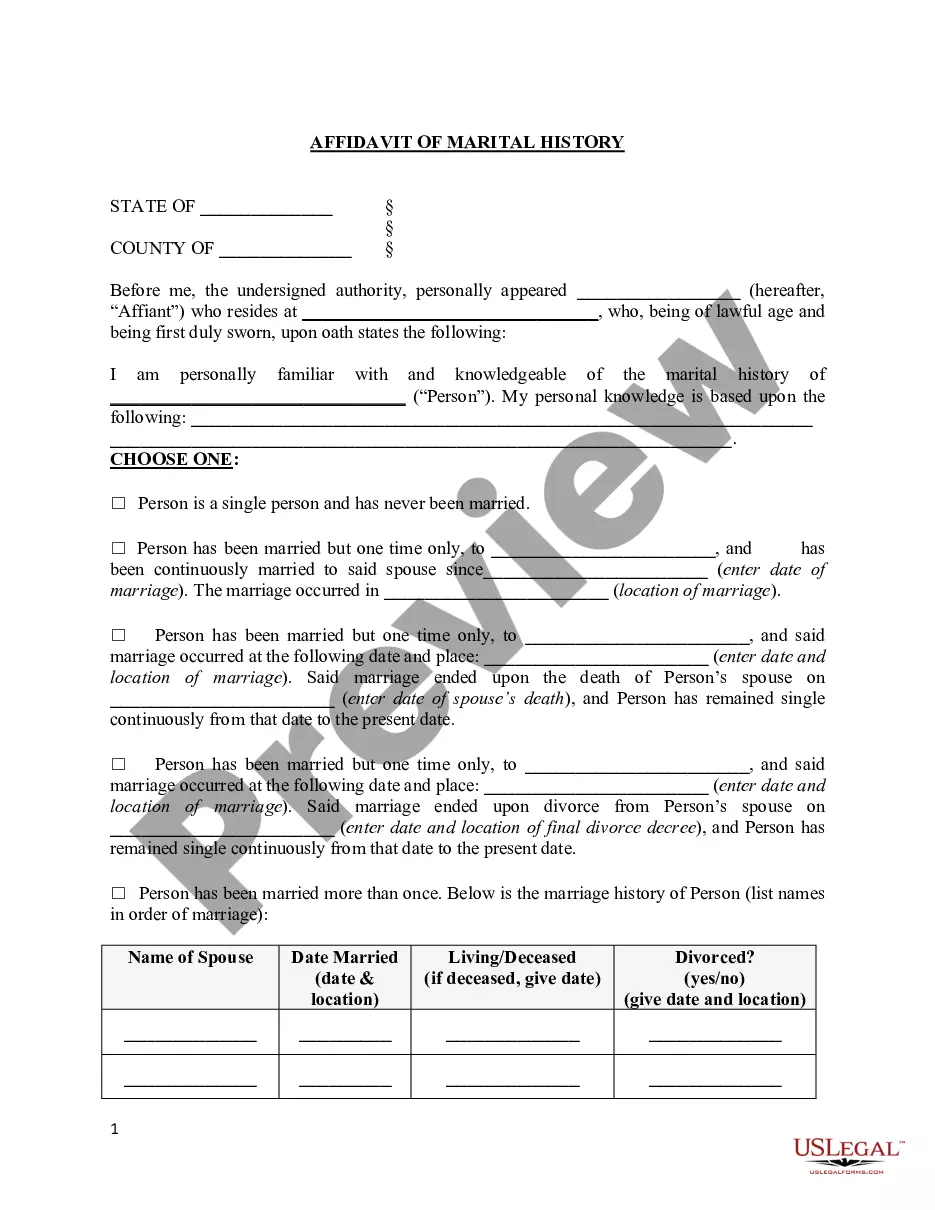
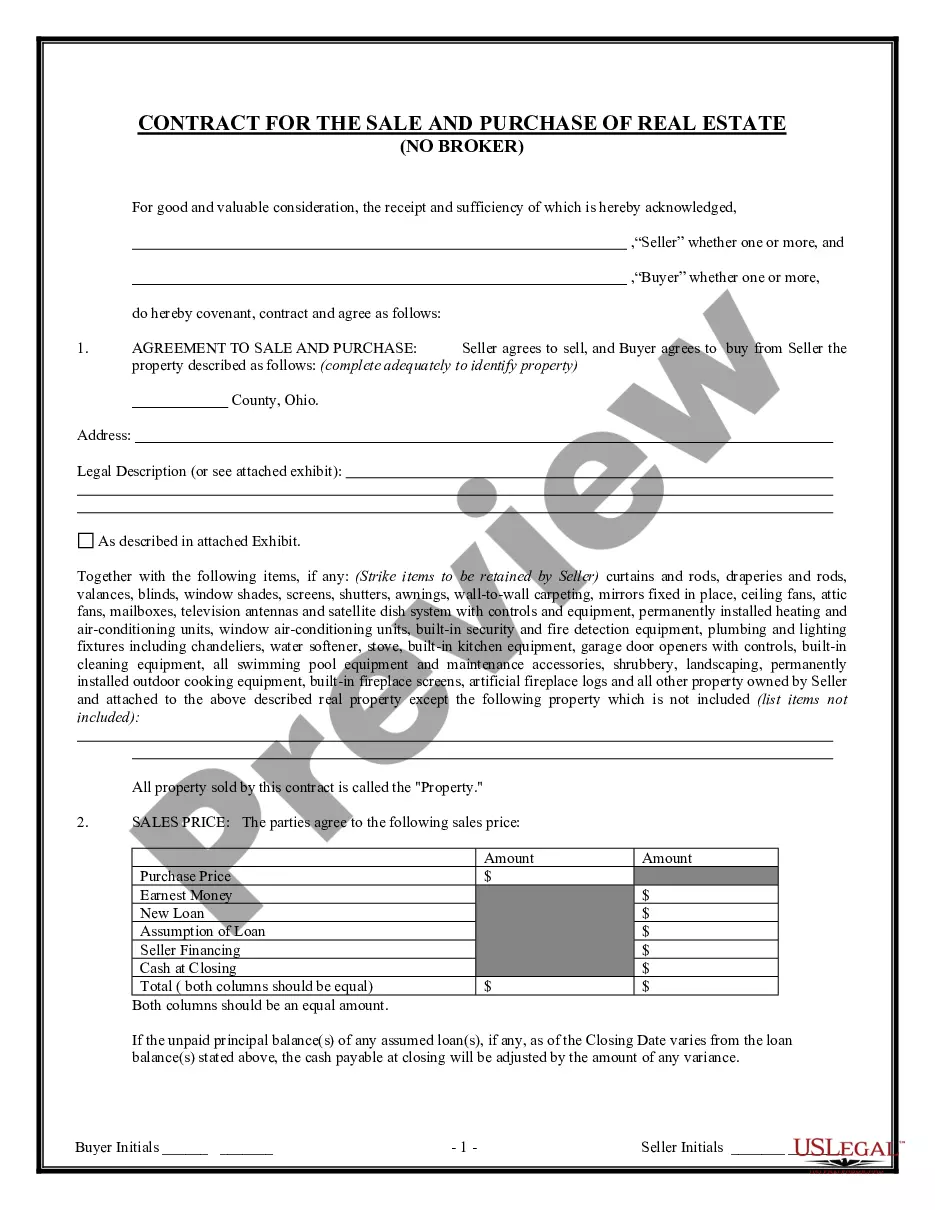
The Pennsylvania Essential Legal Life Documents for Newlyweds form package provides vital legal documents tailored for recently married couples. This package helps you organize your new legal life together by addressing important decisions related to your health, finances, and estate planning. Unlike generic document packages, these forms are specifically designed to meet Pennsylvania's legal requirements and help you ensure your wishes are fulfilled.
Forms included in this package
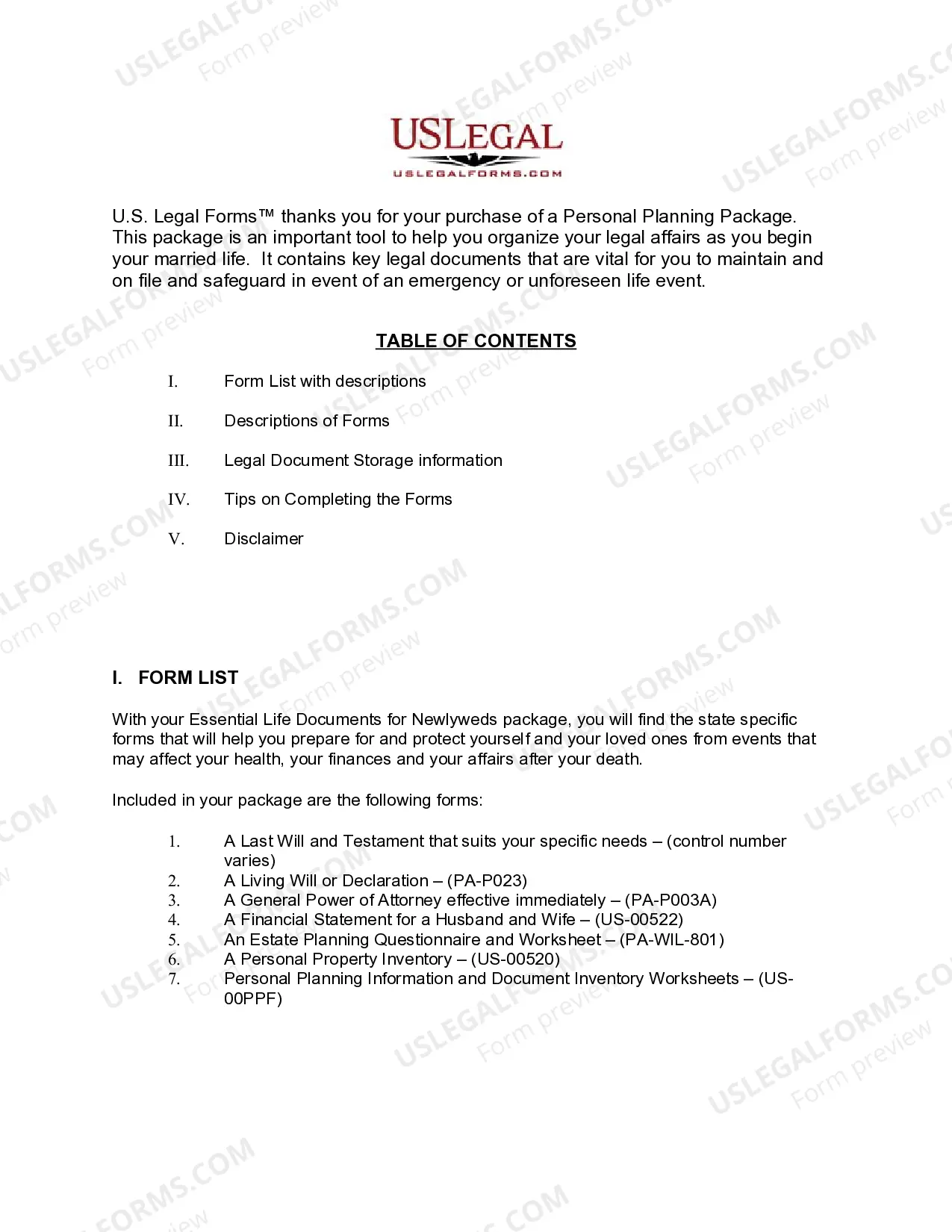
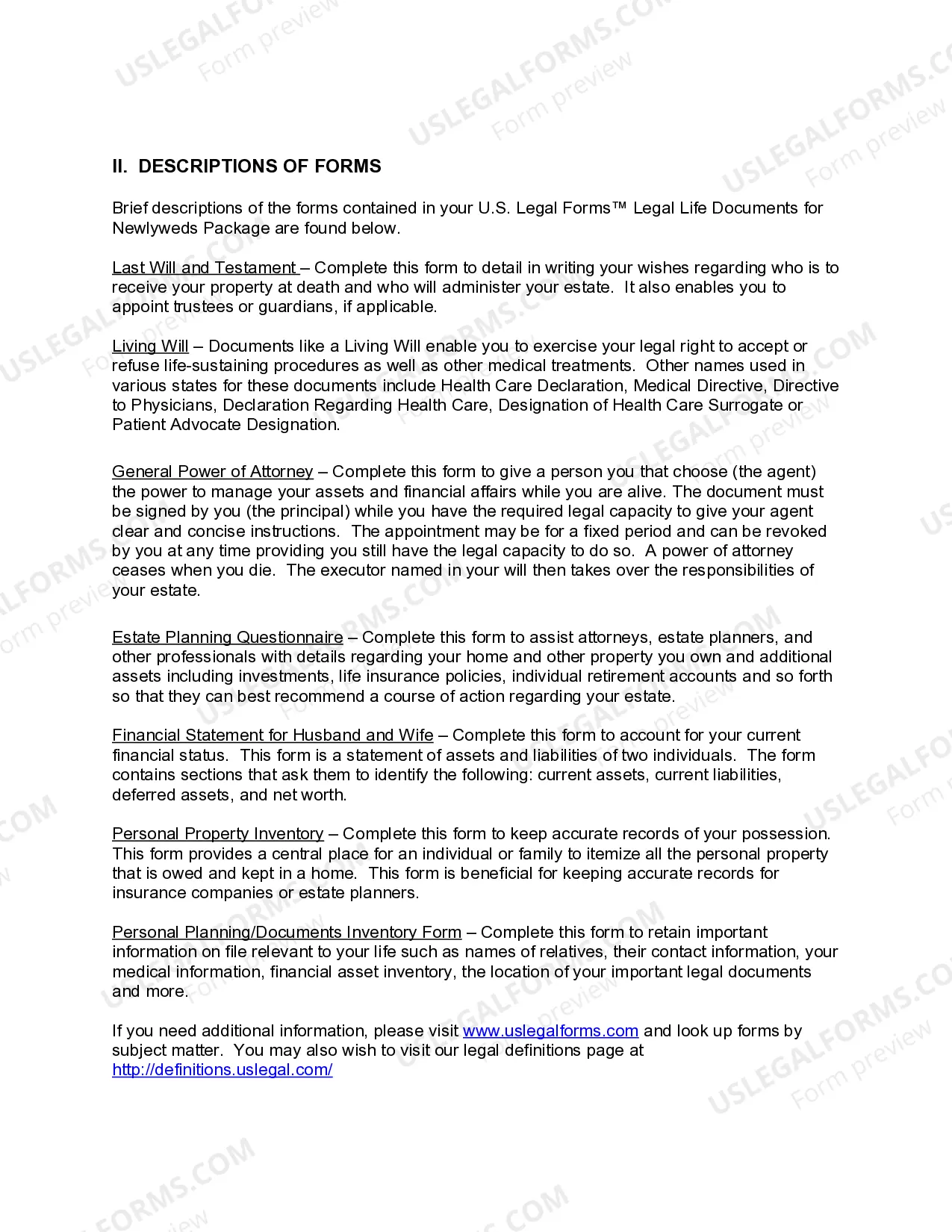
- General Durable Power of Attorney for Property and Finances or Financial Effective Immediately
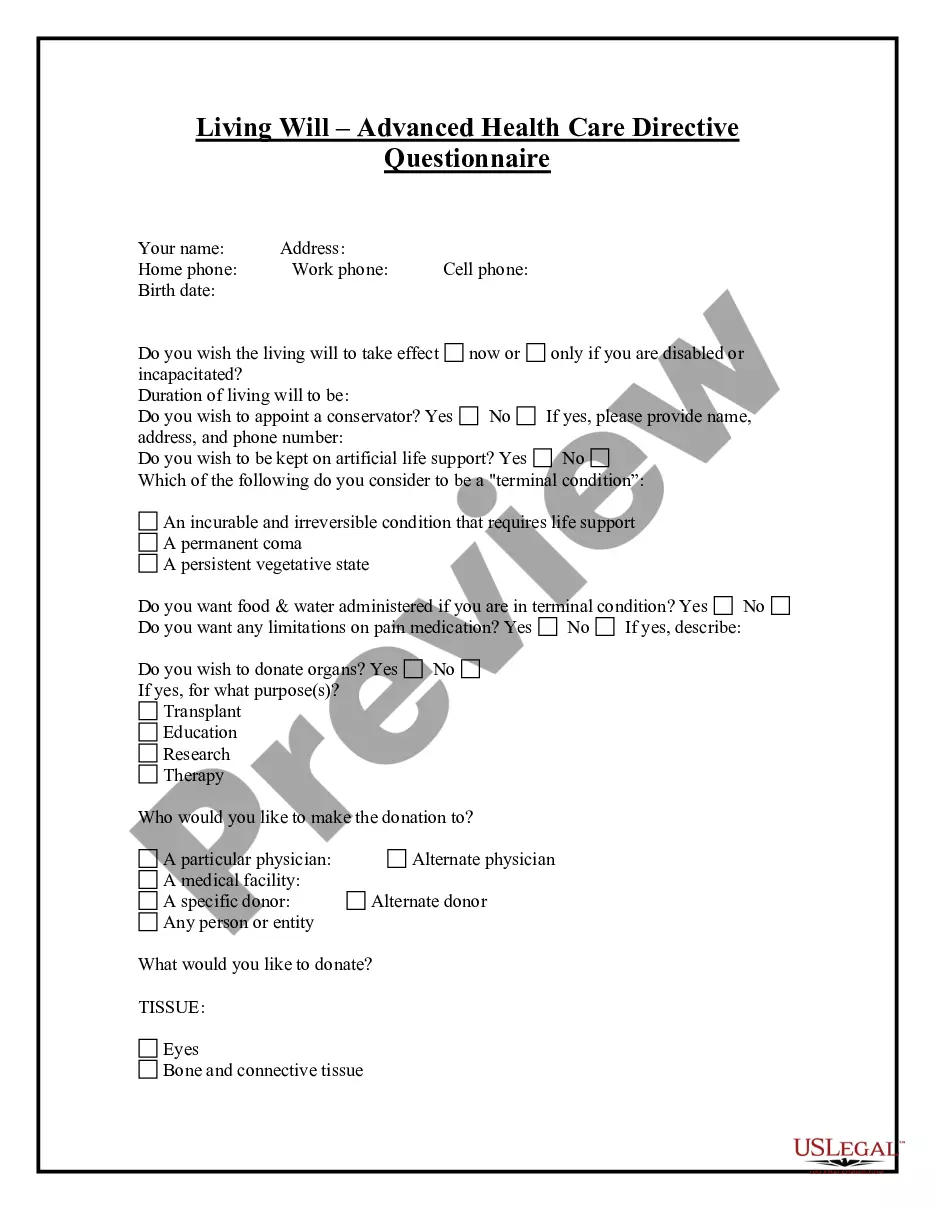
- Statutory Living Will - Advance Directive for Healthcare - Statutory form
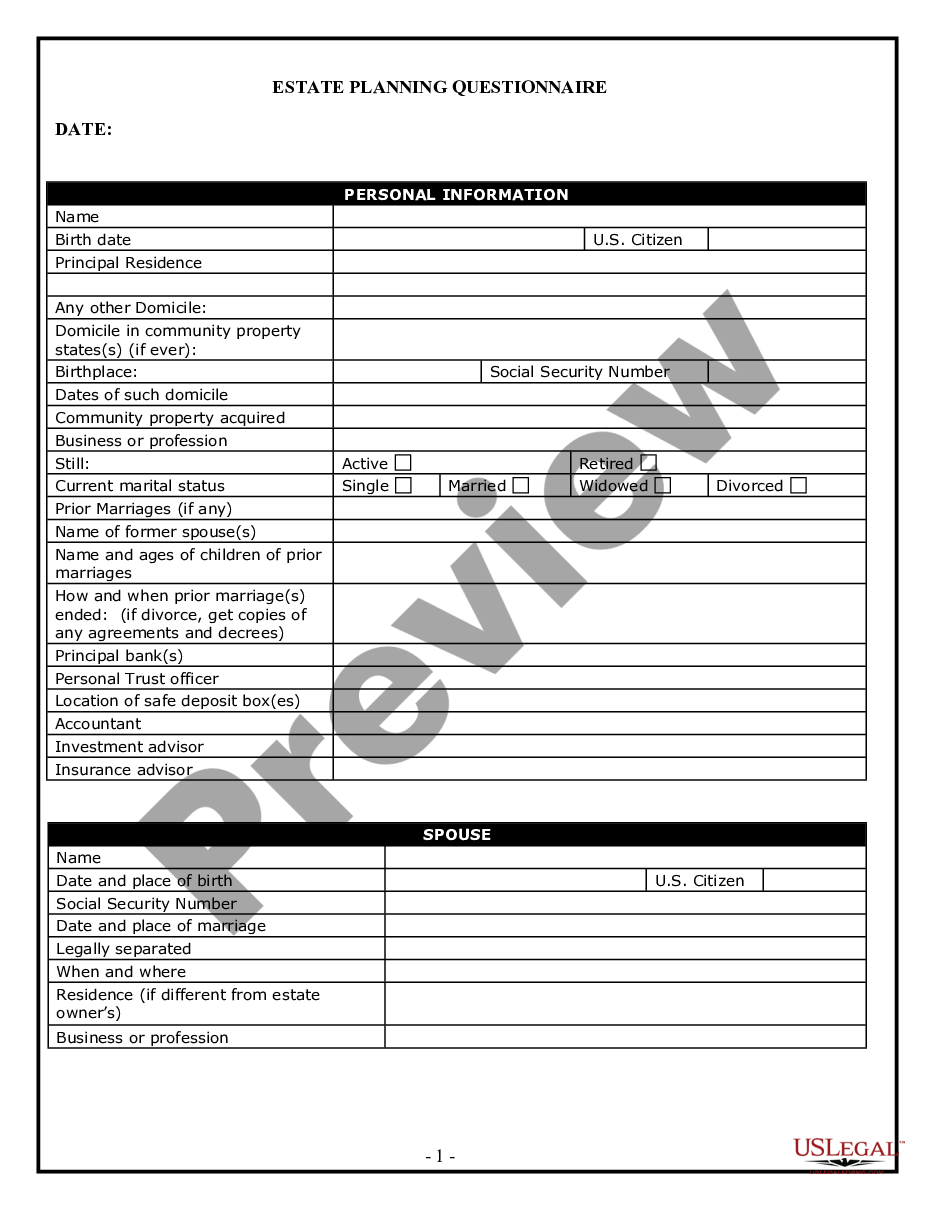
- Estate Planning Questionnaire and Worksheets
- Personal Property Inventory
- Financial Statement Form - Husband and Wife Joint
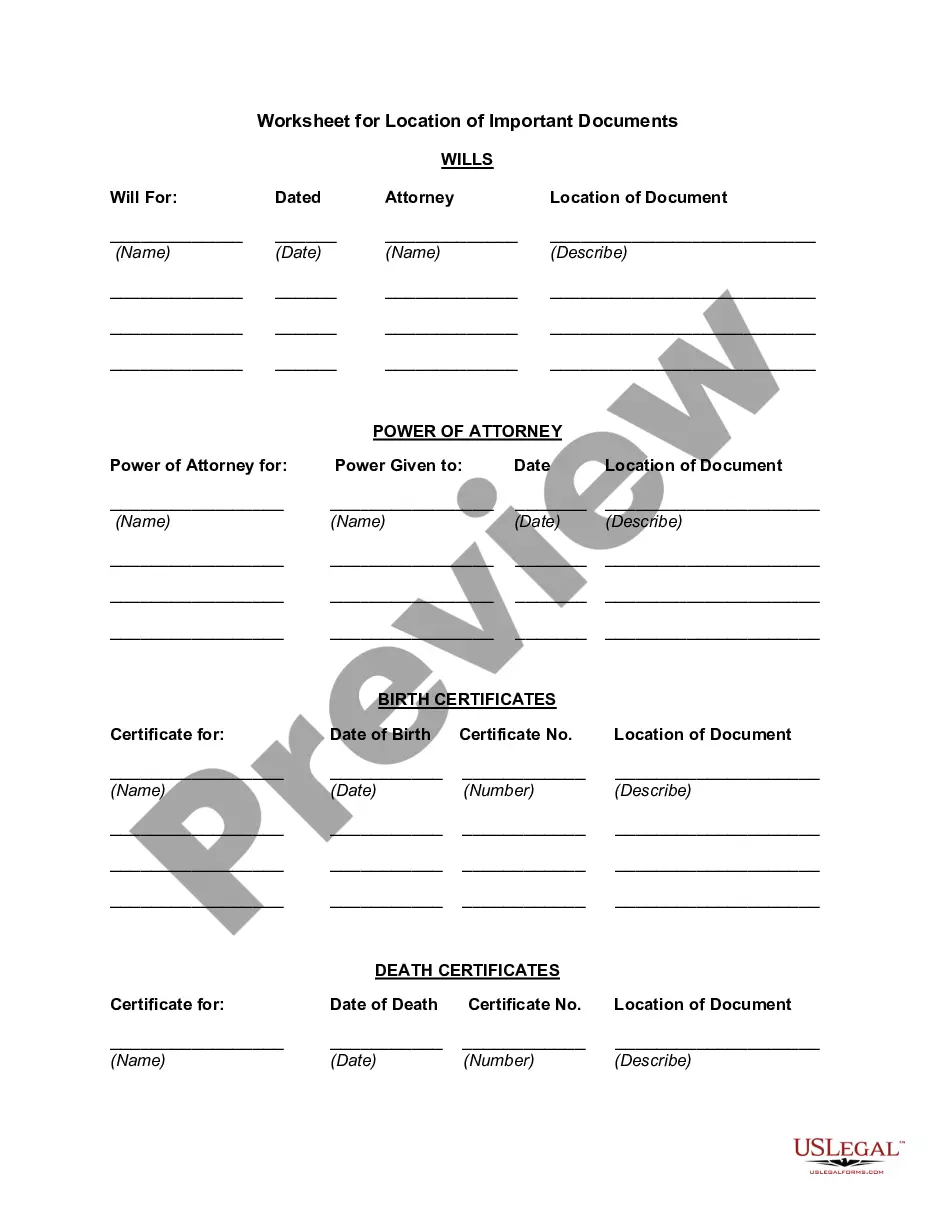
- Personal Planning Information and Document Inventory Worksheets - A Legal Life Document

When to use this form package
This package is ideal for newlyweds who want to formally establish their legal standing with essential documents. You should consider using this package if you:
- Want to create a legally binding will to dictate how your assets will be distributed.
- Wish to outline your medical preferences through a living will or advance directive.
- Need to appoint a reliable person to manage your financial matters through a power of attorney.
- Are planning to clearly document your current financial situation for future planning.
- Want a comprehensive inventory of your personal property and essential documents.
Intended users of this form package
- Newly married couples looking to organize their legal affairs.
- Individuals who want to ensure their medical and financial wishes are respected.
- Couples who need to designate a power of attorney for financial decisions.
- Anyone wanting to establish a clear inventory of personal assets and property documentation.
Completing these forms step by step
- Review the included forms to understand their purposes and requirements.
- Gather necessary information related to your assets, liabilities, and healthcare preferences.
- Complete each form, entering details in the required fields accurately.
- Sign and date the forms as needed, ensuring compliance with state laws.
- Store completed documents in a secure location and inform a trusted person of their whereabouts.
Do documents in this package require notarization?
Notarization is required for one or more forms in this package. US Legal Forms provides secure online notarization powered by Notarize, allowing you to complete the process through a verified video call.
Get your form ready online
Our built-in tools help you complete, sign, share, and store your documents in one place.
Make edits, fill in missing information, and update formatting in US Legal Forms—just like you would in MS Word.
Download a copy, print it, send it by email, or mail it via USPS—whatever works best for your next step.
Sign and collect signatures with our SignNow integration. Send to multiple recipients, set reminders, and more. Go Premium to unlock E-Sign.
If this form requires notarization, complete it online through a secure video call—no need to meet a notary in person or wait for an appointment.
We protect your documents and personal data by following strict security and privacy standards.

Make edits, fill in missing information, and update formatting in US Legal Forms—just like you would in MS Word.

Download a copy, print it, send it by email, or mail it via USPS—whatever works best for your next step.

Sign and collect signatures with our SignNow integration. Send to multiple recipients, set reminders, and more. Go Premium to unlock E-Sign.

If this form requires notarization, complete it online through a secure video call—no need to meet a notary in person or wait for an appointment.

We protect your documents and personal data by following strict security and privacy standards.
Avoid these common issues
- Overlooking the need to sign and date the documents correctly.
- Failing to update documents when personal circumstances change, such as moving or having children.
- Not discussing decisions made in the documents with family or friends who may need to enforce them.
- Neglecting to store documents in a safe and easily accessible place.
Benefits of completing this package online
- Convenience of downloading the completed forms at your own pace.
- Editability allows you to tailor the documents to your specific needs easily.
- Reliable legal forms crafted by licensed attorneys ensure compliance with Pennsylvania laws.
- Access to guidance and resources for completing and storing your documents securely.
Legal use & context
- Documents created with this package are intended to establish and clarify legal rights.
- Properly executed, these documents can prevent disputes and ensure your desires are honored.
- Understanding the proper format and requirements for Pennsylvania laws is crucial for their enforceability.
Main things to remember
- The package includes vital documents for newlyweds in Pennsylvania.
- Proper completion and storage of these forms is essential for legal effectiveness.
- You can save money by purchasing the package rather than individual documents.
- Having these legal tools aids in planning for unforeseen circumstances.
Looking for another form?
Form popularity
FAQ
To obtain a no-fault divorce, you and your spouse must have been separated for two years before filing or you both must consent to the divorce. Additionally, a judge won't grant your no-fault divorce right away. Once you've filed your case, there is a 90-day waiting period before your divorce can be finalized.
Accordingly, the person who files the divorce first controls the divorce process because if the other spouse files later, the spouse who filed first can have the second divorce dismissed (knocked out of court).
A spouse is entitled to alimony only if the court decides that alimony is necessary. To decide whether alimony is necessary, how much should be paid, and how long it should be paid, the court must consider many factors including but not limited to the relative income and earning capacities of the parties, the ages
Act 102, which takes effect in 60 days, reduces the waiting period for unilateral no-fault divorce from two years to one. That means a spouse will need to wait only a year before obtaining a divorce without the other spouse's consent.
As long as the spouse who is served the divorce papers does not deny that the spouses have been living apart for at least one year or that the marriage is irretrievably broken, the divorce may proceed even though only one party filed for divorce. Do both parties have to sign to get a divorce in PA? Not necessarily.
If you or your partner won't agree to getting a divorce it'll take more time and cost more money than if you both agree. If you agree on your divorce and the reasons why, getting a divorce legally finalised will usually take 4 to 6 months.
If the served spouse does not respond in time, the divorce can be finalized by only one party. If your spouse will not leave the family home and thus initiate the separation, under 23 Pa. C.S. § 3502(c) you can file for exclusive possession of the family home.
State and local rules may vary, but generally, if your spouse failed to respond to your divorce petition within 30 days, you may file a request to enter a default along with a proposed judgment. It may also be allowed when a spouse can't be located for service. The court will set a hearing date and ask that you appear.
Pennsylvania divides marital property under the theory of equitable distribution.Community property states attempt a 50-50 distribution, as best as possible. Equitable distribution states divide property based on a determination of what's fair under the circumstances of each case.