Self-Employed Steel Services Contract
About this form
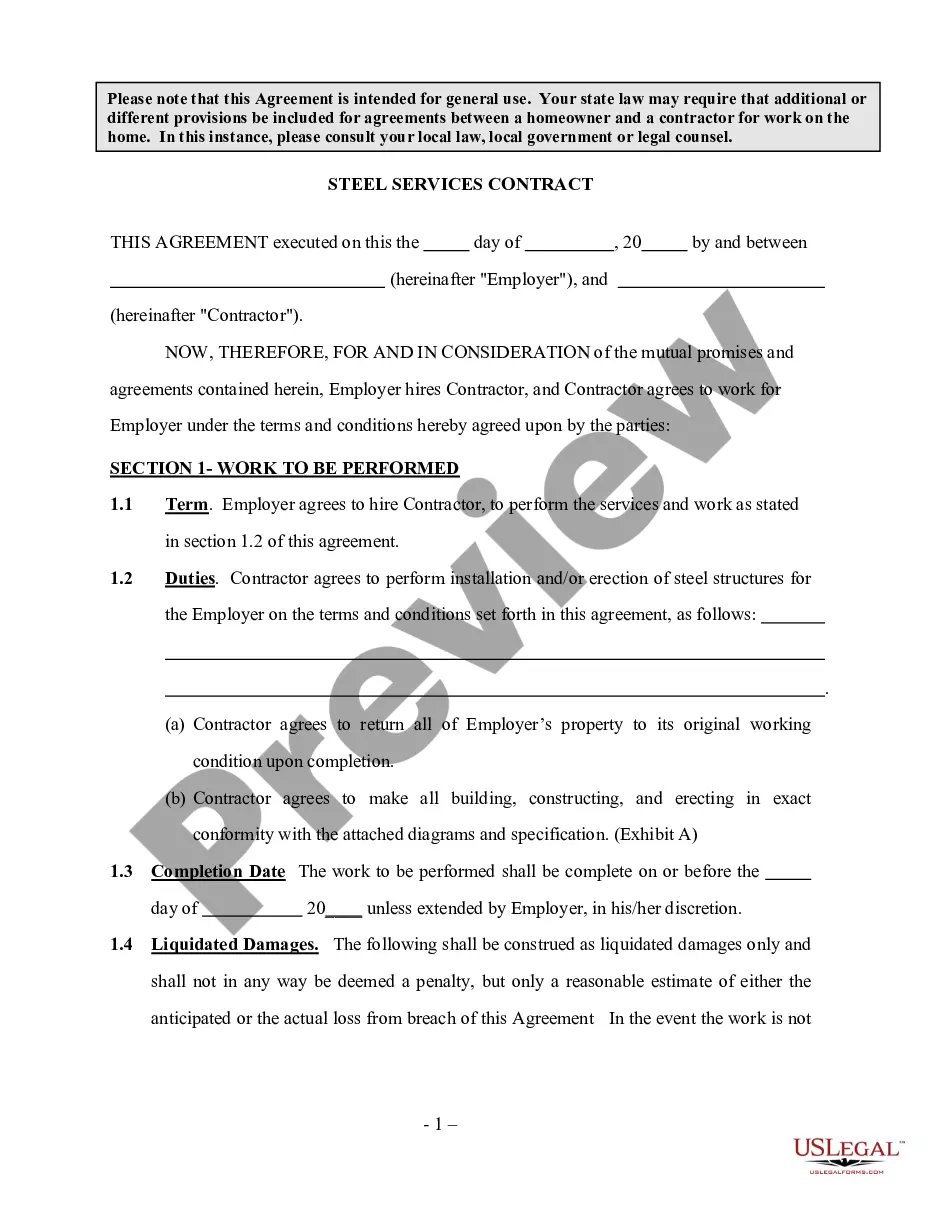
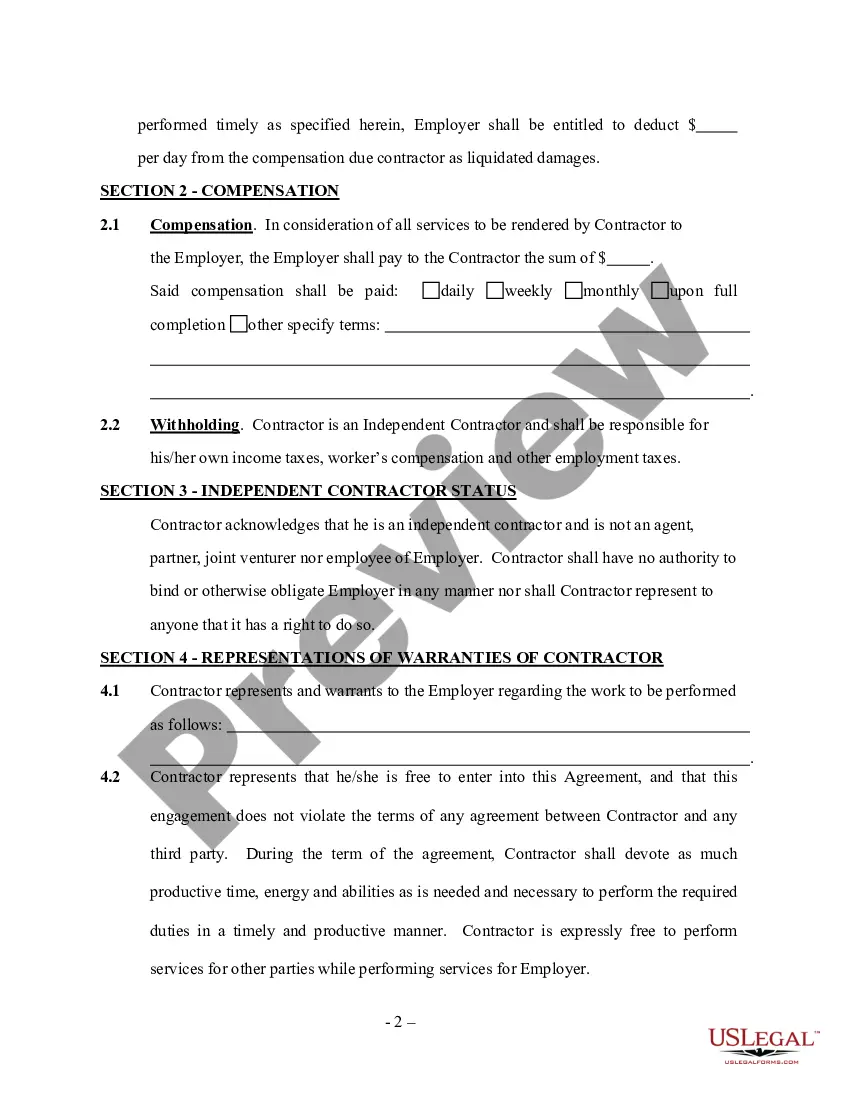
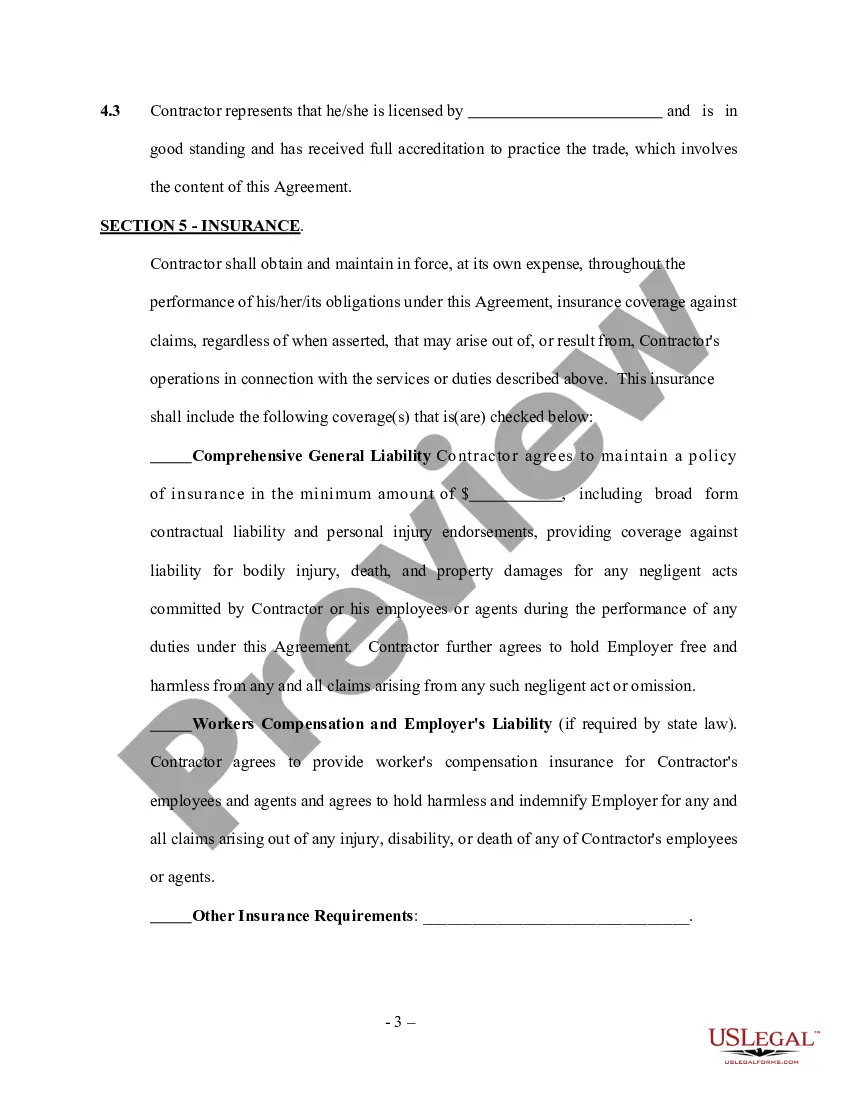
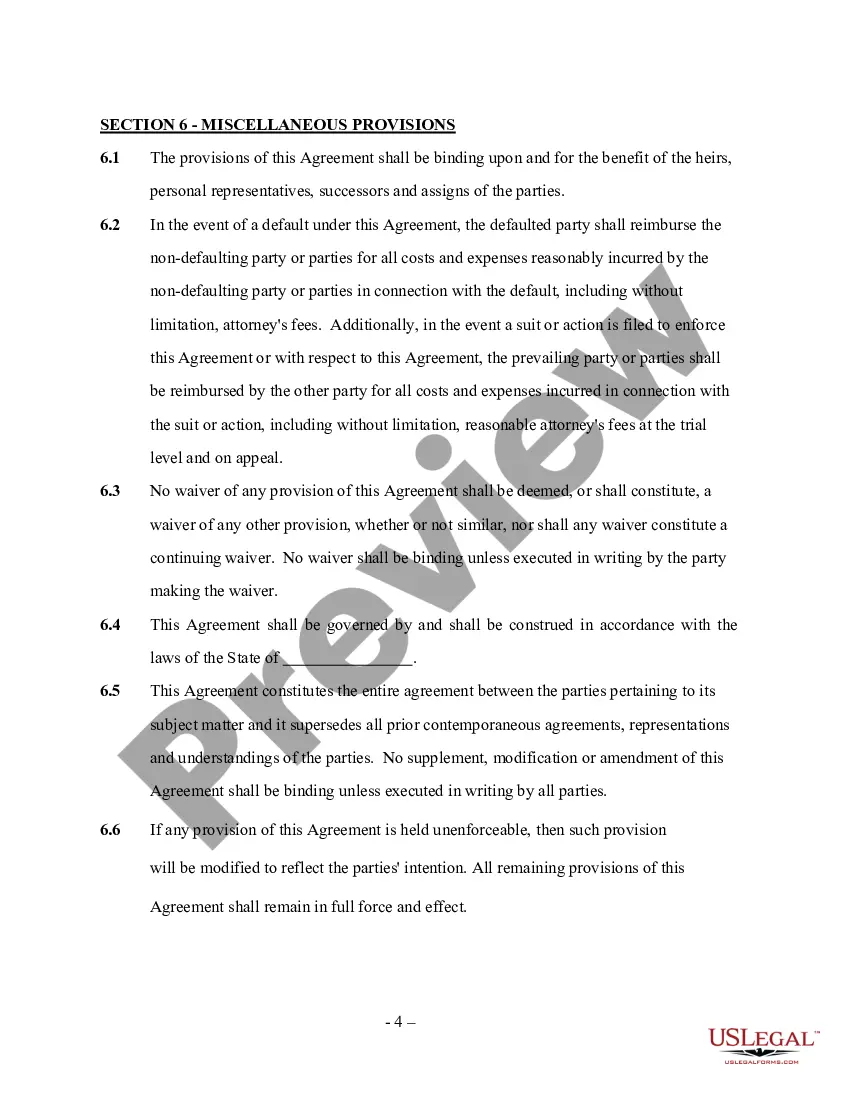
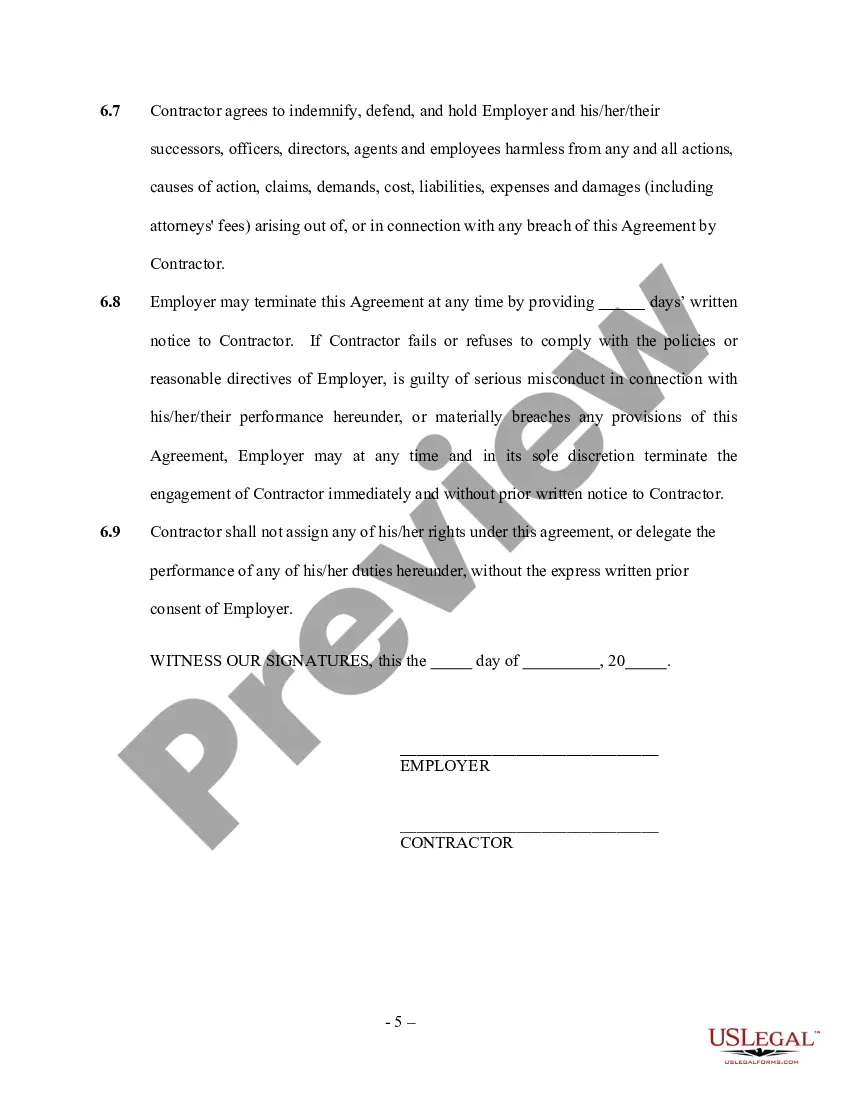
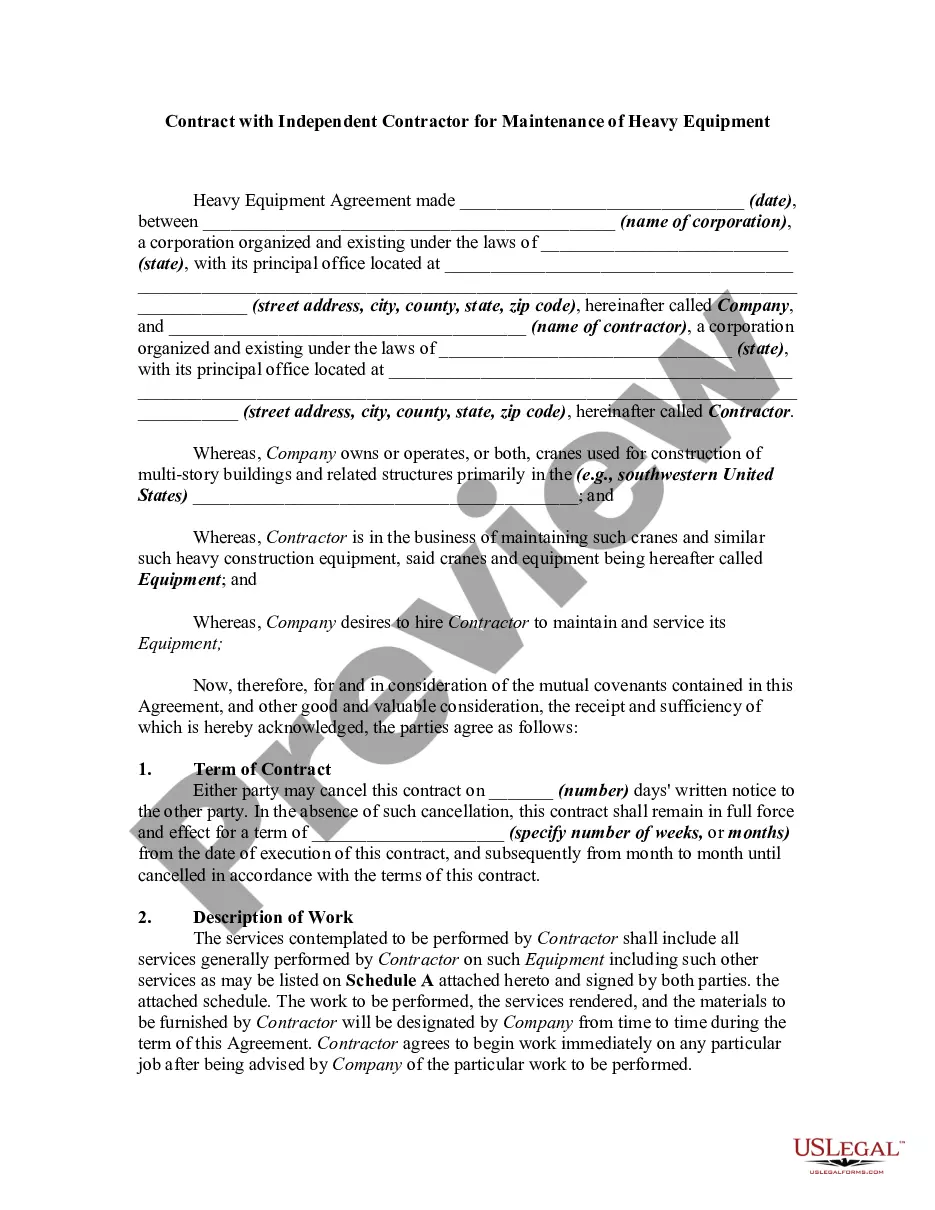
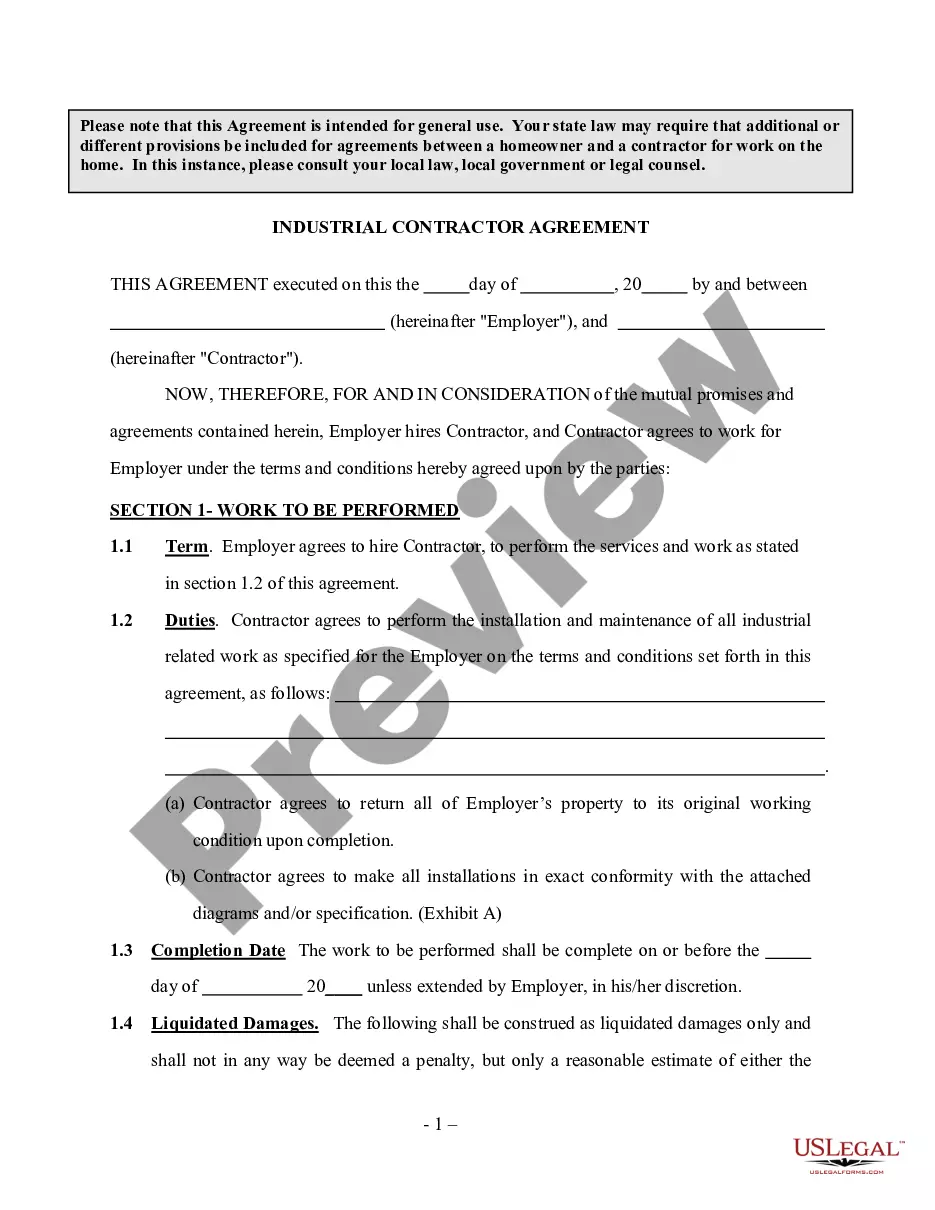
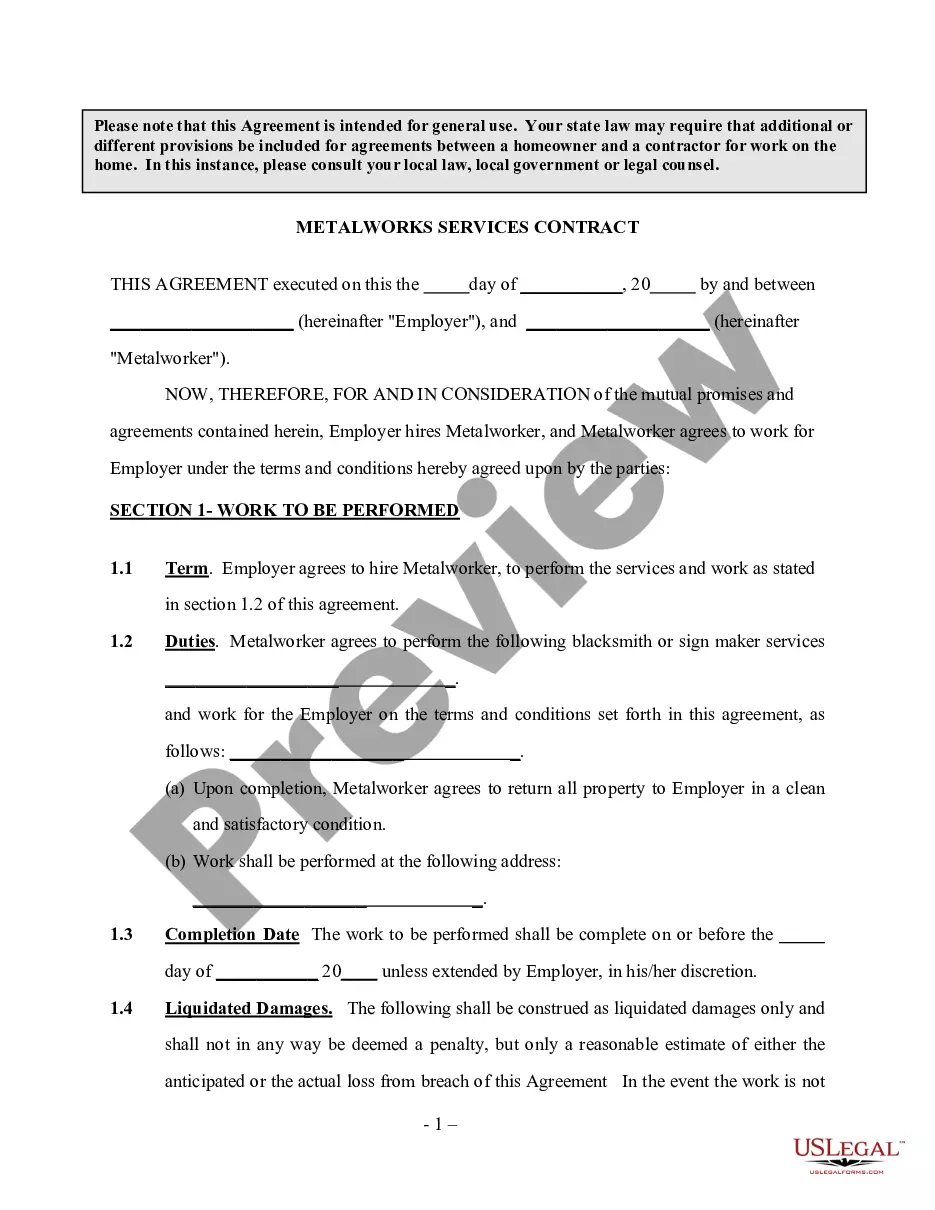
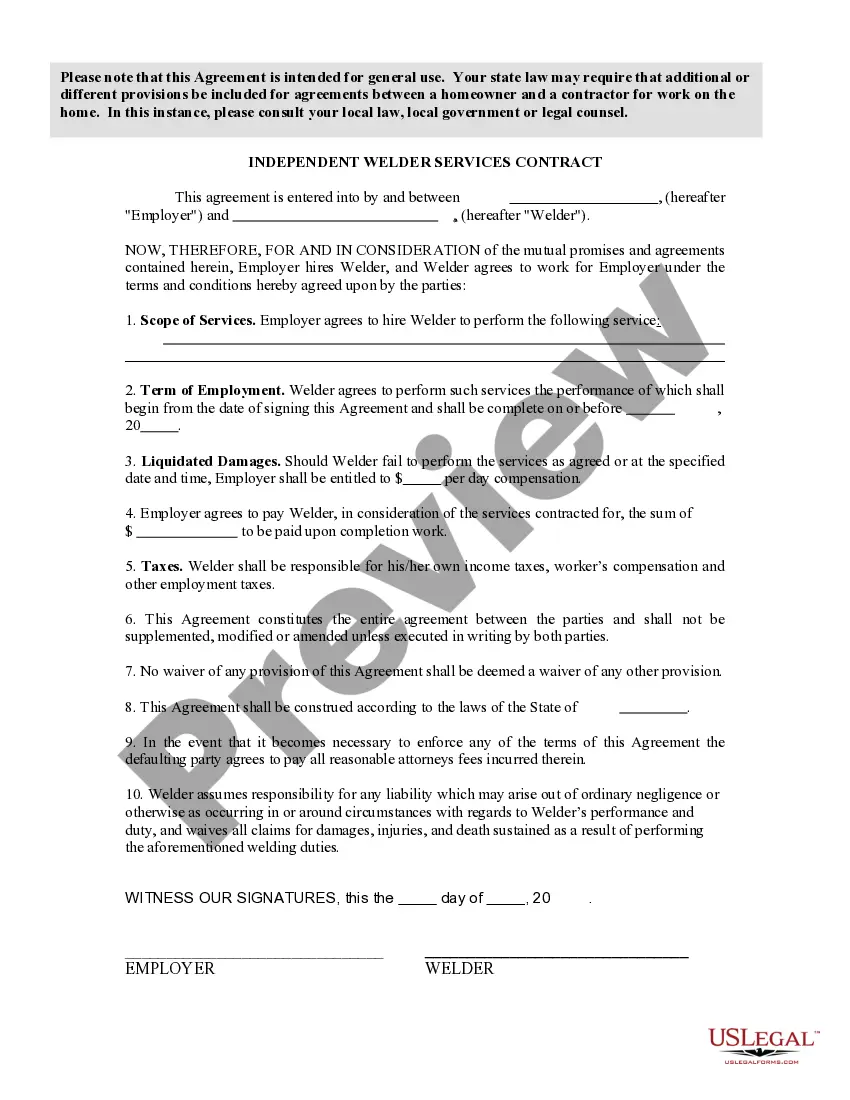
The Self-Employed Steel Services Contract is a legal agreement between an employer and an independent contractor specifically for steel-related services or construction. This form outlines the scope of work, expectations, and responsibilities of both parties, distinguishing the contractor's independent status from that of an employee. Unlike standard employment agreements, this contract focuses on project-specific work while ensuring compliance with legal guidelines for independent contractors.
Main sections of this form
- Term: Defines the duration for which the contractor will be hired.
- Services to be performed: Details the specific steel services or construction tasks agreed upon.
- Independent contractor status: Clarifies that the contractor is not an employee and cannot bind the employer.
When to use this form
This form should be used when an employer seeks to hire an independent contractor for specific steel services, such as fabrication, installation, or repair work. It protects both parties by clearly defining the work relationship, expectations, and responsibilities. Situations may include a construction project requiring specialized steel work, or a renovation needing a contractor skilled in steel fabrication.
Who should use this form
- Employers hiring independent contractors for steel-related services.
- Independent contractors specializing in steel work looking to formalize agreements with clients.
- Companies or individuals managing construction projects that require bespoke steel solutions.
Instructions for completing this form
- Identify the contracting parties: Include the legal names and contact information of both the employer and the contractor.
- Specify the term: Clearly state the duration of the contract.
- Detail the services to be performed: Outline the specific steel services or construction tasks to be completed.
- Sign the agreement: Ensure both parties review and sign the document to indicate acceptance of the terms.
- Keep copies: Retain a copy of the signed contract for your records.
Does this document require notarization?
Notarization is not commonly needed for this form. However, certain documents or local rules may make it necessary. Our notarization service, powered by Notarize, allows you to finalize it securely online anytime, day or night.
Get your form ready online
Our built-in tools help you complete, sign, share, and store your documents in one place.
Make edits, fill in missing information, and update formatting in US Legal Forms—just like you would in MS Word.
Download a copy, print it, send it by email, or mail it via USPS—whatever works best for your next step.
Sign and collect signatures with our SignNow integration. Send to multiple recipients, set reminders, and more. Go Premium to unlock E-Sign.
If this form requires notarization, complete it online through a secure video call—no need to meet a notary in person or wait for an appointment.
We protect your documents and personal data by following strict security and privacy standards.

Make edits, fill in missing information, and update formatting in US Legal Forms—just like you would in MS Word.

Download a copy, print it, send it by email, or mail it via USPS—whatever works best for your next step.

Sign and collect signatures with our SignNow integration. Send to multiple recipients, set reminders, and more. Go Premium to unlock E-Sign.

If this form requires notarization, complete it online through a secure video call—no need to meet a notary in person or wait for an appointment.

We protect your documents and personal data by following strict security and privacy standards.
Avoid these common issues
- Failing to accurately define the scope of work, leading to misunderstandings about expectations.
- Not clearly identifying the duration of the contract, which can create ambiguity.
- Assuming verbal agreements supersede the written contract, which may lead to disputes.
Why use this form online
- Convenience: Download and complete the form at your own pace without the need for legal appointments.
- Editability: Customize the form to fit specific project requirements easily.
- Reliability: Ensure compliance with current legal standards set by licensed attorneys.
Legal use & context
- This contract is legally enforceable as long as it clearly outlines the terms agreed upon by both parties.
- It is important to ensure compliance with state regulations to avoid disputes.
Quick recap
- The Self-Employed Steel Services Contract is crucial for defining the relationship between employers and independent contractors.
- Clearly articulated terms help prevent future disputes.
- Form completion requires attention to detail, particularly regarding work scope and signatures.
Looking for another form?
Form popularity
FAQ
Which Is Stronger: Metal or Steel? Although metal is naturally occurring and can be found in the Earth's crust, steel is much stronger. For this reason, metal is best when used in jewelry making, decorative projects or surgical implants, due to its malleable nature.
Low carbon steel (or mild carbon steel or plain carbon steel) refers to carbon steels that have up to 0.30% carbon content. This is, by far, the most common type of steel on the metals market.
Tool Steel. As the name suggests, tool steel is often used in the construction of tools. Alloy Steel. Alloy steel is called such because it has small amounts of multiple alloying elements within it. Carbon Steel.
Steel is an alloy of iron and carbon containing less than 2% carbon and 1% manganese and small amounts of silicon, phosphorus, sulphur and oxygen. Steel is the world's most important engineering and construction material.
Steel is defined as to make with the strong substance made of iron and carbon, or to make something strong or tough or unfeeling.An example of steel is to sturdy up the foundation of a home. An example of steel is to have feelings that focus on being tough or unfeeling.
The following are the strongest metals in the world: Carbon Steels have a carbon content up to 2.1 percent by weight, a yield strength of 260 megapascals (MPa), and a tensile strength of 580 MPa. They score about 6 on the Mohs scale and are extremely impact-resistant.
Steel is an alloy of iron with typically a few tenths of a percent of carbon to improve its strength and fracture resistance compared to iron.The interaction of the allotropes of iron with the alloying elements, primarily carbon, gives steel and cast iron their range of unique properties.
The Four Types of SteelSteel is graded as a way of classification and is often categorized into four groupsCarbon, Alloy, Stainless, and Tool.
Carbon Steel. Carbon steel looks dull, matte-like, and is known to be vulnerable to corrosion. Alloy Steel. Next up is alloy steel, which is a mixture of several different metals, like nickel, copper, and aluminum. Tool Steel. Stainless Steel.