Motion Requesting Additional Time to Respond to Motion for Summary Judgment with Notice of Motion
What this document covers
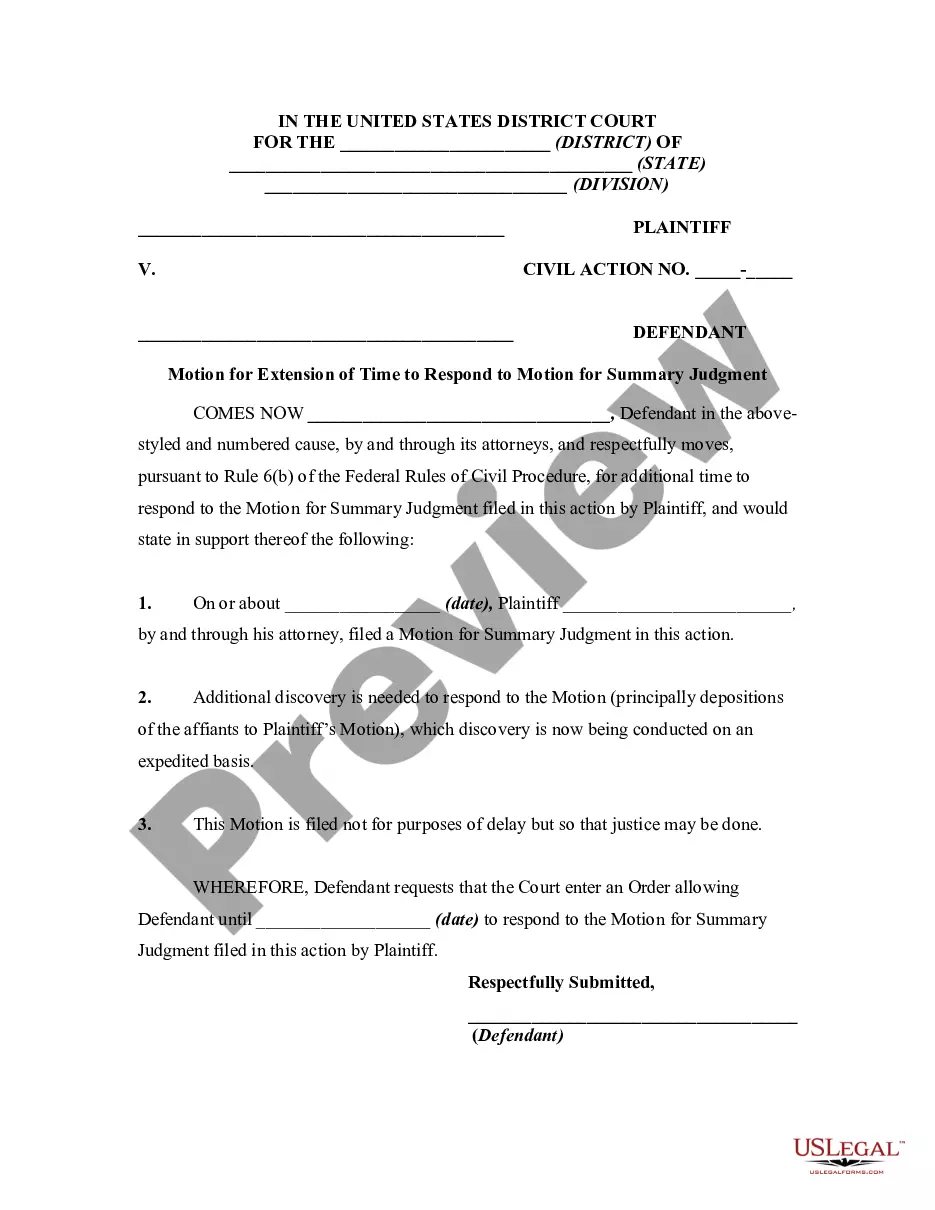
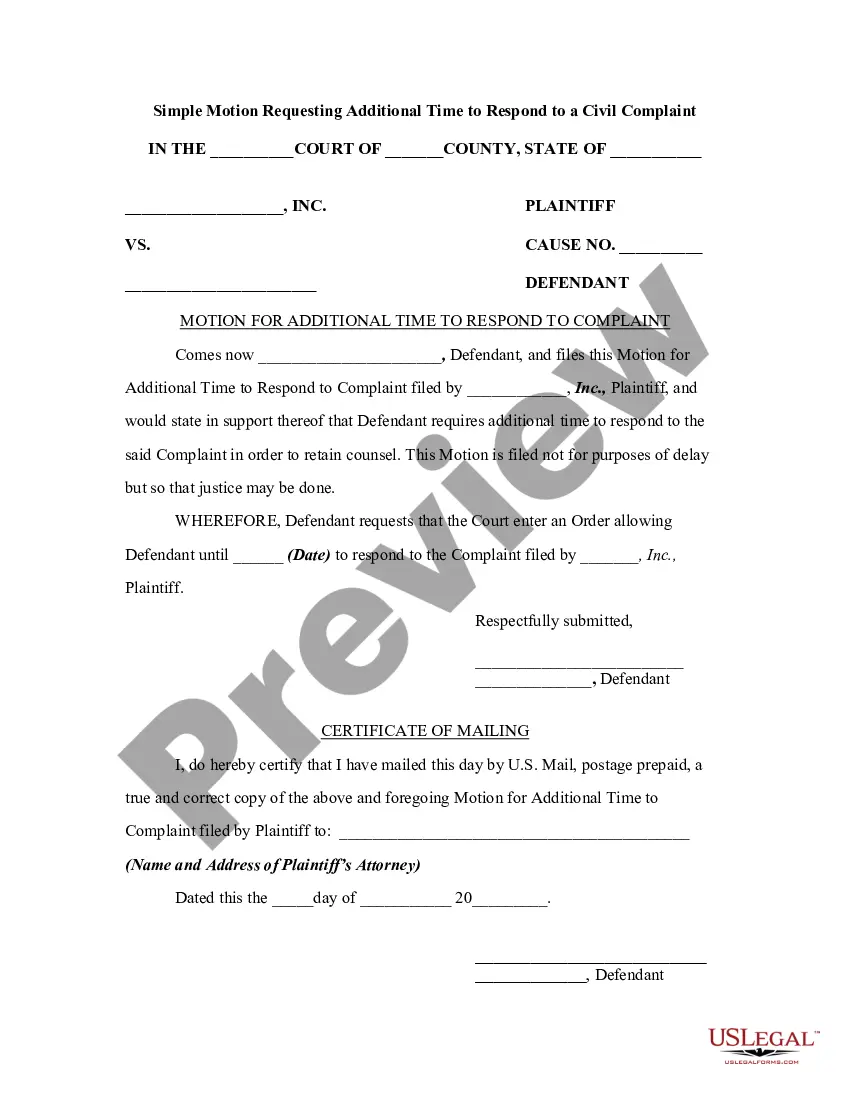
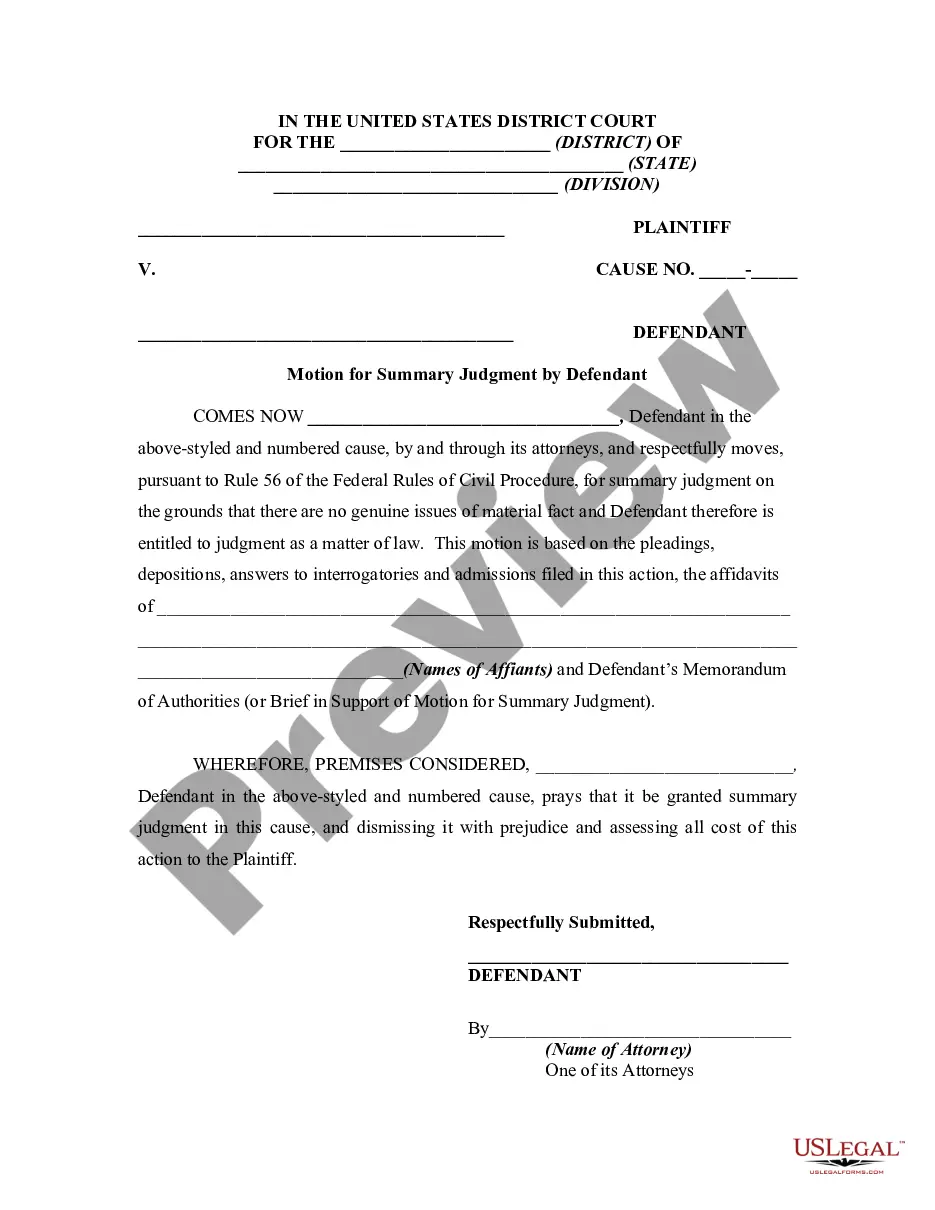
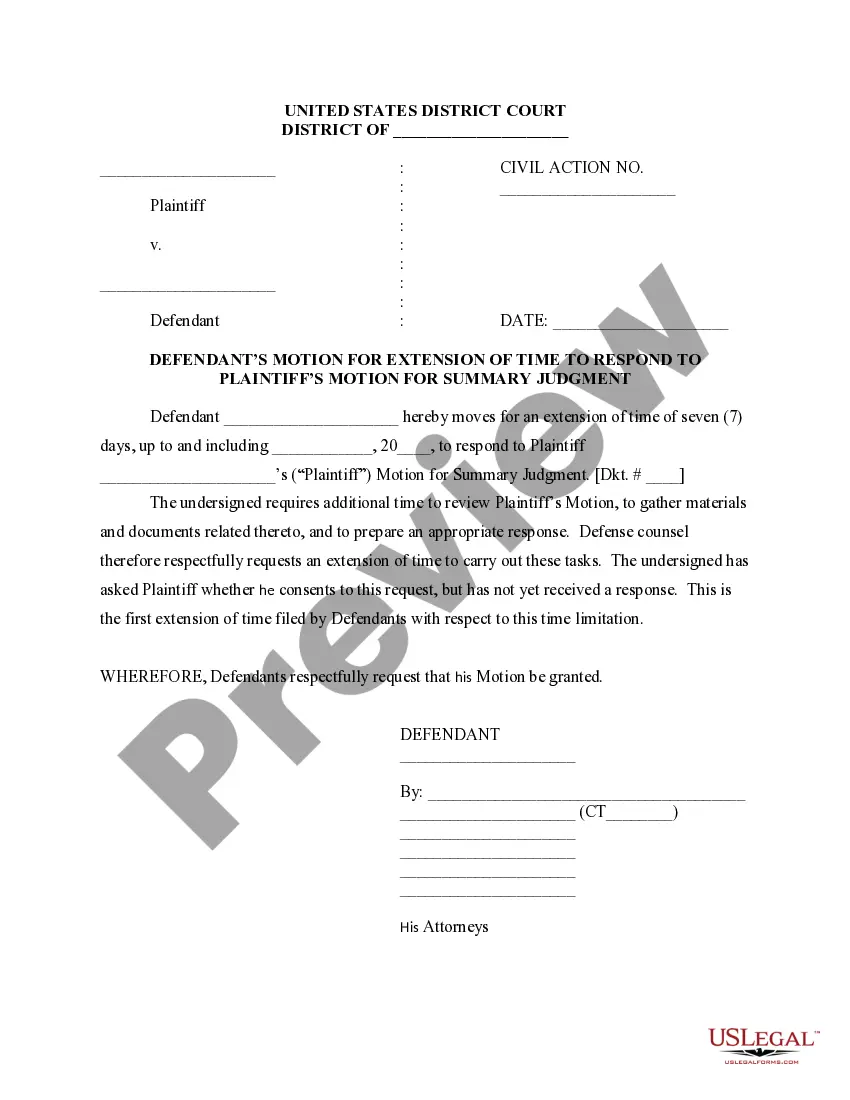
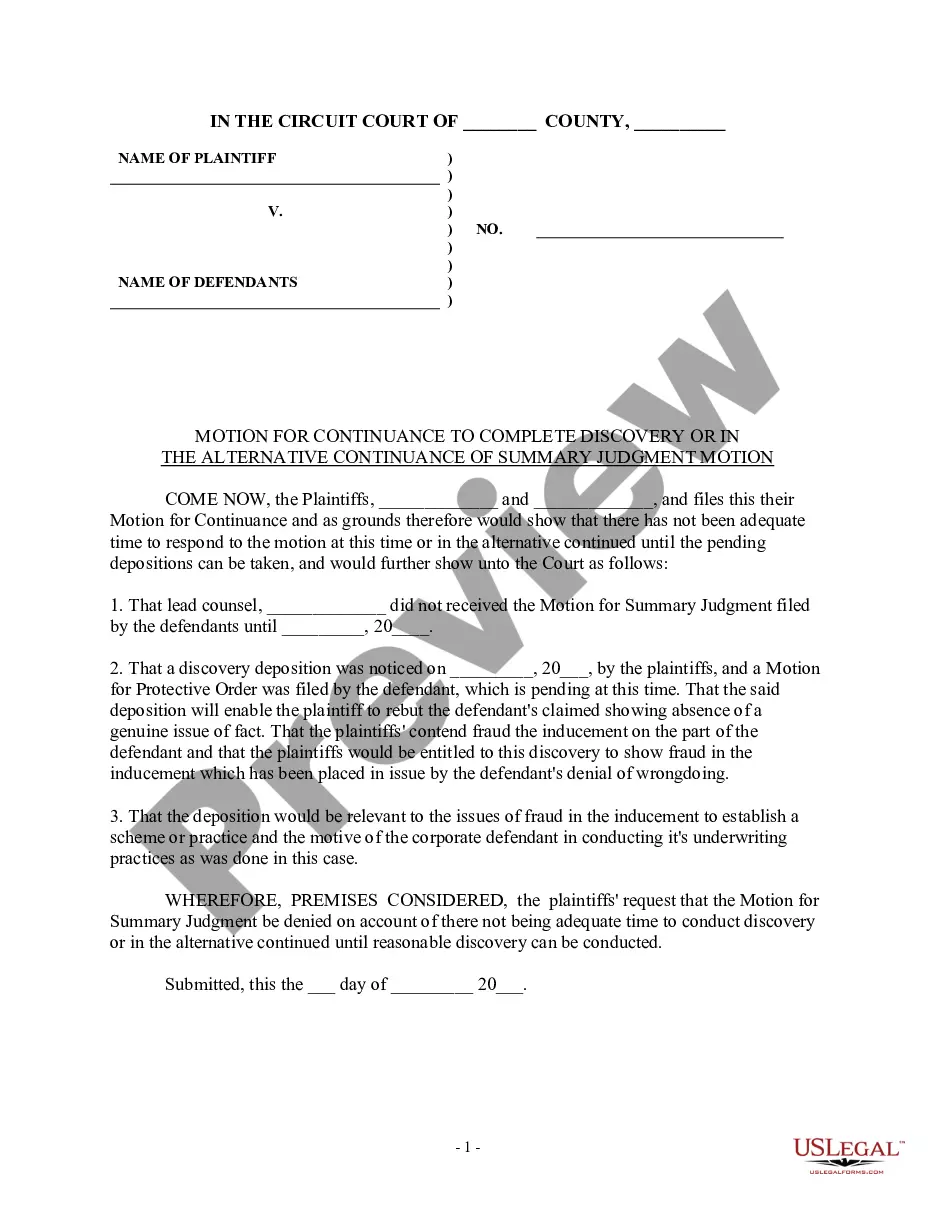
This form is a Motion Requesting Additional Time to Respond to Motion for Summary Judgment. It is used by defendants who need extra time to adequately prepare their response to a plaintiff's motion for summary judgment. Unlike other motions, this specific request emphasizes the need for additional legal discovery and is filed under Rule 6(b) of the Federal Rules of Civil Procedure to prevent delays while ensuring a just resolution.
Form components explained
- Case information: Includes sections for division, plaintiff, and defendant names.
- Details of the original motion: Specifies the filing date and the plaintiff's motion for summary judgment.
- Justification for extension: Outlines reasons why additional time is necessary, such as needing more discovery.
- Proposed new response date: Requests a specific date by which the defendant will respond.
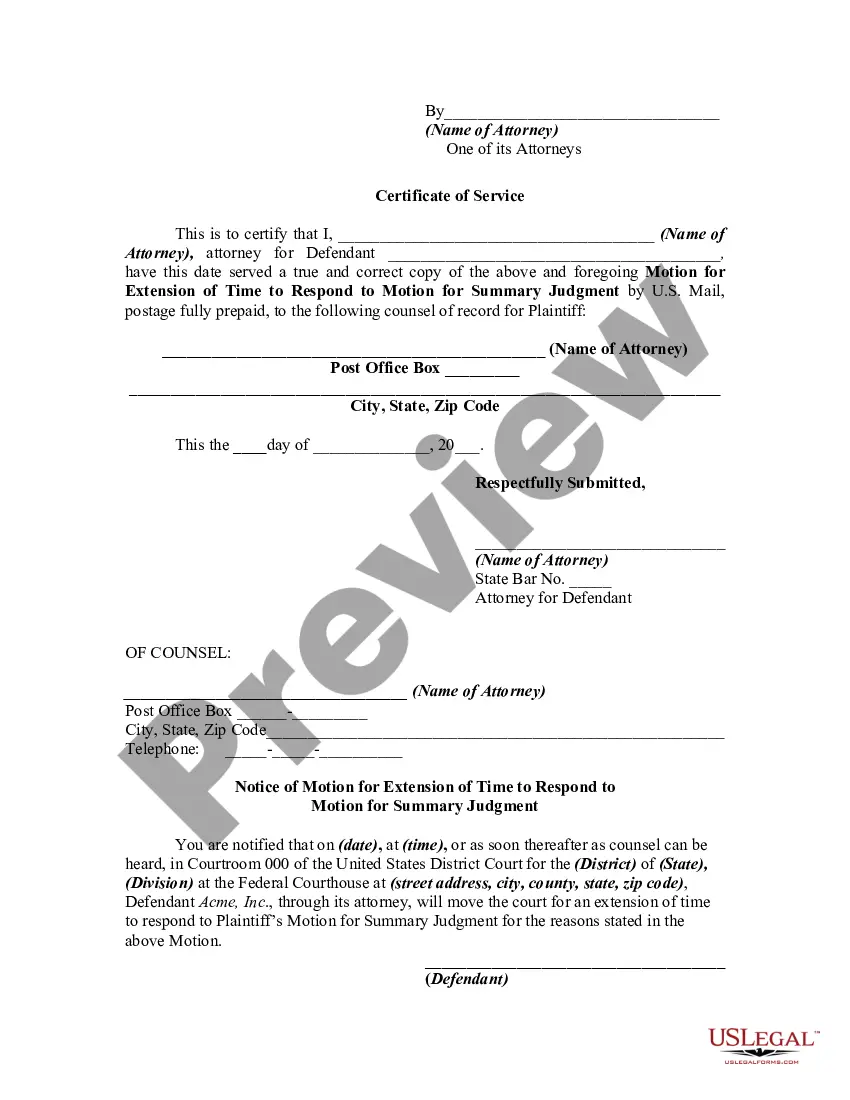
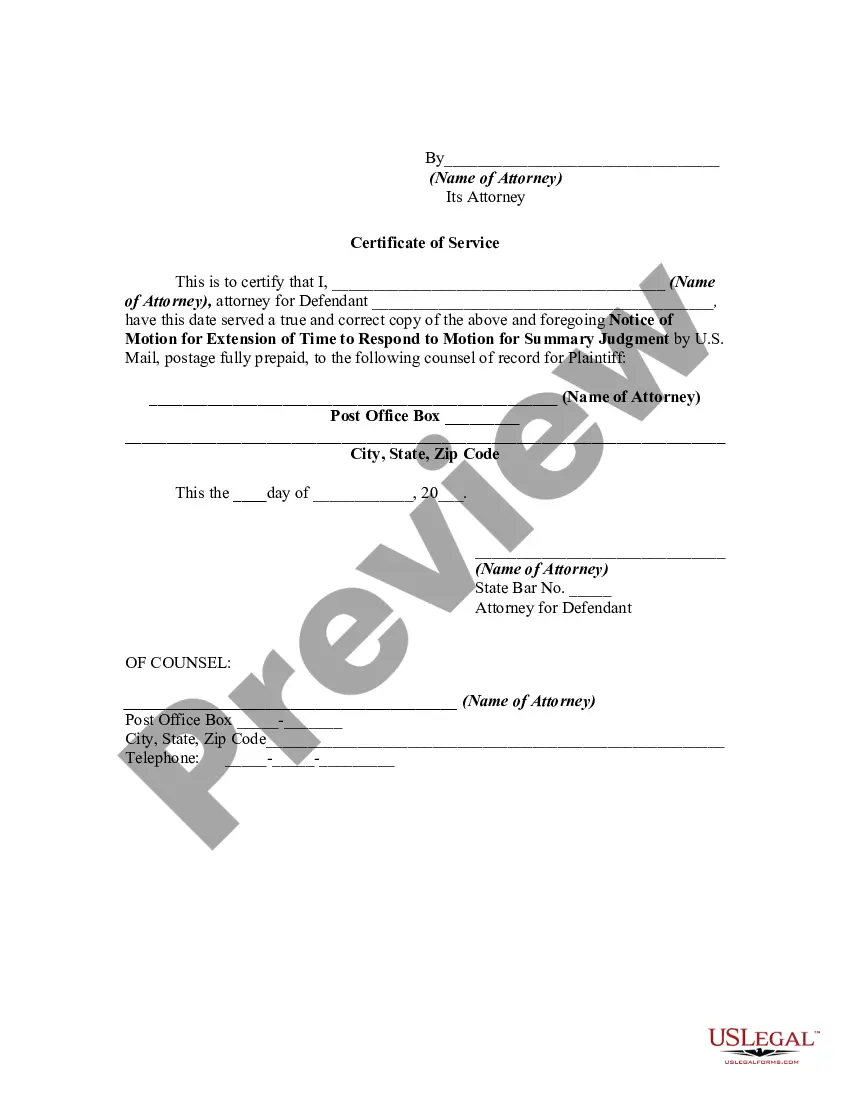
- Certificate of service: Verifies that the motion has been sent to the plaintiff's counsel.
- Notice of motion: Alerts the court and plaintiff about the motion's hearing details.

When to use this document
This form should be used when a defendant has received a motion for summary judgment but requires more time to prepare a thorough response. Situations may arise when the defendant needs additional discovery, such as depositions of witnesses or acquiring documents, that are critical in building their case against the motion for summary judgment. Using this motion ensures that the defendant can respond fully and fairly.
Who this form is for
- Defendants in civil action cases facing a motion for summary judgment.
- Attorneys representing defendants who need to request an extension of time.
- Individuals unfamiliar with legal procedures who are representing themselves and require guidance on how to seek more time.
How to prepare this document
- Fill in the case information including division, plaintiff, and defendant names.
- Specify the date when the plaintiff filed the motion for summary judgment.
- State the reasons for requesting additional time, such as necessary discovery.
- Indicate the proposed new date for responding to the motion.
- Sign the form and ensure the certificate of service is completed, indicating the plaintiffâs counsel has been notified.
Does this form need to be notarized?
This form does not typically require notarization unless specified by local law. However, check with your local court to ensure compliance with any specific requirements regarding notarization.
Get your form ready online
Our built-in tools help you complete, sign, share, and store your documents in one place.
Make edits, fill in missing information, and update formatting in US Legal Forms—just like you would in MS Word.
Download a copy, print it, send it by email, or mail it via USPS—whatever works best for your next step.
Sign and collect signatures with our SignNow integration. Send to multiple recipients, set reminders, and more. Go Premium to unlock E-Sign.
If this form requires notarization, complete it online through a secure video call—no need to meet a notary in person or wait for an appointment.
We protect your documents and personal data by following strict security and privacy standards.

Make edits, fill in missing information, and update formatting in US Legal Forms—just like you would in MS Word.

Download a copy, print it, send it by email, or mail it via USPS—whatever works best for your next step.

Sign and collect signatures with our SignNow integration. Send to multiple recipients, set reminders, and more. Go Premium to unlock E-Sign.

If this form requires notarization, complete it online through a secure video call—no need to meet a notary in person or wait for an appointment.

We protect your documents and personal data by following strict security and privacy standards.
Common mistakes to avoid
- Failing to specify valid reasons for the extension can lead to denial.
- Not providing a new date for the response is a common oversight.
- Neglecting to complete the certificate of service can invalidate the motion.
Why complete this form online
- Immediate access to a professionally drafted form that meets legal standards.
- The ability to edit and customize the form to fit specific needs and circumstances.
- Convenience of downloading and storing the form electronically for future reference.
Legal use & context
- Ensures defendants have adequate time to prepare their responses.
- Helps uphold the fairness of the judicial process by allowing for sufficient discovery.
- Prevents default judgments due to lack of response from a defendant.
Looking for another form?

Form popularity
FAQ
Watch the Deadlines. Generally, you are required to give the non-moving party at least 25 days notice prior to a hearing on your Motion for Summary Judgment.
If the motion is granted, the judgment on the issue or case is deemed to be a final judgment from which a party may seek an appeal. The court of appeal can reverse the grant of summary judgment and reinstate the claim in the lower court. However, this is rarely done and most summary judgments are upheld on appeal.
Generally, you can amend a motion. You have to serve the amended motion to the other party, and the other party will get more time to answer.
A motion for summary judgment filed by an opposing party claims that you cannot prevail in the case because there is no legal dispute or your claim is without merit or a defense. Failure to respond to a motion for summary judgment can result in your case being dismissed or a judgment being rendered against you.
A response must be in writing and include the same supporting documents as a motion for summary judgment. The opposition to the motion for summary judgment should also include a statement of facts showing the dispute and supporting documents.
If a motion for summary judgment is filed before a responsive pleading is due from a party affected by the motion, the time for responding to the motion is 21 days after the responsive pleading is due.
Any party may file a response to a motion; Rule 27(a)(2) governs its contents. The response must be filed within 10 days after service of the motion unless the court shortens or extends the time.
Unless the requirements of Code of Civil Procedure 437c, subdivision (f)(2), are met a party may not file a second summary judgment motion. The pertinent provision provides: However, a party may not move for summary judgment...
If a defendant refuses to produce documents or witnesses for depositions, you can oppose the summary-judgment motion by submitting your declaration and showing that facts essential to justify your opposition may exist but cannot for reasons stated be presented to the court.