Subpoena for Documents to a Nonparty
About this form
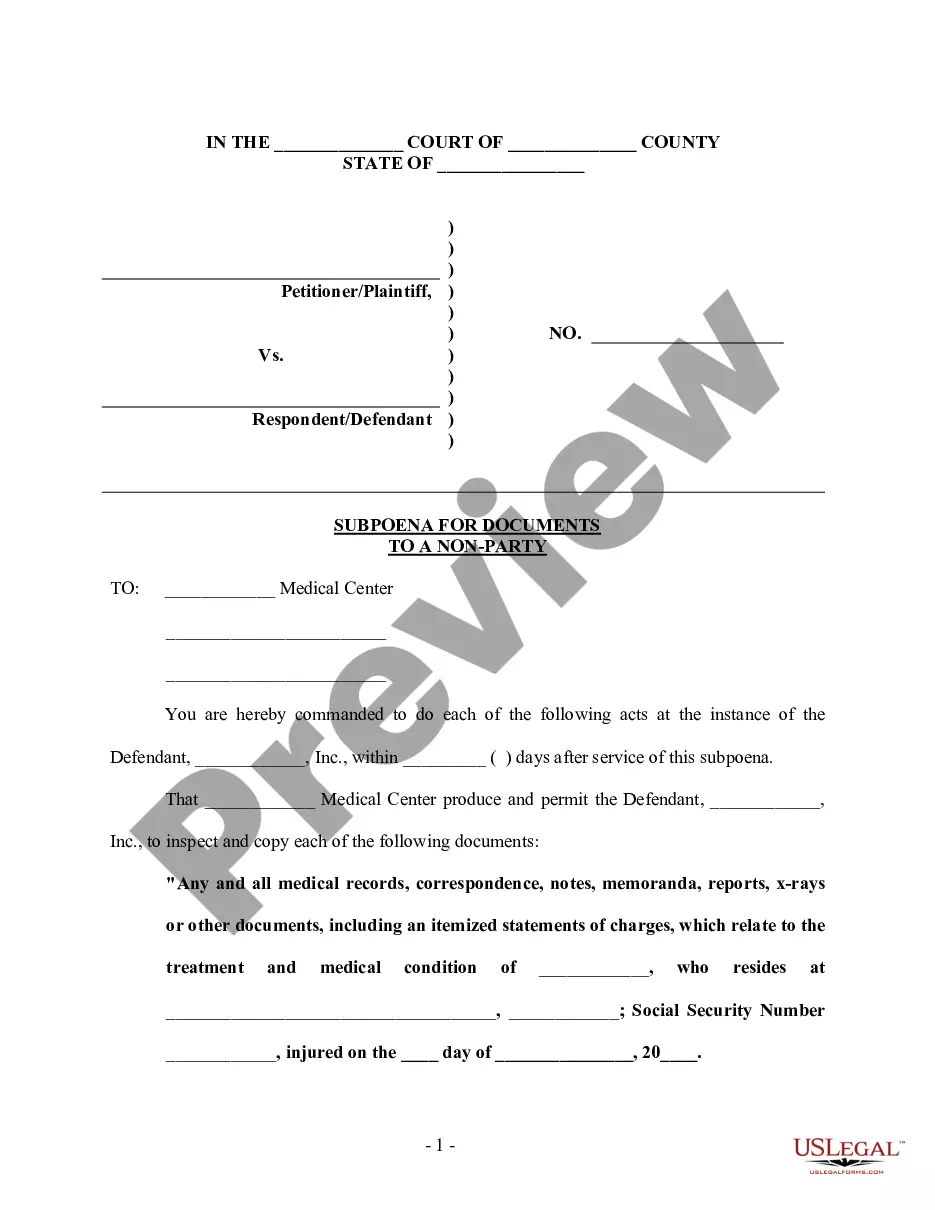
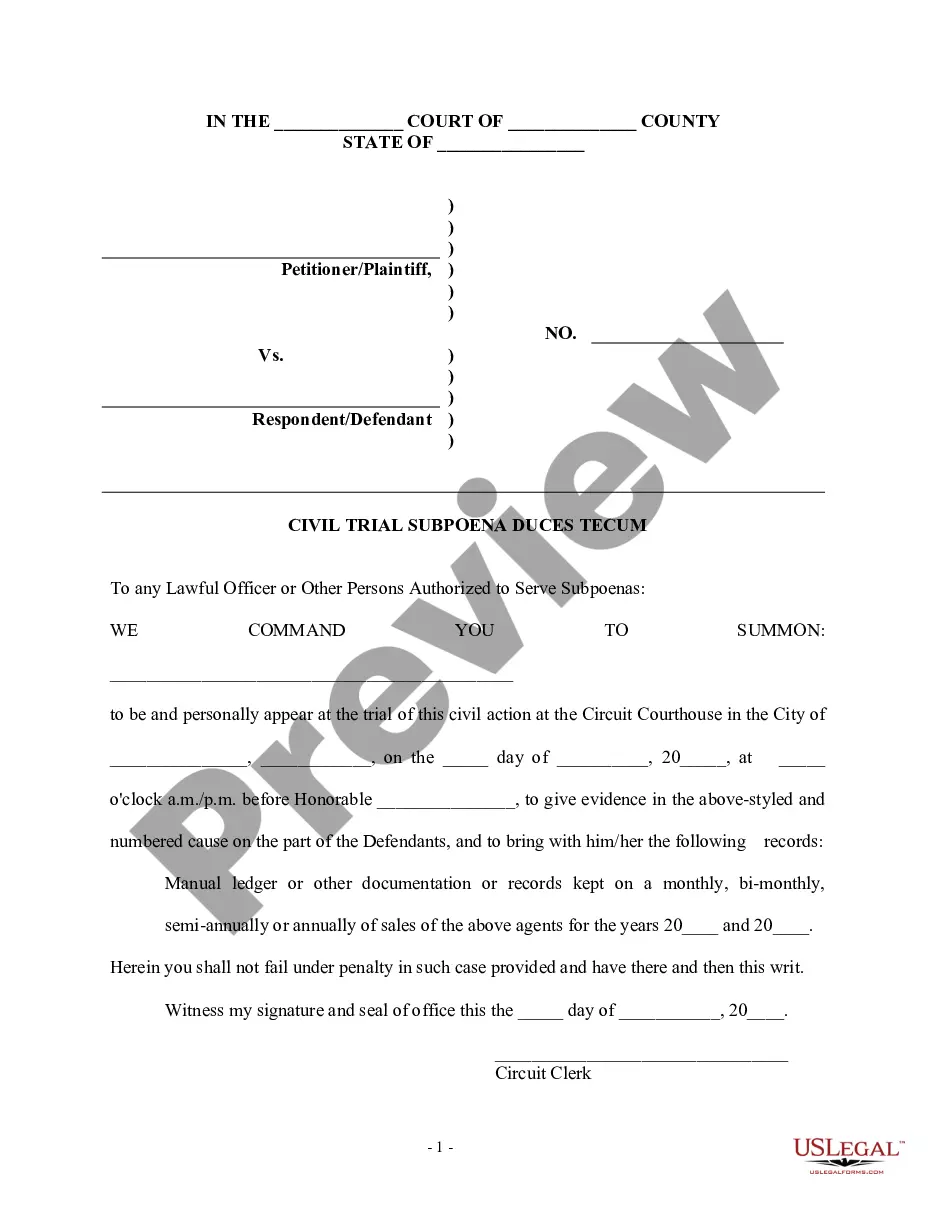
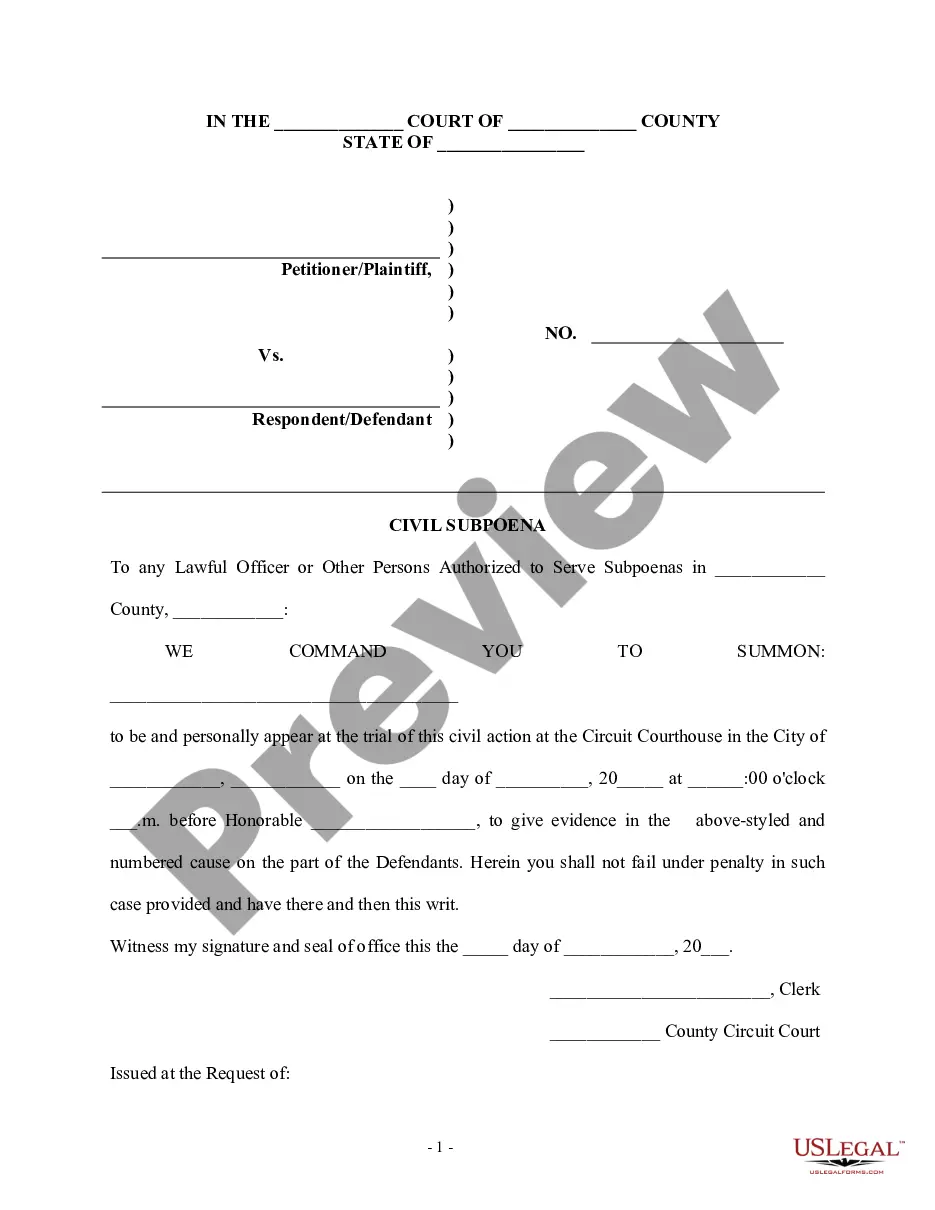
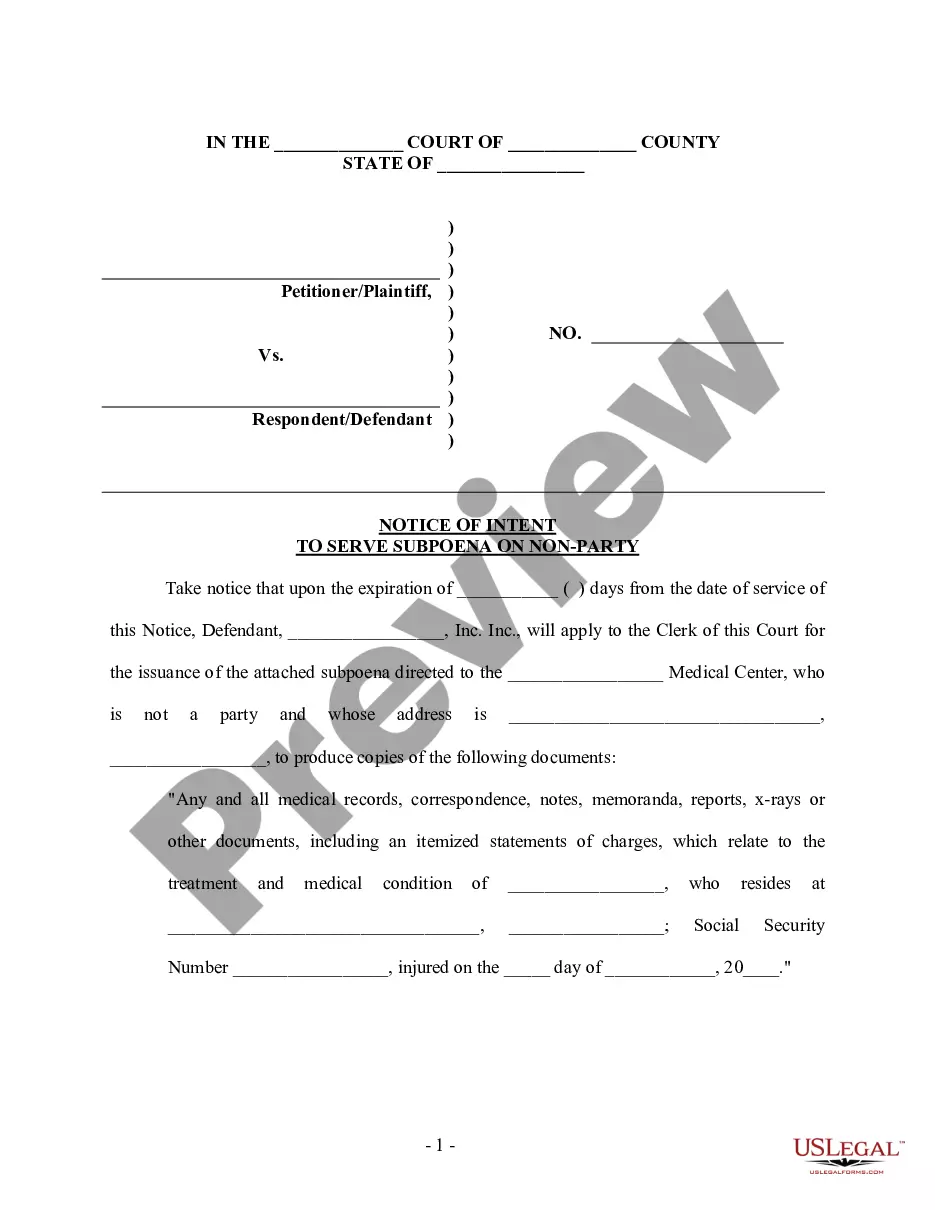
The Subpoena for Documents to a Nonparty is a legal document that compels a non-party, such as a medical facility, to produce specific documents relevant to a legal action. This form is unique as it is directed at individuals or organizations not directly involved in the litigation but possessing pertinent information. It is essential for gathering evidence to support a case.
Main sections of this form
- Identification of the medical center or entity being subpoenaed.
- Details about the defendant, including name and address.
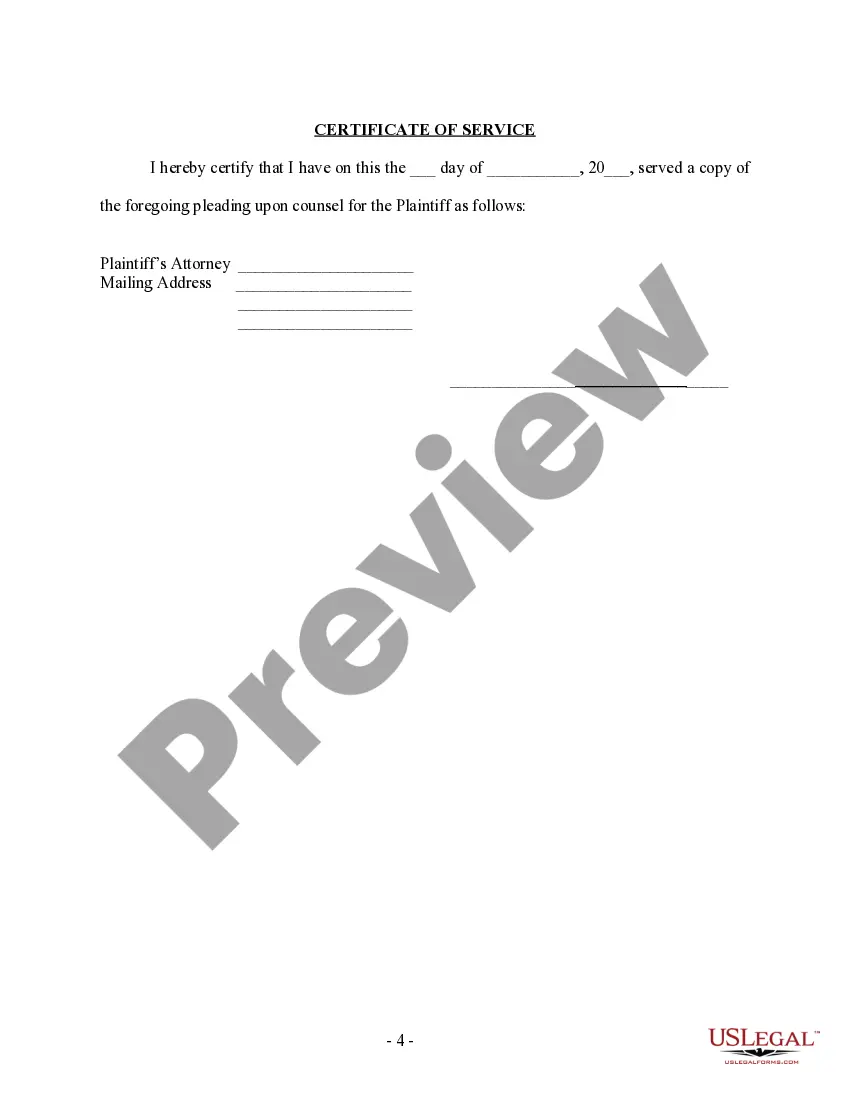
- Descriptive list of documents requested, such as medical records and correspondence.
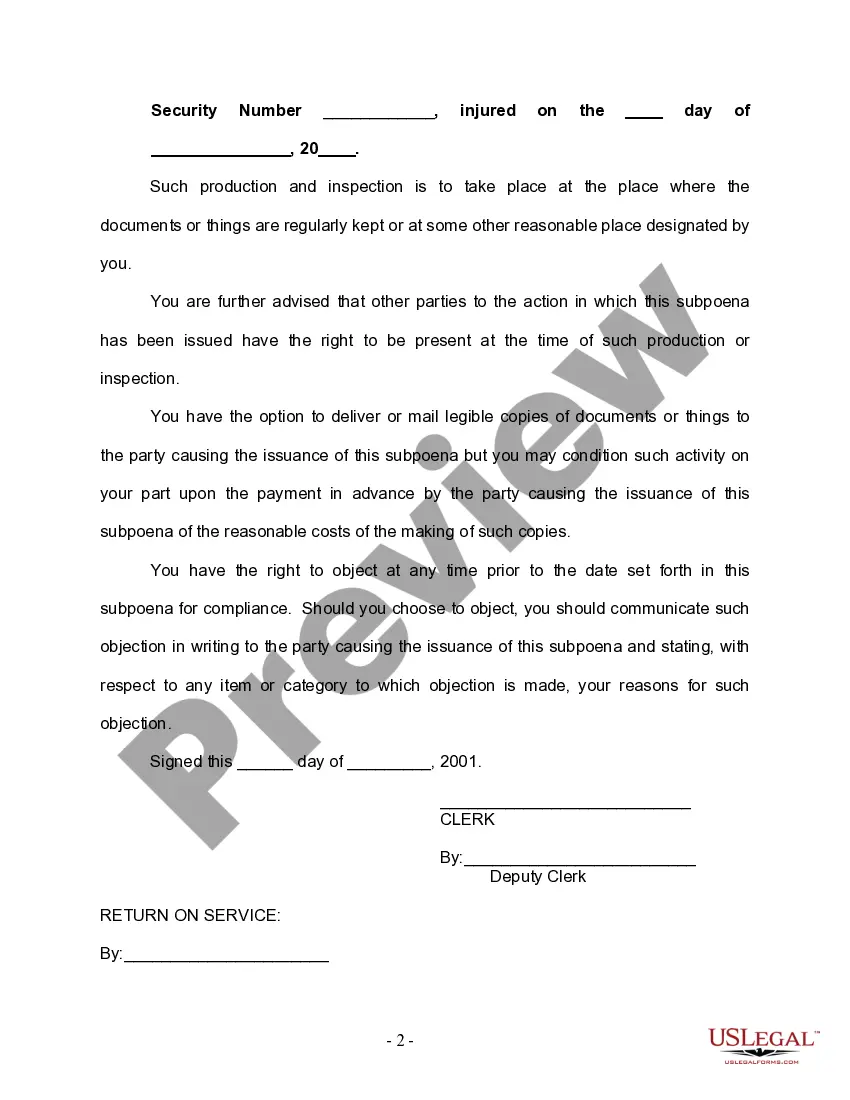
- Instructions for document inspection and copying logistics.
- Rights of other parties to be present during document production.
- Objection procedure, allowing the subpoenaed party to contest the request.
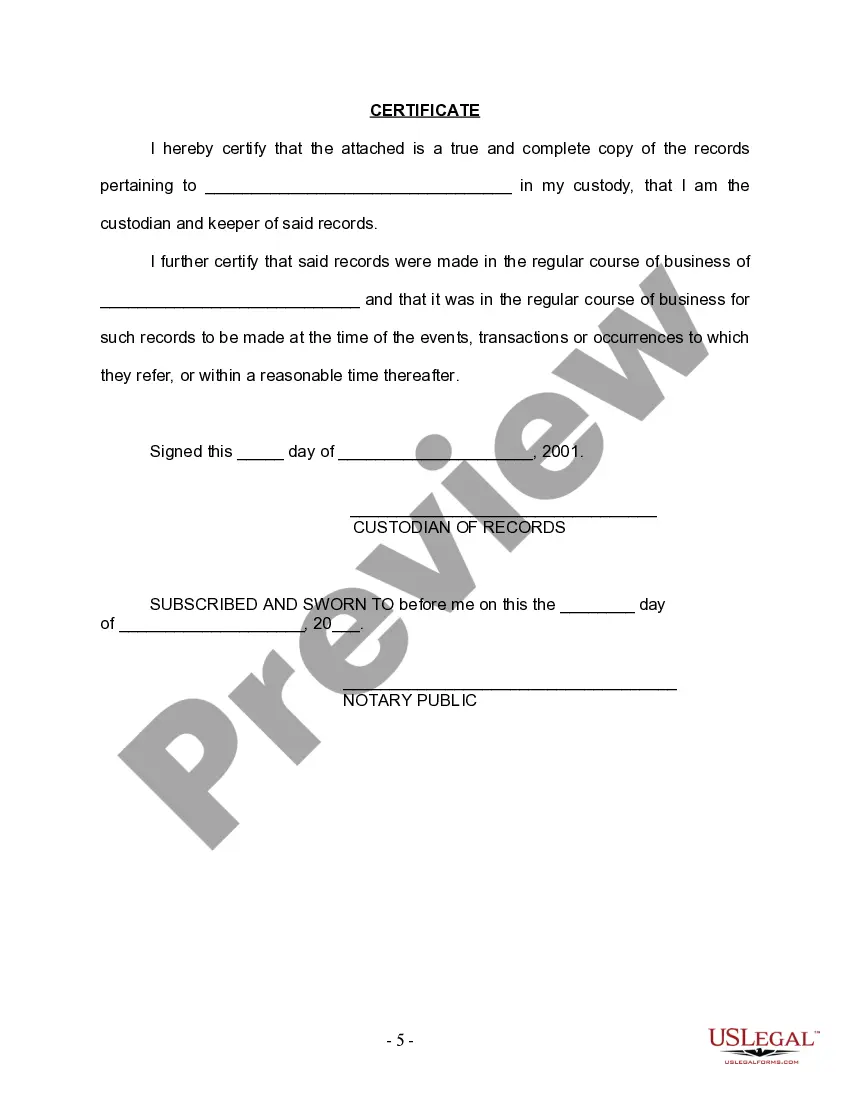
- Certification section for record custodians to affirm document authenticity.

Situations where this form applies
This form is utilized when a party involved in a legal case requires access to documents held by a non-party, such as a medical facility, to substantiate claims or defenses in the litigation. It is particularly applicable in personal injury cases where medical records are essential for establishing the nature and extent of injuries.
Who should use this form
- Legal professionals representing defendants or plaintiffs in a lawsuit.
- Individuals seeking to gather evidence from third parties relevant to their case.
- Parties involved in personal injury claims needing medical documentation.
- Organizations that must obtain records for legal compliance in ongoing cases.
How to prepare this document
- Identify the medical center or records custodian to whom the subpoena is directed.
- Fill in the names and addresses of the involved parties, including the defendant.
- List the specific documents to be produced, ensuring clear descriptions.
- Specify the location and conditions under which documents will be inspected.
- Include the date and signature of the clerk or authorized individual issuing the subpoena.
Does this document require notarization?
This document requires notarization to meet legal standards. US Legal Forms provides secure online notarization powered by Notarize, allowing you to complete the process through a verified video call, available 24/7.
Get your form ready online
Our built-in tools help you complete, sign, share, and store your documents in one place.
Make edits, fill in missing information, and update formatting in US Legal Forms—just like you would in MS Word.
Download a copy, print it, send it by email, or mail it via USPS—whatever works best for your next step.
Sign and collect signatures with our SignNow integration. Send to multiple recipients, set reminders, and more. Go Premium to unlock E-Sign.
If this form requires notarization, complete it online through a secure video call—no need to meet a notary in person or wait for an appointment.
We protect your documents and personal data by following strict security and privacy standards.

Make edits, fill in missing information, and update formatting in US Legal Forms—just like you would in MS Word.

Download a copy, print it, send it by email, or mail it via USPS—whatever works best for your next step.

Sign and collect signatures with our SignNow integration. Send to multiple recipients, set reminders, and more. Go Premium to unlock E-Sign.

If this form requires notarization, complete it online through a secure video call—no need to meet a notary in person or wait for an appointment.

We protect your documents and personal data by following strict security and privacy standards.
Typical mistakes to avoid
- Failing to adequately describe the documents sought, causing confusion.
- Not properly identifying the parties involved, which can lead to invalid subpoenas.
- Omitting compliance details, such as dates and locations for document production.
- Ignoring the objection timeline, which could invalidate rights to contest the subpoena.
Advantages of online completion
- Immediate access to a wide range of legal forms tailored to specific needs.
- Editable templates that save time and ensure compliance with legal standards.
- Convenient download option for quick and secure file access.
- Flexibility to customize forms for particular circumstances and jurisdictions.
Summary of main points
- The Subpoena for Documents to a Nonparty is critical for gathering evidence from nonparties.
- Proper completion and service of the form are essential to avoid legal complications.
- Understanding the rights to object to the subpoena is important for the nonparty.
Looking for another form?
Form popularity
FAQ
Yes. For a party in litigation (regardless of whether the party is an individual or an entity), the normal procedure is to serve a Demand for Production of Documents and Things pursuant to California Code of Civil Procedure section 2031.010, et seq.
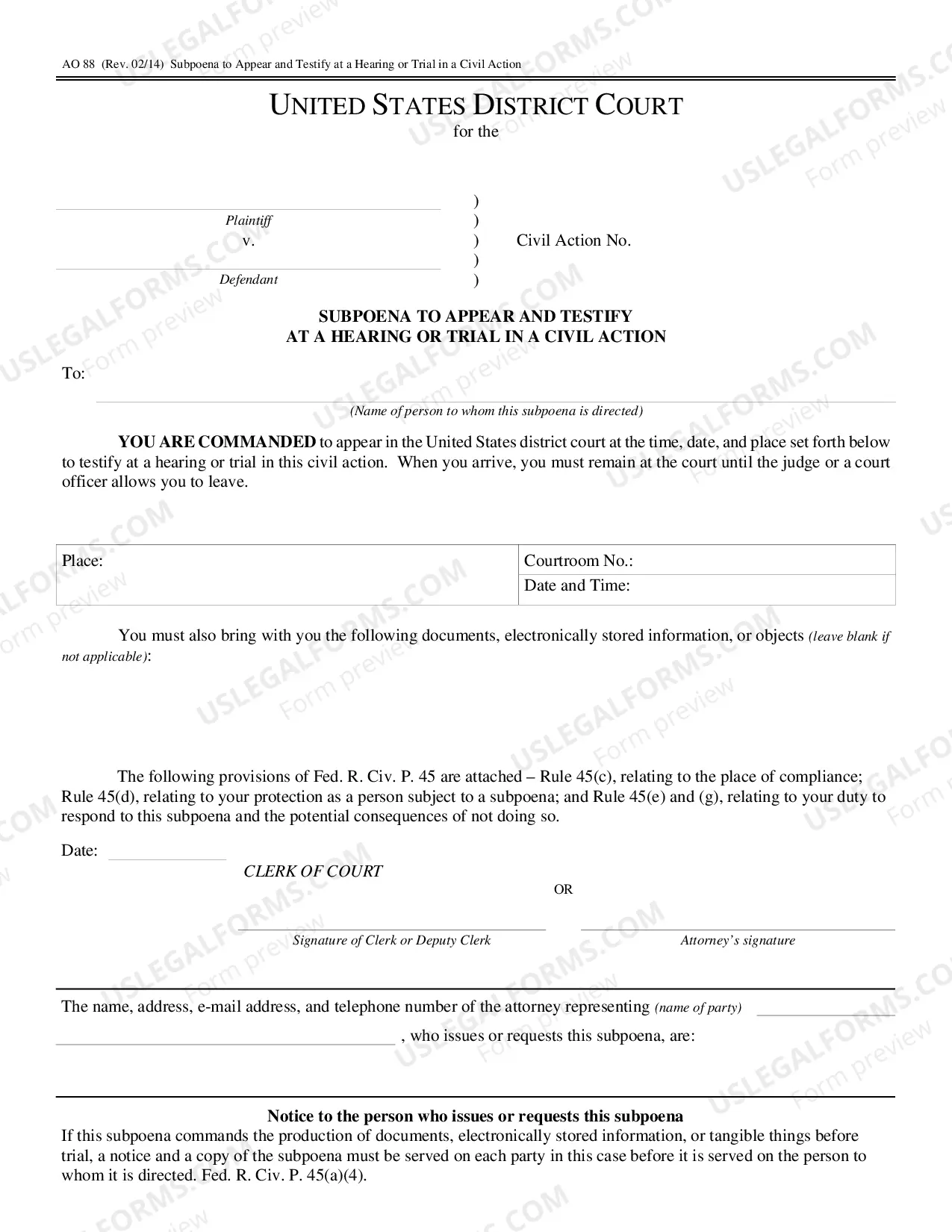
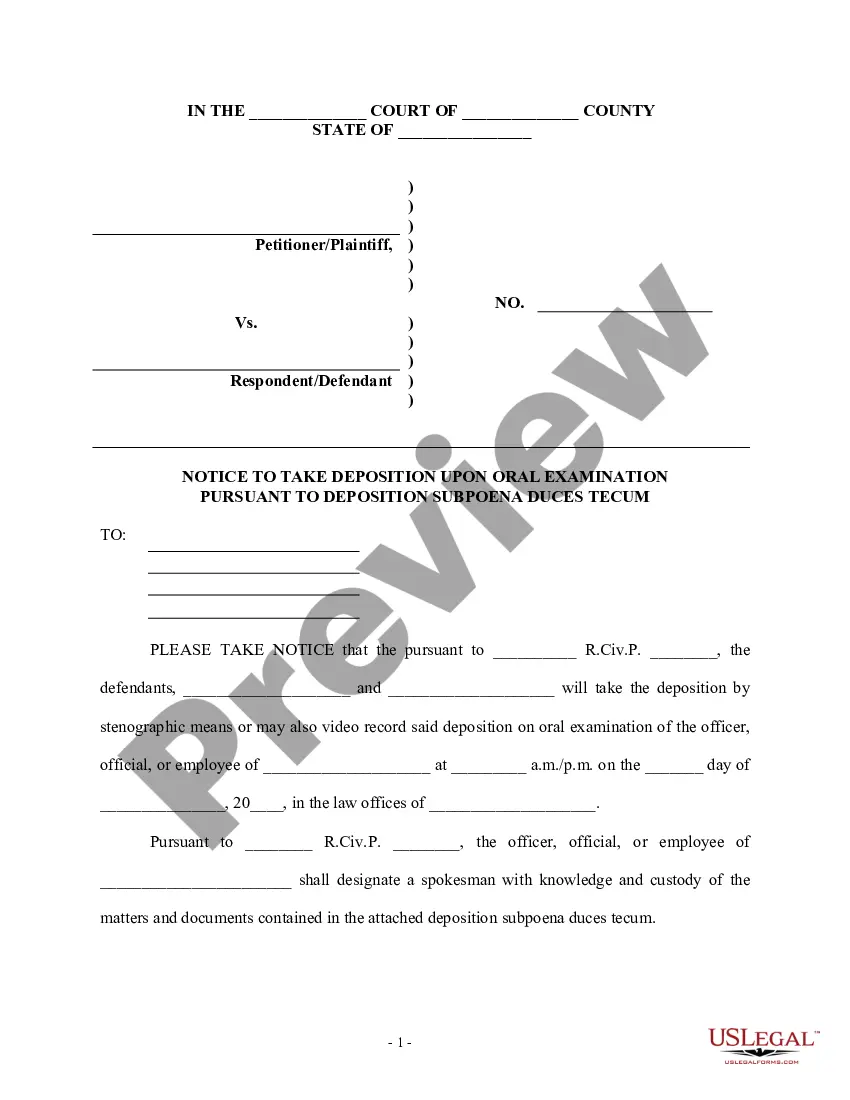
A Subpoena Duces Tecum (meaning 'subpoena for production of evidence') is a court order requiring the person subpoenaed to produce books, documents or other records under his or her control at a specified time/place in a court hearing or a deposition.
Take a blank Subpoena to the clerk to have it issued. Take a blank Civil Subpoena (Form SUBP-001 ) to the clerk. Fill out the Subpoena. Make copies of your issued Subpoena. Serve the Subpoena. Fill out Page 3 of the original Civil Subpoena. Return the Subpoena to the clerk before your hearing (or trial).
The first, called subpoena ad testificandum (pronounced "ad test- te-fi-kan-dum"), requires you to testify before a court, or other legal authority. The second, called subpoena duces tecum (pronounced "doo-seez tee-kum"), requires you to produce documents, materials, or other tangible evidence.
You may subpoena the other party or a non-party witness to the hearing if: He or she is a California resident. You need him or her to come to court to testify and there is a possibility he or she may not come. He or she has documents you need to support your case and will not give them to you.
Individuals may require subpoenas in order to justify missing work to their employer or because they do not willfully want to involve themselves in the proceedings. A subpoena can also be issued if a party wants a person or organization to provide him or her with certain documents or physical evidence.
Some purported subpoenas are not valid. For example, if a subpoena violates a case management order or a local rule, or the subpoena issued from another state, the subpoena may be invalid and you may not need to respond at all.
A subpoena is a court order and therefore there can not be a subpoena issued without a legal action pending. A party to the legal action requests the Court issue the subpoena and if the Court agrees, it will issue the subpoena with the... Thank you very much for your explanation of this to me.
A subpoena doesn't even need to be signed by a judge. A court clerk, prosecutor or even a private attorney can issue a subpoena to gather information.All you need is to have possession of some record that is remotely likely to contain information relevant to a case or investigation.