Oklahoma Employment Employee Personnel File Package
Overview of this form package
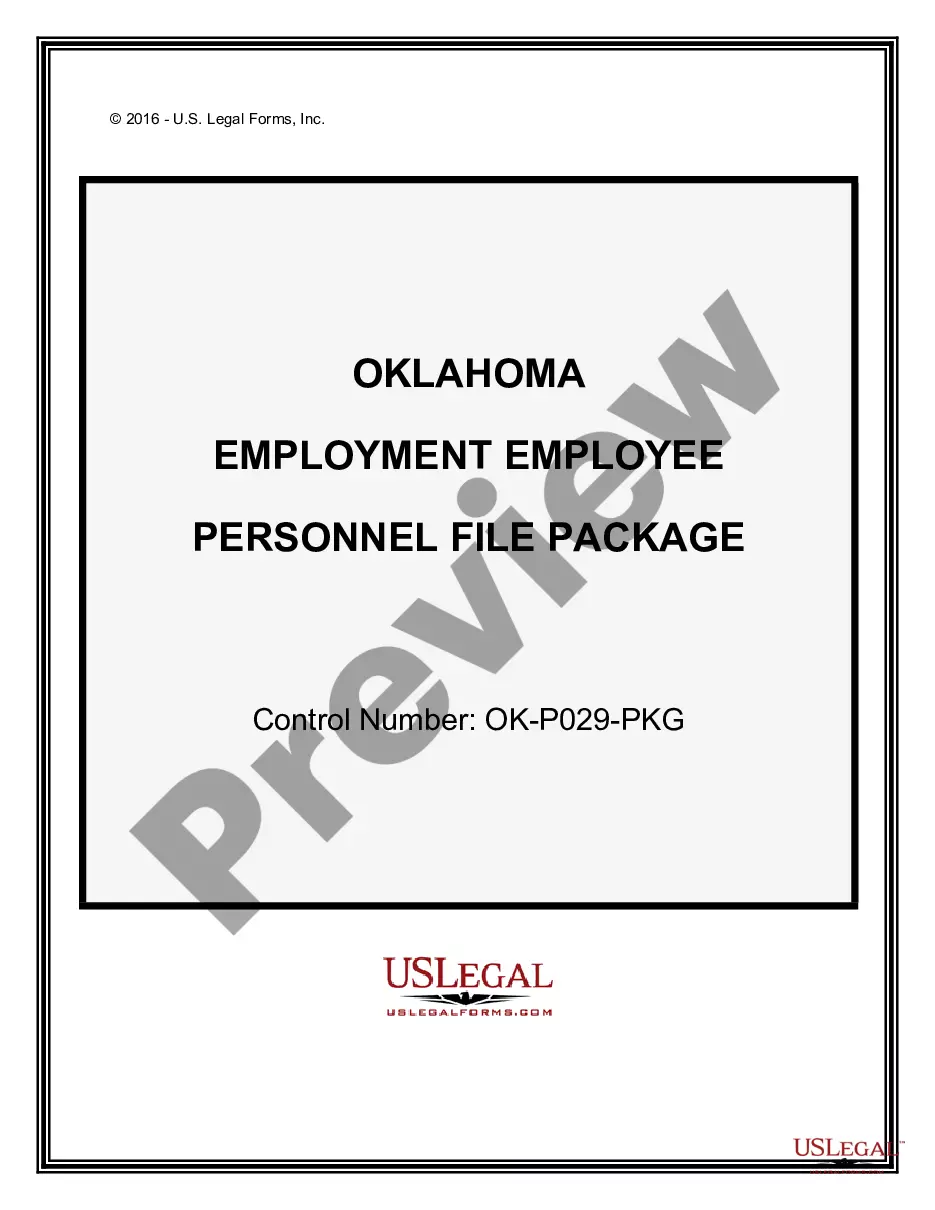
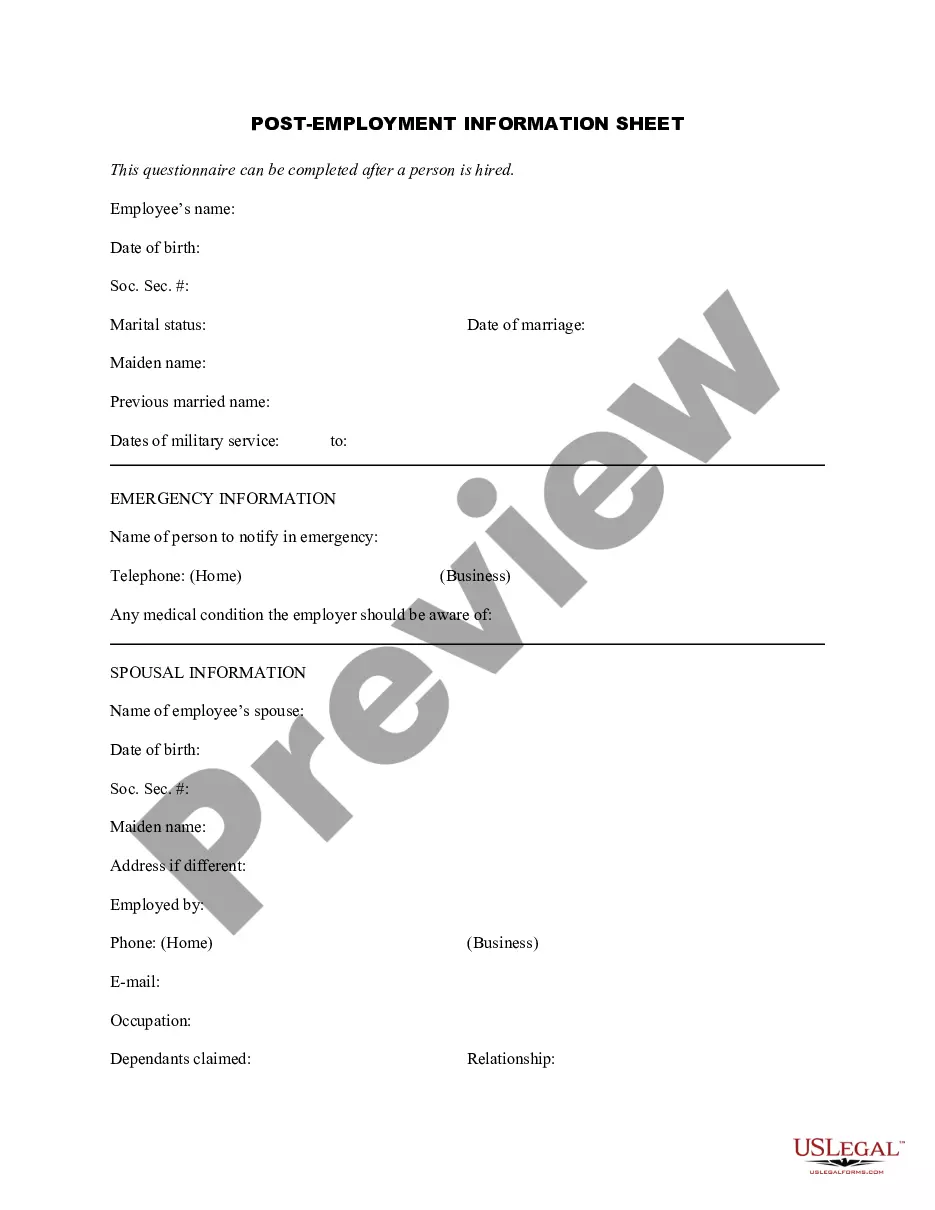
The Oklahoma Employment Employee Personnel File Package is a comprehensive set of essential personnel forms designed to help employers maintain accurate records of all personnel matters. This package protects employers from costly errors and ensures compliance with important federal regulations. It includes a variety of documents, such as employee reviews, authorization agreements, and injury reports, amid others tailored specifically for managing employee information efficiently and effectively.
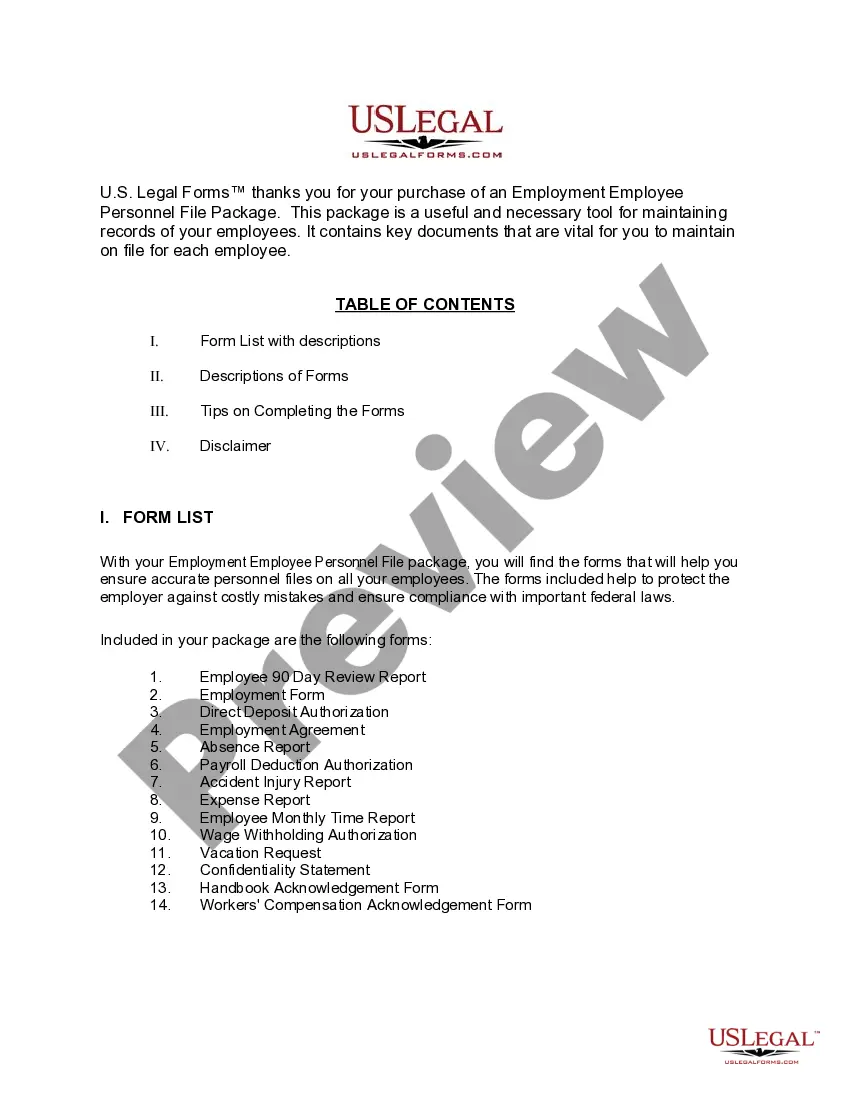
Documents contained in this package
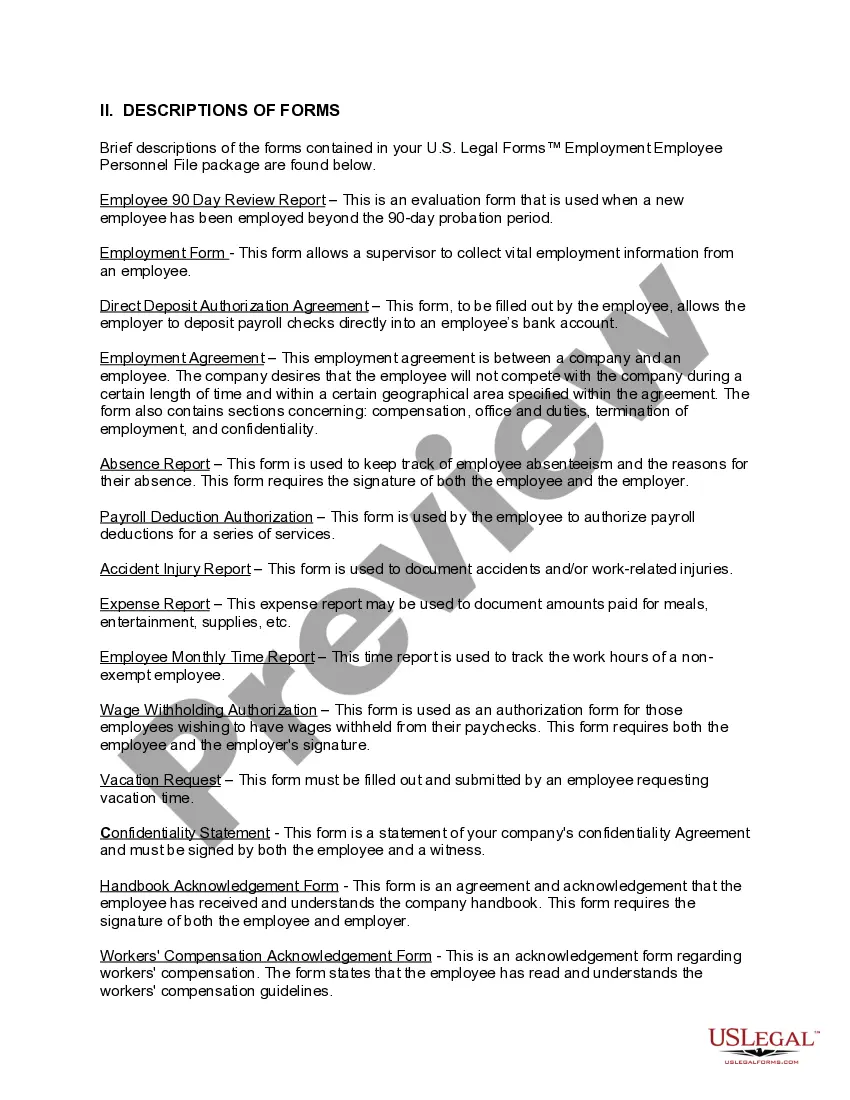
- Employment Agreement between a company and an employee
- Absence Report
- Payroll Deduction Authorization Form
- Accident - Injury Report
- Direct Deposit Authorization
- Nonexempt Employee Time Report
- Employee 90 day Review Report
- Wage Withholding Authorization
- Confidentiality Statement and Agreement for an Employee
- Employee Agreement and Handbook Acknowledgment Form
- Workers' Compensation Acknowledgment Form
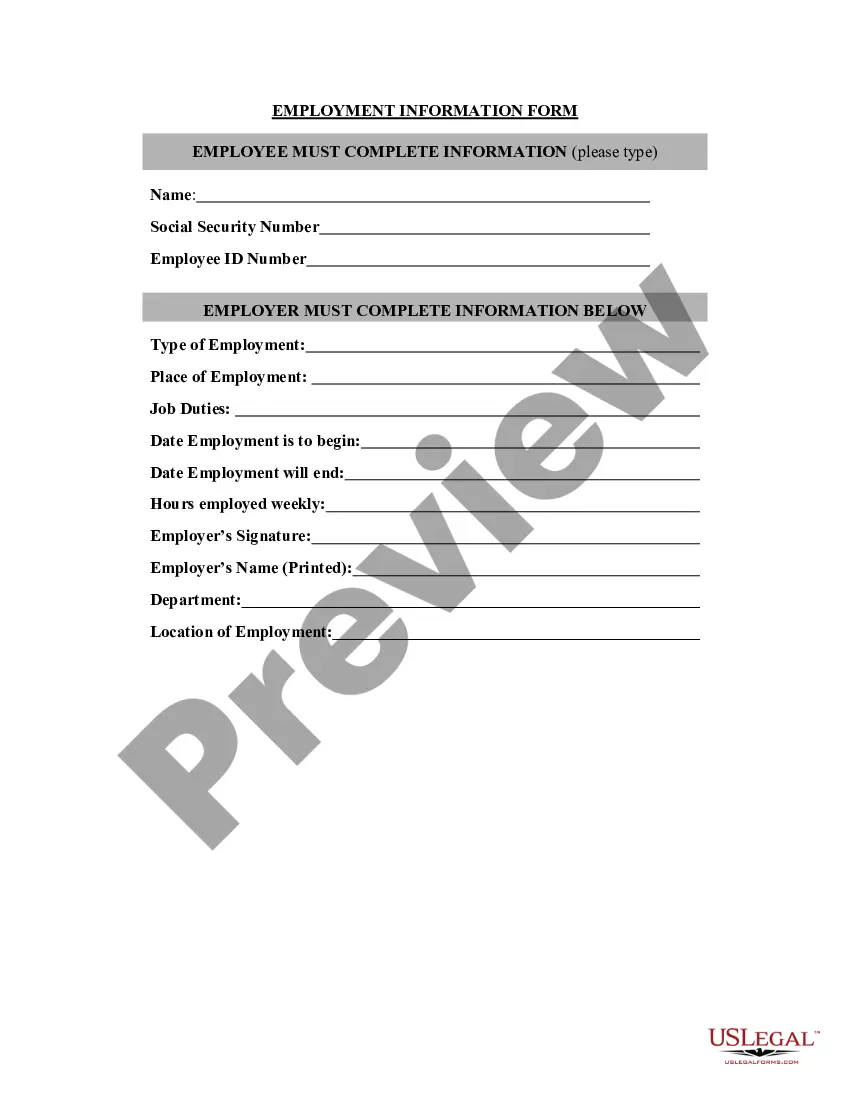
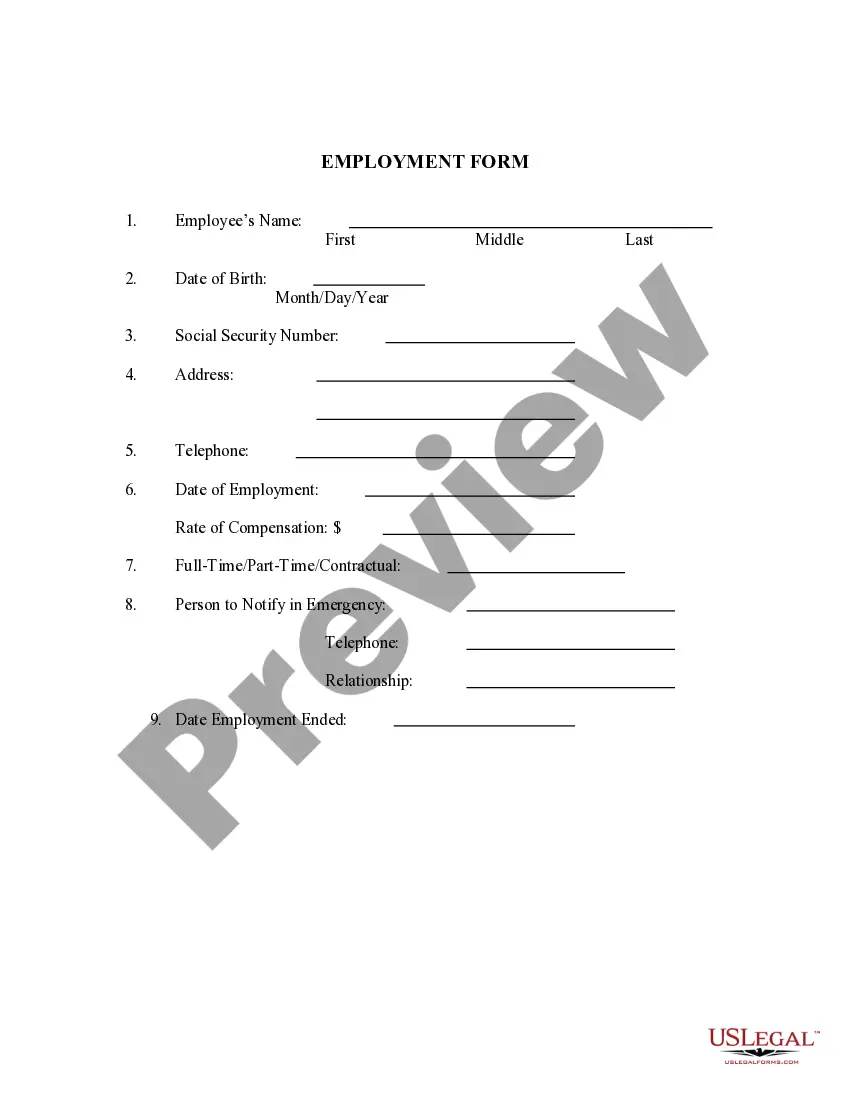
- Employment Form
- Vacation Request Form
When to use this form package
This package is useful in several real-world scenarios, including:
- Onboarding new employees to gather essential employment information.
- Periodic employee evaluations to document performance and track progress.
- Processing payroll and authorizing direct deposits or deductions.
- Managing employee absences and vacation requests efficiently.
- Documenting any work-related accidents or injuries.
Who should use this form package
- Business owners looking to streamline their HR documentation.
- Managers responsible for overseeing employee records and performance.
- Human resources professionals tasked with ensuring compliance and proper record-keeping.
- Any organization in Oklahoma that employs individuals and needs structured personnel documentation.
How to prepare this document
- Review all included forms to understand their purpose and requirements.
- Collect necessary information from employees to complete the Employment Form and related documents.
- Fill out each form accurately, ensuring all required fields are completed.
- Obtain signatures from both the employee and employer where necessary, such as in the Employment Agreement and Payroll Deduction Authorization.
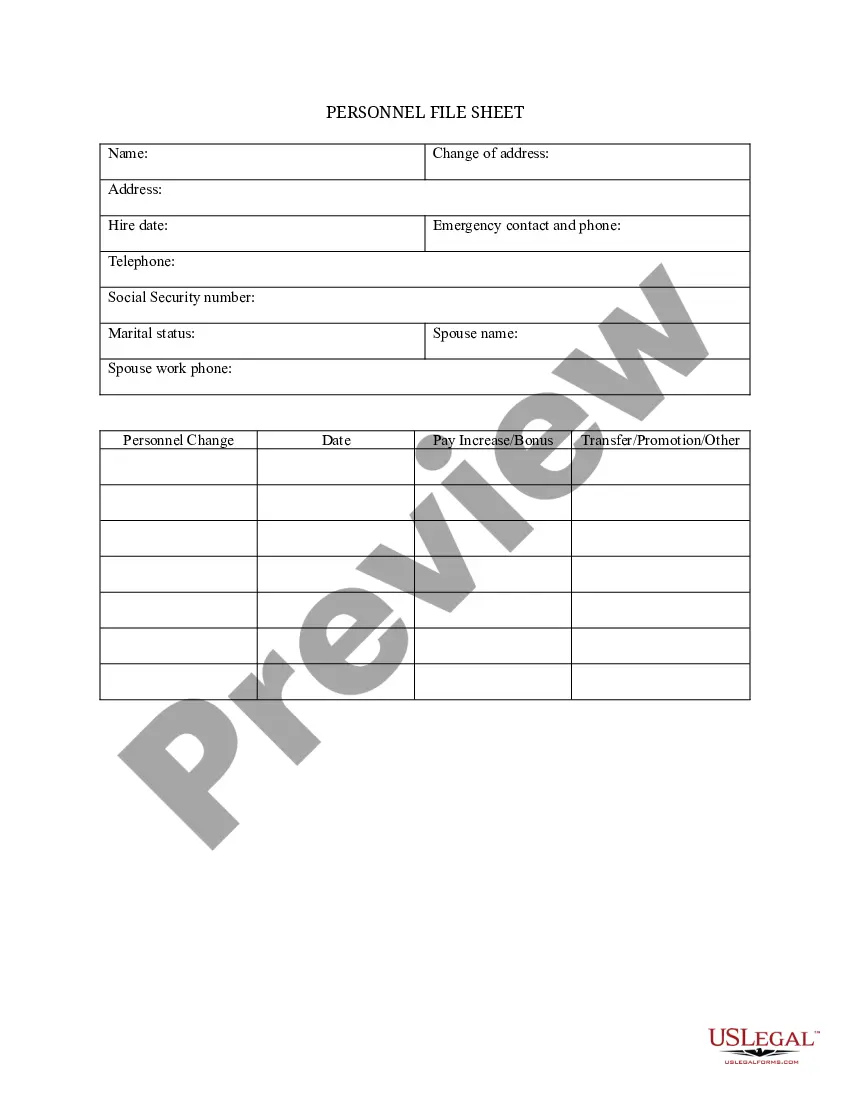
- Keep completed forms in a secure location within your employee's personnel file for future reference.
Do documents in this package require notarization?
Most forms in this package do not require notarization. However, local laws or specific situations may demand it. Our online notarization service, powered by Notarize, lets you complete the process through a verified video call, available anytime.
Get your form ready online
Our built-in tools help you complete, sign, share, and store your documents in one place.
Make edits, fill in missing information, and update formatting in US Legal Forms—just like you would in MS Word.
Download a copy, print it, send it by email, or mail it via USPS—whatever works best for your next step.
Sign and collect signatures with our SignNow integration. Send to multiple recipients, set reminders, and more. Go Premium to unlock E-Sign.
If this form requires notarization, complete it online through a secure video call—no need to meet a notary in person or wait for an appointment.
We protect your documents and personal data by following strict security and privacy standards.

Make edits, fill in missing information, and update formatting in US Legal Forms—just like you would in MS Word.

Download a copy, print it, send it by email, or mail it via USPS—whatever works best for your next step.

Sign and collect signatures with our SignNow integration. Send to multiple recipients, set reminders, and more. Go Premium to unlock E-Sign.

If this form requires notarization, complete it online through a secure video call—no need to meet a notary in person or wait for an appointment.

We protect your documents and personal data by following strict security and privacy standards.
Mistakes to watch out for
- Failing to gather complete information from employees on the Employment Form.
- Not obtaining all necessary signatures on key documents like the Employment Agreement.
- Neglecting to update employee files with new information or changes in status.
- Not keeping copies of the forms for company records once signed.
Benefits of using this package online
- Convenience of downloading and accessing forms anytime and anywhere.
- Editability, allowing tailoring of forms to fit specific business needs.
- Reliability as the forms are drafted by licensed attorneys to ensure legal accuracy.
- Saves time compared to creating documents from scratch, speeding up the HR process.
Legal use & context
- These forms are legally valid and enforceable in Oklahoma when completed correctly.
- Using these forms helps ensure compliance with federal and state employment laws, reducing legal risks.
- Proper maintenance of personnel files can serve as valuable evidence in disputes or legal proceedings.
Main things to remember
- The Oklahoma Employment Employee Personnel File Package provides essential forms for managing employee records.
- It helps ensure compliance with local and federal laws while protecting employers from potential liabilities.
- Understanding how to complete and use these forms effectively is critical for any business operating in Oklahoma.
Looking for another form?
Form popularity
FAQ
In the state of California, every current employee, or his or her representative has the right to inspect and receive a copy of their personnel records, maintained by their employer.
Current and former employees have a right to their personnel records under Labor Code section 1198.5. Under California Labor Code section 1198.5(a) provides that every current and former employee, or their representative, has the right to inspect and receive a copy of their personnel records.
As an employee, do I have a right to see my personnel files? The short answer is 'yes'. You have a right to make a SAR to your employer, asking to see your personnel files, at any time. Your employer has the right to ask why you want to see your files, but must then provide all your records to you.
Lawyers can also subpoena the contents of the personnel records for lawsuits and the Equal Employment Opportunity Commission (EEOC) complaints. A former employee can also request a copy of his or her personnel records. Best practice makes the personnel file only accessible by Human Resources staff members.
Effective January 1, 2013, California law provides that current and former employees (or a representative) have the right to inspect and receive a copy of the personnel files and records that relate to the employee's performance or to any grievance concerning the employee.
Employers should keep all job-related documentation such as hiring records, performance reviews, disciplinary actions and job descriptions in an employee's general personnel file. Consider whether the document would be relevant to a supervisor who may review this file when making employment decisions.
EEOC Regulations require that employers keep all personnel or employment records for one year. Under Fair Labor Standards Act (FLSA) recordkeeping requirements applicable to the EPA, employers must keep payroll records for at least three years.
There are eight employee-related HR documents that every personnel file must contain, which includes legal employment records such as payroll tax forms as well as employee-employer agreements.
In the state of California, every current employee, or his or her representative has the right to inspect and receive a copy of their personnel records, maintained by their employer.